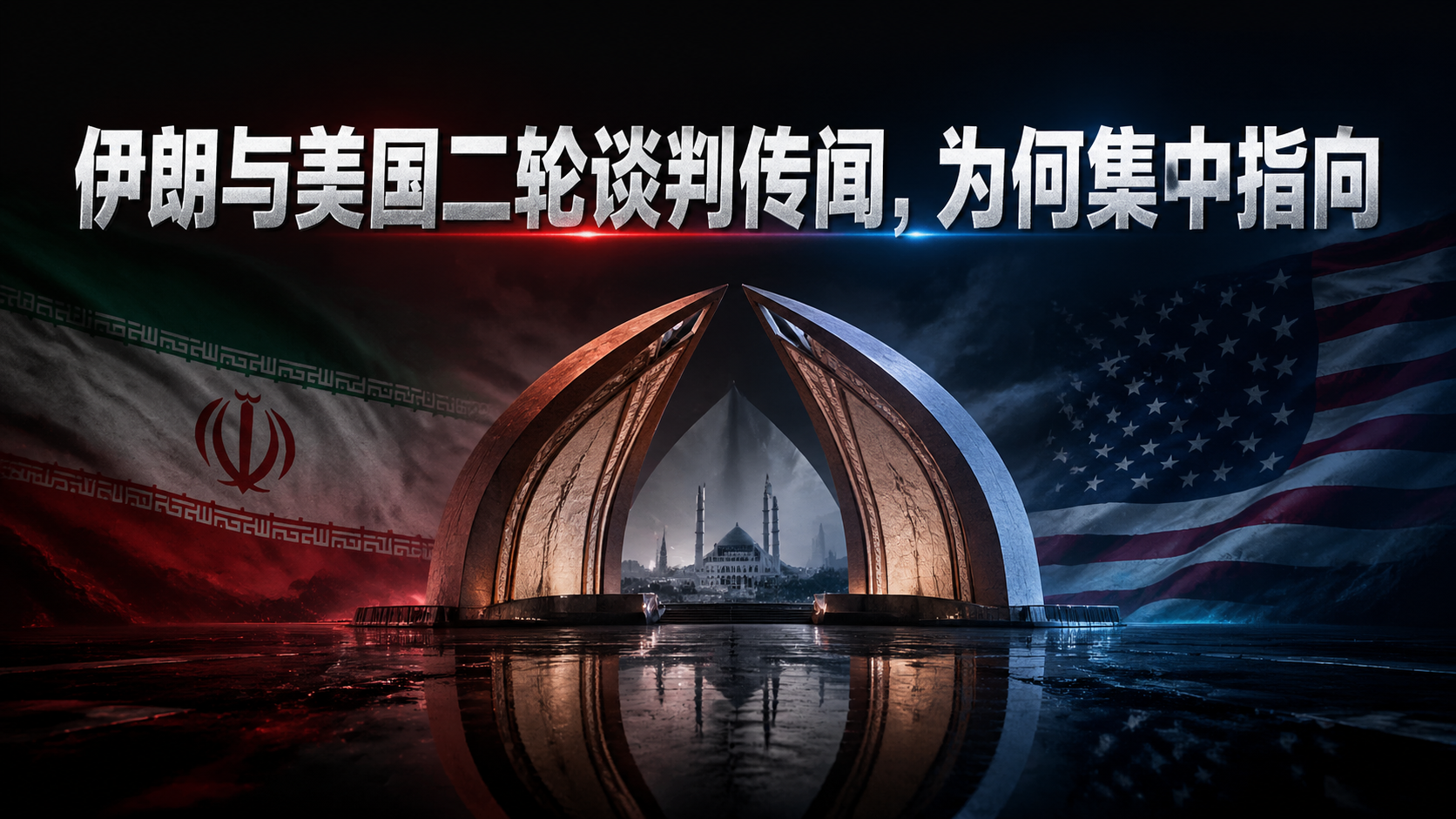
On April 25, 2026, when Abbas Araghchi left Islamabad, the Iranian Foreign Ministry repeatedly expressed the same message: during the stay in Pakistan, the delegation did not meet and will not meet any U.S. officials. The next stop on the itinerary is Muscat, followed by Moscow—a multifaceted shuttle route centered around nuclear issues and regional security, yet deliberately drawing a clear distance from “the United States” in every public statement.
Almost on the same timeline, however, Tehran sent out a different and louder signal. On the anniversary of the Tabas incident, President Masoud Pezeshkian publicly referred to a similar incident in southern Isfahan as a “historic defeat” of the United States, explicitly hoping that such defeats could serve as a “warning bell for hegemony.” Since the failed rescue operation in 1980, “Tabas” has repeatedly been portrayed in Iranian political narrative as a symbol of U.S. failure and Iranian resilience, and its revival today amounts to turning up the volume on anti-American rhetoric to the maximum.
Apart from the firm statements, another less conspicuous clue is raising the outside world’s imaginative scope. On the prediction market platform Polymarket, contracts related to “U.S.-Iran diplomatic meetings before April 30” are being traded, with participants betting real money on the possibility of diplomatic contacts occurring; meanwhile, some media quoted New Delhi TV stating that the “second round of negotiations” between the U.S. and Iran is scheduled for April 27, which, along with the previously unverified claims of a “first round of indirect talks,” quickly spread on social media and trading chat rooms.
The problem is, all these expectations and rumors confront Iran's repeated reaffirmation of the “no meeting” line. Islamabad has been imagined by some as a secret stage for indirect contacts between the U.S. and Iran, but two verifiable facts stand out: Araghchi indeed came and indeed did not meet any U.S. officials; as for the specifics of the so-called second round of negotiations, it currently remains at a single source, lacking public evidence.
This torn image sets the stage for the following story: as the president invokes the term “historic defeat,” framing the U.S. as needing to be “alerted” by a warning bell, the Iranian diplomatic team is frequently shuttling between Pakistan, Oman, and Russia. On the surface is an official stance full of hard-line language, while behind the scenes are market contracts and news sources continuing to place bets on the negotiations—within this tension, whether the U.S. and Iran are still quietly seeking a diplomatic window to connect has become the core question shared among participants, yet no one dares to answer easily.
Intensive Meetings in Islamabad: A Diplomatic Stage Absent from the U.S.
Abbas Araghchi arrived in Islamabad in mid to late April, with the publicly available itinerary quickly outlining a clear route: first, closed-door talks with senior government officials in Pakistan’s capital, then setting off for Muscat, and finally extending to Moscow. On an increasingly magnified geopolitical map, these three cities are linked in a line, interpreted as key nodes for Iran's multilateral communication around nuclear issues and regional security—from the gateway to South Asia, through the Gulf entrance, to the capital of a traditional power, Araghchi plays the role of a mediator shuttling between different power centers, rather than a counterpart in a singular bilateral negotiation.
In Islamabad, the few facts that the outside world can confirm are limited: Araghchi held talks with Pakistani officials and then left to continue his visit; as for which top figures he met in Pakistan and how long the talks lasted, currently only a single channel claims involvement of the Prime Minister, Deputy Prime Minister and Foreign Minister, as well as the Army Chief of Staff, with the meeting reportedly lasting about two hours—these details remain marked as “pending verification” due to a lack of multi-source confirmation. In contrast, one point that Iran has repeatedly emphasized stands out starkly—during their stay in Islamabad, the delegation did not meet with any U.S. officials.
The statement “no meeting with Americans” was reiterated multiple times by Iranian officials in various expressions during Araghchi's entire stay in Islamabad, forming a stark contrast to previous media and market imaginations about “ongoing negotiations” and “Islamabad as an indirect contact window.” Some reports had labeled the alleged “first round of indirect talks” in Islamabad on April 11-12 as established fact, and some media quoted New Delhi TV claiming that the “second round of negotiations” would take place on April 27—but these statements currently all rest at the single-source level, lacking public corroboration. In contrast, Iran's repeated emphasis on “no meeting with U.S. officials,” coupled with the current lack of public confirmation from the U.S. side regarding meetings, constitutes the few verifiable pivot points in this round of public opinion confrontation.
This repeated statement has had a subtle impact on the public expectations surrounding “U.S.-Iran negotiations.” Markets and media had previously bet on Islamabad as a potential stage for U.S.-Iran indirect contacts; now the stage has been set: the Iranian Foreign Minister is present, Pakistan as a regional hub is present, while the U.S. remains almost “absent.” Is the negotiation nonexistent, merely exaggerated by unverified news, or might there exist some communication channels outside of Islamabad that don’t take the traditional “meeting” format? Iran precisely delineates the line with “no meeting,” yet it doesn’t answer all questions.
From the lens of this round of regional diplomacy, it appears to be a multilateral dialogue between Iran and various parties: the axes of Iran-Pakistan, Iran-Oman, and Iran-Russia are clearly visible, while the U.S. role is compressed into an absent blank. It is this void that affords various interpretations space—on sensitive issues, major powers often prefer to test each other’s bottom lines through partner nations, friendly regimes, or neutral spaces, rather than directly stepping in to incur political costs. Gulf cities like Muscat, regional hubs like Islamabad, and traditional power capitals like Moscow will naturally be projected as potential “third-party channels,” even though currently there is no multi-source evidence proving that U.S. envoys have intervened in Araghchi's trip.
The result is a contradictory scene gradually taking shape: on one side, Tehran loudly commemorates the “Tabas incident,” with the president reshaping the image of the U.S. using terms like “historic defeat”; on the other side, Iranian Foreign Minister Araghchi shuttles along the Pakistan-Oman-Russia route, intentionally maintaining formal distance from the U.S. at every stop while leaving room for outside imagination—if the U.S. and Iran are really seeking some connection window, it is likely not to appear in the formal settings in Islamabad that can be photographed or counted as “meetings,” but rather hidden in the thin gap between the feeling of absence and denial rhetoric.
From Tabas to Isfahan: The President Ignites Anti-American Memories
The Tabas incident on April 25, 1980, has never been a mere military accident in Iranian official narrative; rather, it is a foundational myth of “U.S. failure—Iranian victory.” Pezeshkian's choice to speak on this anniversary is in itself a form of orchestration: aligning himself with that “classic failure” on the timeline allows any subsequent security turbulence to be automatically projected against the backdrop of this anti-American narrative.
In this commemorative text, he directly likens recent events in southern Isfahan to a new “historic defeat” of the U.S., effectively forcing an uncertain current security incident into the mature script of Tabas. For the domestic audience, this comparison almost needs no further explanation: the imagery of helicopters stuck in the desert and retreating midway naturally extends to symbolize the U.S. “tripping again” in the vicinity of Iran today.
Alongside “historic defeat” is his phrase “ring the alarm for hegemony.” This old-fashioned anti-American rhetoric is familiar enough to require almost no translation: internally, it reinforces the impression that “Iran’s steadfastness is forcing opponents to awaken”; externally, it serves both as a warning and a framing—Iran will not acknowledge any potential talks as a show of weakness, and all contacts can be packaged as opponents being “forced to turn back” in the sound of the alarm.
This high-profile anti-American narrative serves first and foremost as a political mobilization tool domestically. What exactly happened in southern Isfahan and how great the risks might be could have prompted questions about security errors, but once stamped with the label of “U.S. defeat,” the space for dissent is compressed into applause for “one more victory.” Information awaiting verification indicates that there have indeed been statements within Iran attempting to connect the Isfahan incident with the so-called ceasefire background, but this line of reasoning has not yet gathered multi-source verification, highlighting a fact: different political forces are competing for the narrative interpretation of the same event.
By threading Tabas and Isfahan together, the president has pre-arranged a rationalization framework for any future diplomatic rounds—even if negotiations occur, or even some form of compromise arises, they can still be depicted as “after continuously encountering historic defeats, the U.S. finally realizes it must change its ways,” rather than as Iran retreating under pressure. The tough rhetoric here serves to “raise the starting point,” providing a narrative buffer zone for negotiating representatives to explain themselves upon returning home.
Meanwhile, the Iranian diplomatic machinery has not “locked itself down” along with this rhetoric. Just as Pezeshkian was invoking “historic defeat,” Foreign Minister Abbas Araghchi was already setting off from Islamabad, as planned, to Muscat and Moscow, engaging in multilateral discussions on nuclear issues and regional security, among others. Iran’s repeated emphasis on “not meeting with U.S. officials” maintains formal distance outwardly, yet the trip itself indicates that Tehran has not extracted itself from potential contact networks.
This deliberate soft-hard mismatch is a strategically designed dual-track approach: the president ignites anti-American memories on the anniversary, stacking Tabas and Isfahan into a long image of “America's repeated defeats,” setting a high-pressure line for domestic discourse; the diplomatic team shuttles along the Pakistan-Oman-Russia path, leaving technical space for any possible forms of dialogue in the gap between public denials and actual engagement. The tougher the rhetoric, the more leeway for actual operations—this is the rhythm chosen by Iran’s power structure in the current situation.
Polymarket Betting on Meetings: Money and Official Announcements in Opposition
While Tehran molds the U.S. into a long-term loser using phrases like “historic defeat” and “ringing the alarm for hegemony,” another invisible emotional curve is pulsating on the screen: on the prediction market platform Polymarket, contracts for “U.S.-Iran diplomatic meetings before April 30” have been spotlighted. For those accustomed to reading the world through prices, the allure of such contracts is simple—they compress the vague geopolitical “possibility” into a tradeable number at any moment, allowing participants to express their judgments about whether an event will happen with real money.
Recently, media frequently referenced this contract as a tracking indicator for short-term U.S.-Iran diplomatic expectations, yet there has been little consensus on the “current probability”: some reports suggest it is over fifty percent, while others provide higher figures, with the numbers themselves conflicting. Due to a lack of verifiable consistent data, any specific percentages at this moment resemble nothing more than secondary noise rather than a reliable quantitative signal.
The real question worth asking is: why, at a time when Iran has repeatedly publicly emphasized that the delegation “did not meet any U.S. officials” in Islamabad, and the president high-profile reiterates anti-American narratives on the anniversary of the “Tabas incident,” is there still funding willing to bet on “a diplomatic meeting before the 30th”?
Part of the answer lies in Iran's own dual-track operations. Market traders see not just the hardline text on the screen but also Araghchi's roadmap traversing Pakistan, Oman, and Russia—nuclear issues, regional security, multilateral contacts in themselves imply blank spaces and room for maneuver. In this structure, “public denials” and “technical contacts” are not contradictory; rather, they are seen as a common posture before negotiations. What funding is betting on is the potential within these gaps: even if it’s just a brief exchange on the sidelines, or indirect interactions facilitated by a third party, they could be interpreted by some traders as the embryo of a “diplomatic meeting.”
On the other hand, rumors are also driving up the emotions. Some reports mentioned the alleged “first round of indirect talks” in Islamabad on April 11-12, and others have cited New Delhi TV claiming that the second round of negotiations is scheduled for April 27; however, these claims currently only come from a single source and lack multi-source verification, thus under strict standards, only qualifying as pending verification. Yet on prediction markets, such “unverified” content is not automatically filtered out; rather, it tends to be quickly converted into price. Reports state that a sub-market on Polymarket for “an April 27 meeting” had produced an approximate 24% probability, which also belongs to the realm of emotional rumor rather than confirmed data, yet it is sufficient to provide imagination for short-term speculation.
The problem is, when funds and emotions run ahead of facts, the rules of the contracts themselves become particularly crucial. Platforms like Polymarket have frequently engaged with geopolitical topics in recent years, but terms like “diplomatic meeting” are inherently vague: should it be a formally announced meeting? Does brief interactions at the sidelines of multilateral events count? Does conveying information through third-country officials, or even merely sharing the same room and being captured by media, count as “contact”? Different interpretations could correspond to entirely opposite settlement results.
This means that even if some form of contact were to occur at some point between the U.S. and Iran, it may not necessarily trigger the contract conditions without dispute; conversely, even if nothing ultimately happens, rumors and single-source reports can create severe volatility in an environment of information asymmetry—participants closer to the information sources might adjust their positions ahead of most others. For observers using Polymarket as a “geopolitical thermometer,” this layer of rules and information risk promptly reminds us: the prices on the screen are also part of the narrative, not a neutral annotation of reality.
Indirect Talks and April 27 Rumors: The Fog of a Single Source
As the narrative that “the U.S. and Iran have already begun negotiations” is built layer upon layer on single sources, the price curves on the prediction markets are being amplified in interpretation.
First, there is the so-called “first round of indirect talks held in Islamabad on April 11-12.” Currently, the publicly visible claims can essentially be traced back to the same reporting chain with no independent verification from other media or officials, and no further details have been unearthed in subsequent coverage. In other words, it resembles a footnote suspended on a timeline: frequently cited, yet lacking new evidence to substantiate it.
Second, there is the claim that “the second round of negotiations will take place on April 27 in Islamabad.” Some media quoted New Delhi TV stating that the U.S. and Iran have set this day for the new round of contact. However, as of now, it has been difficult to find the original source of this so-called “New Delhi TV report” in social media and searchable public channels; it also belongs to the category of information with only one source that remains unverified and cannot directly be written into the timeline as fact.
Running parallel to these two rumors is another line repeatedly emphasized by Tehran: that the Iranian delegation “has not met with any U.S. officials” in Islamabad. This point has not only been reiterated publicly by Iranian officials multiple times, but aligns with the current lack of public confirmation from the U.S. side regarding meetings, becoming one of the few claims that can currently be supported by multi-source cross-validation. In this comparison, the narratives of “meetings have occurred,” “meetings are about to happen,” and “no meetings have taken place at all” create a typical narrative tearing.
More subtly, there are also reports claiming that Iran criticized U.S. media for “fabricating stories.” If this accusation is true, it implies that Tehran is attempting preemptively to define foreign media reports related to negotiations as misinterpretations of Iran’s stance, thereby undermining the opponent’s ability to shape the agenda through “leaks” in public opinion. But, like the aforementioned “talks on the 11-12” and “the second round of talks on the 27,” this accusation too currently lacks broader public verification, and must cautiously be placed in the “pending verification” column.
From the perspective of the information war and narrative contest, all parties have motives to make a fuss about “whether talks will happen, when they will happen, and in what form”:
● For Iran, while publicly declaring the U.S.’s “historic defeat” on the anniversary of the Tabas incident, having the Foreign Minister shuttle between Pakistan, Oman, and Russia while maintaining the posture of “not meeting with the U.S.” helps create room for maneuver between hardline domestic rhetoric and practical external engagement;
● For the U.S. and its surrounding information channels, even if real contact has yet to occur, releasing signals of “indirect talks have already begun” or “a second round of negotiations is about to take place” can also present an image of “the situation is under control” to regional allies, domestic audiences, and even market participants.
The issue is, when these signals largely remain at the single-source level, and prediction market prices quickly react to them, the information chain is pulled onto a dangerous slope: rumor—headline—price—then cited again as “fact.” For readers, what is most needed at this point is not to search for “insider information” within these indistinguishable details, but to do something simpler and more rational—distinguish between already verified diplomatic actions (such as Araghchi’s visit itinerary, Iran’s publicly reiterated stance of “not meeting with the U.S.”) and the still resting at single-source, pending verification claims of “first round of indirect talks on the 11-12” and “second round of negotiations on the 27.”
Looking at the market and media through this distinction reveals that many of the so-called “confirmations,” “scheduled,” and “have already begun” are actually only established on one or two untraceable reports. Treating them as established realities in making decisions essentially places your positions based on the propagandistic skills of information war participants, rather than on actual diplomatic actions taking place.
Next Steps: Negotiation Window and Transaction Opportunities
At this moment on April 25, the confirmed reality is not complex: Araghchi did not meet with any U.S. officials during his time in Islamabad, while Tehran repeatedly emphasizes “no meeting” while simultaneously ramping up anti-American rhetoric with terms like “historic defeat” on the anniversary of the Tabas incident; meanwhile, this Foreign Minister continues flying to Muscat and Moscow, bringing nuclear issues and regional security into the next round of multilateral communication. The hardline rhetoric and pragmatic shuttling form the true background of current U.S.-Iran relations.
Against this background, the short-term scenarios actually swing primarily between two extremes:
● On one end is “zero meetings”—until April 30, no multilateral side meetings have occurred in any public channels, nor have any sufficiently credible “secret channels” been exposed, with the U.S. and Iran continuing to speak separately and Araghchi's regional diplomacy remaining at the communication level with third parties. This scenario is highly consistent with the currently observable facts and is also the conservative path most easily accepted by policymakers and military personnel.
● On the other end is “limited indirect contact”—not face-to-face handshakes between the two foreign ministers, but possibly brief exchanges via third parties at nodes like Muscat or Moscow, or even just validating an existing secret channel in the media. Should even such a limited interaction occur, as long as it roughly aligns with the contract definition of “diplomatic talks,” it would be sufficient to trigger sharp fluctuations on Polymarket, potentially altering the direction of the ultimate contract settlement.
In other words, the short-term risk worth monitoring is not a sudden high-profile meeting with formalities, but a form of “indirect contact that barely meets the definition”: limited impact on reality but capable of causing dramatic reversals for those betting.
This aspect represents both the allure and trap of prediction markets. The contract for “U.S.-Iran diplomatic meetings before April 30” on Polymarket indeed indicates that some funding is willing to pay for the prospect that “some form of contact may emerge in the short term.” What it does is quickly convert hints scattered across various news, briefings, and rumors into a rapidly fluctuating “collective expectation,” which includes both relatively professional intelligence interpretations and emotional expressions and herd effects.
However, this price is neither an “insider hotline” nor a judgment of the future:
● First, even the media reports on the specific probability levels of this contract are inconsistent, indicating that even the “price itself” is not as clear as it appears, much less how many political conclusions can be derived from it.
● Second, the contract's specific definition of “diplomatic meeting” is often filled with gray areas: do brief interactions at the sidelines of multilateral meetings count? Does conveying messages through third parties, while disclosed publicly, count? Once entering the area of dispute, price fluctuations may reflect more the market participants' imaginations about the rules than their judgments about real diplomacy.
● Most importantly, prediction markets reflect “how those willing to bet money right now think,” not “what those in real power intend to do.” Decision-makers often only need a single phone call to change plans, but for prices to be revalued, a new emotional cycle is required.
In the medium term, will U.S. domestic politics reshape this situation? Briefings mention that the Republican Party is attempting to downplay Trump’s influence ahead of the midterm elections, which is interpreted as part of a potential future adjustment of foreign policy routes, potentially affecting political support for U.S.-Iran diplomacy. But it must be emphasized: this is currently single-source information, with limited reliability, and it cannot be said to have transformed into specific diplomatic authority. For traders, it resembles a variable that needs to be noted in their observation checklist, rather than a certainty sufficient to justify heavy bets.
In terms of “how to operate” in this noisy information and market sentiment environment, there are actually a few simple things to do:
● First, separate “what has happened” from “what others say will happen.” The former includes: Iran’s repeated restatement of not meeting with the U.S. during the Islamabad stay, Pezeshkian amplifying anti-American symbolic narrative on the anniversary of the Tabas incident, and Araghchi continuing to travel to Oman and Russia for multilateral discussions; the latter encompasses all sorts of claims regarding the so-called “first” and “second rounds of talks”—these currently lack multi-source verification and should be classified as “pending information.” Your positions should primarily be built on the former rather than the latter.
● Second, break down the time dimension. Contracts prior to April 30 are binary bets to be settled within a few days; whether the U.S. and Iran can move towards a more stable contact framework is a medium-to-long-term issue crossing the U.S. midterm election cycle. Mixing these two questions will either lead you to bet on long-term stories within short-term contracts or chase the heat of a rumor within medium to long-term arrangements.
● Third, do not allow any single narrative to “kidnap your positions.” Whether it is the domestic mobilization line of “Iran has already won and will not negotiate again,” or the optimistic rumor of “negotiations have actually been initiated but just not publicly,” these should be seen as one possible scenario rather than the only scenario. A more practical approach is to assign a subjective probability to “zero meetings,” “limited indirect contacts,” and “more formal discussions,” and then ask yourself: does the current account structure essentially assume the probability of one scenario to be near 100%? If so, then you are merely adopting someone else's faith instead of managing your risks.
● Fourth, treat prediction markets as a “noise amplifier + early warning device,” rather than the only compass for guiding your positions. When prices jump suddenly, first check what news source triggered it, which country’s media it came from, and whether there is multi-source verification, then decide whether to follow the trend or utilize the opportunities from emotional excess; do not mistakenly think that a number looks “certain” due to an unknown absolute truth behind it.
From now until April 30, what truly deserves close attention is not who is leaking on social media that “the second round of negotiations has been confirmed,” but rather whether there is any multi-source verified trace of indirect or direct interaction between the U.S. and Iran occurring at nodes like Oman and Russia. If nothing appears, you must accept the “zero meetings” result and pay the price for having bet in the wrong direction; if even a slight peripheral engagement arises, be cautious: this may not represent a structural turning point, yet it is enough to cause a sudden revaluation of short-term prices that you may react to too late.
In such a situation where rhetoric and actions are highly misaligned, the only sustainable advantage lies not in guessing more aggressively than others, but rather in distinguishing more calmly: where are actions that have already landed, and where are merely amplified stories. Only by clearly separating these two can you avoid trading your risks in someone else's narratives.
Join our community, let's discuss and become stronger together!
Official Telegram community: https://t.me/aicoincn
AiCoin Chinese Twitter: https://x.com/AiCoinzh
OKX Welfare Group: https://aicoin.com/link/chat?cid=l61eM4owQ
Binance Welfare Group: https://aicoin.com/link/chat?cid=ynr7d1P6Z
免责声明:本文章仅代表作者个人观点,不代表本平台的立场和观点。本文章仅供信息分享,不构成对任何人的任何投资建议。用户与作者之间的任何争议,与本平台无关。如网页中刊载的文章或图片涉及侵权,请提供相关的权利证明和身份证明发送邮件到support@aicoin.com,本平台相关工作人员将会进行核查。