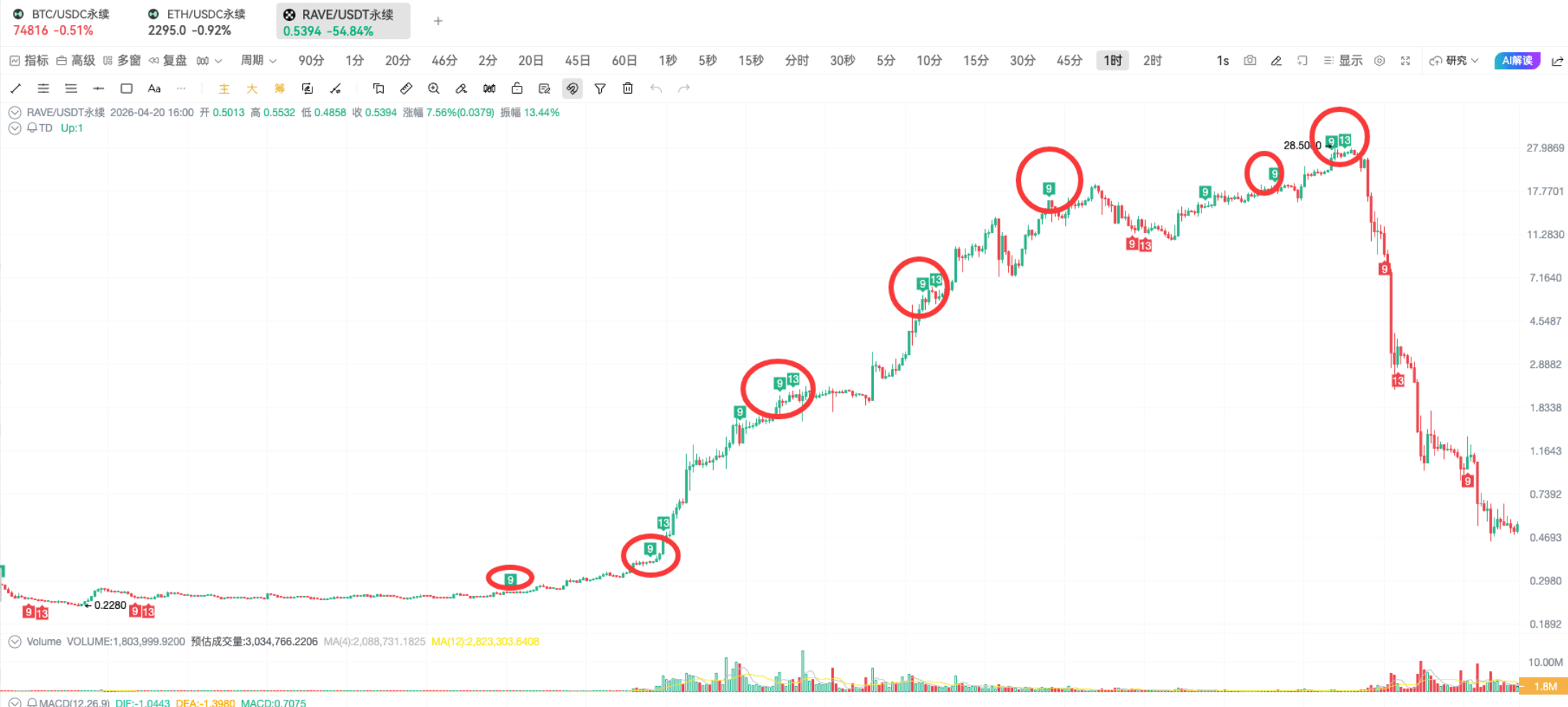
Today we will thoroughly understand the Fibonacci indicator and guide everyone step by step into practice! Whether it's the usage of technical indicators, disassembling large orders, custom quantitative strategies, or on-chain meme mining, our research institute has a comprehensive grasp. Follow along and you will definitely be able to start from scratch and steadily get the hang of it.
Look at the market with insight and earn returns by following the mindset. Let's talk about the core of today —— Fibonacci. This indicator is truly magical, and it's also particularly simple. Its core relies on a few key values. Let me explain it in plain language: Fibonacci retracement is a super commonly used technical tool in trading, specifically used to predict the upcoming key price levels in the market. If used correctly, you can accurately find future support and resistance levels based on past trends; this is its core value.
Remember: Fibonacci is a confirming tool, never use it alone. Pair it with trend lines, trading volume, MACD, EMA moving averages, and the TD indicators we discussed earlier—this way the accuracy of the signals will be maximized! In the previous sessions, I broke down all these basic indicators, and with that foundation, learning Fibonacci today will make your trading system more comprehensive and practical. Remember this: the more confirming signals there are, the more reliable the trade becomes!
OKX App download link: https://jump.do/xlink?checkProxy=true&proxyId=24
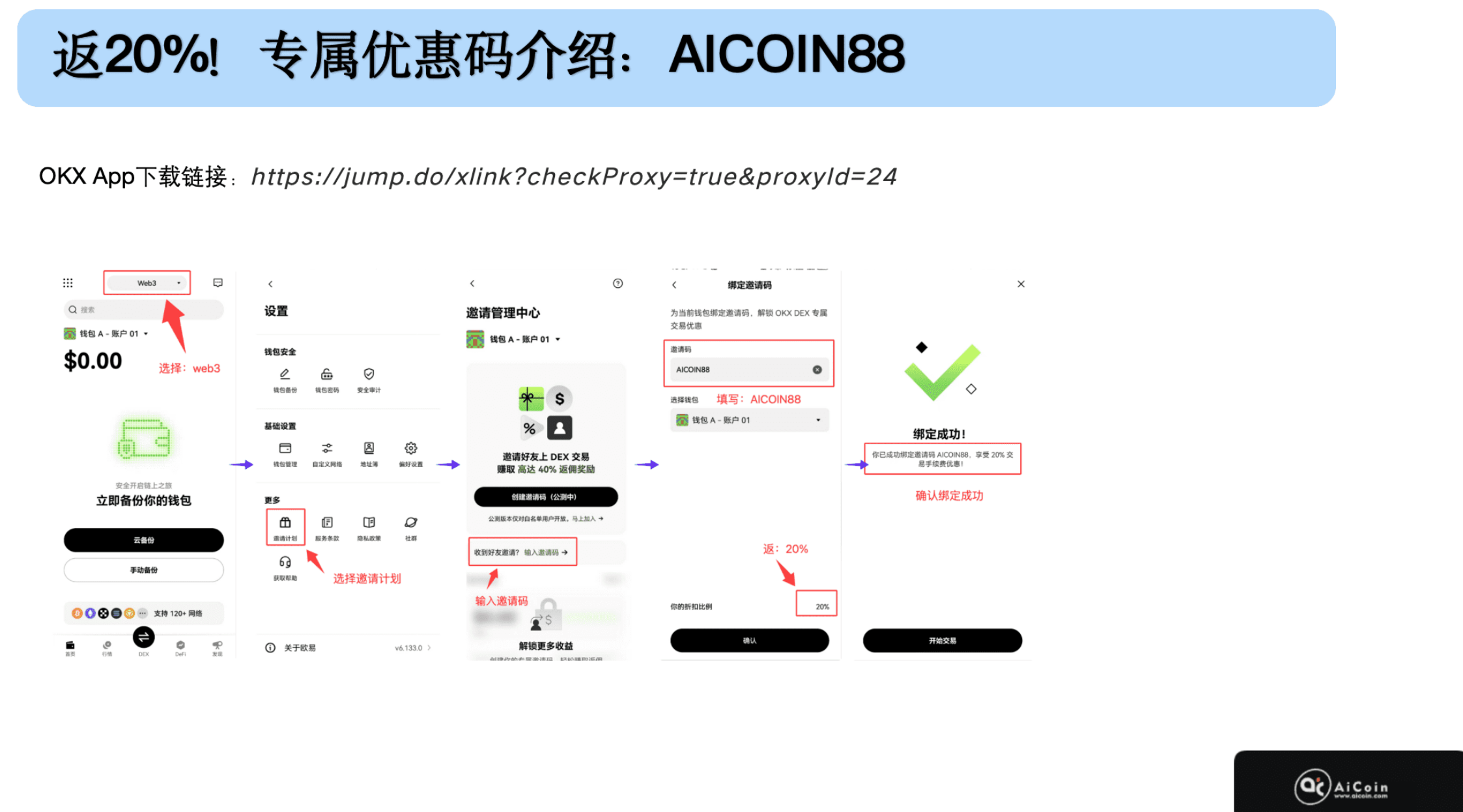
For those who haven't linked yet, hurry up and get it done. There are really a lot of benefits from the OKX wallet. You can get airdrops and there are many zero-cost projects where you can earn some pocket money with a little time; you can also invest in on-chain DEX assets, such as oil or gold on Hyperliquid, and trade alongside global players.
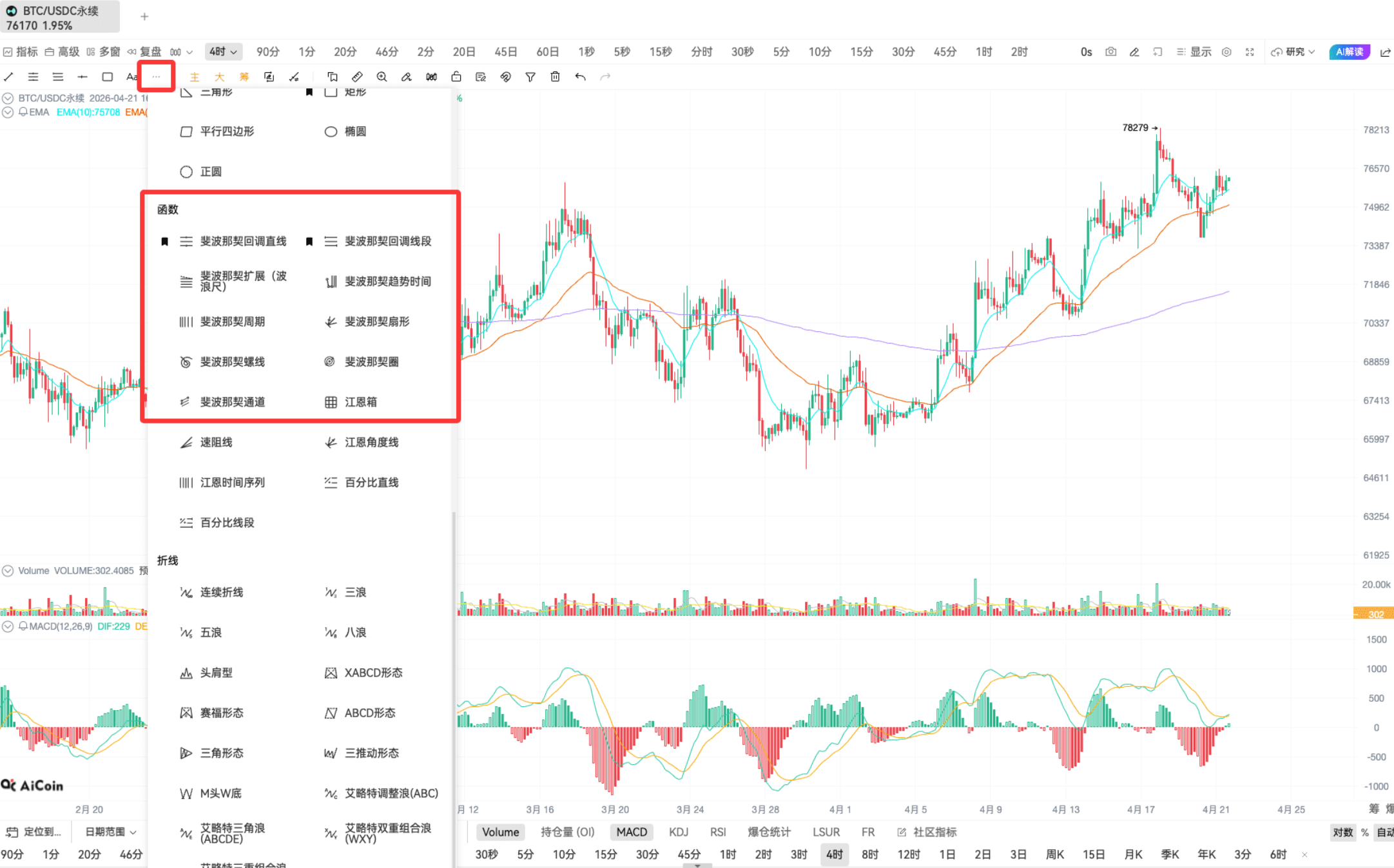
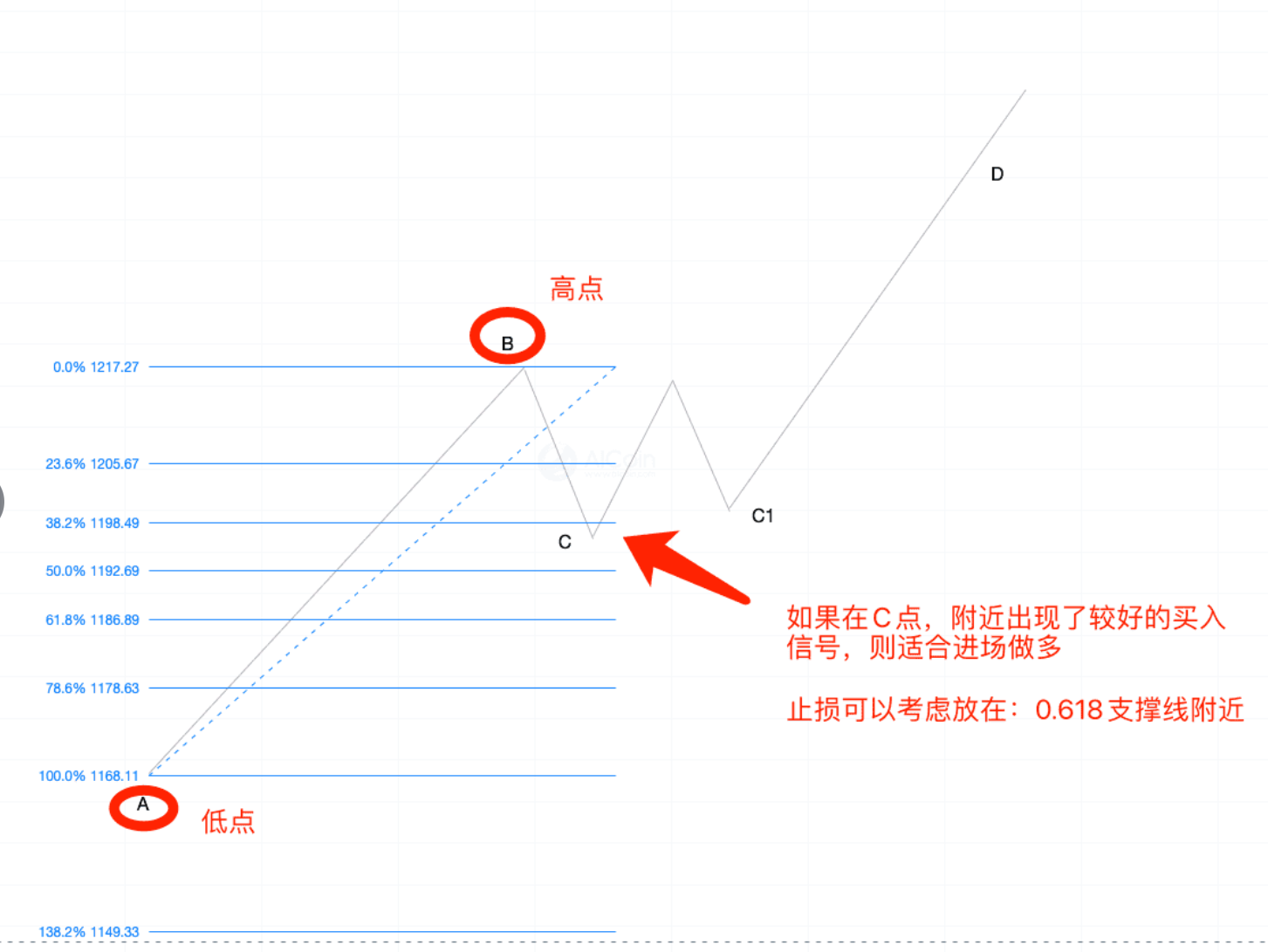
We are officially entering the technical details. Master this set of techniques, and you will be able to analyze the market accurately. For friends using the PC client, just follow my operations. The core function of Fibonacci is to create price support/resistance lines. This indicator can be found on the K line interface, and it has only two uses: find the best entry point and determine precise stop-loss levels.
- Upward trend: draw from the low point to the recent high point, focusing on the Fibonacci retracement support levels of 0.382, 0.5, 0.618
- Downward trend: draw from the high point to the recent low point, focusing on the Fibonacci retracement resistance levels of 0.382, 0.5, 0.618
When it comes to Fibonacci, focus on two cores: high and low points, key line positions.
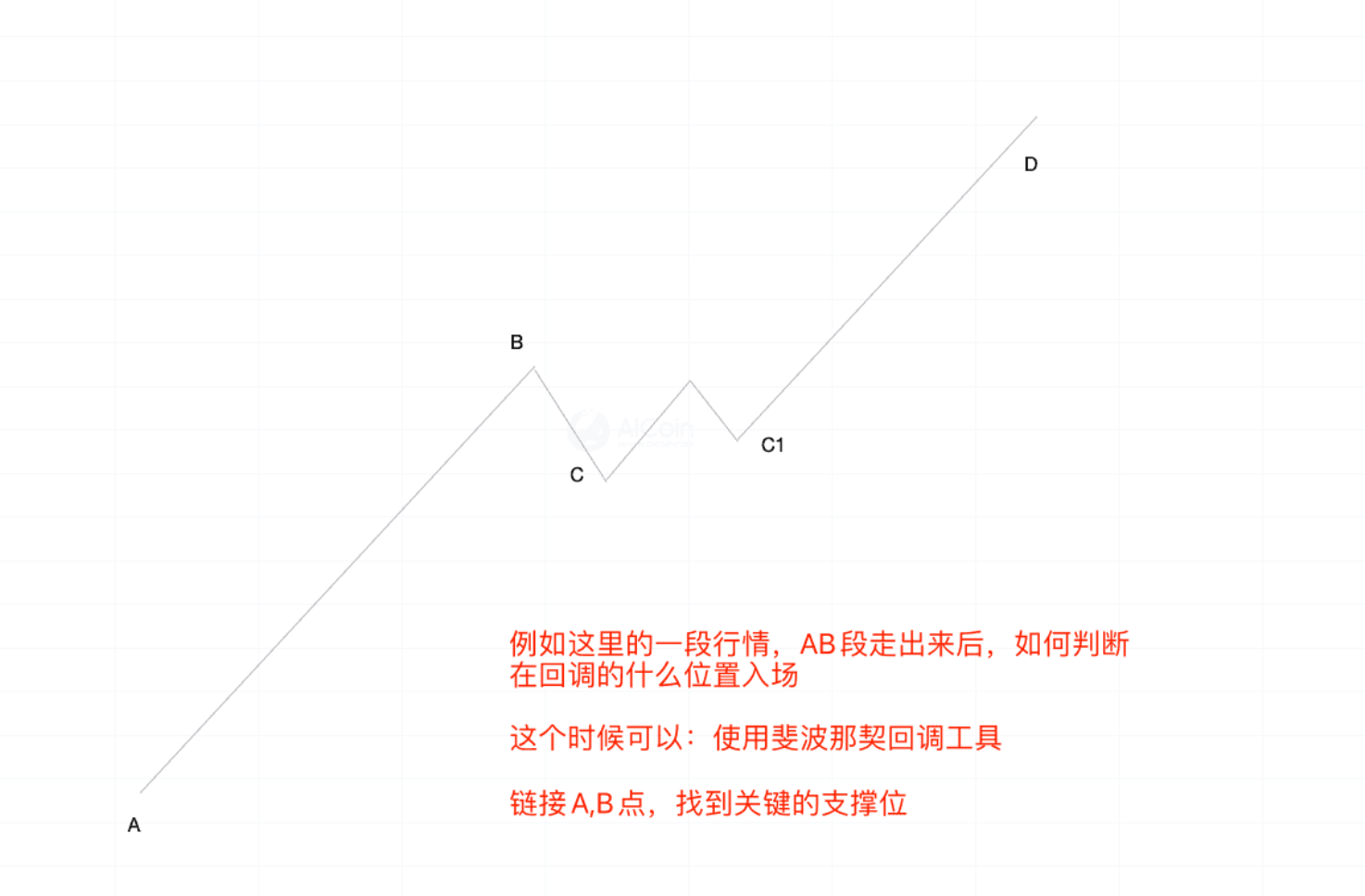
For example, let’s take an upward trend. It may seem abstract to talk about it on paper, so let’s analyze real-time data. The concepts of intervals, lines, and top-bottom categorization in the theory can help you better understand high and low points, but for now, don’t get bogged down in those; just follow my streamlined thought process: on the AiCoin K line, the lowest price that has appeared recently is the low point, which is easy to identify; the high point is similar. After the K line reaches a new high and then retraces, that sharp peak is the recent high point.
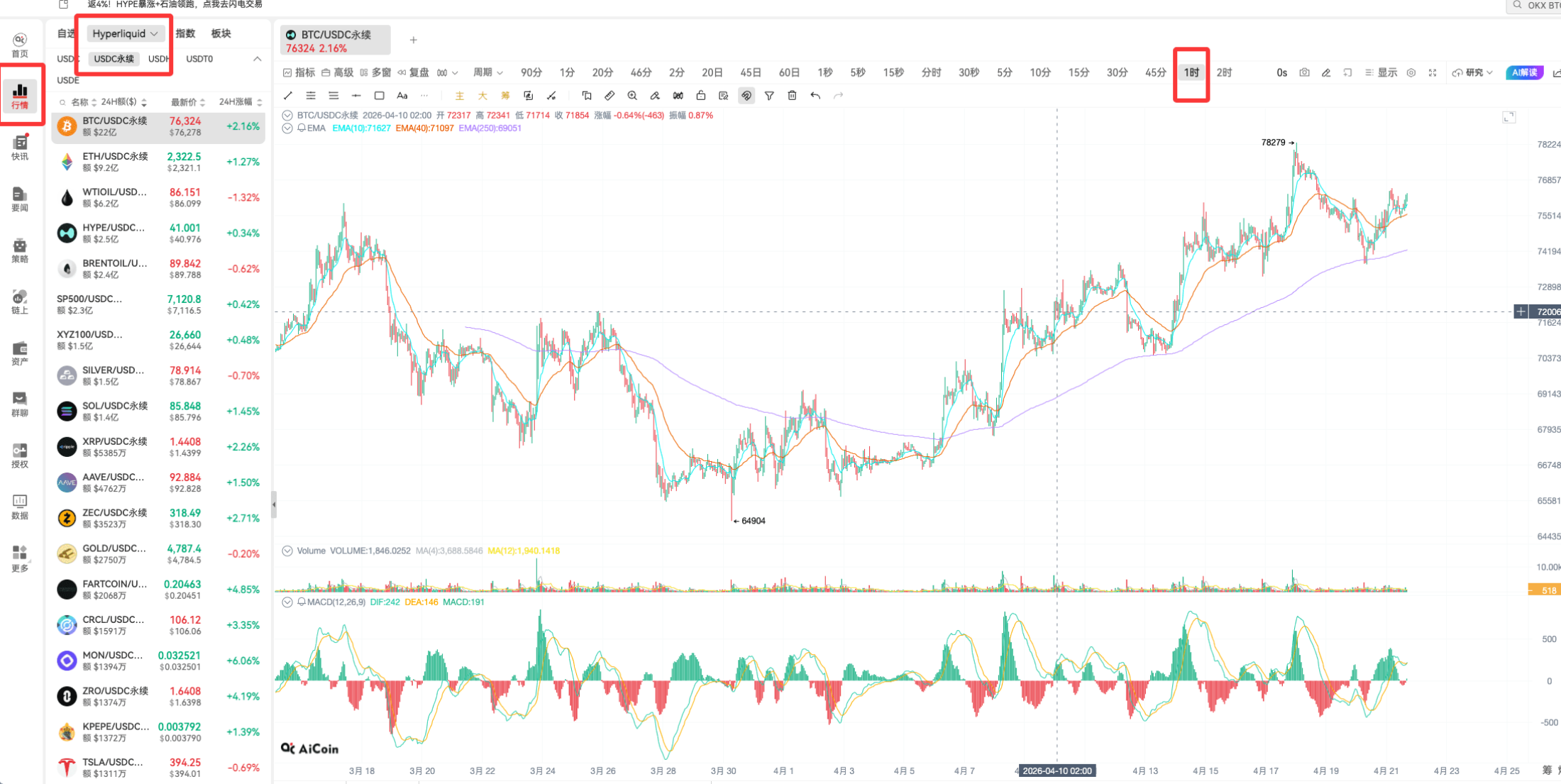
Everyone wants to see how to draw in real-time, so let's get hands-on! Open the BTC perpetual contract on the Hyperliquid platform, switch to the 1-hour period. Any period can be used; I select this period just for convenience in viewing together.
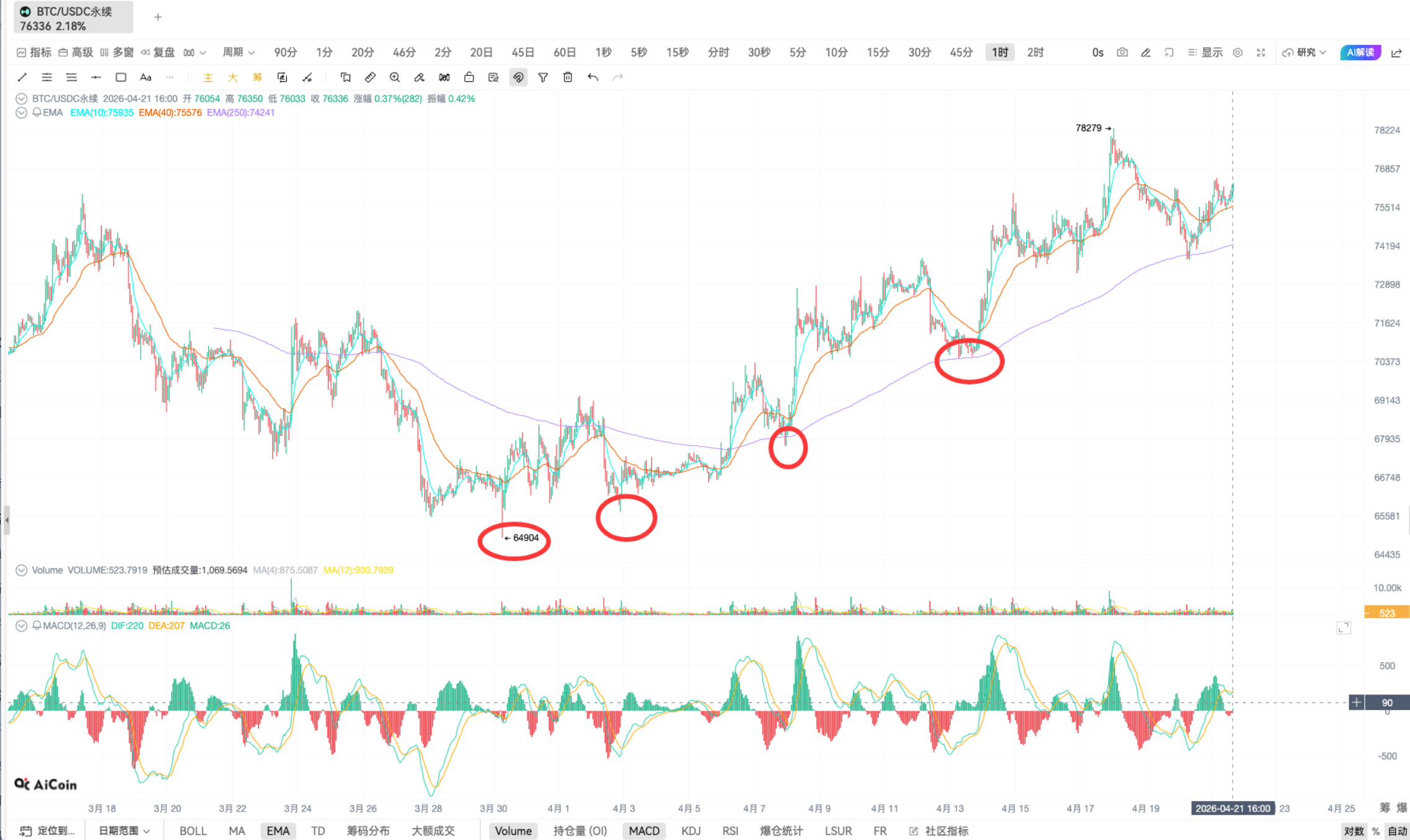
First, find the low point; there are plenty of low points to choose from on the market. Selecting different low points corresponds to different ranges of market trends, which is the difference between a "line" and a "market segment" in theory. For short-term trades, just pick the most recent low point; it’s sufficient.
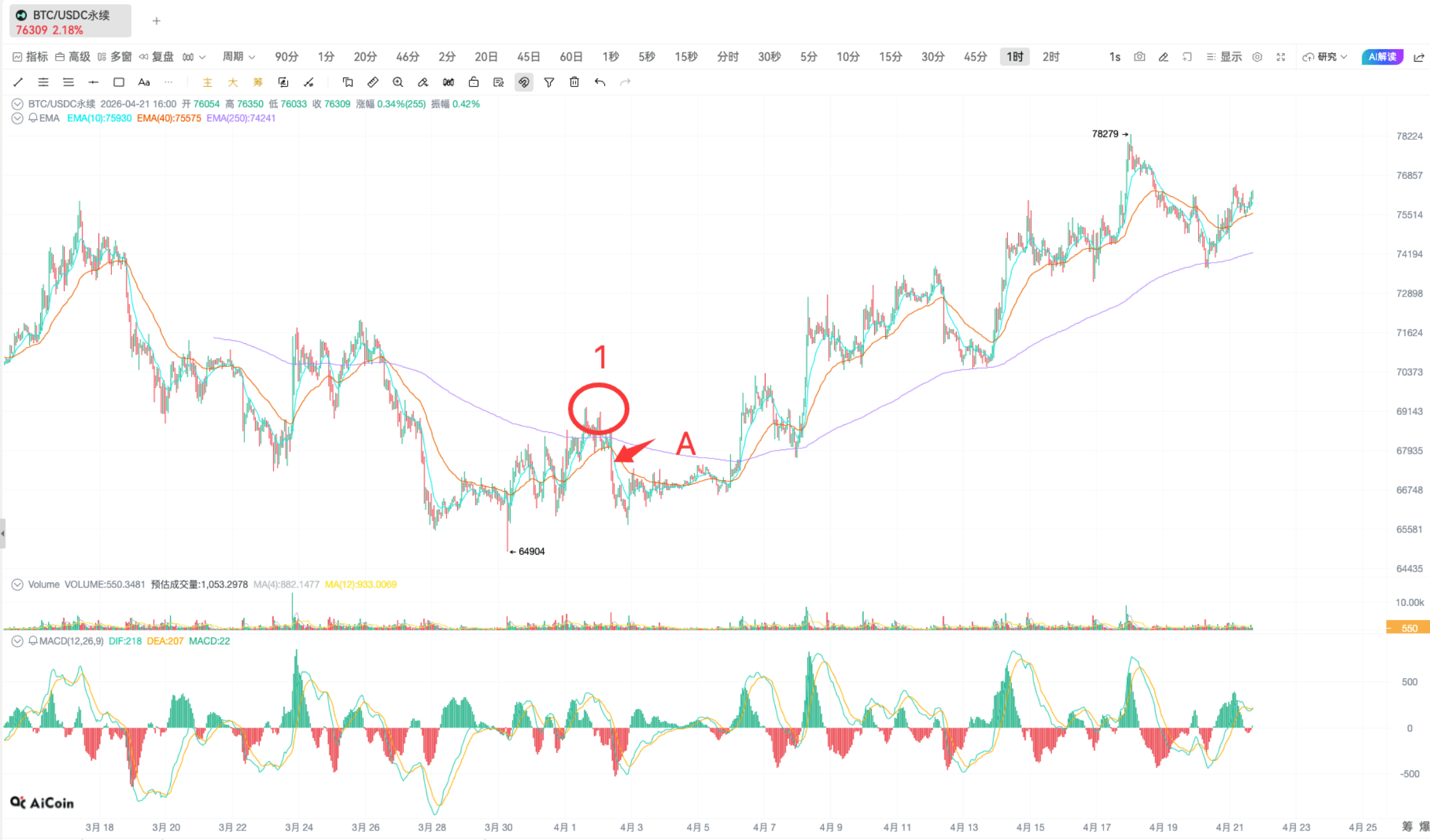
Next, let’s teach you how to find the high point: only when the market reaches point A can you confirm that 1 is a high point (Figure 7). Any upward trend that hasn't fully developed doesn’t count as a true high point; the most recent high point follows the same logic, reaching point B to confirm that 2 is a high point.
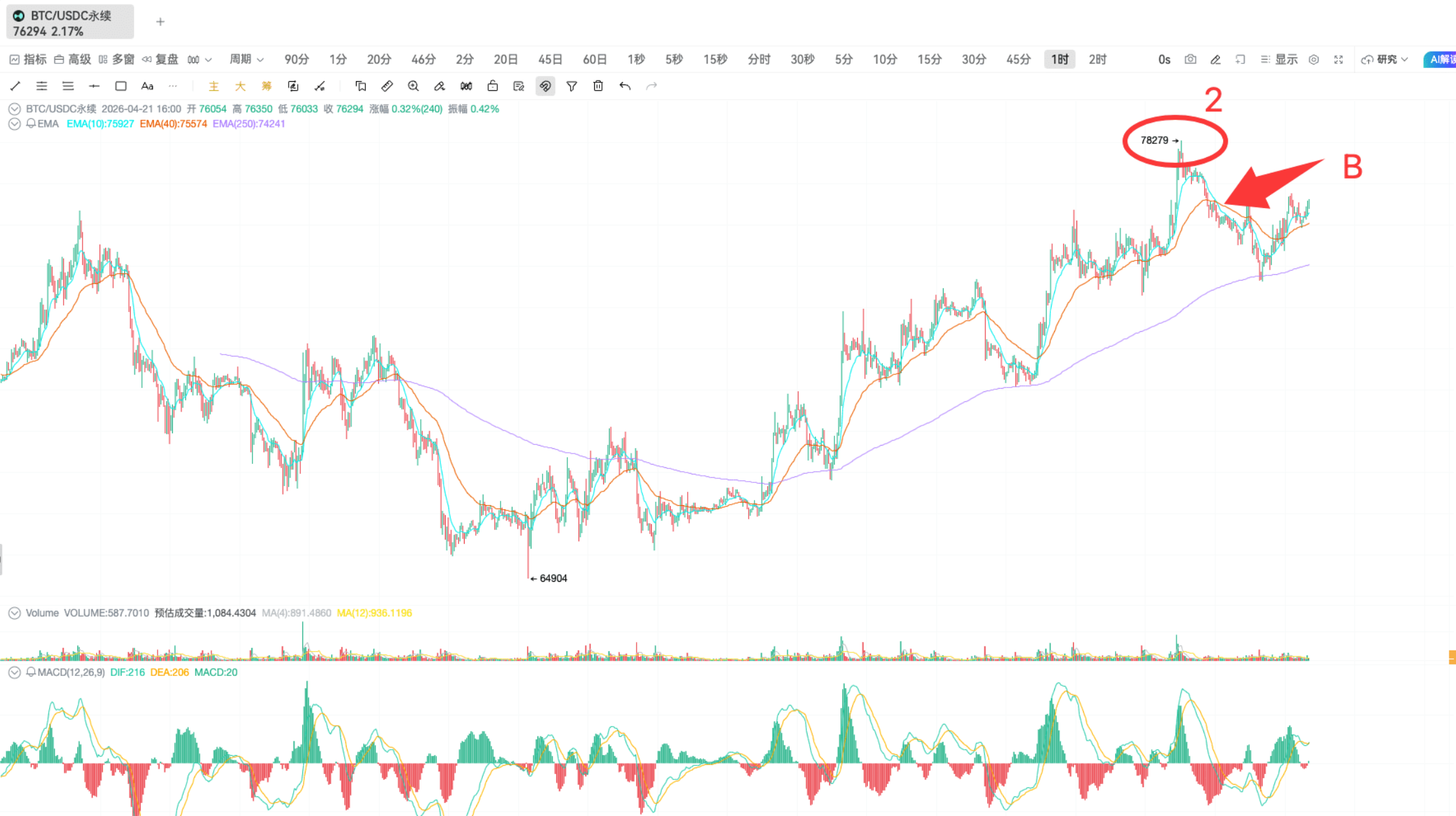
Now that you can find the high and low points, the next step is the crucial line drawing! Here’s a must-follow principle: when using Fibonacci, the calculation must remain consistent.
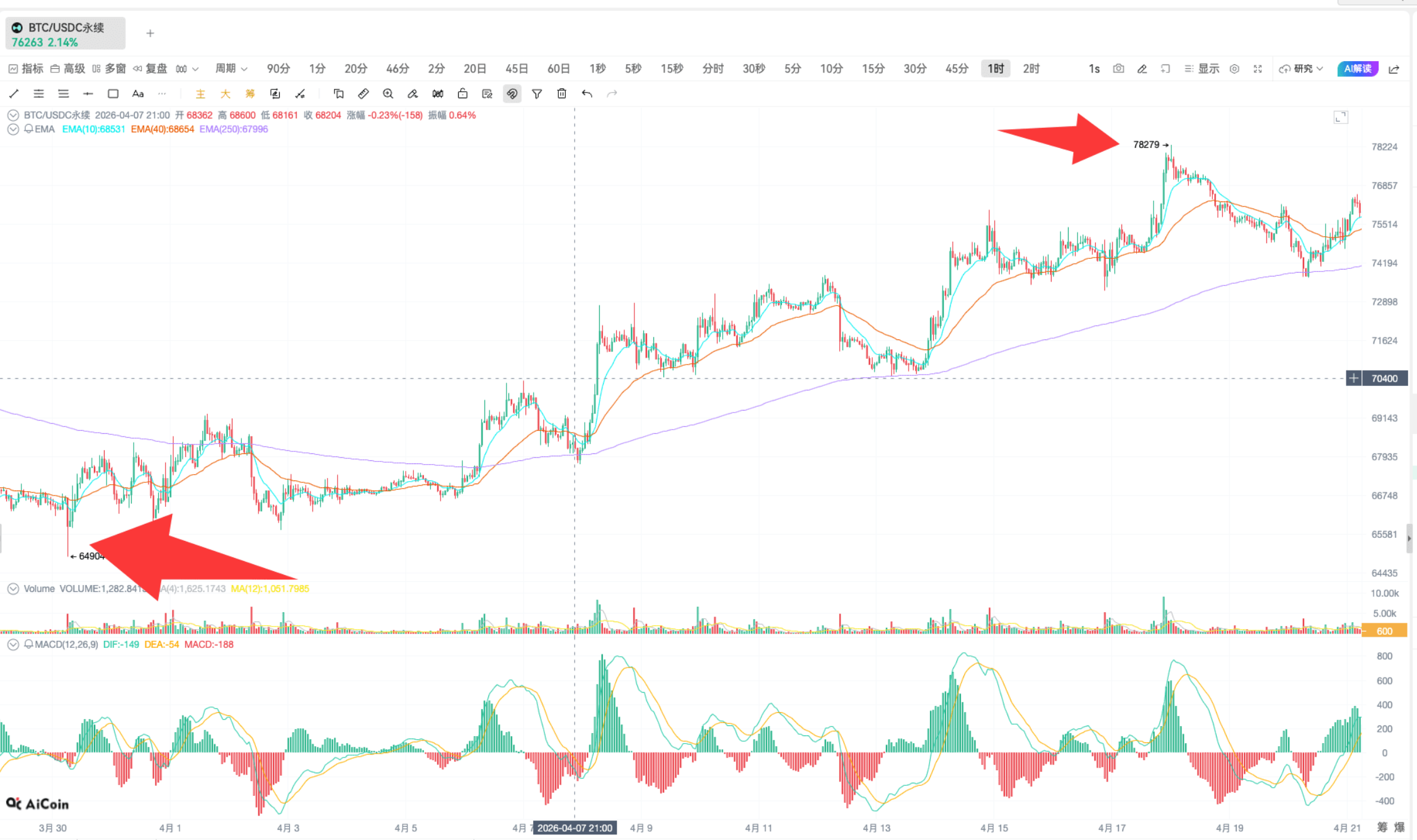
For high and low points, you can either look at the wicks (shadows) or the body of the K line; never switch between looking at wicks and bodies, otherwise your analysis will be inconsistent. Personally, I prefer to include the wicks when determining high and low points, just to clarify this in advance, avoiding misunderstandings.
We will connect the highest and lowest points, with the upward trend linking from the low to the high, and the downward trend linking from high to low. Once linked well, the key support lines will be revealed.
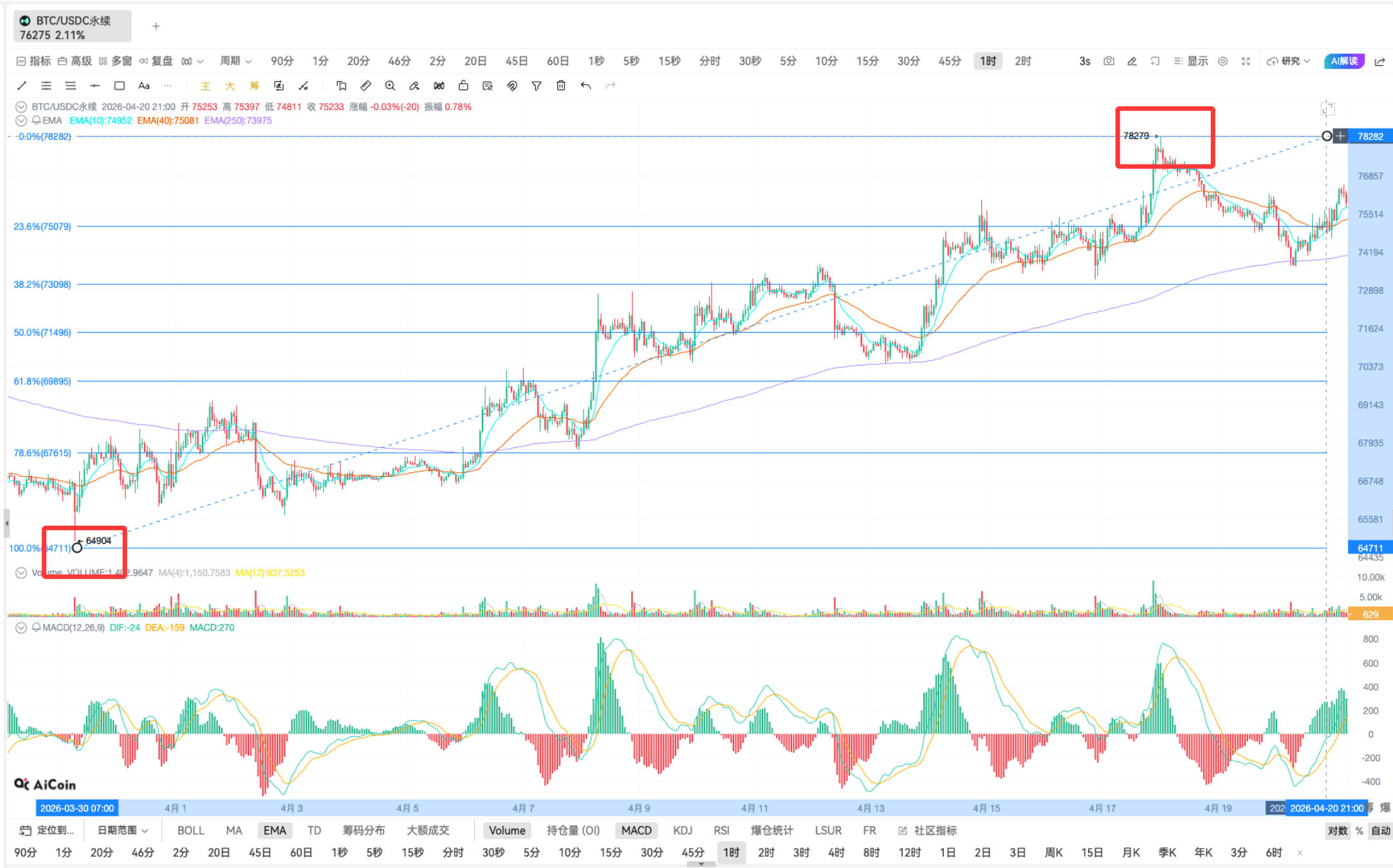
After connecting the lines, how do we analyze? Let’s combine what we learned about the EMA strategy, which is easy to understand! During this rally, when it retraced to the 0.236 support level, an EMA golden cross signal appeared.
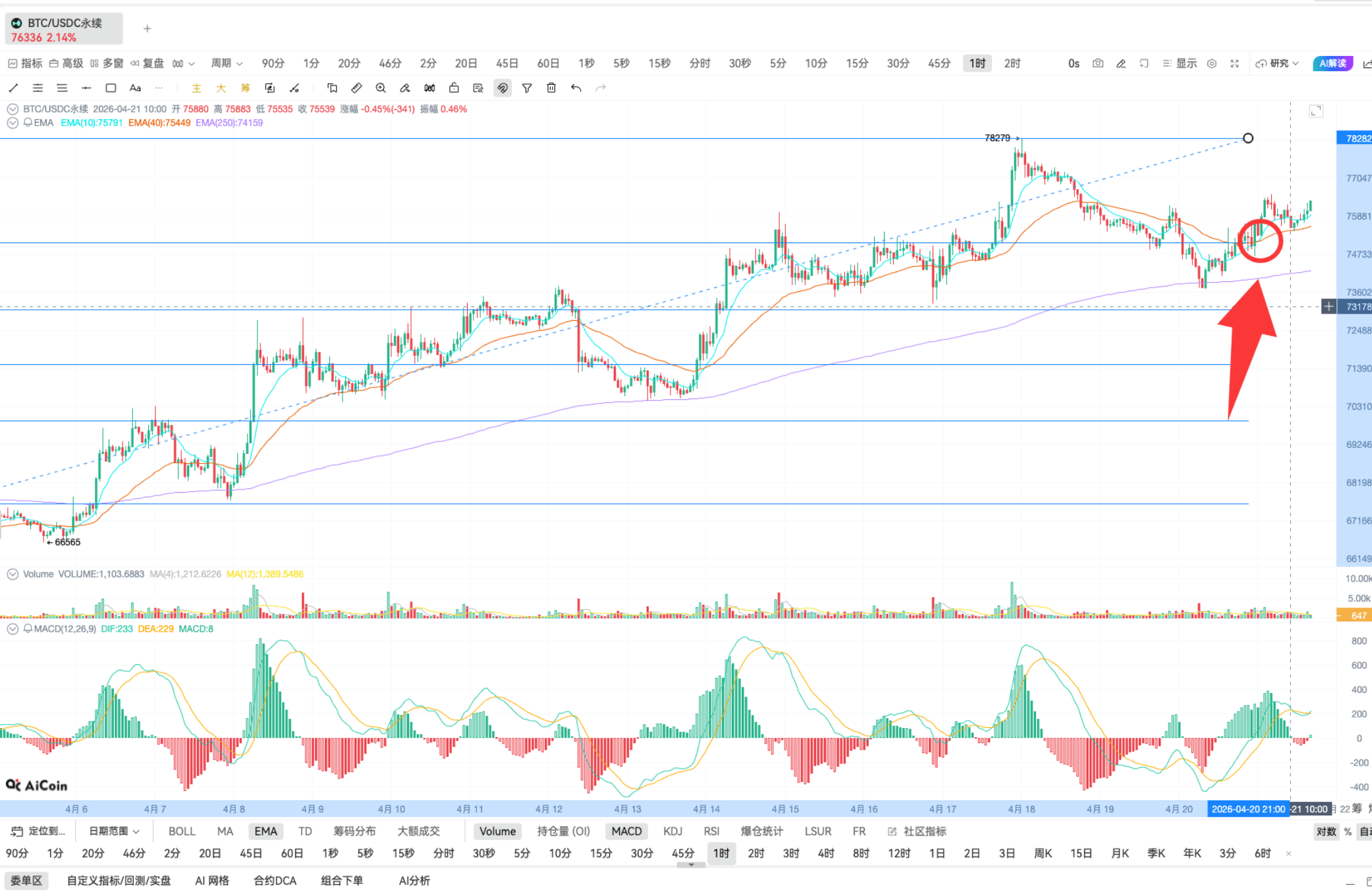
How strong is this position? Strong support at 0.236 + bullish trend above the EMA250 + EMA10 golden cross EMA40, three signals combined, directly boosting entry confidence! After the signal appeared, the price moved up by 2%; the trend was particularly strong.
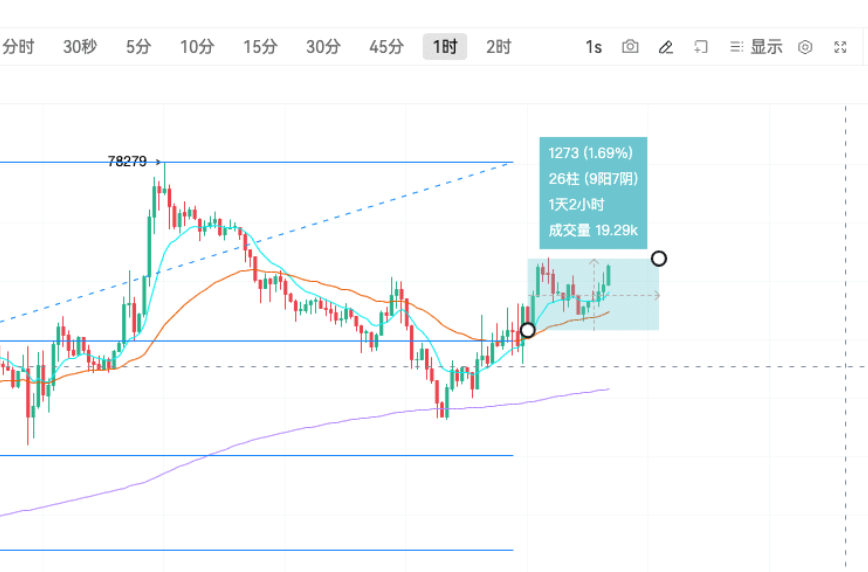
Retracing to 0.236 triggered a strong support entry signal. Doesn’t this boost your trading confidence instantly? This is the practical charm of Fibonacci.
Let’s switch to the 1-minute K line to observe real-time support. It continues to set new highs; just patiently wait for the retracement signal, it’s the same thought process as before.
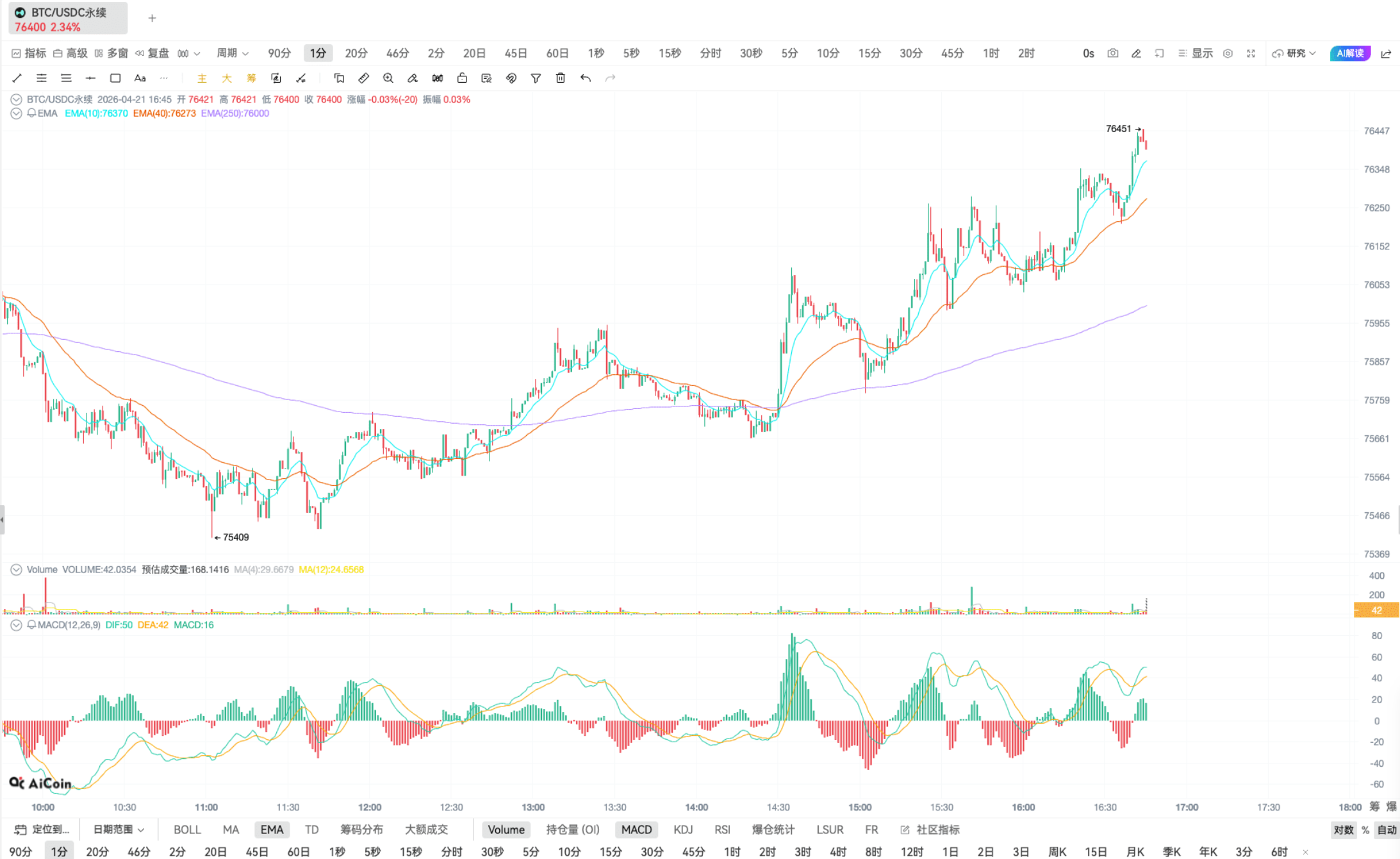
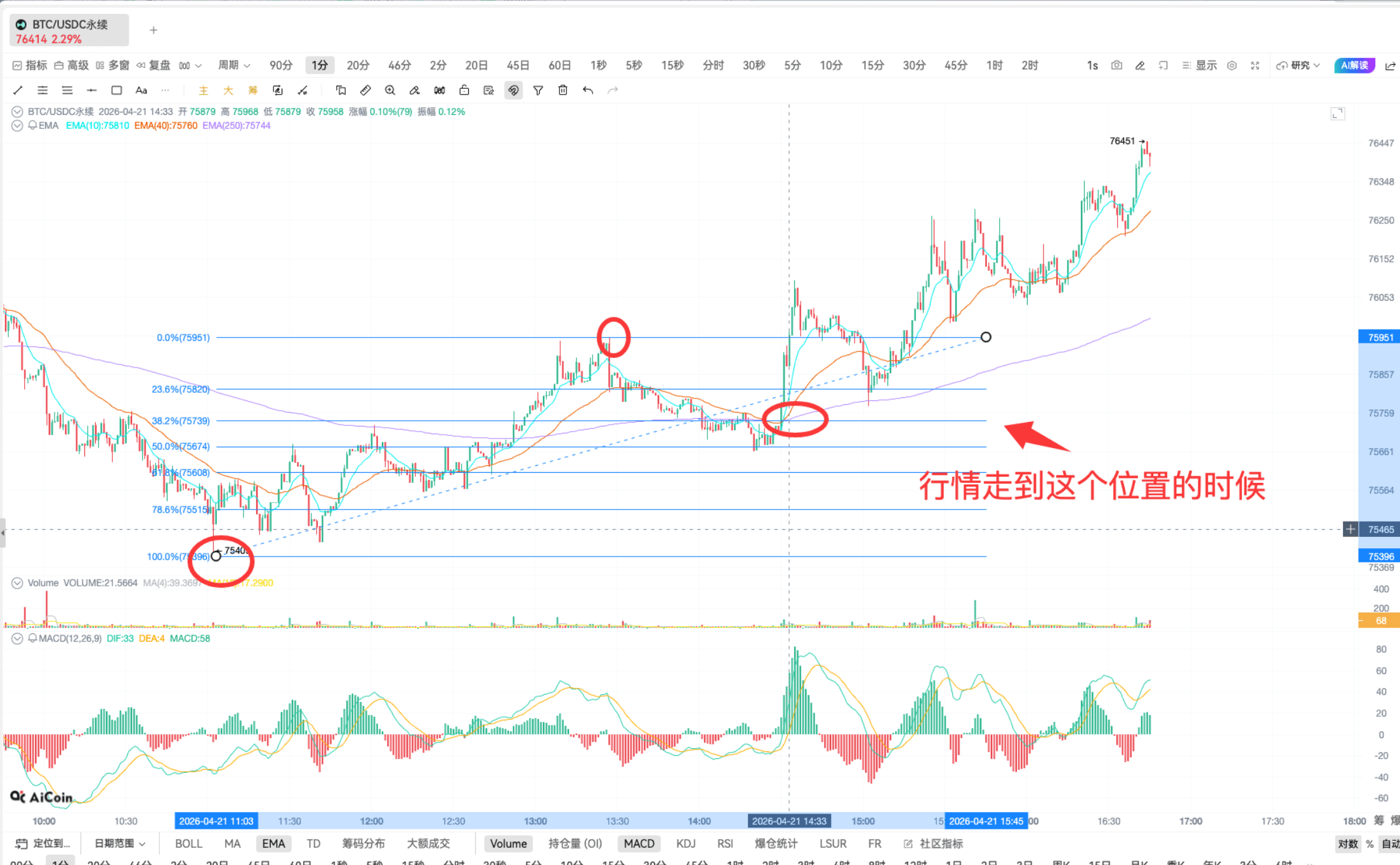
After drawing the Fibonacci line segment, when the market reaches the retracement position, the signals fill up directly:
- Retracing to 0.382 strong support
- Three EMA moving averages resonance golden cross
- MACD just crossed above the zero axis
Subsequently, the 1-minute period directly exhibited a powerful surge, which is the correct way to use Fibonacci: combine with market retracements and integrate with your analytical system to accurately lock in the best entry positions.
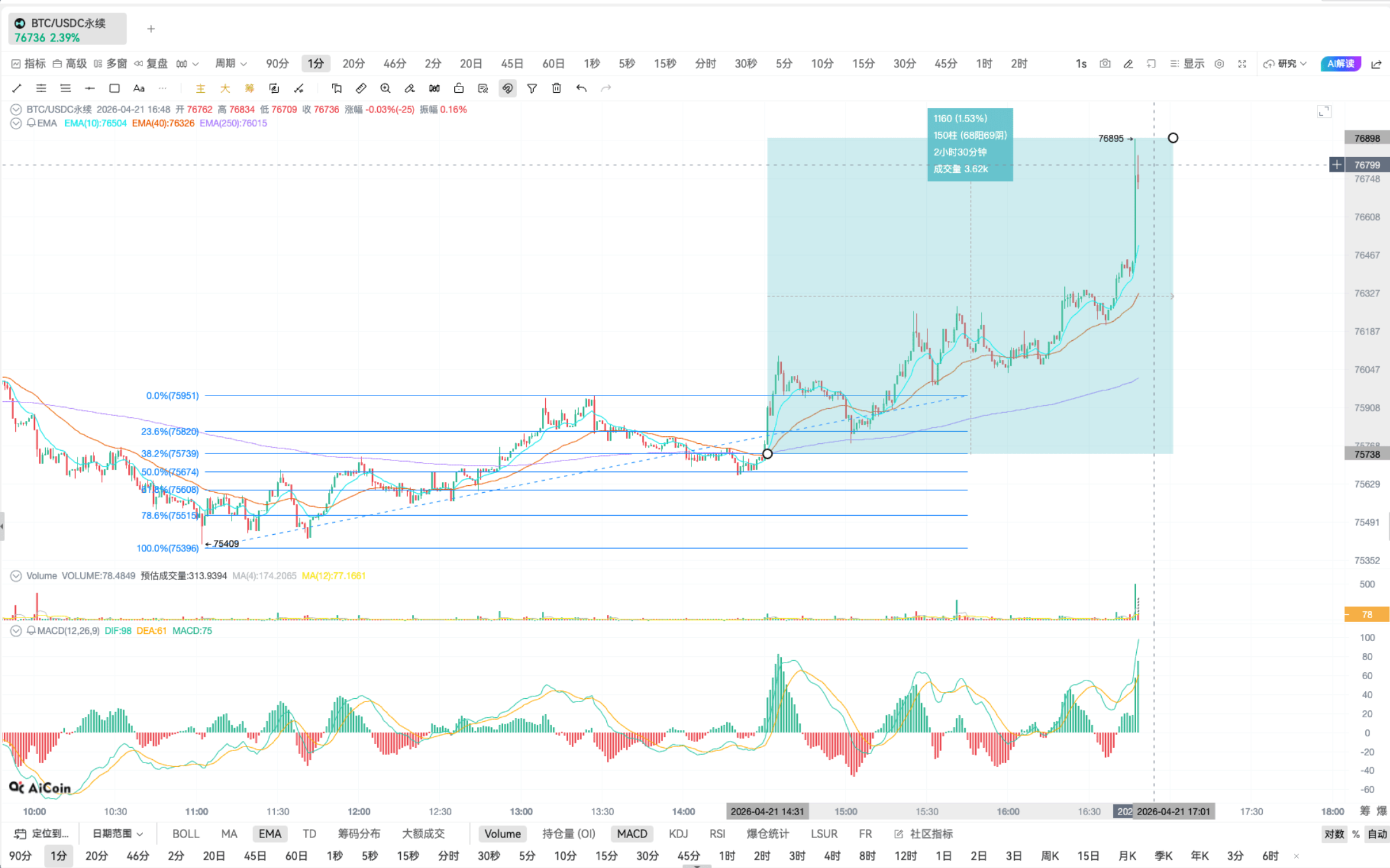
From the 1-hour trend, the MACD shows a golden cross above the water, and the upward trend remains healthy. You can try integrating Fibonacci with your own analysis system. For friends who haven't built their own system yet, combine the previously taught EMA, MACD, and TD indicators, and it definitely won’t be in vain.
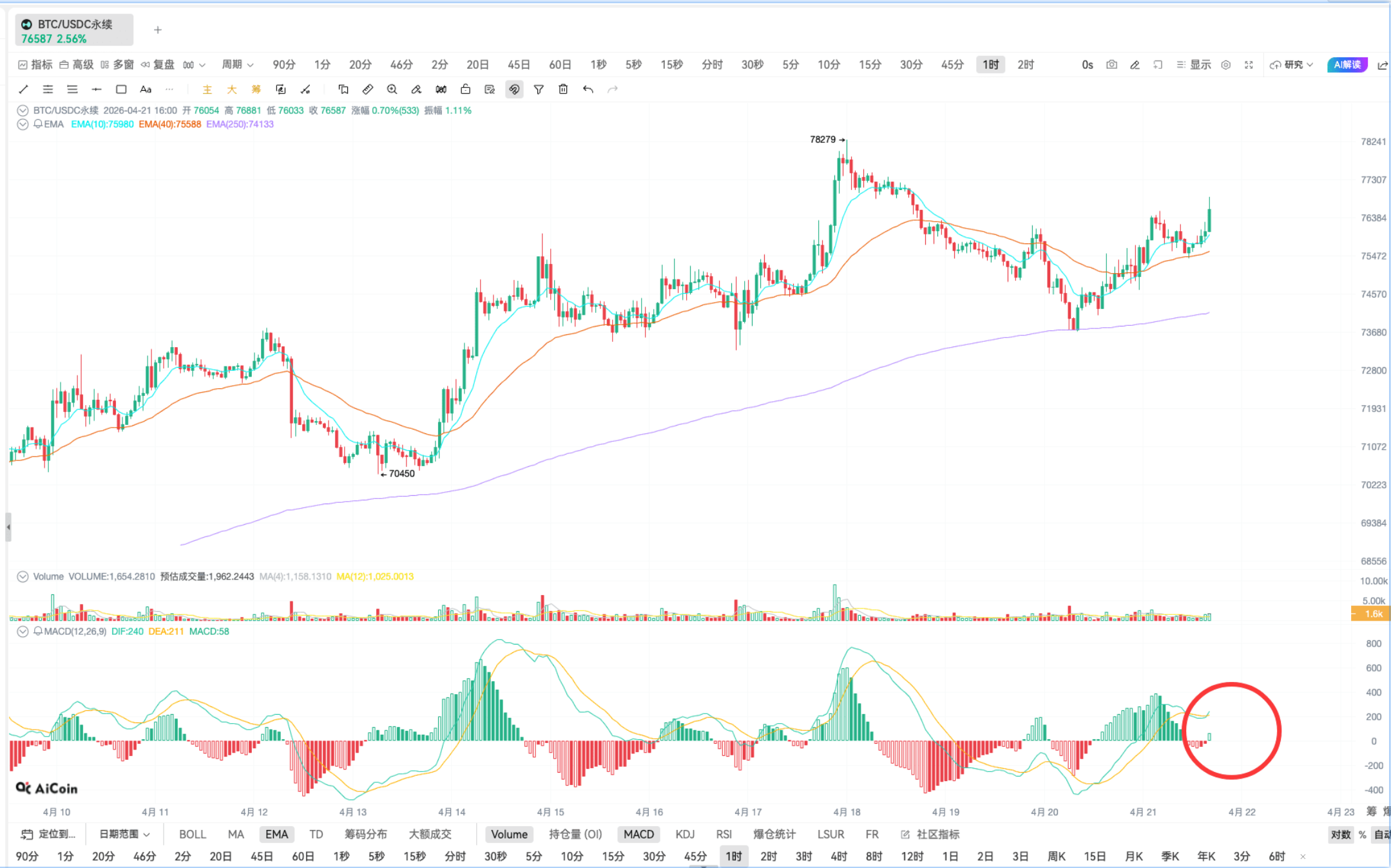
If you only use TD, you might have missed this latest BTC surge, but consider it as a few hundred dollars in tuition; while learning the skills, you can also make a profit, which means learning useful knowledge at no cost, ensuring profit without loss.
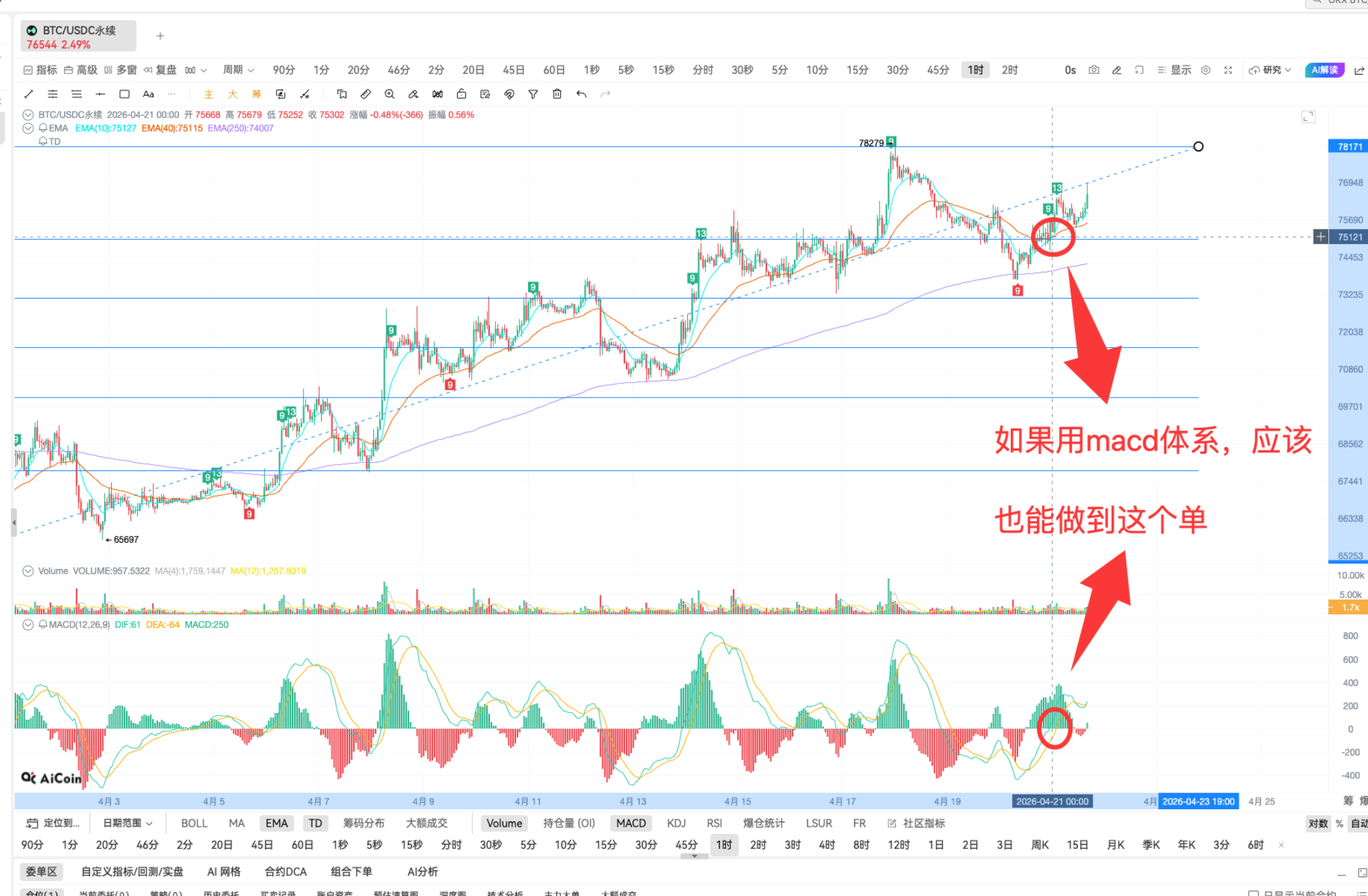
Fibonacci is applicable in all trading markets, and it is used more frequently in gold and foreign exchange. Our research institute also relies on it for on-chain K line analysis daily.
For friends interested in Hyperliquid, try it out. With an OKX wallet, you can manage all on-chain investments. I have compiled a beginner’s tutorial with detailed step-by-step images: “Beginner's Guide! Hyperliquid First Trade Detailed Image Tutorial”: https://www.aicoin.com/zh-Hans/article/510225
Exclusive binding benefits: https://app.hyperliquid.xyz/join/AICOIN88
This article only represents the author's personal views and does not represent the platform's stance and opinions. This article is for information sharing only and does not constitute any investment advice to anyone.
免责声明:本文章仅代表作者个人观点,不代表本平台的立场和观点。本文章仅供信息分享,不构成对任何人的任何投资建议。用户与作者之间的任何争议,与本平台无关。如网页中刊载的文章或图片涉及侵权,请提供相关的权利证明和身份证明发送邮件到support@aicoin.com,本平台相关工作人员将会进行核查。