On the morning of April 22, Trump said during a phone call on CNBC's "Squawk Box": "I do not want to extend the ceasefire. We do not have enough time. I expect to start bombing because I think it's a better entry posture."
Several hours after this statement, he posted on Truth Social indicating an indefinite extension of the ceasefire until Iran submits a proposal and negotiations end in some way.
Trump's "step" this time was the intervention of the Chief of Army Staff and Prime Minister of Pakistan. He also added that this decision was related to the "serious divisions within the Iranian government."
Those familiar with Trump know that this is his typical TACO operation.
BlockBeats note: TACO stands for "Trump Always Chickens Out," meaning Trump backs down every time. This term was first coined by Financial Times columnist Robert Armstrong last year and has since been widely used by traders to describe Trump's pattern of making extreme threats followed by policy reversals.
How the ceasefire was extended
It seems this was not a proactive diplomatic victory but rather a passive decision made when there were no better options before the deadline.
To understand this, we need to start from the Islamabad negotiations on April 11.
At that time, Vice President Vance led the U.S. delegation to Pakistan, and the negotiations with Iran lasted for 21 hours. This was the highest-level direct talks between the U.S. and Iran since the Islamic Revolution in 1979. When Vance left, he claimed that Iran "refused to accept U.S. conditions." The core U.S. demand was solely: Iran must make a clear commitment to "not seek nuclear weapons"—not only promising not to build nuclear bombs but also committing not to retain any technical capabilities that could quickly lead to nuclear armament. Iran did not agree to this. Iran's chief negotiator, Parliament Speaker Qalibaf, stated that the U.S. must first decide "whether it can win our trust."
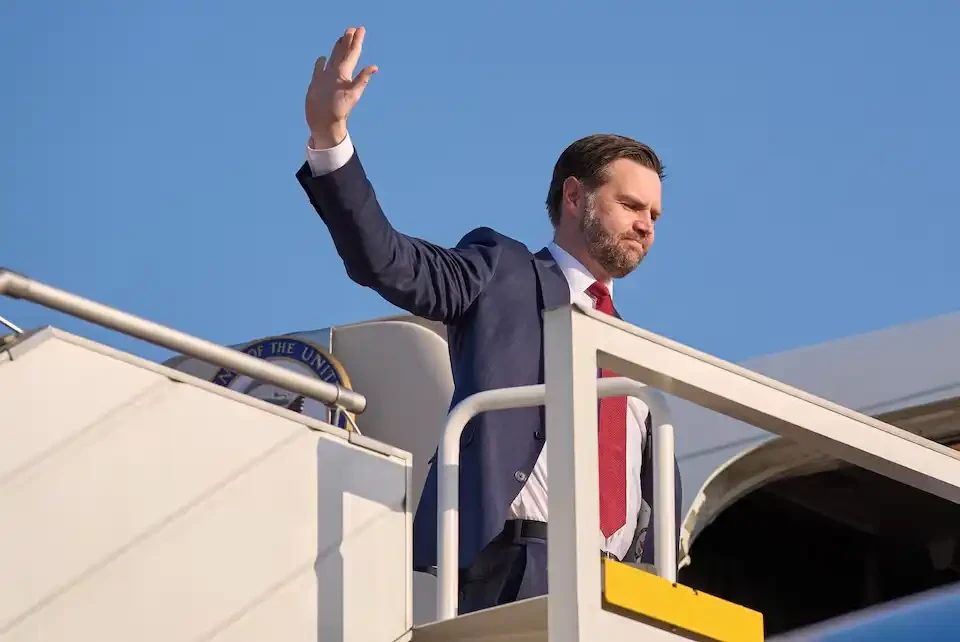
On April 12, after peace negotiations in Islamabad with Iran, Vance gestures as he boards Air Force Two. Image source: Jacquelyn Martin/Pool via REUTERS/File Photo Purchase Licensing Rights
After the negotiations broke down, the U.S. immediately announced a naval blockade in the Strait of Hormuz.
The two-week ceasefire framework was established on April 8, with an expiration date of April 22. On the eve of the expiration, the situation sharply deteriorated: Iran had not confirmed whether it would attend the second round of negotiations, and the Pakistani information minister openly stated that "the formal response has yet to arrive." The Pakistani side, therefore, strengthened security deployments in Islamabad ahead of time, with security personnel appearing around the Serena Hotel in Islamabad—this detail itself indicated that Pakistan was still waiting for Iran to confirm its attendance.
Vance was originally scheduled to fly to Islamabad again, but after a series of internal meetings at the White House, the trip was indefinitely postponed. The Wall Street Journal reported more directly: Trump privately discussed completely canceling this trip due to Iran's unwillingness to make concessions on nuclear enrichment. The Iranian negotiating team then officially informed the U.S. through Pakistani intermediaries: under these circumstances, participating in negotiations was a waste of time, as the U.S. was preventing any substantive agreement from being reached.
Meanwhile, Trump was also facing enormous pressure from within the U.S. political landscape.
Deutsche Bank created a "pressure index," which combines inflation expectations and U.S. Treasury yields to predict points of policy adjustment in the White House. According to this framework, when crude oil prices approach $95–100 per barrel, the White House's statements will noticeably soften; a real pressure for policy adjustment only emerges when the 10-year U.S. Treasury yield approaches 4.5%.
Currently, WTI has already surpassed $90. If the situation escalates again after the ceasefire expires, it is not hard to imagine oil prices breaking through $100. Gas prices at the pump exceeding $4 per gallon have historically had a very strong impact on polls for U.S. decision-makers.
Additionally, Trump plans to visit China in mid-May, hoping to appear as a "winner" rather than a "wartime president." This time window gave Iran more bargaining chips and provided Washington with greater flexibility on deadline issues.
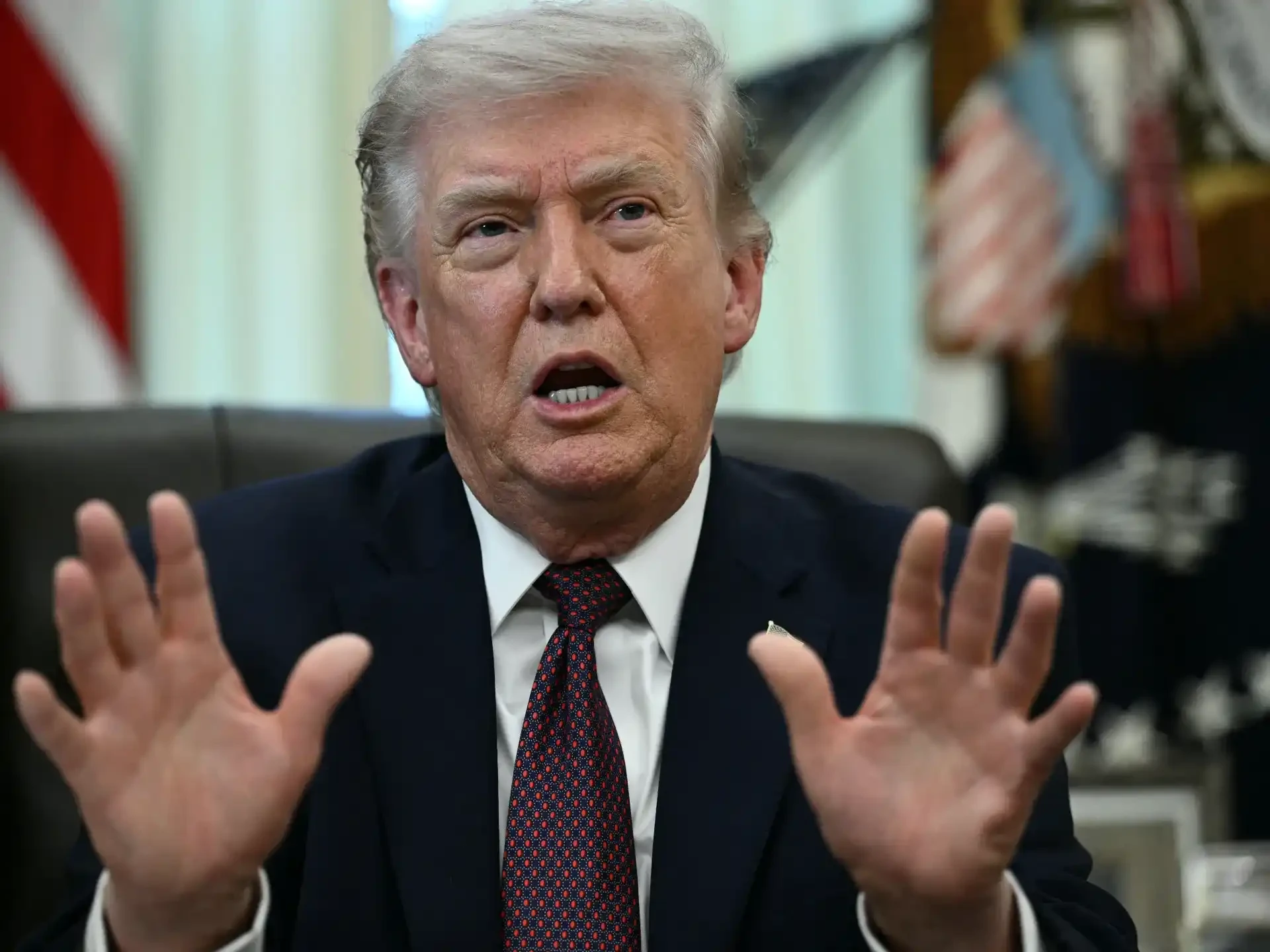
The wording of "indefinite extension" should be understood more as a political posture directed at domestic audiences rather than a diplomatic concession to Iran. It gave Trump the space to delay without announcing failure.
In this state, Trump announced the extension.
Axios's analysis hits the nail on the head: Although this extension avoided a restart of war and a large-scale regional escalation, it weakened Trump's own negotiating chips. A credible threat of force relies on the reality of the countdown. Each TACO diminishes the credibility of the next threat.
Internal divisions in Iran
Iran's response was divided, with clear tensions between moderates and hardliners.
The tone of Iran's state television is a narrative of victory: Iran is the "victor on the battlefield," controlling the Strait of Hormuz is the most valuable chip of this battle, and Iran agrees to suspend military combat, but "the war is not over." Meanwhile, Iran's state television warns that the premise for negotiations is not to discuss any topics that "violate Iran's independence and dignity," primarily including defense and missile capabilities, nuclear capabilities, and technology.
Hardliners' wording is more direct. An advisor to the Iranian Parliament Speaker stated, "Trump's ceasefire extension is meaningless; the defeated party cannot dictate the terms," and warned that this extension is "to buy time for a surprise attack."
However, there are also moderate voices in Iran. Iran's ambassador to the United Nations, Ilavi, stated that the government has received "some signals" from the U.S. preparing to stop the blockade, and once the blockade is lifted, "the next round of negotiations will be held in Islamabad." He emphasized that the U.S. naval blockade itself violates the ceasefire agreement, and lifting the blockade is a prerequisite for holding new negotiations. When asked how confident he was about the prospects for negotiations, his response was: "We should give it a chance; we remain hopeful."
The core contradiction remains unchanged: the U.S. demands complete denuclearization, while Iran demands the lifting of the blockade first. Both sides are exchanging time for space.
Outlook for BTC
It is very evident that, over the past two weeks, the price of Bitcoin has been almost entirely driven by narratives of Middle Eastern geopolitics rather than macroeconomic factors.
Last Friday, Bitcoin soared to as high as $78,300, reaching the highest level since early February. Subsequently, after Iran announced the closure of the Strait of Hormuz, the price retreated to the range of $75,000–76,000. On April 19, U.S. forces detained the "TOUSKA" cargo ship, causing Bitcoin to fall below $74,000. After the extension of the ceasefire was announced on April 21, the price rebounded that day, breaking through $76,000, driving the overall cryptocurrency market up by more than 1%, with a total market capitalization rising to $2.55 trillion.
Every price point corresponds to a specific event on the battlefield.
At the institutional level, demand has not disappeared. Bitcoin spot ETFs recorded approximately $1.29 billion in net inflows between April 14 and 17, and the figures for the week around April 10 were even higher, reaching around $1.1 billion, aligning closely with the expected ceasefire surrounding the Islamabad negotiations.
BTC Markets analyst Rachel Lucas's judgment is: "Bitcoin's current resilience is less about the narrative and more due to market mechanics. Institutional buyers, particularly corporate funds, are aggressively accumulating during each pullback." Analysts also note that this round of recovery has been compounded by the market's attention to the hearings of Fed chair candidate Waller—investors are simultaneously betting on the direction of monetary policy.
However, the data signals from internal structures are not as optimistic.
After Bitcoin returned to $75,000, the perpetual contract funding rate continued to be negative. A negative funding rate means that short positions still dominate in the derivatives market. In other words: while spot prices are rising, the structural force for going long has not kept pace, and this rebound is driven more by short cover rather than new long entries.
Deribit's data confirms this judgment: approximately $1.5 billion in Bitcoin put options are concentrated around $60,000, while there are $1.3 billion in call options around $75,000. The combination of these two groups of data creates an options structure with ambiguous directional significance.
10x Research's head of research Thielen's judgment aligns with this signal. He noted that this round of upward movement has not been accompanied by a significant buying of call options; the market is essentially in a short-covering trend rather than a trend-based upward move.
Hughes from Tokenize Capital stated that the upward momentum may weaken next month, with further downside risks in August.
Even less optimistic is that CryptoQuant's on-chain data model shows that there is downward pressure on the current Bitcoin price, and in the medium term, it may first test support around $70,000. If on-chain momentum continues to weaken, a deeper correction could reach the $56,000 range. Morgan Stanley strategist Denny Galindo indicated that Bitcoin is currently in the "autumn" phase of a four-year cycle, with winter approaching.
If the ceasefire continues, and there are substantial signs of opening in the Strait of Hormuz, some analysts believe that Bitcoin may rush towards $80,000 before the end of April. However, the prerequisites for this judgment are numerous: the ceasefire does not break, the blockade is lifted, negotiations advance, global energy supply expectations stabilize, and market risk appetite can truly open.
Tariffs, threats to allies, and pressure on the Fed, almost every time, TACO moments appear as scheduled, and those betting on reversals have made profits.
But TACO is not a natural law; it is a predictive model based on past behavior. The nature of the Iran war and trade negotiations is different. It involves military casualties, sovereign dignity, and political red lines domestically; each round of the TACO cycle consumes the remaining mutual trust in negotiations and the market's operating space for TACO. This also means that one day, TACO may completely malfunction.
免责声明:本文章仅代表作者个人观点,不代表本平台的立场和观点。本文章仅供信息分享,不构成对任何人的任何投资建议。用户与作者之间的任何争议,与本平台无关。如网页中刊载的文章或图片涉及侵权,请提供相关的权利证明和身份证明发送邮件到support@aicoin.com,本平台相关工作人员将会进行核查。


