In the internet finance and cryptocurrency industry, scams are constantly appearing. For investors, "protecting the principal" is far more important than "earning profits." Many scams may seem sophisticated, but they all have traces to follow. Below is an in-depth analysis of the four most common scam methods and identification techniques. Please make sure to share this with your friends to collectively build a safety firewall.
1. Role-playing: Impersonating officials, customer service, and other personnel to scam
[Scam Logic]: This is one of the most confusing tactics. Scammers lurk on social platforms by highly imitating official accounts, avatars, and nicknames. They exploit users' trust in official platforms and their anxiety about "account abnormalities" to induce users to transfer funds or provide sensitive information.
[Specific Techniques]:
- "Proactive care" private chat: When you ask questions in the official group, scammers will instantly impersonate official avatars and nicknames to initiate private chat.
- Screen sharing temptation: Scammers induce you to start a video meeting or screen sharing under the pretense of "remote assistance to troubleshoot issues." Once you operate your wallet and display recovery phrases or input passwords, your assets will be stolen instantly.
- Verification code interception: Claiming that due to "security upgrades," they need you to provide the SMS or email verification code you received. This is actually an attempt by scammers to reset your account password.
Case 1: Scammers guide users to private chat by impersonating the official avatar, nickname, or group owner/admin tag. They lead users to invest on a specified platform or claim they need to "pay to download." In reality, official customer service absolutely will not engage you in private chats or request private transfers through direct messages. Any "paid version" that is outside the official website channels is a trap.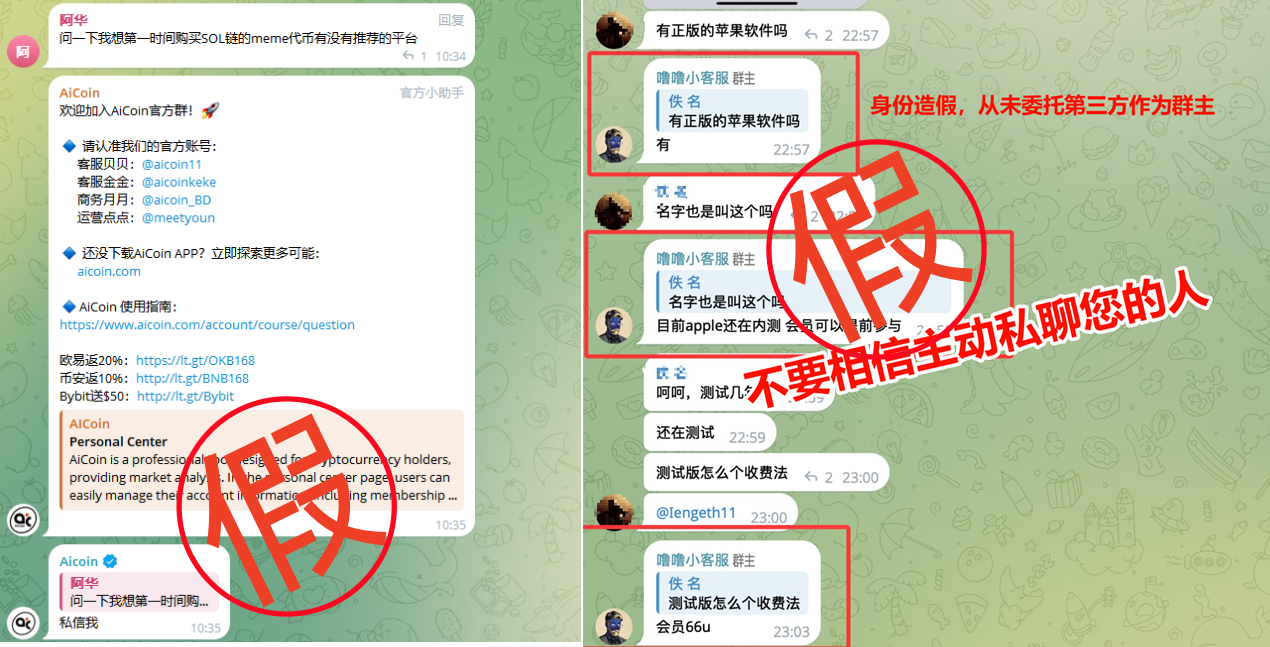
Case 2: Scammers impersonate exchange customer service, using phrases like "smart contracts automatically returning high returns" to induce users to transfer funds.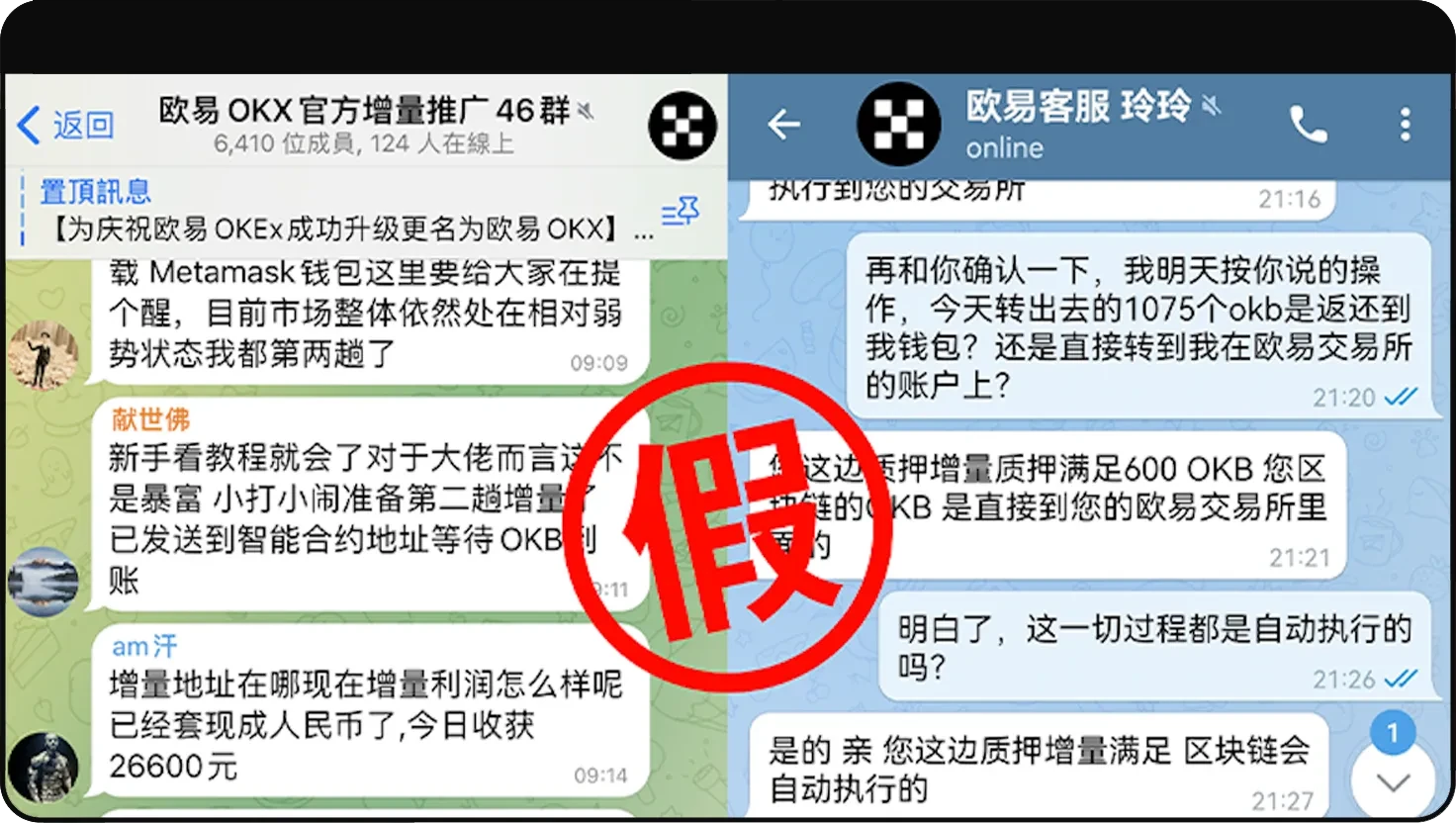
2. Psychological Induction: "Group pulling and group trading" and "insider information" scams
[Scam Logic]: Greed is the most powerful weapon of scammers. They exploit investors' desire to "get rich quick" by creating a false sense of prosperity. Scammers pull you into various chat groups filled with "planted individuals" who post fake profit screenshots and messages of thanks to leaders every day.
[Specific Techniques]:
- "Echo chamber" god-making: After joining the group, you'll notice everyone is posting profit pictures. In fact, aside from you, all the other dozens of people in the group are either the scammer's embodiments or robot decoys.
- "Pi Xiu plate" trap: The leader recommends buying a certain "hundred-fold potential coin." You see the price skyrocket and your assets double, but when you prepare to sell and cash out, the system reports failure. Tokens of this type have locked selling permissions at the code level and only allow buying.
- Fake market software: Inducing you to download non-standard market inquiry tools, where the displayed numbers and K-lines are all false data manually modified in the scammer's backend.
Case 3: Scammers disguise themselves as "crypto big shots" or "senior analysts," frequently posting fake profit screenshots, claiming they can "help beginners earn guaranteed profits." In reality, they either get users to recharge on fake trading platforms or guide them to buy worthless coins at a high price. Once users invest their funds, the "big shot" and their decoys disappear, or the "virtual coins" held by the users become worthless instantly. Some scams also require users to pay "membership fees" or "guidance fees," further defrauding them of money.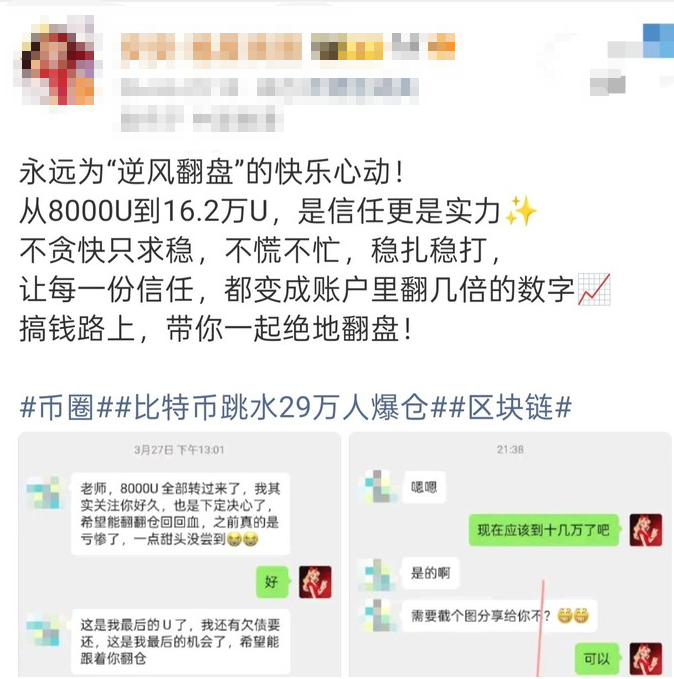
3. Profit Trap: Impersonating platforms, virtual currency "investment/ crowdfunding/ mining" scams
[Scam Logic]: Directly occupying the principal by faking official websites, apps, or by borrowing emerging hot topics (such as investment, crowdfunding, cloud mining).
[Specific Techniques]:
- Search engine advertisement (SEO) poisoning: Scammers purchase keywords to rank counterfeit websites at the top of search results. When you search for the official website and log in, your account password and assets are recorded and stolen.
- "Zero cost/no loss mining" authorization: Claiming "depositing means mining," but in reality, they use high rebates to attract users to invest more principal, only to lock it up with principal and interest at the end.
- Fake first-level market quotas: Faking the enthusiasm before the launch of well-known projects, claiming there are "insider quotas" available for investment, and once you transfer USDT, the other party will immediately block you and disappear.
Case 4: A novice, Zhang, just got into the cryptocurrency industry. He searched "AiCoin download" on Google and clicked on a high-ranking paid link (counterfeit website), downloading a forged AiCoin app. After registering and logging in, Zhang followed the "APP prompts" to bind his wallet information and entered his private key to view "asset markets." The next day, Zhang found that all ten bitcoins in his wallet had been transferred, and the forged AiCoin app could not be logged into, with no response when contacting "customer service." Upon investigation, the counterfeit app contained a Trojan horse, which had obtained Zhang's private key and wallet information, leading to asset theft. Ultimately, due to the scammers hiding abroad, the assets could not be recovered.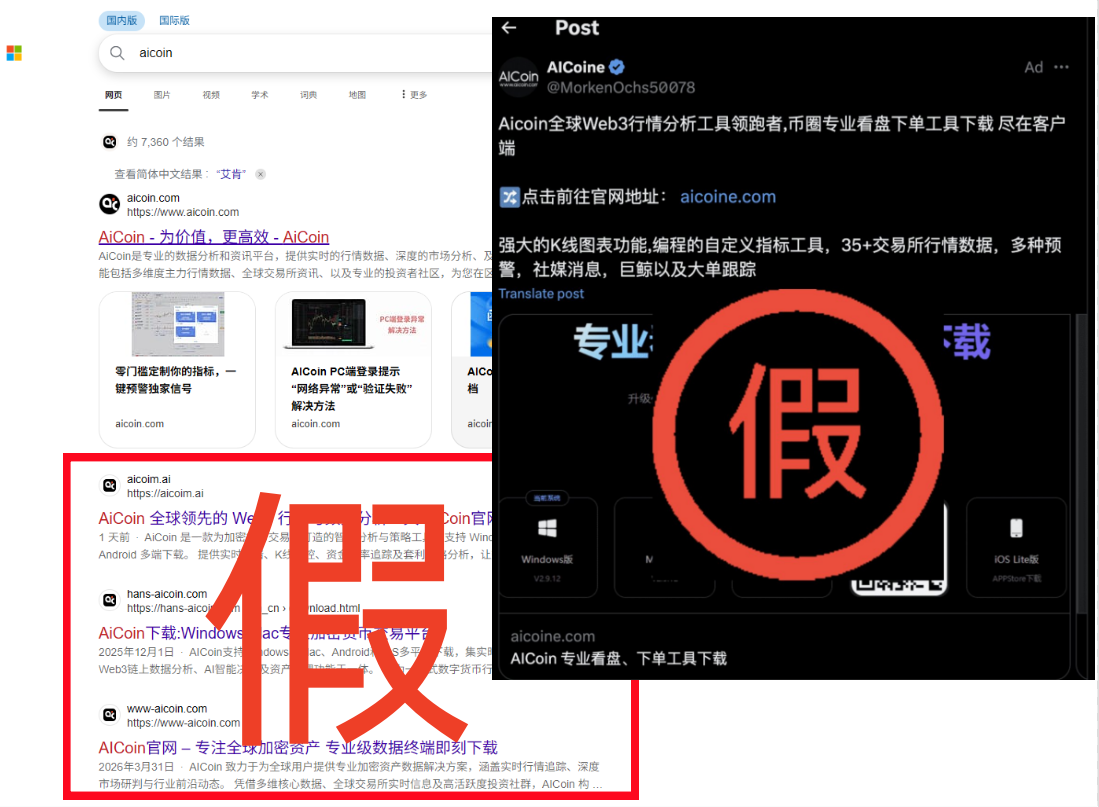
4. Technical Harvesting: Phishing links and private key solicitation scams
[Scam Logic]: Illegally obtaining the highest authority of the wallet—private keys or recovery phrases—through technical means. This is a direct attack on the user's control over their assets and is the most fatal "last mile."
[Specific Techniques]:
- Head and tail number screwing (address pollution): Scammers use generators to create a fake address that perfectly matches the first few and last few digits of your commonly used transfer address. If you habitually copy addresses from your history and do not verify the entire address, it is easy to transfer to the wrong account.
- Phishing links: By using emails and text messages to release fake activity rewards, they guide you to log into your account or "authorize" your wallet. Once you click to confirm, the assets in your wallet will be instantly emptied.
- Cloud backup temptation: Some niche tools may prompt you to "back up your recovery phrase to their encrypted cloud to prevent loss." Once uploaded, your assets will be controlled by others.
Case 5: Scammers guide users to click on phishing links under the pretext of "nodes stopping use." Once logged in, users' private keys and recovery phrases will be leaked, leading to asset theft.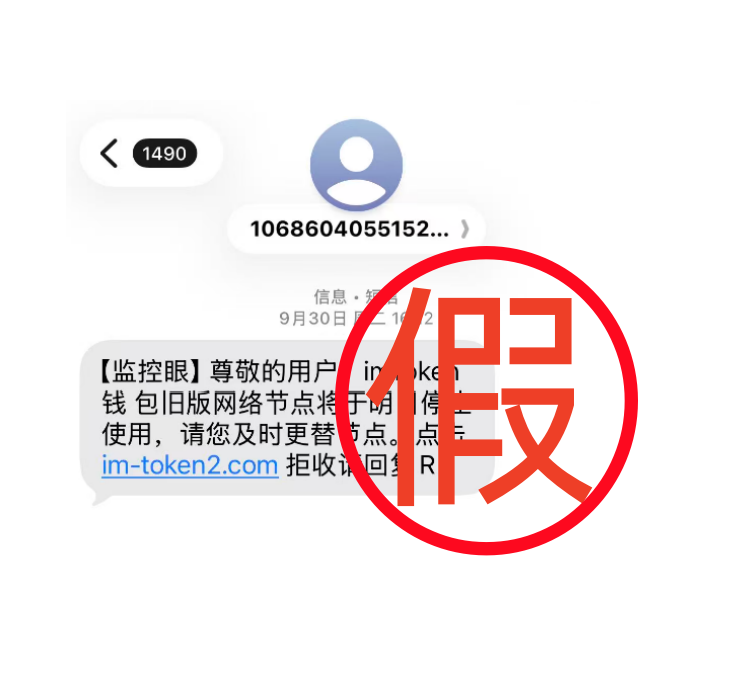
Case 6: Scammers post "giveaway coins upon leaving the circle" information on Twitter or in communities, openly providing their wallet recovery phrase. After you import it, you find that there is indeed a large amount of USDT in the wallet, but you only lack the transaction fee (such as TRX or ETH) to transfer it. Once you transfer "transaction fees" to extract USDT, the program will quickly transfer the tokens you charged away.
[Beginner Prevention Guide: Rules to Avoid Scams]
1. Your private key is your lifeline: Under no circumstances should you ever disclose your recovery phrases or private keys to anyone. Do not take screenshots and store them in your phone gallery; recording them physically on paper is currently the safest method.
2. Do not trust "proactive private chats": All proactive care, group trading, and insider information in the crypto world is essentially equivalent to scams.
3. Verify every character before transferring: No matter who you are transferring to, make sure to manually check every character of the address, not just the beginning and end.
4. Uniqueness of official channels: When downloading apps or checking announcements, please rely on the official website. If you have any questions, verify via online customer service on the official website or official Twitter (blue/gold verified).
5. Conduct small tests first: When faced with new platforms or significant transfers, first use a very small amount to test the smoothness of both the deposit and withdrawal.
[Official Channel Guidance]
AiCoin Official Website
(Professional cryptocurrency data analysis platform)
Binance Official Website
https://accounts.binance.com/zh-CN/register?ref=aicoin668
(Register to enjoy a 10% fee rebate)
OKX Official Website:
https://www.okx.com/zh-hans/join/aicoin20
(Register to enjoy a 20% fee rebate)
HTX Official Website:
https://www.htx.com/zh-cn/register/?invite_code=aicoin168
Bitget Official Website:
https://www.bitget.com/zh-CN/expressly?channelCode=fxbu&vipCode=hktb3191&languageType=1
Gate Official Website:
https://www.gate.com/zh/signup?ref_type=103&ref=AICOINCN
Industry Warning: Transactions in the crypto industry are irreversible. Once assets are transferred out, it is difficult for any police or official platform to help you retrieve them. Slower operation and a bit more suspicion are key to preserving your wealth in 2026.
Join our community, let’s discuss and become stronger together!
Official Telegram Community
AiCoin Chinese Twitter:
Group Chat - Wealth Group:
https://www.aicoin.com/link/chat?cid=10013
免责声明:本文章仅代表作者个人观点,不代表本平台的立场和观点。本文章仅供信息分享,不构成对任何人的任何投资建议。用户与作者之间的任何争议,与本平台无关。如网页中刊载的文章或图片涉及侵权,请提供相关的权利证明和身份证明发送邮件到support@aicoin.com,本平台相关工作人员将会进行核查。