On April 19, 2026, Eastern Daylight Time, Alex Thorn, head of research at Galaxy Digital, disclosed a set of data regarding Bitcoin addresses sanctioned by the U.S. Department of the Treasury's Office of Foreign Assets Control (OFAC): 518 addresses that collectively received 249,814 BTC, sent 239,708 BTC, and currently hold a net of 9,306 BTC, estimated at approximately 707 million dollars on that day. This volume makes the abstract "sanctioned addresses" instantly tangible as a mid-sized exchange-level capital pool, also placing the depth and breadth of regulatory intervention into the on-chain world on the table. Regulatory power continues to expand along the narratives of anti-money laundering and national security, while the decentralization, self-custody, and permissionless transactions represented by Bitcoin constitute the most direct points of collision. The CLARITY Act is viewed as the next watershed in this contest: whether it will push U.S. crypto regulation towards a more systematic monitoring framework, or be forced to narrow its boundaries in response, remains the biggest unanswered question.
Behind the 518 Addresses: A $700 Million On-Chain Portrait
The research team led by Alex Thorn at Galaxy Digital systematically analyzed and aggregated the Bitcoin-related portions of the OFAC's sanctioned list, ultimately identifying 518 addresses, creating a data portrait that has garnered widespread attention. Rather than being a new discovery, it is more about bringing the originally scattered on-chain entities, found across multiple sanction batches, different cases, and enforcement documents, under the same spotlight: which addresses were named, how large the capital scale is, and how much residual value remains on-chain, all compressed into directly comparable numeric dimensions.
In terms of the inflow and outflow structure, these 518 addresses received a total of 249,814 BTC, sent a total of 239,708 BTC, and retained a net of 9,306 BTC. This indicates that on one hand, these addresses have once handled capital flows comparable to leading institutions or large exchanges' cold wallets; on the other hand, most funds have already been transferred along on-chain paths, with only about 3.7% remaining of historical flows as current stock. In between lies a complex behavior of long-term accumulation and high-frequency migration: some addresses serve as "warehouses," holding large amounts of capital for extended periods; while others resemble "transfer stations," quickly receiving, splitting, and resending funds, demonstrating typical risk diversification and counter-tracing strategies.
For this reason, the 9,306 BTC still under the blacklist is far more than just a static number. It symbolizes that once a transaction occurs with these, U.S. identified compliant entities—including U.S. citizens, institutions operating within the U.S., and even service providers using U.S. dollars and tightly coupled with the U.S. financial system—must immediately freeze related assets and cease all dealings. For the Bitcoin network itself, the protocol layer does not "recognize sanctions," blocks continue to be packed, and transactions broadcast as usual, but at the compliance level, these 518 addresses are pinned on the regulatory target. Their strong demonstrative and deterrent effects will force more institutions to reassess: in an open, irreversible on-chain environment, the probability and cost of "coinciding" with sanctioned entities are being systematically elevated.
From the Patriot Act to CLARITY: The Crypto Sequel of Financial Surveillance Power
When interpreting this data set, Alex Thorn equated the current expansion of regulatory power with the USA PATRIOT Act, calling it “one of the largest expansions of financial surveillance power since the Patriot Act.” This assessment carries weight because the Patriot Act reshaped America's risk control and intelligence rules in the traditional financial system after 9/11: banks and financial institutions were required to enforce customer identification (KYC) and suspicious activity reports (SAR) more rigorously, allowing U.S. law enforcement to retrieve account, cross-border transfer, and fund flow information on a broader scale. It elevated "financial data" from commercial records to an integral part of national security tools.
In this historical context, the concerns raised by the CLARITY Act are not about one or two specific provisions, but about its potential to represent a directional choice for the U.S. to replicate or even amplify this surveillance logic in the on-chain world. The research brief did not provide the complete text and details of the act, and we cannot and should not fill in the blanks, but the focal point of market discussions is clear:
First, regulatory boundaries may extend from the traditional focus on “targeting people” and “targeting institutions,” to "targeting addresses" and "targeting protocols." In the past, compliance requirements mainly fell on financial intermediaries such as banks, brokerages, and payment companies, with the goal being to identify and restrain the "people" using these channels; however, OFAC directly naming 518 Bitcoin addresses, as well as its sanctions against Tornado Cash smart contracts in 2022, have already pulled "technical objects" themselves into the enforcement range.
Second, if CLARITY progresses towards a broader coverage of on-chain entities and activities, then developers, miners, node operators, and even middleware service providers offering infrastructure could all be included in different tiers of compliance review. This does not necessarily mean a “one-size-fits-all prohibition,” but it does mean that within the U.S. legal framework, “who counts as a financial intermediary” and “who bears the reporting obligations” will no longer be issues exclusive to traditional finance, but will become the new focal point around Bitcoin and the broader crypto ecosystem.
This path evolution brings a sense of pressure, creating notable tension between the technical community and the compliance community: one side emphasizes that open-source code and neutral infrastructure should not be endowed with “subjective intent,” while the other argues for stricter regulation of any tool capable of harboring, obfuscating, or accelerating capital flows under the pretext of national security and anti-money laundering. OFAC's concentrated display of the 518 addresses is just the latest chapter in this larger institutional story.
Under the Shadow of the SDN List: The Migration of Funds and the Invisible Pressure of Compliance
Within the U.S. sanctions framework, the OFAC's SDN (Specially Designated Nationals) list possesses significant legal authority: all U.S. persons, entities operating within the U.S., and financial institutions subject to U.S. jurisdiction are generally required to freeze assets and prohibit transactions with any individuals, entities, or addresses on the list. Violating this may lead to hefty fines, business restrictions, or even criminal liability. Therefore, when 518 Bitcoin addresses were clearly marked as “sanctioned entities,” they were not technically “banned” on-chain, but legally categorized as high-risk zones.
In 2022, OFAC listing the Tornado Cash smart contract address as a sanctioned entity marked a milestone in crypto history: moving from traditional "individual, company, organization" sanctions to a direct strike on "neutral code and protocols." The debate surrounding whether this move overstepped boundaries of enforcement power and whether it created a chilling effect on open-source developers continues to this day. Now, OFAC's view has expanded from Ethereum's privacy protocol to Bitcoin, the earliest and most fundamental public chain, maintaining a consistent logic: as long as it is identified as related to criminal, terrorist financing, sanction evasion, etc., any contract address or UTXO address may fall within SDN's scope.
On-chain, the fund flows of sanctioned addresses often exhibit some common patterns:
● Continuously splitting and reorganizing through multi-level intermediate addresses, attempting to obscure direct connections with the original sanctioned entities;
● Utilizing cross-chain bridges, wrapped assets, and decentralized liquidity pools to migrate assets from heavily monitored chains to ecosystems with relatively weak monitoring;
● Employing mixing tools or privacy-enhancing technologies to disrupt fund trails, increasing the cost and uncertainty of on-chain analysis tracking.
These paths are not unique to this event, but are common methods used to evade regulation on-chain. For compliant exchanges, the pressure lies in: firstly, continuously upgrading on-chain monitoring systems, introducing more granular address profiles and risk scores to ensure they do not unintentionally provide access to sanctioned entities; and secondly, they must objectively assume the role of "regulatory relayer"— when funds cross a certain “red line” into their custody systems, platforms must respond immediately and cooperate with law enforcement, or expose themselves to severe compliance risks. This dual pressure shifts the role of compliance institutions in the Bitcoin network from a passive "channel" to an active "filter”.
Fear Index Drops to 27: Bitcoin Identity Anxiety Under Low Sentiment
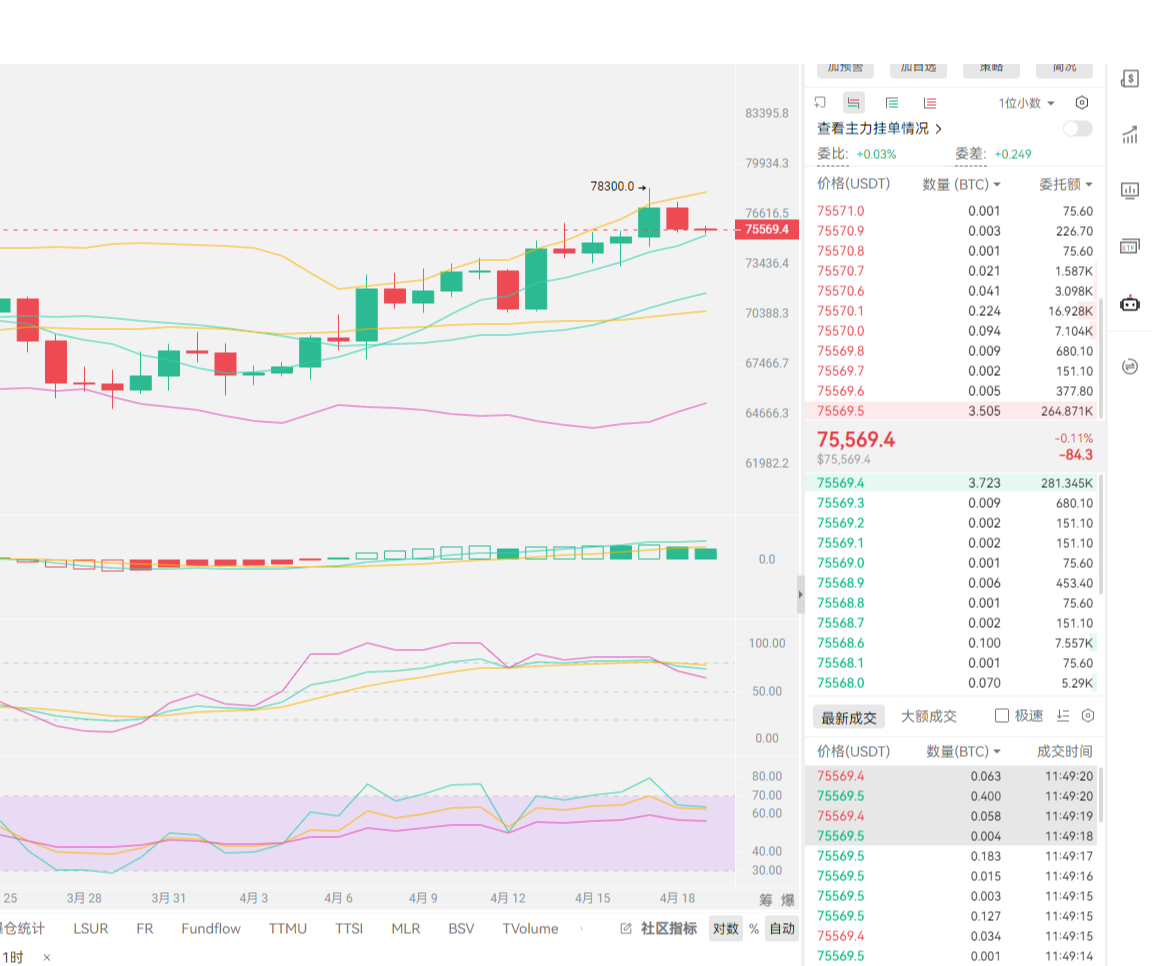
Research briefs indicate that on the same day Galaxy Digital disclosed this batch of sanction data and discussions around the CLARITY Act heated up, the crypto market's fear and greed index stood at 27, falling into the typical "strong fear range." This reading itself does not prove a direct causal relationship between regulatory news and price fluctuations, but can be viewed as a quantifiable slice of the market's perception of the macro and regulatory environment: overall risk appetite is contracting, and aversion and cautious sentiment are rising.
In terms of information dissemination, news about regulatory upgrades often manifests as a dramatically amplified chain reaction: official documents or list updates are first captured by compliance and research institutions, then released through entities like Galaxy Digital in the form of reports and data analysis, and subsequently spread via social media, KOL interpretations, and trading group shares, quickly covering a large portion of active participants. Simple figures—518 addresses, 9,306 BTC, 707 million dollars—easily become focal points for emotional resonance, simplified into narrative symbols of “regulatory massive entry” and “on-chain assets being nailed down.”
In terms of investor behavior, several typical reactions can be observed: some funds choose short-term hedging or reduction, lowering exposure to highly sensitive assets and high-leverage positions; another part tends to remain on the sidelines, delaying large-position decisions and waiting for clearer regulatory and policy signals; simultaneous preferences for assets and platforms with clearer compliance labels increase, such as centralized exchange accounts under strict KYC and anti-money laundering constraints, licensed custodians, and financial products explicitly aimed at institutions. These choices do not necessarily alter the endgame, but reshape the distribution of capital within compliant and non-compliant ecosystems.
Deeper concerns point to the "soft erosion" of Bitcoin's decentralization narrative: in a continuously pressurized compliance environment, Bitcoin remains an open network that anyone can freely participate in; however, participants who genuinely hold substantial sums and need to interact frequently with the real financial system may increasingly be compelled to rely on regulated entry and exit points. While the decentralization of technology and neutrality in governance still exist, in terms of capital and liquidity dimensions, the network may gradually be shaped into a dual-layer structure of “compliant rings coexisting with gray rings,” this structural division is the deeper existential anxiety behind the low index.
Counterattack in the On-Chain World: Technical Detours and Dance with Regulation
In the face of the OFAC's expansion of sanctions and the wider regulatory borders potentially posed by the CLARITY Act, the possible response paths in the on-chain world roughly split into two distinctly different trajectories.
One is to continue technical detours. Privacy tools, cross-chain facilities, and decentralized infrastructure are seen as key pieces to break free from the constraints of a single jurisdiction: through cryptographic solutions like zero-knowledge proofs and multi-party computation, visibility of on-chain identities and asset associations is reduced; relying on decentralized cross-chain bridges and liquidity networks, capital flows between multiple public chains and layers, thereby weakening the effectiveness of targeted sanctions; using self-custody wallets, peer-to-peer markets, and permissionless DeFi protocols, some transactional activities are moved from centralized nodes that are easily captured by regulation to more decentralized structures. This path continues the crypto-native community's consistent technical-centric mentality: responding to rules with code.
The other is to attempt to establish a more nuanced dialogue with regulators. Within this framework, the industry does not simply resist but strives to replace the “across-the-board ban on entire platforms and protocols” with more segmented risk identification. For example, in scenarios involving privacy tools, distinguishing the boundary between “default crime tools” and “neutral privacy infrastructure”; on the mining and node operation side, clarifying whether merely providing computational power or network forwarding services should be seen as assuming financial intermediary functions; at the developer level, exactly what degree of protocol upgrades and governance participation would be interpreted as “assistance to sanctioned entities.”
If CLARITY ultimately leads to a wider regulatory border, then developers, miners, node operators, and infrastructure providers will have to reevaluate the legal risks they face: everything from hosting platforms for open-source code repositories to selecting geographical locations for running nodes, to whether establishing entities in the U.S. or associated jurisdictions will all need to be included in new compliance considerations. In this process, a critical gray area will become the focal point of the contest: who is identified as a “financial intermediary”, and who is obligated to perform KYC, reporting, and freezing duties.
As regulation tries to draw more on-chain participants into traditional financial role frameworks, the crypto industry will inevitably engage in a tug-of-war around "functional boundaries": is running a node equivalent to processing payments? Are miners “facilitating transactions”? Does governance voting on a protocol imply control over specific capital flows? The answers impact not only the compliance costs for individual players but also whether decentralized infrastructure can continue to expand without being overly burdened.
After the Regulatory Iron Curtain Falls: The Next Survival Curve for Bitcoin
By summarizing the 518 address data disclosed by Galaxy Digital and the discussions around the CLARITY Act, a relatively clear direction emerges: the U.S. is attempting to upgrade from targeted sanctions to a more systematic on-chain monitoring and enforcement framework. From Tornado Cash to the named Bitcoin addresses, the range of regulatory targets is expanding, the data capabilities are enhancing, and the response speed of the financial system to on-chain signals is accelerating, a nascent closed-loop prototype covering "lists—on-chain analysis—institution filtering—judicial accountability" has already begun to take shape.
This round of sanctions and bill contests will become an important reference point for evaluating the U.S. tolerance boundaries regarding crypto assets in the future: once CLARITY passes in some form, its core spirit—whether it leans toward incorporating more on-chain activities into a monitorable and sanctionable grid or is forced to acknowledge the baseline of open-source infrastructure and public chain neutrality in the legislative contest—will directly affect the site selection, product design, and risk pricing logic of global crypto institutions and developers.
For investors and developers, the medium to long-term path is almost laid bare: either choose deep compliance, operating in a permissioned environment, accepting higher information disclosure costs and tighter scrutiny rhythms in exchange for mainstream funds and more stable institutional expectations; or turn to a more decentralized, cross-jurisdictional ecosystem, leveraging technical means and geographical dispersion to hedge against the concentration risks brought by a single regulatory system, while also accepting the reality of liquidity fragmentation, increased access barriers, and legal uncertainties.
Bitcoin's decentralization attributes will not instantly vanish under a piece of legislation, and blocks will not stop being packed simply because a name has been written into the SDN. However, the rules of the game are being rewritten: from who dares to trade with whom, which addresses will be actively avoided, to which infrastructures can interface with the mainstream financial system, the price of compliance risk is being rapidly reassessed. For all participants, the real question is no longer “whether one will be regulated,” but rather under what rules to participate, at what costs to hedge compliance risks, and in the face of the regulatory iron curtain and technological countermeasures, how to secure the survival space for oneself and the protocols constructed.
Join our community to discuss together and grow stronger!
Official Telegram Community: https://t.me/aicoincn
AiCoin Chinese Twitter: https://x.com/AiCoinzh
OKX Welfare Group: https://aicoin.com/link/chat?cid=l61eM4owQ
Binance Welfare Group: https://aicoin.com/link/chat?cid=ynr7d1P6Z
免责声明:本文章仅代表作者个人观点,不代表本平台的立场和观点。本文章仅供信息分享,不构成对任何人的任何投资建议。用户与作者之间的任何争议,与本平台无关。如网页中刊载的文章或图片涉及侵权,请提供相关的权利证明和身份证明发送邮件到support@aicoin.com,本平台相关工作人员将会进行核查。