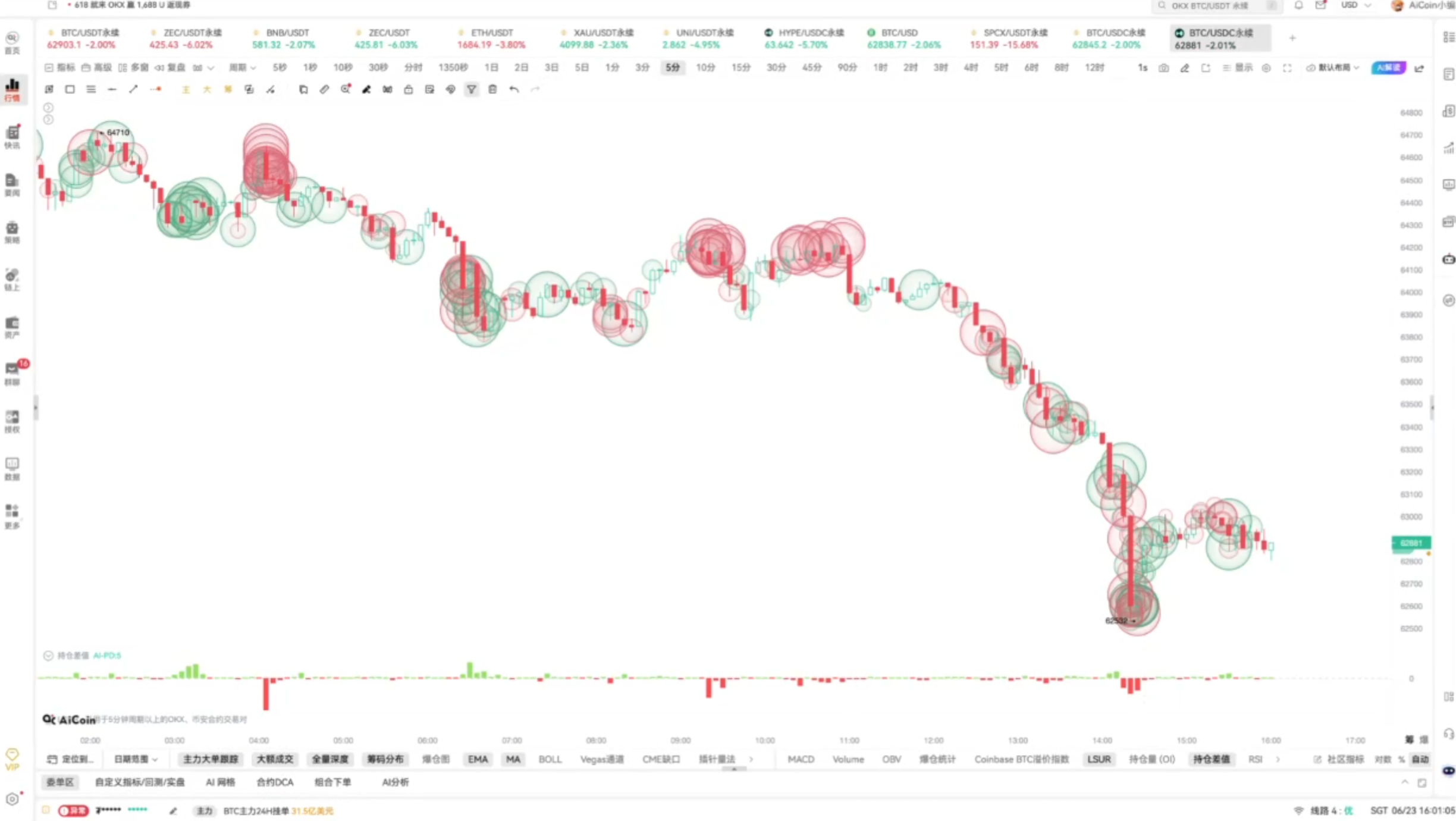
As of April 18th, in the morning of UTC+8, the U.S. Ethereum spot ETF has achieved a continuous net inflow of funds for the seventh trading day in a row, with a single-day net inflow of approximately $127 million on April 17th. During this period, the overall price of Ethereum has remained relatively stable, whereas the price of Bitcoin momentarily dropped below $77,000 on the same day, with an intraday decline of approximately 1.02%, creating a discrepancy between the funding situation and price performance. Institutional funds continue to accumulate Ethereum through the ETF, while leading asset Bitcoin has experienced a slight adjustment; this divergence amplifies a core question: what implications does the accumulation of passive funds through ETFs have for the long-term pricing of Ethereum?
Seven Days of Continuous Inflows: The Rhythm of $127 Million Fund Inflow
On April 17th, the net inflow of the U.S. Ethereum spot ETF totaled approximately $127-127.4 million, representing a single-day increment in the upper medium range during the continuous seventh day of net inflows. In the preceding trading days, funds similarly maintained a positive inflow trend, indicating that this is not an isolated event but part of a continued funding trend. It should be noted that specific values vary slightly among different data sources; SoSoValue and FarsideInvestors have reported single-day and product-level data with fluctuations in the tens of thousands of dollars, but these minor discrepancies do not alter the overall directional judgment of "sustained inflow with considerable scale."
A continuous net inflow over seven days serves as a clear "recognition signal" for the recently initiated Ethereum spot ETF market. On one hand, it signifies that institutions are beginning to incorporate Ethereum into a more conventional asset allocation framework, rather than merely considering it as a high-volatility trading target; on the other hand, against the backdrop of Bitcoin spot ETFs having become "normalized," the Ethereum ETF, as the second-largest compliant entry, is proving through stable subscription data that the passive funding foundation for Ethereum is thickening, with its influence no longer solely reliant on Bitcoin cycles.
Fidelity and BlackRock Seize Top Funding Entry
From a product structure perspective, the net inflow of the Ethereum spot ETF on April 17th was almost entirely dominated by the two major traditional asset management giants. Among them, Fidelity FETH had a single-day net inflow of approximately $84.1-84.13 million, dominating the total net inflow of Ethereum ETFs on that day, with its historical cumulative net inflow reaching approximately $2.356 billion, accumulating considerable positions in a short time. Meanwhile, BlackRock ETHA had a single-day net inflow of approximately $30.79-30.80 million, with a historical cumulative net inflow of about $11.830 billion, leading the industry both in current scale and growth rate.
In the overall structure of Ethereum spot ETFs, the combined contributions of Fidelity and BlackRock accounted for most of the funding increment on April 17th and hold the dominance in historical cumulative net inflows. This indicates that the passive funding entry for Ethereum ETFs is highly concentrated in the hands of a few leading institutions, whose asset allocation decisions, fee structures, and long-term strategies will amplify the scale ceiling and volatility characteristics of the Ethereum ETF segment. More symbolically, these two asset management giants, which have systemic influence in traditional finance, are signaling to the market through continued net subscriptions that Ethereum has upgraded from a "high-risk experimental product" to one of the mainstream crypto assets that can be integrated into institutional asset allocation templates.
$14.263 Billion Volume: The Lock-up Effect of Ethereum ETFs
As of April 17th, the total net asset value of the U.S. Ethereum spot ETFs is approximately $14.263 billion. This scale still lags behind Bitcoin ETFs but is significant within Ethereum's own market cap structure. According to current estimates, $14.263 billion accounts for about 4.87% of Ethereum's total market value, meaning that nearly 5% of Ethereum's market cap is "woven" into traditional financial account systems through passive tools like ETFs, creating a kind of "semi-lock-up" supply-side constraint.
From a supply-demand perspective, ETF holdings are not permanently locked, but since the underlying investors are primarily medium to long-term allocation funds, their turnover rate and trading rhythm are significantly lower than on-chain short-term funds, which marginally weakens the scale of free circulation in the spot market. As an increasing proportion of the total market cap becomes trapped in passive products, the chips available for short-term speculation in the public market relatively decrease; during phases of increasing demand or emotional recovery, prices are more easily pushed higher, showing a stronger "scarcity premium." Conversely, when inflows slow or turn into outflows, the re-release of this trapped capital might also amplify the adjustment magnitude, making ETF holdings one of the key variables affecting the mid-term volatility structure of Ethereum.
Large Inflows in Bitcoin ETFs Yet Price Declines
Similar to Ethereum, on April 17th, the U.S. Bitcoin spot ETF recorded a net inflow of approximately $664 million, achieving a consecutive fourth day of positive fund inflows. Among them, BlackRock's IBIT had a single-day net inflow of approximately $284 million, continuing to serve as the main incremental channel for Bitcoin ETFs, indicating strong institutional demand for passive allocation in Bitcoin. Ideally, such a large scale of passive buying should provide some support for prices, but the actual market performance shows a contrast: on that day, Bitcoin's price briefly fell below $77,000, with an intraday decline of approximately 1.02%.
This "substantial fund inflow vs slight price decline" disconnect often does not indicate weakened spot demand, but rather that derivatives and leveraged positions dominate short-term volatility. On one hand, high-leverage long positions in futures and perpetual contracts may face concentrated liquidation when under pressure at high levels, bringing passive selling pressure; on the other hand, some arbitrage positions may use the price difference between ETF subscriptions and on-site spot or contract transactions for hedging, reflecting as net subscriptions on the ETF side, but presenting as sell pressure or fluctuations in the market. This also reminds investors that the relationship between single-day ETF net inflow and daily price direction is not a straightforward one-to-one correspondence, interspersed with complexities like leverage, hedging, and basis trading.
Structural Signals from the Divergence of Ethereum and Bitcoin Capital Releases
Viewing Ethereum and Bitcoin in the same frame reveals an interesting divergence: on April 17th, Bitcoin ETF saw a single-day net inflow of $664 million while the Ethereum ETF net inflow was $127 million, with both funds moving in the same direction while prices displayed "Bitcoin slight decline, Ethereum resilience," even showing a relatively strong performance. Prior to this, the Ethereum ETF had also logged net inflows for seven consecutive days; this continuity indicates that the "Bitcoin as a single compliant exposure" pattern is subtly changing—some institutions may be shifting from pure Bitcoin concentrated exposure to a "BTC + ETH" combined configuration.
From the perspective of existing proportions, Ethereum ETF's current market value share of approximately 4.87% is significantly lower than Bitcoin ETF's absorption ratio of Bitcoin's total market value, which suggests that there is still considerable "catch-up space" for Ethereum in the ETF channel. If funds continue to surge in the future, and the share of supply locked in through compliant products in Ethereum rises, its price elasticity is expected to be concentratedly released during the next resonance of macro and crypto cycles. Of course, to assess whether current inflows are sufficient to support Ethereum's mid-term strength, two dimensions must be observed: first, the sustainability of fund inflows, whether it evolves from "a few days of consecutive increases" to "weeks or months of structural inflows"; second, the price's response to key support levels during pullbacks, whether it reflects the "lifting of the center of gravity" characteristic under passive funding support, rather than merely a noise rebound driven by short-term emotions.
From Passive Funds to Long-term Pricing Observation Framework
In summary, the consecutive seven-day net inflow of the Ethereum spot ETF, along with major institutions like Fidelity and BlackRock continuously accumulating through FETH and ETHA, strengthens Ethereum's mid to long-term narrative: on one hand, it is steadily completing its transition from a trading target to a “passive allocation asset”; on the other hand, the ETF volume of $14.263 billion, accounting for 4.87% of total market value, is bringing the structure of its supply side closer to the path Bitcoin has traversed. Meanwhile, investors should remain vigilant: ETF fund data and short-term price trends do not synchronize perfectly, as derivative leverage liquidations and hedging adjustments may mask the positive effects of passive inflows during specific phases.
In practical decision-making, a more feasible approach is to establish a dynamic observation framework: continuously track the net inflow/outflow rhythm of Ethereum and Bitcoin ETFs, alongside the evolution of ETF holdings' share of market value, to observe whether prices exhibit "re-matching of funds and prices" during key macro events and days of significant volatility. When you see: first, the funds have continuity over time rather than sporadic pulses; second, prices show stronger support and higher lows during pullbacks; third, the ETF holdings share steadily increases rather than sharply retracts, there will be stronger reasons to define the current influx of Ethereum ETFs as a new force influencing mid to long-term pricing, rather than just background noise in a short-term market trend.
Join our community to discuss and grow stronger together!
Official Telegram community: https://t.me/aicoincn
AiCoin Chinese Twitter: https://x.com/AiCoinzh
OKX Benefits Group: https://aicoin.com/link/chat?cid=l61eM4owQ
Binance Benefits Group: https://aicoin.com/link/chat?cid=ynr7d1P6Z
免责声明:本文章仅代表作者个人观点,不代表本平台的立场和观点。本文章仅供信息分享,不构成对任何人的任何投资建议。用户与作者之间的任何争议,与本平台无关。如网页中刊载的文章或图片涉及侵权,请提供相关的权利证明和身份证明发送邮件到support@aicoin.com,本平台相关工作人员将会进行核查。