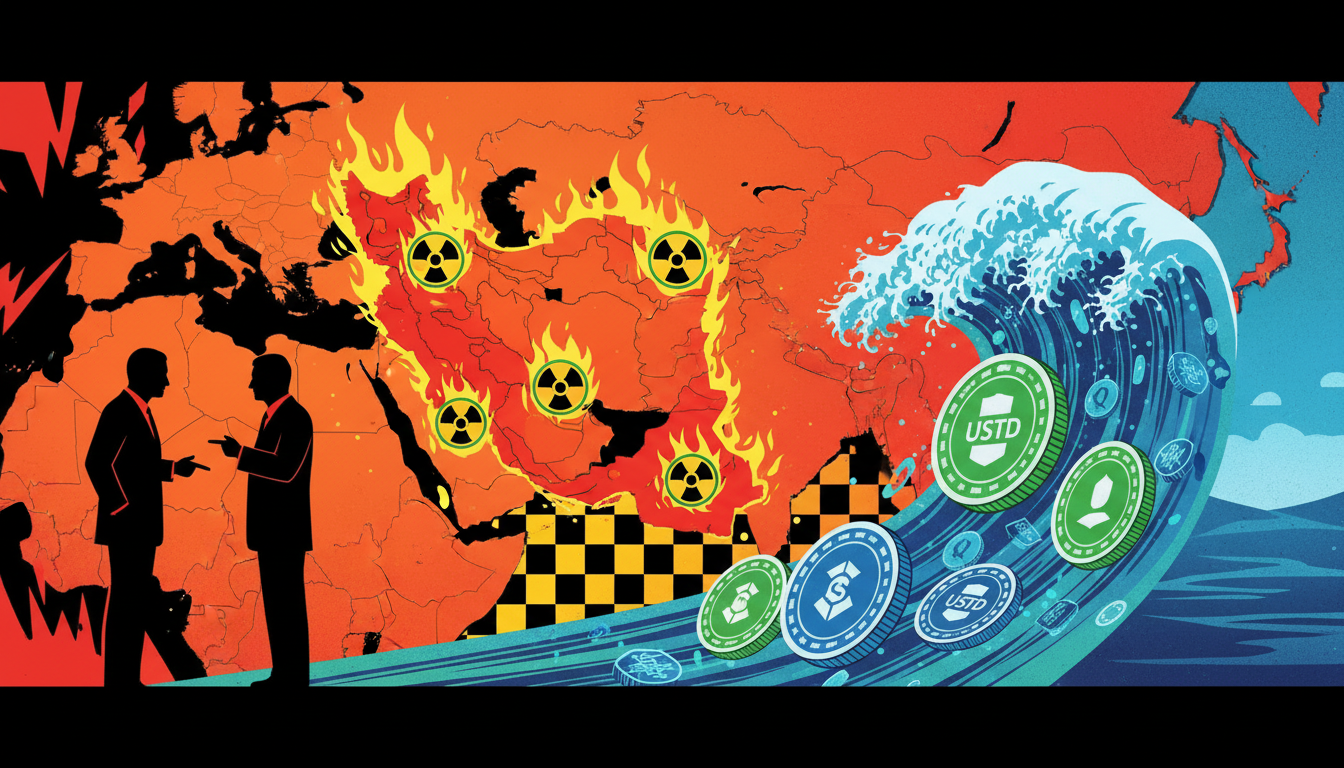
On April 18, 2026, Eastern Eight Time, as the deadline for the ceasefire agreement with Iran approaches, Trump chooses to raise the stakes under the spotlight: threatening not to extend the ceasefire any longer, stating that an agreement must be reached by "Wednesday", and clearly indicating that the blockade on Iranian ports will continue. Meanwhile, the Strait of Hormuz is being publicly declared "completely open" by Iranian officials, while in reality, it is enduring high pressure from port blockades, creating a disconnect between policy rhetoric and actual passage. Amid this contradiction, Chinese merchant ships previously stranded near Hormuz received a "prepare for evacuation" notice on April 17, staging a dramatic reversal from long-term detention to hopeful departure. Around this globally sensitive energy waterway, the ceasefire deadline, port blockades, and the movements of third-party vessels are intertwined with an invisible thread: the key right of passage, why is it always being used as a bargaining chip on politicians' tables?
Trump's Ultimatum Amid Ceasefire Countdown
The core of Trump's statement this time is locking time to a clear "Wednesday" node: if no agreement is reached between the U.S. and Iran before this deadline, he will no longer extend the current ceasefire arrangement, but the blockade on Iranian ports will continue. This effectively separates "extend the ceasefire" from "port blockade" into two mechanisms: the former is treated as a retractable favor, while the latter is framed as a long-term punitive tool. In this countdown atmosphere, time itself is weaponized, forcing Iran to make choices within a limited window.
Even more subtly, while pressuring, he intentionally releases signals of "good news". According to several Chinese media sources, Trump stated, "We received some pretty good news twenty minutes ago", and quickly added, "The most important thing is that Iran will not have nuclear weapons". The first part creates an atmosphere that negotiations seem to have turned a corner, while the latter returns to the long-standing U.S. narrative, intertwining toughness with reassurance in the same set of rhetoric: suggesting that the situation is developing favorably while emphasizing to both domestic and international audiences that the red line of "curbing Iran's nuclear capability" will not be crossed.
This statement is not isolated but is embedded in the larger context of the Lebanon ceasefire agreement implementation. Trump attempts to bring multiple battlefields—Lebanon front, Iran issue, maritime security—into the same negotiation table, offering limited concessions in one direction in exchange for more significant chips in another. Whether the ceasefire is extended or how the port blockade is adjusted is tied to his posture of packaging regional conflicts: no longer treating each front as an independent case but as an overall trade bundle, enhancing U.S. bargaining power across the entire Middle East map through time pressure and security issues.
Proclaiming the Strait Open While Ports Remain Tense
Almost simultaneously with Trump's public pressure, the official discourse from Tehran chose another route. On April 17, Iranian Foreign Minister Amir-Abdollahian released key information through platforms like CCTV, stating that the “Strait of Hormuz is completely open”, trying to "extract" this global energy artery from the narrative of geopolitical confrontation, sending a stable signal of "normal passage, controllable situation" to the outside world. In Iran's description, the critical waterway should not be viewed as a tool of threats from any party but should continue to serve as an international public passage.
Meanwhile, the Iranian ports and maritime authorities also announced coordinated routes and other technical arrangements, attempting to demonstrate through navigational planning and vessel scheduling that within their controllable maritime areas, they are working hard to maintain shipping order and reduce the room for misjudgment. From the presentation of technical terms and operational details, Iran aims to showcase a "professional and responsible" stance to both domestic and international audiences while emphasizing its leading role in the Strait's daily operations.
However, on the other side, the blockade on Iranian ports has not been lifted. This means that even if the "Strait is completely open" on paper, in reality, the corridors to enter and exit key ports remain tightly restricted. For shipping companies, "the Strait open" seems more like a legal and diplomatic expression, while "port blockade" is the rigid constraint they must face every day in route planning and insurance pricing. This gap exposes the disconnect between discourse and actual control: Iran is attempting to reshape its image through public declarations and technical arrangements, while the U.S. maintains actual control through sanctions and blockades, ultimately deciding which ships can pass and at what cost.
A Dramatic Turn for Chinese Merchant Ships from Stranded to Evacuated
In this high-pressure game surrounding Hormuz, the experience of Chinese merchant ships offers a perspective of a passive participant. Previously, several Chinese media reported that some Chinese merchant ships were stranded near Hormuz and had to remain detained for a long time under the shadow of blockade and tension. For commercial operators, this means not only that the value of vessels and cargo is exposed to an uncertain environment but also that shipping schedules are disrupted and financial turnover cycles are extended, increasing risk premiums and opportunity costs.
The turning point occurred on April 17. According to reports from Yicai and CCTV, these previously stranded Chinese ships received “prepare for evacuation” notices, indicating that the actual navigation environment had changed enough to support their departure. Although this does not equate to a comprehensive easing of the situation, for crew members and companies who have endured long-term detention, being able to plan for evacuation itself is an important emotional recovery signal, also indicating that for certain sub-segments of the route, risk perception has shifted from "completely uncontrollable" to "cautiously manageable."
This dramatic turn reflects the structural passivity of third-party countries like China in this game: the entry and exit of merchant ships are highly dependent on the rhythm of great power competition and the temperature of rhetoric, with almost no bargaining room itself. Whether being forced to "remain in high-risk waters" previously or hastily evacuating during the window period now, the choice has always been in the hands of others. For large economies that rely on global shipping and energy imports, this limited discourse power forces them to continuously enhance risk management, diversify shipping routes, and engage in diplomatic intervention, yet it is challenging to change the fundamental pattern of being embroiled in geopolitical hedging.
Rights of Passage in the Strait of Hormuz Become Global Chips
The reason a series of statements can attract so much attention is that the Strait of Hormuz itself is one of the vital points on the global energy map. As a key passage connecting the Persian Gulf to the open sea, it carries substantial transportation of crude oil and liquefied natural gas, serving as a physical link between multiple oil-producing and consuming nations. Any disturbance regarding its passage safety will be quickly amplified by the market as questioning the stability of energy supply, thus entering price expectation models.
In the current situation, the U.S. maintains the blockade on Iranian ports while publicly emphasizing concerns about regional security and nuclear proliferation; Iran, on the other hand, attempts to shift the responsibility for the port blockade to its opponents through public declarations of "normal passage". The common result is to shape the "right of passage" itself as core bargaining chips on the negotiation table: not simply discussing whether a certain route is safe but packaging a deal between "whether to relax the blockade" and "whether to maintain the commitment to openness". Technical issues related to energy and shipping are elevated to political issues of diplomacy and security.
This tension does not only stay on the surface of the sea but will also spill over into shipping insurance, energy expectations, and global supply chain psychology on three levels. Insurance companies need to reassess war risk rates in the absence of stable prospects, potentially increasing operational costs for enterprises; energy markets will translate these uncertainties into risk premiums, reflected in the price fluctuation range of oil and gas; supply chain managers must set aside contingency plans for the extreme scenario of "sudden failure of key segments." Even if real disruptions have not yet occurred, the mere alternation of high-frequency terms like "blockade" and "open" is sufficient to prompt multiple industries to enter a defensive state psychologically.
Domestic and International Audiences in the Clash of U.S.-Iran Discourse
Returning to Trump's original words, "Iran will not have nuclear weapons" is not only a warning to Iran but also a message to American voters and traditional allies. For the voter groups that prioritize security narratives, this statement clearly defines an inviolable bottom line, framing him as the "gatekeeper against nuclear proliferation"; for some Middle Eastern allies, it sends the assurance that "the U.S. will not concede on critical security issues". The tough rhetoric tied to the ceasefire negotiations serves to score points for him both in domestic politics and on the diplomatic stage.
In contrast, Iran's choice to announce at platforms like CCTV that "the Strait is completely open" has a clear dual direction: internally, it eases public anxieties over sanctions, blockades, and escalations of conflict, emphasizing that the government still holds dominant control over the key waterway; externally, it is shaping an image of "responsible channel management", hoping to place more of the unpredictable risk label on its opponents rather than itself. By combining technical details with open declarations, Iran attempts to seize the moral high ground in the international discourse arena.
In the media battlefield, this clash of discourses is further magnified. Mainstream English media, Chinese official channels, and crypto and financial media like Golden Finance, Deep Tide TechFlow, BlockBeats each provide tailored versions for different audiences: some emphasize the countdown to ceasefire and security risks, others highlight normal passage and controllable situations, while some focus on potential impacts on financial markets and bulk commodities. In this multilingual, multi-platform dissemination, the same event is dissected into multiple narrative versions, and different countries and circles often only see one side, thus being shaped in their cognition by their respective information environments.
The Next Steps Amid Countdown and Fog
Based on current information, a highly tense yet gap-filled picture can be sketched: the ceasefire deadline is approaching, Trump issues the ultimatum that "if no agreement is reached, it will not be extended"; the blockade on Iranian ports has not been lifted, yet Iran claims that the Strait of Hormuz is "completely open"; although Chinese merchant ships received evacuation notices on April 17, the overall shipping environment remains full of uncertainties. The multiple dislocations between time pressure, policy rhetoric, and onsite operations make it difficult for outsiders to capture the true direction from superficial optimism or pessimism.
If negotiations collapse, the ceasefire cannot be renewed, and the blockade is maintained or even intensified, shipping companies' risk pricing for this waterway will inevitably continue to rise, vessel passage will tighten further, and detours and rerouting will become the forced choice of more companies, making the regional security situation more susceptible to being ignited by accidental events; conversely, if a deal is successfully reached at the last minute, the ceasefire is extended, and measures surrounding the port blockade begin to ease, then the current suppressed transport demand and risk premiums may see some release, with regional tensions easing from high expectations to a "high-pressure but controllable" range.
From an observational perspective, the next few key nodes are particularly critical:
● Whether the ceasefire will be renewed: This will directly determine whether the time pressure is postponed or transformed into real impacts. Renewal means that the negotiation game continues, while a breakdown may trigger a new round of escalation.
● Whether the port blockade will ease: This is the core indicator to judge how meaningful the claim of "the Strait is open" is; if the blockade sees substantial easing, it will directly improve the shipping environment and market sentiment.
● Whether Chinese merchant ships can successfully evacuate and restore normal shipping lanes: This relates not only to individual case security but also serves as a barometer for third-party countries to re-establish "daily operations" on this waterway. The ability to transition from "stranded - evacuate" to "normal back and forth" will become an important signal for outsiders to judge whether the situation is reverting from an emergency state to a new normal.
Amid the coexistence of countdown and fog, the issue of passage through Hormuz is no longer merely a narrow waterway on the map, but layered with multiple meanings of security, energy, finance, and narrative. The real risks are often not in the loudest slogans but buried in whether the blockade has lifted and whether vessels can depart.
Join our community to discuss and become stronger together!
Official Telegram Community: https://t.me/aicoincn
AiCoin Chinese Twitter: https://x.com/AiCoinzh
OKX Benefits Group: https://aicoin.com/link/chat?cid=l61eM4owQ
Binance Benefits Group: https://aicoin.com/link/chat?cid=ynr7d1P6Z
免责声明:本文章仅代表作者个人观点,不代表本平台的立场和观点。本文章仅供信息分享,不构成对任何人的任何投资建议。用户与作者之间的任何争议,与本平台无关。如网页中刊载的文章或图片涉及侵权,请提供相关的权利证明和身份证明发送邮件到support@aicoin.com,本平台相关工作人员将会进行核查。