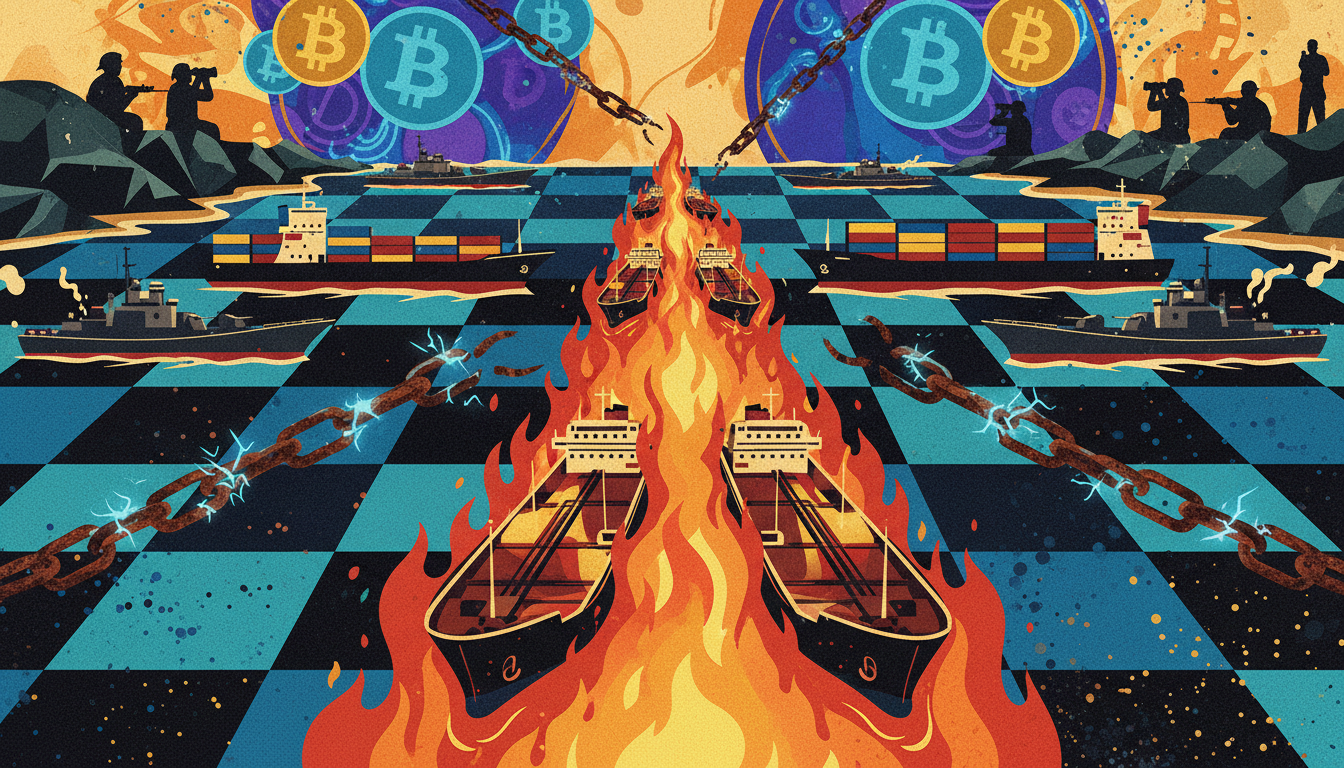
This week, in the middle of the week in Eastern Eight Time, a new round of narratives surrounding the 20 billion dollars of Iranian frozen funds and the disposal of enriched uranium stocks has been intensively amplified: from the early 60 billion dollar humanitarian aid program to a once-reported 27 billion dollars funding scale, and then back down to the currently reported 200 billion dollars "cash for uranium" comprehensive proposal, the amount itself has already become a magnifying glass for the game of chips between the two sides. Accompanying this narrative is the market price movement: according to trading platform data, Brent crude oil dropped nearly 3% during the day, sliding from about 91.15 dollars to around 89.70 dollars, while spot silver broke through the 80 dollars per ounce mark, with a daily increase of about 2%. The dislocation of oil falling and silver rising has become an immediate vote of fund expectations for the "marginal easing of geopolitical tensions." The real question is: how will this game marked by "20 billion for uranium" penetrate the risk premium pricing of bulk commodities and further reshape the narrative structures of Wall Street and the crypto market?
From 6 Billion to 20 Billion: The Price Code of Upgraded Chips
Looking back at the timeline, the initial version of the US-Iran negotiations was described by the media as the "60 billion dollar humanitarian aid program"—under the premise of strictly limited usage and payment paths, to partially unfreeze Iranian overseas funds in exchange for limited restraint in regional behavior. However, this relatively "narrow-caliber" arrangement was soon replaced by larger proposals. According to what AXIOS cited, the earlier 60 billion dollar plan has been replaced by a package of "comprehensive proposals", with the amount range once being interpreted by the outside as as high as 27 billion dollars, and then gradually converging to the more executable number of 20 billion dollars through multiple parties' signals and testing.
The expansion and adjustment of the amount reflect a simultaneous two-way escalation: on one hand, the United States, under the pressures of inflation and the Middle East frontline, is signaling a moderate relaxation of sanctions boundaries in exchange for controllable nuclear risks and de-escalation of regional conflicts; on the other hand, Iran continuously accumulates chips in enriched uranium stocks and enrichment levels, using reversible and verifiable technical actions recognized by the International Atomic Energy Agency to exchange for the actual benefits of asset unfreezing and financial liquidity. The so-called "comprehensive proposal" likely involves more than just simple funds unfreezing + humanitarian supplies but bundles fund sizes, nuclear material disposal paths, regional security commitments, and other elements into a compromise plan that can barely be accepted by domestic public opinion on both sides.
For the market, the numerical value of funds itself is a "quantitative indicator" of geopolitical risk: from 60 billion to 27 billion and back to 20 billion, representing that the negotiation has not broken down, and the chips are still being measured repeatedly on the table. This rhythm of "talking while arguing" is priced as marginal conflict de-escalation rather than total loss of control, which is why, as relevant news ferments, crude oil first hedged a part of the war premium without generating extreme market conditions of widespread risk repricing.
Where Does Uranium Go: Transporting Out or Local Dilution?
If the scale of funds is the visible surface of negotiation, then where high-enriched uranium goes is the key core that determines whether this transaction can land. The current core divergence is relatively clear: the United States advocates for all of Iran's high-enriched uranium stock to be transported out of the country to physically reduce nuclear breakout capability; while Iran insists on dilution and degradation processing domestically, technically fulfilling the requirement of being "far from weapon-grade" while maintaining its sovereign narrative and symbolic control over the nuclear program.
Between these two poles, the media's reference to the "partial high-enriched uranium may be transported to a third country as a compromise方案" opens a middle corridor for potential compromise. A part of the inventory is sent to a third country to be processed and supervised by relatively neutral or multilateral recognized technical institutions to meet the domestic demands in the U.S. for "visible security results"; another part is diluted in Iran in a transparent and verifiable way to maintain Tehran's emphasized political narrative of "the right to peaceful use of nuclear energy has not been deprived."
This third-country disposal plan has vastly different meanings for both sides: for Iran, it is a passive balance between sovereignty and economic relief—exporting too much would be seen by domestic hawks as "selling chips"; for the U.S. and its allies, it is to prove to voters that "no real gold and silver was exchanged for mere paper commitments," but rather achieved physical changes that can be photographed by satellites and verified by international institutions. If even a small, verifiable nuclear degradation action occurs, the market will tend to believe that the tail risk of nuclear confrontation escalation has been partially "insured," further compressing the geopolitical risk premium on oil prices and certain industrial metals.
Oil Price Drops and Silver Surges: Geopolitical Easing and Risk Aversion Switching
On the same trading day that the news fermented, Brent crude oil price experienced a significant drop of about 3%, falling from about 91.15 dollars to around 89.70 dollars. In the absence of a sudden supply shock, this magnitude seems more like a correction of the previous war premium. Once geopolitical tension is interpreted by the market as "there are talks, prices, and chips," crude oil, being the most direct geopolitical target, will have its embedded conflict premium prioritized for removal as funds begin to question: is there really going to be a disruption in physical supply? If the answer leans towards "unlikely in the short term," the bulls have reason to reduce their positions.
In stark contrast, spot silver price broke through the 80 dollars per ounce mark, with a daily increase of about 2%. In an environment where gold has been heavily allocated by institutions for a long time, silver is increasingly seen as a "second line cushion" of precious metal risk aversion intertwined with industrial demand: when the drop in oil prices suggests that geopolitical premiums are being compressed, some funds will withdraw from volatile commodities like crude oil, turning to assets like silver that still have reasonable liquidity and are sensitive to economic cycles and risk aversion sentiment to seek "compromised defensive positions."
This "oil price drop + silver surge" dislocation performance opens up space for cross-assets arbitrage: one end is short or reducing positions to hedge the overly high portion of the crude oil premium, while the other end is through bullish positioning in precious metals like silver to capture the relative gains brought by the "risk aversion structure switching." For the crypto market, this chain will further extend to tokenized assets related to bulk narratives, on-chain commodity indices, and derivative agreements linked to precious metals or energy—when traditional markets experience structural price differences, on-chain products often show delayed reactions or even greater amplitudes, providing exploitable arbitrage windows for high-frequency and cross-market strategies.
From Islamabad to Wall Street: The Transactionalization of the Negotiation Script
Some media have pointed out that Islamabad may become a candidate location for US-Iran talks, and this geographical choice itself has narrative significance. For Pakistan, its role in the Middle East and the broader Muslim world has always been delicate: it is an important part of the U.S.’s regional security architecture while maintaining complex bilateral and multilateral relations with Iran and Gulf states. If the final meetings are held in Islamabad, it would signify that the negotiations are embedded in a larger regional game rather than being a simple bilateral technical dialogue.
The realignment of power in the Middle East directly points to the expectations of oil supply and pricing discourse: once Iran makes visible concessions on nuclear issues, the expectation around the loosening of its oil export restrictions will rise; conversely, if the negotiations break down again, the market will reprice the risks of maritime safety and oil and gas facilities being attacked around Iran. For Wall Street and global hedge funds, "negotiation progress—oil price volatility" has long been internalized as a trading rhythm anchor:
● When the news leans "good," they will compress the premium of oil price long-term contracts and increase holdings in downstream benefiting stocks like refining and aviation, amplifying gains on the rollback of war premiums.
● When public opinion turns to "stagnation or even deterioration," they will raise their allocations to energy stocks, defense stocks, and certain precious metal longs, using options structures to hedge tail risk.
This rhythm trading around crude oil and precious metals has been further financial-engineered in the crypto world as on-chain oil index tokens, precious metal tokens anchored at physical or OTC prices, and derivative agreements tracking commodity volatility. Each repricing of traditional markets concerning negotiation ups and downs often presents more extreme fluctuations in these on-chain assets through anticipated and emotional amplification effects, forming a cycle of "Wall Street sets the story, on-chain provides leverage."
How the Crypto Market Tells the Story of 20 Billion for Uranium
If we view the unfreezing of 20 billion dollars + verifiable progress in nuclear degradation as a "successful scenario," then for global asset allocation, this means that some geopolitical risks have been "converted into cash flow," releasing additional space for Risk-on sentiment. Macroeconomic traders will expect: further retraction of crude oil's war premium, marginal relief of inflation pressures, a weakening upward momentum of U.S. Treasury yields, thus freeing valuation space for growth stocks and high-beta assets. In this chain, Bitcoin, Ethereum, and certain high-liquidity crypto-assets will be seen as part of the basket of risk assets, benefiting from overall warming risk appetite and expectations of liquidity easing.
Structurally, the most immediate potential benefiting sectors include:
● Tokenized Bulk Commodities: products mapping the prices of crude oil, metals, etc., to the blockchain, directly absorbing fluctuations in traditional market prices, and amplifying both gains and risks through market-making and derivative contracts.
● On-chain Gold/Silver Assets: in an environment where geopolitical risks have not completely dissipated and have only shifted from "explosiveness" to "slow burn," on-chain precious metals assets can enjoy safe-haven demand while also amplifying returns through DeFi combinations.
● Commodity Options and Volatility Protocols: on-chain options and perpetual volatility products referenced against crude oil and precious metals indices will see both trading volume and rates dramatically increase when traditional market volatility rises.
Conversely, if negotiations repeatedly fail even to break down, the market will reprice the surging oil prices and crowded transactions of risk-averse assets: crude oil will rise again, pushing up inflation expectations, U.S. Treasury yields will rise, squeezing valuations, and a globally Risk-off sentiment will spread. Crypto assets will easily come under pressure in the chain of "selling stocks—selling highly volatile assets." Funds will shift more towards Bitcoin, seen as "digital gold," while reducing exposure to small-cap tokens that are highly leveraged and closely tied to bulk narratives.
In a phase of highly uncertain information, traders need to constrain narratives with time points and price signals:
● Pay attention to the oil and silver price jumps before and after key negotiation nodes (the initiation/suspension of talks and phased statements about fund scales and uranium disposal) to observe whether they indicate a trend reversal or a "sell the news" market.
● Monitor the synchrony and volume scale of Bitcoin, Ethereum, and "commodity narrative related tokens" during these time windows to identify expectation dislocations between traditional and crypto markets.
● Utilize temporary divergences between on-chain and off-chain prices to construct small-scale, strictly stop-loss cross-market arbitrage or hedging structures, rather than heavily betting on one side during narrative peaks.
The Game Is Not Over: 20 Billion Is Just the Opening Chip
Returning to the starting point, the unfreezing of 20 billion dollars and the disposal paths for enriched uranium are merely a phase in this long-term game: the funds scale shifted from 6 billion to 27 billion and back down to 20 billion, reflecting an ongoing testing of the bottom lines between both sides regarding the easing of sanctions and nuclear chips; the route contention of "all out vs. local dilution vs. partially exported to a third country" will phase by phase impact the geopolitical risk premium over the coming months, reflecting on the price curves of crude oil, precious metals, and related credit assets.
The current divergence of falling crude oil and rising silver reflects the market rehearsing various possible endings: one pricing is based on "conflict de-escalation, rollback of war premiums"; the other is "risks are not eliminated, just transferred from the front line to systemic and technical levels," which requires precious metals and other safe-haven assets to hedge long-term uncertainty. No single price path has yet represented an endpoint; rather, they are merely the trajectories of participants experimenting repeatedly under different assumptions.
In such an environment, investors need to remain vigilant against over-interpretation of negotiation details—locations, wording, and anonymous officials' leaks are often partially digested before impacting asset prices. A more robust approach is to validate narratives through price trends and volume changes: if the correlation structure of oil and precious metals undergoes sustained alteration, rather than just noise over one or two days; if Bitcoin and bulk-related tokens show synchronized volumes at critical nodes, then it means that the narrative has entered the second phase at the "asset level."
Looking ahead to the upcoming rounds of news landing nodes—including whether talks officially start in Islamabad or another neutral location, whether the scale of 20 billion is written into a binding framework document, and whether international institutions confirm specific nuclear degradation steps—the linkage between bulk and crypto assets may present a rhythm of "event-driven amplification—mid-term return to fundamentals." For mid-term allocators, what might be more worthy of attention is not the direction of any single piece of news, but rather in this round of geopolitical repricing, how crude oil, precious metals, and crypto assets are respectively assigned roles of risk and liquidity, and thus adjust weights and hedging paths across different assets in their portfolios.
Join our community to discuss together and grow stronger!
Official Telegram community: https://t.me/aicoincn
AiCoin Chinese Twitter: https://x.com/AiCoinzh
OKX benefits group: https://aicoin.com/link/chat?cid=l61eM4owQ
Binance benefits group: https://aicoin.com/link/chat?cid=ynr7d1P6Z
免责声明:本文章仅代表作者个人观点,不代表本平台的立场和观点。本文章仅供信息分享,不构成对任何人的任何投资建议。用户与作者之间的任何争议,与本平台无关。如网页中刊载的文章或图片涉及侵权,请提供相关的权利证明和身份证明发送邮件到support@aicoin.com,本平台相关工作人员将会进行核查。