On April 17, 2026, U.S. Federal Senator Richard Blumenthal sent an inquiry letter to the U.S. Department of Justice and the Financial Crimes Enforcement Network (FinCEN) under the Treasury Department, directly pointing to Binance's compliance oversight arrangements within the U.S. regulatory framework. In the letter, he requested both agencies clarify whether the two compliance officers currently responsible for "monitoring" Binance are actually in place, how they are performing their duties, and whether they have effectively mitigated risks of money laundering and sanctions violations. Previously, Binance had just accepted independent monitors after reaching a $4.3 billion settlement with the U.S. Department of Justice, which had been seen as a turning point for compliance in the industry. Now, a new round of questions around whether regulatory enforcement has quietly weakened is surfacing, which not only serves as a "final exam" for Binance but also reflects the compliance direction and uncertainties facing the entire crypto industry in the next phase.
After the $4.3 Billion Settlement: Binance Under the Spotlight
The $4.3 billion settlement agreement between Binance and the U.S. Department of Justice originates from historical compliance issues related to anti-money laundering and sanctions. The Justice Department determined that Binance inadequately controlled the flow of suspicious funds and sanctioned entities during its early global expansion, failing to construct a complete Know Your Customer (KYC) and Anti-Money Laundering (AML) system according to U.S. standards. Facing high-pressure law enforcement risks, Binance opted for a hefty settlement and a structural reform plan to gain space to pause further criminal prosecution. The size of the $4.3 billion settlement is extremely rare in the history of corporate compliance in the U.S. and directly announces that crypto exchanges are no longer in a regulatory gray area.
One of the core components of this settlement agreement is the introduction of an independent external monitor/compliance supervisor mechanism. According to the general framework reported publicly, this independent monitor will conduct long-term "embedded" reviews of Binance's compliance structure, including examining internal processes, spot-checking the handling of suspicious transactions, assessing the effectiveness of the sanctions list screening system, and regularly reporting to U.S. regulatory and enforcement agencies. This role is positioned not as a traditional external audit or merely a consulting advisor but closer to a "compliance guardian," continuously measuring over several years whether Binance has truly shifted from a high-risk operational model to a compliant operational track.
Because of the case's influence, the Binance settlement has created a benchmark effect within the global crypto exchange community: on one hand, it established a "ceiling" for fines and compliance rectification, making other leading platforms realize that once they cross U.S. anti-money laundering and sanction red lines, the cost is no longer a simple administrative penalty, but a compliance restructuring that could fundamentally change the business landscape; on the other hand, it has, through the independent monitor model, pushed compliance standards outward as industry pressure, forcing more platforms to prepare in advance—either proactively enhancing KYC, transaction monitoring, and sanctions screening systems or facing similar forced compliance restructuring in the future. Every move Binance makes under the spotlight is invisibly raising the regulatory threshold for the entire industry.
Senator's Challenge: Who is Watching Binance
In this context, Blumenthal suddenly took action on April 17, 2026, choosing to focus questions directly on the key aspect of the Binance settlement—namely, the two compliance officers/monitors responsible for overseeing Binance. According to multiple reports from Chinese crypto media, he requested both agencies clarify whether these two monitors are currently in place, whether they are still performing their duties, and the extent of their role in identifying risks, issuing warnings, and promoting rectification. This type of specific inquiry into individual roles and positions exceeds general accountability at an abstract level and resembles a verification of the execution checklist for the settlement.
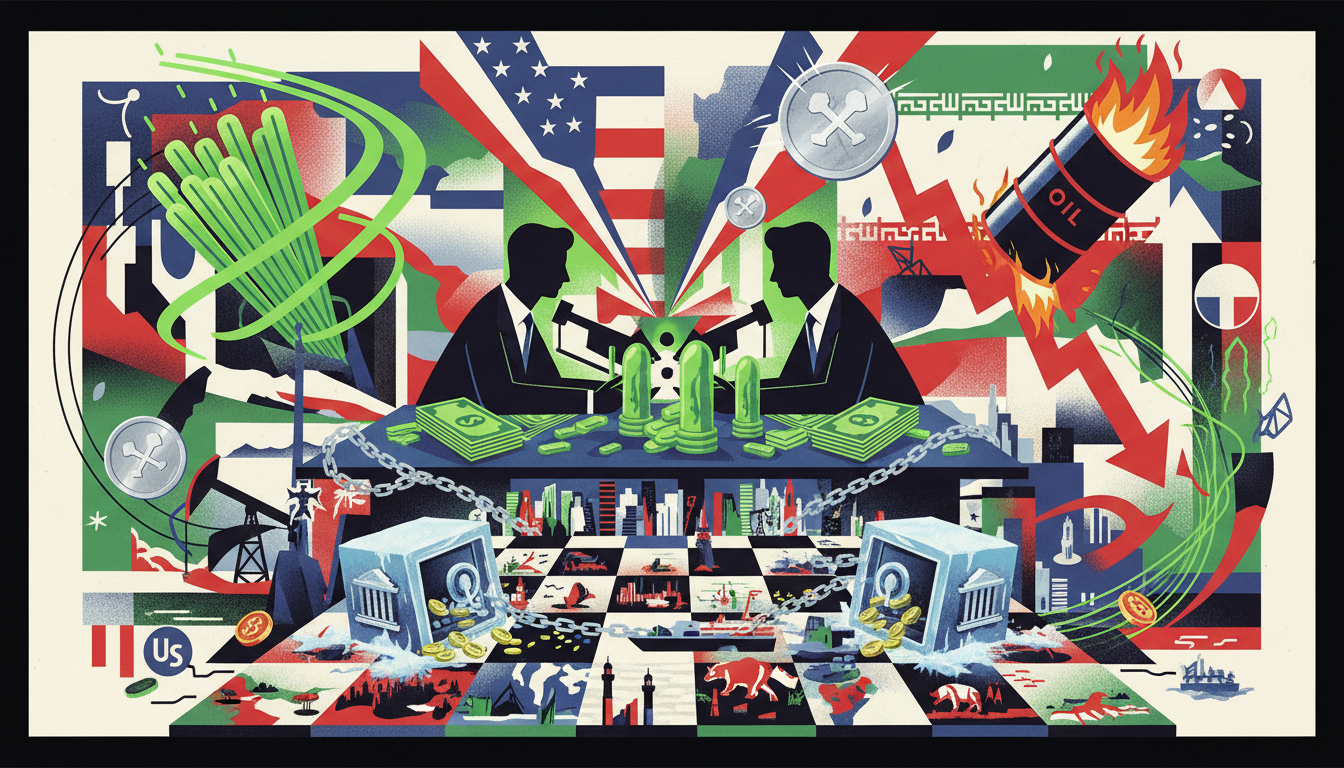
According to summaries from Chinese media such as Golden Finance, Foresight News, and PANews, Blumenthal expressed serious concerns about Antimoney Laundering loopholes and sanctions compliance issues at Binance. He cited reports about funds related to sanctions on Iran flowing through Binance, questioning whether the current compliance structure is sufficient to block high-risk funding channels. Such concerns are not unfounded; they are built upon the framework of the U.S. elevating anti-money laundering and sanctions enforcement as national security issues: any seemingly "technical" compliance lapse could be amplified as a security risk from a geopolitical perspective.
As for why the focus is on the monitor role at this moment, on one hand, it can be interpreted as a routine action by lawmakers to fulfill procedural accountability—checking whether the execution status aligns with public expectations some time after a major settlement agreement is signed; on the other hand, in light of recent revelations about the Justice Department suspending or shrinking certain corporate monitoring plans, this letter is also seen as a warning signal against potential "regulatory loosening." In other words, Blumenthal is not simply questioning Binance but reminding the Justice Department and FinCEN: amid resource constraints and political pressures, the compliance monitoring of large crypto platforms cannot devolve into mere paperwork.
Billion-Dollar Funds Doubts: A Magnifying Glass on Antimoney Laundering Loopholes
Blumenthal’s decision to challenge at this moment is largely connected to a recent focus on a set of sensitive funding data by the outside world. Several Chinese media outlets cited a single overseas report stating that approximately $1 billion to $1.7 billion of crypto funds related to Iran have flowed through the Binance platform, with the figure of "about $1.7 billion" frequently quoted. If this number is accurate, it could be viewed as a major risk exposure in any financial institution's anti-money laundering and sanctions compliance assessment. However, it is essential to emphasize that the current specific amounts, time span, and transaction structures about these funds come from a single source, and different reports mention both "over $1 billion" and "about $1.7 billion," showing notable discrepancies.
In the absence of multi-source verification and official disclosures, these figures are better regarded as indicative clues, not as established factual conclusions. For readers, the key to rationally processing this type of information lies not in fixating on the precise value of "is it $1 billion or $1.7 billion," but in realizing that once a leading exchange is accused of having significant interactions with sanctioned countries or entities, even if not formally confirmed on a legal level, it is enough to trigger heightened vigilance from lawmakers, law enforcement agencies, and the market. Especially in the current context of geopolitical tension, compliance with anti-money laundering and sanctions carries extremely high political sensitivity and public opinion amplification effects; any unclear funding flows will be scrutinized under a microscope.
From this perspective, the "billion-dollar funds doubts" serve more as a spotlight shining on Binance's compliance framework: it prompts the public and regulators to reassess whether the firewall constructed through the $4.3 billion settlement and independent monitors is sufficiently tight, and whether it can address the real-world challenges posed by complex cross-border funds and dynamic changes in sanctions lists. This, in turn, subtly raises market expectations for transparency regarding compliance progress and risk handling among major exchanges.
The Shadow of the Justice Department’s Shrinking Corporate Monitoring Plans
Running parallel to the Binance case is the U.S. Department of Justice's adjustments to its broader Corporate Monitorship program. According to reports from foreign media, the Justice Department has recently come under scrutiny for pausing or shrinking corporate monitoring arrangements in certain cases, sparking widespread discussion in compliance and legal circles about its motivations. One interpretation suggests that this is a trade-off based on resource allocation and cost-effectiveness: deploying independent monitors long-term entails high financial and human resources for both the Justice Department and the monitored companies, and the benefits in individual cases can be hard to quantify. Another perspective worries that such reductions might objectively weaken ongoing constraints on large enterprises, especially multinational fintech platforms.
In this policy context, it is natural for observers to turn their attention to Binance: Does this global trading platform, which just exchanged a record amount for a settlement and compliance restructuring, still have its independent monitoring mechanism affected by this “balance-sheet reduction” mentality? Blumenthal’s inquiry openly raises this concern using a legislator's approach—if the Justice Department overall reduces its long-term monitoring investment in businesses, whether the independent oversight in the Binance case can maintain its initial promised strength and independence or be quietly downgraded in execution is an unavoidable question.
Deeper contradictions lie in the following: on one side, regulatory resources are limited, and the number of law enforcement personnel and independent monitors cannot infinitely expand; on the other, the number of high-risk fintech entities is rapidly increasing, encompassing everything from traditional financial institutions to crypto exchanges, decentralized finance interfaces, and cross-border payment startups, all monitored under the anti-money laundering and sanctions compliance lens. This structural imbalance forces regulatory bodies to make choices and prioritize among many high-risk subjects, also allowing room for market speculation—when regulators must focus on the "most critical risk points", whether platforms like Binance will still be closely locked in or, to some extent, receive "regulatory discounts" becomes a crucial variable in the competition.
Compliance Game Escalation: A Long-term Confrontation Between Exchanges and Regulators
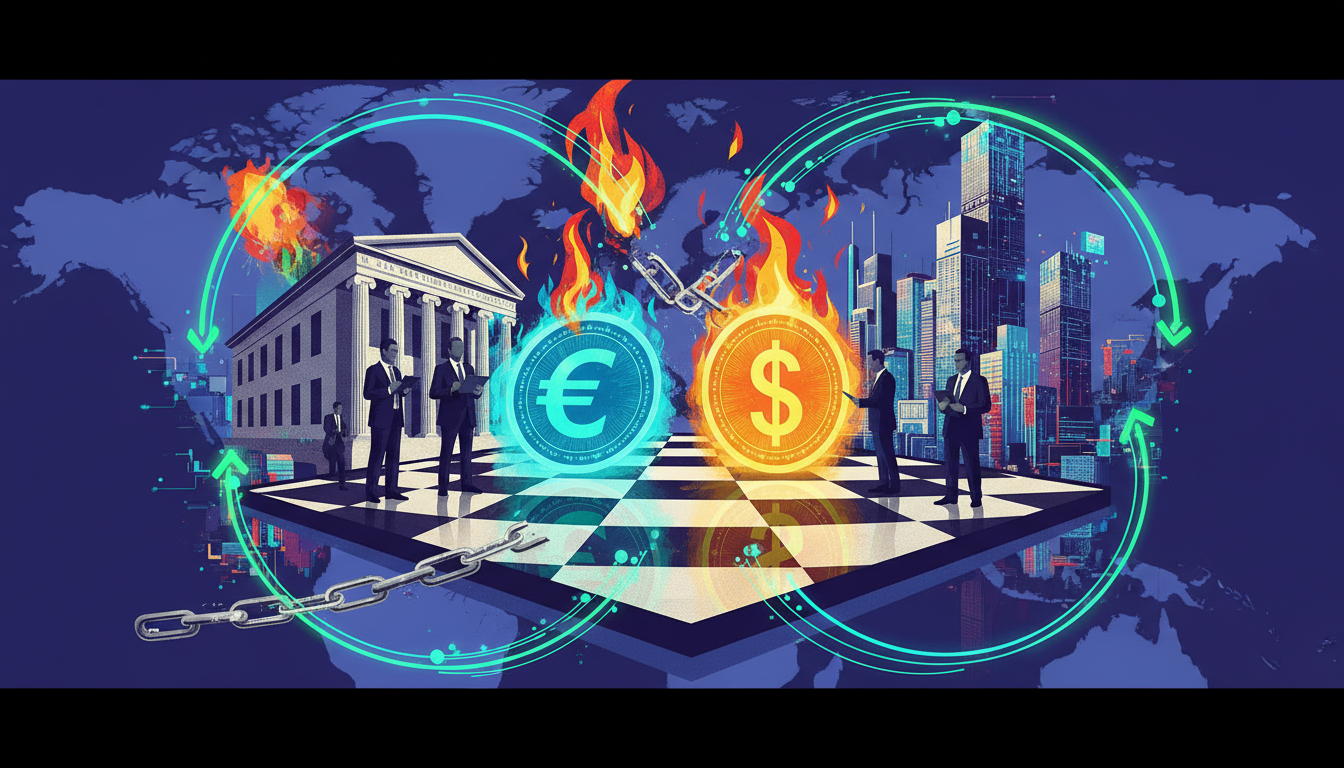
If the Binance case is viewed as an amplified sample, it reveals the complex balancing act that large crypto exchanges engage in between compliance costs, market share, and regulatory negotiations. On one hand, the hefty settlement, ongoing years of independent oversight, and systemic remodelling of KYC and transaction monitoring structures all signify tangible cost expenditures and operational constraints. For platforms known for global liquidity and product innovation, this may weaken their competitiveness in certain regions, giving small- and medium-sized platforms in regulatory "gray areas" more flexibility. On the other hand, by bearing high compliance costs and reaching settlements with crucial jurisdictions like the U.S., top platforms such as Binance gain the opportunity to secure advantageous positions in the long-term compliance race.
Throughout this process, lawmakers apply pressure, law enforcement agencies act cautiously, and platforms undergo self-reform, creating a less-than-smooth interaction pathway. Lawmakers continuously raise higher compliance expectations and oversight requirements through public letters, hearings, and potential legislation; law enforcement must find a balance among legal boundaries, evidence standards, and resource constraints, avoiding a "blind eye" towards large platforms while also preventing excessively aggressive enforcement from triggering systemic risks or industry exodus; platforms, facing pressure, adjust their business models and compliance frameworks, but will also leverage compliance improvements to negotiate for more reasonable regulatory treatment. The rhythms of these three parties do not always sync, often leading to expectations misalignment and information asymmetry, manifesting market-wise as periodic "compliance storms."
The spillover effects of this game are already apparent: for other leading global exchanges, Binance’s $4.3 billion settlement and subsequent oversight disputes act as a mirror—once entering high-standard jurisdictions like the U.S., compliance baselines are no longer self-determined by platforms but characterized jointly by regulators through penalties, settlement terms, and continuous oversight. For small- and medium-sized platforms, this case represents dual pressures: on one hand, regulatory attention and law enforcement focus are extending from individual giants to a broader range of crypto service providers, making it increasingly difficult to remain "invisible" even if smaller in scale; on the other hand, after experiencing major compliance overhauls, if leading platforms successfully complete governance upgrades, they may gain trust premiums from institutional clients and compliance-sensitive funds, further constricting the survival space for smaller platforms. This compliance game surrounding Binance is, in essence, reshaping the competitive landscape and regulatory mapping of the entire crypto exchange industry.
From the Binance Question to the Industry Question: How Will the Compliance Baseline be Redrawn
Returning to the narrative starting point, a clear regulatory main thread emerges: Binance reached a $4.3 billion settlement with the Justice Department due to anti-money laundering and sanctions compliance issues, introducing an independent monitoring mechanism; the Justice Department was subsequently revealed to be shrinking corporate monitoring plans on a broader scale, raising questions about the strength of compliance supervision; at this juncture, Blumenthal chose to publicly query the Justice Department and FinCEN regarding the true status and performance of Binance’s monitors. The convergence of these three aspects pushes questions that originally existed only within legal documents and regulatory internal procedures to a more public and politicized stage.
Looking ahead, the transparency of U.S. oversight arrangements regarding Binance is likely to improve. Regardless of whether the Justice Department and FinCEN are willing to disclose the names and detailed activities of specific monitors, at least at the principle level and mechanism operational framework, it is possible to release more information via briefings, hearings, or responses to Congress to address doubts about whether supervision is being weakened in execution. Once this information is made public, it will directly affect market sentiment towards Binance and the entire crypto exchange sector: if the external world believes that independent monitoring is still operating strongly, some compliance concerns may ease; conversely, if the disclosed content reveals gaps in oversight or inadequate execution, it could trigger a new round of reassessment of compliance risk premiums.
For crypto exchanges, the compliance baseline and information disclosure expectations for the next few years are being rewritten. Platforms not only need to meet traditional technical and security requirements but also proactively increase transparency in anti-money laundering, sanctions compliance, and cross-border data governance, accepting scrutiny from regulators, lawmakers, and the market. For investors and users, on one hand, there is a need to realize that compliance risks have transitioned from background variables to core factors influencing platform survival and business continuity; on the other hand, when evaluating exchange choices and risk exposures, one should not only focus on trading depth and fees, but also consider the compliance status in major jurisdictions, the historical interactions with regulators, as well as the existence of any significant unresolved investigations or settlement obligations. Ultimately, the question surrounding Binance will evolve into a compliance question that the entire industry must collectively address.
Join our community to discuss and become stronger together!
Official Telegram community: https://t.me/aicoincn
AiCoin Chinese Twitter: https://x.com/AiCoinzh
OKX Welfare Group: https://aicoin.com/link/chat?cid=l61eM4owQ
Binance Welfare Group: https://aicoin.com/link/chat?cid=ynr7d1P6Z
免责声明:本文章仅代表作者个人观点,不代表本平台的立场和观点。本文章仅供信息分享,不构成对任何人的任何投资建议。用户与作者之间的任何争议,与本平台无关。如网页中刊载的文章或图片涉及侵权,请提供相关的权利证明和身份证明发送邮件到support@aicoin.com,本平台相关工作人员将会进行核查。