Written by: Slow Fog Technology
On April 7, 2026, the Federal Bureau of Investigation (FBI) released the "2025 Internet Crime Report." This report coincided with the 25th anniversary of the FBI's Internet Crime Complaint Center (IC3), and it provided a detailed analysis based on over one million complaint data collected in 2025. It explored the historic loss scale exceeding $20.8 billion, victim profiles, investment frauds, and more, with a focus on the evolving trends of artificial intelligence (AI) in online scams and breakthroughs in asset recovery by law enforcement agencies.
This article interprets the core content of the report to help readers quickly grasp the dynamic changes in global cybersecurity threats in 2025 and enhance their awareness and prevention capabilities against complex online fraud and AI-driven threats.
Key Point 1: IC3 Complaint Data for 2025
1. Overall Situation
In 2025, IC3 received a total of 1,008,597 complaints, with total losses amounting to $20.877 billion, an increase of 26% compared to 2024, resulting in an average loss of approximately $20,699 per incident. Among these, 85% of losses were due to online scams.
2. Cryptocurrency-Related Complaints
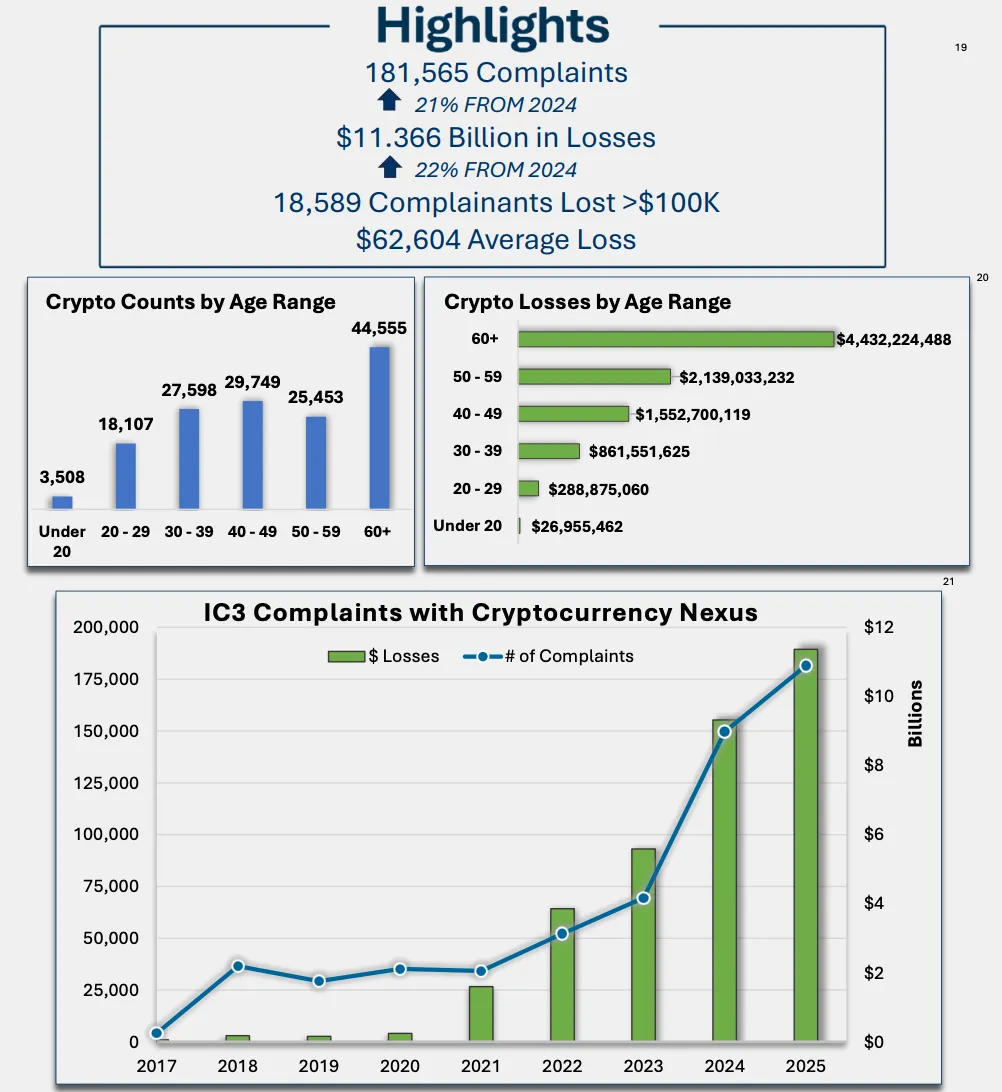
Complaints related to cryptocurrency totaled 181,565, resulting in losses of $11.366 billion, a 22% increase from 2024. Among these, 18,589 investors lost over $100,000. The group aged 60 and above accounted for the highest proportion among all complainants.
Key Point 2: Victim Group Analysis
1. Overall Age Distribution
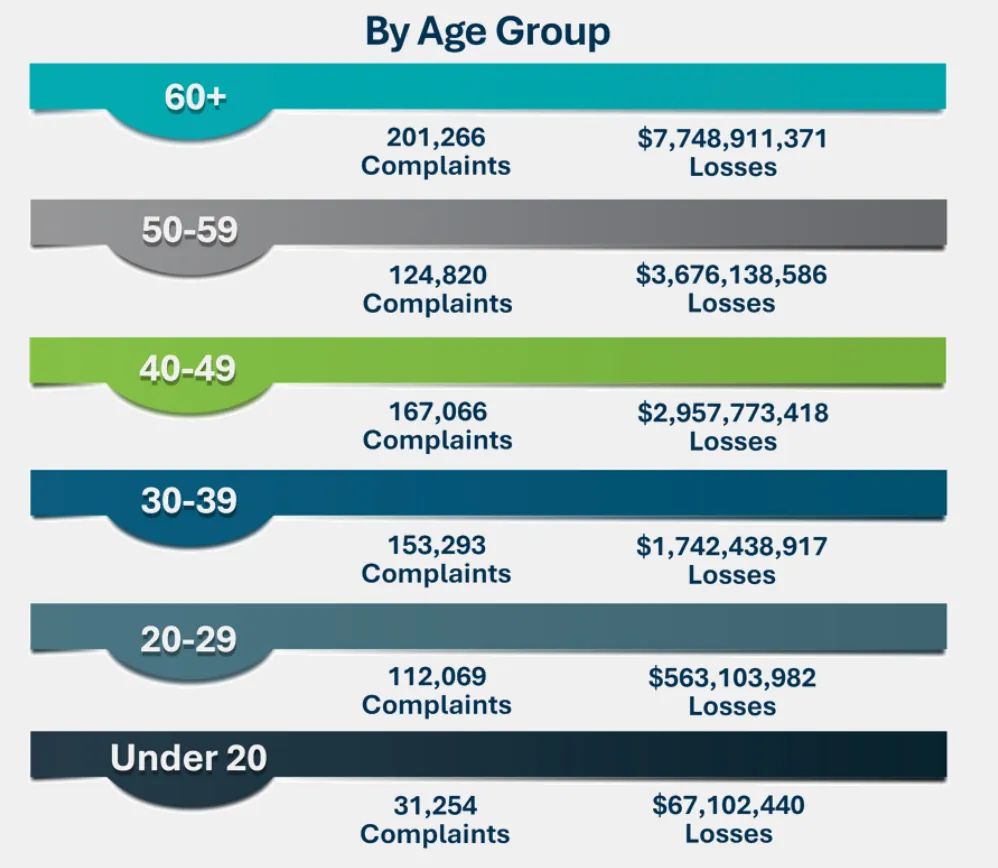
- Aged 60 and above: 201,266 complaints, approximately $7.75 billion in losses.
- Ages 50-59: 124,820 complaints, approximately $3.68 billion in losses.
- Ages 40-49: 167,066 complaints, approximately $2.96 billion in losses.
- Ages 30-39: 153,293 complaints, approximately $1.74 billion in losses.
- Ages 20-29: 112,069 complaints, approximately $560 million in losses.
- Under 20: 31,254 complaints, approximately $67.1 million in losses.
2. Cryptocurrency Victim Groups
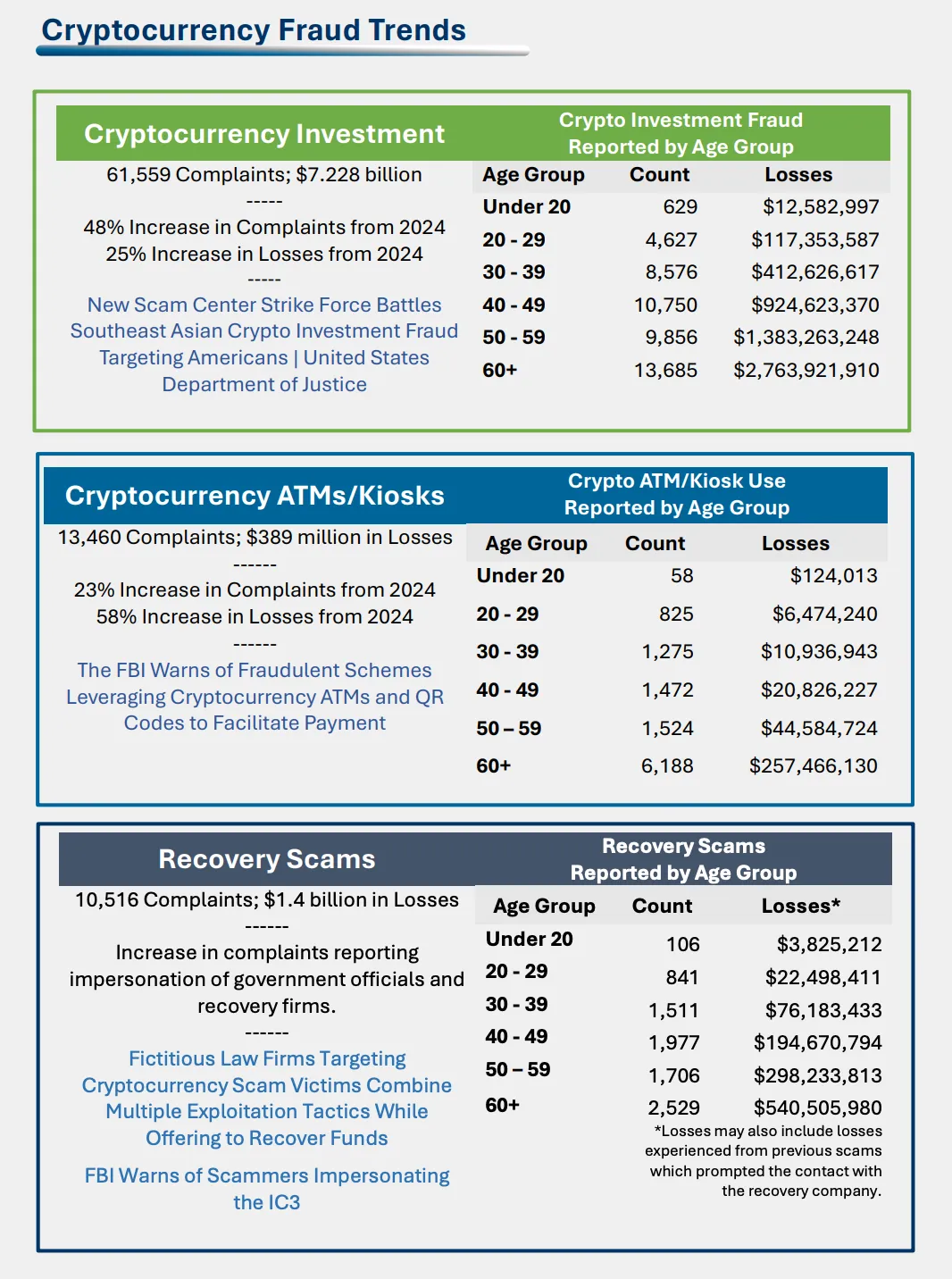
In cryptocurrency investment scams, the group aged 60 and above had the highest number of complaints (13,685), with total losses of $2.76 billion, far exceeding other age groups. This group was also the most affected in cryptocurrency ATM/Kiosk scams, with 6,188 related complaints and losses of approximately $257 million. Due to a lack of understanding of emerging financial technologies and payment methods (such as cryptocurrency ATMs, QR code transfers, etc.) and relatively weak anti-fraud awareness, individuals aged 60 and above have become key targets for scammers.
Notably, many victims were scammed a second time after initially being defrauded because they believed in so-called "fund recovery services"—in "recovery scams," this age group again topped the complaints with 2,529 complaints and losses exceeding $540 million.
3. Main Types of Scams Faced by the Aged 60 and Above
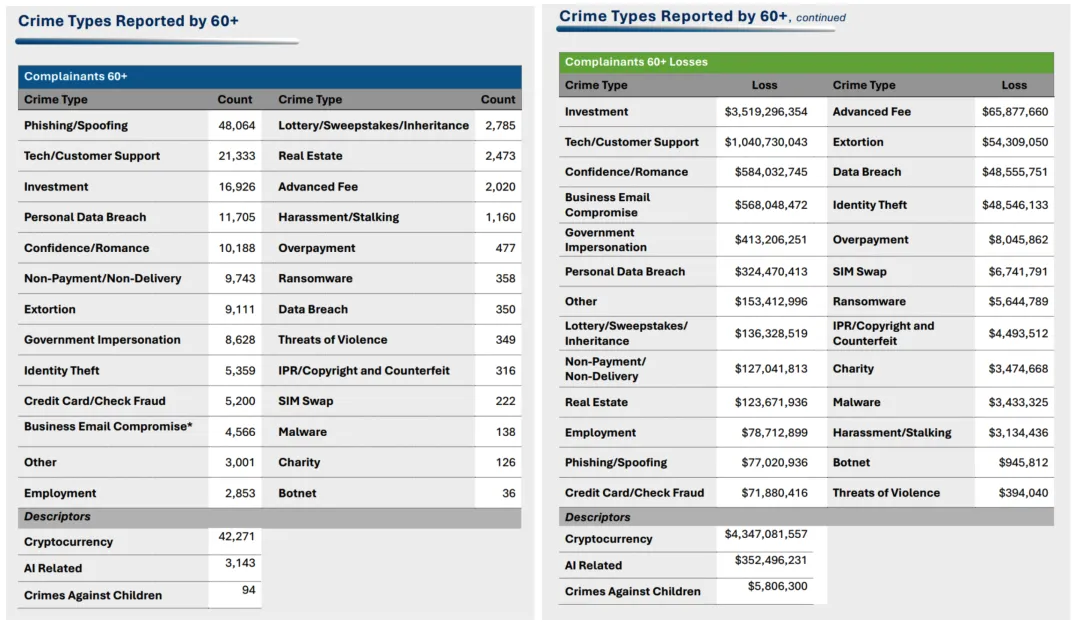
- The scam types with the most complaints: phishing/identity theft, tech support/customer service scams, investment fraud, personal data breaches, emotional/trust scams.
- The scam types with the most losses: investment fraud, tech support/customer service scams, emotional/trust scams, business email compromise (BEC) scams, impersonation of government officials scams.
Key Point 3: Crime Type Analysis
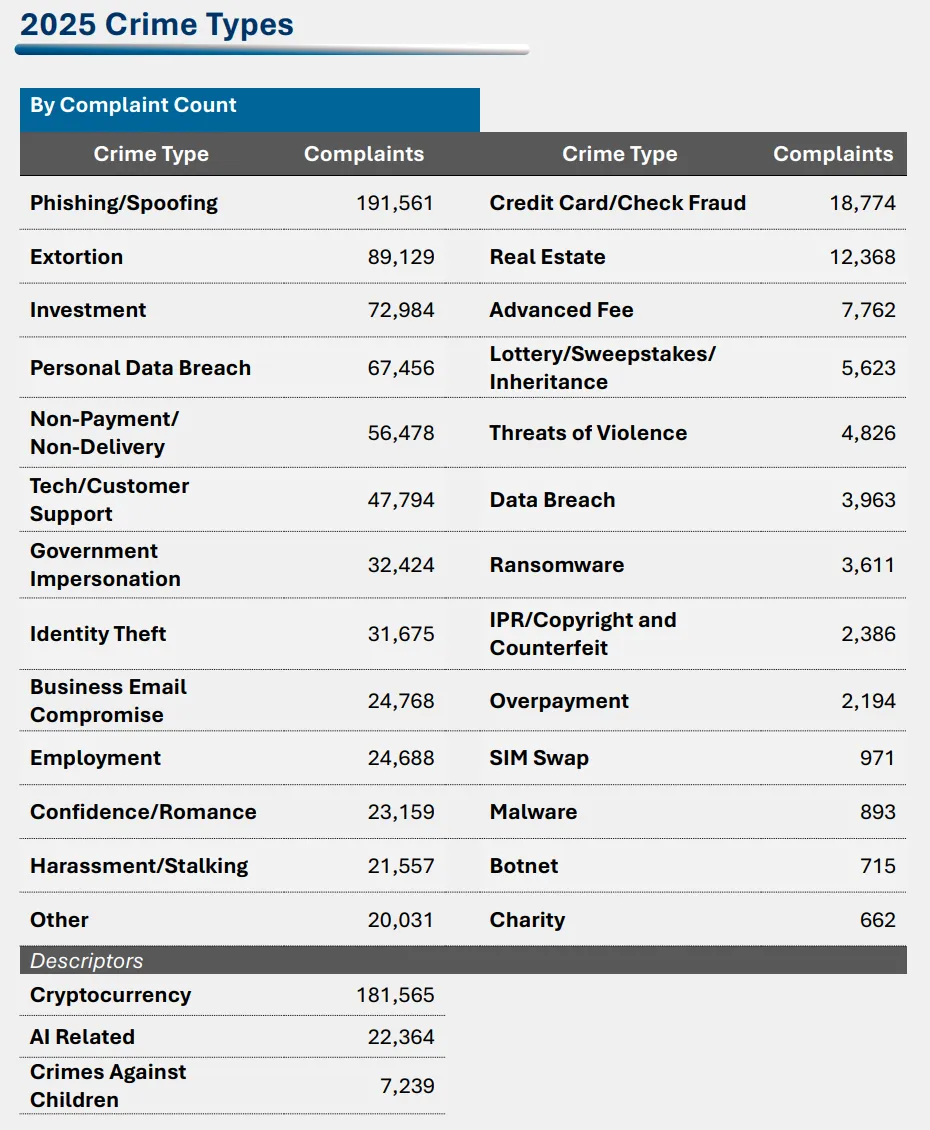
1. By Number of Complaints
- Phishing/electronic scams: 191,561 complaints.
- Extortion: 89,129 complaints.
- Investment fraud: 72,984 complaints.
- Personal data breaches: 67,456 complaints.
- Unpaid/unshipped: 56,478 complaints.
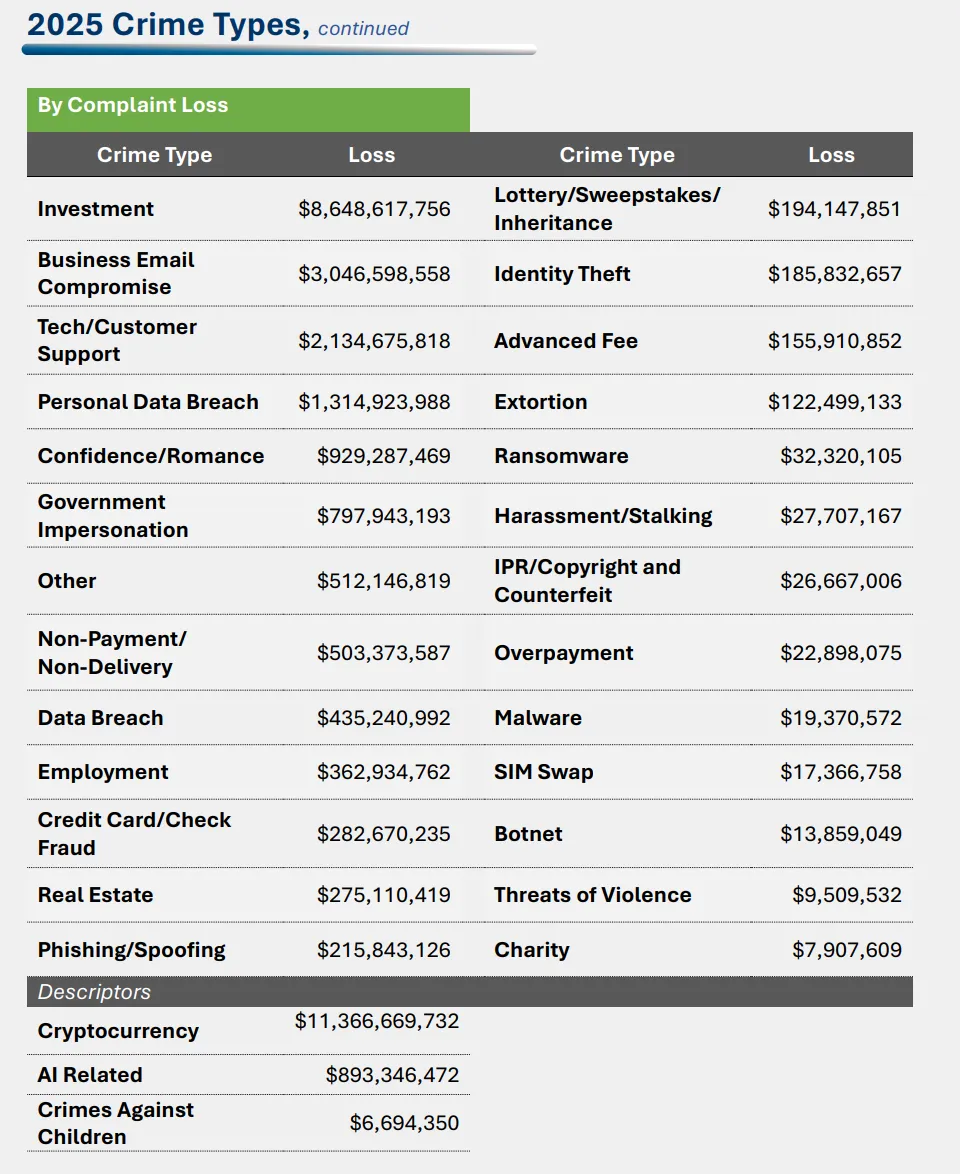
2. By Loss Amount
- Investment fraud: approximately $8.649 billion.
- Business email compromise (BEC): approximately $3.047 billion.
- Tech support/customer service scams: approximately $2.135 billion.
- Personal data breaches: approximately $1.315 billion.
- Emotional/trust scams: approximately $929 million.
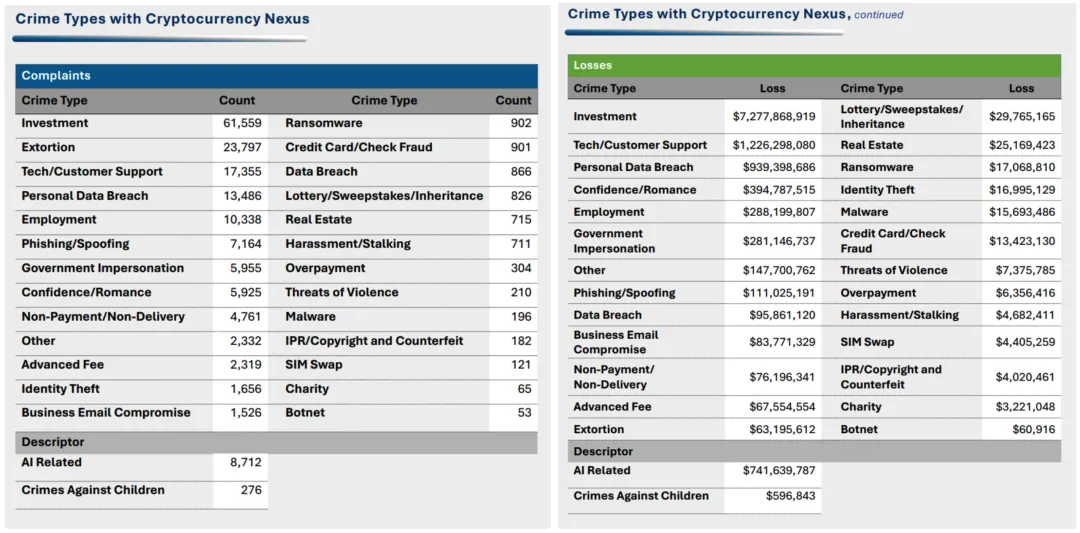
3. Cryptocurrency-Related Crimes
- Most complaints: investment fraud (61,559), extortion (23,797).
- Largest losses: investment fraud (approximately $7.28 billion), tech support/customer service scams (approximately $1.23 billion).
Key Point 4: Online Scams and Law Enforcement Achievements
1. Overall Situation of Online Scams
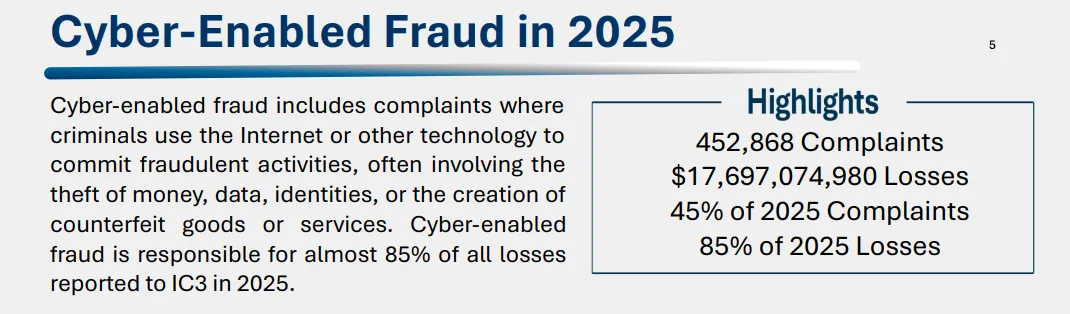
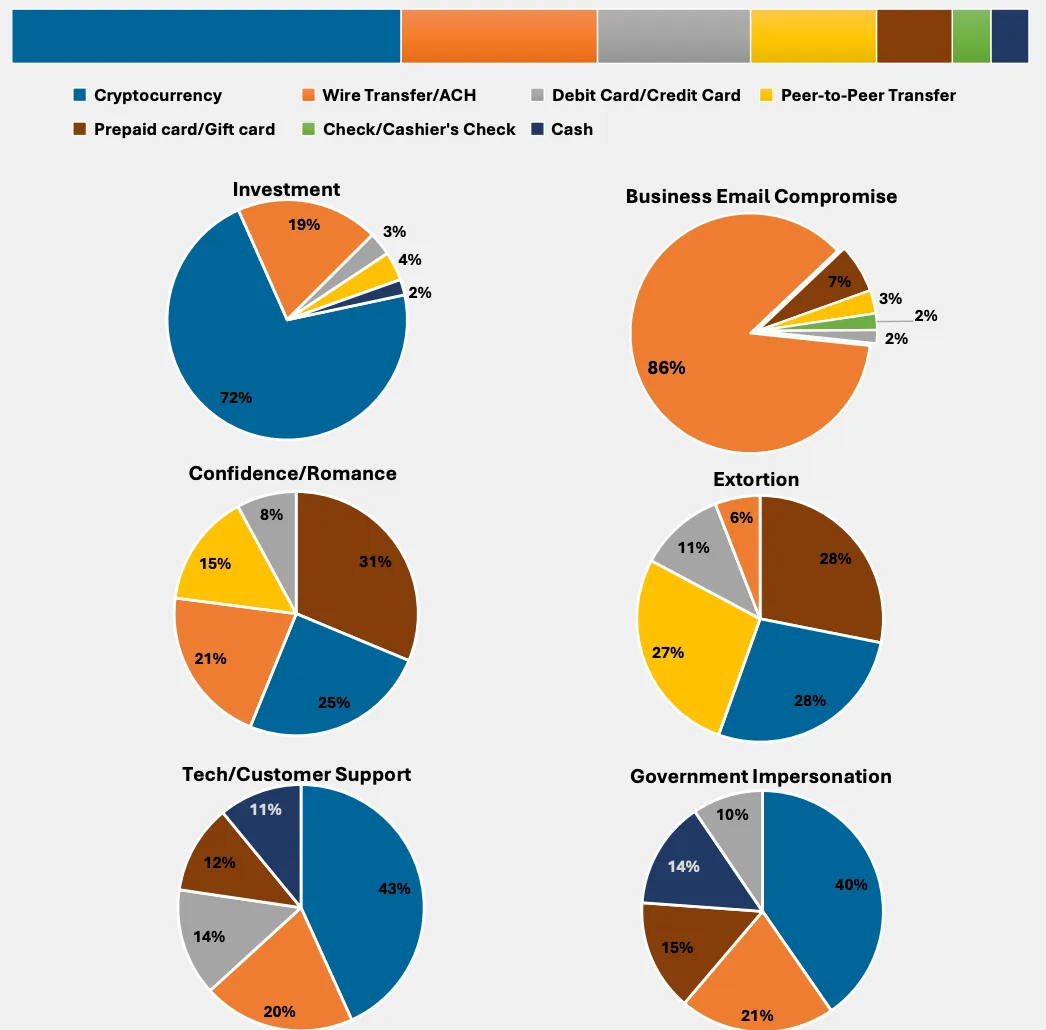
In 2025, IC3 received 452,868 complaints related to online scams, resulting in losses of $17.697 billion, accounting for 85% of total losses for the year.
The types of transactions with the most complaints included cryptocurrency, wire/ACH transfers, debit/credit cards, peer-to-peer transfers, gift cards/prepaid cards, checks/bank drafts, and cash.
2. Typical Scam Techniques
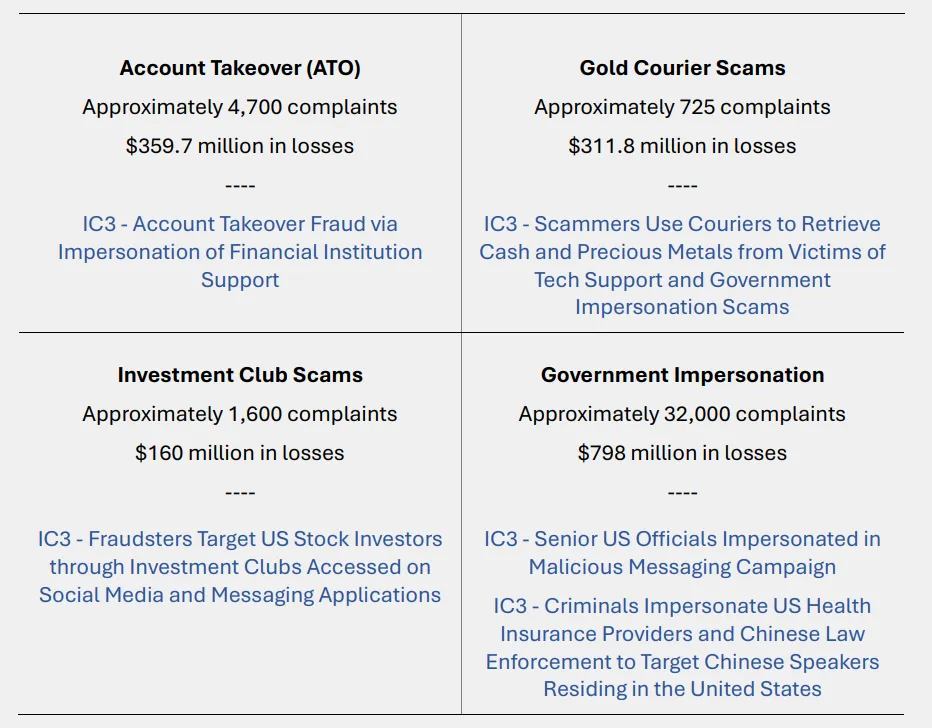
- Account takeover: approximately 4,700 complaints, $359.7 million in losses.
- Gold delivery scams: approximately 725 complaints, $311.8 million in losses.
- Investment club scams: approximately 1,600 complaints, $160 million in losses.
- Impersonation of government officials: approximately 32,000 complaints, $798 million in losses.
3. Cyber Threats
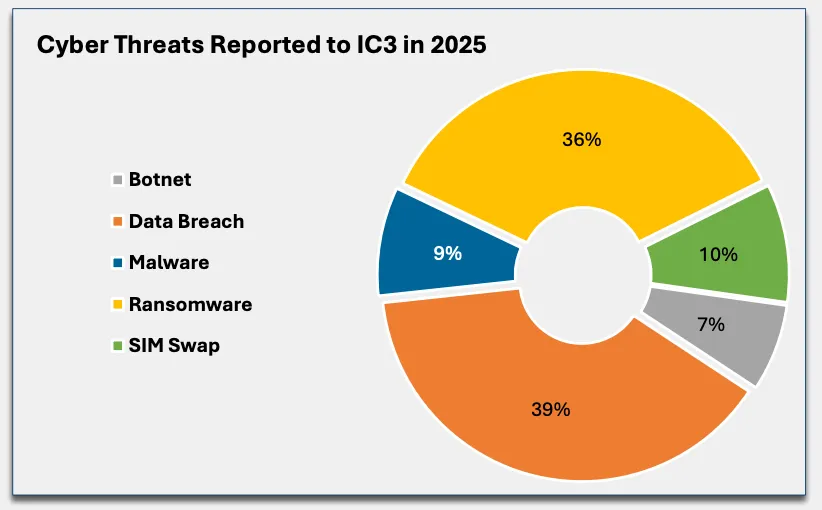
In 2025, types of cyber threats reported to IC3 included:
Data breaches: 39%, the most common type.
Ransomware: 36%, the second most common type.
SIM card swapping: 10%.
Malware: 9%.
Botnets: 7%.
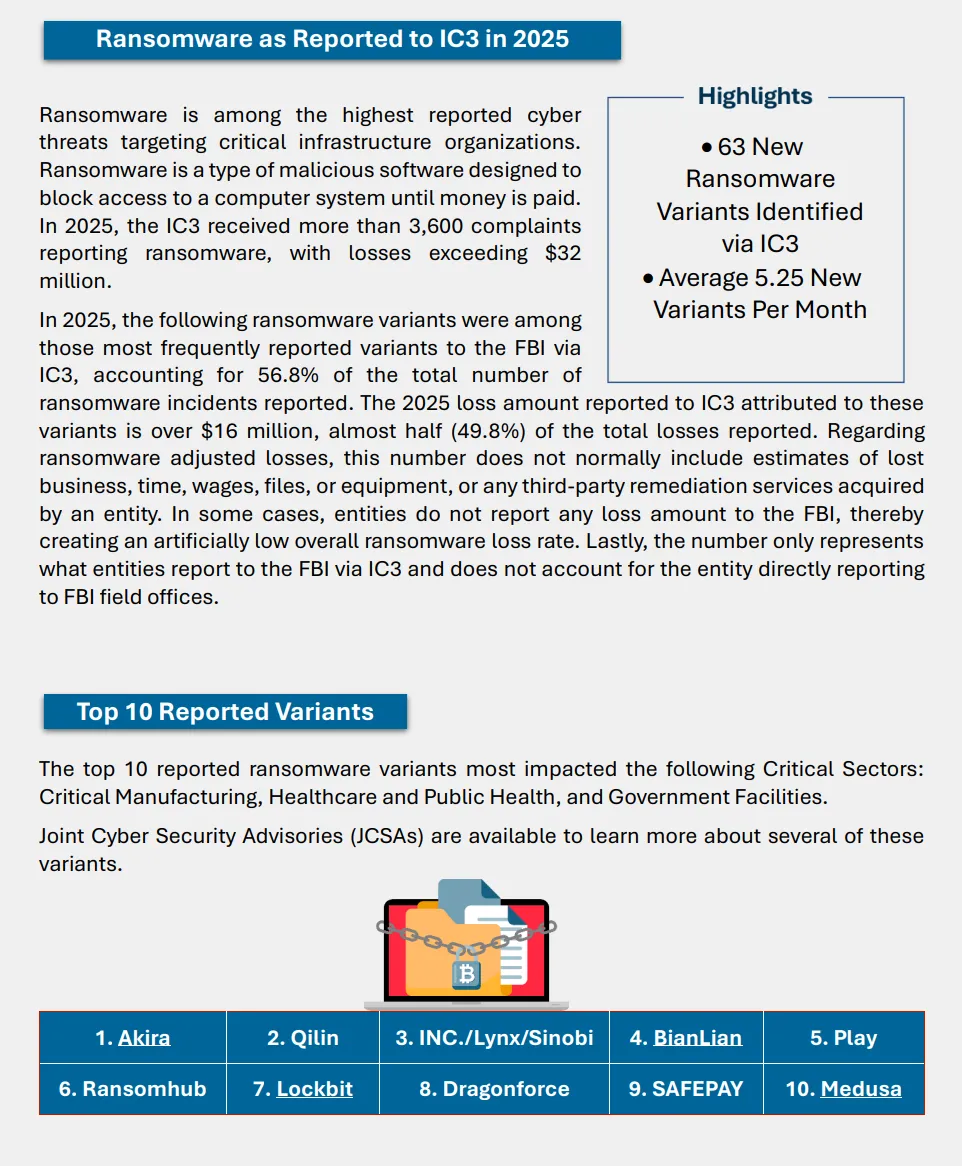
Among these, 3,600 complaints regarding ransomware led to losses of over $32 million. Major ransomware variants include Akira, Qilin, INC./Lynx/Sinobi, BianLian, Play, Ransomhub, Lockbit, Dragonforce, SAFEPA, Medusa.
In light of the frequent ransomware attacks, the FBI recommends that businesses and organizations take the following key protective measures:
- Create offsite or offline backups and regularly maintain backup and recovery mechanisms;
- Remove default passwords and credentials when installing software;
- Disable and remove unnecessary protocols by default;
- Enable multi-factor authentication (MFA) for all services wherever possible;
- Protect initial points of entry;
- Implement network segmentation to prevent the spread of ransomware;
- Promptly update all operating systems, software, and firmware.
4. Asset Recovery Achievements
- In 2025, the FBI RAT intercepted 3,900 cases through FFKC, freezing $679 million in funds, with a successful interception rate of 58%.
- "Operation Level Up" issued alerts to over 8,000 victims and recovered over $500 million in potential losses for these victims.
- In collaboration with Indian law enforcement, it targeted call center scams, resulting in over 475 arrests through 27 joint actions.
- In financial fraud projects, multiple large amounts of funds were successfully frozen and recovered.
Key Point 5: The Application of Artificial Intelligence (AI) in Cyber Crime
1. Overall Situation
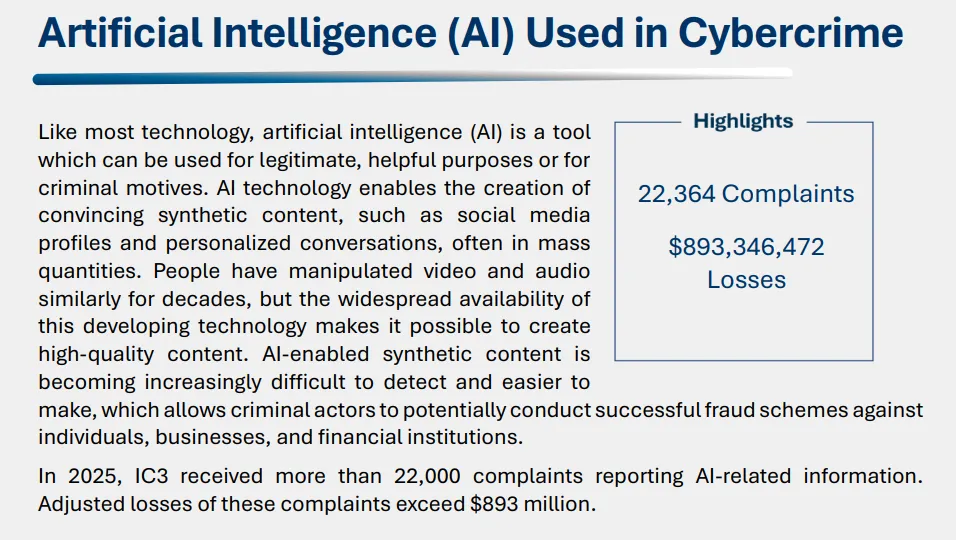
In 2025, IC3 received over 22,000 complaints involving AI-related information. The total losses from these complaints exceeded $893 million.
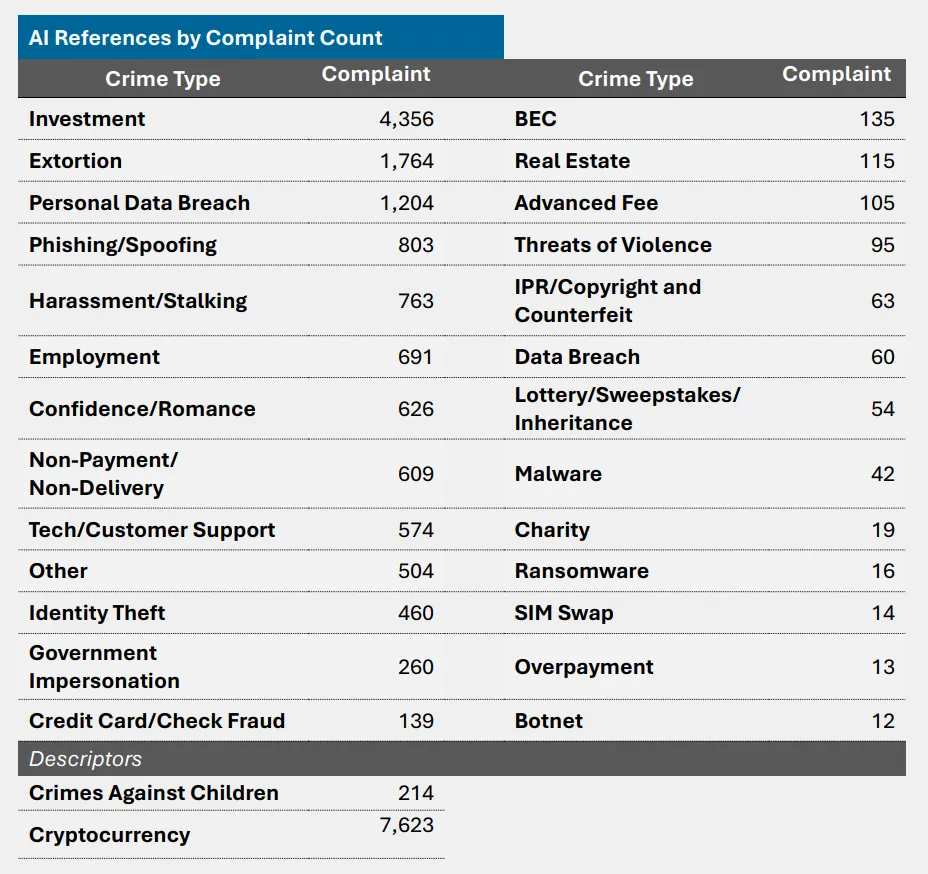
2. By Number of Complaints
- Investment fraud: 4,356.
- Extortion: 1,764.
- Personal data breaches: 1,204.
- Phishing/impersonation scams: 803.
- Harassment/stalking: 763.
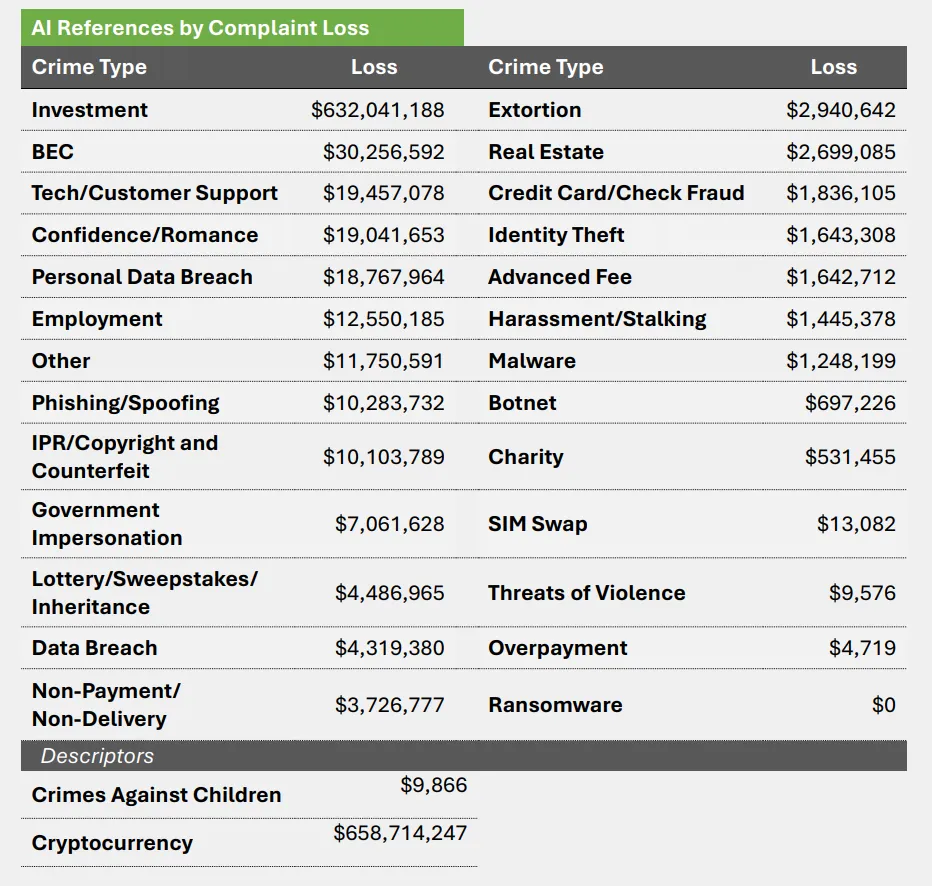
3. By Loss Amount
- Investment fraud: approximately $632.04 million.
- Business email compromise (BEC): approximately $30.26 million.
- Tech support/customer service scams: approximately $19.46 million.
- Emotional/trust scams: approximately $19.04 million.
- Personal data breaches: approximately $18.77 million.
4. Specific Applications of AI in Typical Scam Scenarios
According to the report, AI has been widely applied in the following typical scam scenarios:
- Business email compromise (BEC): using AI to generate emails mimicking the tone of executives or issuing transfer instructions via voice cloning, resulting in losses exceeding $30 million in 2025;
- Emotional/trust scams: generating false identities and dialogue scripts through AI, even simulating emergency requests from relatives using voice cloning, with losses over $19 million;
- Recruitment scams: using voice forgery or deepfake technology during remote interviews to gain internal access to companies, resulting in nearly $13 million in losses;
- Investment fraud: leveraging AI to bulk-generate personalized communication content and faking videos and voices for celebrity or authoritative endorsements, with losses exceeding $632 million.
Overall, AI is lowering the barriers to scams and significantly enhancing the scalability and disguise capacity of fraud.
Conclusion
The "2025 Internet Crime Report" published by the FBI further reveals the profound evolution of the current cybercrime ecosystem: on one hand, the scale of fraud continues to rise, with cryptocurrency still serving as an important vehicle for fund transfer and money laundering; on the other hand, the methods of crime are rapidly shifting from traditional "opportunistic fraud" to "precision, industrialized operations," especially with high-intensity infiltration among the elderly population and the spread of "recovery scams," reflecting the attackers' deep utilization of victim psychology and behavior patterns. Meanwhile, the introduction of artificial intelligence technology is significantly lowering the barriers to scams and amplifying attack efficiency, gradually transforming online fraud into a complex threat system characterized by automation and scalability.
Although law enforcement agencies have achieved phased results in fund interception and cross-border cooperation, the risk situation remains severe considering the overall loss scale and growth trend. For ordinary users, developing basic risk recognition and anti-fraud awareness has become a "required course" in the digital age; for industry participants and regulatory bodies, how to enhance the comprehensive identification capacity of fund flows, behavior patterns, and abnormal signals at the technical level, and strengthen cross-regional collaborative governance, will be crucial to addressing new types of cybercrime in the future.
免责声明:本文章仅代表作者个人观点,不代表本平台的立场和观点。本文章仅供信息分享,不构成对任何人的任何投资建议。用户与作者之间的任何争议,与本平台无关。如网页中刊载的文章或图片涉及侵权,请提供相关的权利证明和身份证明发送邮件到support@aicoin.com,本平台相关工作人员将会进行核查。


