Original | Odaily Planet Daily (@OdailyChina)
Author|jk

What is this ETF?
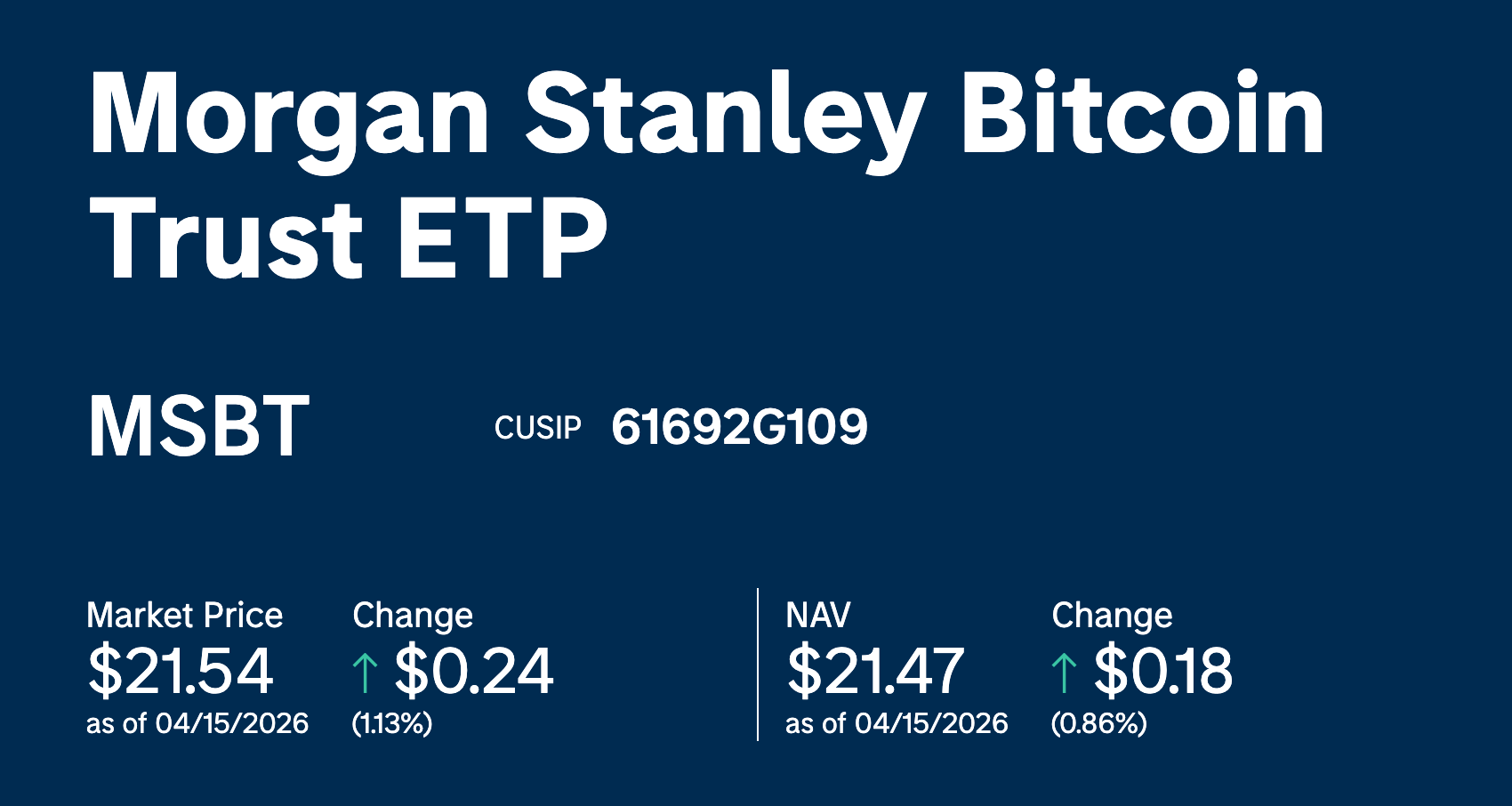
On April 8, Morgan Stanley officially launched the Morgan Stanley Bitcoin Trust (code: MSBT) on the NYSE Arca platform under the New York Stock Exchange, becoming the first spot Bitcoin ETF issued by a major commercial bank in the U.S. history.
The fund is custodied by Coinbase, with BNY Mellon responsible for cash and administrative management. The core competitive advantage is its annual fee rate of 0.14%. This is currently the lowest among all spot Bitcoin ETFs in the U.S. market, lower than BlackRock's IBIT at 0.25%, Grayscale's mini BTC at 0.15%, and Bitwise's 0.20%.
To summarize Morgan Stanley: it is one of the top investment banks and financial services companies in the USA, established in New York in 1935; its market capitalization is about $180 billion, making it one of the Globally Systemically Important Banks (G-SIB) alongside Goldman Sachs, JPMorgan Chase, and Bank of America, ranking among the top institutions on Wall Street; it has long been ranked among the top three globally in IPO underwriting, M&A advisory, and stock brokerage.
Inflow and Outflow Data for the First Week of Listing
On its first trading day (April 8), MSBT recorded a net inflow of $30.6 million, with a trading volume of approximately $34 million, and a turnover surpassing 1.6 million shares. Notably, the entire market's Bitcoin ETFs had a net outflow of $93.9 million that day, with Fidelity's FBTC and ARK 21Shares experiencing significant losses, while only BlackRock's IBIT and MSBT recorded positive inflows against the trend. In other words, this ETF completed a counter-trend capital attraction amidst the market's losses. On April 9, with news of a ceasefire negotiation between the U.S. and Iran boosting market sentiment, the entire market's Bitcoin ETFs turned into a net inflow of $304 million. MSBT continued to record a net inflow of $14.9 million, ranking third among all ETFs of the day, following BlackRock's IBIT ($269.3 million) and Fidelity's FBTC ($53.3 million).
Entering the second week (Monday, April 13), the market weakened again, and the entire market's Bitcoin ETFs returned to a net outflow state. On Tuesday, April 14, the situation was similar, with Fidelity's FBTC having a single-day outflow as high as $229.2 million, leading to a total market net outflow of $291 million, while MSBT recorded a positive inflow of $6.28 million, tying with BlackRock's IBIT and Bitwise BITB as the only three mainstream Bitcoin ETFs maintaining net inflows that day.
Cumulative data: A cumulative net inflow of $37.5 million since inception, with the fund's AUM at approximately $63.84 million (Morgan Stanley's perspective), SoSoValue data shows $70.12 million, holdings of about 960 BTC, and a market price relative to NAV premium of 0.57%, with market price returns of +6.86% and NAV returns of +6.24% since inception.
Behind the Data, Institutions Build Positions at Bear Market Lows
The inflow data of MSBT, in the current market context, sends a very clear signal.
After Bitcoin reached a historical high of $126,198 in October 2025, it significantly retraced and is currently oscillating in the $70,000-$75,000 range, down about 44% from its peak. For the first few months of 2026, U.S. spot Bitcoin ETFs experienced four consecutive months of net outflows, market sentiment was low, and retail investors were exiting.
But what are institutions doing? The data from MSBT provides a good example.
First, regarding the timing of the launch, Morgan Stanley prepared this product for about 18 months, ultimately choosing to launch it when Bitcoin was down 50% from its historical high and market sentiment was generally pessimistic, instead of entering at the peak of a bull market. Secondly, this ETF saw continuous counter-trend inflows during a time of widespread market pessimism. On April 13 and 14, when the entire market's Bitcoin ETFs saw significant net outflows (with a single-day outflow on the 14th as high as $291 million), MSBT still maintained positive inflows.
This indicates that the funds inflowing into MSBT are not hot money shifted from other ETFs due to fee rate considerations.
Third, Morgan Stanley internally recommends a holding ratio of up to 4%. Previously, the bank had advised clients to set their Bitcoin allocation ratio between 0%-4%. With MSBT's launch, advisors now have a direct tool with the lowest internal fee rate. If Morgan Stanley's approximately 16,000 wealth advisors actively recommend allocations to high-net-worth clients, even a small percentage of the $70 trillion in managed client assets reallocated will bring in billions in sustained inflows. Bloomberg ETF analyst Eric Balchunas even predicts that MSBT's AUM could reach $5 billion within a year.
Goldman Sachs Also Prepares to Enter the Market
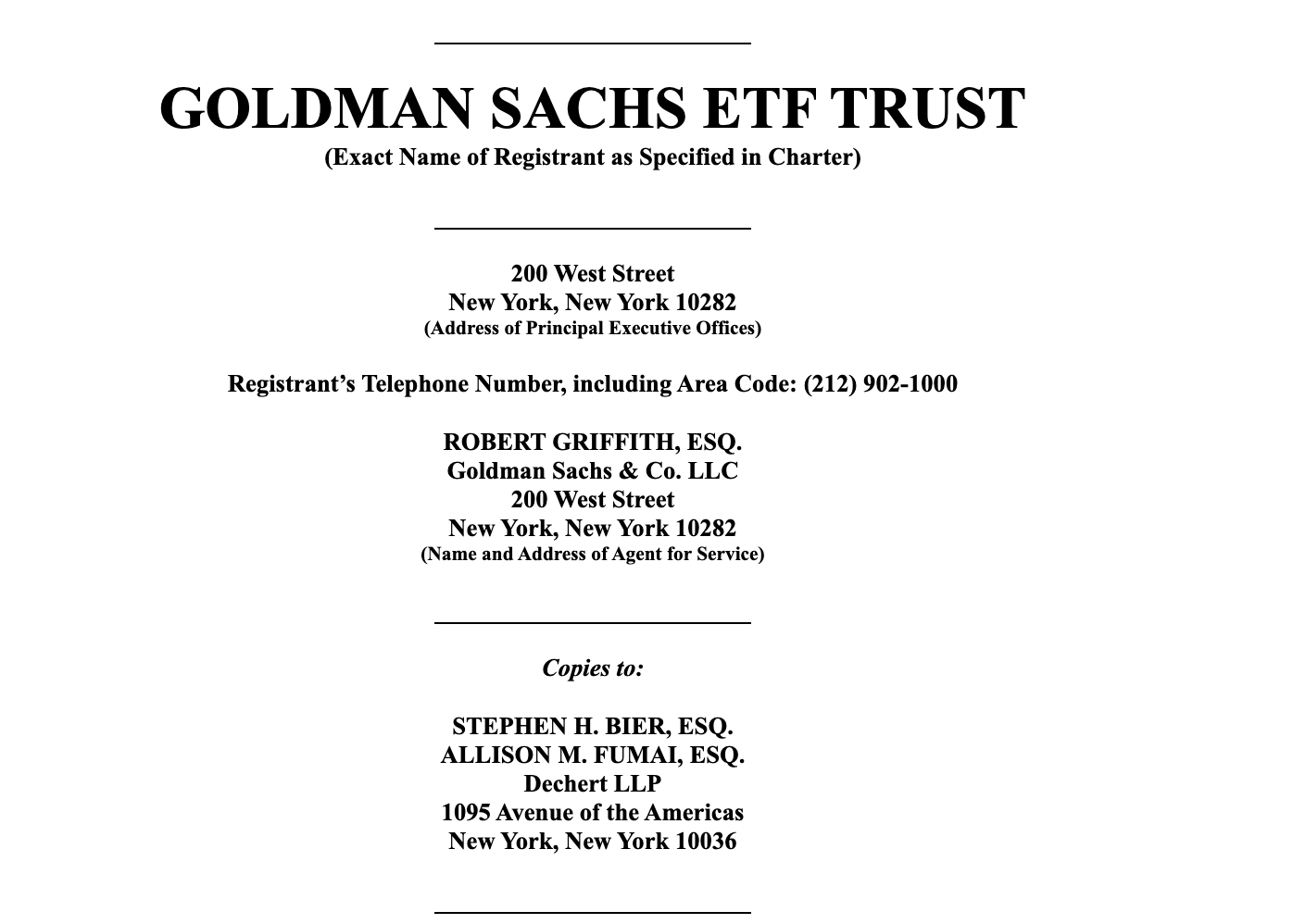
Finally, just six days after MSBT's listing, on April 14, Goldman Sachs announced its application to issue its first-ever proprietary Bitcoin ETF, becoming the second major U.S. bank to personally enter the field after Morgan Stanley.
However, Goldman Sachs's product is completely different from MSBT. The fund, named “Goldman Sachs Bitcoin Premium Income ETF,” employs a covered call strategy, aiming to generate ongoing premium income while holding exposure to Bitcoin. According to the application process, it is expected to officially list between the end of June and early July 2026.
This fund will allocate at least 80% of its net assets to Bitcoin-linked instruments, including spot Bitcoin ETPs, related options, and Bitcoin ETP index options, while utilizing covered call strategies to generate monthly income. The specific operational method is that the proportion of options sold by the fund adjusts dynamically between 40% to 100% of Bitcoin exposure—this range is designed so that the fund can continuously collect option premiums in a sideways or moderately rising market, but during significant Bitcoin rallies, since the upside is capped, the fund's performance will lag behind pure spot ETFs.
In simple terms, this is a "structure that trades some upside potential for stable cash flow"—periodically distributing option premiums to holders, suitable for investors who wish to participate in the Bitcoin narrative but place more importance on stable cash flow rather than full price appreciation. Bloomberg ETF analyst Eric Balchunas thus humorously referred to it as “Boomer Candy,” tailor-made for traditional institutional investors who want to benefit from Bitcoin gains while unable to tolerate extreme volatility.
Goldman Sachs's entry subsequently drove a single-day inflow of $411.5 million across the entire market. In other words, there is no need to panic in a bear market; top institutions on Wall Street have begun to collectively position themselves.
Conclusion
In its first week of listing, the numbers for MSBT do not appear particularly striking. A cumulative inflow of $37.5 million is negligible compared to BlackRock's IBIT at $55 billion. However, a century-old institution managing $70 trillion in wealth entering the market at the historically lowest fee rate amidst a 44% retracement in Bitcoin and extremely pessimistic market sentiment, continuously pushing positions to high-net-worth clients through 16,000 advisors, makes this signal itself very important. For readers who pay attention to institutional trends, the weekly inflow data of MSBT will become an important window for observing Wall Street's true attitude moving forward.
免责声明:本文章仅代表作者个人观点,不代表本平台的立场和观点。本文章仅供信息分享,不构成对任何人的任何投资建议。用户与作者之间的任何争议,与本平台无关。如网页中刊载的文章或图片涉及侵权,请提供相关的权利证明和身份证明发送邮件到support@aicoin.com,本平台相关工作人员将会进行核查。


