Written by: APPSO
If you are a shoe company with years of losses, a halved sales figure, and all offline stores to be shut down, what can you do to make the company's stock price soar by 700% in a single day?
The answer is to stop selling shoes and then loudly shout those five letters with magical powers of resurrection: AI + GPU.

Reality is full of plot twists from dark humor novels. Once praised as the "Silicon Valley's FitFlop," and loved by tech giants, the eco-friendly running shoe brand Allbirds made an irrational decision after experiencing disastrous performance declines:
They not only sold their brand and core assets for a jump-off price of $39 million, but with the new $50 million financing, they turned into a computing power company named "NewBird AI."
According to the grand narrative from the officials, they aim to become "a fully integrated GPU as a service (GPUaaS) and AI-native cloud solution provider."
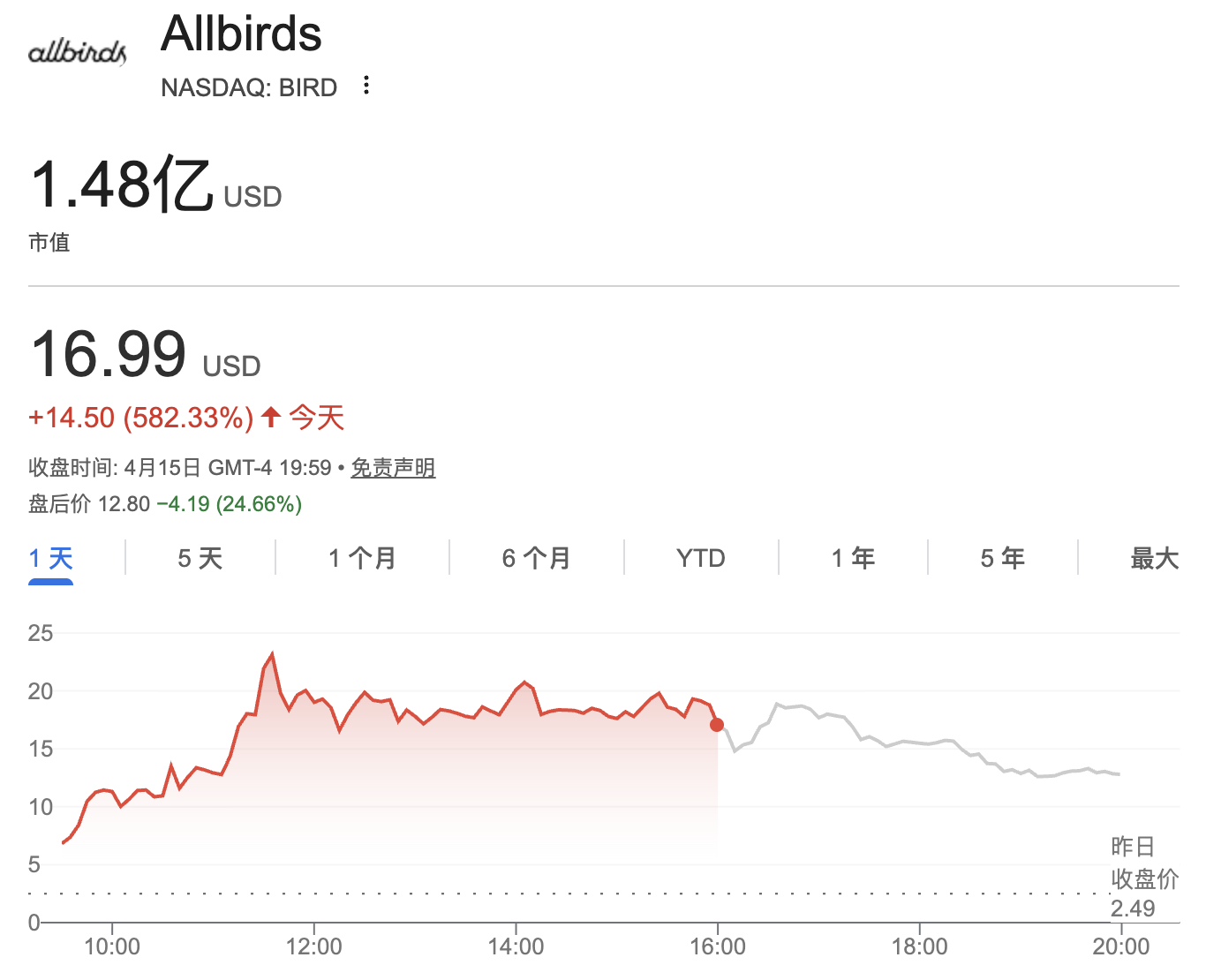
As soon as the news broke, the long-silent Allbirds stock rose like it had been injected with a stimulant, skyrocketing by 721% at one point during trading, with a market value of about $184.5 million, while just the day before its total market capitalization was only a mere $21 million, with share prices hovering below $3.
In today's world swept by the AI wave, we have seen numerous stories of following trends and hype, but Allbirds still seems absurd. When a company that can't even make a decent shoe starts teaching people how to train large models, this AI frenzy may have already reached the most dangerous edge.
How the coolest shoe in Silicon Valley fell from grace
To understand the absurdity of this farce, we must briefly recall Allbirds' former glory.
Ten years ago, Allbirds emerged with a wool running shoe called Wool Runner. In an era where minimalism and eco-friendly narratives thrived, it precisely hit the aesthetic pain points of Silicon Valley elites.
With no prominent logo, claiming to be "the most comfortable shoes in the world," made from merino wool and cane extract—wearing them made you feel like you possessed a uniquely independent soul like Steve Jobs.

From Larry Page to Leonardo DiCaprio, the free promotion by celebrities allowed Allbirds to quickly break the barrier. In 2021, it successfully went public under the halo of being an "eco-friendly tech company," with market capitalization peaking at nearly $4 billion.
But when the tides recede, the naked swimmers will eventually appear.
As consumers' novelty faded, Allbirds exposed its fatal weaknesses: a lack of product variety, poor durability, and lack of innovative styles. People quickly found that these technologically advanced shoes not only easily deformed after prolonged wear but also developed an embarrassing hole at the big toe.
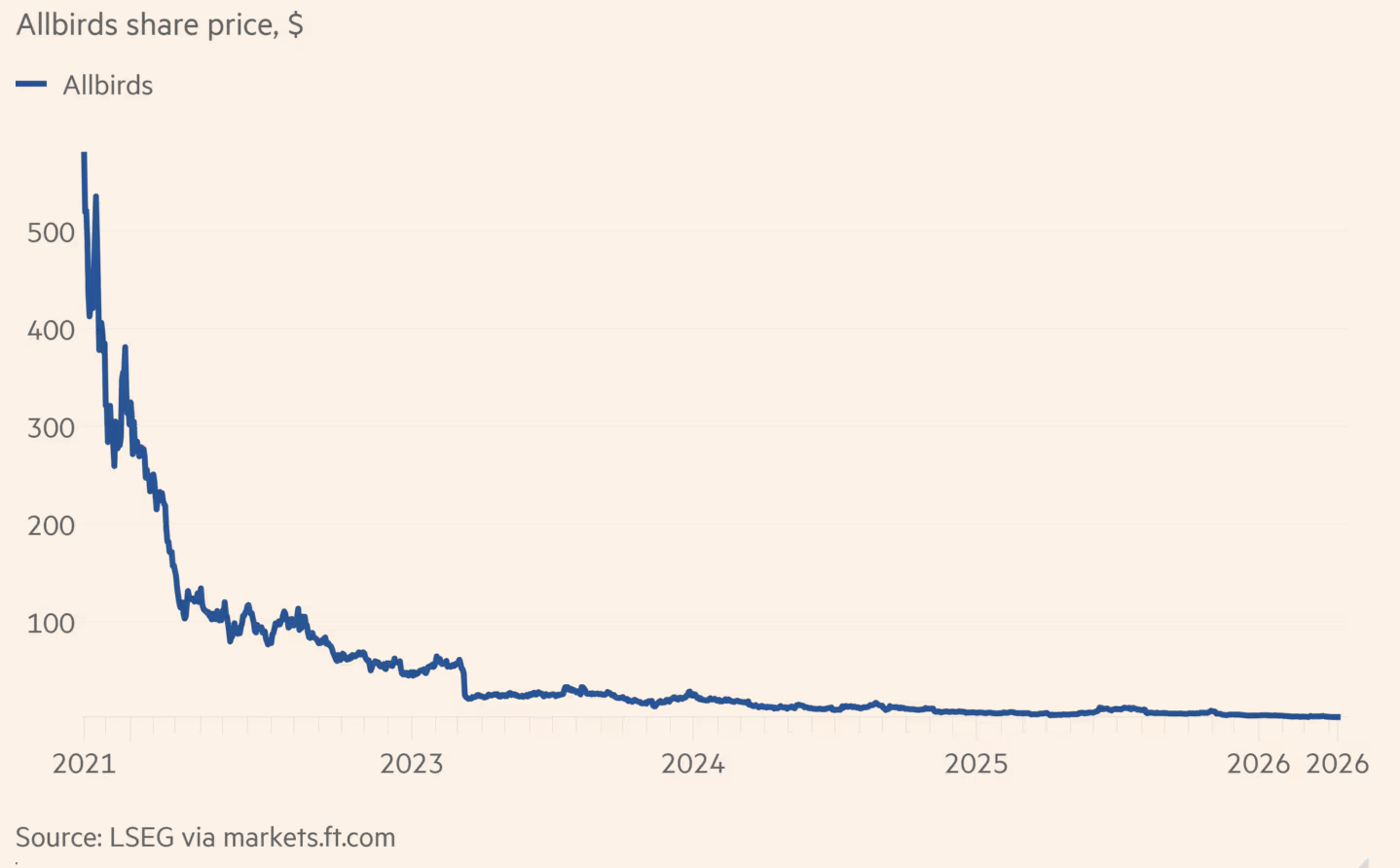
Between 2022 and 2025, Allbirds' sales plummeted nearly 50%, shrinking from $298 million to $152 million, failing to achieve profitability, and the stock price dropped from nearly $30 at its peak to mere cents.
In February this year, Allbirds closed all its full-price stores in the US, completely abandoning its offline presence.
In a desperate move, on March 30, Allbirds announced it would package and sell the company name, intellectual property, and remaining footwear business assets to the brand management company American Exchange Group for just $39 million. The latter also manages brands such as Aerosoles and Ed Hardy.

A unicorn that was once valued at $4 billion ended up being sold off "by the pound."
Thus, the name "Allbirds" now belongs to someone else. Continuing the shoe business is left to American Exchange Group. The shell that has been drained of all tangible business, retaining only its listing qualification on NASDAQ, is in the hands of the management, waiting for a new opportunity.
After shedding the heavy shell of its footwear business, the management found that they still held something very valuable in today's market—a clean, legal, publicly listed shell resource that can be used for speculation.
After selling shoes, they decided to seize the GPU leasing business
Less than three weeks after offloading assets, Allbirds' current CEO, Joe Vernachio, announced a shocking plan: they raised $50 million from a mysterious anonymous investor to rename this shell company to NewBird AI.
In today's official press release, they used highly technical internet jargon to package the plan:
"NewBird AI will use the initial funds to acquire high-performance GPU assets... to meet customer demand for dedicated AI computation capabilities."
"Global demand from enterprises for AI computing power is unprecedented, while the vacancy rate of North American data centers has dropped to an all-time low, and the procurement cycle for high-end hardware has extended."
"We will procure high-performance, low-latency AI computing hardware and fill the market gap that large-scale cloud vendors cannot cover through long-term leasing agreements."

🔗 https://ir.allbirds.com/news-releases/news-release-details/allbirds-inc-executes-50m-convertible-financing-facility
More intriguingly, is the amendment they submitted to shareholders. Due to the proposed AI computing power business's "less focus on the public interest of environmental protection," management formally requested shareholders to approve the removal of all references to "operating for the public interest of environmental protection" from the corporate articles.
The Allbirds that once captivated investors with a green eco-friendly story is now removing its last shred of covering. All this will be submitted for a vote at the shareholder meeting on May 18, during which existing shareholders will receive a special dividend as compensation.
At first glance, Allbirds' logic for transformation seems reasonable. After all, the most scarce resource in the world right now is computing power, and companies like OpenAI and Anthropic are practically fighting over GPUs. But a little reflection reveals a huge disconnect.
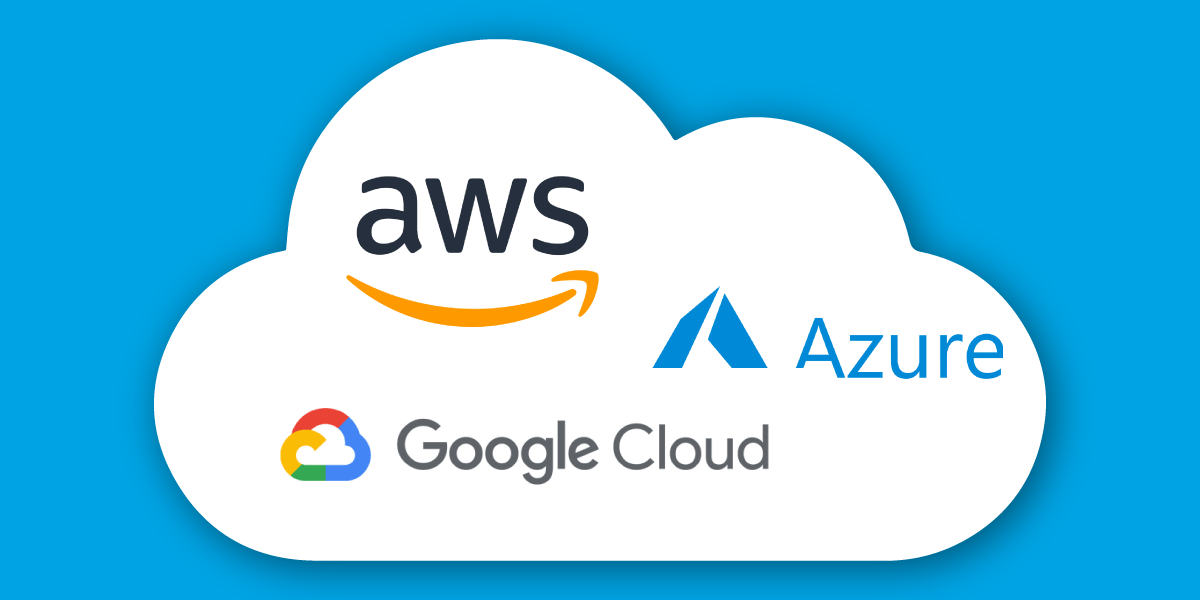
This is the computing power leasing market! It's a trillion-dollar battlefield dominated overseas by Amazon AWS, Microsoft Azure, and Google Cloud. Even vertical newcomers specializing in GPU leasing (such as CoreWeave) typically start with financing amounts in the tens or hundreds of billions of dollars.
NewBird AI only has a pitiful $50 million. At current market prices, this amount is not even enough to buy half a high-end GPU cluster in a data center, let alone cover subsequent high electricity costs, cooling facilities, and network bandwidth maintenance fees.
More critically, what qualifications does a company that started with wool shoes have to manage the extremely complex AI data center? Can they solve the low-latency interconnection issues of GPU clusters? Do they know how to optimize the parallel computing for large model training?
The answer is obvious; they know nothing, and they don't need to know.

Regarding this laughable "transformation," Wharton School professor Gad Allon poignantly stated: "To call this a 'pivot' is to greatly overrate Allbirds."
In business logic, transformation means that a company reallocates some of its existing capabilities, whether technology, talent, or channels, to a new market. For instance, Netflix shifted from DVD rentals to streaming because they had mastered users' viewing preferences.
"But Allbirds has no capabilities in the AI field," Gad Allon bluntly stripped away this cover, "What they only possess is a public listing qualification. In the current market environment, that has surprisingly become the only important asset."
This is not an isolated case. In the history of the tech circle, whenever a super trend appears, it is often accompanied by the phenomenon of "zombie brands borrowing corpses to resurrect." Previously, after digital media company BuzzFeed announced plans to use ChatGPT to assist with content creation, its stock price surged by 307% in just two days.

However, the market's excitement did not last long; when analysts began to question the details of the business model, the stock price quickly lost 40% from its peak.
According to The Verge, just recently, in another transaction also managed by Chardan Capital (the same placement agent for this Allbirds deal), the health tech company Movano, which makes Evie smart rings, suddenly announced a merger with an AI cloud computing company called Corvex.
In their latest merger announcement, the once-proud terms "health monitoring" and "smart rings" were completely erased, replaced entirely with AI concepts.

Thus, rather than saying Allbirds is addressing the industry pain point of computing power shortage, it's more accurate to say this is a capital game exploiting the shell resource of a public company to precisely harvest market sentiment.
And even if the logic is riddled with flaws, on the day NewBird AI was announced, the market still briefly cast a vote of approval by soaring by 700% with real money.
Why? Because in this age highly driven by AI narratives, retail investors and speculators are caught in an extreme anxiety. They fear missing out on the next Nvidia, afraid of not finding a seat on the biggest wealth train in human history.

Thus, as long as a stock code gets associated with "AI," "GPU," or "large model," regardless of how poor its fundamentals are, there will be people willing to pay for that one-in-a-million chance to get rich.
In the past, startups produced products; now, buying GPUs is the best valuation narrative.
For Allbirds, selling off that battered shoe brand to exchange for a chance to continue rolling the dice in the AI casino may have been the most "rational" decision the management could make for survival.
Only, when solidly producing a pair of shoes that are comfortable to wear, the value is surprisingly far less than sketching a few illusory GPU leasing plans. The tide will eventually recede once more, and by then, it is unknown what kind of new trend this company called NewBird will seek.


免责声明:本文章仅代表作者个人观点,不代表本平台的立场和观点。本文章仅供信息分享,不构成对任何人的任何投资建议。用户与作者之间的任何争议,与本平台无关。如网页中刊载的文章或图片涉及侵权,请提供相关的权利证明和身份证明发送邮件到support@aicoin.com,本平台相关工作人员将会进行核查。


