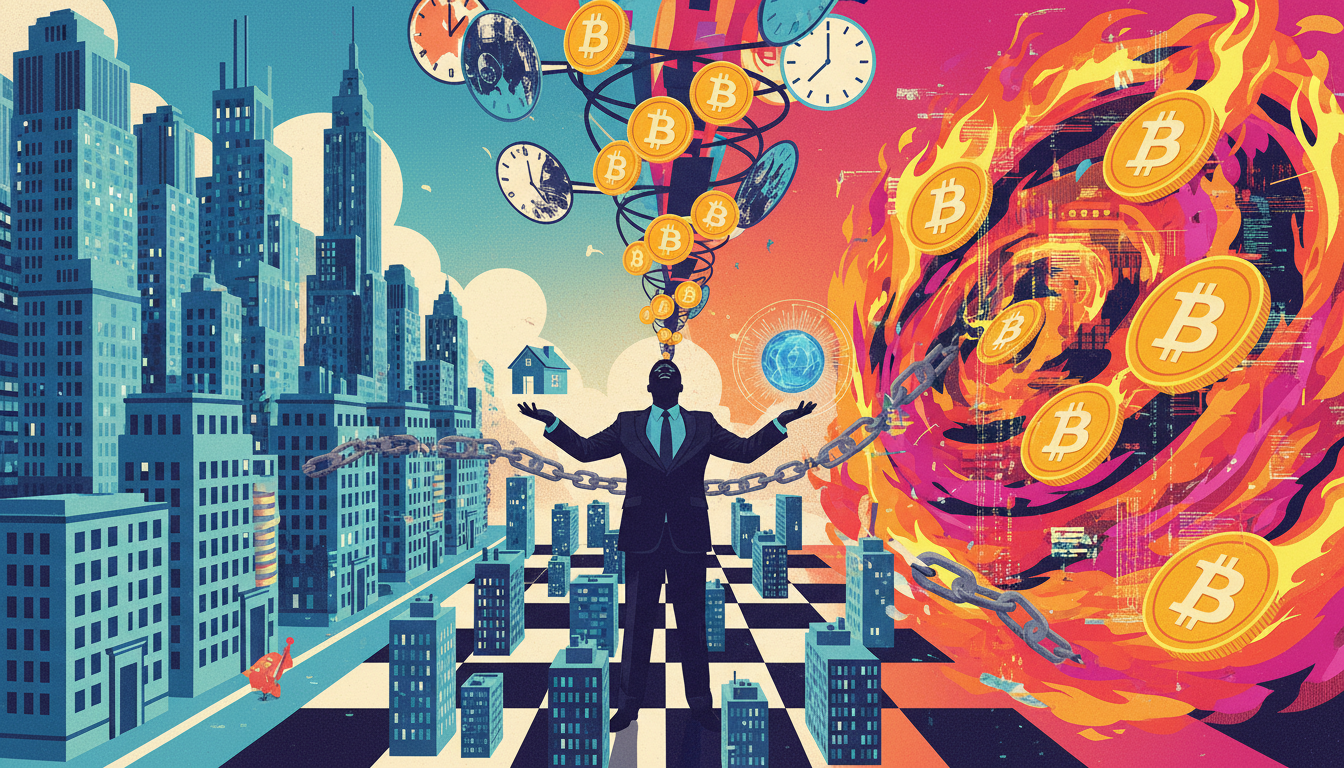
Recently, CoW Swap faced a typical DNS social engineering attack: the attacker did not directly target the protocol contract, but instead circumvented to the Web2 side, taking action from the domain registrar to temporarily seize control of cow.fi and deployed a phishing front-end, guiding users to interact with a counterfeit page. Official information indicates that the protocol contract and infrastructure are said to be unaffected, on-chain funds are overall secure, but the actual entry point for users into the protocol was briefly completely in the hands of the attacker. This incident highlights a long-ignored contradiction: while the asset and trading logic are meticulously designed to be highly decentralized, the very door that determines whether users can "safely arrive" at the contract is still controlled by a few centralized DNS and registrars.
Counterfeit documents seize the domain: How the attack happened
From the currently available information, the breakthrough for this attack did not occur on-chain but rather in traditional internet infrastructure. The attacker successfully deceived the review process by submitting forged materials to the DNS registrar, temporarily gaining control of the cow.fi domain. This is a typical social engineering path: instead of breaking a password or violently invading a server, it impersonated a “legitimate owner”, leveraging the trust and procedural loopholes on the registrar side to complete a "seamless takeover".
Once the control of the domain was transferred, the subsequent attack path became very clear: the attacker could resolve cow.fi to a server they controlled, deploying a highly realistic counterfeit front-end. When users, based on their habitual trust in the “official domain name,” open the page, connect their wallets, and sign as prompted, what they actually sign could be a malicious transaction that transfers assets out, or an unlimited authorization allowing the attacker to control the funds broadly. The entire process is almost imperceptible from the user's perspective, as the URL, brand logo, and interaction logic are all consistent with what they remember.
It is currently confirmed that control over the cow.fi domain has been recovered, with the team emphasizing that the protocol layer infrastructure has not been compromised, meaning the contract itself has not been altered or breached. However, more detailed technical specifics and a complete timeline have yet to be fully disclosed by the officials. Including how long the attack specifically lasted, how many users interacted with the phishing front-end during this window, all outsiders can do is wait for further explanations, and any more intricate process descriptions at this stage are considered unverifiable information.
Front-end hijacked but contract intact: The misalignment of security and real risks
On the surface, this appears to be a “front-end issue,” with the contract remaining unchanged, and the on-chain audit report still valid; the protocol seems "secure." However, the disparity between the security of on-chain contracts and the vulnerability of off-chain entry points explains why even when the protocol itself has no vulnerabilities, user funds can still be stolen. For most users, the true "protocol" isn't a string of contract addresses but the familiar web page they habitually open, that set of UI, and that fixed-color interaction button.
This trust in the combination of “official domain name + familiar UI” is the psychological asset that attackers can most easily exploit. Once the DNS is tampered with, the attacker can gain effectively equivalent "entry discourse power" to the official without touching any on-chain logic. Every click and signature made by users on the phishing page will be packaged as standard transactions broadcast to the blockchain; the blockchain itself will not determine whether “this is signed on the front-end you thought it was,” it will only execute coolly. Thus, the notion of "the protocol has no problem" only indicates that the contract continues to operate as expected, yet it completely fails to reflect whether the user is interacting with the correct front-end.
What is more concerning is that this claim about "the infrastructure remains unaffected" comes from a relatively singular source. It can be understood as: the contract code and core nodes have not been compromised, rather than asserting that the entire access chain is absolutely safe. Readers need to clearly understand the boundary when facing expressions like “unaffected” — does it refer to on-chain states not being illegally modified, or does it include that the entire chain including front-end, DNS, and CDN has undergone thorough inspection? In a phase where information is not fully transparent, equating "unaffected" with "no risk at all" is, in itself, a risk.
From DNS to CME gaps: How macro narratives amplify an attack
This front-end hijacking incident did not occur in isolation within a calm market environment. After Bitcoin's price just broke the $76,000 mark, the inflow of BTC to exchanges has reached 11,000 (according to a single source), indicating that capital is rapidly flowing into the market, and both market leverage and sentiment are under high pressure. In such a rhythm, any security event is no longer simply a technical accident but will swiftly be woven into macro narratives.
On one hand, trader Killa pointed out that there is a CME exhaustion gap around $84,000 for Bitcoin, a technical structure often seen as a magnet for prices that "will inevitably fill." From a bullish perspective, this indicates there is still imaginative space above, with short-term speculative tendencies likely to push the price higher; but from a risk management perspective, this similarly implies a steeper path and harsher pullbacks, with any negative news potentially amplified into a catalyst for accelerated corrections.
On the other hand, a viewpoint circulating in the market claims that “the current trend is highly similar to the pattern in 2022,” combined with heightened risk repricing triggered by signals from US-Iran negotiations, leading to an overall sentiment in a highly sensitive period. When macro uncertainty resonates with a high technical profile, safety events are more easily interpreted as “signals” rather than “noise”: a DNS hijacking not only impacts the trust of specific protocol users but also projects systemic doubts onto whether “the entire Web3 security stack is solid.” With prices at heights, capital flowing in rapidly, and geopolitical fluctuations, any security detail could become the last straw triggering emotional swings.
The Web3 security paradox: The more decentralized, the more reliant on centralized entry
The experience of CoW Swap highlights a seemingly ironic yet extremely realistic paradox: DNS, registrars, hosting services, and other Web2 infrastructures represent a single-point risk shared by most DeFi front-ends. Regardless of how the protocol emphasizes trustlessness and permissionlessness in its whitepaper, when users truly engage, they almost always start by typing in a domain name in their browser’s address bar, which is backed by a whole set of centralized systems maintained by a few institutions.
When viewed over a longer horizon, the model of front-end hijacking or fake site phishing is not new within the industry: domain theft, routing pollution, and CDN tampering all ultimately present in similar forms—pages that are strikingly similar to the official ones, guiding user actions that primarily benefit the attacker on-chain. Their common point is: not attacking the blockchain itself but targeting that most human-habitual and cognitively fragile bridge between users and the blockchain. Thus, this seems more like a systemic structural issue rather than an isolated incident that can be blamed on the negligence of a particular team.
In such a structure, there is a long-term unresolved tension curve between protocols, teams, and users. On one hand, everyone advocates “self-custody of assets,” opposing the long-term entrustment of funds to centralized custodians; on the other hand, the vast majority of users have to trust third-party front-ends to interact with contracts because directly operating contracts and verifying bytecode and parameters is practically impossible as a mainstream behavior. Asset sovereignty is highly decentralized, but the interaction experience inevitably reverts to a few centralized entry points, this misalignment itself is the fundamental contradiction of Web3 security.
Self-rescue for users and project parties: How to add another layer of defense before the next phishing attempt
In this reality where structural risks cannot be eradicated in the short term, what users and project parties can do is push every controllable detail slightly toward the security side. For ordinary users, first, they can establish a habit of “contract address whitelisting”: after confirming core contract addresses through official channels, marking them for long-term storage in wallets or locally, and prioritizing checking whether the transaction target address belongs to their recognized group during key operations, rather than only looking at the project name displayed on the front end.
Secondly, try to access commonly used protocols through bookmarks or locally saved trusted entries, rather than jumping through search or social media links each time, reducing the risk of being deceived by forged domain names or similarly spelled URLs. When initiating any high-value operations, taking a few more seconds to inspect whether the signature content aligns with expectations is critical, especially for authorization-type or upgrade operations, to avoid having permissions quietly stripped away in the rush of “time-sensitive” actions or “invisible signing.” These habits cannot guarantee immunity against attacks, but they can significantly raise the threshold for attackers to succeed.
For project parties, the spaces for enhancement are equally clear. Enable and correctly configure DNSSEC, along with multi-management strategies for domain names, can reduce the situation of being left "defenseless" after a registrar is compromised by social engineering to a certain extent. At the front-end level, options like front-end code signature verification, multi-entry redundancy distribution can also be explored, such as providing access paths through browser extensions, local applications, IPFS gateways, and so on, to avoid a single domain going black when it is compromised.
It must be repeatedly emphasized that the specific technical details of the current attack are still in the verification stage, including how the attacker communicated with the registrar, what procedural loopholes were exploited, and what specific phishing logics were implemented on the front end; there are currently no authoritative, comprehensive public reports. Whether users or observers, everyone should rely on the official subsequent disclosures, remaining cautious of chasing unverified “insider versions” on social media to avoid misjudging risks or being misled by new “false security advice” in secondary information pollution.
How many locks can we fix before the next hijacking
The reality reflected by the CoW Swap incident is clear: Funds can flow highly decentralized on-chain, but the entry points for users to reach these financial logics are still controlled by a few centralized institutions. The locks formed by DNS, registrars, and hosting nodes are the least “cryptographically native” part of the entire system, yet bear the frontline defense responsibilities. Once this door is breached, even the most sophisticated encryption mechanisms behind it can only passively execute malicious instructions that users have already “willingly” signed.
Looking ahead, the industry clearly needs to make more innovations and reach consensus at the “lock layer.” Decentralized naming systems, verifiable front-end distribution mechanisms, and UX designs that are tightly coupled with contracts are all potential directions: allowing users to interact with contracts without relying on a single domain or UI, but rather through a combination of multiple cryptographic proofs, social signals, and local trust mechanisms to comprehensively judge “who exactly am I connecting with.” This is not an issue that a single project can resolve independently; it is more like a new infrastructure that the entire ecosystem must work together to refine.
In a macro backdrop where capital is flowing in a bull market intertwined with geopolitical risks, similar security incidents will only increasingly impact market sentiment. Every DNS hijacking, front-end phishing, or permission abuse will leave traces on both price and trust curves. If the industry continues to see “locks” as ancillary facilities that can be outsourced to web2 service providers rather than important components on par with consensus algorithms and audits, then the next lesson will likely be much heavier. Truly treating entry as core infrastructure to build may be the only way to avoid repeating the same story during the next round of high volatility.
Join our community, let's discuss together, and become stronger!
Official Telegram community: https://t.me/aicoincn
AiCoin Chinese Twitter: https://x.com/AiCoinzh
OKX benefit group: https://aicoin.com/link/chat?cid=l61eM4owQ
Binance benefit group: https://aicoin.com/link/chat?cid=ynr7d1P6Z
免责声明:本文章仅代表作者个人观点,不代表本平台的立场和观点。本文章仅供信息分享,不构成对任何人的任何投资建议。用户与作者之间的任何争议,与本平台无关。如网页中刊载的文章或图片涉及侵权,请提供相关的权利证明和身份证明发送邮件到support@aicoin.com,本平台相关工作人员将会进行核查。