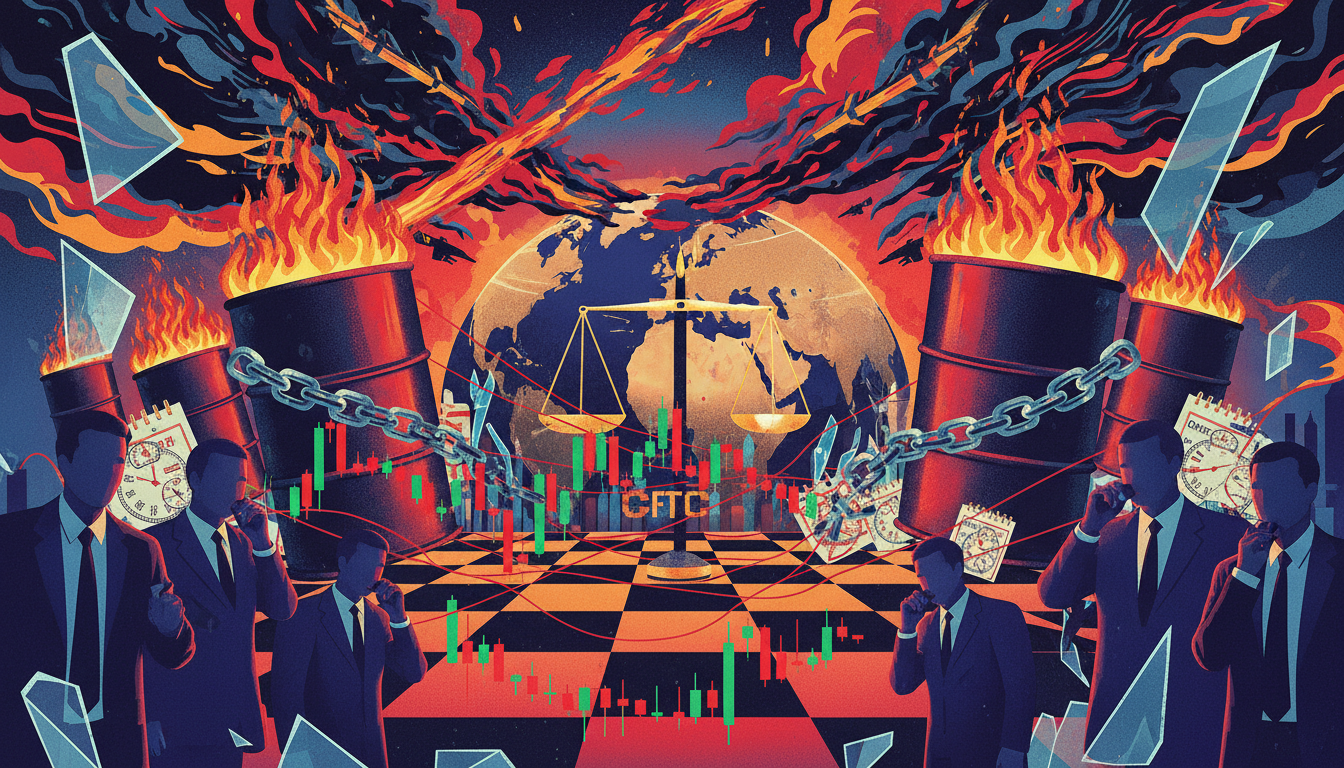
This week, multiple sources indicated that senior political and security officials in Iran are leading efforts to facilitate a one-week ceasefire arrangement between Lebanon and Israel. This concept is not confined to the Lebanon-Israel border but is designed to connect with the ceasefire period between the US and Iran, aiming for a overall extension—this key information comes from Al-Manar TV in Lebanon, which also suggests that Iran is attempting to de-escalate tensions on multiple fronts simultaneously. Meanwhile, sources from Iranian high-ranking officials have stated that the Israeli Prime Minister may disrupt the agreement at a critical moment, while Israel has not yet provided a verifiable public response, making this the largest uncertainty variable affecting the situation. For the cryptocurrency market, this is an emotional tug-of-war played out between geopolitical conflict and risk assets: whether the short-term ceasefire can be realized or extended will directly affect the Middle East’s demand for safe-haven assets and the switch in risk appetite, thereby reshaping the volatility rhythm of Bitcoin and crypto-related assets during a limited 'breathing period.'
One-Week Ceasefire Window: “Low Voltage” Battlefield Under Iranian Leadership
Current disclosed information shows that the proposed one-week ceasefire did not arise spontaneously, but was actively promoted by senior political and security officials in Iran through diplomatic and security channels. Iran serves as both an ally and a "protector" on the Lebanese issue, having substantial influence over battlefield intensity through its ties with the Lebanese armed forces. At the same time, Iran is a key regional power confronting Israel, which gives it the ability to shift the frontline from high pressure to "low voltage" whenever it chooses to lead the de-escalation.
More strategically significant is the disclosure from Al-Manar TV that this one-week ceasefire is envisioned to be extended in connection with the US-Iran ceasefire period, which attempts to reduce the overall frequency of regional conflicts through an integrated temporal arrangement, continuing the established ceasefire timeframe between Iran and the United States. From a regional security perspective, if the firepower suppression between Lebanon and Israel synchronizes with the easing tensions between the US and Iran, it will effectively weaken the intensity of impacts on energy supply, shipping channels, and financial markets in the short term, allowing all parties to recalibrate costs and leverage.
However, it should be noted that Al-Manar TV itself tends to lean towards a “pro-Iran narrative” within the regional media spectrum, and its reporting on Iran's role and intentions is naturally biased: on one hand, emphasizing Iran’s posture as a "stabilizer," while on the other hand, downplaying the leadership roles of other powers. Therefore, although the channel’s claims about the ceasefire connection design carry reference value, in the absence of multi-source cross-verification, they should still be considered as one version among a singular narrative perspective, rather than an established fact.
Because the ceasefire period is limited to one week, along with the lack of publicly disclosed monitoring mechanisms and execution details, this arrangement resembles a fragile "window period" rather than a solid bridge to long-term peace. One week is insufficient to resolve fundamental contradictions but is ample to create a tactical-level rhythm shift between the battlefield and the financial market: conflicting parties can seize the opportunity to adjust troop deployment and negotiating chips, while capital can reprice some high-sensitive assets under the expectation of reduced short-term risks. Therefore, the market's understanding of this ceasefire leans more towards a "breathing window" rather than a "peace turning point."
Uncertainties from Israel: Agreement May Break at Any Time
In stark contrast to the positive signals released by Iran and its friendly media, another expression from Iranian high-level sources has shifted the uncertainty focus onto the Israeli Prime Minister—reports indicate that the highest levels in Israel may choose to undermine the agreement or lower their implementation willingness at the last moment. This assertion has emotionally amplified the already limited credibility of the ceasefire, which forces the market to incorporate the high-weight scenario of "the agreement breaking at any time" into risk pricing. However, so far, there has been no official confirmation from any Israeli official channels that they have agreed to the ceasefire, nor has there been any formal document or statement that can verify "acceptance and readiness to implement a one-week ceasefire."
In this information environment, adhering to the constraint of “not fabricating that Israel has agreed to the ceasefire” is particularly critical. The existing public data can only confirm that: Iran and its friendly media are actively promoting a ceasefire framework and partially pre-setting the potential blame for the ceasefire failure onto Israeli leaders; yet the Israeli government’s attitude towards these specific arrangements remains in an information vacuum. This asymmetric information structure further exacerbates the noise and misjudgment risks for external observers interpreting the situation.
Simultaneously, the briefing also mentioned that Israeli media Kan had reported on a refusal to ceasefire, but this statement was marked as pending verification. Without direct verification of the original text and context, it is difficult to determine whether its expression pertains specifically to the current one-week ceasefire plan or to a broader ceasefire framework, and it may even have been amplified or misinterpreted in the second-hand retelling process. Therefore, in analysis, it can only be regarded as a potential clue existing in “tension” with the statements from Iranian high ranks, rather than direct rebuttal evidence to the Iranian version, nor can it deduce more explicit policy intentions.
If the scenario plays out to Israel choosing a hardline approach and the ceasefire ultimately breaking, the risks of regional military escalation will rise once again: the intensity of conflicts at the Lebanon-Israel border may potentially recover or even exceed pre-ceasefire levels, and friction between Iran and the United States in other fronts could also be reignited. For global assets, this usually means a rise in safe-haven sentiment, with funds returning to government bonds, gold, and certain asset classes seen as “geopolitical hedges”; for the cryptocurrency market, the brief emotional repair period will be quickly terminated, volatility will surge, and the risk of leveraged liquidations will simultaneously amplify. Previous long positions established on the basis of ceasefire expectations may encounter concentrated liquidation pressure during the emotional reversal.
US-Iran Dark Lines and Pakistan Shuttle: Great Power Calculations Behind Limited Ceasefire
Beyond the surface-level discussions of the Lebanon-Israel ceasefire, the briefing mentioned that a delegation from Pakistan went to Iran on the same day to convey messages from the US, a scenario reported by Iran's state media and marked as “pending verification.” If this lead proves valid, its significance lies in revealing a more complex multilateral communication network: the US does not need to openly endorse the Iran-led ceasefire, yet can still use third-party countries to release de-escalation signals or exchange demands towards Iran, thus quietly alleviating regional tensions without touching on domestic political sensitivities.
Within the US-Iran-Lebanon-Israel multilateral structure, the one-week ceasefire thus is not only a tactical choice for frontline commanders, but also a bargaining chip among great powers: Iran enhances its bargaining position in future political negotiations by demonstrating the ability to “turn off the lights or dim them”; the US seeks to prevent the situation from spiraling out of control to raise oil prices and transportation costs, thereby disrupting its financial market and macro policy path; while Lebanon and Israel evaluate each other's bottom lines and external support strength during the limited ceasefire, allowing room for maneuver in subsequent actions.
From the perspective of US motives, promoting de-escalation through a third party rather than openly endorsing the ceasefire has several considerations: first, directly supporting an Iran-led framework is likely to encounter strong domestic political skepticism, which would undermine existing ally relationships; second, maintaining "deniability" is beneficial in shifting the blame to regional actors in the event of ceasefire failure; third, in controlling oil price levels and financial market volatility, as long as a phased reduction in the intensity of conflict is achieved, the key policy demands are already fulfilled without needing to create complex narrative packaging for the ceasefire at the public opinion level.
This also explains why the current ceasefire is widely understood as "limited ceasefire" rather than a move towards a final political arrangement: all parties need time and space to recalibrate their bargaining chips on both the battlefield and negotiation table, and the short-term ceasefire provides such a tactical platform. The ceasefire itself carries the function of chip exchange and pressure management, rather than being a carrier for final problem resolution. For investors focusing on the correlation between cryptocurrencies and traditional assets, this means: as long as the ceasefire is still viewed as a "tactical tool," rather than the beginning of structural reconciliation, the market transactions surrounding it are more inclined to repeat fluctuations driven by events, rather than forming trend reversals.
Risk Aversion Sentiment Lowered: Inverse Fluctuations of Crypto-Related Assets
At the financial market level, some market observers have pointed out that "crypto-related stocks display inverse fluctuations with geopolitical risks"—when geopolitical tensions rise and safe-haven sentiment takes precedence, risk-seeking assets generally face pressure, while once a ceasefire or de-escalation expectation arises, risk appetite may phase into repair. Behind this logic is a weighing of funds between "survival" and "appreciation": when conflicts escalate, a preference for capital preservation in allocations rises; when tensions ease, the risk appetite pursuing yields regains dominance.
The research brief also mentioned that US stocks related to cryptocurrencies have risen in sync, which is seen as evidence of risk appetite recovery under the expectation of Iran promoting the ceasefire and regional de-escalation. However, this information comes from a single source and has not provided specific stock names and price change data, making it more suitable as a directional sentiment indicator rather than being understood as verified data through multiple verifications. From a trading perspective, this kind of synchronized increase is often a sector rebound driven by macro narratives, without direct strong correlations to individual stock fundamentals.
Historically, the relationship between Middle Eastern tensions and Bitcoin or crypto concept stocks has not followed a simple linear risk-hedging logic. At certain phases, Bitcoin is viewed as an "alternative insurance" against traditional finance and sovereign risks, attracting capital inflows during extreme uncertainties; yet at other times, when global liquidity tightens and risk assets are under overall pressure, Bitcoin and related stocks tend to behave more like high-beta risk assets and perform weaker in overall market pullbacks. Thus, Middle Eastern conflicts usually indirectly affect cryptocurrency prices through liquidity environment and risk appetite dimensions, rather than existing solely as a "hedging tool."
Under the framework of "short-term ceasefire but long-term uncertainty," funding strategies are more likely to manifest as structural adjustments: on one side, withdrawing from assets that are highly sensitive to geopolitical conflicts and lack liquidity support; on the other side, moderately replenishing high-beta crypto targets and related stocks during the ceasefire window, to capitalize on price recovery based on the "worst-case scenario being delayed." For leveraged funds, this often showcases as a reduction of extreme safe-haven positions while increasing short-term long exposure in derivatives and conceptual stocks, attempting to amplify returns within a limited timeframe.
Middle Eastern Funds and On-chain Transactions: From Warfare to Risk Appetite Repricing
From a narrative perspective, the typical behavior patterns of investors in the Middle East and surrounding regions during geopolitical conflicts often follow a logic chain of "local assets being pressured, spilling over into dollars and crypto." When conflicts escalate and local currencies and assets bear pressure, some funds tend to shift towards US dollar assets through legitimate or grey channels, or further divert into Bitcoin and other cryptocurrencies, partly for cross-border transfer and asset custody convenience, and partly to hedge against domestic policy and financial system risks.
Against the backdrop of rising ceasefire expectations, the extreme versions of such funding behaviors are expected to phase out: the panic selling force against local assets decreases, and the passive absorption pressure on dollar assets and gold correspondingly weakens. In response, some Middle Eastern funds may adjust from an "extreme safe-haven combination" to a more balanced asset allocation, redistributing a portion of positions to cryptocurrencies to bear high-risk exposures and potential high returns. For such funds, the crypto world serves both as a supplementary "insurance policy" and as a testing ground for rebuilding the yield curve.
Meanwhile, geopolitical news spreads rapidly in social media and trading groups; a tweet concerning a ceasefire or escalation of conflict can complete the whole process from message diffusion to emotional magnification within minutes. Retail investors' perception of cryptocurrency assets often swings between “insurance” and “speculation”: when trust in traditional finance and sovereign entities declines, Bitcoin is packaged as a decentralized insurance tool; when observing prices experiencing intense fluctuations driven by events, crypto assets are swiftly redefined as high-leverage speculative chips. This dual property of narratives allows a single piece of geopolitical news to trigger completely opposite trading behavior at different phases.
It is essential to emphasize that due to the lack of precise on-chain regional markers and publicly verifiable cross-border capital flow data, discussions on "how Middle Eastern funds migrate on-chain" currently remain at the level of behavioral finance and historical case extrapolation, rather than strict quantitative conclusions. We can extract some patterns from price reactions, social sentiment, and historical experiences, but we cannot precisely quantify the specific contribution ratio of funds from a certain region to the current trend in the absence of high-quality data. This uncertainty also reminds market participants to maintain necessary caution and skepticism when interpreting sayings like “Middle Eastern funds entering the market.”
Ceasefire is Just a Breather: Crypto Market Still Operates Under Pressure
In summary, the one-week ceasefire concept led by Iran indeed provides an emotional buffering period for regional situations and global markets at the current time point: if the ceasefire materializes and effectively connects with the US-Iran de-escalation window, the probability of a full-blown escalation in the short term will be lowered. However, Israel’s stance is still not publicly clarified, and with factors like Pakistan’s shuttle and US-Iran dark-line communications overlapping, the prospects for peace remain structurally fragile—any party choosing to restart high-intensity actions could cause emotions and prices to swiftly reverse.
The rebound of crypto-related stocks and assets under the expectations of the current ceasefire resembles a transaction surrounding "the worst-case scenario being delayed": the market has adjusted down its subjective probability for extreme conflict scenarios in a short timeframe, thereby allowing for a certain degree of valuation recovery for high-beta assets, rather than genuinely forming confidence pricing for long-term easing. Should the ceasefire fall through or execution faces obstacles, the current gains may rapidly unwind, and even amplify into deeper declines during leveraged unwinding.
For investors, the key is to distinguish between short-term emotional repair and long-term risk pricing: a tactical ceasefire only indicates that the conflict participants have chosen to control the pace in this round, but does not mean that fundamental contradictions have been resolved, nor can it guarantee that higher intensity confrontations will not emerge later. In such an environment, interpreting the ceasefire as "risk has been completely cleared" equates to building a high-leverage structure on an unstable foundation.
Strategically, in a phase of highly asymmetric information where situations can reverse at any time, controlling leverage and reducing concentration on single-direction bets is more important than chasing short-term narratives. Whether interpreting the movements of Iran, the US, or Israel, it is necessary to rely as much as possible on official sources and mainstream media reports, and to filter out noise through multi-source cross-verification. For price fluctuations driven by events, a rational approach is to view them as disturbances within a larger macro and cyclical framework, rather than isolating bets on a particular version of geopolitical narratives that can long dominate the market.
Join our community to discuss and grow stronger together!
Official Telegram (Telegram) Community: https://t.me/aicoincn
AiCoin Chinese Twitter: https://x.com/AiCoinzh
OKX Welfare Group: https://aicoin.com/link/chat?cid=l61eM4owQ
Binance Welfare Group: https://aicoin.com/link/chat?cid=ynr7d1P6Z
免责声明:本文章仅代表作者个人观点,不代表本平台的立场和观点。本文章仅供信息分享,不构成对任何人的任何投资建议。用户与作者之间的任何争议,与本平台无关。如网页中刊载的文章或图片涉及侵权,请提供相关的权利证明和身份证明发送邮件到support@aicoin.com,本平台相关工作人员将会进行核查。