From April 11 to 12, 2023, in the time zone of UTC+8, the U.S. and Iranian delegations held a new round of closed-door negotiations regarding the nuclear program in Islamabad. According to public reports, the U.S. proposed a "long-cycle" constraint plan, while Iran insisted on "short-cycle, reversible" limited concessions. The two sides became entrenched in disputes over the suspension duration for uranium enrichment and the disposal of stockpiles. At this sensitive moment, GENIUS, seen by some traders as a "nuclear negotiation concept coin," once surged over 850% within a single day, igniting the sentiment of cryptocurrency investors far from the negotiation table with an extreme candle. This article attempts to trace the transmission path from Islamabad to on-chain market movements: how geopolitical games are packaged into tradable narratives, and how they are exponentially amplified and gambled on in the cryptocurrency market.
Stalemate on Uranium Enrichment Duration: Clash of 20 Years vs. Single-Digit Years
In this round of dialogue in Islamabad, the U.S. delegation reportedly proposed a highly binding scheme: it hopes Iran will suspend uranium enrichment activities for a relatively long period, with a time frame specified to the level of 20 years. This setting, in Washington's logic, means "locking in" nuclear risks over multiple administrations, aiming to minimize the uncertainty in Iran's future nuclear capabilities.
In contrast, Iran's response clearly outlined another timeline. Public information shows that Tehran is only willing to discuss a suspension arrangement of single-digit years, and even within this range, it emphasizes the necessity of retaining sufficient policy leeway. This idea of “short-term controllable concessions” directly conflicts with the long-cycle irreversible constraints sought by the U.S. As cited by Rhythm and Golden Finance, Axios expressed that "there are fundamental disagreements between the two sides on the suspension duration of uranium enrichment and the disposal of stockpiles", directly pointing to the structural nature of the negotiation stalemate.
Moreover, the divergences are not solely at the technical terms level. Planet Daily reported that Iran expressed clear dissatisfaction with the U.S. statements at the press conference, believing that Washington was "selecting favorable fragments" in its external rhetoric, attempting to gain a moral high ground in public opinion. This means that the U.S. and Iran are not just negotiating at the table in Islamabad but also shaping their respective "responsibility narratives" through media discourse, searching for explanations for potential negotiations collapsing or delays.
It is important to emphasize that many key technical details regarding stockpile disposal—including stockpile scale, destination, operational paths, etc.—remain highly ambiguous in public reports, and some data is marked as pending verification. Due to caution, a detailed exploration of "how stockpiles are to be handled" cannot be made; we can only judge based on existing statements: when there are fundamental disagreements on the two core levers of "duration" and "stockpiles," the difficulty of this round of negotiation is far higher than in typical technical discussions.
Islamabad Becomes a Focus: The Game of Bundling Nuclear Agreements and Ceasefires
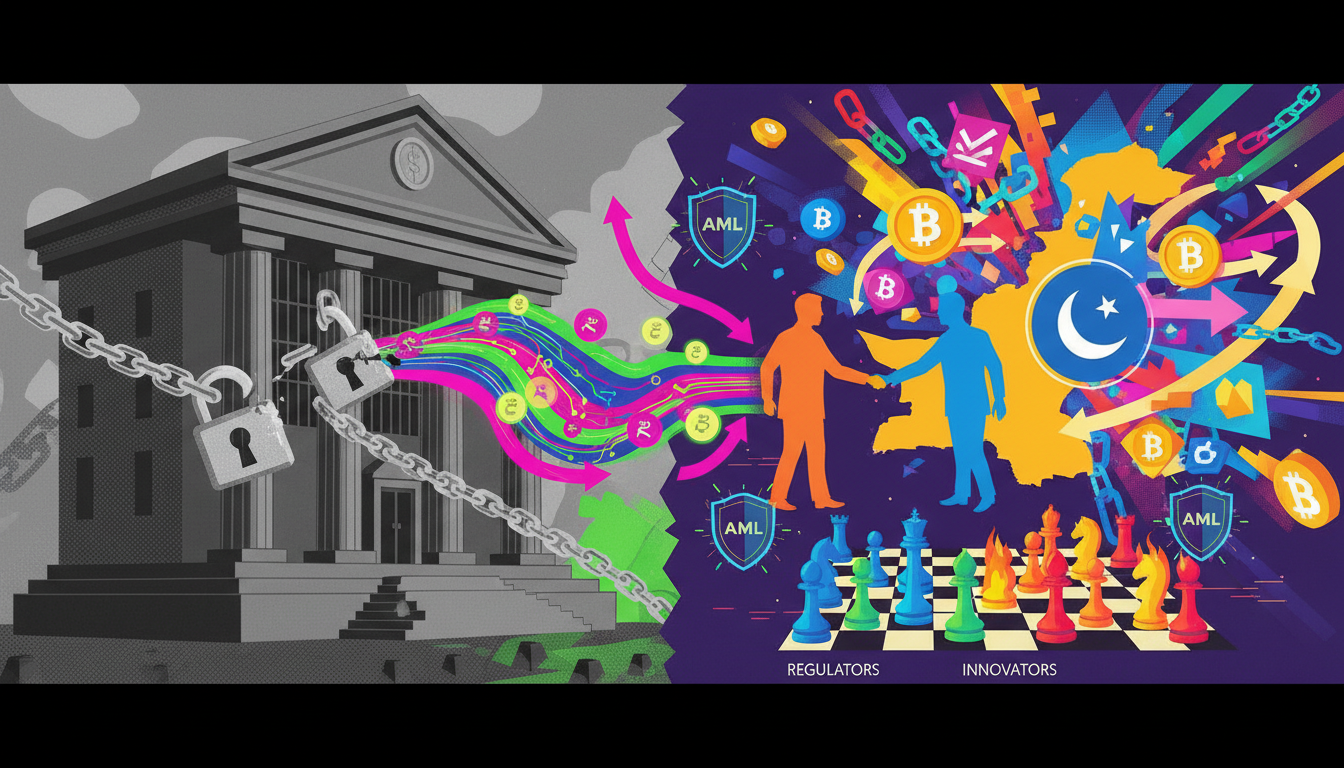
The U.S.-Iran talks held in Islamabad have been viewed by several media outlets as a key node linking the nuclear agreement and ceasefire agreement together. In a broader regional context, the nuclear project is no longer just a technical supervision issue but is tightly linked with a series of problems including risks of regional hot wars, proxy conflicts, and security commitments from allies. In a way, it's a simultaneous opening of three cards regarding the nuclear issue, regional security architecture, and economic sanctions, attempting to push for a "packaged deal."
The difficulty in resolving nuclear issues lies in its inherent dual structure of security and economy: nuclear capabilities are seen as "ultimate insurance," while sanctions directly target the economic lifeline serving as bargaining chips. Therefore, when nuclear constraints, regional tensions cooling down, and sanctions easing are all merged into the same dialogue, any concession in one sector could lead to repricing in others. This complex interplay makes the Islamabad negotiations inherently carry a strong sense of path dependence—either the overall trend leads to easing, or a blockage in certain links results in more uncertainties spilling over.
If the nuclear talks ultimately break down, or if there are prolonged delays on key terms, the first thing the market will feel is a repricing of regional risks. The energy market will recalculate scenarios for production, interruptions, and alternative routes, the shipping industry will closely monitor the risks and insurance costs of navigation in specific waters, and broader global assets will quickly engage in a game of "whether to increase safe-haven weighting." The possibility of risk appetite contracting or rebounding in a short time will directly reflect in price fluctuations and the risk premium of related assets.
For the cryptocurrency market, such macro uncertainties are particularly "suited" to be amplified. The reason is: on one hand, this market operates 24/7, almost capable of responding in real time to any geopolitical news; on the other hand, most tokens lacking cash flow and earnings anchoring naturally rely on narratives and expectations for their pricing. Once keywords like "nuclear negotiation stalemate" or "ceasefire obstacles" arise, speculators can easily translate this into a "new tradable story," simplifying the complex negotiations originally belonging to the realms of diplomacy and security into a short-term game that can be wagered on via market orders.
GENIUS Surge and Retreat: From $820 Million to $716 Million Event Coin Curve
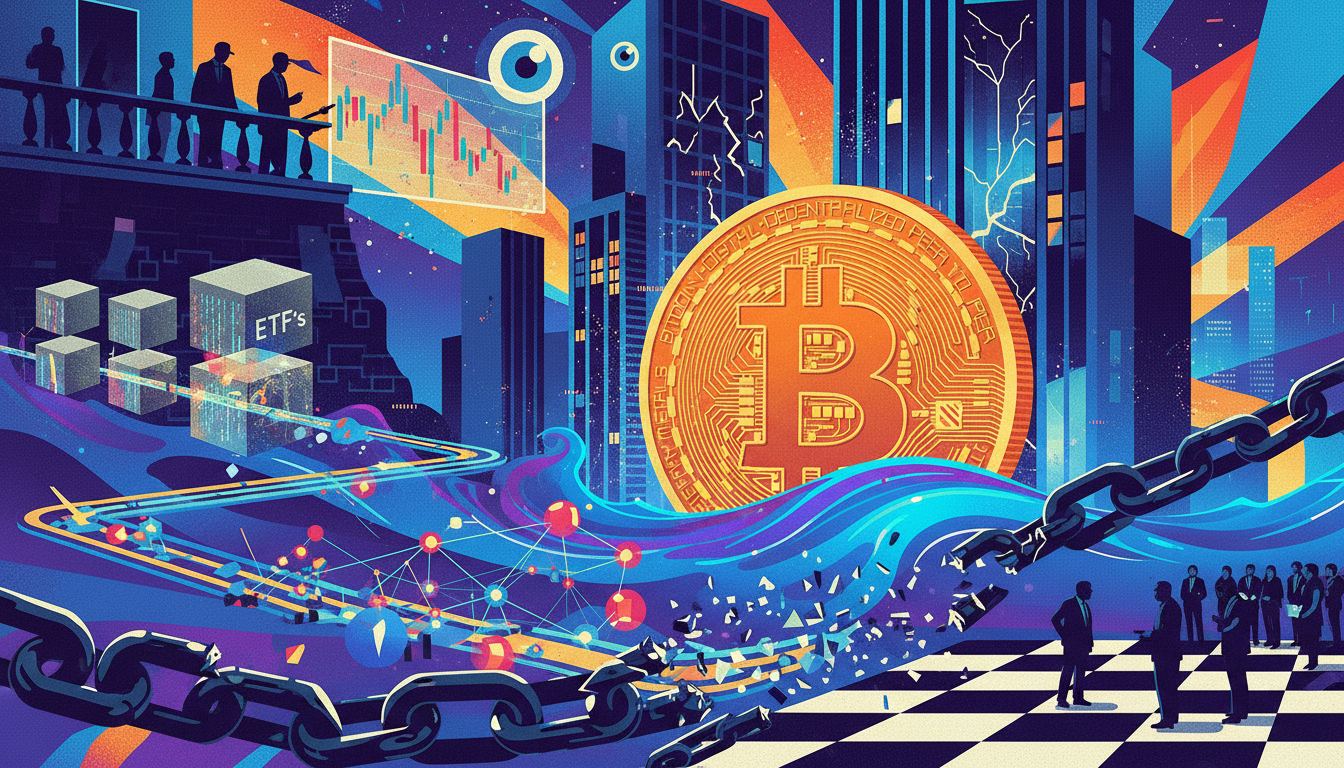
As news of the Islamabad negotiations spread in the Chinese circle, a sharply rising candle was generated on-chain. According to statistics from sources such as GMGN, the token GENIUS at one point surged over 850% in a short time, rapidly being pushed to the narrative stage of the so-called "nuclear negotiation concept." The same data source showed its market cap peaked at about $820 million, then retreated to about $716 million, and the price saw dramatic fluctuations at high levels typical of an "event coin" rollercoaster.
It should be noted that the above prices and market cap data primarily come from GMGN or individual market sites' singular metrics, which have not yet been cross-verified in more mainstream data sources. Such data may have deviations in terms of time granularity and depth of liquidity recognition; thus, it must carry the risk prefix of "limited sources, volatility may be amplified." For ordinary investors, understanding this candle as "a sample story" is far more rational than viewing it as an accurately replicable trading template.
Structurally, this surge bears the highly typical characteristics of an "event coin": “geopolitical narrative + thin liquidity + concentrated holdings.” In terms of narrative, GENIUS has been self-tagged by some communities as "related to nuclear talks," becoming a container for expressing funding sentiment; in terms of liquidity, the early order book was relatively thin, and a small amount of active buying was enough to drive up prices, thereby attracting trend-following purchases; in terms of chip structure, the collective action of large holders in the absence of widespread dispersed holdings can easily shape severe volatility of "straight-up surge—rapid return" on a minute level.
The subsequent retreat process resembled a public lesson on the brutality of short-term gaming: Capital that had chased high on the narrative pressure began to be passively squeezed out upon realizing the lack of new buying power and peak media attention; the K-line transitioned from vertical rise to waterfall-like decline. The switch from euphoria to calmness in sentiment relied not on a new piece of news but on constantly refreshing unrealized loss figures—on-chain, the price itself is the most lethal item in public opinion.
From News to K-Line: The Echo Chamber of Chinese Crypto Media and Trading Sentiment
It is noteworthy that the rise of GENIUS this time was not predicated on any updates from the project itself but on the rare concentrated attention by Chinese crypto media on the Islamabad negotiations. Platforms like Rhythm, Golden Finance, and Planet Daily almost simultaneously referenced related reports from traditional media such as Axios, bringing content originally belonging to geopolitical and security policy into the timeline of crypto readers.
In terms of title and content arrangement, terms like "key divergent," "negotiation stalemate," and "fundamental contradiction" were repeatedly amplified, becoming the emotional tags first encountered by readers. Compared to lengthy technical clauses and procedural details, confrontational phrases like "twenty years vs. single-digit years" and "fundamental disagreement on stockpile disposal" are more likely to trigger the market’s "script instinct": either ushering in a historic breakthrough or heading towards complete rupture, and few have the patience to understand the more common real-life scenarios of "delays, re-negotiations, and repeated oscillations."
In tracing the information flow path, we can roughly sketch this chain: overseas leaks/reports → translated and curated by Chinese media → entering Weibo, TG, Discord communities → speculators translating narratives into tokens like GENIUS. With each step forward, the original information becomes more simplified and emotional. By the time it reaches the trading end, many people who place orders no longer think of the "technical challenges of not reaching consensus on uranium enrichment duration," but rather "collapse of talks = either big surge or big drop," or "not getting in now equals missing a significant market rally," which is a form of binary narrative.
A self-reinforcing feedback loop thus forms between media attention and trading heat: the more concentrated the coverage, the more active the related keywords on social platforms, and the more retail traders begin to search for "what is GENIUS," which, after the market transactions amplify, in turn propels the media to follow up with secondary reports on “surge” and “drop.” For many ordinary investors, the decision-making process is compressed into a three-step sequence of seeing the title—scrolling the K-line—placing an order, with the complexity and uncertainty of information sources greatly overlooked in this path.
A Template for Trading Geopolitical Risks: How Funding Transforms Negotiations into Stories
Looking outward from the GENIUS case, a clearer view of how the market packages macro risks like "negotiation breakdown," "sanctions extension," and "escalation of conflicts" into short-term tradable stories emerges. In traditional markets, the pricing of geopolitical events is often reflected through assets like oil, defense stocks, and treasury yields, exhibiting a relatively mild rhythm and being constrained by trading hours. However, in the cryptocurrency space, where 24/7 and global retail participation with high leverage thrives, any minor fluctuation has the potential to be amplified into a "super theme."
In such an environment, typical strategies for short-term participants generally include three steps: first, building positions while information is still confined to overseas reports or a few media outlets, betting on the time lag of "information not yet widely recognized"; next, leveraging the momentum as Chinese media and communities began amplifying sentiment and creating more "shares and screenshots," thus pushing prices higher and attracting followers, converting “news events” into “price facts”; finally, once transaction volume and search heat peak, quickly locking in profits by offloading to later entrants, shifting the narrative risk and liquidity risk to those entering the market later.
Tokens like GENIUS share a commonality: they lack verifiable fundamental support. The project’s own technological advancements, revenue, or real on-chain use cases were almost non-existent in this round of market activity, with prices serving more as a leverage amplifier for geopolitical sentiment. For investors accustomed to analyzing traditional assets using frameworks of "valuation—profits—growth," this model is almost counterintuitive: a story comes first, prices follow, and only in retrospect do we seek explanations for the price movements.
Lessons from Islamabad: Don’t Mistake Gambling for Consensus
Returning to Islamabad, the disagreements between the U.S. and Iran on uranium enrichment duration and stockpile disposal stem from fundamentally different views on security and strategic patience. The U.S. aims to "seal" nuclear risks within a predictable range through a long cycle of 20 years, while Iran can only accept limited constraints of single-digit years to preserve future policymaking flexibility. Regarding the specific disposal methods of stockpiles, public information also only remains at the vague expression of "fundamental disagreements," lacking sufficient detail. Considering these factors, such deep-rooted contradictions are unlikely to be resolved in the short term, and geopolitical uncertainties will inevitably repeatedly impact market sentiment in various forms.
The surge and fall of GENIUS seem more like a gamble on narrative than a prudent pricing of project value. Capital swiftly pushed a marginal token to a market cap of hundreds of millions, and then collectively retreated without hesitation as sentiments faded. This script is likely to be replayed continuously with new hot events in the future. What truly changes is often not the structure of the script but the “new token” selected to bear the story.
For investors, there are at least three points worth remembering. First, deliberately distinguish between amplified emotions and real progress: a negotiation stalemate does not equate to a breakdown; news headlines do not equal the final agreement text. Secondly, value the reliability and diversity of information sources, especially when prices are highly bound to narratives and market data primarily originates from singular sources like GMGN, more caution should be exercised in positioning to maintain a safety margin. Thirdly, when facing an "event coin," always remind yourself: you are engaged in a game centered around narratives, not an asset anchored by cash flow.
It can be anticipated that further negotiations surrounding the Islamabad talks, every fluctuation in regional situations, and new ceasefire or sanctions developments will continue to provide new "themes" for the cryptocurrency market. However, in a market where this theme rotation speed far exceeds the pace of fundamental changes, rational participation is often more critical than betting on so-called "chosen narratives." What is truly worth holding long-term is not a candle symbolizing a myth of sudden wealth but the ability to calmly sift through risks and opportunities time and again after emotional waves.
Join our community to discuss and become stronger together!
Official Telegram community: https://t.me/aicoincn
AiCoin Chinese Twitter: https://x.com/AiCoinzh
OKX welfare group: https://aicoin.com/link/chat?cid=l61eM4owQ
Binance welfare group: https://aicoin.com/link/chat?cid=ynr7d1P6Z
免责声明:本文章仅代表作者个人观点,不代表本平台的立场和观点。本文章仅供信息分享,不构成对任何人的任何投资建议。用户与作者之间的任何争议,与本平台无关。如网页中刊载的文章或图片涉及侵权,请提供相关的权利证明和身份证明发送邮件到support@aicoin.com,本平台相关工作人员将会进行核查。