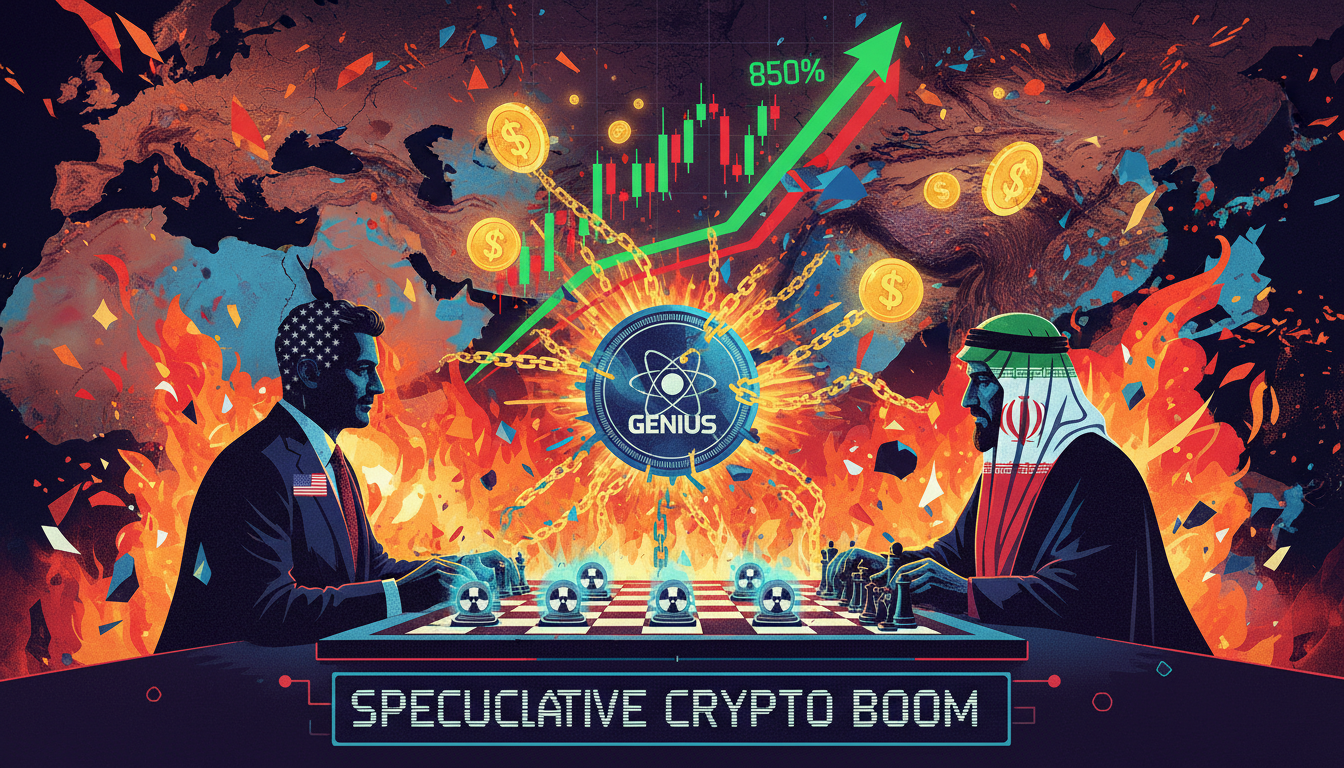
On April 13, 2026, Ondo Finance officially submitted a no-action request to the U.S. Securities and Exchange Commission (SEC), bringing the compliance boundaries that were previously discussed mainly in meeting rooms and legal memos to the public stage. Ondo hopes to record a portion of securities rights in a tokenized form on the Ethereum mainnet under a specific business structure, without being viewed as triggering enforcement risks under U.S. securities law. The focus quickly narrowed down to a precise question: Does moving part of the rights of traditional securities onto a public blockchain for accounting count as the issuance or trading of securities, thus crossing the SEC's red line? This request is not merely a compliance action for an individual project, but rather a test presented to the entire industry—traditional regulation and tokenized finance are starting to confront each other directly, and who will delineate the new boundaries and how they will be defined will directly affect whether trillions of assets can truly move onto the chain in the future.
From ICO to Tokenized Assets: A Shift in SEC Regulatory Narrative
To understand the significance of Ondo's move at this time, one must rewind to the SEC's enforcement trajectory in the crypto space over recent years. From early concentrated crackdowns on ICOs to more recent lawsuits against large trading platforms and infrastructure projects, the SEC initially targeted unregistered public offerings and trading activities. The typical logic was: if projects sell tokens to the public without registration statements or qualifying exemptions, it is considered illegal issuance. As the market evolved, the SEC's focus gradually extended from merely watching “fundraising activities” to whether the tokens themselves constitute securities and what compliance obligations the platforms conducting business around these tokens must bear.
In this process, “crypto asset securities” has become a high-frequency term in the SEC's context, behind which is the regulators' attempt to transplant the analytical framework of traditional securities law onto all assets existing in token form. Early public chain tokens were often dissected from the perspective of “are they securities,” while now, the battlefield has further shifted to how to represent and circulate the traditional securities rights on-chain. This stands in stark contrast to the ICO days: the former debated whether a certain token was a security, while the latter debates whether recording rights structures originally belonging to regulated securities on-chain constitutes new securities activity. Ondo's actions tread along this narrative shift, becoming a central example of tokenizing traditional securities in direct confrontation with the SEC.
Ondo's Request: Aiming for “On-Chain Without Going Public” on Ethereum
From Ondo's disclosed core request, it attempts to gain SEC recognition in a very narrow yet critical gap: under a specific business model, to record part of the securities rights in a tokenized form on the Ethereum mainnet, but this on-chain recording action itself should not be regarded as a separate securities issuance or trading activity, and thus should not trigger SEC enforcement. In other words, Ondo is not trying to circumvent securities regulation to issue new assets but aims to prove that the blockchain serves merely as a bookkeeping and settlement tool here, rather than another fundraising venue.
The derived design thinking is deliberately cutting the functional and legal logic between “recorded on the Ethereum mainnet” and “the securities rights themselves.” On one end are bonds, fund shares, and other securities existing within a regulated framework in the real world; on the other end are on-chain tokens representing these rights. Ondo hopes the SEC will acknowledge that as long as substantial securities relationships remain bound by the traditional system, the on-chain tokens are more akin to a mapping or certificate, and cannot be deemed as new securities issuance or OTC trading merely due to a change in the bookkeeping medium.
In the current regulatory atmosphere, Ondo's choice to first submit a no-action request to the SEC instead of directly launching a product is a highly defensive strategy. Without prior confirmation like “no enforcement action,” once the project pushes tokenized securities rights to market, it faces the risk of being retroactively identified as an unregistered issuance or engaging in illegal securities trading—this would not only lead to fines and rectifications but could potentially crush the entire business model. This is why Ondo is willing to make its internal compliance design public, betting on a precedent: once it gains a positive or partial recognition from the SEC, subsequent innovations surrounding tokenized securities will seek a replicable model in this letter.
Simultaneous Statement Response: SEC Is Focused on More Than Just Tokens
Coincidentally, on the same day Ondo submitted its no-action request, SEC staff released a statement specially addressing the "user interface" of crypto asset securities trading, providing guidance on whether it triggers broker-dealer registration requirements. This statement did not name any specific project but shifted the regulatory perspective from “what tokens are” and “how they operate on-chain” to the front-end interface that users can see and engage with. In the SEC's view, when users place orders, match, and settle crypto asset securities through an interface, the entity providing this interface likely plays the role of a broker-dealer or trading intermediary in substance.
The logic of “interface as the regulatory object” implies that the SEC is weaving its regulatory net starting from the asset level to the front-end interaction layer: not only concerned with what kind of tokens you issue, but also how you push these tokens to investors through product forms and interaction processes. Even if the off-chain structure is complicated, as long as what is ultimately presented to users is an operation experience “like a securities account,” the regulation has grounds to require compliance with the entire set of rules, including broker-dealer registration, investor protection, and information disclosure.
When juxtaposing this statement with Ondo's request, a subtle tension emerges: on one hand, projects strive to argue that on-chain accounting should not be regarded as new securities business, hoping to abstract blockchain as much as possible into a “technical facility”; on the other hand, the SEC actively emphasizes the compliance responsibilities of front-end intermediaries, reminding that any interface engaging in crypto asset securities trading cannot escape traditional definitions. When these two connect, they form a typical contradiction in today's tokenized finance: innovators try to push more functions to the “purely technical layer,” while regulators continuously pull “responsible parties” from behind the code, requiring them to return to the coordinates of traditional securities law for positioning and standing.
The Implicit Voting of the Capital Market: Who Is Pricing the Compliance Narrative
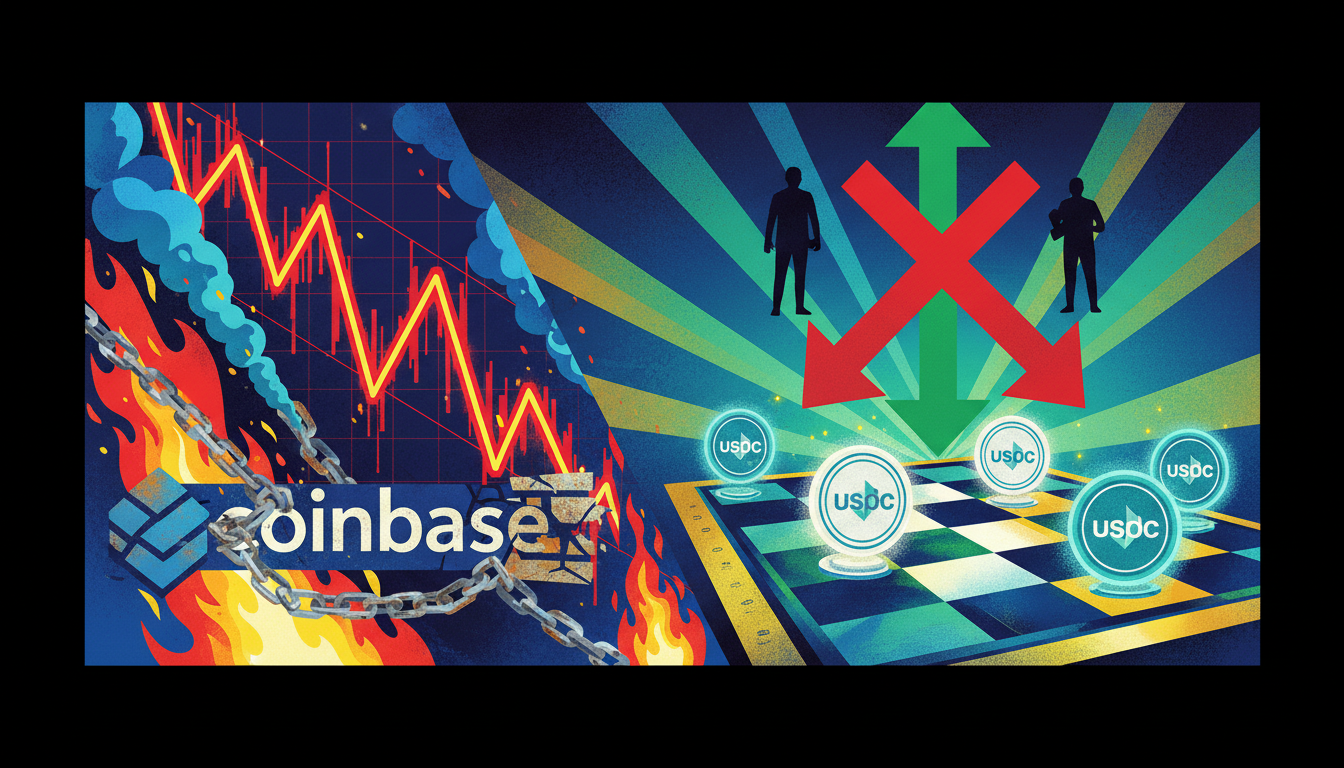
The compliance game between Ondo and the SEC is not happening in a vacuum. On the very trading day the SEC statement was released, as the overall performance of U.S. stocks faced pressure, the U.S. stock market opened broadly lower, reflecting a risk-averse sentiment under dual pressures of macro conditions and risk appetite. However, amidst this overall decline, stocks highly correlated with crypto infrastructure, such as Circle (CRCL), saw a contrary increase of 6.9%, becoming one of the few highlights. This trend is hard to attribute to a single piece of news but clearly conveys a signal: the market is raising the price for the narrative of “compliant crypto infrastructure” .
On-chain capital actions also resonate with this direction. According to disclosures, World Liberty Financial added 25 million USD1 minted through BitGo in a short time, increasing the net circulating volume by 22 million. Regardless of how investors assess specific projects, this set of numbers at least indicates that the demand for custodial, traceable, and more closely linked on-chain dollar assets to traditional financial systems is expanding, rather than receding. From the CRCL stock price to the USD1 issuance, the capital market has provided implicit voting in its own way—those who are willing to actively embrace regulation and build compliant bridges stand a greater chance of obtaining valuation premiums in the new wave of tokenization.
Arbitrage and Risk in the Regulatory Grey Area: How Big of a Gap Can Ondo Open
If we envision an optimistic scenario: the SEC ultimately agrees to take no enforcement action against Ondo's specific model, even if it's just conditional recognition under strict prerequisites, this will provide the entire industry with a replicable tokenization compliance template. Based on traditional securities such as bonds and fund shares, project teams can design more on-chain representation and settlement solutions, lawyers can draft opinions based on this, and institutions can assess risk and control, carving out some operational “shallow water areas” from what was originally a blurred grey area. In the short term, this will stimulate more attempts to bring tokenized bonds and fund products onto public chains, and in the long term may drive the reconstruction of a whole suite of infrastructures around the “on-chain securities ledger,” including custody, clearing, and market-making.
Conversely, if the SEC adopts a very hardline stance towards Ondo, even explicitly denying the feasibility of recording securities rights on public chains in some wording, it would effectively erect a higher wall between public chains and traditional securities. To avoid risks, project teams may be forced to turn to permissioned chains, consortium chains, or traditional custody systems with “pseudo on-chain solutions,” excluding the composability and global accessibility of public chains from their designs. As such, tokenization will still continue, but its aspects of “public, fair, and global” will be significantly weakened, becoming more of an efficiency optimization tool for large institutions within closed systems rather than an open infrastructure accessible to retail and small institutions.
For institutional investors and compliance intermediaries, Ondo's request is also a watershed. If the SEC provides a relatively friendly response, it means the compliance path for tokenized securities is opening up, but the premise is that a complete set of custodial, auditing, KYC/AML, and technical risk control systems need to support it. They can play the role of professional “bridges,” earning compliance dividends. If the SEC chooses to tighten up, it would mean the barriers to entry and compliance costs are further raised: only institutions that have ample capital, legal resources, and compliance experience can continue to explore under high-pressure regulations; other participants may either exit or turn to those fringe tracks with lower regulatory attention. The arbitrage space within the grey area will shrink, but with it, there is a systemic risk that one may pay a higher price if they encounter trouble.
The Next Round of Tokenized Finance: The Game Has Just Begun
Looking at the timing and content, Ondo's proactive submission of a no-action request to the SEC on April 13, 2026, carries strong symbolic significance: tokenized finance is moving from the “technical experimentation phase” to the “compliance game phase”. Previously, the industry was more about trial and error while encountering regulatory red lines and retracting; now, project teams are starting to attempt direct dialogue with regulators before launching products, using cases to measure institutional boundaries and striving to delineate a safe zone that can be shared by the entire market in writing.
Going forward, whether tokenized securities can form a truly sustainable ecosystem will not depend on a single factor but rather be woven from three intertwining lines: first, the stances and rhythms of the SEC and other regulatory agencies, including how they define crypto asset securities, how they view on-chain bookkeeping, and how they address user interfaces and intermediary responsibilities; second, the behavior patterns of market funds, whether they continue to subscribe to a high-leverage narrative or are more willing to pursue compliant infrastructure targets like CRCL; and third, the product design paths of project teams, whether to roll towards “circumventing regulation” or find new efficiency advantages within the institutional framework.
Among these variables, when the SEC responds to Ondo's request, whether it will simultaneously publish more detailed guidance documents, and whether more institutions will submit similar no-action requests will directly influence the speed and path of advancing tokenized assets. For investors, what is truly worth paying attention to is no longer just the short-term fluctuations of a single project or token, but rather the rhythm of policies and compliance itself: every slight adjustment in regulatory stance will amplify a new round of revaluation in capital pricing and product innovation. Ondo's showdown with the SEC is merely the starting whistle for the next round of tokenized finance.
Join our community to discuss and grow stronger together!
Official Telegram community: https://t.me/aicoincn
AiCoin Chinese Twitter: https://x.com/AiCoinzh
OKX Welfare Group: https://aicoin.com/link/chat?cid=l61eM4owQ
Binance Welfare Group: https://aicoin.com/link/chat?cid=ynr7d1P6Z
免责声明:本文章仅代表作者个人观点,不代表本平台的立场和观点。本文章仅供信息分享,不构成对任何人的任何投资建议。用户与作者之间的任何争议,与本平台无关。如网页中刊载的文章或图片涉及侵权,请提供相关的权利证明和身份证明发送邮件到support@aicoin.com,本平台相关工作人员将会进行核查。