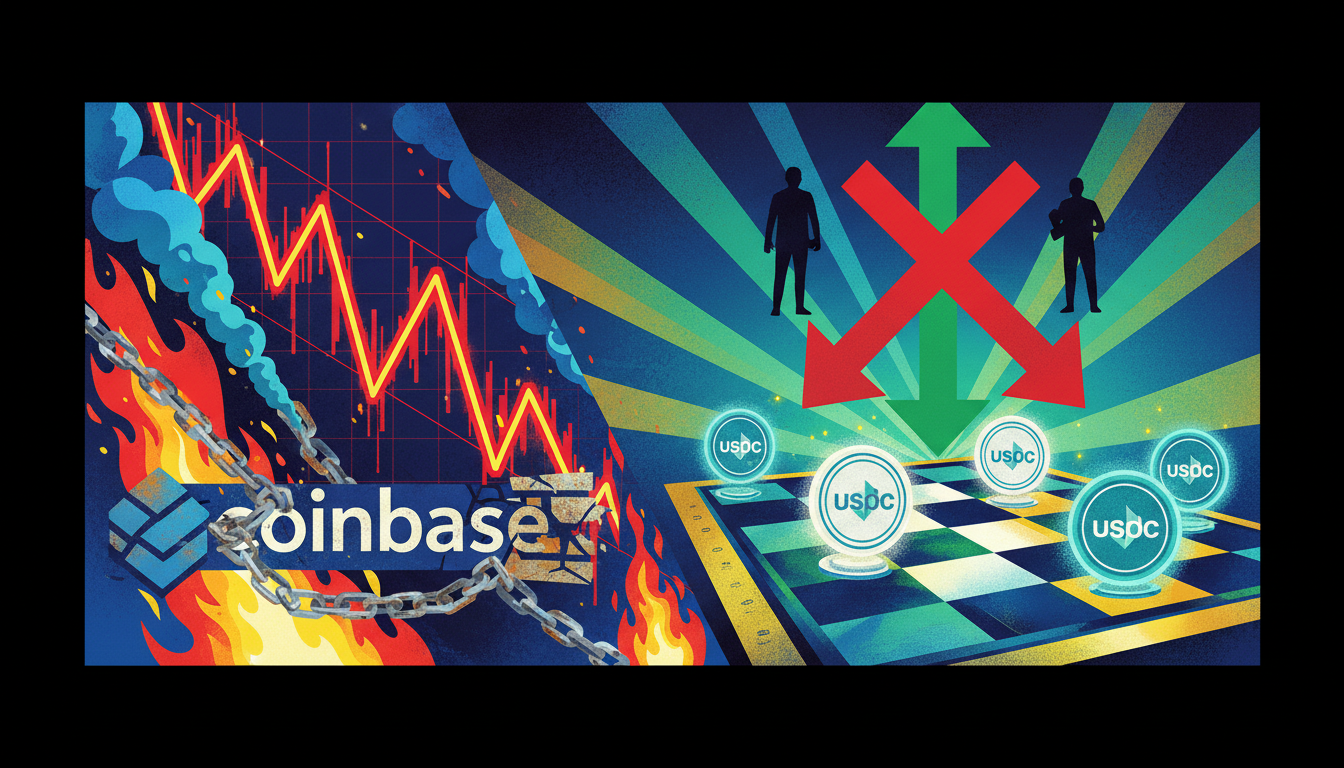
On April 13, 2026, Eastern Time Zone, the American Bankers Association (ABA) publicly criticized the White House Council of Economic Advisers (CEA) for its latest research report regarding payment stablecoins, bringing a policy struggle over "whether to allow interest payments" to the forefront. The CEA claimed in its report that prohibiting interest on stablecoins would only increase the total loan volume in the U.S. banking system by about 0.02%, corresponding to approximately $1.2-2.1 billion in new loans (clearly citing a single estimation source), attempting to frame the impact as a slight disturbance at the macro level. In contrast, the ABA emphasized that this same 0.02% figure, combined with the current pool of related assets exceeding $300 billion, could evolve into a potential blow to the structure of bank deposits. This article delves into the policy "framing" struggle, focusing on how both sides reshape the public's understanding of risk through discourse and rhetoric, rather than getting caught in a mere arithmetic game of singular technical details.
The 0.02% placebo figure as a new battleground of rhetoric
The core conclusion of the CEA report is quite eye-catching: under its model assumptions, if related assets are prohibited from paying interest, the total amount of U.S. bank loans will only increase by about 0.02%, corresponding to approximately $1.2-2.1 billion in new loans, and the report clearly cites a single research source. This conclusion adopts a macro perspective on total loan volume, using the current balance of all commercial bank loans as the denominator, in order to show that "even if there is an impact, it is only a very small marginal change," aimed at delivering a policy signal of "systematic risk is controllable." For the White House economic team, this assessment method anchored to the total national credit scale has inherent political appeal: a small number, limited impact, can leave space for payment innovation without triggering financial stability panic.
The ABA's response, on the other hand, chose a direct confrontation, not only accusing the CEA of "creating a false sense of security" in its statement but also suggesting that the report deliberately downplayed the potential impact on the banking system, especially on small to medium-sized institutions. In the ABA's wording, 0.02% is no longer an ignorable "marginal error," but is framed as a "placebo figure" that obscures structural risk; this stark contrast in language itself is a struggle for discourse power. A minuscule percentage can easily be quickly internalized by the public in macro communication as "nothing" or "the impact is not significant," but it may also mislead policymakers and voters to overlook the drastic disparities at the distribution level. The dispute over the 0.02% figure essentially exposes the choice of whether to see the "national aggregate average" or the "extreme scenarios of specific vulnerable points."
The obscuring of macro totals over community banks' survival
The ABA's core accusation against the CEA is that it framed the issue at the macro level of "total national loans," thus committing a directional error in policy framing. The CEA emphasizes that the overall loan volume is only slightly impacted by 0.02%, while the ABA believes that the real assessment needed is the spatial distribution of this change within the banking system—especially its impact on the stability of community banks. In other words, even if the total national loan volume remains nearly unchanged, it could mean that deposits from certain vulnerable institutions are being withdrawn, leading to a rearrangement or even concentration of risks within the system.
Research briefs show that community banks account for over 40% of the U.S. banking system, serving as the primary channel for many local families and small businesses to obtain credit, and are foundational financial support for local economic activity and employment. From this perspective, merely using the small percentage of national loan increases or decreases to measure risk may obscure the critical question of "who is losing funding sources." After allowing related assets to pay interest, a quite straightforward migration path is that higher interest rates and more convenient asset products absorb funds that would have remained in small banks' checking and savings accounts; these funds either flow directly to large technology platforms and nationally chartered banks or indirectly leave community bank balance sheets through cooperative structures.
In this pathway, the perspectives of "a little less national lending is irrelevant" and "some community banks being drained are a systemic issue" represent two completely different policy priorities. The former aligns more closely with the CEA's perspective: as long as the overall volume remains stable and there are no breaks in national credit supply, local adjustments can be viewed as structural optimization; the latter is where the ABA focuses: even if the total national loan volume rises slightly or remains stable, as long as it results in several key community banks losing their deposit bases, it could trigger regional credit contraction and chain reactions. This divergence is not just a difference in technical assumptions, but a value choice of "seeing the average" versus "seeing the vulnerabilities."
Three hundred billion level stablecoin and misaligned risk perceptions
In the CEA model, what is being discussed is still seen as a "marginal supplement" asset pool, while research briefs remind us that the current market size of related assets has exceeded $300 billion (this figure still requires continuous verification and updating of its source). In a non-interest-paying state, this scale has already had a significant impact on certain cross-border payments, transaction matching, and crypto ecosystems; once the "interest-paying" attribute is added, its absorptive effect on this level of funding will be significantly amplified, which goes beyond the CEA's static assessment of the existing situation.
The ABA is concerned about a kind of "deposit loss leverage effect": the migration of funds is not a one-time large-scale bank run, but rather a slow yet persistent erosion of traditional bank deposits under the combined effects of interest rate cycles, mobile technology convenience, and platform financial services. Each increase in interest rates and each new type of yield product promotion may entice more families and businesses to gradually transfer idle bank balances in batches to interest-bearing assets, especially those products closely tied to payment scenarios and everyday consumption. For large banks, this erosion may more often reflect "liability structure rebalancing"; for community banks, which already rely on local deposits and lack diverse funding sources, it may progressively evolve into a collapse of the deposit base over a few years.
Thus, the CEA views the issue within a framework of "near static equilibrium": at the current scale and structure, prohibiting or allowing interest means how much change for a given total loan market; the ABA emphasizes the evolution of the "dynamic competitive landscape": this asset category itself is still continuously expanding and deeply intertwined with technology platforms, and every slight adjustment in its relative yield will alter the distribution of deposits between the banking system and on-chain assets. The misalignment of these two risk imaginations determines their interpretations of the same set of figures from "controllable marginal effects" to "potential structural reconstruction."
Who should be regulated first: banks, technology platforms, or the assets themselves?
In terms of regulatory paths, the CEA report implies a route of "reserving space for payment innovation under the premise of controllable macro risk." Since, viewed from the total national loan perspective, prohibiting interest only leads to a small 0.02% change, then in its logic, as long as capital adequacy, liquidity management, and transparency are reasonably assured, certain institutional flexibility can be reserved for payment-related assets, allowing them to continue playing the role of enhancing efficiency and convenience without committing to high yields.
The route the ABA hopes to take is entirely different: it prefers to include this type of asset within the existing banking regulatory framework as a "liability requiring capital and liquidity constraints," rather than as "shadow deposits" detached from traditional regulation. Under this assumption, the issuers and operators of such products must either become banks or accept prudential regulatory standards similar to banks, raising compliance costs and capital requirements to increase the barriers to new entrants and minimize unregulated arbitrage opportunities.
From the perspective of community banks, the real anxiety lies in "regulatory asymmetry." Large banks and crypto platforms have stronger compliance teams and technical capabilities, able to digest more complex legal requirements and allocate costs across a large user base; while community banks, even if allowed to participate, remain at a disadvantage compared to these giants. If the regulatory framework is primarily designed around large platforms and national institutions, the result may be that risks are "managed better" technically, but small banks are marginalized in the new round of competition, further undermining their roles in the local financial ecosystem. Meanwhile, more details regarding related bills and internal coordination within the White House team are still in discussion and drafting phases; the research briefs have clearly indicated that this legislative information remains to be confirmed, hence a cautious view should be maintained on any specific timelines or terms when evaluating future paths.
Who represents whom: lobbying battles and rhetorical high ground
On the political level, the ABA is not merely issuing a technical opinion; it is launching a lobbying and public opinion battle aimed at the White House and Congress. As the primary representative of the traditional banking industry, it has a strong motivation to elevate this debate to a "local economy and employment defense battle"—if community banks are forced to shrink their operations or even close branches due to deposit outflows, the first impacted will be small-town manufacturing, small merchants, and farmers, who often play a critical swing role in the U.S. electoral landscape. By publicly accusing the CEA of "creating false security," the ABA is effectively pressuring policymakers: any decision that underestimates this risk may be perceived by local voters as a choice that "abandoning the community."
Meanwhile, the CEA is fighting for voters along a different narrative line: using "innovation" and "convenient payments" as keywords, describing related assets as tools for enhancing consumer experience, lowering cross-border payment costs, and increasing financial inclusion. In this narrative framework, the focus is on the everyday needs of urban middle-class, online entrepreneurs, and cross-border workers, emphasizing that overly conservative policies could stifle the U.S.'s competitiveness in the fintech sector. This narrative tension contrasts with the local community’s reliance on physical branches and traditional credit: one side emphasizes "future efficiency and innovation," while the other stresses "current accessibility and safety nets."
Interestingly, both sides are using the rhetoric of "protecting ordinary families and small businesses" to vie for moral high ground. The CEA emphasizes the user side: allowing regular people to have better payment experiences and lower fees; the ABA focuses on the financing side: ensuring that small businesses can continue to access loans locally and not be marginalized by capital markets. As the U.S. elections approach, the community banking issue is easily amplified into a political symbol of "who truly cares about the local economy" and "who can safeguard jobs in counties and small towns." Therefore, policy discussions are no longer just about regulatory technical details, but become part of the geographical dynamics of votes: the type of regulatory framework supported often indicates a bet on which voter groups.
Stablecoins are not just a technical product but an institutional choice
Summarizing the divergences between the CEA and ABA reveals a deeper issue: whether related assets should be viewed as a minor supplementary payment tool or as an institutional variable that may reshape the structure of bank deposits. The CEA emphasizes its minuscule share in the macro loan total, preferring to see it as a "plug-in" to the existing system, allowing experimentation within a certain range as long as risks are controllable; the ABA, however, regards it as a competitive liability tool fighting for the same pool of funds as bank deposits, which could lead to a long-term restructuring of the deposit base and credit distribution once interest payments are allowed, rather than a simple technological upgrade.
In this context, the short-term policy is unlikely to lead to a simple "comprehensive liberalization" or "comprehensive prohibition." A more realistic path would be to find a compromise between "limited testing, cautious interest payments, and strengthened disclosure": for example, limiting the usage scenarios and concentration of interest-bearing products, increasing information disclosure requirements, and reinforcing liquidity and asset quality constraints—thereby retaining some innovation space while mitigating the impact on traditional deposit structures. For participants in the crypto market, what truly needs attention is not the specific figure of 0.02% itself, but how regulations delineate the boundary between bank liabilities and these new types of assets—what products are regarded as "deposit-like" and require bank-level oversight; which are categorized closer to "funds" or "payment tools," subjecting them to different capital and liquidity rules.
Key observation points to track going forward include: whether the White House and Congress adopt the ABA's framing of community banking risks in subsequent hearings and public statements; whether the investment and voice of community banks and their representing organizations in lobbying continue to rise; and whether regulatory agencies will reassess the current risk judgment based on the $300 billion scale as the size of related assets further expands in the future. How policies land at the intersection of these clues will determine whether this struggle is ultimately recorded as an "overblown minor squabble" or the beginning of a forced restructuring of the traditional banking system.
Join our community for discussions and to become stronger together!
Official Telegram group: https://t.me/aicoincn
AiCoin Chinese Twitter: https://x.com/AiCoinzh
OKX Welfare Group: https://aicoin.com/link/chat?cid=l61eM4owQ
Binance Welfare Group: https://aicoin.com/link/chat?cid=ynr7d1P6Z
免责声明:本文章仅代表作者个人观点,不代表本平台的立场和观点。本文章仅供信息分享,不构成对任何人的任何投资建议。用户与作者之间的任何争议,与本平台无关。如网页中刊载的文章或图片涉及侵权,请提供相关的权利证明和身份证明发送邮件到support@aicoin.com,本平台相关工作人员将会进行核查。