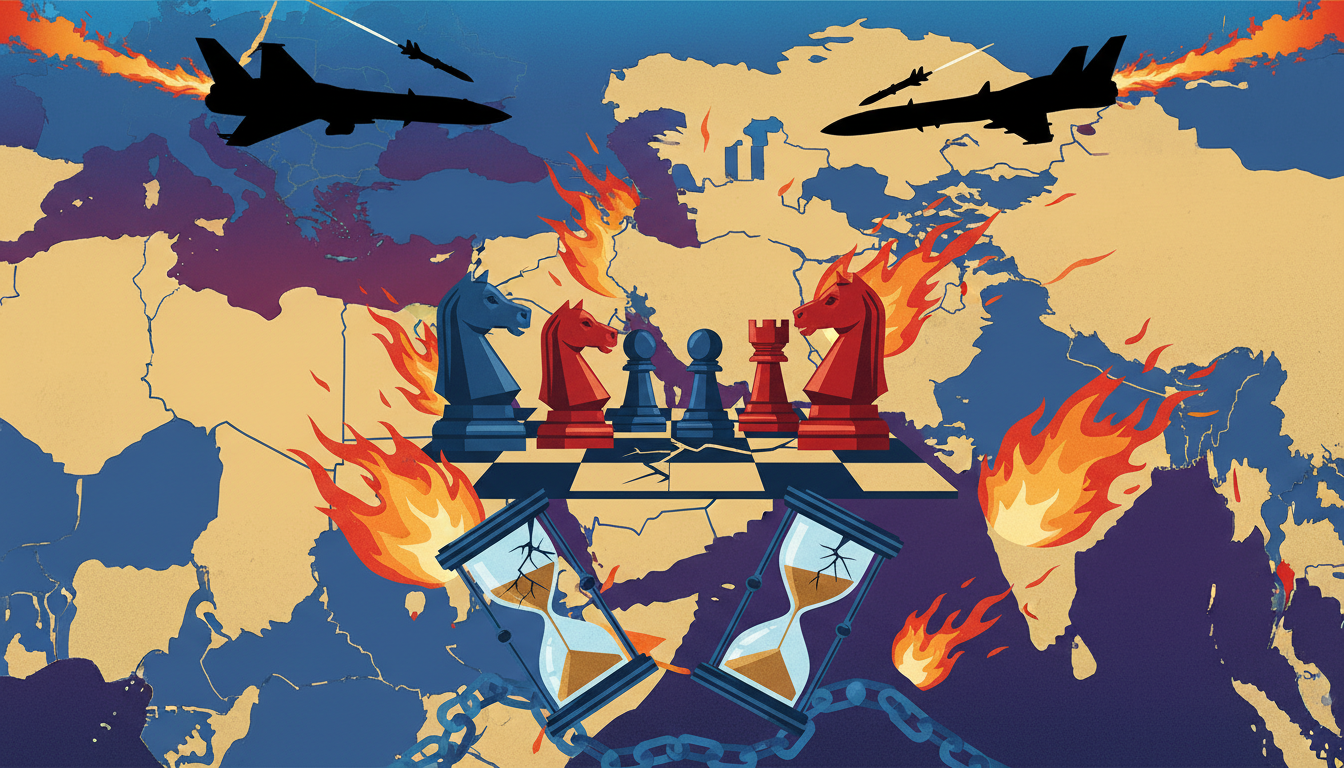
On April 13, 2026, the Central Headquarters of the Iranian Armed Forces Khatam al-Anbiya publicly announced that it had launched a "permanent mechanism for controlling the Strait of Hormuz", pushing the narrative of controlling this global energy artery in the Persian Gulf into a new round of sharp confrontation. The Strait of Hormuz accounts for approximately 20% of global oil transportation, and any statement about "permanent control" goes far beyond the regional conflict itself, directly touching the nerves of global energy security and inflation expectations. Synchronous with the fluctuations in oil prices and gold in traditional financial markets, the more extreme feedback is reflected in a batch of cryptocurrencies with noticeable thematic attributes: according to a single source, GIGGLE surged over 40% in a day, RAVE surged over 172% in a day, and BNBLife saw a rise of about 6 times over the past two weeks, completing a narrative leap from marginal small caps to "super stocks" in a short period. The question then arises: why can an energy pathway game occurring at the mouth of the Persian Gulf be packaged as a "geopolitical conflict theme" within hours to days, igniting localized frenzy and panic expectations in the cryptocurrency market?
The Hand That Chokes the Global Energy Chain in Hormuz
The announcement by the Central Headquarters of Khatam al-Anbiya regarding the "permanent mechanism for controlling the Strait of Hormuz" is not merely a tactical statement but sends a signal of structural reconstruction to the outside world through the word "permanent": Iran will no longer just passively respond when specific events occur but will set its own rules for controlling the Strait at the institutional level. In the context of years of US-Iranian gamesmanship, this statement effectively elevates the previous tactical options of "temporary blockades and limited harassment" to the public domain of long-term strategic chips, indicating that the game around Hormuz will become more sustainable and repetitive.
More symbolically, there is the frequently quoted statement: "Port security either belongs to everyone or belongs to no one". This statement constitutes Iran's narrative framework regarding the current maritime shipping order: accept Iran as one of the rule participants to collectively safeguard the so-called safety of "everyone"; or Iran has the right to render this safety ineffective for all through pressure. It is both a denial of "unilateral security" and an open challenge to the existing maritime order dominated by a few strong countries, shaping itself into an "order player" rather than merely a "disruptor".
Geographically and in terms of energy structure, the Strait of Hormuz is the only maritime passage connecting the Persian Gulf to the outside world, accounting for approximately 20% of global oil transportation; crude oil and natural gas from major producing countries such as Saudi Arabia, the UAE, and Iraq must be exported through it. For decades, US-Iranian clashes over "freedom of navigation" and "sanctions enforcement" have centered around the question of "who has the authority to define security and passage in this narrow waterway". Currently, various blockades and countermeasures that the US is expected to potentially implement remain largely at the direction and attitude level — for example, strengthening naval deployments, enhancing monitoring and interception of Iranian-related vessels — but there is still a clear information void in specific technical measures and execution details. For the market, this state of "clear direction with missing details" is precisely when risk premiums can be most easily amplified, also providing room for subsequent narratives and emotional imaginings.
How Oil Price Panic Expectations Penetrate into Cryptocurrency Sentiment
When the critical node of Hormuz gets entangled in rising tensions, the pricing chain of traditional assets is almost textbook: rising geopolitical risks → heightened expectations of supply disruptions → oil risk premiums increasing → market worries about imported inflation returning → increased demand for hedging against inflation and systemic risks. In terms of investment portfolios, this means capital flows from high-leverage, high-beta assets to traditional safe havens like gold and government bonds, leading to a repricing of the global asset allocation "oil-inflation-hedging" transmission chain.
In past rounds of conflicts, gold and US Treasury bonds have often been the first beneficiaries among safe-haven assets, while mainstream cryptocurrencies like Bitcoin linger awkwardly between “quasi-safe haven” and “high-risk growth”. At times, Bitcoin may be sold off initially as risk appetite diminishes at the onset of heightened conflict, only to later be re-packaged as "digital gold" amid monetary easing or rising inflation expectations, enjoying a rebound. This rhythm is markedly different from gold's immediate premium surge at the outbreak of geopolitical events and also indicates that the safe-haven attribute of crypto assets is highly emotional and narrative-driven, rather than stably institutionalized.
In the context of the current Hormuz event, on-chain performance is more akin to "localized emotional amplification and thematic speculation", rather than representing a widespread safe-haven trend in the entire cryptocurrency market: the volatility of Bitcoin and leading assets still primarily revolves around macro liquidity and regulatory expectations, while the real "massive surges" are seen in small-cap thematic coins that can quickly bind to geopolitical conflicts, energy games, and narratives of specific countries. The rise of these assets does not stem from a rational reassessment of the energy supply landscape but rather from traders' familiar procedural operations of "hitting the hotspots—traffic—chip games".
It is also necessary to emphasize that surrounding this event, some opinions have directly characterized the potential restrictions by the US as "illegal", attempting to construct a grand trading logic of "the dollar order will be overturned—value reserves shift towards crypto". However, according to existing information, whether the restrictions are officially characterized as "illegal" remains to be verified, lacking clear legal and multilateral mechanism support. Under this premise, using unverified qualitative conclusions as the core trading logic not only risks falling into emotional misinterpretations but may also trigger intense reverse volatility when factual corrections occur.
The Frenzy of Meme Coins: GIGGLE and...
In the shadow of the macro narrative, the most intuitive and visually striking aspect is a batch of "meme coins" surrounding geopolitical conflict and playful narratives. According to a single source of data, within the same time window as Iran's announcement of the "permanent mechanism", GIGGLE surged over 40% in a day, RAVE surged over 172%, with K-lines almost showing a typical small-cap thematic coin "rising straight up". Such a frantic surge, highly decoupled from the trends of mainstream assets, reflects not a demand for hedging against geopolitical risks, but a sensitive capture of "conflict narratives + hot traffic".
These coins often possess distinct "narrative symbolization" characteristics: names, logos, topic tags are vaguely linked to the current conflict, characters, or countries, facilitating low-cost secondary creation and dissemination on social media. From "Iran" to "Hormuz", "oil route" to various meme styles, geopolitical events are condensed into a few visual symbols and then grafted onto the coin types, completing the transformation from political events to trading targets. Traders do not care whether these projects truly possess business, funding, or technical ties to the geopolitical events; what matters most is: whether the story is compelling, direct, and can be quickly understood and amplified by the secondary market.
At the structural level, these meme coins generally exhibit features of weak liquidity, high concentration of chips, and suspected control by operators. When buy orders concentrate even slightly, they can pull up dozens or hundreds of points on extremely narrow depth; conversely, when operators or early funds choose to cash out at highs, minimal selling pressure can trigger a waterfall decline. This “one-sided staircase ascent, elevator drop” structure makes wild fluctuations the norm, with asymmetry in returns and risks far exceeding those of mainstream assets.
What is particularly concerning is that the current market data, chip distribution, and funding sources surrounding assets like GIGGLE and RAVE mostly come from a single data source or statistics that have not undergone systematic cross-verification. In the absence of in-depth on-chain analysis and insufficient disclosure of project information, traders often have to rely on screenshots, KOL anecdotes, or exchange frontend displays to make decisions. Information asymmetry is magnified to the extreme in such small-cap thematic coins: once dominant funds choose to concentrate their exit at points of weakest liquidity, latecomer retail investors not only find it difficult to cut losses in time but also easily fall victim to a collective stampede in the delayed chain of "seeing data—starting to buy—price is already at a high".
Suspected Whale Withdrawals and BNBLi...
Parallel to the fermenting geopolitical conflict narrative is another more "insider" story of a meme stock: BNBLife. According to the same single source, BNBLife has surged about 6 times in the past two weeks, and against a backdrop of overall market activity not being exceedingly lively, such a slope is enough to propel it onto the watchlists of speculators. Its name directly points to "Binance Life", naturally establishing some psychological association space with the brand and user imagination of leading exchanges—regardless of whether the project itself has actual ties to the platform, the logic of "as long as it is listed, it can attract traffic" is deeply rooted in retail investors' minds.
On the on-chain side, a widely noted operation is: suspected controlling parties recently withdrew a large amount of coins, approximately $9.37 million. In the absence of more complete disclosures regarding the flow paths and holdings structure, the market naturally tends to interpret such a large-scale action as a sign of "operators accumulating positions", "the project has insider information", "big moves are still to come", etc. A withdrawal is technically merely a transaction moving chips from an exchange to an on-chain address, but in an emotionally driven environment, it is imbued with strategic intentions and even imaginings of "insider news", forming a “behavior—interpretation—self-reinforcement cycle”: someone sees a large withdrawal → interprets it as a good sign → increases positions boosting the price → the price rising then validates the “good news” narrative.
The problem is that, under the premise of almost blank basic information about the project, such "dark line narratives" are easily over-interpreted or even deliberately exploited. The inadequacies of regulatory and information disclosure mechanisms mean that large address activities can be seen as either reasonable position management or scripts designed to deliberately manufacture signals using "on-chain visibility". Retail investors, unable to distinguish between “real confidence influx” and “operators blowing the horn before pulling the rug”, can easily be attracted to the position of the last buyer. Once the large address subsequently engages in concentrated selling, the earlier withdrawals deemed a “strong bullish signal” will be retrospectively translated into "classic bait and switch", but for those caught up, such post-analysis holds little significance.
Geopolitical Hotspots Become VC...
Panning out from the secondary market to the primary market, another capital logic closely related to this round of geopolitical narrative emerges: "The early financing environment is tightening, and the discourse power of VC institutions is increasing". This statement from the head of Varys Capital highlights the structural changes in crypto startup financing today—funds flowing towards leading projects and star narratives remain considerable, but small and medium teams lacking strong narrative support are facing unprecedented coldness, with financing showing clear polarization.
During periods of capital tightening, VCs often prefer those projects that can articulate grand narratives in the shortest time: binding keywords like geopolitical tensions, national security, energy restructuring, and de-dollarization, mean they can more easily explain “why this is the core track of the next cycle” to LPs, thus accelerating fundraising and future exits. Compared to infrastructure projects that slowly build technological barriers and struggle to present "dramatic stories" in the short term, concepts around "geopolitical finance", "on-chain national assets", and "decentralized energy settlements" resonate more with the current narrative economics.
For retail investors in the secondary market, when there are not enough clear and quality long-term assets available for allocation, sentiment will naturally gravitate towards those short-term thematic coins closely tied to hot conflicts and major macro events. Whether it is Hormuz, central bank digitalization, or great power games, as long as an association is made with the token name and logo, it holds the potential to be chased after. When capital is constrained in the primary market and lacks trend in mainstream assets, it will seek alternatives with "high volatility—high story density" in a smaller pool, which is the institutional soil from which meme coins endlessly sprout.
Through this lens, we can see that geopolitical risk events are being viewed by multiple market participants as "emotional amplifiers" : for VCs, it is a narrative amplifier for fundraising and valuation; for project parties, it serves as a topic amplifier for going viral and attracting new users; for secondary market manipulators, it is a volatility amplifier for controlling positions and selling off. Real long-term fundamental changes related to energy structures, international trade, and financial system reconstruction typically take years or even longer to settle in asset prices, while short-term market actions can be "scripted and dramatized" within days, which is a misalignment investors need to be especially wary of.
From Gunfire in Hormuz to On-Chain Chips...
In summary, Iran's tough stance on launching a "permanent mechanism for controlling the Strait of Hormuz" primarily transmits through the energy supply chain: the market fears that approximately 20% of global oil transport channels may be obstructed, leading to rapid repricing of oil price risk premiums and inflation expectations; on this basis, various grand narratives of “hedging”, “de-dollarization”, and “energy finance reconstruction” have been activated, forming a narrative chain that provides imaginative space for crypto assets, especially thematic coins. Ultimately, enhanced by social media and liquidity environments, these narratives sediment into the distribution and price fluctuations of on-chain chips in forms like “geopolitical conflict memes”, “energy concept meme coins”, and “shadow coins of leading platforms”, completing the transference from gunfire in Hormuz to K-line eruptions across markets.
For investors, it is critical to distinguish: on one hand, the long-term landscape of Hormuz, the Persian Gulf, and energy corridors may indeed reshape part of the macro picture in the coming years; on the other hand, considering this statement as a structural turning point for the cryptocurrency market is evidently premature. This performance seems more like an "event-driven emotional amplification" rather than a systematic repricing based on fundamental reassessment. If simply projecting the short-term meme coin frenzy as a long-term trend while ignoring the control structures and information asymmetries at play, only amplifies the probability of being reversed and harvested.
In markets driven by similar geopolitical events, investors should prioritize three points: liquidity, holding structure, and the reliability of data sources. Liquidity determines the freedom of entry and exit as well as slippage costs; holding structure reveals the power dynamics of the battle between retail and institutional investors, with higher concentration indicating greater potential for manipulation; while the sources and levels of verification of data determine whether you are seeing “real-time signals” or “samples chosen post-factum”. In the absence of multi-source cross-verification and in-depth on-chain analysis, it is better to assume information is lagging than to treat a single screenshot as a leveraged truth.
Looking ahead, if tensions in the Persian Gulf continue to escalate or even further militarize, in terms of mainstream assets, oil prices and gold's safe-haven attributes will still be prioritized, while Bitcoin may oscillate between “risk asset—hedging tool” roles, experiencing increased volatility but directionally more reliant on monetary and regulatory variables; thematic coin sectors are likely to continue appearing with “new stories—rapid rises and falls” narratives, accelerating narrative rotation with fewer survivors; in the industry financing ecosystem, geopolitical and macro hot projects will continue to gain more exposure and discourse power, whereas teams that truly rely on technology and products to navigate the cycles will require more time and greater patience to resist the temptations and noise of this round of “narrative dividends”.
Join our community, let’s discuss and grow stronger together!
Official Telegram group: https://t.me/aicoincn
AiCoin Chinese Twitter: https://x.com/AiCoinzh
OKX welfare group: https://aicoin.com/link/chat?cid=l61eM4owQ
Binance welfare group: https://aicoin.com/link/chat?cid=ynr7d1P6Z
免责声明:本文章仅代表作者个人观点,不代表本平台的立场和观点。本文章仅供信息分享,不构成对任何人的任何投资建议。用户与作者之间的任何争议,与本平台无关。如网页中刊载的文章或图片涉及侵权,请提供相关的权利证明和身份证明发送邮件到support@aicoin.com,本平台相关工作人员将会进行核查。