Written by: Silicon Valley Alan Walker
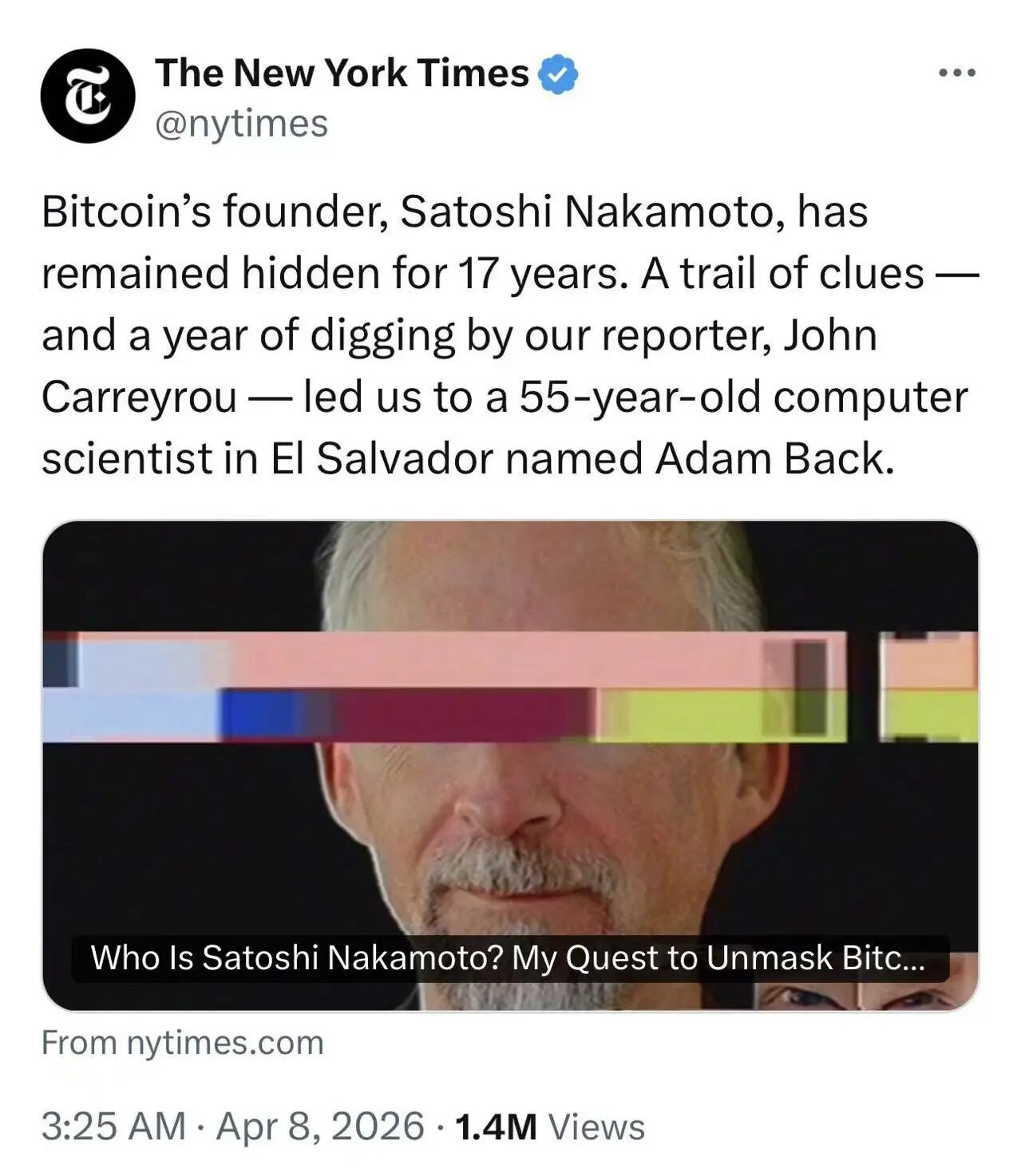
Carreyrou spent a year pointing to a living person through stylistic analysis, while ignoring the undeniable dead person. This is not an investigation; it's choosing a suspect who can be interviewed.
Alan Walker·April 8, 2026·Zombie Café
This morning, Silicon Valley Alan Walker sat in Zombie Café, seeing a tweet from The New York Times:
Adam Back, El Salvador, a 55-year-old cryptographer, is the legendary Satoshi Nakamoto.
He took a sip of coffee.
The New York Times reporter John Carreyrou did something clever in this report: it chose a living person. Adam Back could be flown for an interview, could be recorded in a hotel room, and could have his "nervous body language" documented. He could deny, and then his denial itself becomes part of the news. This is good news handling, but not good investigation.
Alan has been in this industry for thirty years and has seen too many cases where "the most convenient answer" is packaged as "the most reasonable answer." The true identity of Satoshi Nakamoto never depends on who is alive and can be interviewed. It depends on the evidence chain.
The evidence chain points to Hal Finney
First, let’s talk about where NYT's case has flaws.
The core evidence from The New York Times reporter Carreyrou is:
Stylistic analysis shows Adam Back's writing style is closest to Satoshi Nakamoto; Back was "mysteriously silent" on cryptography mailing lists between 2008-2010; Back invented Hashcash, the predecessor to Bitcoin's proof of work; and Back "got nervous" in an HBO documentary.
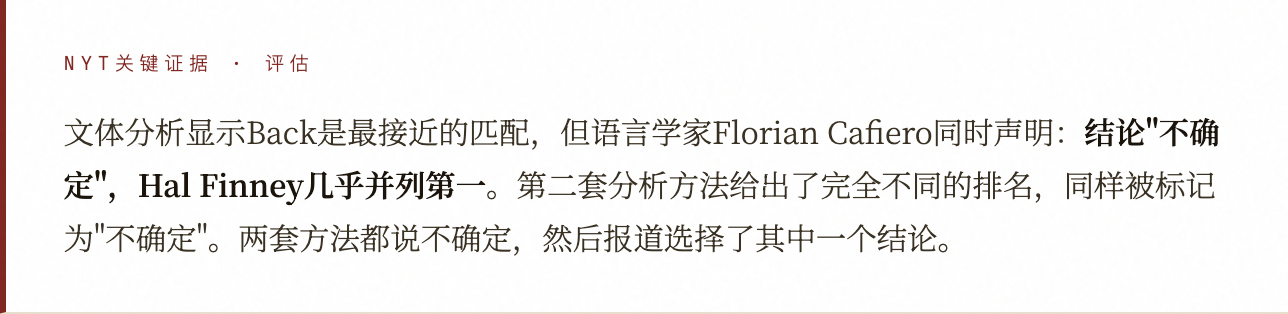
An even more critical flaw: Back submitted five emails between him and Satoshi Nakamoto as evidence in the Craig Wright case. These emails show that the two are different people. Carreyrou's rebuttal is: "Back might have sent these emails to himself as a cover."
This statement appeared in a New York Times investigative report. He has no evidence to support this speculation.
I’m not saying Adam Back is not Satoshi Nakamoto. I’m saying: if your strongest evidence requires a hypothesis of "he might have forged the emails he submitted to the court," your case is not valid.
Now let's discuss why the case for Finney is stronger.
Hal Finney died from complications of ALS in August 2014 at the age of 58. He was diagnosed in August 2009 and gradually lost his ability to type. He denied being Satoshi Nakamoto until just before his death. He couldn't defend himself. This is his greatest weakness as a suspect, and the main reason why everyone overlooks him.
But let's look at the evidence chain.
The first clue: the first Bitcoin transaction
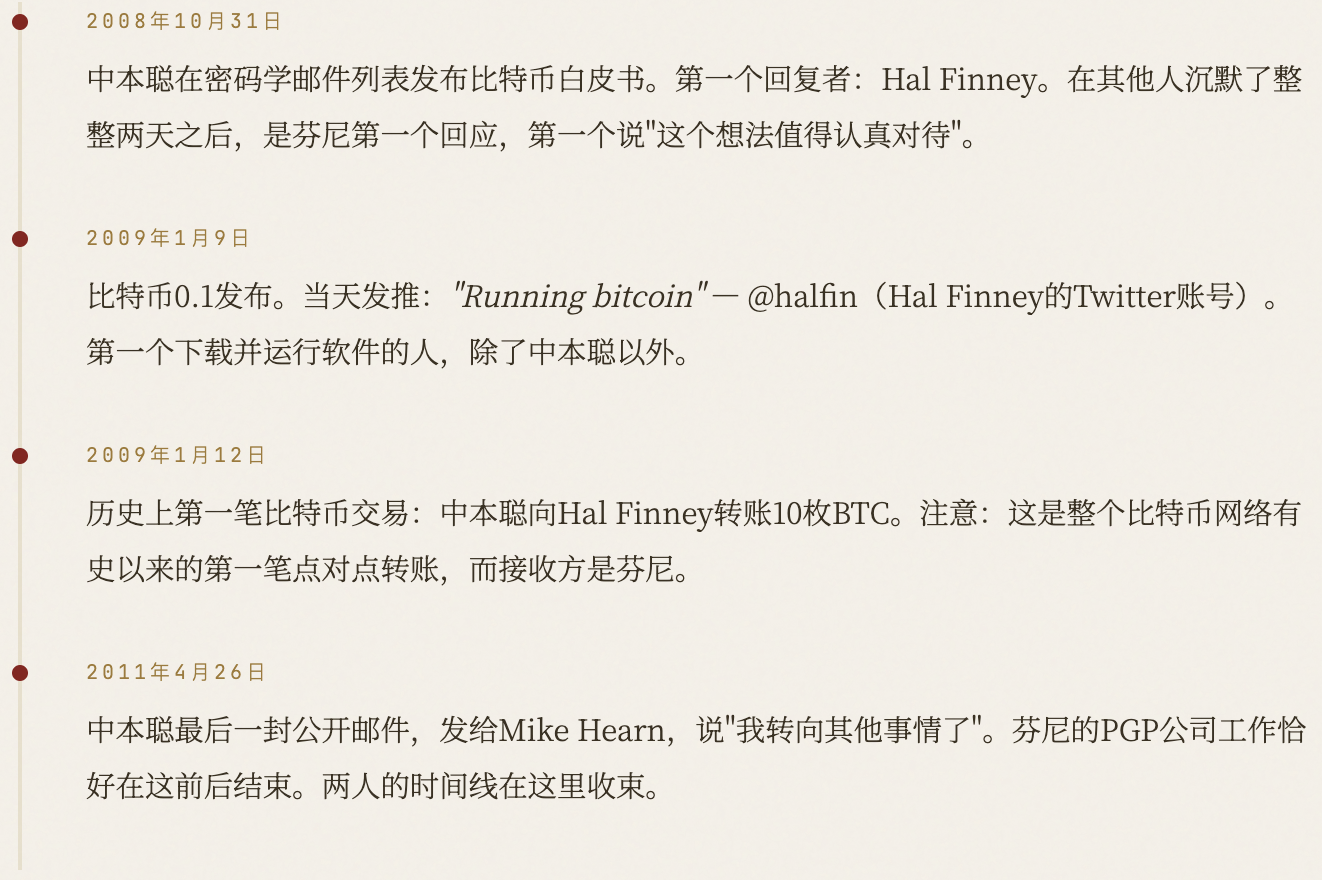
You give the most important first transaction in history to someone you trust. Or, to yourself.
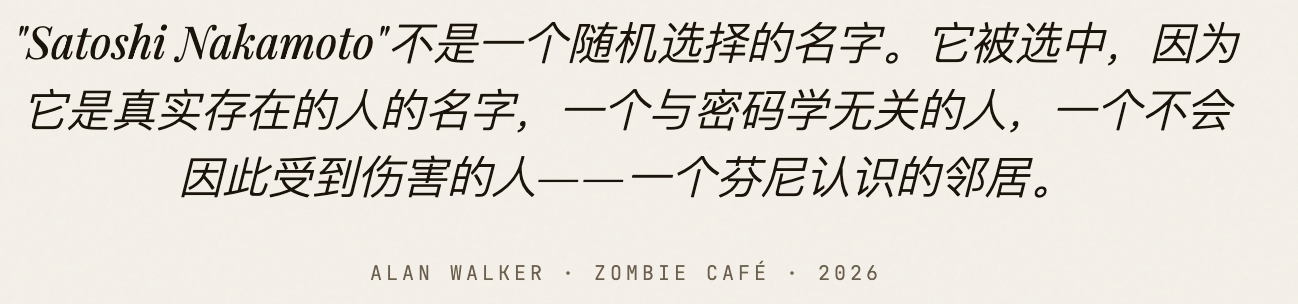
The second clue: he lived next to "Satoshi Nakamoto"
Finney lived in Temple City, California, for a full decade. His neighbor was a Japanese-American named Dorian Satoshi Nakamoto—a retired engineer with no connection to Bitcoin, yet living downstairs from Finney with that name.
Is this a coincidence? Of course it could be a coincidence. But suppose you had to choose a pseudonym for a project that changed financial history, would you look up your neighbor's name, or randomly create a Japanese name out of thin air?
I thought about this for thirty seconds.
The third clue: code genetics
Finney created RPOW—Reusable Proofs of Work—in 2004. This is a direct predecessor to Bitcoin's proof of work mechanism and conceptually closer to Bitcoin's actual implementation than Hashcash.
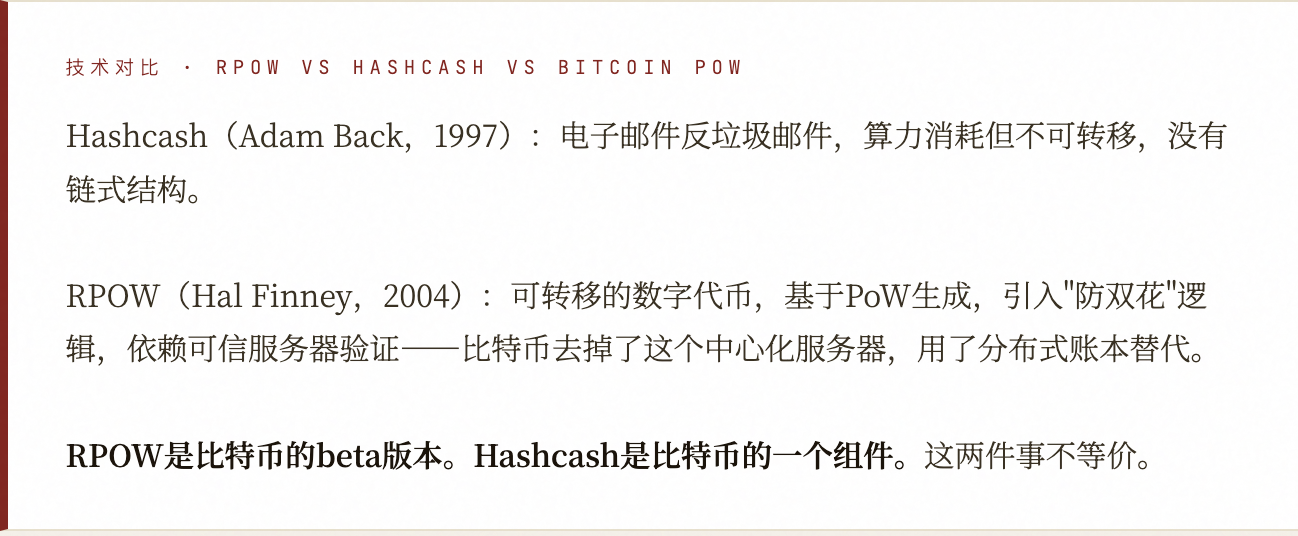
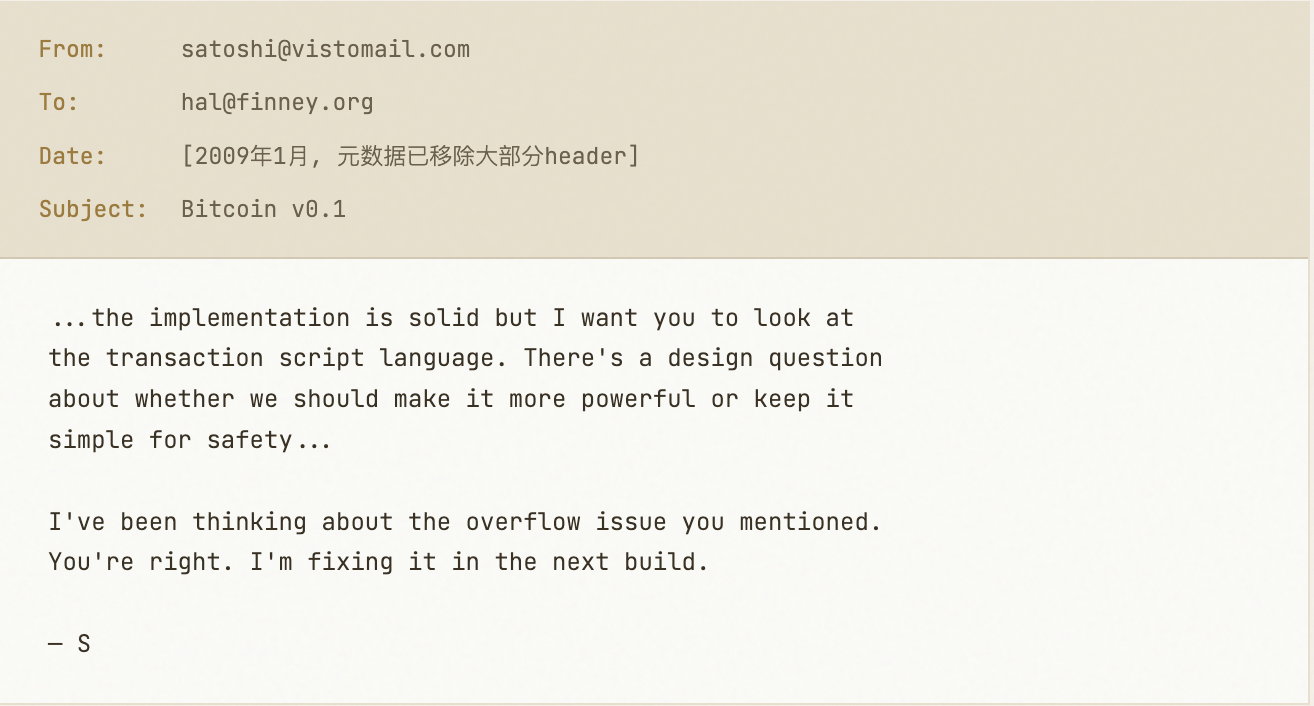
Finney helped debug early Bitcoin code in early 2009. He submitted feedback about overflow vulnerabilities, scripting language design, and transaction format. These are not opinions from a "keen user"; they are from someone who knows the codebase intimately, refining his own work.
Meanwhile, in 2009, researchers found that in Finney's private email correspondence with Satoshi, he used his Gmail account rather than his usual hal@finney.org. Most of the email metadata was removed. This unusual caution is noteworthy—someone writing to themselves tends to care more about the cleanliness of header information.
The fourth clue: timestamps and activity patterns
A widely cited rebuttal by Jameson Lopp states that on April 18, 2009, Finney participated in a 10-mile race in Santa Barbara, while at the same time Satoshi was emailing Mike Hearn and confirming on-chain transactions. Finney couldn't have been operating the computer while running.
This argument holds, but its strength is overstated. There are three reasons:
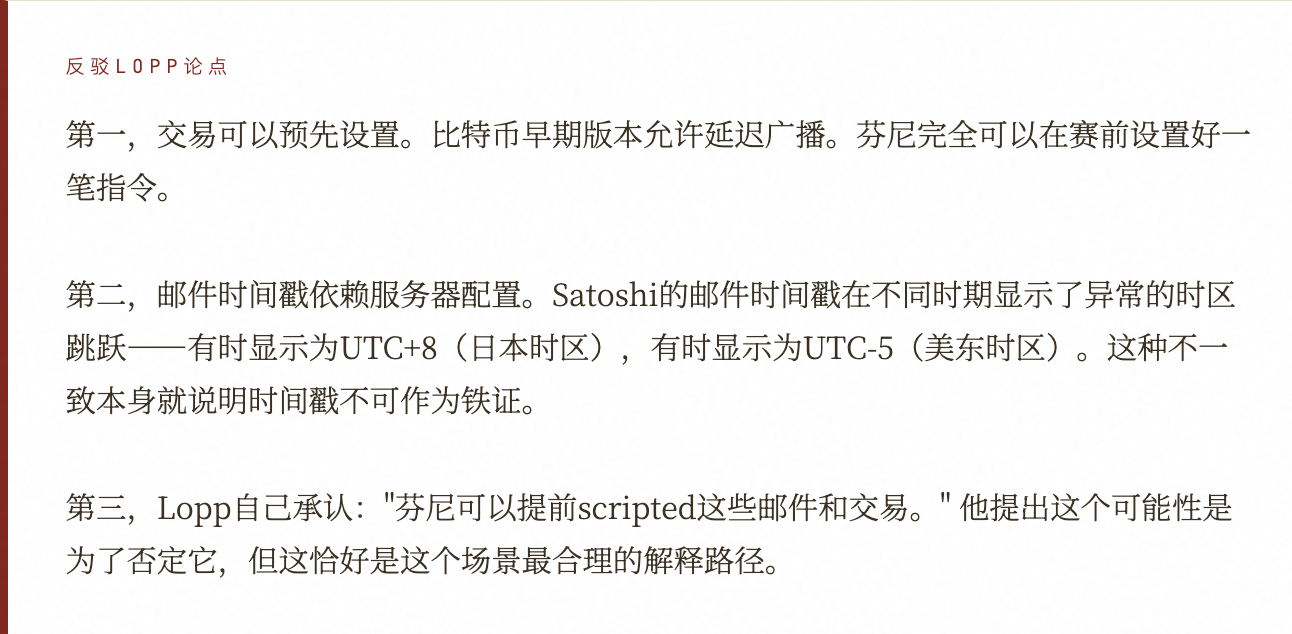
More importantly: after Finney was diagnosed with ALS in 2010, Satoshi's activity began to noticeably decline.
In April 2011, Satoshi announced a "shift to other things," a timeline that closely matches Finney's gradual loss of typing ability due to his illness.
The fifth clue: that unexplained email
In 2020, researchers published a batch of previously unreleased Satoshi-Finney emails, sourced from journalist Nathaniel Popper, who had accessed Finney's belongings. These emails are from November 2008 and January 2009, around the time of Bitcoin's release.
Notice a few details of this email.
First, the email was sent from satoshi@vistomail.com, but the timestamp recorded on Finney's hal@finney.org server was earlier than the anonymousspeech.com server—meaning the receiving server registered receipt before the sender's server recorded sending. This shouldn't occur in normal email transmission.
One explanation is: Finney forwarded Satoshi's email account to his main account, so the local server received a copy first. Or—both accounts are under the control of the same person.
Second, when Finney provided the emails to The Wall Street Journal, the version provided was missing a lot of header data. A person protecting another's privacy might do this. A person protecting their own privacy would do the same.
The sixth clue: he cares but never shows off
In a BitcoinTalk post titled "Bitcoin and Me" in 2013, Finney detailed in the first person how he "discovered" Bitcoin, became the first downloader, and accepted the first transaction. The article is heartfelt and filled with emotion about the project. He mentioned that in his communication with Satoshi, he felt the other party was a "very smart, very sincere person."
A person can talk about themselves in such terms. Especially a person slowly losing their body to ALS, when reflecting on their most important creation in life.
He predicted Bitcoin would be worth $1 million each in 2011. This is not a prediction from an external observer. This is a prediction from someone who knows the code limit is 21 million, understands the system design logic, and knows this system won't fail.
In comparison with Adam Back:
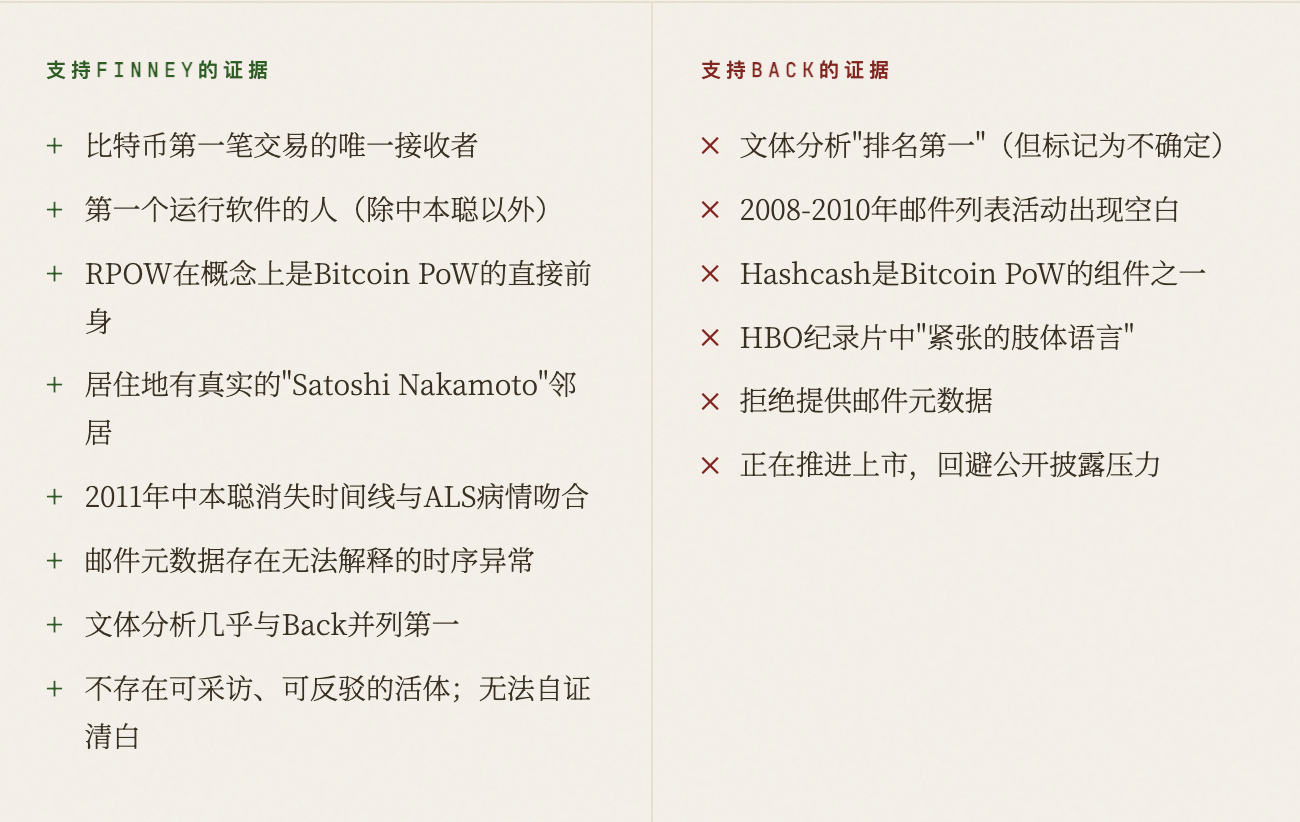
Back's silence can be explained with a hundred different reasons: lawyer's advice, media fatigue, not wanting to provide any nutrition to a false guess.
Back's "nervousness" is a normal reaction of someone suddenly identified as the founder of Bitcoin in a documentary.
Finney's evidence is structural.
It is embedded in the first transaction of the blockchain, embedded in his neighbor's name, embedded in his code, embedded in the timeline of Satoshi's disappearance.
What about that race rebuttal?
I know this is the most commonly cited argument. Finney is running while Satoshi is emailing, so they cannot be the same person. Consider the following two possibilities.
Consider the following two possibilities.
The first: this actually proves Finney is not Satoshi, so Satoshi is Adam Back, with evidence being "stylistic analysis is uncertain" plus "nervous body language."
The second: the transactions and emails were prepared in advance, or involved some degree of collaboration, and Finney was the core organizer of that collaboration and the executor of the final will.
Lopp himself admits that the second possibility exists. He chooses to disregard it because he believes Bitcoin is a single-author project. But he has no evidence proving this—it is his assumption.
If we allow Carreyrou to assume "Back might have forged the court emails" without evidence, then we could also allow ourselves to assume "Finney might have pre-arranged these transactions." The evidentiary basis for both assumptions is the same: zero. But the overall evidential structure of one is much stronger.
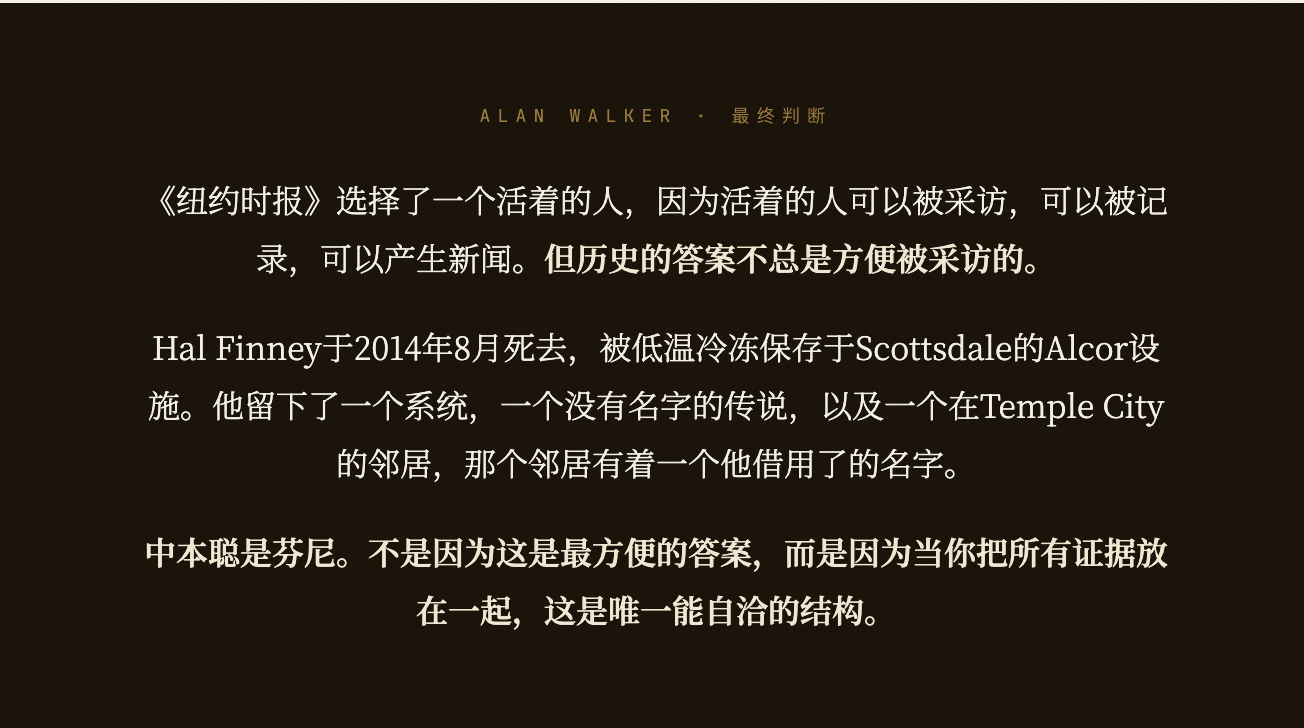
I don't need you to agree with me. I just want you to read this after finishing Carreyrou's report. Then judge for yourself which evidence chain is more solid.
My coffee has gone cold.☕️

Alan Walker doesn't use question marks.
免责声明:本文章仅代表作者个人观点,不代表本平台的立场和观点。本文章仅供信息分享,不构成对任何人的任何投资建议。用户与作者之间的任何争议,与本平台无关。如网页中刊载的文章或图片涉及侵权,请提供相关的权利证明和身份证明发送邮件到support@aicoin.com,本平台相关工作人员将会进行核查。


