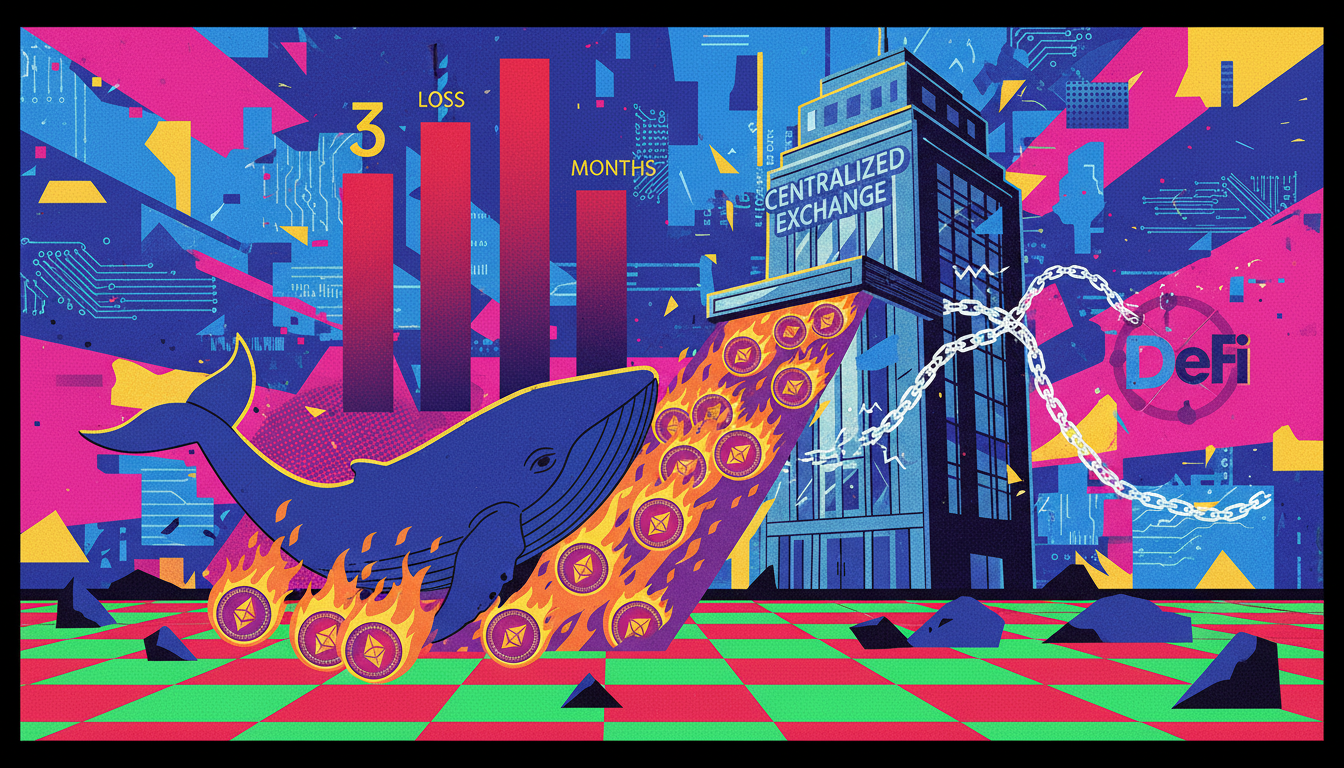
At 2026 April 13, Eastern Eight Time, The Polkadot-related Ethereum cross-chain bridge was reported to have encountered a serious security attack. The attacker maliciously minted 1 billion bridge DOT by tampering with the admin permissions of the cross-chain bridge and circumventing the multi-signature restrictions, quickly selling off on the Ethereum side, smashing through the liquidity pool. The price of the bridge DOT plummeted from approximately $1.22 to near zero in a free-fall, erasing almost all market value on the chart. Officials and several media outlets subsequently emphasized repeatedly: this attack only affected the Ethereum side bridge DOT, and the balance and consensus security of the native DOT on the Polkadot mainnet remained intact. However, for ordinary users, the same "DOT" symbol in their wallets overnight evolved into “unwritten mainnet assets” and “diluted bridge remnants,” starkly exposing the contradiction between technical security and trust fractures.
1 Billion Bridge DOT Sale: Price Instant Kill and Misunderstanding Spread
Rewind to April 13, the story began with what seemed to be a normal permissions change. The technical community's review found that the attacker first successfully tampered with the admin permissions of the cross-chain bridge, equivalent to obtaining the master key for this "multi-signature door." The multi-signature mechanism, which was originally supposed to be jointly signed by multiple parties to protect the minting and burning of bridge assets, became meaningless the moment the permissions were rewritten; the minting button of the cross-chain bridge was controlled by a single point, logically bypassing the defenses.
After the permissions were breached, the attack entered its second phase: 1 billion bridge DOT were minted all at once and quickly split, entering multiple liquidity pools and trading paths to sell off. Because the liquidity of the bridge DOT itself could not support such massive selling pressure, the on-chain transaction records displayed typical characteristics of "huge dump + extreme slippage": every market sell-off sharply lowered the price, further amplifying the impact of subsequent selling orders, leading to a downward price-liquidation spiral.
The cliff-like drop in the price almost completed within minutes: starting from about $1.22, the bridge DOT was crushed to a near-zero range in a short time. The market pool was drained and collapsed, with buyer liquidity unable to absorb the outpouring of massive assets, and the on-chain community and trading groups were quickly dominated by extreme statements like “the bridge was blown up” and “DOT hit zero.” Many holders panicked and sold off while the price was still in a rapid decline stage, further accelerating this chain reaction.
When the incident was first exposed, the market sentiment initially equated the collapse of "bridge DOT" with "DOT collapse," with discussions such as “Polkadot was hacked” and “DOT is about to disappear” spreading across social platforms. It wasn't until multiple media and technical parties clarified repeatedly — “This incident only affects the bridge DOT on the Ethereum side, and the Polkadot mainnet assets are unaffected” — that misunderstandings began to be corrected. However, for those who only saw the "DOT" letters in their accounts but could not distinguish the underlying chain, the psychological shadow brought by this price instant kill was far more stubborn than any technical explanation.
Mainnet Safe and Sound? Dual Realities of Polkadot and Bridge Assets
From the on-chain structure perspective, the impact of this attack was strictly confined to the bridge contracts on the Ethereum side and did not produce substantial impacts on the operational logic of the Polkadot mainnet. The supply, balance records, and consensus security of Polkadot's native DOT were still maintained by the collective of validators and underlying protocols of the Polkadot network; the attacker neither broke through Polkadot's consensus layer nor could directly tamper with the mainnet balance. In other words, this was an attack on "a cross-chain pipeline leading to Polkadot," rather than an invasion of the Polkadot mainnet treasury itself.
However, for users, the security foundation of “the same asset” on different chains is essentially two completely different trust structures. On one side is the consensus security of the native chain: a distributed defense composed of hundreds of validator nodes, on-chain governance, and economic incentives; on the other side is the bridge contracts and multi-signature permissions: private keys, contract upgrade rights, and operational processes held by a few development teams, custodians, or DAOs. Once issues arise in permissions management on the latter, the value support of bridge assets can be overturned in a short time.
In reality, most users only focus on the “DOT” symbol on their wallet interface and rarely make a conscious distinction between whether the DOT comes from the Polkadot mainnet or from a mapping token minted on a cross-chain bridge on the Ethereum side. In a normal market environment, this habit of “ignoring the assigned chain” increases usability but also invisibly amplifies the blind spots in risk perception: as long as the price and liquidity seem normal, who would still question the safety assumptions behind it?
This incident brutally tore the value gap between "bridge assets" and "native assets." The bridge DOT plummeted to near zero, while the mainnet DOT remained calm on the books; this forked fate of the same-named assets reinforced a long-held view in the technical circle — tokens on the bridge are more like a “shadow IOU” issued by contracts and multi-signatures, with the actual collateral and safety backing not resting on the chain where it resides. For some users, the impact of the incident was not about “whether the losses can be recovered,” but rather “whether assets can still be safely entrusted to any bridge in the future.”
Multi-signature Door Kicked Open: The Soft Spot of Admin Permissions
The most critical review by the technical community regarding this incident centered around four words: admin permissions. According to discussions leaked within the community and on-chain behavior analysis, the attack path can be roughly summarized as: first obtaining or rewriting the admin permissions of the cross-chain bridge contract, then using this highest permission to adjust the multi-signature rules, tampering with configurations, and finally directly invoking the minting logic. Formally, the multi-signature mechanism seems to still exist; in reality, the “door” prior to multi-signature has been quietly rekeyed, turning signers into mere background props.
Multi-signatures were initially introduced to avoid catastrophic consequences stemming from the theft of a single point private key: key operations would only be effective when enough participants jointly sign. This design seems to be close to “best practice for contract custody” on paper. However, once into the practical operational phase, problems began to surface — to improve upgrade efficiency and operational convenience, project teams often concentrate multi-signatures in the hands of a few core members or custodial institutions, and in extreme cases, they even conduct “self-signing and self-review” within the same organization with multiple private keys. The decentralized defense line gradually degrades into a “few people making the call” island of permissions.
The uniqueness of cross-chain bridges further amplified this contradiction. On one hand, operators of bridges need to retain sufficient flexibility between emergency upgrades and rapid responses to cope with underlying chain protocol changes, routing adjustments, and risk control rule updates; on the other hand, users expect the permission structure of bridges to be as decentralized as possible and not easily controlled by any team or institution. Thus, we often see cross-chain bridges long swaying between “security cannot be changed” and “upgrade flexibility,” with admin permissions becoming the pivot of this swing.
When putting this attack into a longer timeline, it doesn’t stand alone. Over the past few years, incidents related to multi-signatures have frequently occurred in the cross-chain bridge space: some involved the theft or phishing of signer's private keys, others were due to too low a multi-signature threshold, and there were even extreme cases of “multi-signature address being a single signature.” On the surface, a door equipped with multiple locks appears to be impregnable; but if all the keys are on the same key ring, or the entire door's lock core can be replaced in the background with a single click, these locks resemble more of a psychological comfort rather than substantial security guarantees.
Invisible Cracks in DeFi Pipelines: From Bridges to the Entire System
If we see Ethereum, Polkadot, and other L1s, as well as various L2s and side chains as cities, then cross-chain bridges are the traffic and value pipelines linking these cities. According to public statistics, the total locked value (TVL) of cross-chain bridges had reached approximately $28 billion by Q4 2025, showing a year-on-year increase, while related security incidents rose by about 140%. As the scale continues to grow, the frequency of incidents is also rising, which is a warning bell for the current “pipeline security status.”
In the bustling on-chain economy, cross-chain bridges are not just “transfer tools,” but are the layered coupled entry points within the DeFi system: assets flowing into the bridge enter DEX market-making, provide collateral for lending protocols, participate in staking and re-staking, and magnify leverage and risk exposure through derivatives. When assets on a particular bridge experience serious decoupling or malicious dilution, the immediate impact is felt by the liquidity pool and lending pool directly connected to it; subsequently, the risk control models of other on-chain protocols are triggered under the signal of “collateral value plummeting,” leading to liquidations and discounts.
This kind of transmission is not limited to a single project level but is closer to a systemic shock. In this event, the collapse of the bridge DOT's value means that all contracts treating it as “1 DOT equivalent” are forced to confront the same question: is it still the original collateral? If not, then do corresponding lending positions, LP shares, and derivative exposures need revaluation? Once multiple protocols simultaneously initiate “risk reassessment” in a short period, the market’s violent repricing is no longer an isolated error of a particular contract, but rather a collective response of the entire ecosystem to the “rewrite of the trust foundation.”
From this perspective, cross-chain bridge security incidents are no longer merely a “black swan” of a certain project or a certain development team, but resemble a seismic belt where the entire industry collectively stampeded. The higher the TVL, the more complex the bridging paths, and the deeper the bridge assets penetrate into the DeFi substrate, the more likely a single point failure could evolve into a chain collapse across multiple chains and protocols. Today it is bridge DOT, tomorrow it may be another cross-chain mapping asset; as long as we continue to “affiliate” large volumes of high-value main chain assets under similar permission and contract structures, this seismic belt will persist.
After the Trust Fracture: Can Cross-Chain Bridges Still Hold Users?
From the outcome, this event of 1 billion bridge DOT being pillaged is a heavy blow to the brand and security narrative of the Polkadot ecosystem. Even if the technical stack and consensus mechanism of the Polkadot mainnet maintained “no technical guilt” during this incident, in the perception of ordinary users, the psychological mapping between “incidents with Polkadot-related cross-chain bridges” and “risks with Polkadot-related assets” has been completed. The stories originally used to illustrate “the advantages of cross-chain interoperability” are now forced to end each sentence with a question mark: is this road to Polkadot truly safe?
Looking forward, one point that the technical community can almost certainly determine is that the permissions structure will be re-evaluated and tightened. Stricter multi-signature thresholds, more transparent permission governance, and audits and constraints on the "single point admin" model will become essential options in cross-chain bridge design. Meanwhile, insurance and risk control mechanisms surrounding bridge assets are also expected to receive greater attention, from on-chain insurance pools and risk control white lists to more refined risk exposure limits; the industry may attempt to use financial engineering methods to “add a layer of safety cushion” for such infrastructure.
An alternative pathway with longer-lasting significance is to continue promoting native cross-chain solutions: achieving interoperability at the underlying protocol level so that assets moving between different chains no longer depend excessively on bridges maintained by a single team. Whether it’s Polkadot's own cross-chain design philosophy or mechanisms like light client verification and shared security explored by other public chain ecosystems, they essentially attempt to shift the “cross-chain trust” from the multi-signature and contract layer back to the consensus layer, minimizing reliance on human governance and permissions for cross-chain paths.
For users and institutions, behavior changes post this incident are almost predictable: on one hand, the unified depreciation perception of “bridge assets” will deepen further, with more funds actively distinguishing between native assets and mapped assets, marking the latter with risk when configuring collateral, market-making, and leverage; on the other hand, in choosing cross-chain pathways, institutions will prefer bridges that are widely recognized, thoroughly audited, and clearly regulated, even sacrificing some profit and convenience to exchange for accountable safety boundaries.
It can be foreseen that cross-chain bridges will struggle to continue to exist as completely “invisible infrastructure.” With the expansion of scale and regulatory intervention, they are more likely to evolve towards a form of “strong regulation + strong brand” binding: leading bridge services deeply intertwined with large compliance agencies, auditing firms, and insurers, assuming clearer responsibilities and obligations; while long-tail bridges that lack brand and governance transparency will be marginalized or eliminated under increasingly stringent security and compliance demands. The cross-chain world will not come to a halt due to a single incident, but those walking on this seismic belt will be forced to rethink: who to truly entrust with their assets on the “chain.”
Join our community to discuss together and become stronger!
Official Telegram community: https://t.me/aicoincn
AiCoin Chinese Twitter: https://x.com/AiCoinzh
OKX benefits group: https://aicoin.com/link/chat?cid=l61eM4owQ
Binance benefits group: https://aicoin.com/link/chat?cid=ynr7d1P6Z
免责声明:本文章仅代表作者个人观点,不代表本平台的立场和观点。本文章仅供信息分享,不构成对任何人的任何投资建议。用户与作者之间的任何争议,与本平台无关。如网页中刊载的文章或图片涉及侵权,请提供相关的权利证明和身份证明发送邮件到support@aicoin.com,本平台相关工作人员将会进行核查。