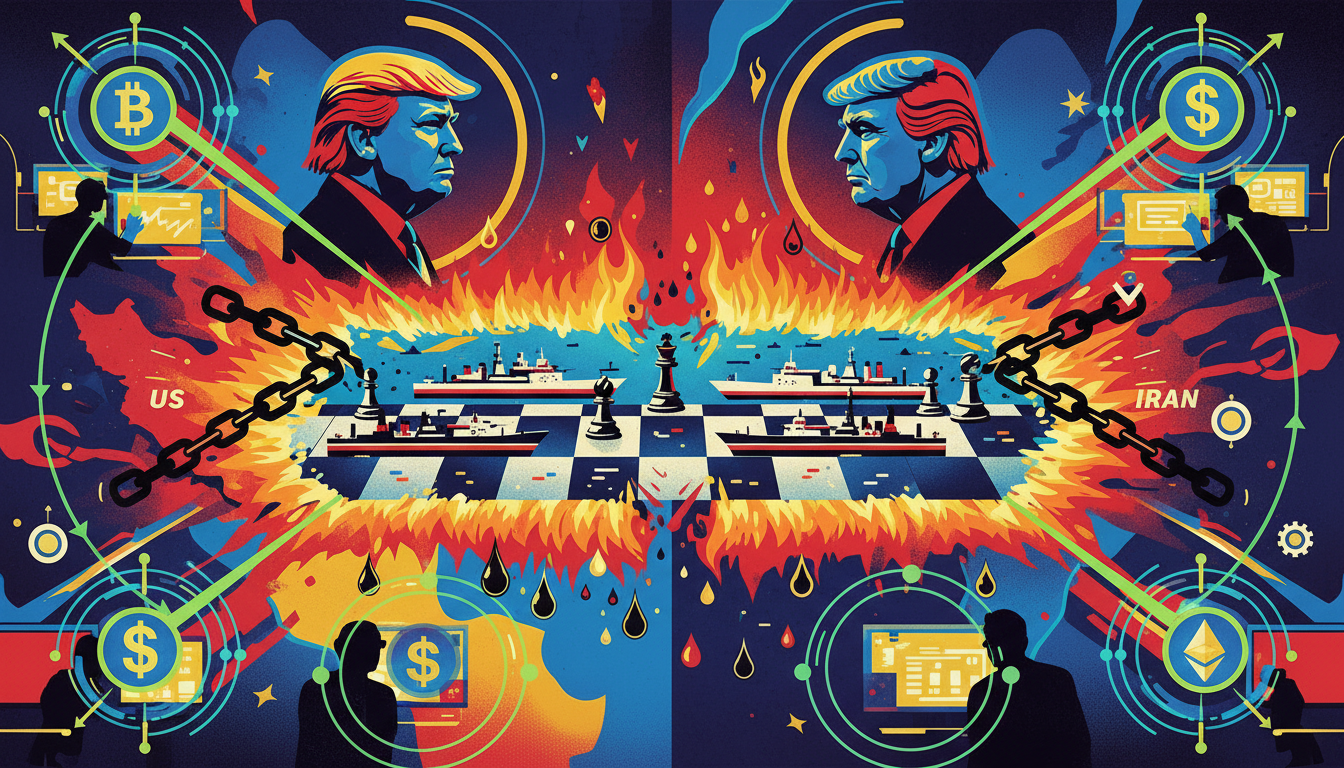
On April 12, 2026, a new round of US-Iran talks mediated by Pakistan ended "without an agreement." After several rounds of closed-door discussions, both delegations failed to produce any public text or framework outcome, but neither announced the termination of negotiations, instead opting to let the dialogue linger in limbo—neither advancing nor completely regressing. Reports from inside and outside the venue pointed to one common issue: Iran's so-called "forward-looking initiative" was met with indifference and even rejection from the US side, marking a turning point in this round of negotiations. While superficially it was a diplomatic interaction with zero substantive progress, the underlying reality was years of accumulated mutual distrust standing again in the way of possible compromise.
From Handshake to Stalemate: Pakistan's Difficult Role
During the talks held on April 12, 2026, Pakistan continued to play a key role as a mediator. It was through its ongoing communication and shuttle diplomacy that the opposing US and Iranian delegations were able to sit at the same table again, continuing the dialogue process that had previously failed in several rounds. For Iran, Pakistan provided a relatively acceptable communication channel; for the US, this arrangement also helped to mitigate the political sensitivity of a direct confrontation between the two sides.
However, in terms of actual results, Pakistan's active coordination did not translate into measurable diplomatic achievements. The negotiations concluded hastily with the "failure to reach an agreement," making the political capital and communication efforts previously invested by the mediator seem somewhat awkward. Formally, negotiations were still taking place; substantively, the core disagreements remained unchanged, highlighting the deep and stubborn nature of the current US-Iran conflict.
Third-party mediation between such deeply hostile opponents is bound to be both important and limited. On the one hand, Pakistan reduced the risk of direct confrontation by providing a venue and channels, allowing both sides to have a "place to talk"; on the other hand, when conflicts touch on structural issues like nuclear matters, regional security, and the sanctions regime, any mediator finds it difficult to replace the party involved in making substantive political concessions. What Pakistan can do is maintain the form and rhythm of communication, but it is challenging to shift the balance of substantive trust.
Iran's Forward-Looking Initiative Meets Cold Reception
In this round of talks, Iran emphasized a "forward-looking initiative" described as a political concept for long-term arrangements, rather than a small deal surrounding a specific sanctions exemption or localized security issue. Its intention was closer to establishing a stable framework for US-Iran relations over the coming years, attempting to fundamentally reduce the chances of misjudgment and escalation of conflict. This positioning was a reflection on past fragmented negotiations and a proactive layout of its security needs.
However, it is important to emphasize that the specific terms of this initiative and its differences from existing agreements have not been made public. Research briefs have similarly not provided details, and the specific reasons for the US's rejection or indifference toward the proposal remain unclear. In the absence of texts and testimonies, any detailed descriptions regarding "who made greater concessions" or "who flipped the table first" can only remain at the level of speculation and cannot form a serious analytical basis.
From a structural perspective, the US maintains a high degree of caution regarding such long-term framework arrangements due to strategic considerations and domestic political constraints. Once a long-term agreement is signed, it would trigger a chain reaction in the sanctions framework, regional alliance commitments, and security promises to Israel and Gulf partners, requiring the US administration to bear enormous political risks before Congress and public opinion. At the same time, the US domestic political cycle around 2026 makes any "concessions to Iran" label potentially magnified, reducing the decision-makers’ maneuvering space at the negotiating table. These internal and external constraints together push the US to be more inclined to delay, dilute, or even temporarily reject Iran's "forward-looking" proposal.
Vance's Exit: Show or Substantive Signal?
A striking scene in this round of negotiations was US representative Vance suddenly leaving the negotiating table. This dramatic moment reportedly cooled the originally tense but still polite atmosphere, causing interactions between the delegations to rapidly shift from technical discussions to emotional confrontation. The exit itself did not change any terms, but it made all present acutely aware that the limits of trust had been breached.
An anonymous source described Vance's behavior as "a show of strength," suggesting that this action was more about internal and external posturing rather than genuine disappointment with the negotiations. Under this interpretive framework, the exit turned into a carefully designed performance: sending a message to Iran that "the US still holds the rhythm control," while also demonstrating to a domestic audience a hardline image of "not being easily controlled by opponents."
From the perspective of Iran and the broader Middle East region, such a symbolic act resembled a negotiating posture rather than a substantive concession or a real breakdown. The Iranian side had already anticipated the US representatives using "emotional withdrawals" as a pressure tactic at critical junctures and, hence, was more likely to interpret this scene as part of managing bargaining chips rather than a final ultimatum. The result was that the performance was seen through, the posturing carried more significance than actual impact, and the already fragile mutual trust between the two sides was further diluted.
Trust Deficit Peaks: The Subtext of Iran's Speaker
After the negotiations concluded, the Speaker of the Iranian Parliament made a poignant remark: "It is now up to the US to decide whether to win Iran's trust." This statement deliberately shifted the focus from "the terms of the agreement" to "the ownership of trust," serving as both a commentary on the outcome of the negotiations and a preemptive narrative for the next stage of diplomacy. It implies that Iran has already formally offered a "forward-looking initiative," and that it is now Washington's turn to express a stance and take responsibility.
This statement effectively shifts responsibility and initiative back to the US, casting Iran as "the party that proposed a solution," while placing the US in a passive role of "whether and how to respond." In the public discourse, this benefits Iran by mitigating its potential blame as "the deal breaker," shifting some pressure back onto its opponent, and even preemptively seeking justifications for future potential hardline responses.
At the same time, this language reflects the internal political pressure and historical memories within Iran. For a long time, from sanctions escalating to existing agreements being overturned, Iranian society has a deeply ingrained impression of the US as "untrustworthy." The Speaker's words are not only directed outward but are also a message to the domestic audience: by emphasizing that "it is up to the US to decide whether to win trust," a signal is sent that if a deal cannot be reached, it is because the US did not seize the opportunity, rather than Iran lacking sincerity. This narrative framework can somewhat cushion domestic doubts about the negotiation path yet further solidifies the existing feelings of distrust towards the US.
No Agreement Yet Continuous Negotiation: The Prolonged War Behind the Breakdown
Despite this round of talks concluding with "no agreement reached," both sides did not announce a termination of contact but clearly stated they would keep negotiation channels open. The formal "no break in communication" became one of the few positive signals in this game: the absence of a text does not mean no communication; and the lack of compromise does not mean readiness to confront directly. For outside observers accustomed to zero-sum narratives, this subtle and fragile continuation is difficult to view as progress and even harder to simply define as failure.
The continuous state of "talks without resolution" sends complex and contradictory signals to both sides' domestic and regional allies. On one hand, it informs hardliners internally: no yielding, no hurried signing of any unequal treaties; on the other hand, it allows moderates and pragmatists to argue: dialogue is still ongoing, and the last door has not been closed. For regional allies like Israel and Gulf countries, the ongoing tug-of-war between the US and Iran reduces the chances of a full-scale conflict erupting in the short term but extends the security anxiety and military pressure created by uncertainty.
In such a structure, both the US and Iran are leveraging time and the rhythm of negotiations to engage in a more nuanced strategic game. The US can diffuse pressure across multiple issues and time points through stalling and segmented dialogues, avoiding concentrated concessions during a single session; Iran, on the other hand, may adopt a "continuing engagement without yielding" approach, avoiding diplomatic costs of "refusing to negotiate" while trying to obtain alleviation of sanctions and changes in regional dynamics through prolonged attrition. What is absent at the negotiating table is the text of the agreement, but outside the table, what is taking place is a prolonged war fought with time as leverage.
Next Steps Undecided: The Long-Term Proposition of US-Iran Competition
This round of talks that concluded on April 12, 2026, once again exposed the deep-seated trust crisis and complex strategic calculations in US-Iran relations. The cooling of the forward-looking initiative, the symbolic walkout, and the mutual shifting of responsibility in discourse all point towards a common indication: neither side is willing to be the first to incur political costs to rebuild trust, yet both are wary of easily severing the safety valve of negotiations.
Until the specific texts and content of the discussions are disclosed, it is difficult for the outside world to make judgments about the timetable or location for the next phase based on established facts, and it is even less advisable to project traditional experiences imaginatively. Research briefs have clearly indicated that the time and location for the next negotiations are sensitive information that is strictly off-limits for speculation, which serves as a reminder to observers: what we can confirm currently is only the state of "no agreement but continuous communication," rather than any definitive process roadmap.
In the foreseeable future, the interactions between the US and Iran are likely to continue oscillating between limited mutual trust and high-pressure environments, gradually evolving into a prolonged war of attrition. The negotiating table will periodically be set up, only to periodically disperse without results; regional situations will repeatedly oscillate between "a crisis that has not exploded" and "dialogue that has no solutions." In this arrangement, what may truly matter is not the "success or failure" of a particular round of talks, but rather when both sides can find a path to dare to pay for trust amid internal politics and external security.
Join our community, let's discuss and become stronger together!
Official Telegram community: https://t.me/aicoincn
AiCoin Chinese Twitter: https://x.com/AiCoinzh
OKX Welfare Group: https://aicoin.com/link/chat?cid=l61eM4owQ
Binance Welfare Group: https://aicoin.com/link/chat?cid=ynr7d1P6Z
免责声明:本文章仅代表作者个人观点,不代表本平台的立场和观点。本文章仅供信息分享,不构成对任何人的任何投资建议。用户与作者之间的任何争议,与本平台无关。如网页中刊载的文章或图片涉及侵权,请提供相关的权利证明和身份证明发送邮件到support@aicoin.com,本平台相关工作人员将会进行核查。