1. Ceasefire Game: Dramatic Turn Before the Deadline
In the early morning of April 8, 2026, the global financial markets held their breath. Less than an hour and a half remained before the "deadline" set by Trump for Iran—8:00 PM Eastern Time on April 7—when a message from Trump himself on social media ignited the markets: "I agree to pause bombing and attack actions against Iran for two weeks."
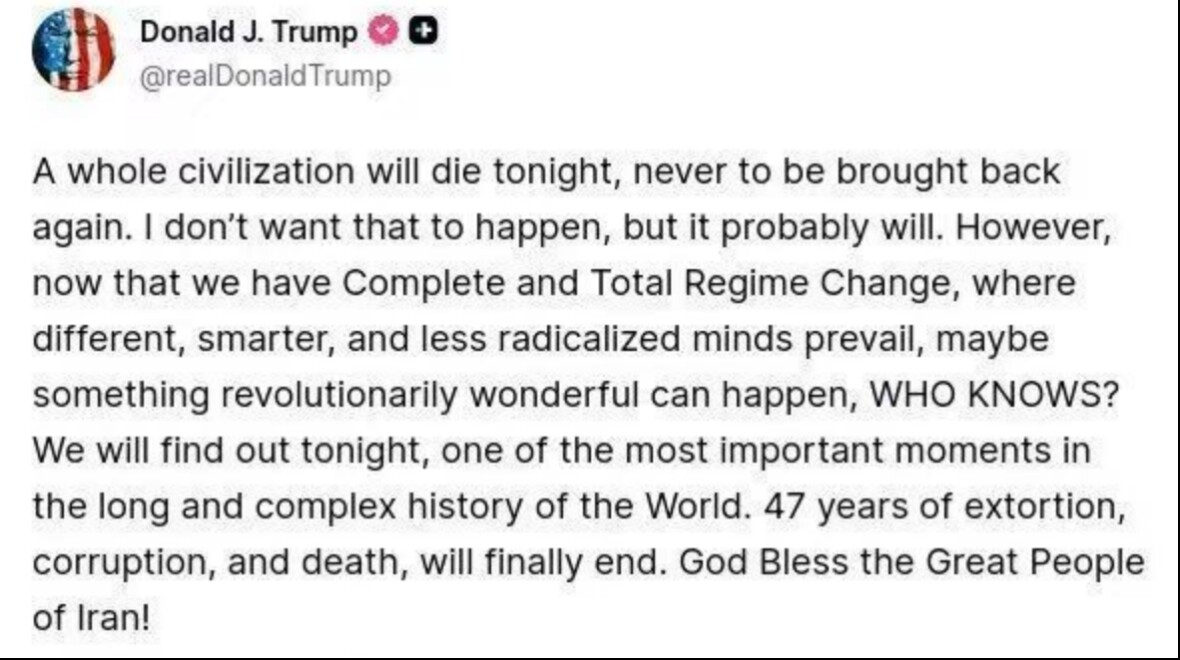
The achievement of this ceasefire underwent intensive diplomatic mediation. The day before, Pakistani Prime Minister Shahbaz called Trump and Iran's Supreme Leader Khamenei, requesting a two-week extension of the "deadline" while asking Iran to open the Strait of Hormuz for two weeks as a goodwill gesture. Trump's condition was that Iran must "fully, immediately, and safely" open the Strait of Hormuz in exchange for the ceasefire. Iran accepted the ceasefire proposal but clearly stated it held "complete distrust" toward the U.S. According to the agreement, the ceasefire officially took effect at 3:30 AM Iranian time on April 8 (8 AM Beijing time), and Israel also agreed to pause bombing actions during the negotiations. The ceasefire lasts for two weeks, with negotiations scheduled to begin on April 10 in Islamabad, Pakistan, and may be extended by mutual agreement. Currently, the U.S. military has paused airstrikes within Iran, and the Iranian armed forces have also halted defensive actions, but it is noteworthy that the ceasefire is essentially a "mutual pause," rather than a permanent peace agreement.
Iran simultaneously announced a ten-point plan submitted to the U.S. through Pakistan, with core demands including: withdrawal of U.S. combat troops from all bases in the region, lifting all sanctions against Iran, acceptance of Iran's uranium enrichment activities, payment of war reparations to Iran, and ultimately, approval of all terms through a binding United Nations Security Council resolution. Iran stated, "Pakistan has notified Iran that the U.S. side accepts the above principles as the basis for negotiations," but the U.S. has never responded directly to this. The significant gap in core demands between the two parties creates a highly uncertain outlook for two weeks from now. Negotiations are a continuation of the battlefield, rather than an end to it.
2. Market Overview: Extreme Divergence of Four Asset Classes
Following the ceasefire announcement, global major assets exhibited a rare and intense divergence, reflecting the complexity of the market's pricing logic for "peace expectations."
Cryptocurrency Market: Risk appetite fully rebounds, with Bitcoin leading the charge. Bitcoin briefly surpassed $72,000, reaching $72,760, with a 24-hour increase of over 5%; Ethereum broke through $2,200, touching $2,273, with a 24-hour rise of over 7%; other mainstream cryptocurrencies like SOL showed varying degrees of increase. In the past 24 hours, the entire network saw $595 million in liquidations, with short positions accounting for $429 million, or 72%, mostly driven by the liquidation of Bitcoin short positions, which totaled $244 million. The core drivers behind Bitcoin's strong rebound came from two aspects: firstly, the ceasefire news directly triggered a concentrated liquidation of previously accumulated short positions; secondly, the U.S.-listed Bitcoin spot ETF recorded a net inflow of $471.3 million on Monday, continuing last week's inflow trend, and institutional funds returning provided fundamental support for the rebound.
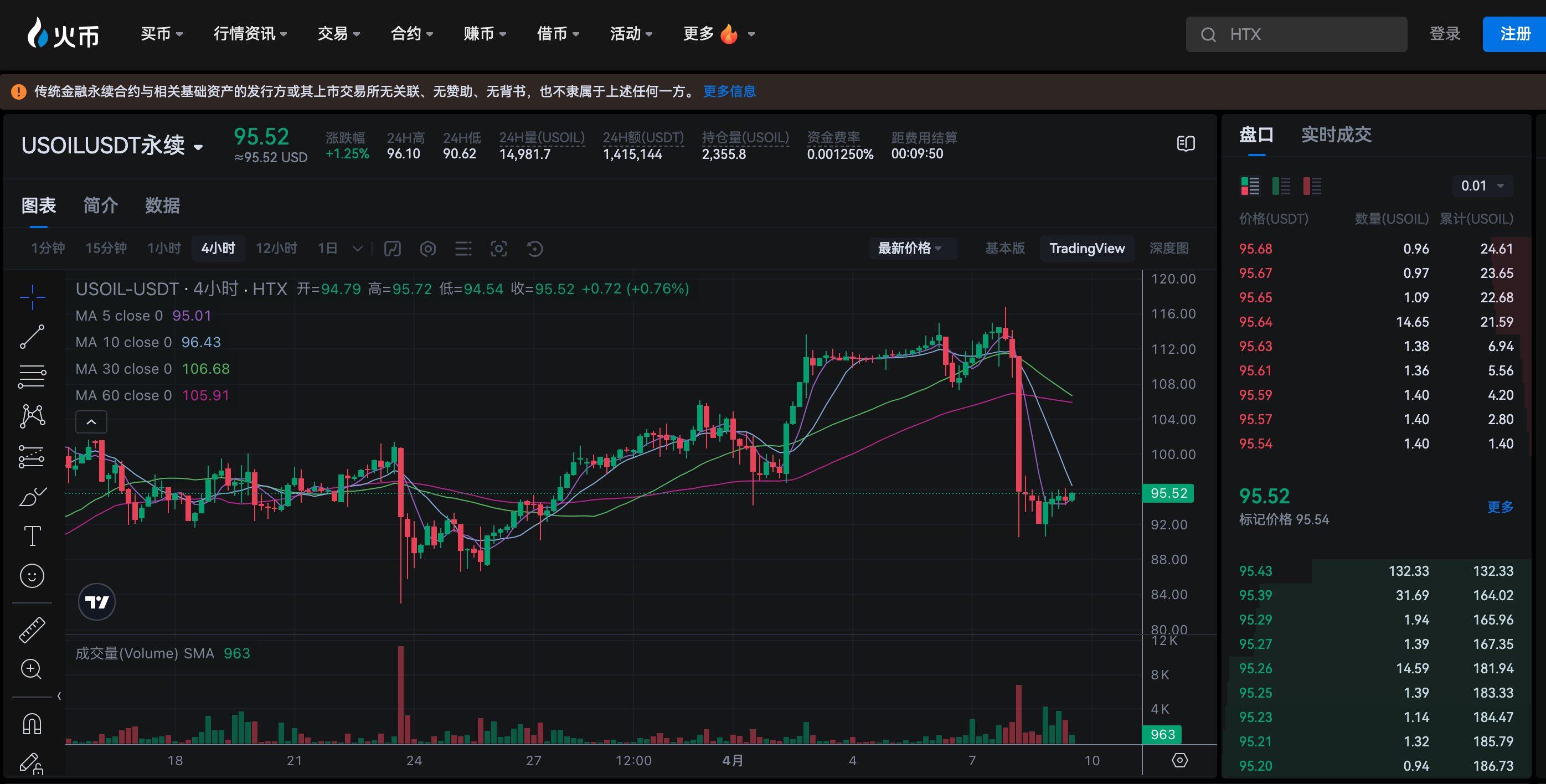
Crude Oil: Complete withdrawal of the war premium. As the absolute center of this conflict, the crude oil market experienced the most severe fluctuations. During the conflict, the risk of a blockade in the Strait of Hormuz pushed WTI crude oil prices from around $65 to nearly $118 per barrel, an increase of nearly 70%. When the ceasefire news broke, WTI crude oil futures plummeted over 15% in a single day, falling to $91.3 per barrel, with declines expanding to 19%. About one-fifth of global oil supply transport relies on the Strait of Hormuz; if the ceasefire agreement can hold, crude oil prices face further downward pressure.
Gold: Unexpected resurgence of safe-haven properties. Gold's performance is the most noteworthy signal in this event. According to the traditional rule that "good news leads to a drop," a reduction in geopolitical conflicts should weaken safe-haven demand for gold, causing prices to retreat. However, spot gold soared to $4,811 per ounce after the ceasefire announcement, rising over 3%, while New York gold futures returned to above $4,840. This unusual phenomenon of "safe-haven assets surging after geopolitical easing" reveals a deeper logic: long-term funds are betting not on a short-term ceasefire, but on long-term distrust of the dollar credit system and U.S. global leadership. The rise in gold essentially reflects a profound skepticism towards fiat currency credibility and long-term geopolitical stability. During the U.S.-Iran conflict, the dollar index appreciated over 2%, but after the ceasefire news, the dollar index dropped nearly 0.7%, retracing to 98.9, further reinforcing this judgment.
U.S. Stocks: Rebound but lingering concerns. Nasdaq futures rose by 2.5%, S&P 500 futures rose over 2%, and Dow futures climbed 1.8%. The Asia-Pacific markets responded in kind, with the Nikkei 225 index rising by 4.7%, and the MSCI Asia-Pacific index up by 2.1%. However, during Tuesday's regular trading session, the three major U.S. stock indices performed relatively flat: S&P 500 rose by 0.08%, Nasdaq up by 0.1%, and Dow down by 0.18%, demonstrating a cautious attitude from funds regarding the economic fundamentals.
The differentiated pricing of major assets indicates that the logic triggered by the ceasefire announcement varies among different asset classes: crude oil is directly reverting the war premium, U.S. stocks are repairing risk appetite, gold is pricing in long-term uncertainty in advance, while the cryptocurrency market simultaneously absorbed the sentiment recovery of risk assets and the safe-haven narrative of digital assets.
3. New Geopolitical Logic of Crypto Assets: Dual Role of Risk and Safe Haven
In this round of U.S.-Iran conflict, Bitcoin's performance model provides an important analytical framework: it no longer simply equates with "risk assets" or "safe-haven assets," but rather showcases a unique "dual attribute."
During the escalation phase of the conflict (from late February to early April), Bitcoin's performance distinctly diverged from traditional risk assets. Although geopolitical tensions led to soaring oil prices and rising inflation expectations, markets were disappointed in the Fed's rate cut expectations, putting significant pressure on traditional tech stocks; however, Bitcoin did not experience a significant drop. The reason is that Bitcoin had already undergone a substantial correction before the conflict began, and the potential for passive selling pressure in the market was relatively limited. At the same time, the continued net inflow into U.S.-listed Bitcoin spot ETFs provided liquidity support for the market.
In the rebound phase following the ceasefire news, Bitcoin's performance contained two levels of logic: on one hand, it rebounded in sync with U.S. stocks and Asia-Pacific stock markets, reflecting its risk attribute as a globally liquidity-sensitive asset; on the other hand, its rebound amplitude and persistence exceeded traditional risk assets, indicating the market's pricing of its "digital gold" narrative. Some market analysts pointed out that Bitcoin tends to outperform traditional safe-haven assets after significant global crises. Research from Mercado Bitcoin shows that, following events such as the beginning of the pandemic and escalation of U.S. trade tariffs, Bitcoin's returns significantly exceeded those of gold and the S&P 500 index during most window periods.
Bitcoin's "dual attribute" is a core characteristic that distinguishes it from other assets. It is a risk asset, highly sensitive to global liquidity and macro policies; it is also a scarce asset that gains safe-haven premiums in the context of questioned sovereign credit. These two attributes are not mutually exclusive but alternate dominance under different macro conditions. During the intensification of geopolitical conflicts, its safe-haven narrative prevails; during liquidity contraction, its risk attributes become more prominent.
However, the establishment of this framework relies on one premise: the continuous increase in institutional participation. On April 7, the U.S. Bitcoin spot ETF recorded a net inflow of $471.3 million, indicating that institutional funds are strategically positioning themselves to take advantage of market fluctuations. The pricing power of Bitcoin by institutional funds has significantly increased, causing Bitcoin's reaction to geopolitical events to shift from "retail-driven sentiment" to "institution-led macro pricing." This shift means that in the future, Bitcoin's correlation with macro variables (interest rates, dollar index, global liquidity) may strengthen further, while the impact of purely geopolitical news on prices may gradually weaken.
4. Future Outlook: Two-Week Window and Three Major Macro Variables
The ceasefire agreement lasts only two weeks, meaning that the current market pricing is based on an extremely fragile premise—the negotiations in Islamabad on April 10 making progress, and the ceasefire being extended after two weeks. If negotiations get bogged down, geopolitical risk premiums will quickly return to the market. Here are three core variables that need to be closely monitored in the future:
Variable One: Direction of Islamabad Negotiations (Key Time Nodes: April 10 - April 24). The Iranian negotiation team is expected to insist on the core demands of the ten-point plan, including U.S. troop withdrawal and lifting sanctions, while the Trump administration's bottom line is "Iran must completely abandon nuclear weapons and dismantle nuclear facilities." The substantial gap in core demands between the two parties creates a high degree of uncertainty regarding whether substantial agreements can be reached in two weeks. Goldman Sachs maintains its prediction of an average Brent crude oil price of $85 for 2026 in its latest report, significantly exceeding the initial forecast of $61, reflecting the market's high pricing of long-term geopolitical risk. Several analysts point out that a two-week window is insufficient to reach a structural agreement to resolve deep-rooted regional conflicts; the decline in energy assets like crude oil is more about profit-taking by bulls and technical squeezes rather than a complete elimination of fundamental supply risks.
Variable Two: Inflation Expectations and Fed Policy Path. Over the past month, due to the U.S.-Iran conflict, crude oil prices surged over 40%, significantly heating global inflation expectations, and the market began to price in a pause on the Fed's rate cuts or even rate hikes. With the collapse of oil prices, inflationary pressures are easing, and the market is recalibrating expectations for the Fed's rate cut path. If oil prices remain below $100 during the ceasefire, it will provide greater policy flexibility for the Fed, which would be macro-positive for global risk assets, including Bitcoin. However, if negotiations collapse in two weeks and oil prices surge again, inflation expectations will quickly return, leading to uncertainties regarding the Fed's rate cut path.
Variable Three: Legislative Progress of the CLARITY Act. BTC Markets analyst Rachel Lucas pointed out: "The bull market scenario depends on two catalysts: one is a confirmed and ongoing U.S.-Iran ceasefire that keeps oil prices below $100; the other is the anticipated passage of the U.S. CLARITY Act in late April, which institutional market participants are closely monitoring as a regulatory 'unblocking'." If the CLARITY Act passes in late April, it will provide clearer legal guidelines for the regulatory framework for stablecoins and digital assets, further lowering the entry barriers for institutions and becoming an important mid-term catalyst for the cryptocurrency market.
Additionally, attention should be paid to the trends in the on-chain derivatives market. In the U.S.-Iran ceasefire prediction market, the probability of contracts for April 15 jumped from 67% to 90% within minutes of the news announcement, later rising to 99.6% "YES," showing the market's high confidence in a short-term ceasefire. However, research from organizations like Chainalysis indicates that when prediction market probabilities become overly concentrated on a single outcome, it often means the market is inadequately pricing tail risks—when everyone believes the ceasefire will last, it is actually the moment when expectations are most likely to reverse.
5. Risk Warning and Strategy Advice
The current market rebound is based on an extremely fragile premise—a two-week ceasefire. Once this foundation is shaken, all types of assets currently priced may face severe revaluation.
The return of geopolitical risk is the most direct risk. If the negotiations in Islamabad on April 10 fail to achieve substantial progress, or the ceasefire agreement is not extended two weeks later, the market will quickly repricing geopolitical risk premiums. At that time, crude oil prices may surge again, global inflation expectations will rise, and the Fed’s rate cut path will again face uncertainties; risk assets (including Bitcoin) will face a new round of pressure.
Uncertainty regarding regulatory policies is also a concern. If the CLARITY Act passes smoothly in late April, it will be a mid-term benefit for the cryptocurrency market; however, if it encounters resistance during the review process, the market may reprice regulatory risk.
The risk of macro liquidity tightening is the third variable. If oil prices continue to fall due to the ceasefire, easing inflation pressures will provide the Fed with greater rate cut space, benefiting risk assets such as Bitcoin. Conversely, if oil prices soar again due to a breakdown in the ceasefire, expectations for Fed rate cuts will be suppressed, posing a macro headwind for Bitcoin.
From a strategic perspective, the current rebound in the cryptocurrency market provides a rare window for reducing or reallocating positions. Key data on April 14-15 (such as U.S. CPI, PPI, retail sales data) and the negotiations starting on April 10 will offer further macro judgment bases. It is recommended that investors maintain flexible positions, closely monitor the progress of Islamabad negotiations, changes in oil prices, and statements from Fed officials, remain rational when the market excessively prices "peace," and maintain clarity when there is excessive panic over "war." In the dual game of macro and geopolitical factors, maintaining strategy flexibility and sensitivity to key variables is more important than betting on a single direction.
免责声明:本文章仅代表作者个人观点,不代表本平台的立场和观点。本文章仅供信息分享,不构成对任何人的任何投资建议。用户与作者之间的任何争议,与本平台无关。如网页中刊载的文章或图片涉及侵权,请提供相关的权利证明和身份证明发送邮件到support@aicoin.com,本平台相关工作人员将会进行核查。


