Written by: George
Under the mediation of Pakistan, the US and Iran reached a two-week temporary ceasefire agreement. The United States and Israel agreed to suspend airstrikes on Iran, in exchange, Iran will temporarily lift the blockade on the Strait. Firstly, it should be clarified that if this agreement is strictly implemented, it is beneficial to the United States and detrimental to Iran. As the mediator, Pakistan’s relationship with the United States is much better than with Iran, so it is naturally unlikely for Pakistan to propose terms unfavorable to the United States.
The second wave of US reinforcements is rushing to the battlefield:
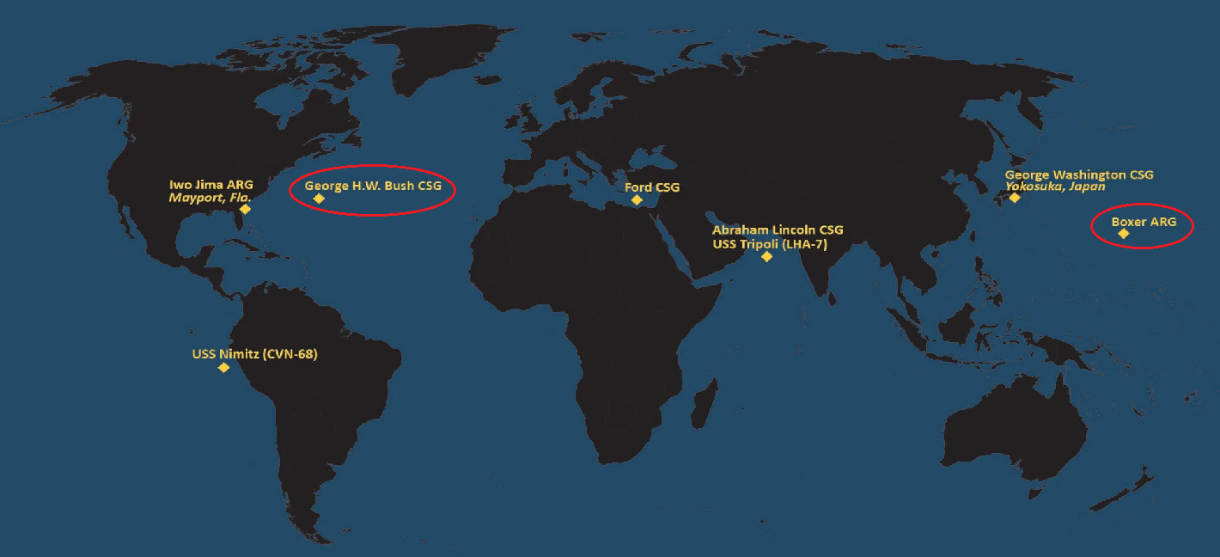
More importantly, if the conflict in the Persian Gulf is frozen for two weeks, it will buy valuable time for the United States to move troops. As a global empire, the United States spends large sums to build a military that can be quickly deployed worldwide, including airborne troops, carrier battle groups, amphibious ready groups, and more. Earlier this year, to intervene in the situation in Venezuela, the United States deployed the USS Ford aircraft carrier and the USS Wasp amphibious assault ship in the Caribbean. As the situation in the Middle East escalated, the United States successively sent the USS Lincoln and the USS Ford carriers to the Middle East, establishing a dual-carrier deterrence system against Iran.
However, starting from mid-March, as airstrikes could not force Iran to compromise, the United States urgently withdrew the ARG led by the USS Tripoli from Japan, carrying 2,500 Marines, and surged toward the Middle East. After three weeks of sailing, this ARG arrived at the designated battlefield. Meanwhile, the 82nd Airborne Division, with 13,000 combat personnel, also rushed to the Middle East from home and completed pre-war preparations. However, coincidentally, the USS Ford, originally deployed in the eastern Mediterranean, suffered a fire and was forced to go to Croatia for repairs.
Amphibious assault ships can provide air cover for landing forces:
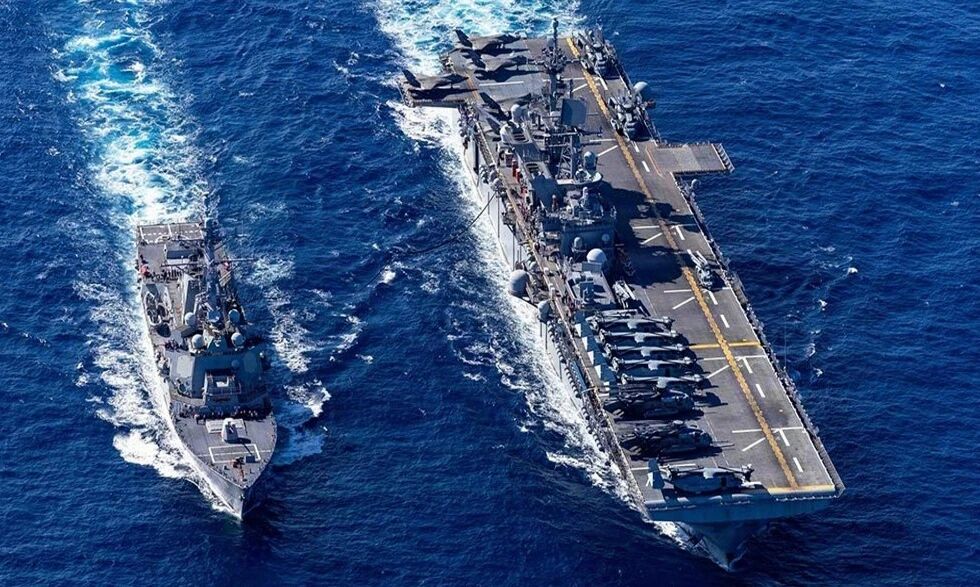
When fighting with small and medium-sized countries, the United States heavily depends on airborne divisions, army aviation, or rapid response forces like the ARG. The ARG consists of amphibious assault ships, dock landing ships, and transport ships, typically able to carry 2,500 Marines, and belongs to elite forces. Due to high maintenance costs, the United States can only form 6-8 ARGs. If aircraft carriers are responsible for fighting for sea and air supremacy, then amphibious ready groups are responsible for executing combat objectives like beach landings.
As the first wave of landing forces arrived in the Middle East, serious divisions emerged within the US military regarding the form of war. Civilian officials promoted by Trump advocated for a quick resolution, relying on ground combat to eliminate Iran's ability to blockade the strait. However, this plan was opposed by professional soldiers who deemed it too risky; once Iran laid significant mines in the Strait of Hormuz, US warships would suffer major losses. Due to these significant differences, the US military faced widespread personnel changes, with many senior officials being dismissed.
Hovercraft can carry soldiers quickly to shore:
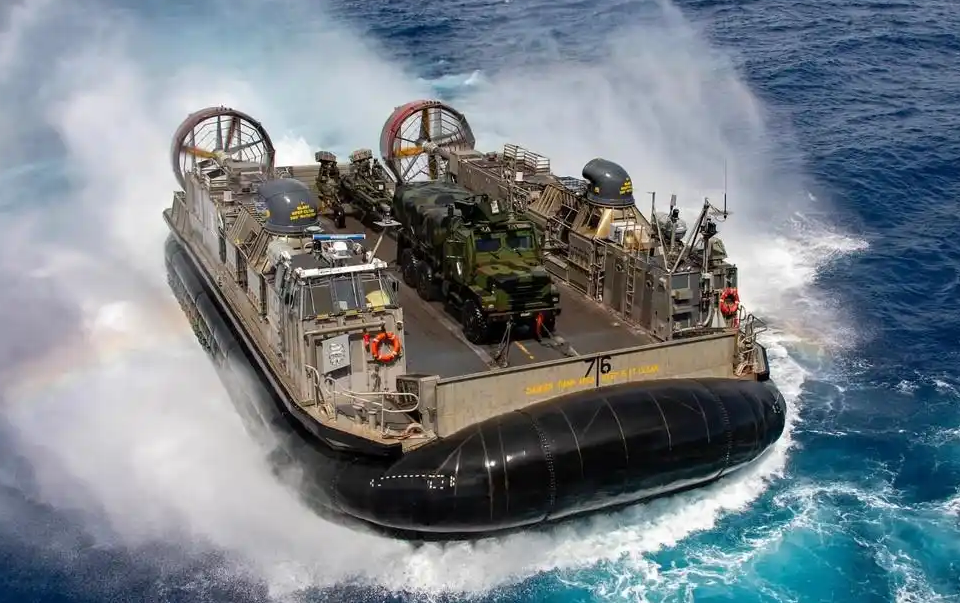
Due to insufficient preparation, in late March, the United States dispatched a second wave of reinforcements to the Middle East, including the USS Bush carrier strike group and an ARG led by the USS Boxer, which also carries 2,500 Marines. The hovercraft equipped can quickly transport tanks and armored vehicles to the beach, ignoring terrain limitations. However, relying on conventional propulsion, amphibious assault ships find it difficult to operate fully loaded and require regular refueling.
At present, the USS Bush is located in the Atlantic and will take at least two weeks to reach the eastern Mediterranean. The USS Boxer has just departed from Pearl Harbor; after over 30 years of service, this ship's speed has decreased. Its expected route will be: Manila (next week) - Diego Garcia base (the week after next) - Gulf of Oman (three weeks later). This means that the second wave of landing forces will not arrive at the designated position until at least the end of April.
This is also one of the reasons why Trump pressured Iran to accept a temporary ceasefire. At present, the US military deployment in the Middle East is not optimistic; the USS Ford has just completed repairs and mainly relies on the USS Lincoln and the USS Tripoli to perform deterrent missions. If the attack occurs now, without deploying ground forces, the US military's escalation methods primarily involve airstrikes on Iran's energy facilities, including those on Khark Island. In response, Iran is bound to launch large-scale attacks on desalination plants in Gulf countries, leading to catastrophic consequences.
The second wave of US expeditionary forces:
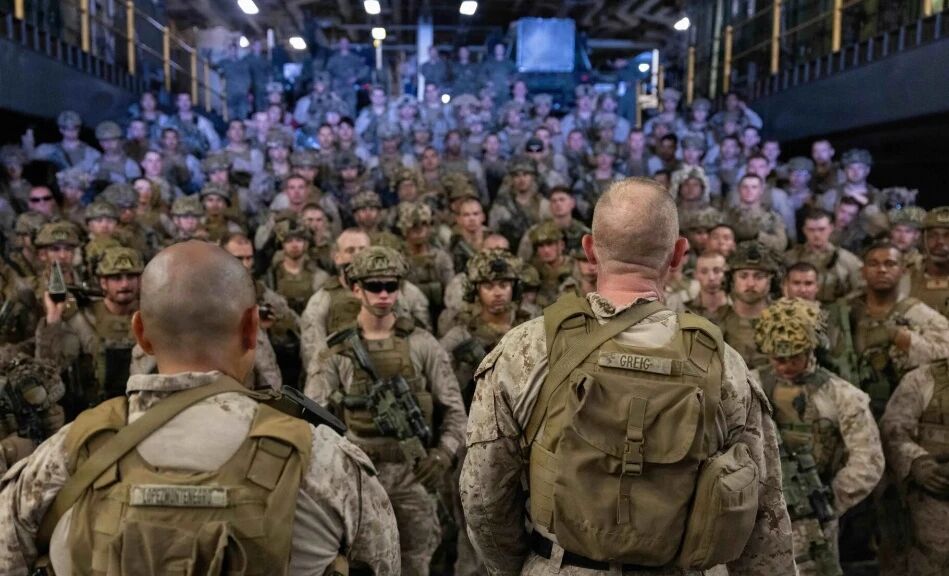
However, if the situation is dragged out for 2-3 weeks, significant changes may occur. By then, both the USS Bush and the USS Ford will be in place, and the second wave of expeditionary forces may also reach the battlefield. Whether in war or peace, the situation for the United States will improve compared to now. A joint strike force of "three carriers + 5,000 Marines + reorganized airborne division" is sufficient to launch a small ground war; even if no war occurs, the presence of these troops can serve as important leverage at the negotiating table.
Therefore, the strange point is why Iran, knowing that Trump might be playing for time, is still willing to accept a 14-day temporary ceasefire agreement. Pakistan's explanation is that at the last moment of negotiations, other major powers intervened to push Iran towards peace talks. If this is the case, other major powers may have offered conditions that can sway Iran, such as providing equivalent assistance to offset the risks brought by the US reinforcements.
Since the start of the war, Iran and Pakistan have maintained a very delicate relationship. Iran has deliberately reduced the frequency of airstrikes on Saudi Arabia and facilitated the passage of Pakistani oil tankers through the Strait of Hormuz, avoiding triggering the Saudi-Pakistani Mutual Defense Treaty. Pakistan is also unwilling to become embroiled in a war with Iran; hence it actively serves as a mediator between the US and Iran, even at the risk of offending the UAE. The UAE is one of Pakistan's largest creditors, and due to dissatisfaction with Pakistan's foreign policy, the UAE has demanded the return of over $3 billion in loans.
Although the US and Iran reached a temporary ceasefire agreement, the difficulty of achieving long-term peace between the two sides remains significant. Iran's 10-point plan can be summarized into three major demands:
1. The United States must provide sufficient security assurances to ensure that it does not easily launch a second invasion. To achieve this goal, the United States needs to withdraw all troops from the Persian Gulf and advocate for Israel to end its war against the "Axis of Resistance."
2. The United States must lift all sanctions against Iran and recognize Iran's right to enrich uranium; in exchange, Iran promises not to develop nuclear weapons (restore the Obama-era Nuclear Deal).
3. After the war, Iran will gain control over the Strait of Hormuz and implement a toll system based on the model of the Turkish straits to compensate for Iran's war losses.
Iran's demands cover security, nuclear issues, and strait management, but regardless of which one, it is difficult for the United States to accept. Looking at the 15-point plan proposed by the United States, it can be summarized into two major demands:
1. Iran must hand over all high-enriched uranium stocks, dismantle key nuclear facilities, prohibit the enrichment of weapon-grade uranium; limit the number and range of ballistic missiles, freeze ballistic missile development; stop supporting organizations in the "Axis of Resistance," including Hezbollah, Hamas, and the Houthis, and cut off their funding and weapons support. In exchange, the United States will lift all sanctions against Iran and allow it to develop civilian nuclear energy.
2. Iran must lift the blockade on the Strait of Hormuz, making it an international strait for free navigation.
It is not difficult to see that the US 15-point agreement simply adds the requirement of opening the strait on the basis of the "zero enrichment" agreement before the war, changing nothing essentially. While Khamenei was in power, Iran did not accept such a humiliating agreement; now, with the hawks dominating Iranian politics, the negotiating position cannot be less rigid than it was two months ago. The probability of reaching a long-term peace agreement between the US and Iran in the next two weeks is negligible, as the price gap between the two sides is simply too wide.
On the other hand, many opinions believe that Trump's military operations against Iran can only last until the end of April, as the "Authorization for Use of Military Force" states that military action initiated by the president without congressional authorization has a 60-day limit, plus a 30-day withdrawal period. By this calculation, after Trump launched airstrikes against Iran at the end of February, theoretically he can only act until the end of April before needing to withdraw.
However, theory is one thing, and reality is another. US law does not specify the form of withdrawal, allowing Trump to exploit legal loopholes to interpret ground wars as "ensuring the smooth withdrawal." In 1999, Clinton bypassed the 60-day military operation limit, justifying massive airstrikes against the Federal Republic of Yugoslavia under the pretext of "protecting expatriates." Therefore, without congressional authorization, Trump could extend military operations against Iran to the end of May.
Looking ahead, there are three possible scenarios for the Strait of Hormuz:
1. Controlled by Iran, gradually opened
2. Long-term blockade, global economic paralysis
3. Controlled by the United States, rapidly opened
For most industrial countries in Asia and Europe, they do not care who controls the strait, only wishing for it to be unblocked as soon as possible. This is also why Europe and Japan and South Korea are reaching out to Iran. Compared to the troubles caused by energy shortages, the cost of paying is negligible. However, for the United States, which does not directly use this strait, it would rather see the Strait of Hormuz be long-term blocked than have the control of the strait fall into Iranian hands. Regaining control over the strait is a bipartisan consensus in the United States; however, it hopes to keep oil prices within a moderate range during this process to avoid economic destabilization.
Trump frequently sends signals of reconciliation to Iran, urging the establishment of a temporary ceasefire agreement. Besides buying time for troop deployment and creating a false sense of security for Iran, there may be another motive, which is to exert extreme pressure on Middle Eastern oil-producing countries. During the Gulf War of the 1990s, Middle Eastern oil-producing countries paid most of the military expenses, allowing the United States to engage in a low-cost high-tech war. After this round of conflict breaks out, Trump demands that Middle Eastern oil-producing countries bear more than half of the military expenses, even using troop withdrawal as a threat. The UAE is more proactive in this regard, while Saudi Arabia holds reservations. If Middle Eastern oil-producing countries are willing to shoulder most of the war costs, the United States would not mind continuing the fight.
China does not wish to see the Strait of Hormuz being long-term blocked, but also does not want to see the United States forcibly seize control of the strait. On Middle Eastern issues, China’s bottom line is that the United States cannot achieve "regime change" in Iran, as this would bring many uncontrollable risks. When necessary, China has the capability to provide robust support to Iran through trade routes in the Caspian Sea, and the United States should not overlook this point when making decisions.
免责声明:本文章仅代表作者个人观点,不代表本平台的立场和观点。本文章仅供信息分享,不构成对任何人的任何投资建议。用户与作者之间的任何争议,与本平台无关。如网页中刊载的文章或图片涉及侵权,请提供相关的权利证明和身份证明发送邮件到support@aicoin.com,本平台相关工作人员将会进行核查。


