Written by: David Christopher
Translated by: Block unicorn
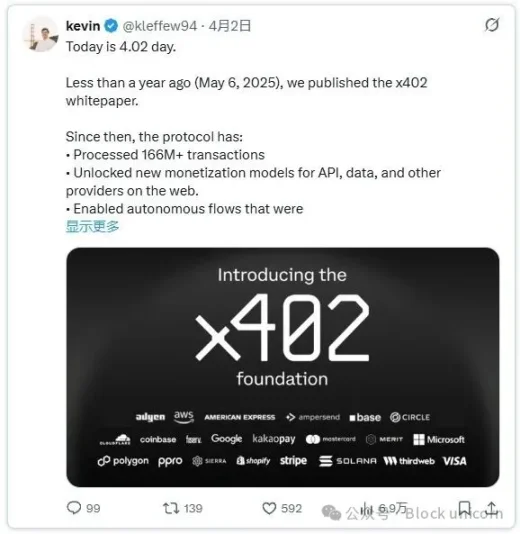
Last Thursday, Coinbase officially contributed the x402 protocol to the Linux Foundation, making it a neutral internet standard.
This alone was enough to make it the headline news of the week, and for a protocol that is less than a year old, joining the Linux Foundation is undoubtedly a significant milestone. In fact, I had already begun writing this article before Thursday. A series of ecosystem releases have gone live, covering every aspect of the x402 user experience: seller-side deployment, proxy expenditure control, and buyer-side proxy tools.
Here is what happened.
Note: If you came here because of the news from Linux, please remember that x402 allows AI proxies to pay for service fees during task execution and settle instantly using stablecoins. No API keys, no subscriptions, no manual approvals are required.
Linux Foundation
Many companies such as Google, AWS, Microsoft, Visa, Mastercard, American Express, Stripe, Cloudflare, Shopify, Circle, Solana Foundation, and Polygon Labs support x402.
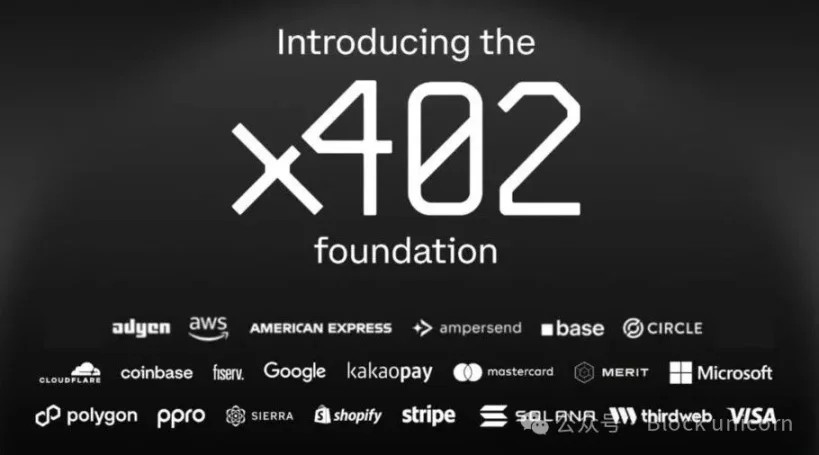
Moving x402 under the Linux Foundation undoubtedly signals to everyone that this protocol must be taken seriously. The Linux Foundation is the gold standard for open-source governance, with three of the world’s most widely used open-source projects: Linux, Kubernetes, and Node.js.
Like most cryptocurrencies, x402 faces the biggest existential threat from the perception that it is a product of Coinbase rather than an underlying technology of the internet. Placing it under the management of the Linux Foundation eliminates this doubt and provides enterprises with the assurance needed to build on x402, which also explains the emergence of its numerous launch partners.
Bankr: Seller's Perspective
While the most noteworthy announcement last week was the migration of x402 to Linux, it was not the first.
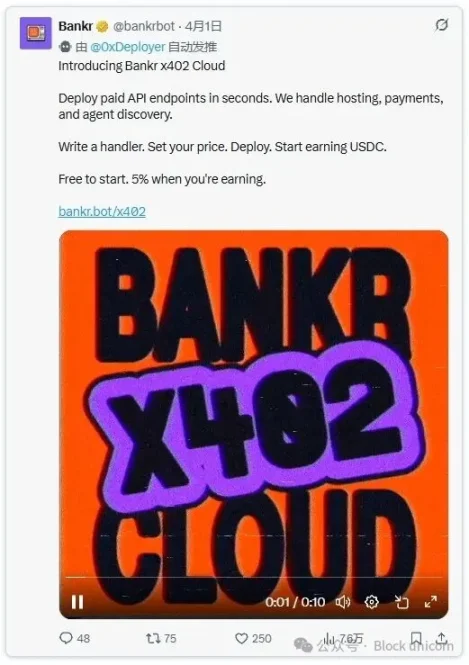
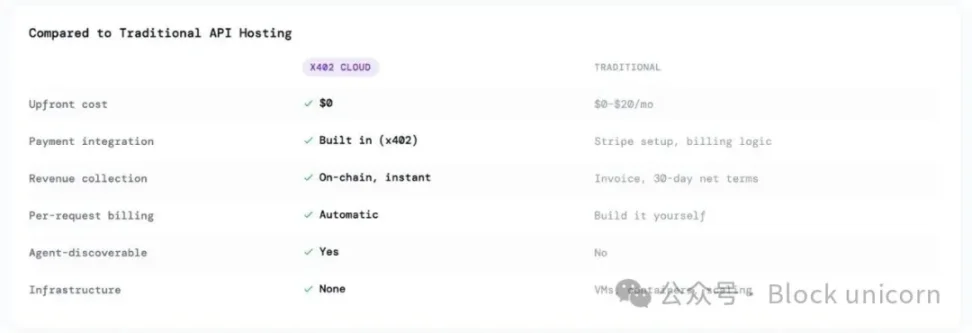
Previously, launching a terminal that supports x402 required manually integrating payment logic, hosting, and discovery mechanisms. Bankr's x402 cloud platform solves this problem: sellers just need to point it to their service, set the price, and deploy with a single command. The terminal goes live via a public URL, payments are settled on-chain to the seller's wallet, and the entire process takes just minutes. Proxies discover the service, pay upon request, and use its output. Bankr offers the first 1,000 requests free each month, followed by a 5% platform fee.
If the tools' profitability still requires a customized payment system, their widespread adoption would stagnate. The x402 Cloud largely addresses this bottleneck.
Ampersend: Control Layer
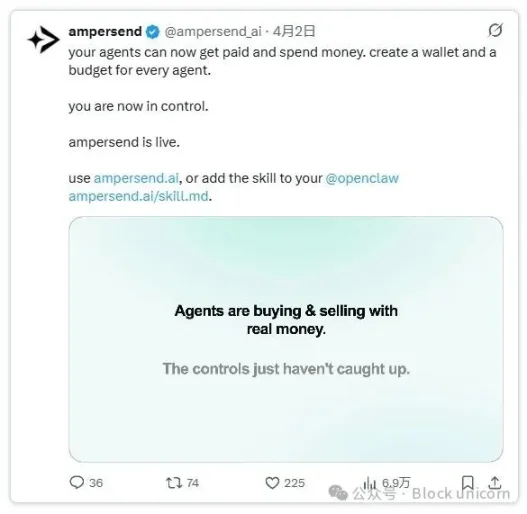
The next important product release comes from Ampersend, a spending control layer for proxies launched by Edge and Node (the team behind The Graph).
The issue is that proxies using x402 do not have built-in expenditure limits or reporting capabilities. This is not a problem for an individual proxy running simple workflows. But for a company deploying dozens of proxies that need to purchase hundreds of services, this becomes overwhelming.
Ampersend fills this gap perfectly. It sits on top of x402, providing operational control functions that the payment protocol does not include by default: budgets for each proxy, auto-recharging, service whitelisting, real-time analytics, and compliance reporting.
As single-person companies like Medvi transition from proof-of-concept to production phases, tools like Ampersend become essential.
AgentCash: Buyer's Perspective
While AgentCash has not made any major announcements this week, I still want to mention it because I have started using the product, and its cost is worth noting.
AgentCash, developed by Merit Systems, is a tool that allows AI proxies to access over 300 APIs and pay via the x402 protocol on Base or Solana. Research, image generation, web scraping, emails, etc.—all of these can be accessed without registering for individual services or managing API keys.
They are currently running a promotion: link your GitHub, X, or LinkedIn account to receive free starter credits to try the platform.
In a recent call with the team, I watched a demo where a proxy found a picture of the “Bankless founder,” imported it into Nano Banana, edited it into a photo of RSA on a yacht, and then emailed it to me. This cost 26 cents. Another example is Joe, who works with AgentCash, shared how he found a lost ID card in the park, took a picture of it, and then had his OpenClaw use AgentCash to find the owner's contact information to return the ID. They are now having lunch together, and the whole process cost about 30 cents.
My own usage has mainly focused on research. I have been developing an application to track candidates for the 2026 midterm elections and used AgentCash to research the positions of 42 candidates. This only cost 19 cents.
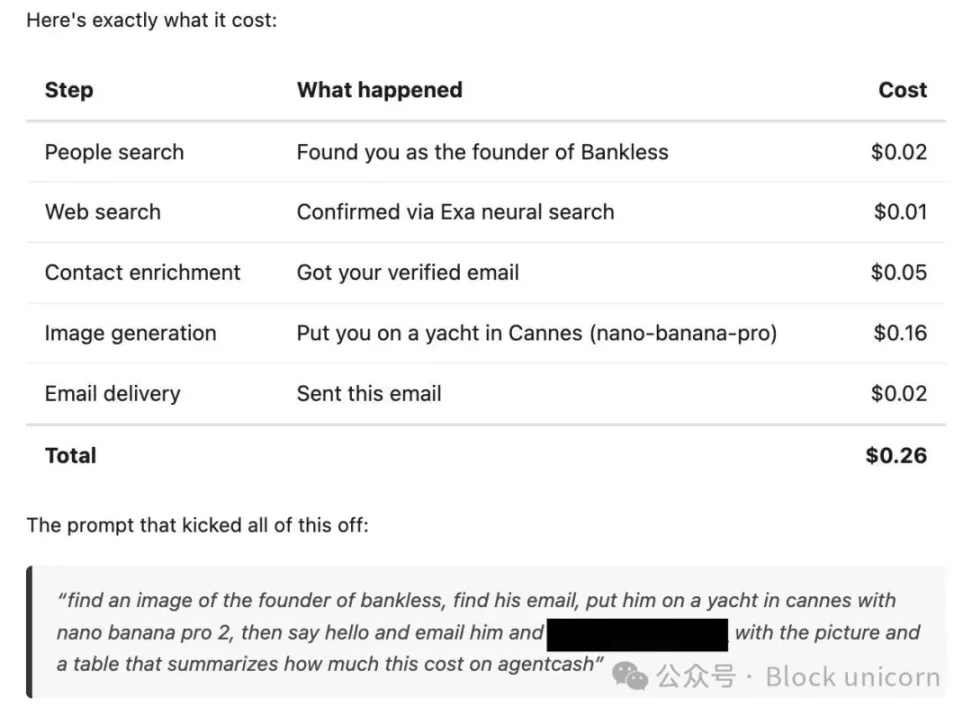
The email involving RSA
I am not a developer. A year ago, I wouldn't have touched an API. But in recent months, especially the past week, using x402 has made me feel like I am grasping half a computer's full capabilities. Trying various things here feels exciting, full of infinite possibilities.
As of now, whether all the API providers wrapped into the x402 protocol will natively support it remains unknown. The future development direction of third-party packaging also needs further exploration. I estimate that the recognition from the Linux Foundation will help address these issues. Meanwhile, the enthusiasm for x402 is evident. The World x402 and Synthesis hackathons both concluded last week. The Open Wallet Standard hackathon will take place this Friday. Locus is hosting a four-week web application development project aimed at developing web applications with proxies and deployment tools. While I am sure there are many other projects I haven’t mentioned, I share these because they showcase the most appealing side of cryptocurrency technology: anyone can connect to others' tools and build new applications on top of them.
This doesn’t feel like a passing fad. Companies such as Google, AWS, Microsoft, Visa, Mastercard, and Stripe are not supporting these projects—at least not simultaneously. With the Linux Foundation now responsible for managing the standard, x402 feels like the beginning of a new era of the internet and injects much-needed creativity into cryptocurrency.
免责声明:本文章仅代表作者个人观点,不代表本平台的立场和观点。本文章仅供信息分享,不构成对任何人的任何投资建议。用户与作者之间的任何争议,与本平台无关。如网页中刊载的文章或图片涉及侵权,请提供相关的权利证明和身份证明发送邮件到support@aicoin.com,本平台相关工作人员将会进行核查。


