Author: Silicon Valley Alan Walker
Not a book on success. It is a complete record of building an anti-entropy system in a world of increasing entropy—about attention, faith, leverage, and the first principles of a window of an era.
Melly · Silicon Valley AI Researcher × Alan Walker · Silicon Valley OG × Sunny · Cryptocurrency KOL
At three in the afternoon at Zombie Café, the sunlight on University Avenue cast long shadows. A copy of "The Binance Life" rested on the table. Alan Walker, the old OG of Silicon Valley, someone who has met CZ, had already ordered his second cup; Melly is an AI researcher at Silicon Valley's GPTDAO, working on the intersection of LLM and on-chain data; Sunny is a well-known KOL in the cryptocurrency world, just flown in from New York, still not adjusted to the time zone yet had flipped to the last chapter of the book. Three cups of coffee and one book later, they had been chatting for nearly four hours.
01 — What is the philosophical foundation of this book
MELLY
My first impression after finishing the book was not "he is so amazing," but "this is not a book about cryptocurrency." It talks about something else, but I couldn't quite articulate what it is.
ALAN WALKER
What you feel is correct. The foundational philosophical proposition of this book is about how a person builds and maintains a set of anti-entropy systems in a continuously increasing entropy environment. Cryptocurrency, regulation, courts, prisons—these are merely pressure scenarios testing this system, not the protagonists.
What does increasing entropy mean? It means that all complex systems, without external intervention, will naturally drift towards disorder. Markets will crash, information will overwhelm, interpersonal relations will decay, organizations will become rigid, and attention will dissipate. This is a physical law, not caused by bad people. Increasing entropy is the default state; anti-entropy needs to be actively designed.
From the beginning to the end, every key decision he made—quitting poker, changing default meetings to five minutes, opting to release information before the FTX crash, voluntarily flying in to plead guilty under maximum pressure—essentially boils down to the same thing: a proactive choice against increasing entropy. Not because he is exceptionally talented, but because he understood earlier and more thoroughly than most: doing nothing will lead the system to chaos. Therefore, the first axiom of his life philosophy is: proactive design is always superior to passive response.
SUNNY
But he does not use this language to describe himself in the book; he talks about very specific things—poker groups, five-minute meetings, balance sheets...
ALAN WALKER
Yes, that is precisely the most valuable aspect of this book. He does not wrap himself in philosophical language; he uses the language of action. Yet there is consistent logic behind the actions.
If you take any decision from the book and ask "why" three layers down, you will always end up in the same place: he has a very stable internal ranking of "what is truly important," and he is willing to pay social costs for this ranking. Friends became estranged because he left the poker group; he accepted that; the media attacked him for his direct expression; he accepted that; the Department of Justice pressured him due to the size of his company; he traded his plea for the least cost, and he accepted that too.
This ability to "accept costs" does not stem from indifference but from a deep clarity of values. He knows what he is protecting, so he knows what he can give up. Most people struggle with decision-making because their value hierarchy is unclear. An unclear hierarchy does not show itself in low-pressure environments, but once real pressure is encountered, it collapses.
The Philosophical Foundation
The core of "The Binance Life" is not the history of cryptocurrency entrepreneurship but a complete record of an anti-entropy operating system. Increasing entropy is the default direction of the world—information overload, attention dispersion, organizational decay, stress accumulation. This book records how a person counteracts this default direction through continuous proactive design. Each specific decision is the output of this system under different pressure scenarios.
02 — Attention is a scarce resource, not a virtue
SUNNY
I found it hardest to understand when he wrote about quitting poker—he mentioned leaving the group, being pulled back in, and then withdrawing again after a tug of war of two to three weeks. Why not just rely on willpower?
ALAN WALKER
Because he understands the essence of willpower. Willpower is not a virtue; it is a finite cognitive resource that gets depleted like blood sugar. Every time you rely on willpower to resist temptation, you deplete the energy for making good decisions next time. This is a well-established conclusion in behavioral economics, not just motivational talk.
Therefore, his strategy is not "I want to be more disciplined," but rather, "I need to redesign my environment to prevent temptation from even reaching my decision-making level." Leaving the group cuts off signals at the source. This is system engineering thinking, not moral thinking. Moral thinking asks, "Should I play cards?" whereas system engineering thinking asks, "How can this signal be cut off?" The latter is much more effective because it does not depend on the depletable resource of willpower.
Everything he did afterward extends from this logic—default meetings lasting five minutes cuts off time leaks at the process level; not accepting lengthy PPTs cuts off noise at the information entry; quitting news television cuts off low-density stimuli at the attention entry. All of these combined form his attention protection architecture. Binance being able to become number one globally in six months is a prerequisite, not a supplementary condition.
MELLY
This is highly isomorphic with the design logic of AI systems. A good AI architecture does not make the model "work harder," but reduces unnecessary computation paths at the architecture level, concentrating computational power where it is truly needed.
ALAN WALKER
Absolutely right. Moreover, there is a deeper point. He mentioned that in prison—without a cell phone, without news, without any external stimuli—he actually had a lot of time for deep thinking for the first time. He said, "Reading an article for ten minutes is easy to nod at, but without deep thought, it is forgotten once it’s over."
The implication behind this statement is a basic fact about cognition: shallow information consumption and deep thinking are mutually exclusive. You cannot think in first principles while scrolling through Twitter, just as you cannot perform precise surgery on the highway. The neural states required for the two activities are completely different.
The design of the modern information environment aims to maximize shallow consumption. Recommendation algorithms, endless refreshes, notification mechanisms—each design pulls your brain into a shallow activation state. This state makes you feel "fulfilled," but in reality, it is systematically eroding your deep thinking capacity. He began fighting against this problem in 2015, back when smartphones still had much less information density than today. This is a form of advanced cognitive self-defense.
What ordinary people can learn · Attention Architecture
01 Substitute willpower with environmental design. Don't ask "How do I become more disciplined?" Ask, "Is my environment defaulting to help me make better decisions?" Leaving the group is a hundred times more effective than "watching less."
02 Identify your attention leaks. Write down activities you spend more than 30 minutes on daily that feel "wasted" afterward. Those are your poker groups.
03 There is a limit to shallow information consumption. Set a hard limit on a "total information intake" for yourself each day, and use the remaining time for thinking, not for intake.
04 Deep thinking requires physical conditions. You don't need a prison—what you need is uninterrupted time without notifications, phones, or meetings. An hour every day is more valuable than three hours daily of content scrolling.
03 — Why him: The first principles of leverage in a great era
SUNNY
This is the question I want to clarify the most. In the same era with so many smart people, why is it him who made Binance number one globally? It cannot merely be "he works harder"; there must be deeper structural reasons behind it.
ALAN WALKER
The first principles answer to this question begins with the "window of an era."
Every technological revolution throughout history opens an extremely brief time window during which old rules fail, and new rules have yet to be established. This vacuum period is the moment of the largest redistribution of wealth and influence ever. The characteristic of the window is that it does not wait for you to prepare. It opens and then closes; after it closes, there is an oligarchic landscape.
In this window, CZ did three things, all of which are indispensable:
First, he entered the scene when information asymmetry was at its peak. When he first heard about Bitcoin in 2013, he immediately sold his apartment and went all in. This was not gambling; it was an accurate judgment of information asymmetry—he saw things that most people had not yet perceived, and he was confident that what he saw was real. Information asymmetry is the source of all excess returns.
Second, he chose to maximize speed rather than profit in the window of network effect. The early rates at Binance were the lowest in the industry. He knew exchanges are a winner-takes-all network-effects business; scale is an order of magnitude more important than profitability. Achieving global number one in six months is not a miracle; it is a correct understanding of the essence of network effects.
Third, he is among the founders with the highest degree of "global native" characteristics of that era. Born in China, raised in Canada, having worked in Japan, Shanghai, and Singapore, he operates social communities fluently in both English and Chinese. Cryptocurrency is the first truly global asset class, and this field naturally favors operators who are globally native.
MELLY
The third point is crucial. The AI field is currently like this—true opportunities are global, yet most founders still have regionally limited cognitive radii.
ALAN WALKER
There is also a fourth factor: he has an almost faith-like obsession with the concept of "users."
A recurring theme in the book is that every time he faced regulatory pressure, media attacks, or internal crises, his ultimate decision anchor was always "How will this affect the users?" During the LUNA crash, he did not run away because "I don't want users to think Binance is running away from retail investors." For pleading guilty, his core reason was "BNB holders will be severely harmed." In the Ukraine crisis, he promptly launched a refugee crypto card, not for PR but because users needed it.
This obsession created a very specific effect in business: user trust became the hardest moat. Technology can be copied, rates can be followed, but the belief that "this platform will not betray me at critical moments," once established, is exceedingly difficult for competitors to shake.
Every technological revolution throughout history opens an extremely brief window—old rules fail, new rules are yet to be established. This vacuum period is the moment of the largest redistribution of wealth ever. The window does not wait for you to be ready. It opens and then closes.

04 — The Structure of Faith: Why He Doesn’t Collapse Under Extreme Pressure
SUNNY
I've been pondering a question: the pressure he faced exceeded most people's imagination—regulatory risks of the largest exchange globally, ten billion dollars in fines, four months in federal prison. But throughout the book, he never seems to have truly "collapsed." Is this a performance, or is there some kind of real structural support?
ALAN WALKER
This question touches on the most core aspect of this book. He did not collapse, not because he is exceptionally strong, but because he has a pressure dissipation structure, which most people do not.
What is a pressure dissipation structure? It means that when external pressure arises, the system can transform that pressure into directional output instead of letting the pressure accumulate internally until it collapses. Bamboo bending in the wind is pressure dissipation. Brittle materials breaking under pressure is pressure accumulation.
First, a sense of mission acts as a buffer against pressure. His repeatedly stated "protecting users" is not just a slogan; it is a real internal anchor point. When external attacks arise—media criticism, regulatory prosecution, betrayal by former employees—his internal coping mechanism is: my mission is to protect users; have I achieved this goal? If he has, then external attacks do not affect his self-assessment of value.
Second, an extremely elongated time perspective. When your thinking perspective is "how important is this matter in the next ten years," today's media headlines and social media attacks lose much of their weight naturally.
Third, "giving up revenge" as energy conservation. When Zhou Wei testified against him at the Department of Justice, he chose to let the other party leave with dignity instead of counterattacking. The cognitive resources consumed by revenge are many times that of building. He reserved all that energy for "what to do next."
MELLY
The framework of "mission as a buffer against pressure" is very interesting. In AI systems, this is similar to having a stable objective function—regardless of how much environmental noise there is, as long as the optimization direction does not change, the system will not diverge.
ALAN WALKER
This analogy is very accurate. Moreover, his "sense of mission" is not abstract; it is verified through specific actions. He did not run away during LUNA; when the Ukraine crisis occurred, he immediately contributed financially and provided cards; during FTX, he disclosed financial problems rather than remained silent.
There is a sentence in the book that I think is the most important of all—he said, "My goal is not to avoid offending people, but to be efficient." The clarity of value ranking is the true reason he does not collapse under extreme pressure. It is not willpower, not luck; it is value clarity.
The Structure of Faith
Real faith is not "I believe I will succeed," but "I know what I am protecting, so I know what I can give up." The clarity of value ranking is the only reliable mechanism for maintaining decision quality under extreme pressure. Blurred values do not show themselves in low-pressure environments, but in real crises, they become the most lethal internal attack surface.

05 — Power Asymmetry
SUNNY
He wrote that he became "the first person in American history to be imprisoned solely for violating banking secrecy laws, without fraud or money laundering," then listed cases like BNP Paribas and Rabobank that paid billions without a single individual being prosecuted. This segment is very powerful, but he wrote it very restrainedly.
ALAN WALKER
Restraint is the most powerful weapon of this book. He shows no anger, does not curse, nor does he present conspiracy theories. He uses only documents submitted by the Department of Justice, their own materials. Then he poses an implicit question: Why do the same actions yield completely different results for different defendants?
Traditional financial institutions—BNP Paribas was fined $8.9 billion, and Rabobank, UniCredit, Danske Bank, each involved in far more serious violations than Binance. Yet not a single individual was prosecuted, not a single CEO went to prison. But he ended up in four months of federal prison for the "registration" administrative compliance issue. Two standards coexist within the same judicial system. He does not say this is unfair; he merely places the two matters side by side. This form of writing is more powerful than any accusation.
06 — FTX and Information: A Person’s Moral Standpoint
MELLY
When he wrote about FTX, he directly stated that considering saving FTX was because "saving the industry means saving myself"—a calculation of interest, without packaging motives. Then within 24 hours, they could not even produce a complete balance sheet, and the decision was no good.
ALAN WALKER
This section is one of the most honest places in the entire book. However, behind that tweet regarding FTX is a deeper ethical issue about information. If he knows and does not speak, who benefits? Institutions and smart money. Who suffers? Retail investors. By choosing to disclose, he objectively democratizes information that only a few knew before.
Information disclosure itself is a moral stance. It is not the noble kind—it is a very practical stance concerning fairness in who can access information.
ALAN WALKER
This is the essence of information warfare. The event itself and its narrative are two independent existences; the distance between them is the space of power operation.
What he does in this book is attempt to reclaim the interpretative authority over this history with his first-person narrative. This act carries a unique weight in the information age—individuals finally have tools to present their narratives directly to the world without relying on media organizations.
The event itself and its narrative are two independent existences. The distance between them is the space of power operation. He is using this book to try to reclaim the interpretative authority over his own history.
07 — What Ordinary People Can Learn from Cryptocurrency and AI Circles
MELLY
This is the question I most want to ask. What truly actionable insights does this book offer to ordinary people—not founders, not big capital?
ALAN WALKER
The first framework: Identify the window of your era and assess how long it will remain open. CZ was able to gain such leverage because he was present when the window opened. Today, is AI a window that is opening? The answer is obviously yes. But which parts of the window have not yet been occupied, and which parts are beginning to become oligopolized?
The second framework: In network effect businesses, speed trumps profit, and scale trumps gross margin. Today in the AI field, data accumulation, user feedback, and model iteration are three interlocking flywheels, and the entry costs for later entrants will increase exponentially.
The third framework: Information asymmetry is the sole source of excess return. In the AI field, which models are genuinely practical and which are just PR; which application scenarios have genuine commercial loops, and which are demo levels. Being six months ahead of the market in these judgments is already a huge advantage.
The fourth framework: Your mental resilience is essentially your value clarity. He does not rely on strength to get through. He gets through by "knowing what he is protecting." Before entering any high-volatility field, first clarify your value ranking.
The fifth framework: In a high-entropy environment, "giving up" is a more core competitiveness than "gaining." AI will generate an increasing number of contents and opportunities. The volume of information will rise exponentially, but your total attention will not increase. The most scarce ability in the future is not "gaining information," but "deciding what not to look at."
Five Actionable Cognitive Frameworks
01 Identify the era window. Assess how long it has before closing and find the subfields that have not yet been occupied.
02 In network effect businesses, speed is prioritized over profit. Once the three flywheels are locked, the costs for latecomers will rise exponentially.
03 Information asymmetry is the sole source of excess returns. Cognitive advantages require proactive information filtering.
04 Maintain clarity in value ranking. This is the only guarantee for decision quality under pressure, quantifiable into figures.
05 "Deciding what not to look at" is the most scarce capability in the AI era. Design your information intake structure from a systems level.
08 — Where This Book’s Scarcity Lies
ALAN WALKER
What AI can generate is the rearrangement of general knowledge. But what AI cannot provide is a first-hand record of a person making real choices and enduring real consequences under genuine pressure scenarios. The real costs are the book's most scarce ingredient. Four months in prison, over a billion dollars in fines, the life or death of the company, the safety of family—these are not rhetoric; they are real occurrences.
The very existence of this book represents his output for contemplation during those four months. In a sense, this book is the result he earned through four months in prison.
"Feeling that it can be learned" is the best evaluation of a book. He wrote down the mistakes, the costs, and the calculations of benefits. This completeness makes this book a system that can be learned from, rather than a myth to worship. In any era, being able to fully expose one's decision-making system to the public is itself rare.
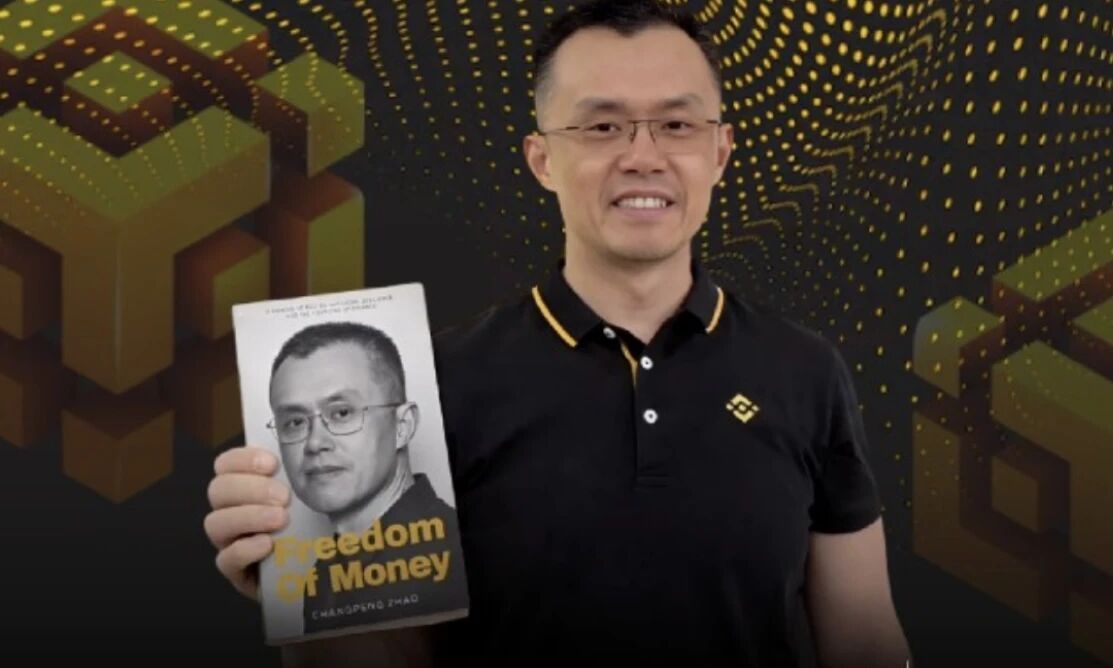
Melly flipped the book back to the cover and looked for a while. The sunlight on University Avenue outside had completely slanted, casting the shadow of Zombie Café across the street. She said what troubles her most about this book is that it portrays many problems she thought were only encountered at "special scales" as issues every earnest person would face. Alan replied that was because those problems are inherently ones every earnest person would encounter; they just occurred on a very unusual stage of scale. Different scales, same structures. Sunny called for a third cup of coffee, and no one spoke.
Zombie Café · Palo Alto · Three Cortados, Four Hours, One Book

All dialogue is fictional and speculative ◆ For thought experiments only. All viewpoints in this article represent the positions of fictional characters in dialogue and do not reflect the views of any real person.
免责声明:本文章仅代表作者个人观点,不代表本平台的立场和观点。本文章仅供信息分享,不构成对任何人的任何投资建议。用户与作者之间的任何争议,与本平台无关。如网页中刊载的文章或图片涉及侵权,请提供相关的权利证明和身份证明发送邮件到support@aicoin.com,本平台相关工作人员将会进行核查。


