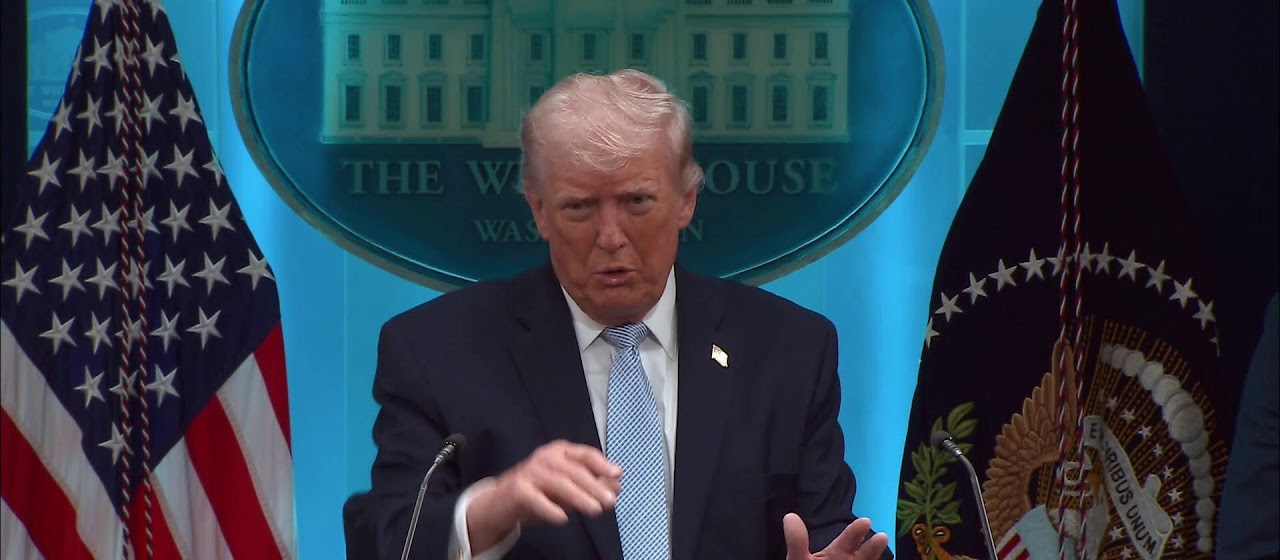
On the evening of April 7, the market first received not a piece of news from the cryptocurrency sector, but rather a piece of geopolitical news. After the US and Iran agreed to a two-week ceasefire, the most striking figures in the AP report were: WTI crude oil futures fell by as much as 14.7%, Brent dropped 14.4%, S&P 500 futures rose by 2.2%, Dow futures increased by 2.0%, and after Asia opened, the Nikkei rose by about 4%, while the Korean Kospi rose by 6%. This set of combinations is very straightforward. The market first did one thing: it removed a portion of the "worst-case scenario" from the quotes.
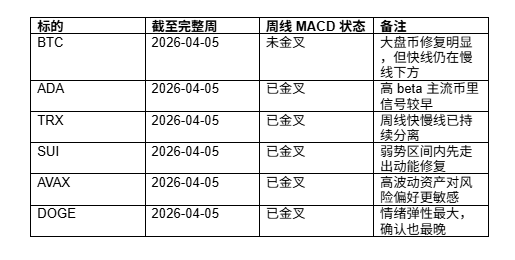
The implication for the cryptocurrency market is not that "because of the ceasefire all coins will rise," but rather that there is renewed room for a return of risk appetite. The question is, where will this capital go first? The answer is not necessarily Bitcoin. According to the daily data from AiCoin's Binance, after reconstructing the weekly data, as of April 5, 2026, Bitcoin's weekly MACD has not yet confirmed a golden cross; instead, a group of high beta coins including ADA, TRX, SUI, AVAX, and DOGE have already made a turn on the weekly signal ahead of Bitcoin.
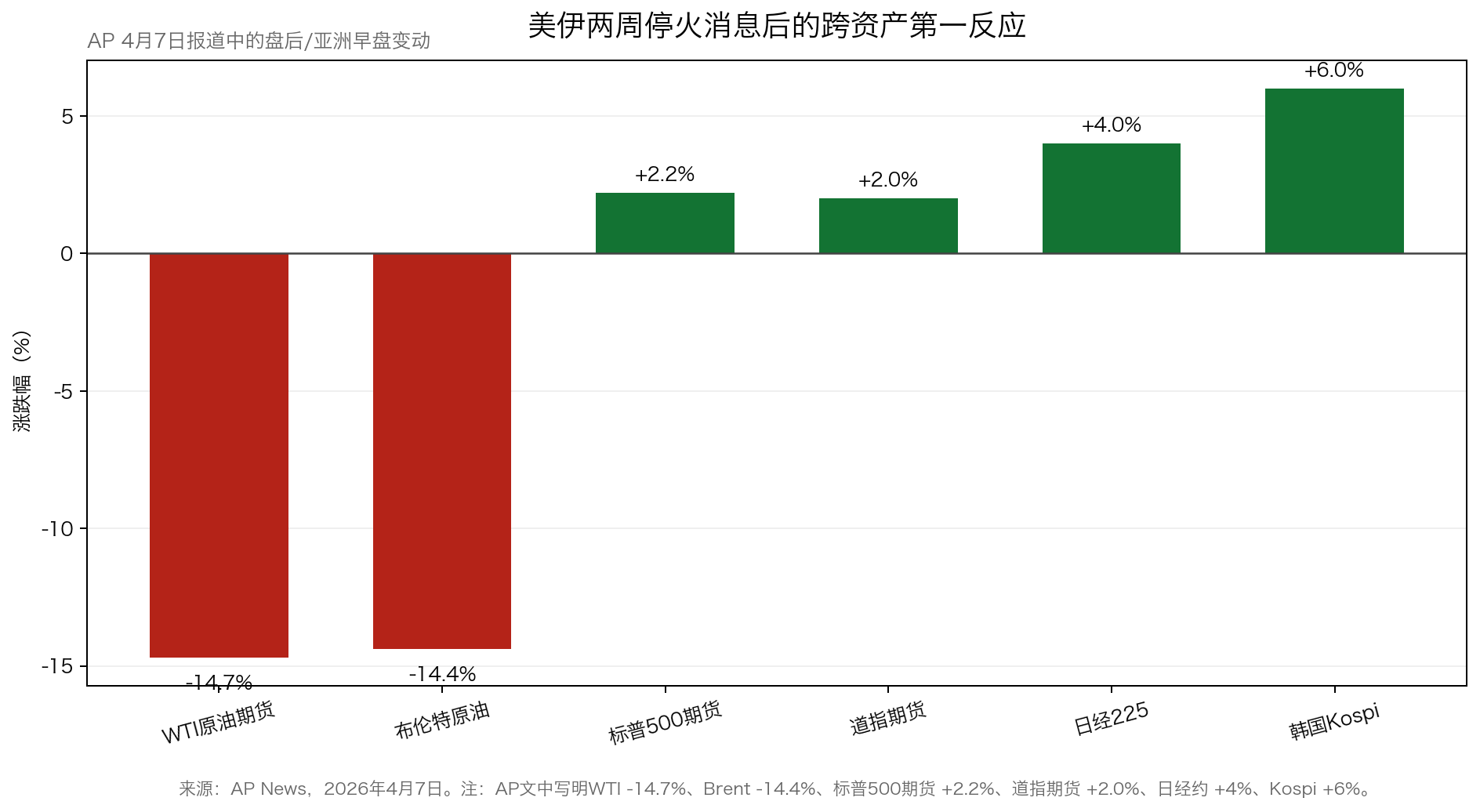
Figure 1: The first cross-asset reaction after the US-Iran two-week ceasefire news. Oil first gave back risk premium, while stocks and risk assets began to repair expectations.
1. The first layer of ceasefire trading is not optimism, but a re-weighting of the worst-case scenario
The large bearish candle in oil has made the logic very clear. What the market feared the most before was not just the conflict itself, but the long-term blockage of the Strait of Hormuz, leading to supply disruptions that could cause a harder spillover of global inflation. Even if the ceasefire is only stated to be for "two weeks," it's enough for traders to pull back the most extreme tail risks. Once oil prices soften, stock index futures bounce back and bond yields also start to catch their breath. This does not mean that the world has suddenly become a better place, but rather that assets are once again willing to pay a lower insurance premium for risks.
This point is very important. Many people like to directly translate geopolitical relaxation into "full risk-on." The market is usually not so straightforward. It first repairs the most expensive part of the pricing, that is, the risk premium that was just pushed up by the conflict. Once this step is completed, capital will continue to flow into high-elasticity assets. Cryptocurrencies happen to be in this layer.
Polymarket’s market caps this repair more explicitly. Just looking at the official market page is enough. By April 8, 2026, the total transaction volume of the "US x Iran ceasefire by...?" page had exceeded $144 million. The trading on April 7, April 15, and April 30 has the most concentrated transactions, and the Buy Yes quotes for the corresponding deadlines in the right-side trading box have been pushed close to $1. The prediction market is not just saying "the situation has eased"; it is telling you with real money that the ceasefire has transformed from a trading hypothesis into a nearly certain priced event.
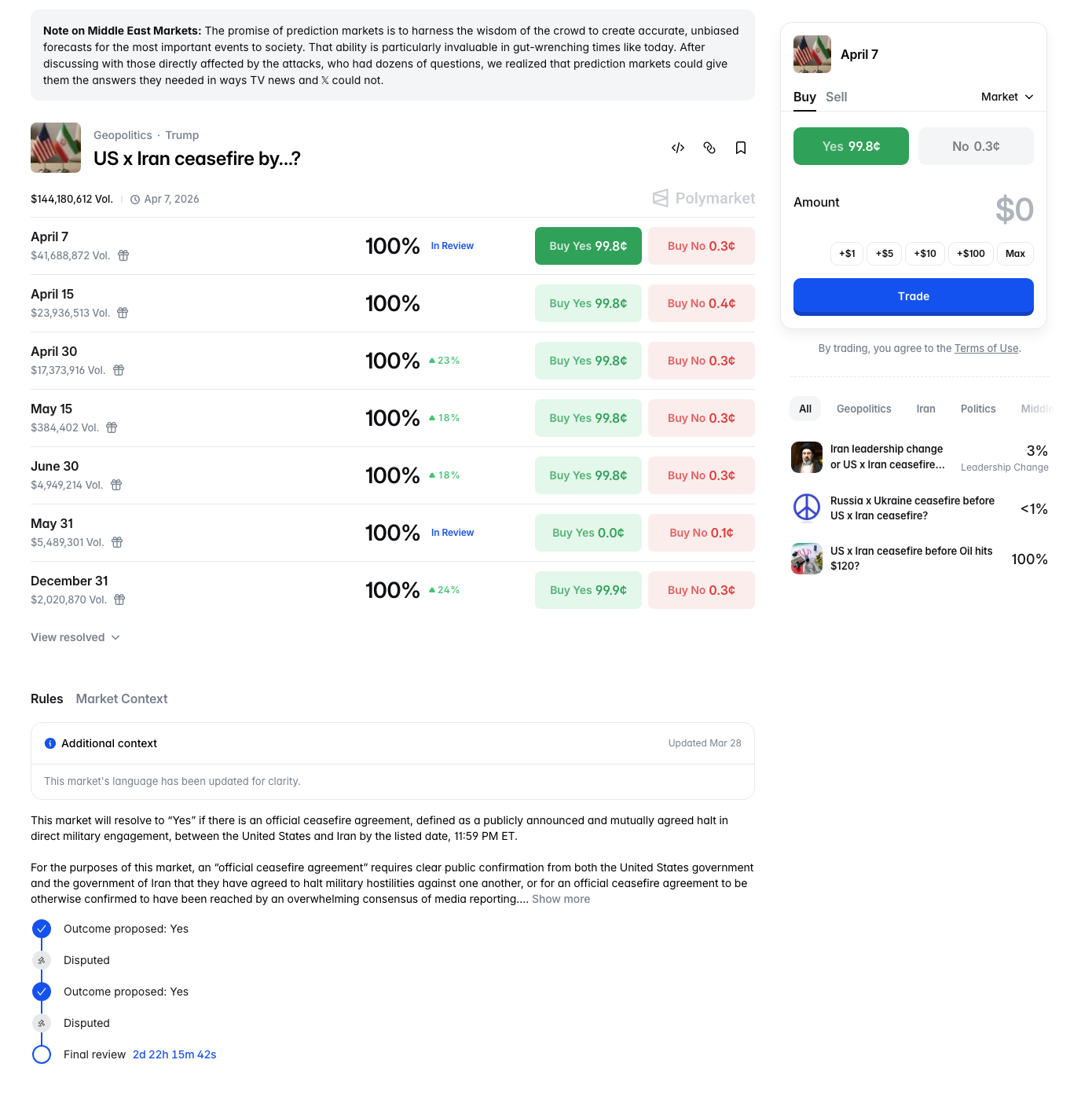
Figure 2: Screenshot of Polymarket official page. The ceasefire deadline market and the right-side trading box both show that the main deadlines have almost been overwhelmingly priced as "will happen".
2. This signal shines first in high beta, not in Bitcoin
Let's clarify the concept first. MACD can be simply understood as a comparison of the fast and slow lines of medium-term trend momentum. This article uses the common parameters of 12/26/9 and analyzes it based on weekly data. A weekly golden cross means that the DIF line crosses above the DEA line from below. It does not guarantee that the market will definitely launch, but on a larger scale chart, it often means that the downward inertia is diminishing, and buying pressure begins to gain an advantage.
Focusing solely on Bitcoin can easily lead to a conservative conclusion: recovery is underway, but confirmation is still lacking. According to the complete weekly data, as of the week ending April 8, 2026, BTC's weekly DIF was still -8652, and DEA was -8529, with the fast line still below the slow line. In other words, Bitcoin is on the mend but has not truly pushed open the door to the larger trend.
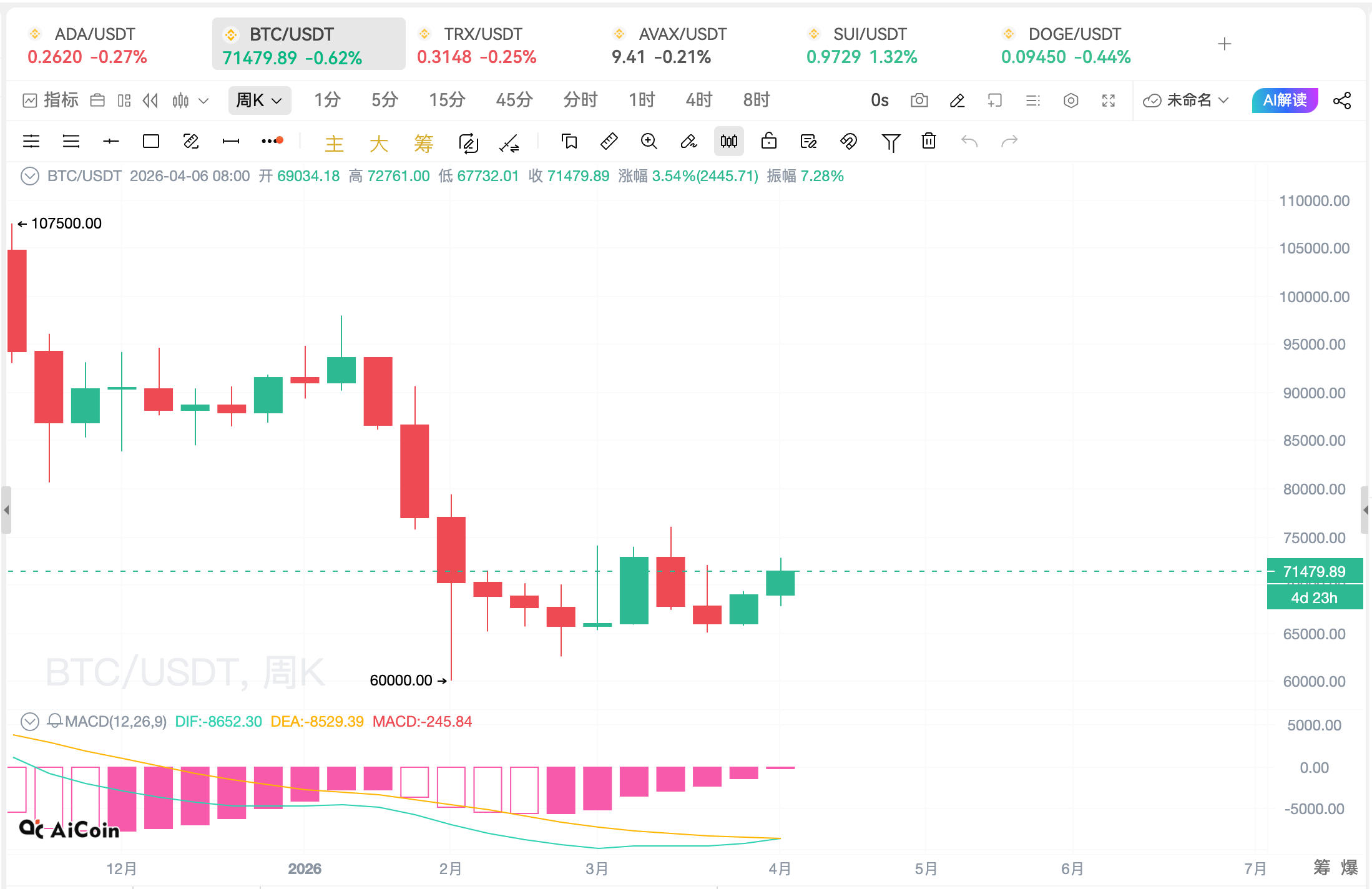
Figure 3: As calculated by complete weekly data, Bitcoin's weekly MACD has not confirmed a golden cross as of the week ending April 8, 2026.
However, there are already actors in the market moving first. ADA's weekly MACD confirmed a golden cross in the week of March 22, 2026, and by the complete week of April 5, the DIF was still above the DEA. It does not conclude that "the bull market has returned," but rather indicates a finer detail: when risk appetite returns, high beta assets often run ahead. This is because these assets had previously dropped deeper, had lighter positions, and are more sensitive to marginal changes in sentiment.
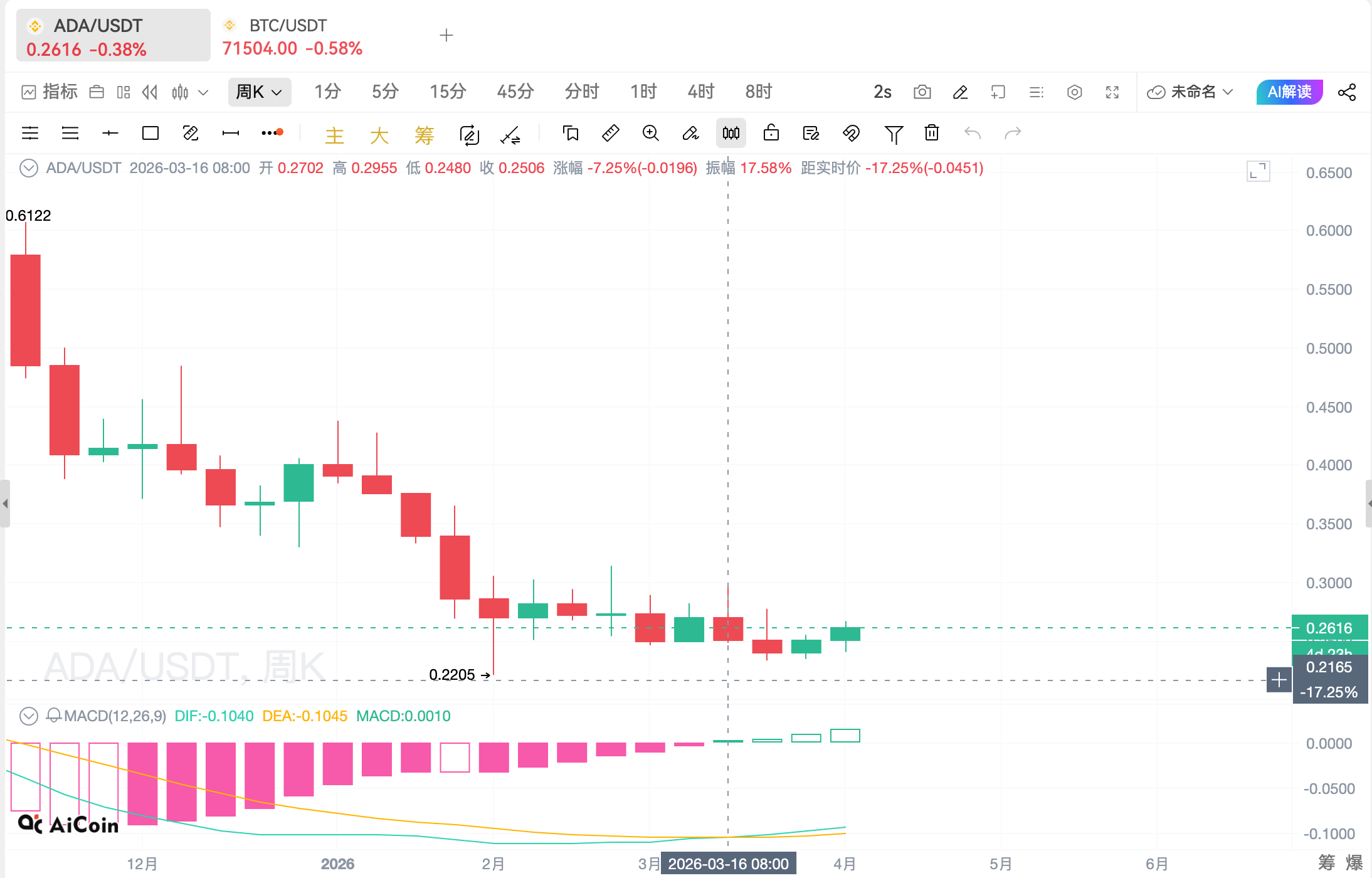
Figure 4: ADA's weekly MACD confirmed a golden cross in the week of March 22, 2026, signaling a trend recovery in the high beta direction.
Looking at a wider scope, this is not just a solitary case for ADA. Using the same method to reconstruct the weekly data, TRX, AVAX, and SUI all confirmed a golden cross in the week of March 16, 2026, while DOGE just turned up in the week of March 30, 2026. This means that the high-elasticity part in the altcoin sector has already taken a step ahead of Bitcoin.
This aligns with the order of the prediction market. First, the geopolitical tail risks were quickly removed, then risk appetite was willing to flow back, and only then did the altcoins start to experience style dispersion. While the large market anchor has not fully flipped, the first signals confirming the movements often do not come from the most stable ones, but rather from those with the greatest elasticity.
If this trend continues to ferment, preparing execution channels in advance is usually more relaxed than trying to find entry points after the news lands. For a topic like the US-Iran ceasefire, the window for actual trading is often very short; the market moves first, emotions follow, and by the time most people start discussing, prices have usually already advanced. Having a usable account prepared in advance is more about preserving options. OKX account opening link:
https://jump.do/zh-Hans/xlink-proxy?id=2
Invitation code `aicoin20`
3. This is not synonymous with "the bull market is back in full swing"
The most common mistake here is to hear "ceasefire" as "everything is fine," and to hear "golden cross" as "the trend has unconditionally established". Neither of these two statements can be translated that way. First, the wording of the ceasefire itself carries an obvious time limitation. Two weeks means that the market has received a buffer, not a permanent conclusion. Second, even from a technical perspective, Bitcoin, the core pricing anchor, has not confirmed a golden cross under complete weekly data. If the large-cap coins have not completed that step, the leading signals from altcoins seem more like risk appetite recovery rather than a confirmed primary uptrend.
Therefore, a more suitable statement would be: the macro-level constraints are weakening, and funds are beginning to be willing to test areas with greater elasticity, but the market has not yet given a unified final judgment of "trend bull market restart." What is most likely to occur at this stage is not a unilateral smooth movement, but rotation, differentiation, and back-and-forth fluctuations.
4. What to really focus on next
First, keep an eye on whether the ceasefire can transform from a two-week buffer into a longer-term sustainable arrangement. If it is just a short ceasefire, oil prices may quickly reclaim some of the risk premium, and the recovery of global risk assets will be similarly discounted.
Second, monitor whether Bitcoin's weekly MACD can complete the final step. The fact that altcoins have confirmed a golden cross certainly indicates a willingness from capital to test, but if Bitcoin remains stuck at the threshold, it will be difficult for the market to achieve a reassuring large-scale resonance.
Third, observe whether this batch of already confirmed high beta coins continues to expand or quickly reverts. The former indicates that the risk appetite is continuing, while the latter resembles a brief rebound. The true utility of technical signals lies not in making judgments for you, but in reminding you: which assets were the first to react to marginal changes in sentiment.
Conclusion
Looking at the US-Iran two-week ceasefire alongside the weekly MACD, the result is not a simple "bullish for crypto." A version that is closer to market reality is: the ceasefire first depressed the most extreme geopolitical risk pricing, risk appetite has begun to flow back; this flow has currently pushed mainstream high beta altcoins to the side of the weekly golden cross, while Bitcoin remains at the doorway of confirmation. As long as this order does not change, the focus of the market ahead will not be on "who shouts the loudest," but rather on who can continue to solidify the leading signals.
If you want to continue following this trend
If you want to keep tracking the developments of the ceasefire, crude oil, Bitcoin, and the interlinkage of high beta altcoins, platforms like AiCoin that integrate market analysis, K-lines, and news are much more convenient. For topics triggered by geopolitical events and then transmitted to risk appetite, focusing on a single piece of news is usually insufficient; looking cross-assets together is easier to catch the rhythm.
AiCoin official website:
https://www.aicoin.com/zh-Hans
AiCoin prediction market page:
https://www.aicoin.com/zh-Hans/polymarket?lang=cn
免责声明:本文章仅代表作者个人观点,不代表本平台的立场和观点。本文章仅供信息分享,不构成对任何人的任何投资建议。用户与作者之间的任何争议,与本平台无关。如网页中刊载的文章或图片涉及侵权,请提供相关的权利证明和身份证明发送邮件到support@aicoin.com,本平台相关工作人员将会进行核查。