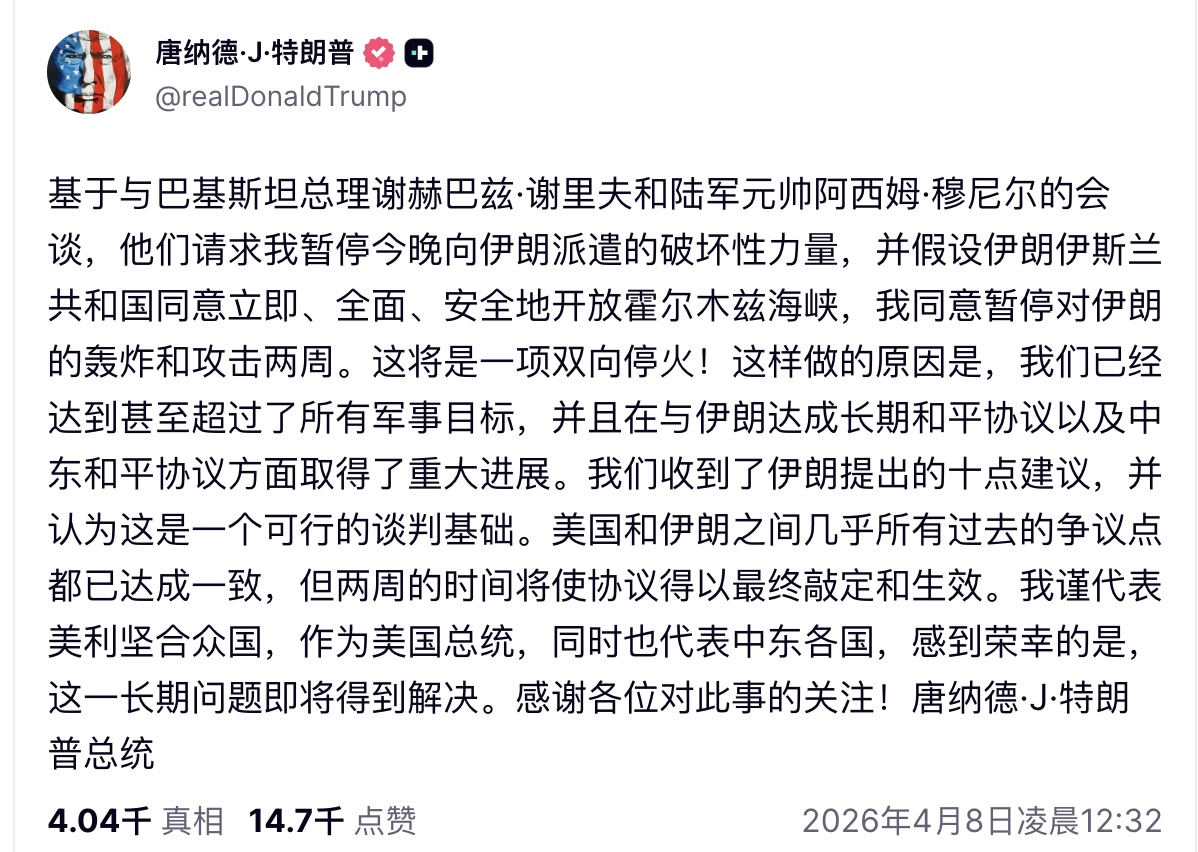
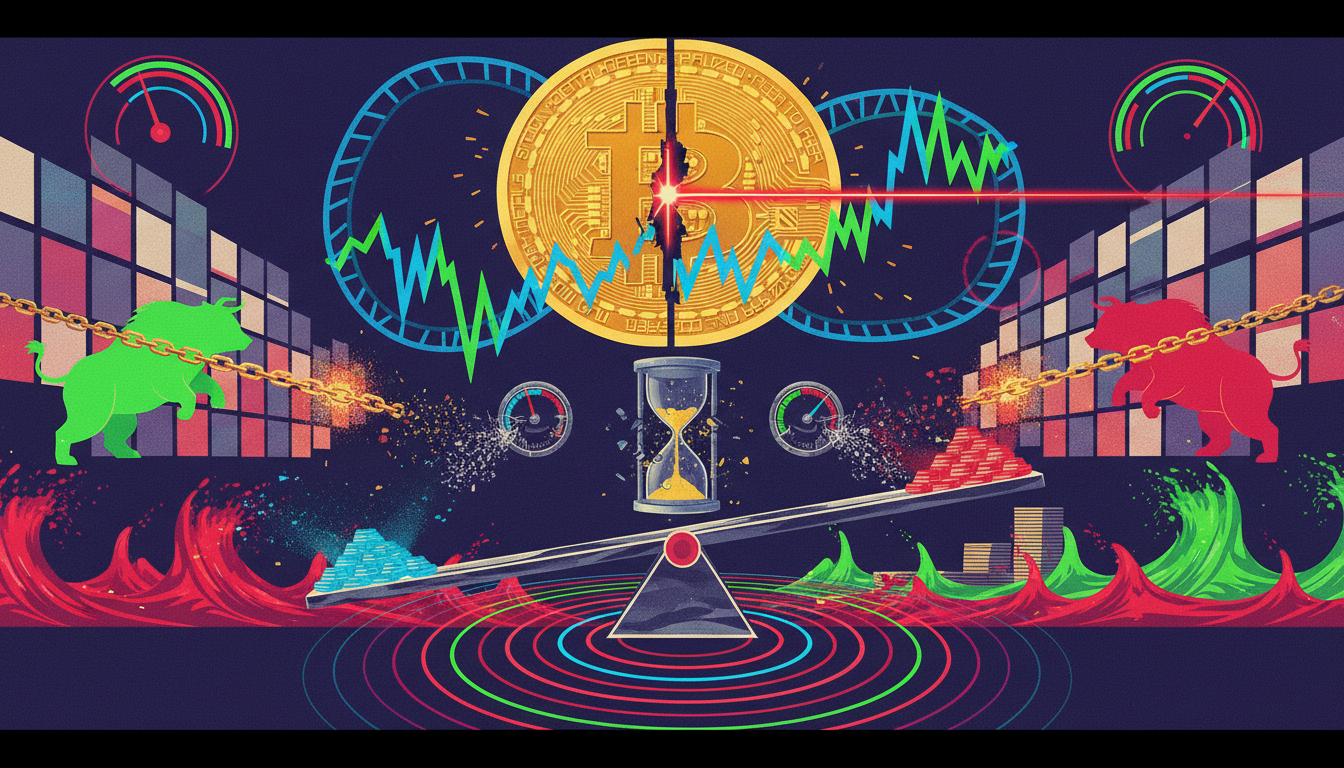
As of the morning of April 8th, in the UTC+8 time zone, the cryptocurrency market is being pulled by two completely different forces at the same time: on one side, the stablecoin regulatory proposal put forth by the U.S. FDIC, which outlines clearer institutional boundaries for the future of "on-chain dollars"; on the other side, the escalating situation in the Middle East, where expectations for ceasefire and navigation can change at any moment, adding a layer of difficult-to-price uncertainty over global risk assets. One end is the institutional certainty brought by the regulatory framework, the other is the tremendous uncertainty brought by regional conflicts, creating a sharp contrast. Pakistan announced that the ceasefire will take effect at 8 a.m. Beijing time on April 8th, while Polymarket shows the probability of resuming navigation in the Strait of Hormuz is about 57%. These key points in time and probability numbers lock the cryptocurrency market in a state of "known rules" intertwined with "unknown events."
FDIC Takes a Stand: Stablecoins Excluded from "Deposits"
One of the most eye-catching signals in the latest stablecoin regulatory proposal from the FDIC is the clear exclusion of stablecoins from the scope of deposit insurance protection, emphasizing that the current discussions are still at the level of regulatory positioning, rather than concrete details being implemented. This means that regulatory agencies have, in principle, drawn boundaries — even if stablecoins are pegged to the dollar on a one-to-one basis, they should not be considered as enjoying the same insurance treatment as bank deposits.
This positioning directly punctures the prior imaginations some market participants had about stablecoins as "deposit-like." For issuers, the explicit indication from regulators that there is no protection equates to a reminder that they must enhance reserve transparency and risk disclosure, and can no longer imply a "hidden guarantee" in ambiguous territories; for holders and the banks collaborating with them, there will be a clearer understanding of these assets being viewed as credit instruments rather than insured liabilities, naturally raising the level of risk awareness.
In this context, funds inevitably have to more distinctly differentiate between "bank money" and "on-chain money": the former is backed by strict capital constraints and deposit insurance, while the latter relies more on the asset quality of the issuing institution, custodial arrangements, and audit transparency to maintain trust. The FDIC's statement will force the market to reassess the credit sources of stablecoins, whether relying on sovereign credit, institutional credit, or merely the confidence maintained through market dynamics.
It is worth emphasizing that this round of proposals resembles a milestone on the regulatory roadmap, rather than an administrative order to "tighten up" starting tomorrow. Whether a systematic legislation can form afterwards will depend on whether Congress and other regulatory agencies follow up and how they coordinate their positions. If the market interprets this statement simply as an immediate crackdown, it may overlook a fact: regulation is mainly about clarifying boundaries, not shutting down channels overnight.
Liquidity Nerves Tightened: Dependency of Crypto on Stablecoins Exposed
Stablecoins have become the core infrastructure of cryptocurrency trading: the vast majority of mainstream spot and derivatives use them as pricing and settlement units, and large fund transfers between different trading platforms also highly depend on on-chain dollar-pegged assets. Once regulatory uncertainty rises, the entire system's "liquidity nerves" will tighten accordingly; even if short-term price volatility does not appear severe, the willingness to move funds between on-chain and off-chain may also be suppressed.
For institutions and large market makers, it becomes difficult to maintain the current state of stablecoin holdings and trading pathways after expectations of heightened regulation. One strategy is to reduce concentrated exposures to a single issuer, diversifying risks among multiple dollar-pegged assets; another is to increase the proportion of direct fiat channels or broker channels within feasible limits, moving part of settlement back to traditional financial infrastructure to lower single-point compliance risks.
For a broader range of investors, funds may gradually migrate from highly concentrated single dollar-pegged assets to a diversified basket of currencies or even non-dollar-pegged assets. For example, some funds are attempting to introduce euros, yen, or even commodity-linked assets to weaken dependence on the regulatory sentiment of a single sovereign currency, which could quietly alter the structure and trading habits of the crypto market in the medium to long term.
From a longer-term perspective, clear regulation may trigger panic in the short term — especially when the proposal clearly delineates the "not protected" red line — but in the medium to long term, it could open up space for compliant stablecoins that "fully align with traditional financial requirements." Those issuers that can meet capital adequacy, transparent reserves, and strict audit requirements may instead have the opportunity to connect more deeply with banks and brokers under the new rules, embedding crypto liquidity into a broader financial system.
Hot Middle East: Ceasefire Timing and Risk Pricing in the Strait of Hormuz
While the regulatory script is gradually surfacing, the situation in the Middle East is accelerating its evolution along another timeline. Under the backdrop of tensions related to Iran, Pakistan announced that the ceasefire arrangement mediated by it will officially take effect at 8 a.m. Beijing time on April 8th; this specific timing has itself become a pivot of market sentiment. If the ceasefire can smoothly land as planned, it will be seen as an important signal of easing tensions; if there are changes before and after the implementation, it will amplify disappointment regarding the "breakdown of peace talks."
The prediction market has also begun to give its own probability labels to key channels. Polymarket currently shows a probability of about 57% for the resumption of navigation in the Strait of Hormuz, slightly higher than the opposing scenario; however, this is just a crowdsourced expectation from a single prediction platform and is neither an official assessment nor can it encompass all participants’ intelligence dimensions, requiring interpretive caution to leave room for uncertainty and not to treat it as a synonym for "market consensus."
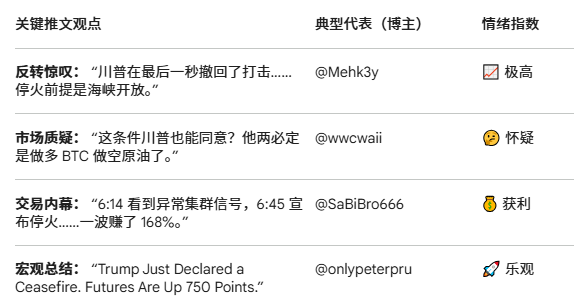
Meanwhile, it has been noted that the U.S. Department of Defense had planned to hold a press conference regarding actions related to Iran, but then canceled it at the last minute. This action itself has been excessively magnified by various media, leading to rampant speculation about whether it foreshadows military action. Yet, in the absence of more authoritative information, any extension of this into a "countdown to action" is mere unverified conjecture that can only be treated cautiously within the realm of information noise, rather than as a hard basis for investment decisions.
Amid the intertwined signals of ceasefire timelines, navigation probabilities, and press conference cancellations, the current situation remains highly unstable. Even if a brief ceasefire and navigation expectations provide a slight easing for risk assets, any sudden military changes — such as miscalculations, localized escalations, or involvement of allies — could completely reverse market risk appetite within hours. For crypto assets, this situation means emotions and liquidity can be drawn to extremes within very short time windows.
Risk Aversion Under the Shadow of Oil Prices: Bitcoin Swings Between Winds and Storms
The Strait of Hormuz itself is a key artery of the global energy system, connecting oil-producing countries in the Gulf with international shipping routes. If navigation is obstructed, it would create strong upward pressure on oil prices from both the flow of physical goods and psychological expectations, and soaring oil prices can quickly become embedded in inflation expectations, resulting in a chain reaction impacting monetary policy paths and valuations of risk assets in various countries.
During this phase of overlapping geopolitical conflict and inflation concerns, cryptocurrencies like Bitcoin are often seen by some funds as alternative options for “digital safe-haven assets”: when doubts arise about sovereign credit and the purchasing power of fiat currencies, some traders hedge concerns about domestic currency depreciation or long-term inflation by increasing their holdings of Bitcoin or mainstream assets. This logic has appeared repeatedly during multiple rounds of macro turmoil, reinforcing the narrative of "digital gold."
However, unlike traditional safe-haven assets, the high leverage and high volatility characteristics of the crypto market can cause it to act both as a short-term refuge during extreme events and as a pool of assets that face concentrated sell-offs when liquidity suddenly tightens. Many times, when external shocks trigger margin calls and deleveraging, funds have to close crypto positions to fill gaps in other markets, turning "safe-haven positions" overnight into "forced selling."
Thus, for investors seeking hedging tools amid this intertwining of geopolitical and macro volatility, merely watching price trends is insufficient. It is necessary to monitor macro data such as oil prices, U.S. inflation, and interest rate expectations concurrently, along with on-chain capital flows — for example, net inflows/outflows of stablecoins, behavior of large addresses of mainstream assets, etc. Only when oil prices and macro risks rise simultaneously, alongside sustained net inflows of on-chain funds and spot positions tending toward lockup, does it approach a picture of "proactive hedging"; conversely, if price rises are accompanied by fund withdrawals and leverage accumulation, it is more likely to be just a short-term emotional peak.
Regulatory Certainty Contrasts with Geopolitical Fog: The Game Under Two Timelines
When pulling the perspective back, it becomes evident that the current market is being pulled between two timelines of entirely different natures: one is the slow but relatively predictable advancement of U.S. regulatory pathways — from the FDIC's positioning on stablecoin boundaries to the potential future cross-agency coordination and legislative details; the other is the extreme unpredictability of the Middle East situation — while the ceasefire timing can be defined, whether it is fulfilled, how long it will last, and whether new conflict sparks will arise are difficult to model in advance.
In this misaligned time structure, short-term traders are more likely to engage in rhythm games surrounding the landing of the ceasefire and expectations for navigation in the Strait of Hormuz: betting on reversals in sentiment before and after the ceasefire, oil price gaps, and Bitcoin following safe-haven or bear market trends. Meanwhile, medium to long-term funds are more concerned with the shaping effect of the regulatory framework on compliance pathways — which assets are likely to survive under the rules and gain institutional adoption, and which models are bound to be marginalized when regulation tightens, are core considerations for reallocation.
In this environment, institutional investors often adopt layered allocation strategies to hedge risks from different sources. One layer of positions bets on assets that are highly aligned with regulatory discourse, such as compliant stablecoins potentially benefiting from clear regulation in the future, regulated custodial Bitcoin products, or related infrastructures; another layer retains flexible exposure to high-beta assets to capture short-term excess returns driven by events. Dynamic adjustments between different "risk buckets" become a key means to respond to dual uncertainties from regulation and geopolitics.
At the same time, both media reports and prediction markets inevitably carry deviations and noise. Regarding sensitive issues such as Iranian actions and navigation in the Strait of Hormuz, some information remains at the rumor or verification stage. Investors need to deliberately distinguish what has been confirmed by authoritative channels, what is merely the narrative magnified by market sentiment, and which figures (e.g., probabilities from a single platform) can only serve as reference samples rather than being unconditionally trusted as "collective wisdom."
Finding a Survival Interval Between Rules and War
Returning to the starting point, the FDIC's stablecoin proposal essentially delineates a clearer boundary between crypto and traditional finance: which "on-chain dollars" can strive for treatment akin to bank money in the future, and which must openly acknowledge that they are merely uninsured credit instruments. This is not only a rehearsal of compliance pathways but also forces the market to reexamine the credit foundations on which it operates — whether it is trust in sovereigns, institutions, or code.
Simultaneously, the situation in the Middle East and risks to energy routes have caused macro uncertainty to rise again. The ebb and flow of navigation and oil price expectations in the Strait of Hormuz will directly affect inflation paths and monetary policy, while cryptocurrencies like Bitcoin are still in the process of reshaping their role between "digital safe-haven assets" and "liquidation targets." It has both the opportunity to gain a premium in the cracks of trust and the potential to be among the first to be sold off during systemic deleveraging.
At this current moment, investors need to closely monitor the actual landing rhythm of U.S. regulation — how the FDIC proposal evolves into executable rules, how other regulatory agencies align their positions; simultaneously, they should pay attention to the authenticity and sustainability of the ceasefire execution in the Middle East, along with the feedback from navigation in the Strait of Hormuz and oil price performance on global risk appetite. In this phase where these two uncertainty curves intertwine, it may be more important to design risk management contingencies for high-volatility scenarios, embedding position, leverage, and liquidity management into the strategy itself, rather than betting on the direction of any single event.
Join our community to discuss and grow stronger together!
Official Telegram group: https://t.me/aicoincn
AiCoin Chinese Twitter: https://x.com/AiCoinzh
OKX福利群: https://aicoin.com/link/chat?cid=l61eM4owQ
币安福利群: https://aicoin.com/link/chat?cid=ynr7d1P6Z
免责声明:本文章仅代表作者个人观点,不代表本平台的立场和观点。本文章仅供信息分享,不构成对任何人的任何投资建议。用户与作者之间的任何争议,与本平台无关。如网页中刊载的文章或图片涉及侵权,请提供相关的权利证明和身份证明发送邮件到support@aicoin.com,本平台相关工作人员将会进行核查。