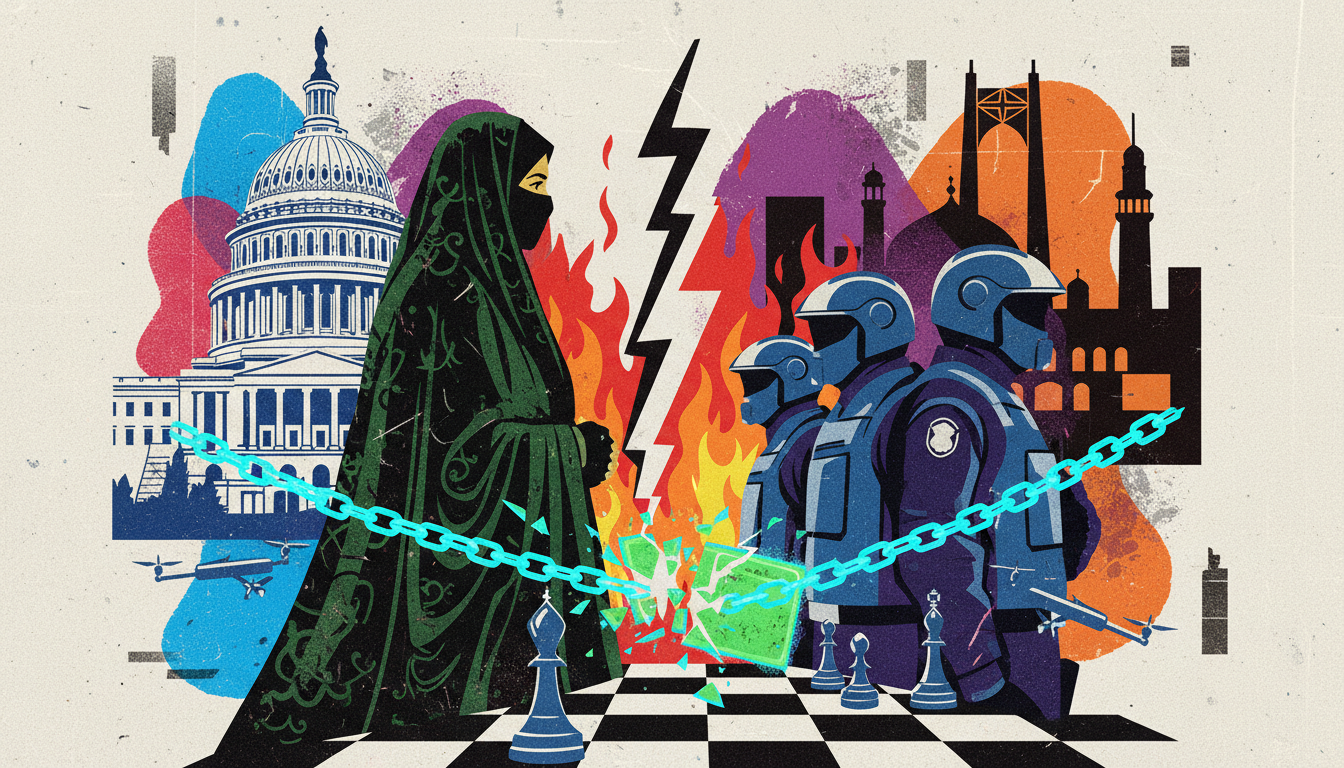
On April 4, 2026, Eastern Eight Time, U.S. President Trump issued an “ultimatum” to Iran via social media, claiming to have provided a 10-day window for Iran to reach an agreement or “reopen the Strait of Hormuz,” warning that action would be taken in 48 hours. This statement came against the backdrop of Iran's drone strikes against Israel and the severe impact on Iran’s domestic education system, rapidly escalating tensions in the Middle East. As the countdown for the ultimatum began, geopolitical tensions quickly heightened global risk expectations, pushing the already fragile sentiment in cryptocurrency assets to a new breaking point: between panic and “digital safe haven,” the market was once again forced to make a choice.
48-Hour Countdown: The Overlap of Trump's Ultimatum and Hormuz Risks
On April 4, Trump claimed on social media that he had given Iran 10 days to reach an agreement or reopen the Strait of Hormuz, clearly warning that action would be taken in 48 hours. In terms of the timeline, he simultaneously recalled the so-called “negotiation window” of the past 10 days while narrowing the focus to the “countdown” of the next two days, creating a high sense of urgency for war. However, it is important to emphasize that this ultimatum message suspiciously originated from Truth Social rather than X, and the platform of the original post, along with the complete expression and context, still requires further verification. The publicly circulated versions all carry the risk of being one-sided summaries.
The Strait of Hormuz, as a global energy and shipping chokepoint, when interpreted as potentially escalating into military actions surrounding the “reopening” narrative, naturally leads the market to associate with systemic shocks to crude oil transport, international routes, and insurance costs. In the absence of precise data, we can only make qualitative judgments: once the risks in that sea area are perceived to be continuously escalating, the risk premiums associated with energy and shipping within traditional assets will significantly increase, further intensifying the overall volatility in foreign exchange, equity, debt, and cryptocurrency assets, without needing to detail any “target strikes” or transport proportions.
Almost simultaneously with the ultimatum, Trump also publicly claimed that the “New York Times’ credibility has collapsed” and directed his criticism at mainstream U.S. media. This stance of continuous opposition to the existing media system further amplified the information noise in the market: on one hand, supporters are more willing to unconditionally believe his firm statements on his own platform; on the other hand, skeptics tend to perceive it as political performance or campaign rhetoric. In this torn information environment, even key signals regarding war and peace are more easily emotionally amplified, increasing the market's premium on “unknown risks.”
War Extends to Campuses: The Destruction of 763 Schools and Humanitarian Pressure
At the other end of the same timeline, Iranian society is paying a heavy price. According to statistics from the Iranian Ministry of Education, in the past 36 days, a total of 763 schools have been destroyed, and 241 students and 56 teachers have lost their lives in the assaults. It is important to repeatedly emphasize that this is a data point from a single official source, with a lack of external cross-verification, especially regarding the scale of fatalities, and caution should be maintained when citing this data. Nevertheless, even the magnitude of “hundreds of schools destroyed” is sufficient to reflect the extreme pressure on local livelihoods.
The systematic damage to educational facilities is not just a series of cold statistics. The destruction of campuses means children lose classrooms, families lose future expectations, and the casualties among the teaching staff directly tear apart the social trust structure. For any society, schools are key nodes for intergenerational transmission and social mobility; when these become targets of attacks or areas impact by conflict, what remains are long-term psychological trauma, a talent gap, and the weakening of regional development capacity. This irreversible damage escalates the conflict from mere military confrontation to a profound humanitarian disaster.
Against this backdrop, U.S. policy toward Iran is sliding from the past “maximum pressure” sanctions and blockade to language with war implications, a “final ultimatum.” For the Iranian internal context and broader Middle Eastern and global public opinion, this threat, intensified while humanitarian wounds are still bleeding, is easily interpreted as indifference to humanitarian crises, potentially triggering broader regional backlash and emotional opposition. The market's pricing of such sentiments often manifests not only in oil prices, gold, and government bonds but also spills over into more sensitive, emotion-driven cryptocurrency assets.
Drone Attack on Israeli Airport: Infrastructure Warfare Under Red Alert
In the same escalation narrative, the Iranian military announced that it had conducted a large-scale drone attack on Israeli Ben Gurion Airport facilities. The related information also comes from a single source, and the external world lacks comprehensive, verifiable details regarding the scale of the attack, damage extent, and air defense interception effectiveness. However, based on the nature of the reported targets, this is a military action aimed at critical infrastructure rather than limited to small-scale skirmishes at the border or local frontlines.
As a core hub for international routes and personnel flow, the declaration of the airport as an attack target itself acts as a wake-up call to the market. Investors will see this as a spillover of regional conflict from traditional battle lines to international transportation nodes and cross-border flow systems, projecting broader uncertainties that aviation security, tourism, cross-border business, and global supply chains may face. Even if the actual damage is limited, as long as the narrative that “Ben Gurion Airport was attacked” repeatedly circulates in news and social media, it is enough to elevate regional risk premiums at the emotional level.
At this juncture, the long-standing solid alliance between the U.S. and Israel gives a dual meaning to Trump’s hardline statement: externally, it is a punitive threat against Iran’s “crossing of lines”; internally, it serves as a clear political show aimed at voters and supporters. By prominently presenting a timeframe of “10 days + 48 hours” on social media, he shapes himself into the image of a tough leader guarding allies and holding the “red line.” This intertwining of political and security narratives not only intensifies the military pressure felt by Iran but also leads the global capital market to adopt a more pessimistic interpretation of the situation in the Middle East, conveying risk appetite from traditional assets straight into cryptocurrency fields.
Safe Haven or Sell-Off? The Pull of Cryptocurrency Narratives Amid Geopolitical Conflict
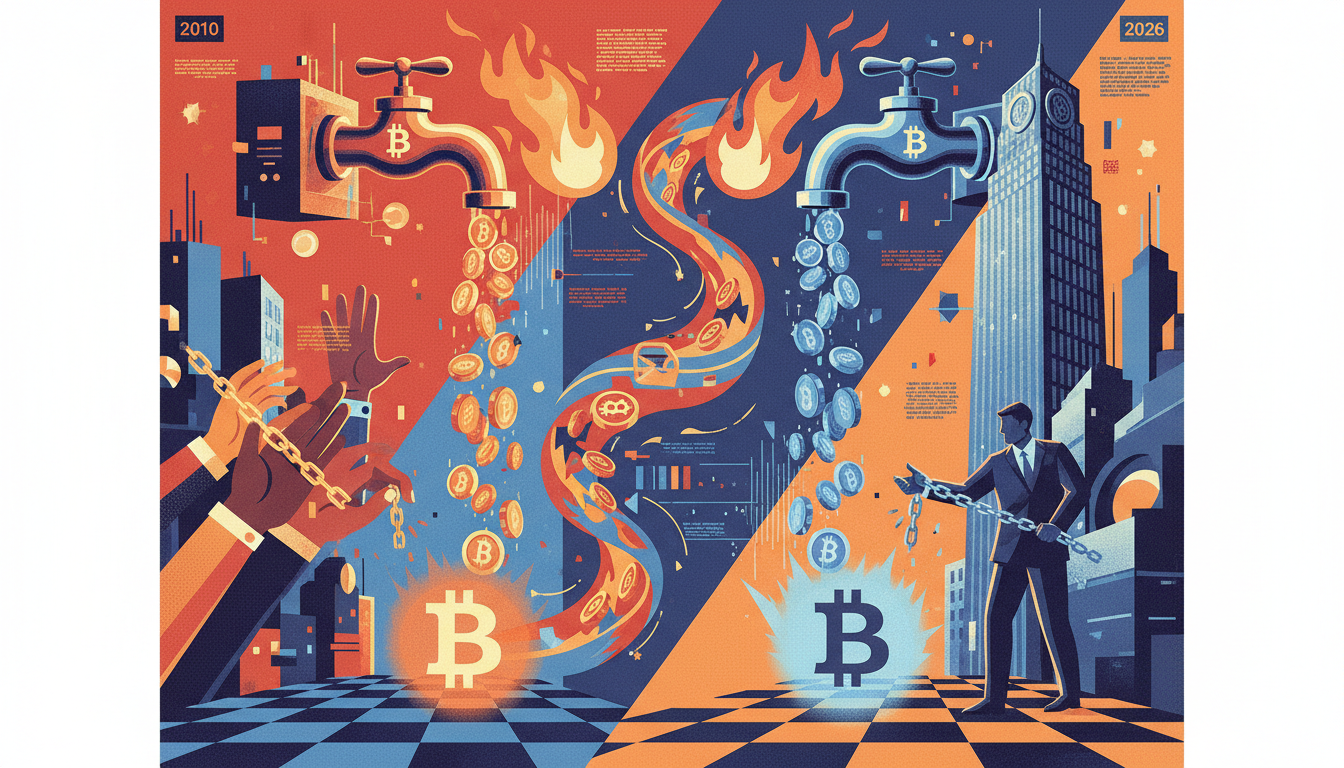
Around geopolitical conflicts, the cryptocurrency market has experienced narrative swings multiple times over the past few years: during periods of tensions in the Middle East or the Russia-Ukraine conflict, mainstream coins such as Bitcoin were once packaged as “digital safe haven assets”, akin to gold, seen as tools to combat sovereign risk and monetary overhang; yet when actual market sell-offs or liquidity shocks occurred, they were often reclassified as high-volatility risk assets, becoming targets for investors to prioritize in selling off to secure cash. This role reversal has never truly settled.
In this round of tense cycles characterized by “ultimatum countdown,” “drone attack on airport,” and “education system impacted,” the cryptocurrency market may reproduce similar patterns in the short term: in the early phase of news fermentation, panic emotions rise, leveraged positions concentrate on risk-off actions, the strong liquidations and funding rate fluctuations in the futures sector may amplify short-term dramatic price swings; while when the market begins to hedge against long-term geopolitical uncertainties, some funds may shift from traditional markets to relatively independent and more easily cross-border flowing cryptocurrency assets, attempting to treat them as “external system assets” to diversify political risk.
In terms of funds, the rapid switching between spot and derivatives often becomes a hallmark of such events: large on-chain transfers and fund migrations between exchanges, combined with concentrated betting on unidirectional movements in the contract market, cause the price to be dramatically pulled within a short time. Meanwhile, oil price fluctuations and the performance of traditional safe-haven assets—such as gold and U.S. Treasury yields—indirectly influence investor pricing sentiment regarding Bitcoin and other assets through macro risk appetite and liquidity expectations. It is important to specifically note that the popular narrative about “oil prices nearing a certain high point” currently remains unverified information. A more prudent approach in analysis is to treat it as directional volatility rather than making fine judgments based on specific numbers.
From Truth Social to Market Panic: Cryptocurrency Amplifiers in the Age of Information Warfare
This time, a key point of contention surrounding Trump's statement of the ultimatum is its platform of expression itself. Multiple leads indicate that the original post suspiciously appears on his own platform, Truth Social, rather than the broader reach of X. The audience structure and information diffusion paths of different platforms create substantial differences in market sentiment: within Truth Social, the audience is more inclined to be “natural allies,” making it easier to unconditionally amplify and believe in hardline language; however, when information enters broader media and social platforms, it often undergoes “secondary processing” in recounting, interpreting, and rebutting, producing starkly different narrative versions.
For example, statements such as “time is running out; hell will descend upon them in 48 hours” are still marked as unverified content from Truth Social posts. For investors, directly quoting such statements and basing positioning decisions on them carries high risks: on one hand, the original text may exist in a different context or may be taken out of context; on the other hand, there is even the possibility of fabricated screenshots or secondarily stitched edits. The rational approach is to cross-check the original text, platform, and surrounding context, and to corroborate with official statements and mainstream media reports rather than being emotionally led by a single channel's “extreme wording.”
In an environment of information asymmetry and rumor-driven dynamics, the cryptocurrency market often acts as a “volatility amplifier”:
● Once a type of “ultimatum” or “war countdown” statement begins to widely circulate within cryptocurrency communities and trading groups, on-chain funds may experience sudden migration, with large wallets rapidly concentrating toward exchanges, aiming to cash out or hedge before potential black swan events.
● The futures and perpetual contract markets will quickly accumulate unidirectional leveraged bets, whether for “war-time safe-haven buying” or “panic selling,” which may drive up leverage ratios within a short time, making it easier for the market to experience violent “long squeezes” or “short squeezes” when news reverses or facts are debunked.
In this structure, the authenticity of information and its dissemination order often become more decisive than the content of the information itself. Any delay in verification or one-sided citations have the potential to transform into significant price fluctuations.
After the Ultimatum: How Will Middle Eastern Risk Premiums Be Priced in the Cryptocurrency Market?
Overall, the current geopolitical tensions arise from three overlapping impulses: first, the “10-day window + 48-hour countdown” ultimatum thrown out by the U.S., directly raising expectations of sudden changes in the Middle Eastern situation; second, Iran's announcement of a large-scale drone attack on Israeli Ben Gurion Airport facilities, indicating a war for critical infrastructure; and third, the humanitarian crisis reflected by the destruction of 763 schools, the casualties of hundreds of students and teachers in Iran over the past 36 days. These three forces intertwine into a complex risk combination that global markets incorporate into pricing with varying weights.
The scenarios ahead can be roughly categorized into two types:
● If, within the 48-hour window Trump claims, the situation begins to ease or key information gets debunked or clarified, the market may retract previously accumulated panic premiums. In this case, the short-term sharp declines or increases in cryptocurrency assets driven by geopolitical news are likely to be “corrected” in a new round of narratives, with funds shifting from extreme positions back to a neutral or slightly risk-off allocation.
● If conflicts escalate further, particularly with new cross-border strikes, maritime passage being blocked, or larger-scale humanitarian disasters, global assets will face a prolonged period of “concurrent safe havens and deleveraging”: part of the funds will flow into traditional safe-haven tools like gold and U.S. Treasury bonds, while another part will passively close positions and reduce leverage, further impacting the valuations of high-volatility assets like Bitcoin. The cryptocurrency market may experience simultaneously “safe haven buying and liquidity withdrawal,” leading to complex market conditions with violent price fluctuations yet no clear direction.
In this era of heightened information noise, investors need to proactively set limits on their positions and leverage: avoiding extreme bets based on unverified “ultimatum details,” single oil price figures, or sensational quotes, and prioritizing the cross-verification of multi-source information—including official channels, mainstream media, and reliable independent observations. During the phase where geopolitical and political narratives dominate pricing, controlling drawdowns and retaining liquidity is often more critical than “hitting the direction of a black swan event once.”
Join our community for discussions and to become stronger together!
Official Telegram community: https://t.me/aicoincn
AiCoin Chinese Twitter: https://x.com/AiCoinzh
OKX Welfare Group: https://aicoin.com/link/chat?cid=l61eM4owQ
Binance Welfare Group: https://aicoin.com/link/chat?cid=ynr7d1P6Z
免责声明:本文章仅代表作者个人观点,不代表本平台的立场和观点。本文章仅供信息分享,不构成对任何人的任何投资建议。用户与作者之间的任何争议,与本平台无关。如网页中刊载的文章或图片涉及侵权,请提供相关的权利证明和身份证明发送邮件到support@aicoin.com,本平台相关工作人员将会进行核查。