On April 4, 2026, amid the continuous tension in the Middle East and the long-standing tug-of-war between the US and Iran, Mohsen Rezaei, a senior official of the Iranian Islamic Revolutionary Guard Corps, chose to shift the battlefield to social media. He publicly refuted the US military's external statement regarding the "destruction of Iran's air defense system" on X, bluntly stating, "They are lying as always," directly questioning the authenticity of the US military briefing. More explosively, he did not confine his criticism to military technology but pointedly stated, “It is Trump who should be ousted, not military commanders,” turning a dispute over military strength and results into a cross-national, cross-domain battle of public opinion and politics.
A single "they lied" tears open the trust gap
Rezaei's core wording on X is very sharp: "They claimed to have destroyed Iran's air defense system; as always, they lied." This statement directly denies the US military's narrative of "destroying Iran's air defense system" while suggesting through "as always" that the US has a systematic and habitual problem of "exaggerating outcomes" or even lying on similar topics. On the surface, this is a dispute over the authenticity of whether "the air defense system has been destroyed," but in essence, it points to: who is the more credible source of battlefield information.
Previously, the US side's statements emphasized technological advantages and strike precision—through official briefings and media reports, they repeatedly conveyed signals of "successfully suppressing Iran's air defense capabilities" and "effectively weakening its counterattack methods." The focus of the controversy lies in whether these descriptions fully present the results or carry a clear propaganda meaning as a one-sided narrative. By publicly dismantling this claim, Rezaei effectively questioned the reliability of the US military's report before a global audience, pushing what could have been a technical debate confined to military experts into a public trial of opinion concerning ordinary people, media, and governments of various countries.
From an information warfare perspective, Iran's move has distinct strategic considerations. Facing the US's discursive advantage in the global media system, if Iran only expressed dissent in closed-door diplomatic venues, it would be hard to shake the existing narrative structure. By having high-ranking officials speak directly on X, using impactful short sentences to rebut the US version, it can immediately stabilize domestic public opinion—sending the message to its citizens and supporters that "our air defense system is still intact, and the US has exaggerated its achievements." At the same time, this public dismantling aims to compete for the "definition of facts" on the international stage, attempting to weaken the US's monopolistic interpretative ability regarding military information.
From battlefield to ballots: Iranian officers overstepping into US domestic politics
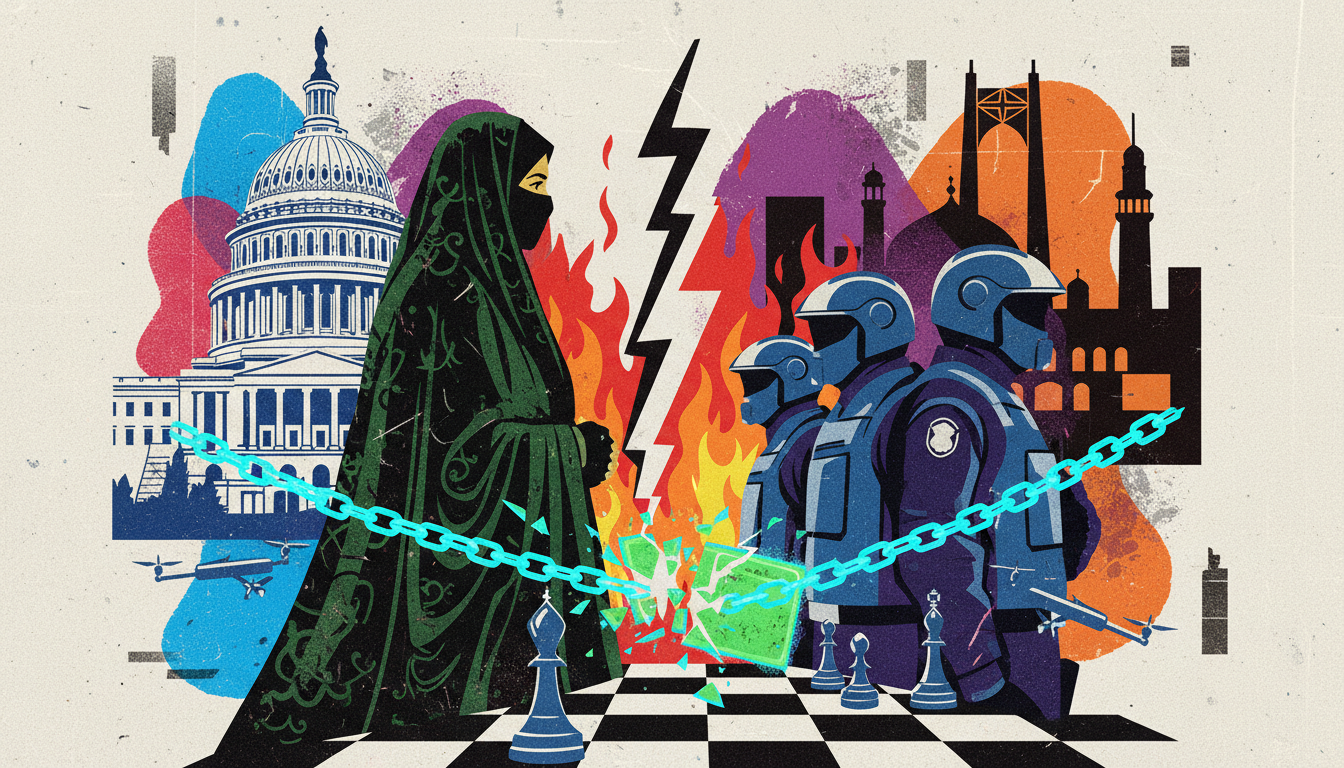
If the attack and defense surrounding the "destruction of the air defense system" still stayed within the realm of traditional military information warfare, then the statement "perhaps it is Trump who should be ousted, not military commanders" clearly crossed the usual boundary. Rezaei's English paraphrase—"Perhaps TRUMP should be ousted, not military commanders"—is no longer just a rebuttal of a military operation's evaluation but directly questions whether the US national leader should continue in office. This wording in fact intervenes in the US domestic discussion about accountability and political responsibility, forcefully inserting the Iranian military's voice into the context of the American electoral battle and power struggle.
In the past, criticisms between countries in public venues mostly pointed to "the US government" or "the Middle East policy of a particular administration," and even sharp criticisms often remained at the macro level of policy direction or military deployments, avoiding outright naming and calling for the ouster of any sitting or former leader. The rarity of Rezaei's statement lies in its almost exclusive use of language structures that would typically be employed by opposition figures within the US, using the incendiary phrase "should oust Trump" to break the traditional diplomatic language’s ambiguity and restraint.
This kind of statement has potential audiences that extend beyond just Iran's domestic sphere or the US decision-making circle. Directed at American voters, it subtly conveys an "external perspective" evaluation: even the senior military officials of an adversary country are questioning Trump’s leadership capabilities and decision-making consequences, which might be used by internal opponents in the US as argument material; directed toward US allies, it attempts to amplify "the strategic risks brought by Trump" at the levels of security and trust, prompting allies to have more concerns when following the US in intervening in Middle Eastern issues; and domestically in Iran, such a strong stance of "daring to name Trump" helps to solidify the legitimacy of a hardline approach, shaping an image of "not only withstanding pressure on the battlefield but also daring to publicly question the highest levels of America in international public opinion."
Rezaei's identity enhancement: Systemic signals behind a tweet
To view this tweet in relation to Rezaei's identity, its weight goes beyond being merely "a netizen's heated expression." Mohsen Rezaei is one of the key figures in the Iranian Islamic Revolutionary Guard Corps, long seen as an important participant in Iran's military-political system and a representative figure with a hardline stance on America. He has previously expressed strong criticisms of US policies and military actions in public forums, providing continuity for this statement: this is not a spontaneous emotional outburst but a latest extension of his consistent line under current new circumstances.
In the Iranian system, public statements from high-ranking members of the Revolutionary Guard are often perceived as a sort of "quasi-official" signal. Although they cannot simply be equated with formal government statements, their representativeness is significantly higher than that of ordinary officers or media commentators. Statements from figures like Rezaei on social media are likely to reflect the dominant judgments within the military—at least indicating that, on the two questions of “how to respond to the US military's narrative of achievements” and “whether to direct criticism at the highest political level in the US,” the hardline approach currently holds the upper hand.
Viewing this statement within the context of the long-term military confrontation and psychological information warfare and propaganda warfare between the US and Iran, it shows a progressive meaning: from the early Gulf blockade and missile exchanges, to later mutual characterizations of tanker attacks and drone shootdowns, and now directly competing on X over "who is telling the truth," the information war between the US and Iran has long since migrated from traditional media and diplomatic talks to an immediate public opinion battle centered on social platforms. Rezaei's tweet represents a new round in this long-standing confrontation model—the front line of information warfare has already extended to every piece of social media dynamic reported by global media.
Chinese and English media relay amplifying this battle of public opinion
A key driver of the event's fermentation is the relay amplification by multilingual media. A number of Chinese financial and technology media, including Jinse Finance, Odaily Planet Daily, and Deep Tide TechFlow, concentrated on April 4 to relay Rezaei's statements on X, highlighting the highly impactful keywords such as "destruction of the air defense system," "they are lying," and "Trump should be ousted." For readers familiar with the discourse ecology in the cryptocurrency and technology circles, these media's dense coverage signifies a rapid cross-border transition from mere geopolitical news into a broader discussion of risk and macro issues.
Compared to the Chinese version, the English media's paraphrase of "Perhaps TRUMP should be ousted, not military commanders" is more politically pointed. On the one hand, the direct quote in English is more easily embedded in the context of American political discourse, allowing domestic and international commentators, think tanks, and even politicians to reference or rework it; on the other hand, this translation and paraphrase amplify the symbolic effect of "a third-party military figure publicly assessing Trump’s continued leadership," upgrading what might have been viewed as "dissatisfaction with the US military report" into a "transnational questioning of Trump's personal legitimacy in governance."
The paraphrase in different contexts is actually reshaping the focus of the event narrative. Chinese media tend to place it within the macro framework of "escalation of tensions in the Middle East" and "resurgence of US-Iran confrontation," with readers focusing more on regional security risks and major power struggles; whereas the communication in the English-speaking world is more likely intertwined with internal topics such as "the US election" and "failures in foreign policy," prompting audiences to understand it as another "backlash against Trump's Iran policies." In this multilingual, multi-platform amplification, the same piece of X content is endowed with different political interpretations and emotional hues, and the global audience's understanding of the same event has been subtly reshaped by their respective discursive environments.
The undiminished smoke of war in the Middle East: a public opinion counteraction against real firepower
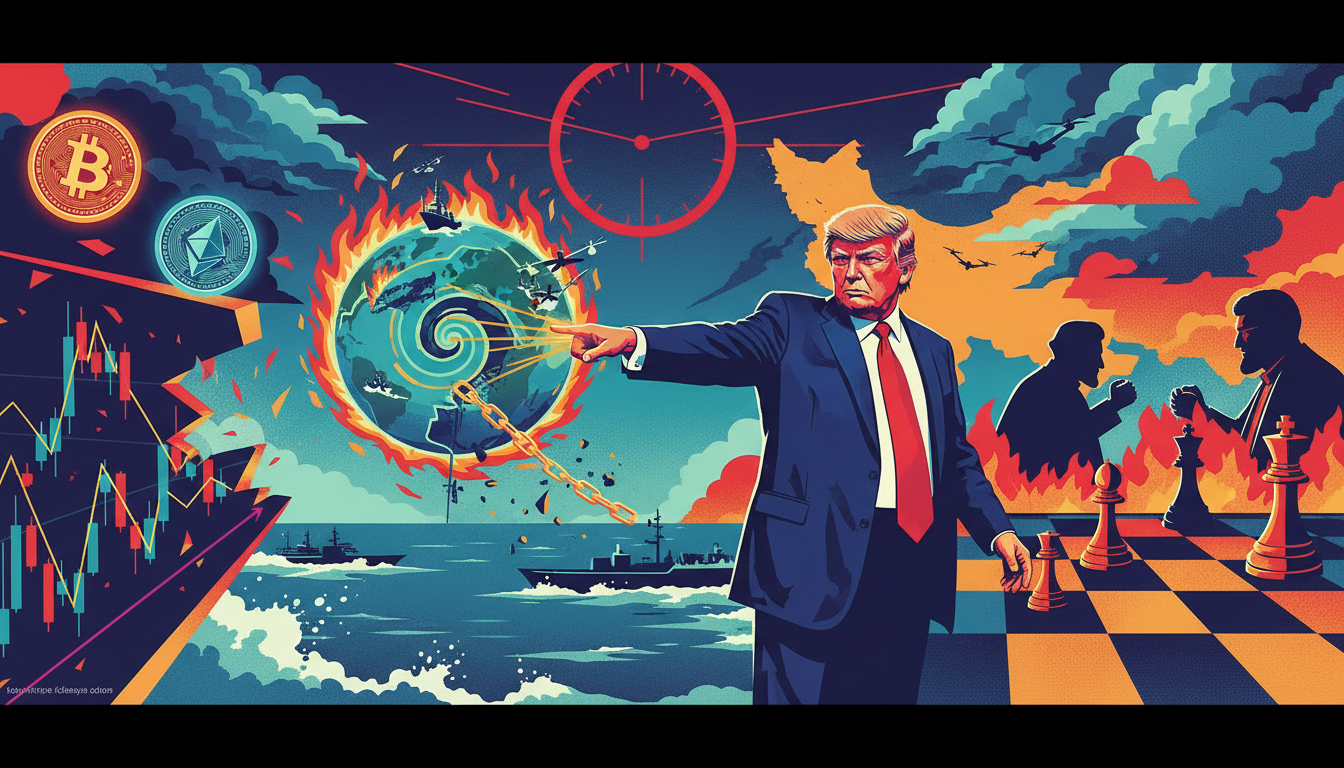
By zooming out to the perspective of the entire Middle East, we can see more clearly: Rezaei's words represent another clash of public opinion hanging over the shadows of war. The current regional tension has not truly cooled down; the US and Iran's power struggle continues across multiple dimensions, including maritime domains, missile and drone offensives and defenses, and regional proxy forces. This tweet ties together "whether the air defense system has been destroyed" and "whether Trump should be ousted," symbolizing that military deterrence and political accountability have been placed in the same public opinion battlefield, where whoever prevails in the narrative has a greater chance of shaping the judgments of other countries' determination and allies' confidence.
In the struggle of "who is telling the truth," social media has become the most direct weapon. For the US, demonstrating "precise suppression" of Iranian military facilities through Department of Defense briefings and accompanying media reports helps to reinforce deterrent narratives both domestically and internationally; for Iran, publicly refuting statements from high-ranking military officials tells opponents and onlookers: "Your strikes have not reached the level you claim; our defensive capabilities and willingness to counterattack still exist." These types of public opinion attacks and defenses regarding "air defense systems, survival capabilities, and costs" ultimately serve the next steps in negotiation leverage, deterrent balances, and even war-edge policies.
However, we remain in a state of severe information asymmetry. On the one hand, the US has not yet provided a clear and direct public response to Rezaei's specific tweet, making it hard for outsiders to judge what type of discussions this has triggered within decision-making circles or whether it will elicit a counter-narrative; on the other hand, details concerning the original sources remain unverified, with discrepancies existing in how various Chinese and English media have paraphrased, translated, and handled headlines. Which sentence is the original quote and which is a processed summary requires cautious discernment. In such a high-frequency information warfare environment, accepting any party's unverified statements can easily lead one into the narrative traps designed by the other side.
After the escalation of information warfare, how will the US and Iran play their cards?
From this event, it can be observed that the confrontation between the US and Iran on military information warfare and political discourse has entered a new stage that is more direct and with blurred boundaries. A senior Iranian Revolutionary Guard official is not only challenging the credibility of the US military's statements on the authenticity of achievements but is also directly commenting on Trump's political fate, indicating that the focus of information warfare has shifted from "who controls air supremacy and air defense" to "who is qualified to lead regional order and who should be accountable for the current tensions." This narrative method that spans both battlefield and ballots elevates the public opinion dimension's importance in future similar conflicts.
Moving forward, the external world needs to pay attention to whether the US will launch its own "counter-narrative" at the appropriate time—this could include releasing more detailed assessments of strikes through defense and diplomatic channels, reinforcing the impression that "Iran is exaggerating" through friendly media, or even exploiting Rezaei's statements in domestic discourse to shape a narrative of which "hostile nation prefers to see which leader ousted." Similarly, Iran may continue to voice its position through officials of varying ranks and media in different languages, refining and upgrading its version to strengthen the collective memory of "we have not been weakened, the US is exaggerating its achievements."
In terms of regional trends, this escalation of information warfare does not necessarily mean an immediate large-scale military conflict will erupt in the short term, but it will continuously raise the risks of misjudgment and emotional decision-making. As each side attempts to use social media and public opinion to suppress opponents and stabilize allies, the space for calm communication is further compressed, and any new military friction could quickly evolve into an uncontrollable political crisis after being amplified in interpretation.
In such a context, the most important point in understanding this incident is to maintain a high degree of caution regarding information sources and extended statements. As of now, rumors about "internal purges" and "high-level accountability chains" that are more dramatic lack reliable evidence and should be treated as unverified information noise; concerning potentially more intense expressions in the Persian original, they should not be easily quoted or disseminated before being repeatedly verified by authoritative sources. For ordinary observers, a more prudent approach would be to continuously monitor authoritative channels and formal responses from multiple sides, placing this X statement back into the overall framework of the long-standing US-Iran negotiations and structural risks in the Middle East, rather than being led by a singular narrative.
Join our community to discuss and become stronger together!
Official Telegram community: https://t.me/aicoincn
AiCoin Chinese Twitter: https://x.com/AiCoinzh
OKX benefit group: https://aicoin.com/link/chat?cid=l61eM4owQ
Binance benefit group: https://aicoin.com/link/chat?cid=ynr7d1P6Z
免责声明:本文章仅代表作者个人观点,不代表本平台的立场和观点。本文章仅供信息分享,不构成对任何人的任何投资建议。用户与作者之间的任何争议,与本平台无关。如网页中刊载的文章或图片涉及侵权,请提供相关的权利证明和身份证明发送邮件到support@aicoin.com,本平台相关工作人员将会进行核查。