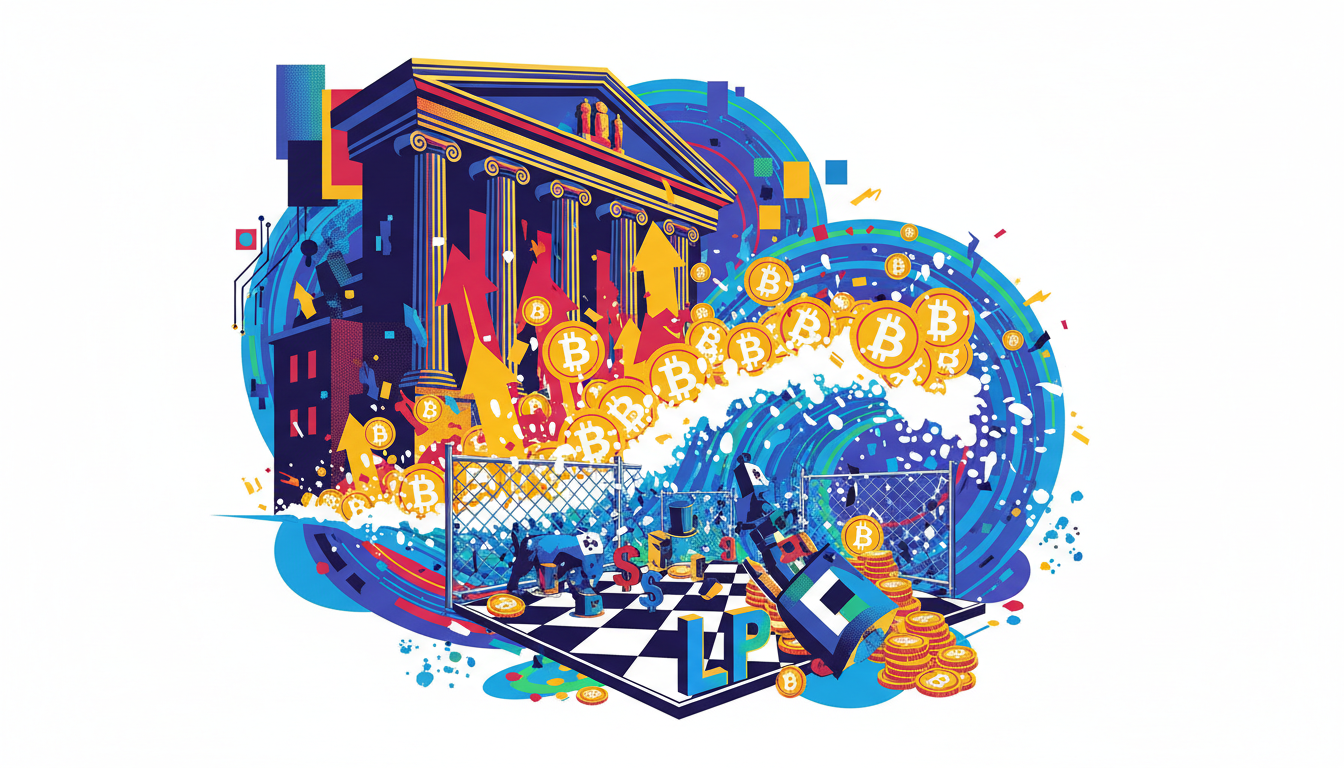
Recently, the decentralized derivatives protocol Drift Protocol in the Solana ecosystem suffered a vulnerability attack, resulting in funds being transferred by unidentified attackers, marking yet another on-chain security incident. Public information shows that the stolen assets are currently concentrated in 4 Ethereum addresses, and the project team has been continuously monitoring and marking these funds on-chain. Unlike many past incidents where projects “suspended operations and then made announcements,” the Drift team proactively sent a communication invitation to the attackers through on-chain messages immediately, bringing the confrontation that was originally hidden within the code and transactions to a transparent on-chain stage. After the security line was breached, how to carry out tracking, pressure, and negotiation on-chain has become the main narrative of this incident.
After the Vulnerability Attack: Drift's Timeline and Tracking Boundaries
According to public reports, this incident has been defined as a “vulnerability attack resulting in stolen funds”, with the attackers exploiting a certain flaw in the protocol to transfer funds from Drift to an externally controlled address. Shortly after the incident, these funds were quickly transferred to 4 ETH wallets, without further large-scale diffusion or mixing, leaving a window for subsequent on-chain tracking and public pressure.
The Drift team then stated through the media that “the team has identified important information related to this attack event”. Such wording often indicates that the protocol party has obtained a certain level of clues through on-chain behavioral analysis, interaction history, or cooperation with regulatory agencies: these could include the flow of funds and historical transaction networks, or connections with centralized platforms or other identifiable addresses, but it is still insufficient to publicly identify or push for judicial outcomes. This stance of “having mastered some information” also sends a signal to the attackers—the completely concealed space is shrinking.
Under the premise of high transparency on the blockchain, the concentration of stolen funds in 4 clearly visible addresses itself constitutes a negotiation chip. On one hand, any subsequent large transfers and mixing attempts will be immediately captured and amplified by on-chain analysis tools and communities, increasing the difficulty and cost for attackers to dispose of the funds; on the other hand, this also buys time for the project team to align compliance reports, exchange cooperation, on-chain marking, and a full set of tracking processes. However, it should be emphasized that currently, the specific amount stolen, technical details of the attack, and the tracing progress of third-party security teams have not been disclosed by authoritative multiple sources, making it impossible for the outside world to make credible quantitative assessments of the loss scale and attack paths; incident analysis must proceed within this information boundary.
On-chain Call to the Hacker: Change in Stance from Pursuit to Negotiation
After grasping preliminary clues, Drift chose to take a route with a more Web3 native character: directly sending messages to the holding addresses on-chain and inviting the attackers to communicate via Blockscan Chat. This means that the project team is not only explaining to users on social media but has targeted the dialogue window towards the actual party in control of the assets, attempting to construct a communication channel “only speaking to the attackers” on-chain.
The motivation behind this approach is relatively clear. Firstly, through public and traceable on-chain communications, seizing narrative control, making the market see that the project is not passively being attacked but actively designing the game framework; secondly, leveraging the time delay and the stage where funds have not yet been completely washed to create space for potential fund return, white-hat style restitution, or partial reconciliation. Drift's official stance on social platforms states that the team “is willing to communicate”, shifting from the initially attacked party to attempting to take a “negotiating” stance with the opponent, a combination of soft and hard approaches intended to convey to the attackers that they face both the risks of accountability and the option of a dignified exit.
Compared to the traditional path of “issuing announcements, filing police reports, and leaving it to law enforcement,” this operation is clearly more aligned with Web3 native game logic. On one hand, the public on-chain communication and the private connections via Blockscan Chat run parallel, moving some communications that could only be conducted in legal letters or private emails into a publicly visible on-chain space; on the other hand, this approach also somewhat bypasses the slow processes of the traditional financial system, utilizing the protocol's own transparency and community attention to directly create psychological and public pressure on the attackers.
Breaking the Security Myth of the Protocol: User Confidence and Overflows in the Sector
The Drift incident has once again brought to the forefront the structural contradictions faced by decentralized derivatives protocols: on one hand, there are considerable protocol revenues brought by high leverage and high liquidity; on the other hand, extremely high potential profits after an attack make it economically incentivizing for attackers to invest time and resources to find vulnerabilities. For such products, the balance between security expenditures and potential attack returns is often difficult to achieve, leading to a long-term “profit-risk” imbalance.
Once funds are stolen and cannot be fully recovered, the impact initially falls on users' risk perception. For participants, account assets may face losses, and even if the project team later compensates through protocol income, fund reserves, or external financing, “whether, when, and in what way compensation will be made” is full of uncertainty, which can erode trust in the product and team over a longer time dimension. The protocol brand will also carry the label of “having been successfully attacked,” facing implicit depreciation in future liquidity competition and partnership negotiations.
In this context, the Drift team's emphasis on having “identified important information” raises a crucial question for users: can this translate into a sense of security? From the user's perspective, such a statement indicates that the protocol party is not completely out of control and is actively tracing and applying pressure; however, on the other hand, due to a lack of concrete progress and absence of clear actions from judicial or regulatory levels, this information mainly remains at the level of “emotional reassurance” and “pressure signals,” still distant from genuine asset security.
Widening the view to the Solana ecosystem and derivatives sector, the impact of single-point incidents often rapidly spreads through community discourse and liquidity. Some liquidity providers and professional traders may adjust their positions in the short term, reducing their capital exposure in similar protocol sectors; new projects in financing and launch phases might also face frequent inquiries about security audits and emergency plans. To a certain extent, this overflow effect forces the entire sector to reevaluate the balance between security investments, attack incentives, and product design, but in the short term, fluctuations in confidence and a contraction of risk appetite are also an unavoidable chain reaction.
Tracking, Settlement, or Litigation: Multiple Outcomes Under On-chain Evidence
Based on past experiences of similar incidents, there are generally a few common paths for the destination of funds after an on-chain attack: one is that the attacker, identifying as a “white hat,” returns all or a majority of the funds under pressure, receiving only a previously agreed “bug bounty”; another is reaching partial settlements through multiple rounds of negotiation, where the attacker retains a certain proportion of the assets as profit and returns the rest to users or the protocol; a third scenario involves the attacker “lying low” for a long time, allowing the funds to sleep on-chain, waiting for future environmental changes before attempting to wash them in batches; the fourth, more extreme scenario sees the funds quickly dispersed via mixers, cross-chain bridges, and black market transactions, completely entering an underground gray system.
Without fabricating any specific plans, it can be observed from public information that Drift is currently both claiming to have “mastered important information” and simultaneously releasing signals of “willingness to communicate” through multiple channels, which seems to reserve space for the three frameworks of “settlement—accountability—long-term deadlock”: if the attacker assesses that the risks and costs are too high after weighing, they might choose to return a portion or a large proportion of the funds; if they have sufficient confidence in their concealment, they may gamble on a long-term confrontation, leading the incident into a slow variable stage of judicial and regulatory deadlock.
In this process, on-chain evidence, regulatory pressure, and judicial intervention will directly alter the attacker’s cost-benefit calculations. The inherent traceability of on-chain transaction records provides fragments of puzzle pieces for regulation and law enforcement when intersecting with KYC platform addresses or real identities; at the same time, as more jurisdictions increase their pursuit of crimes involving crypto assets, the enhancement of cross-border collaboration and blacklist mechanisms has also significantly raised the risks associated with “long-term holding of marked assets.” For the Drift incident, the concentration of stolen funds in a few addresses and the possession of partial relevant information make “negotiation” no longer merely a superficial gesture but a realistic option that the attackers can rationally include in their decision-making models.
A Public Game: The Psychological War Between Attackers and Protocol Parties
From the attacker’s perspective, the current situation exhibits typical “high reward—high exposure” characteristics: on one hand, they control a significant quantity of on-chain assets; on the other hand, these assets are clearly marked as obtained through attack, under full network monitoring, where every transfer, split, or even attempt to enter centralized platforms could leave new clues. As time progresses, advancements in technical tracing capabilities and judicial collaboration networks also continuously elevate the likelihood and cost of facing future accountability.
For the project team, the strategy is more pragmatic: without the ability to predict the final recoverable proportion, the primary goal is to maximize recoverable chips while controlling the secondary damage of the incident on the protocol's daily operations and user confidence. Through public communication, on-chain marking, and statements of “having mastered important information,” Drift is shaping the context of “you are not completely safe”; simultaneously, they provide the attackers with a downward protection that leads from extreme confrontation to some degree of settlement.
This public communication serves not only to influence the negotiation psychology between both sides but also produces spillover effects within community discourse and potential imitators. For other possible attackers, it offers a view of how a protocol, upon facing an attack, can utilize on-chain transparency and software tools to publicize and trace the game process, thereby raising the psychological threshold for similar future behaviors. For ordinary users and liquidity providers, the frequent on-screen messages can easily be amplified in emotions when information is still incomplete, interpreting “uncertain facts” as “worst outcomes,” leading to cascading confidence fluctuations.
Therefore, in the current stage where many key data are still undisclosed and investigations are ongoing, market participants need to remain vigilant against various second-hand messages and emotional interpretations: not overly amplifying the most pessimistic assumptions nor easily concluding “the situation is under control” due to positive signals released by the project team. Real progress must ultimately be measured by on-chain fund flows, official updates, and potential judicial actions.
After the Crisis: The Next Steps for Drift and On-chain Security Governance
Overall, this incident poses a dual test for Drift: the first is the most intuitive security of code and architecture, specifically how to minimize the exploitable attack surface under the complex logic of derivatives; the second, more long-term and often underestimated, is crisis response and negotiation capabilities, including the rhythm of information disclosure, strategy design for competing with attackers, and transparency in communication with users and partners. These two lines collectively determine whether the protocol will face a rapid fall or a difficult rebalance after encountering a black swan event.
Before the specific amount stolen and technical methods are officially detailed, the outside world's judgments about the final impact of the incident should maintain a cautious boundary. Whether it's the optimistic scenario of “completely recovering” or the pessimistic forecast of “losing everything,” there is currently a lack of sufficient data support, and any conclusions that exceed public facts are more emotional projections than reliable analyses.
It is foreseeable that regardless of whether the funds can ultimately be recovered, and to what extent, this incident will generate ongoing pressure effects within the industry: the protocol party needs to reevaluate the depth of security audits, attack response plans, and the connection to compliance and judicial systems; investors and users, when assessing new projects, will also pay more attention to their response processes in extreme scenarios rather than only focusing on high returns, low slippage, and beautiful interfaces. For developers, “post-event handling capability” is transforming from an option into a core configuration; for users, incorporating the team’s transparency, negotiation capability, and accountability during a crisis into key dimensions of project selection may be one of the most realistic takeaways from this incident.
Join our community to discuss and become stronger together!
Official Telegram group: https://t.me/aicoincn
AiCoin Chinese Twitter: https://x.com/AiCoinzh
OKX benefits group: https://aicoin.com/link/chat?cid=l61eM4owQ
Binance benefits group: https://aicoin.com/link/chat?cid=ynr7d1P6Z
免责声明:本文章仅代表作者个人观点,不代表本平台的立场和观点。本文章仅供信息分享,不构成对任何人的任何投资建议。用户与作者之间的任何争议,与本平台无关。如网页中刊载的文章或图片涉及侵权,请提供相关的权利证明和身份证明发送邮件到support@aicoin.com,本平台相关工作人员将会进行核查。