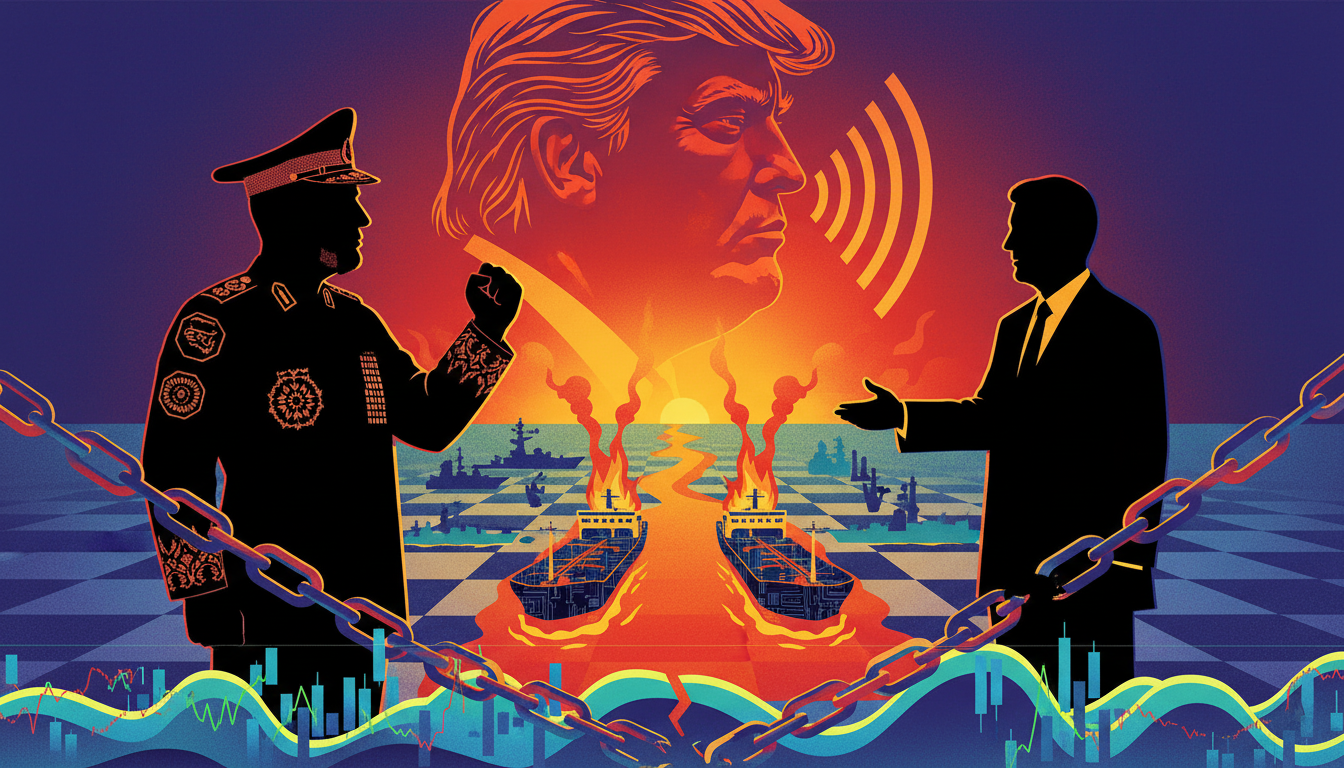
In late March 2026, OpenClaw v2026.3.31 was released, bundling support for QQ Bot, linking one end to China's national social entry point and the other to global cryptocurrency infrastructure. On the same timeline, controversy erupted within the EU over a proposal to centralize cryptocurrency regulatory authority, with the small nation represented by Malta openly expressing opposition, fearing loss of its advantages in licensing and regulation. The technology system expands eastward while regulatory power consolidates in the west; these two seemingly unrelated strands are converging within the same industry, raising the question: how will the simultaneous changes in China's entry and European regulations reshape the space and order of the cryptocurrency industry?
The Technical Entry of OpenClaw Binding QQ
In the v2026.3.31 version, OpenClaw packaged QQ Bot support directly into the main version, choosing a technical pathway that integrates through SDK, supporting multiple account configurations. For developers, this means they can embed OpenClaw capabilities into multiple group or service accounts at a lower cost on top of the existing QQ account system, without waiting for the platform to provide more robust native capabilities. This method of “using SDK to enter an existing entry point” is regarded by many industry insiders as a key move for entering the Chinese scene—not first discussing brand collaboration, but rather placing tools in the developers' hands first.
Citations from research briefs indicate that “the QQ Bot integration of OpenClaw has gained certain attention among Chinese developers and the cloud ecosystem”. This attention primarily comes from two types of users: one is development teams already active in the cloud vendor and automation tools ecosystem, using QQ Bot as a new outreach channel for building market alerts, automated risk control, or strategy backtest notifications; the other consists of individuals and small teams focused on community operations, looking to use bots to carry education, customer service, and simple interactions in high-frequency social scenarios. Early adopters are mainly users with a strong technical background and a basic understanding of regulatory boundaries, but their exploratory access has accumulated practical samples for larger-scale usage to come.
Considering QQ's long-maintained large user base and high daily activity, its social entry attribute acts as a natural amplifier for any set of protocols or tools. OpenClaw's entry into this ecosystem through Bot could, once the habit of having an “OpenClaw Bot by default in groups” forms in several vertical scenarios, drive synchronized increases in protocol call frequency and developer demand. For a project that originally focuses on infrastructure and toolchains, QQ offers a testing ground that covers more down-market users: community growth, protocol usage rates, and the subsequent value-added services built around the Bot will all be amplified, but with amplified opportunities come amplified risks as well.
Running in the Regulatory Gray Zone: QQ Remains Silent
So far, available information has not shown that QQ has made any formal statements regarding this OpenClaw integration, nor have there been clear actions from the platform at the product level to specifically support or block it. It must be emphasized that at the current stage, all discussions can only remain within the dimension of “integrating third-party Bots through SDK” and cannot, nor should, extrapolate any implicit commitment to platform-level native access—this point has been explicitly listed as a forbidden area in the research briefs. This “neither affirmed nor denied” silence places all third-party explorations in a usable but fragile gray space.
Integrating Bots related to cryptocurrency assets within a national-level social platform naturally involves threefold pressure. The first is content review: when Bots can disseminate price information, project news, and even trading guidance, how existing platform content supervision rules adapt—whether vaguely applying “financial” norms or delineating specific standards for “on-chain assets”—directly affects the Bots' ability to operate steadily over time. The second is data compliance: Bot integration means that message data, group structures, and user behavior are consumed by more third-party services. Current data security and personal information protection rules in China require clearer data boundaries and storage norms, imposing additional responsibilities on infrastructure providers. The third is potential KYC requirements: once Bot functions approach custody or matching, regulators may introduce identity verification requirements, forcing currently “light access” forms to evolve towards heavier compliance processes.
Looking at the longer term, China has consistently maintained a regulatory attitude of “function visible, asset invisible”: technology and efficiency can be discussed and experimented with, but aspects involving asset issuance, redemption, and speculation are tightly constrained within strict boundaries. The QQ Bot of OpenClaw essentially treads this boundary: it provides tools and interfaces to help users perform operations in the external world rather than directly launching asset activities within QQ. Its growth space comes from functional exploration and scenario innovation, while its constraints stem from the risk of encountering more intense regulation and platform intervention once it touches the asset layer. For OpenClaw, this means finding a balance between “multi-entry” and “remaining lightweight,” responding to compliance expectations through configurable and disengageable technology.
The EU Wants to Centralize, Malta Doesn’t Want to Let Go
In contrast to the exploratory entry point from the east, discussions in Western Europe revolve around who has the authority to formulate and enforce rules. The EU is discussing a proposal for centralized cryptocurrency regulatory authority, intending to gather licenses and supervisory powers previously scattered among member states more at the EU level, thus constructing a cryptocurrency market framework with more unified standards and smoother cross-border regulation. This means that certain previously reliance on domestic regulatory agencies for “single-point clearance” models will be incorporated into a more unified EU-level evaluation and collaboration system, weakening member states’ latitude in formulating details and interpreting gray areas.
This power restructuring is particularly sensitive for small member states represented by Malta. Insights noted in the research brief pointed out that, “Malta will be forced to relinquish direct regulatory authority over cryptocurrency institutions including Crypto.com and Gemini”. For these countries, the cryptocurrency institutions attracted over the years through relatively active and flexible licensing policies are not only sources of tax revenue but also pivotal points for financial and technological industry upgrades. Once regulatory powers are centralized, their competitive advantages may be diluted to “EU average levels,” and the “service spillover” model formed through local regulatory standards will face rewriting.
If EU-level centralization progresses, cryptocurrency institutions will see reallocation of licenses and costs in three areas. First, revaluation of license value structure: the relative attractiveness of single member state licenses will decline, and EU-level licenses designated as “passport licenses” will be repriced, becoming core assets for entering the entire regional market. Second, changing logic for choosing business locations: projects will no longer solely consider the friendliness of a particular small country but will need to balance the overall regulatory orientation, talent, and infrastructure resources across the EU; the traditional strategy of “selecting the country with the loosest regulation as a springboard” will be weakened. Third, compliance costs will shift from points to areas: compliance teams that previously operated before a single regulatory body will need to adapt to a more unified but complex set of EU rules, with compliance budgets shifting more towards cross-regional coordination and legal interpretation costs.
Intersection of Eastern Technological Expansion and Western Regulatory Contraction
Within this macro context, certain derivatives and contract platforms are accelerating expansion in the gaps. Research briefs cite data from a single source indicating that Hyperliquid's revenue reached 61.4 million USD in March 2026; in the still unclear global regulatory landscape, such numbers themselves are a response to “regulatory vacuum” and “rule discrepancies.” Behind the high yields lie the platform's search for gray spaces among different jurisdictions, weaving between incomplete regulatory systems; this model is efficient in the short term yet amplifies adjustment costs when policies tighten in the future.
In contrast to these platforms “sprinting in the gaps,” China's approach leans more towards “soft entry”: through toolchains and developer ecosystems like OpenClaw, it roots itself in existing platforms, using technical integration and scenario innovation as drivers to embed on-chain capabilities into the fine corners of local digital life. This method avoids directly challenging asset regulatory boundaries while steadily advancing in the minds of entry points and developers. In contrast, the EU's approach is closer to a “hard constraint” path—centralizing regulatory authority and standardizing applicable criteria to consolidate fragmented national-level experimental fields into a unified market, sacrificing some flexibility for overall controllability and cross-border consistency.
As exchanges and contract platforms simultaneously plan for China's traffic entry and the EU's unified regulation, a new round of business migration and license arbitrage logic will emerge. On one hand, targeting Chinese users, they may be more willing to establish a presence through lightweight Bots, data interfaces, and educational tools first, placing real functions touching the asset layer in products with clearer regulations abroad or locally; on the other hand, facing the EU, they will need to make more detailed configurations between “where to physically establish” and “which regulatory level to apply for a license,” possibly resulting in a “dual structure”: one set of architecture aligning with EU unified rules, another targeting still relatively independent regions to minimize compliance friction and allow for adjustment space.
From QQ Bot to EU Meetings: Unfinished Paths
Looking ahead along the current trends, OpenClaw faces roughly two pathways in the Chinese scene. The first is continued penetration: gradually becoming the “default access component for developers” with Bots as the frontend and open interfaces as the backend across more cities, vertical industries, and types of QQ communities. This path would significantly enhance its infrastructure status in the Chinese developer ecosystem but also requires higher engineering and compliance costs in content filtering, risk control interfaces, and data governance to adapt to possibly elevated platform and regulatory demands. The second is platform tightening: if the platform assesses that relevant Bots touch sensitive areas or pose excessive compliance risks, it may compress their operational space through interface restrictions, strengthened reviews, or strategic adjustments. For developers, this would amplify “platform risks,” prompting them to add multiple entrance and platform backups in architecture design and weaken reliance on single channels.
On the European side, discussions around regulatory centralization are equally far from settled. Following the constraints of the research brief, we cannot and should not make any predictions about the specific progress or final outcome of the EU proposal, but it is foreseeable that small countries represented by Malta will not passively wait for outcomes when their core interests are at stake. They may seek “exception clauses” or transitional arrangements within the EU through lobbying and negotiation, maintaining some of their domestic regulatory discretion; they may also promote compliance innovation, such as refining asset classification, risk-tiered regulation, or sandbox mechanisms, to demonstrate the continued value and experimental significance of the “small country model” within the overall framework.
Considering the two pathways of China and the EU, a mid-term judgment that can be made is: the technical side will continue to seek the highest user density and interaction frequency entry points, whether that is a social platform like QQ or other local “super apps”; while the regulatory side will redefine the tolerable innovation boundaries through concentration of power and cross-border cooperation frameworks. The relationship between entry points and rules is not merely adversarial; it is a dynamic game—where the former continuously probes and expands, and the latter continuously summarizes and tightens, both shaping the industry's form and focus in the coming years.
The Battle for Entry and Regulation: Who Will Concede
Returning to the initial two lines: OpenClaw's entry into China through QQ and the EU's attempt to centralize cryptocurrency regulatory powers actually share the same theme—who can control the entry points and who can allocate power. The former is about controlling traffic entry and developer access through technical integration, embedding itself in the daily use of national-level products; the latter involves controlling institutional entry and license entry by reallocating regulatory powers to redefine “who is qualified to do business here.” Within the cryptocurrency industry, these two control logics are accelerating simultaneously, intersecting in trading platforms, development tools, and user behaviors to create complex effects.
The current uncertainties mainly center around two points: first is platform attitudes—how major platforms like QQ will redraw the lines between risk control and innovation tolerance, which will directly affect how far and deep technical solutions like OpenClaw can go in China; second is the EU legislative and negotiation process—even though we intentionally avoid providing any specific time points, the interaction rhythm, wording adjustments, and supporting details among committees, member states, and industries will all become important signals for judging the future regulatory environment. For readers, what needs more attention is “what types of changes will occur”—for example, authority centralization, license grading, and interface openness—rather than fixating on a specific date.
For institutions and developers, the real insight is: in a period of simultaneous radical changes in regulation and technology, reserving technical and compliance options for multiple jurisdictions and platforms is shifting from being a “plus factor” to becoming a “condition of survival.” In terms of technical architecture, excessive binding to a single platform entrance or single jurisdictional regulatory pathway should be avoided, maintaining the portability of Bots, APIs, and frontend access; in terms of compliance strategy, different product versions and data flow solutions under various regions and regulatory levels should be designed early to allow for quick switching when rules tighten or entrances shrink. The battles of entry and regulation will not see a “judgment of victory or defeat” in the short term; the ones truly needing to make choices are the builders and participants standing in the middle ground.
Join our community, let’s discuss and grow stronger together!
Official Telegram community: https://t.me/aicoincn
AiCoin Chinese Twitter: https://x.com/AiCoinzh
OKX Benefit Group: https://aicoin.com/link/chat?cid=l61eM4owQ
Binance Benefit Group: https://aicoin.com/link/chat?cid=ynr7d1P6Z
免责声明:本文章仅代表作者个人观点,不代表本平台的立场和观点。本文章仅供信息分享,不构成对任何人的任何投资建议。用户与作者之间的任何争议,与本平台无关。如网页中刊载的文章或图片涉及侵权,请提供相关的权利证明和身份证明发送邮件到support@aicoin.com,本平台相关工作人员将会进行核查。