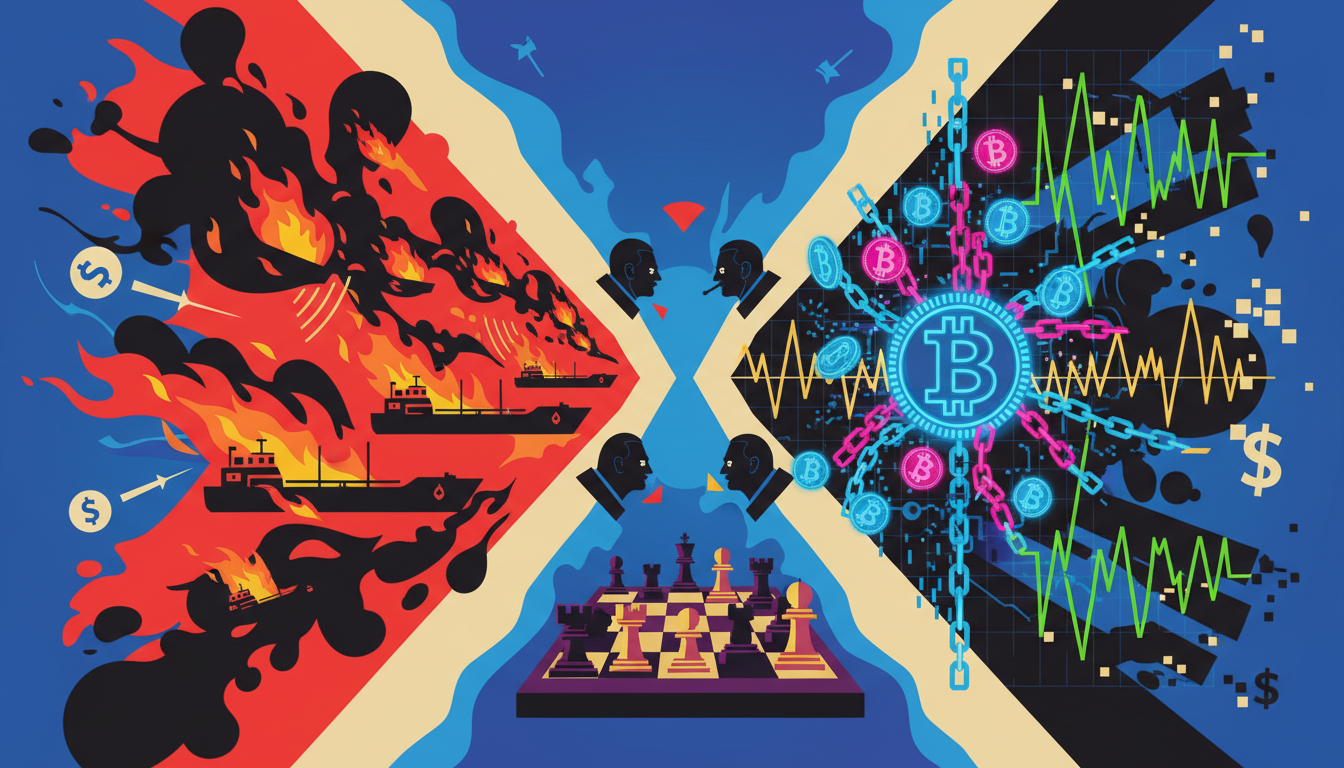
On April 1, 2026, in the evening of East 8 Time, the Vice Speaker of the Iranian Parliament sent a strong signal to the media: the Strait of Hormuz will not be opened, there will be no negotiations, and there will not be any negotiations in the future. This statement was quickly cited by Golden Finance, alongside reports from New Delhi Television, and echoed by multiple cryptocurrency and finance media. More critically, the Iranian side explicitly emphasized that the ultimate decision-making power regarding war, peace, and negotiations is entirely in the hands of the Supreme Leader, and no authorization regarding negotiations for passage through the Strait has currently been granted. The right of passage through the Strait is highly concentrated under a single authority, fundamentally eliminating the imagination of "technical consultations" and "temporary easing" in a short period. The question then arises: how will this unambiguous hard-line statement penetrate the expectation management of traditional energy and bulk commodity markets, ultimately leaving a mark in the sentiment and pricing of cryptocurrency assets?
Iran's Hard Stance: Closing the Strait and Narrative Expansion
According to Golden Finance citing reports from New Delhi Television, the Vice Speaker of the Iranian Parliament's exact words were: “The Strait of Hormuz will not be opened, we have not held any negotiations, and we will not do so in the future.” This is not an anonymous tip or a so-called insider leak; it is a public statement that can be cross-verified by multiple parties. Crypto media such as Rhythm and TechFlow subsequently reframed it with headlines like "The Strait of Hormuz will not be opened" and "No negotiation records or future negotiation plans," turning this statement, originally belonging to a traditional geopolitical context, into a narrative within the crypto realm.
Even more noteworthy is that, almost simultaneously, multiple media emphasized another key piece of information - “The decision-making power regarding war, peace, and negotiations lies in the hands of the Supreme Leader.” This implies that the releases from the Parliament, the Vice Speaker, and the diplomatic system are more about emotions and attitudes, rather than immediately operable policy options. The extreme concentration of decision-making power has reinforced the external perception that the current stance is "unmovable in the short term": as long as the Supreme Leader has not issued negotiation permission, all imaginings of “technical passage arrangements” and “limited opening windows” remain at the noise level.
The path of this statement from Tehran to the crypto world is very clear: it first emerges from local and regional television media, then captured by Chinese information platforms like Golden Finance, followed by crypto media such as Rhythm and TechFlow, using high-emotion keywords like “Hormuz,” “Closing the Strait,” and “No Negotiations” to create headlines, while mainstream financial media include it alongside stories of “oil prices, geopolitical conflicts, and risk assets.” The result is that the same piece of news is shaped into two topics in different information fields: on the traditional finance side, it is a story of oil prices, inflation, and shipping risks; on the crypto side, it is quickly translated into a potential trigger for “a new round of geopolitical black swan” and “the possible activation of safe-haven transactions.”
The Energy Throat is Blocked: From Tanker Risks to Asset Repricing
The Strait of Hormuz itself is a geographical term with strong symbolic meaning. Even without citing specific transport volume ratios, it is widely seen as the throat of global oil and energy shipping — once the right of passage is artificially tightened or overshadowed by the threat of war, imagined scenarios of tankers queuing, soaring insurance rates, and increased detour costs can sufficiently constitute a "script template" for market sentiment. This time, Iranian leaders pushed the potential risk from "hypothesis" to "background noise with high probability of continuous existence" by stating it as “will not open” and “will not negotiate in the future.”
In terms of pricing logic, the market's first reaction to "blockade risks" is often not to wait for real disruption data or to count the number of tankers but to first raise expectations. The implied path of oil prices is: once the Strait is viewed as an “unstable passage,” supply uncertainty will be converted into a consensus of “oil prices may rise,” which in turn elevates mid- and long-term inflation concerns. As inflation expectations rise, traditional safe-haven assets (including some commodities, government bonds, and even some currencies) become the first choice for quick capital inflow, while risk assets seek a new equilibrium amid the pulls of "profit improvement" and "rising financing costs."
Historical instances of geopolitical conflict have confirmed similar chains: from tensions in the Middle East to war among resource-exporting countries, each uncertainty in energy supply will first explode volatility in crude oil and related derivatives before spreading to the stock market and foreign exchange market, ultimately extending to crypto assets. In such scenarios, the crypto market often bears the demand for “inflation hedging” while being labeled as “risk assets,” leading to a pronounced “resonance amplification” in price paths: areas of intensified volatility in traditional assets often serve as starting points for surges in crypto trading volume and volatility.
Crypto Market Emotional Relay: From Crude Oil to On-Chain Hedging
After the news of “the Strait will not be opened” trended, the immediate feedback from the crypto community reflected primarily on two dimensions: first, the mention frequency of keywords such as "Hormuz," "Strait," and "Middle East" in social media topics significantly increased, and were highly co-occurring with phrases like "Bitcoin," "BTC," and "safe haven"; second, sentiment indicators and public opinion direction rapidly switched from early discussions of “halving, ETF, narrative rotations” to a side issue of “geopolitical conflict → inflation expectations → safe-haven demand.” Some traders on Twitter and Telegram channels classified this news directly as “potential hedging catalysts” and began discussing “if oil prices surge and the stock market faces pressure, will BTC replicate its previous safe-haven story?”
Historically, under conditions of geopolitical conflict, the typical path of Bitcoin is to first amplify volatility briefly after the news is released, entering a phase of “seeking direction” with both sharp rises and drops; subsequently, if the traditional markets indeed enter a hedging mode, Bitcoin often emerges with a relatively strong trend accompanied by enlarged trading volumes. Ethereum, on the other hand, is more constrained by its own technical and ecological narratives, showing slightly less sensitivity to geopolitical events, but it will still passively accommodate liquidity inflows and outflows within the entire risk asset basket.
Tokens related to energy narratives often play the role of leveraged emotional amplifiers in similar news. Once “energy,” “oil prices,” and “war supply chains” become the market focus, these tokens can easily experience drastic fluctuations of significant increases and retreats within a single day, reflecting more the short-term speculative betting of thematic funds rather than a reassessment of fundamental value.
The potential chain of capital migration can be roughly outlined: when the traditional market experiences hedging sentiment spillover at energy and stock futures levels, some capital will first turn to assets viewed as “stores of value,” and then redistribute within the crypto market based on their own risk preferences. Among them, some funds will choose on-chain assets pegged to fiat currencies as a “parking lot,” utilizing on-chain transfer advantages for flexible deployment; another portion will directly flow into Bitcoin, Ethereum, and other mainstream coins, viewing them as “risk hedging tools that can flow globally 24 hours.” Ultimately, under the impact of repeated geopolitical noise, the crypto market establishes its own inertia structure of “following, amplifying, and rebalancing.”
Power and Information Game: Tehran's Statement and Dual Audience
The phrase “will not open, and will not negotiate” can be understood as both a policy bottom line and a dual signal designed for external pressure and internal mobilization. Externally, before the negotiation table has officially been set, a hard-line statement raises the potential negotiation threshold, showing opponents "do not expect negotiations without being prepared to pay sufficient costs"; internally, it serves as a declaration of stance for the public and political elite, reinforcing the community narrative that “sovereignty and security are non-negotiable,” while compressing space for internal doubts and moderate compromises. Whether it is a final declaration or a posture management before subsequent negotiations is difficult to qualify under the current informational conditions, but it is confirmed that its communication effect far exceeds its immediate policy efficacy.
The timing of the publication is also subtle. The date of April 1 carries the symbol of “April Fools’ Day” in the global media context, but applying this symbol directly to the high-pressure geopolitical context of the Middle East carries a serious risk of misinterpretation. Whether it is the internal political rhythm of Iran or the timeline of regional diplomacy, they are far more complex than a “holiday meme.” Viewing this statement as “jokingly spoken” clearly underestimates the sensitivity of the Strait of Hormuz in the global energy system and overlooks the critical fact that the Supreme Leader monopolizes decision-making power.
Even more contrasting are the differences in narrative emphasis among various media. In the headlines of traditional international and financial media, “war risks,” “energy corridors,” and “oil price reactions” often occupy center stage, guiding readers to consider: will this push up oil prices, worsen inflation, and drag down global growth? In contrast, the logic of crypto media tends to approach from “black swan,” “safe-haven transactions,” and “asset repricing opportunities,” translating the same event into asset allocation issues. For traditional audiences, the Strait of Hormuz is a vulnerable node of globalization; for the crypto audience, it is gradually being shaped into “a risk variable that can respond through on-chain positions.”
How Crypto Faces Long-Term Geopolitical Noise and Pricing Power Boundaries
In summary, Iran's hard statement concerning the Strait of Hormuz is more reflected in the realm of risk premium and expectation management regarding its impact on the real market, rather than immediately changing the physical reality of energy supply. Whether the Strait truly experiences large-scale disruption and whether tankers are forced to detour for the long term will require time and data validation; however, before the data arrives, the market preemptively prices the stance of “not opening, not negotiating,” causing oil prices, inflation expectations, and hedging demand to “take off” psychologically in advance. Crypto assets, amid expectations-driven volatility, are passively pulled into the repricing process on the global risk map.
For crypto traders, it is vital to be particularly cautious not to simplify geopolitical conflicts into a one-way narrative of “the price must rise”. At certain stages, Bitcoin does exhibit similar hedging properties to gold, but in other more extreme shocks, global liquidity contraction and sudden drops in risk appetite can also lead to “indiscriminate selling,” and crypto assets do not automatically benefit from “rising during turmoil.” Short-term emotional volatility can certainly amplify returns but also increases the costs of directional misjudgments; mid-to-long-term pricing still relies on more solid fundamental factors like macro liquidity, regulatory environments, and genuine on-chain business demand.
Looking ahead, similar geopolitical “black swan” events like Hormuz may appear with greater frequency in the narratives of global asset prices. The role of crypto assets in this landscape is evolving from merely being “high beta risk assets” to gradually becoming tools that can independently bear some inflation and political risks. However, the boundaries of pricing discourse authority they can obtain remain clear: what truly determines energy, currency, and security orders are still sovereign states and traditional financial systems; the crypto market focuses more on repricing expectations, sentiment, and liquidity in the gaps after these forces clash. Understanding this boundary is both a respect for risk and the first step toward the genuine maturation of this emerging market.
Join our community, let’s discuss and become stronger together!
Official Telegram community: https://t.me/aicoincn
AiCoin Chinese Twitter: https://x.com/AiCoinzh
OKX benefit group: https://aicoin.com/link/chat?cid=l61eM4owQ
Binance benefit group: https://aicoin.com/link/chat?cid=ynr7d1P6Z
免责声明:本文章仅代表作者个人观点,不代表本平台的立场和观点。本文章仅供信息分享,不构成对任何人的任何投资建议。用户与作者之间的任何争议,与本平台无关。如网页中刊载的文章或图片涉及侵权,请提供相关的权利证明和身份证明发送邮件到support@aicoin.com,本平台相关工作人员将会进行核查。