Written by: Demir
Google just published a paper that has shocked the crypto community.
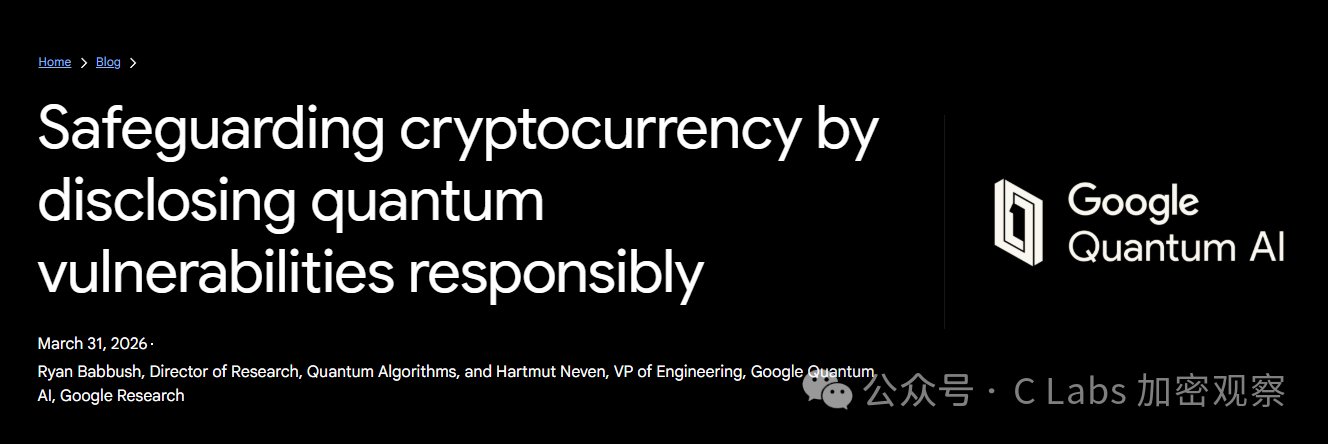
Here is the link to the paper, but friends outside of academia just need to remember the conclusion: Quantum computers can crack Bitcoin 20 times easier than everyone thinks.
The security logic of Bitcoin wallets is based on a mathematical problem:
You can generate a public key from a private key; but to derive the private key from a public key, a regular computer would take thousands of years.
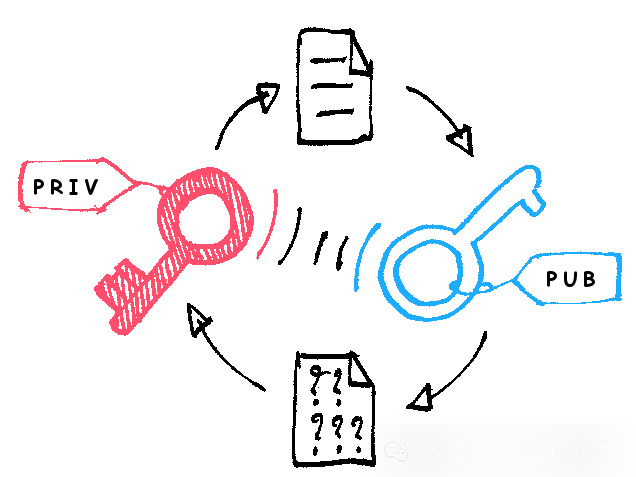
Quantum computers do not operate under these rules; they use something called the Shor algorithm, which can violently compress the difficulty of this problem—originally thousands of years could potentially become just a few minutes.
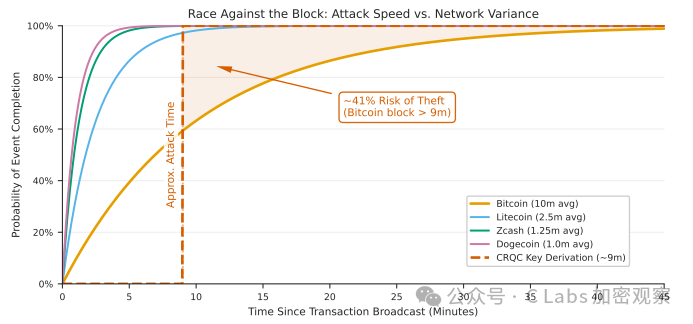
When a Bitcoin transaction is broadcast, the public key is briefly exposed.
And a quantum computer can derive the private key and steal the funds in about 9 minutes—while Bitcoin transactions require about 10 minutes for confirmation, with a success probability close to 41%.
The mainstream judgment in the industry was that a quantum computer capable of cracking Bitcoin would need millions of qubits, which seemed far away.
Google says this time: it doesn’t need that many. They optimized the algorithm and reduced the required resources by 20 times, just 500,000 physical qubits will be enough.
500,000 still sounds like a lot, but today's most advanced quantum computers are quickly approaching this direction.
Google's own deadline is set for 2029.
01 Taproot Upgrade Amplifies Vulnerabilities
In 2021, Bitcoin underwent an important upgrade called Taproot, originally aimed at improving efficiency and privacy.
But Google's paper points out that Taproot has made the public keys of more wallets visible by default—thus expanding the attack surface.
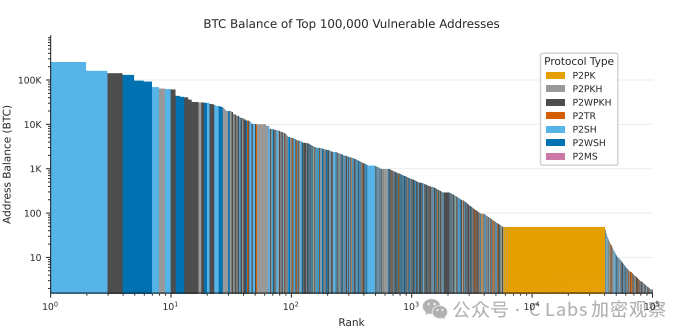
What was once a "good upgrade" has now become an amplifier for quantum vulnerabilities.
Currently, about 6.9 million Bitcoins across the network are in a high-risk state. Among these, 1.7 million come from early addresses from the Satoshi Nakamoto era—these addresses' public keys have been exposed on-chain for over a decade, and hackers are estimated to have saved them, just waiting for a future quantum attack.
02 Bitcoin's Response Plan and Existing Issues
Bitcoin is not sitting idly by; CZ stated that upgrading to quantum-resistant encryption algorithms is enough.
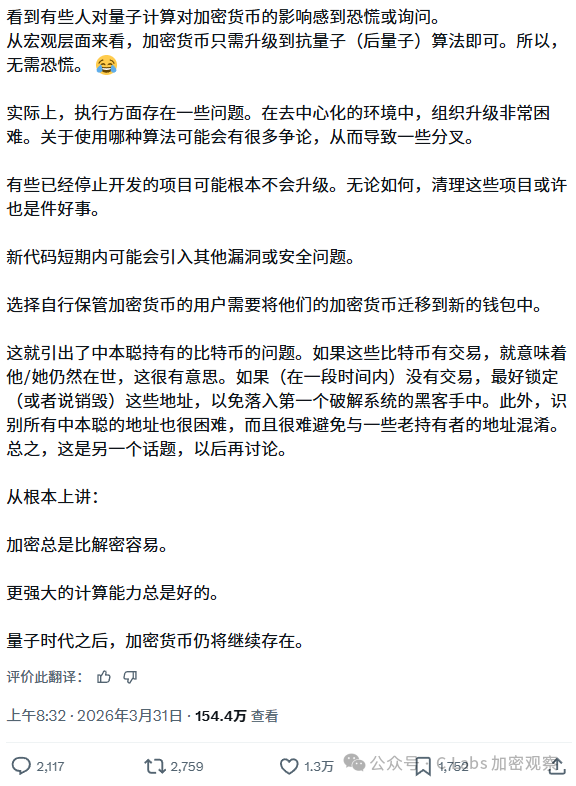
In February of this year, a proposal called BIP-360 officially entered Bitcoin's official codebase. It just passed testing on the testnet last month. Its core idea is to create a new address format, where public keys are not exposed throughout the transaction, making it impossible for quantum computers to find an entry point.
However, this scheme has three major flaws:
Old coins cannot be managed. Existing Bitcoin addresses remain vulnerable until you actively transfer assets to a new address. No one can operate on your behalf; it relies entirely on user action. The coins from Satoshi Nakamoto cannot be migrated by anyone. 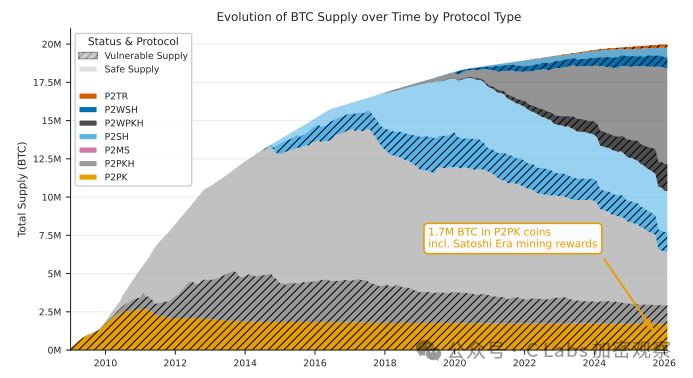
Google's paper also states that the community must accept the reality that this batch of tokens will ultimately be stolen by quantum computers. It only solves half the problem. BIP-360 can protect against scenarios where a quantum computer slowly cracks dormant wallets. However, the type of "9-minute real-time interception of ongoing transactions" described in Google's paper cannot be prevented by BIP-360 at all—this would require a complete overhaul of the signature algorithm at the Bitcoin base layer, which is a much larger operation; BIP-360 is merely a warm-up.
Time calculations don’t add up. The co-author of BIP-360 estimates that even if consensus is reached tomorrow, migrating the entire network will still take 7 years. Meanwhile, the industry judges the threat window from quantum computers to be 5 to 7 years. Both lines will reach their endpoints simultaneously, with no buffer time.
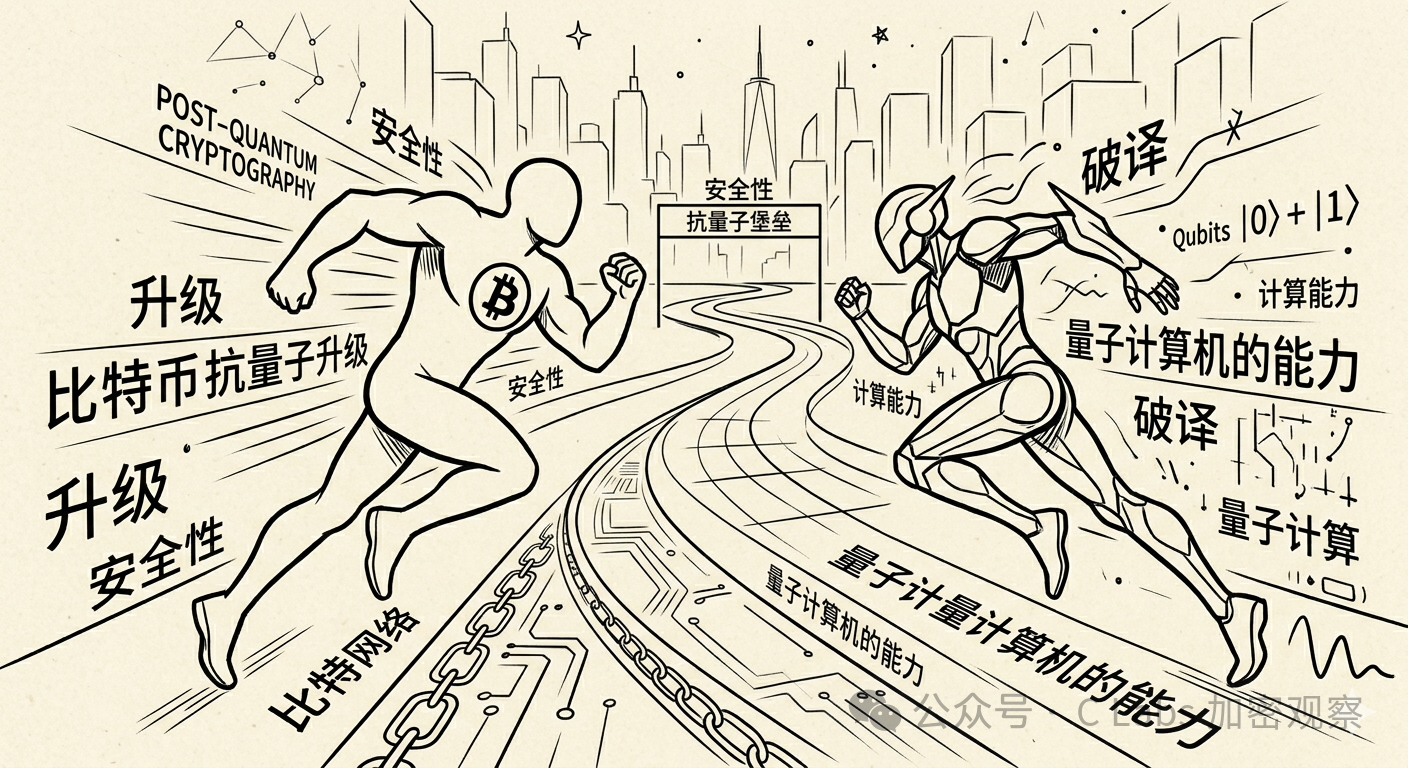
Bitcoin's upgrade to resist quantum threats is in progress, and the capabilities of quantum computers are also advancing; it remains to be seen who will outrun whom.~
免责声明:本文章仅代表作者个人观点,不代表本平台的立场和观点。本文章仅供信息分享,不构成对任何人的任何投资建议。用户与作者之间的任何争议,与本平台无关。如网页中刊载的文章或图片涉及侵权,请提供相关的权利证明和身份证明发送邮件到support@aicoin.com,本平台相关工作人员将会进行核查。


