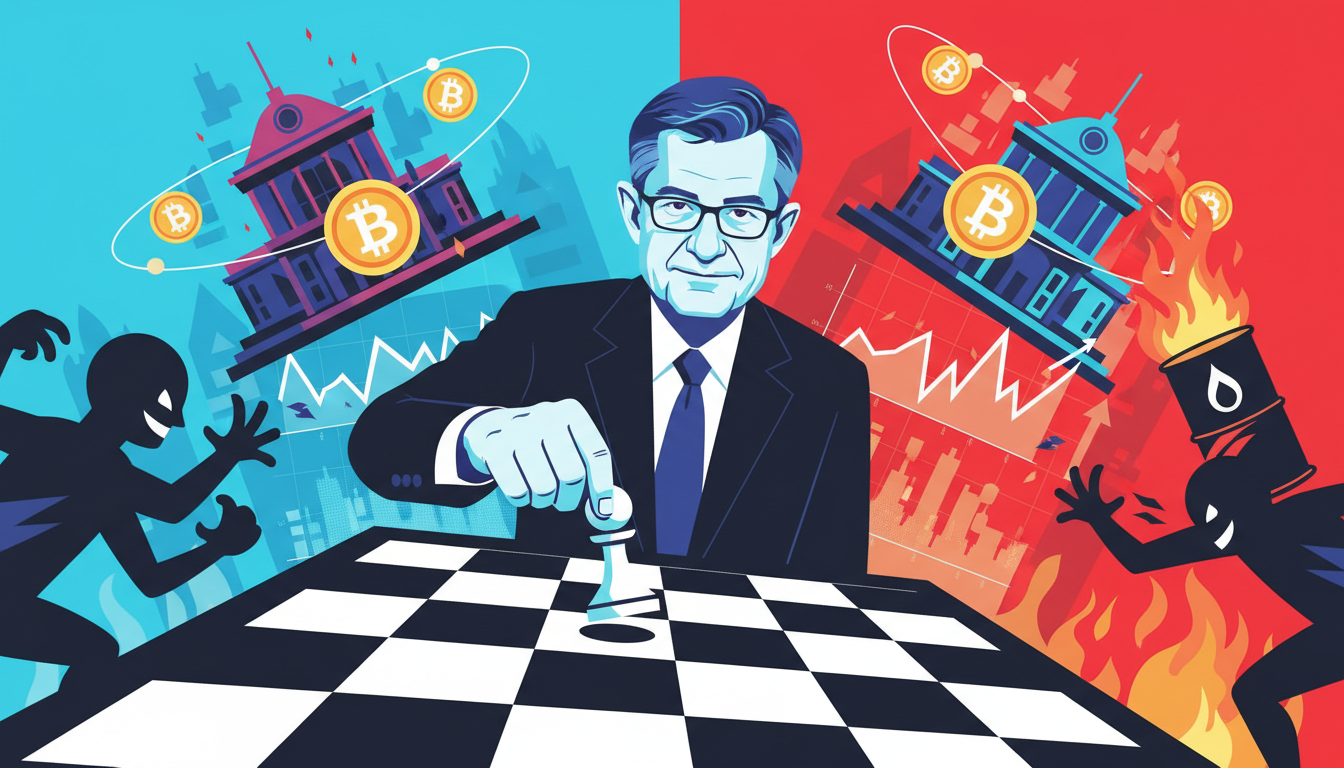
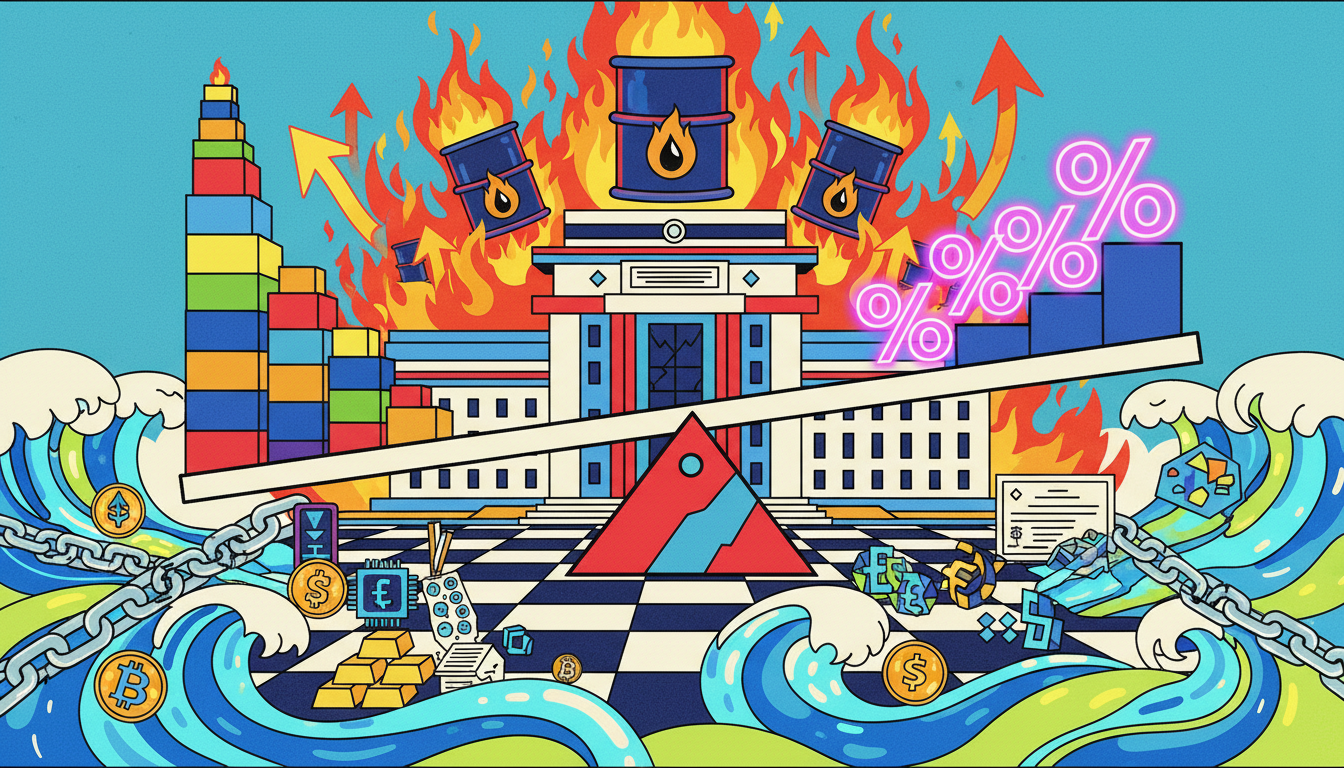
On March 30, 2026, the situation in the Middle East escalated again after Trump's tougher threats against Iran, and the risks of obstructed passage through the Strait of Hormuz were repriced by the market. Simultaneously, HIP3's position ratio on Hyperliquid reached a historic high, while the relevant trades of South Korean local giants were postponed under regulatory pressure, coupled with the dollar/yen falling to 159.50, weaving together multiple macro and crypto clues. Amid geopolitical tension, whether crypto assets like Bitcoin are being used as "digital safe-haven assets" or as high-beta tools to magnify volatility and leverage has become the new focus. The current qualitative assessment is more closely aligned with: short-term prices are driven by sentiment and liquidity, with volatility premiums rapidly increasing around oil prices, exchange rates, and regulatory uncertainties, while medium to long-term trends still hinge on the underlying dynamics of energy supply and the intricate game of compliance frameworks among nations.
Trump Ignites Middle East Oil Routes and Market Repricing
In his latest statements, Trump clearly targeted Iran, threatening to strike key infrastructures such as power plants and oil wells if negotiations remain fruitless and the Strait of Hormuz continues to face delays. This comment indicates a stalemate in US-Iran negotiations, transitioning the Middle East tension from a "sanctions game" to an escalation channel of "infrastructure threats," prompting the market to reassess the tail risks of a crude oil supply disruption. The Strait of Hormuz, as one of the world's most important oil transportation routes, means that any news concerning blockades or military conflicts will immediately reflect on oil price expectations and the pricing of risk assets.
From a macro pricing chain perspective, once Hormuz is continuously viewed as a high-risk passage, the market will preemptively reflect potential shocks through various dimensions such as oil prices, freight costs, and insurance premiums, adding to the already strained global supply chain, leading to a resurgence of the logic of "energy shock—import-driven inflation—uncertainty in monetary policy paths." On March 30, 2026, the dollar/yen exchange rate fell to 159.50, which in a strong dollar cycle was more interpreted as a reassessment by risk-averse funds of US assets and global risk exposures, rather than a simple fluctuation of a single currency pair. The subtle changes in exchange rate and interest rate expectations mirror the global capital’s repricing process in response to Middle Eastern variables.
Against this background, the volatility background of crypto assets has been significantly heightened. On one hand, uncertainty in energy and exchange rates will raise the discount rate for all risk assets, pushing the volatility premium upwards; on the other hand, the tensions in the Middle East and Trump’s tough rhetoric injects imaginative space into the narrative of Bitcoin as "escaping sovereign risks" and "hedging against fiat currency depreciation." In an environment where oil prices, exchange rates, and political risks intertwine, crypto assets have gained an added narrative premium: the same news that manifests as discounts and risk premiums in traditional markets is often transformed into high-volatility trading opportunities in the crypto world, spurring more intense price tug-of-war.
HIP3 Holdings Soar: Hedge or Speculator's Chips?
During the same period when Hormuz risks were amplified and Trump's statements continued to dominate headlines, market monitoring data showed that HIP3’s holdings on the Hyperliquid platform accounted for a historic high of total holdings, hitting just before and after March 30. This data did not provide specific absolute values or growth rates, but "historic high" itself is sufficient to indicate that, regardless of being bullish or bearish, interest in the contract was significantly ignited in a short time, coinciding closely with the escalation of Middle Eastern tensions and macro uncertainties. However, there remains a lack of more granular data regarding the sources of driving funds and types of trading accounts, so the specific causes are yet to be verified, and it is not possible to simply conclude it to be a large-scale unilateral hedging or trading behavior by one party.
From an emotional structure point of view, the sharp increase in HIP3 holdings can correspond to at least two distinctly different market motivations. The first type is a defensive position: some funds may view it as a tool to hedge macro risks, constructing protective positions through crypto derivatives when crude oil, exchange rates, and stock markets are under pressure simultaneously to counter potential extreme market conditions. This type of demand often arises alongside warming event expectations and a strengthening of traditional safe-haven assets. The second type represents typical leveraged speculation: during periods of dense news, high volatility itself becomes a "product," with traders using high liquidity contracts like HIP3 to amplify positions, betting on short-term direction and amplitude, effectively engaging in the opposite high-risk games under the narrative of geopolitical anxiety.
Therefore, simply interpreting the record high in HIP3 holdings as "warming of risk aversion" is clearly too simplistic. A more reasonable approach is to regard it as a signal of "risk appetite rearrangement": some funds are seeking a protective umbrella, while others are looking for a casino. Further examination of fund flows and forced liquidation data—such as whether liquidation amounts are concentrated on one side, and whether long and short positions show extreme asymmetry—may yield a more accurate reflection of the true risk preference structure behind this wave of position changes. Until then, prudent investors should regard HIP3 data as a "high-volatility warning," rather than a directional trading guide.
Korean Exchanges Caught Between Regulatory Storm and Retail Sentiment
As macro geopolitical risks rise, the South Korean local market is facing another type of pressure: compliance and regulation. At the end of March, trading between Naver and Dunamu (the parent company of Upbit) has been confirmed as postponed, occurring against the backdrop of tightening regulation in South Korea. For a market already regarded as "one of the most active for global retail investors," any changes involving equity and governance structures of mainstream platforms will quickly trigger the sensitive nerves of regulatory bodies, traditional finance, and the crypto space, postponing signals interpreted by the market as having undefined regulatory attitudes.
In stark contrast to regulatory uncertainty is the impressive performance. According to public data, Upbit achieved operating revenue of 1.56 trillion won in 2025, approximately 1.028 billion US dollars, maintaining its leading position in the South Korean crypto trading market. This scale means Upbit already possesses systemic importance: if the platform undergoes significant changes in compliance or is forced to reduce operations, it would affect not only the revenue of a single platform but also the main source of liquidity for local retail investors and the price linkage with global markets.
As regulations become stricter, the systemic importance and compliance costs of large exchanges are magnified. On one hand, regulators need to implement stricter licensing, capital, and risk control requirements to reduce systemic risk when "Too Big To Fail" platforms encounter problems; on the other hand, the rise in compliance costs will pressure exchanges to more meticulously filter listings and limit leverage and derivatives, thereby changing the risk tolerance path of retail investors during increased volatility. Especially in a phase where geopolitical risks are amplified and price volatility is rising, if South Koreans face restrictions from local platforms, they may turn to overseas platforms or on-chain protocols that are not strictly regulated, creating new channels for cross-border and on-chain risk transmission.
This suggests that while Middle Eastern tensions elevate global risk asset volatility, the risks in the South Korean market do not stem solely from price itself, but also from the "trading channel risks" brought on by changes in regulatory and compliance structures. Once local leading platforms tighten leverage or impose partial trading restrictions due to regulatory pressures, retail sentiment may be forced to concentrate and release in a short time, leading to temporary imbalances in the local market that could transmit through price linkage to the broader crypto asset ecosystem.
From Binance's New Contracts to the Lista Proposal: Resculpting the Risk Landscape
Against the backdrop of increasing global volatility, centralized giants and DeFi protocols are quietly adjusting their products and mechanisms. From Binance, there has been a continuous launch of new contracts recently, though no specific targets or parameters were listed, but the rhythm clearly aligns with the market's rising demand for hedging and speculation in high-volatility periods. For many traders hoping to make short-term bets under multiple variables like the Middle East, exchange rates, and regulation, the introduction of new instruments means a richer set of directional and volatility trading tools but also concentrates more counterparty and clearing risks on a few leading platforms.
On the on-chain side, Lista DAO has proposed to gradually eliminate the veLISTA mechanism and expand the application scenarios of LISTA throughout the protocol. This kind of tokenomics adjustment is fundamentally reassigning governance rights, revenue rights, and liquidity incentives within the protocol, partially releasing long-term governance-locked rights into more flexible uses and collateral values. In an environment where macro uncertainties are on the rise, the protocol seeks to attract broader funding participation and retention by simplifying governance structures and enhancing capital efficiency, trying to find a new balance between “safety net” and “efficiency.”
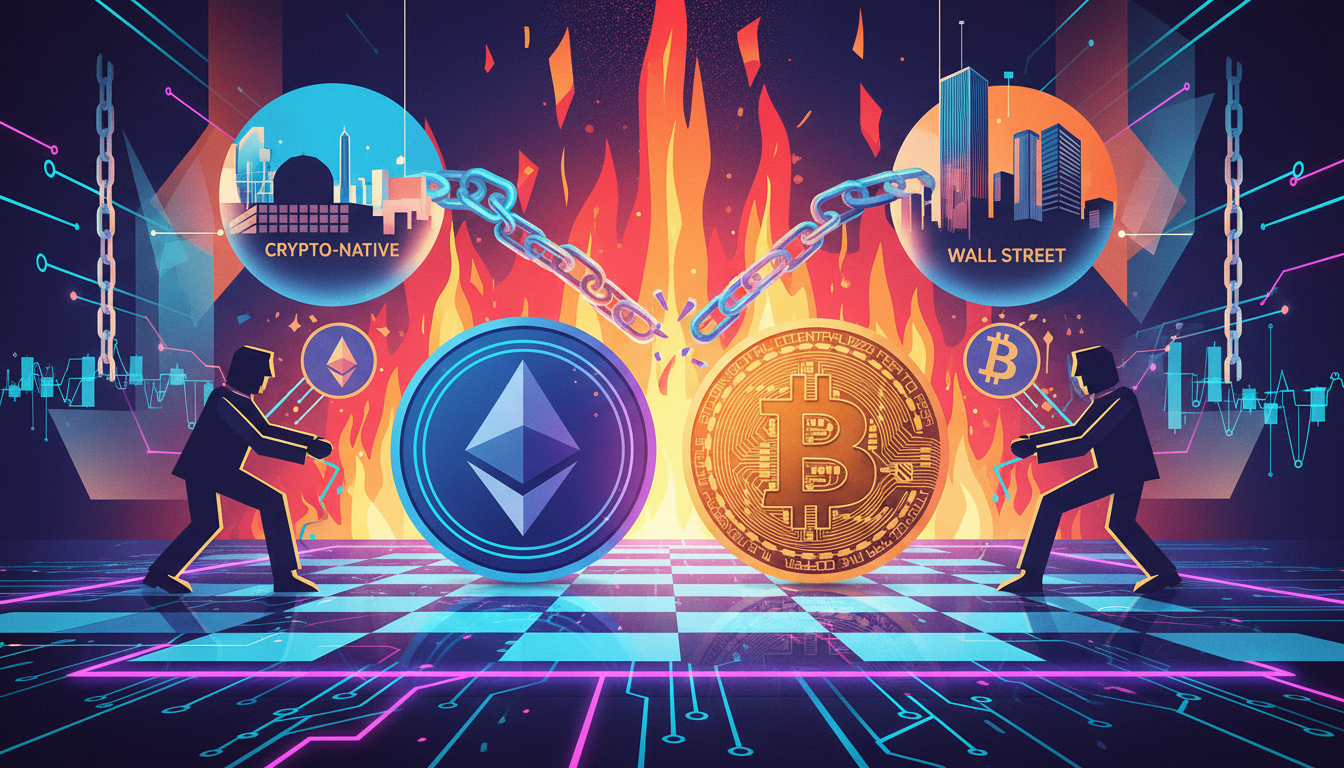
When we place Binance's contract expansion alongside Lista's tokenomics reshaping on the same risk map, we find they both point toward one trend: the risk distribution is being redrawn. Centralized derivatives, through higher leverage and more categories, further concentrate price discovery and liquidity; DeFi transforms capital that was originally locked by governance and voting, partially into tradable and collateralizable assets through mechanism reforms. This bidirectional movement allows funds to migrate more smoothly between on-chain and off-chain spaces, freely choosing according to their preferences for regulatory, counterparty, and technological risks.
Meanwhile, the trade-off between regulatory compliance and capital efficiency is becoming the core driving force of fund migration. For funds concerned about regulatory tracking and account freezes, on-chain protocols and cross-chain assets provide relatively autonomous spaces; while institutions lacking confidence in technology and smart contract security prefer to stay on compliant and clearer centralized platforms. Under the dual pressure of Middle Eastern clouds and tightening global policies, this choice is assigned higher value, making the entire crypto market's risk landscape more three-dimensional and complex.
Struggles Between Safe-Haven Narrative and Leveraged Speculation on the Same Candlestick
Returning to the asset level, if we compare the performance during this round of Middle Eastern tension escalation along the same timeline, a differentiated picture emerges: traditional safe-haven assets like gold often receive buying support under expectations of conflict escalation, with prices and market sentiment fairly aligned; the dollar wavers between interest rate expectations and safe-haven demand, while its drop against yen to 159.50 reflects a global capital game between US assets and Middle Eastern risks. The behavior of mainstream crypto assets appears more torn: on one hand, they are viewed in some narratives as "digital gold hedging against geopolitical and fiat risks," while on the other, trading data and on-chain behaviors indicate they function as high-beta speculative tools during high-volatility phases.
This dual attribute introduces structural tearing in narratives and pricing. Proponents of the "safe-haven asset" side emphasize Bitcoin's relatively independent monetary attributes, limited issuance, and cross-border portability; while those highlighting "high-leverage tools" present extensive futures and perpetual contract holdings and liquidation data to prove that short-term prices are more significantly driven by leverage and liquidity. The phenomenon of HIP3 holdings reaching a historic high on Hyperliquid, Binance intensively launching new contracts during periods of heightened volatility, and Korean retail investors maintaining high participation levels on both domestic and overseas platforms, collectively forms a misaligned hierarchy of risk preference: at the upper level is the macro narrative of "digital safe-haven," in the middle is the reconstruction of regulatory and compliance frameworks, while at the lower level are high-frequency, high-leverage short-term trading behaviors.
Within this multilayered structure, any single candlestick often carries the interplay between safe-haven buying and speculative leveraging. When prices rise, supporters may interpret it as "capital voting with its feet, fleeing traditional fiat and geopolitical risks"; when prices fall, cautious investors may point out that this is leveraged liquidation and market repricing of tail events. The real risk lies in the habitual tendency of the market to "financialize" geopolitical risks, simplifying keywords such as Hormuz, Trump, and Iran into "volatility fuel," easily overlooking those tail events that cannot be digested through short-term trading—for instance, prolonged blockades, energy supply constraints, and spillover of regional conflicts—once they materialize, their impact on the crypto market could far exceed a few daily candlestick fluctuations.
The Next Wave of Shock: Focus on Oil Price Trends and Regulatory Implementation
Synthesizing the current landscape reveals a relatively clear mainline: The geopolitical tension in the Middle East has elevated volatility premiums, with capital rapidly switching between "hedging" and "speculating," with HIP3 and other derivatives reaching record high holdings, Binance and other platforms expanding contract products, and DeFi protocols like Lista reshaping their token economies, together forming the stage for this round of risk repricing. In the short term, the prices in the crypto market are more driven by sentiment, liquidity, and leverage structures, rather than single variables from fundamentals.
The following key observation points are worthy of continuous monitoring. The first is the passage conditions of the Strait of Hormuz and the trajectory of oil prices: if passage risks remain high and oil prices continue shaking at elevated levels or even climb further, this will strengthen market concerns regarding "energy shocks," subsequently influencing inflation and monetary policy expectations. The second is whether Trump's stance towards Iran transitions from extreme hardline to "conditional softening," or conversely escalates further, as this will directly impact market subjective probability judgments regarding conflict escalation or de-escalation and ultimately change the allocation weights between safe havens and risk assets.
At the same time, it is also essential to closely watch the regulatory implementation pace in key markets like South Korea. The postponement of trading between Naver and Dunamu is merely a signal; what genuinely affects market structures are subsequent regulatory details, licensing standards, and cross-border cooperation frameworks, which will determine the trading depth of local platforms, compliance costs, and their connections to global liquidity. Should regulations be tightened too abruptly or the pace becomes unbalanced, it may trigger liquidity migration and risk redistribution among different markets.
In a phase of high informational uncertainty and deeply divided narratives, the most practical strategic requirement is not to "bet on which narrative will prevail," but rather to control leverage and counterparty risk. For both individuals and institutions, clearly defining their risk tolerance boundaries, diversifying platform and asset exposures, and avoiding concentrated bets during extreme emotional conditions is far more critical than searching for standard answers in the debate of "hedge or leverage." What truly needs to be managed is not the match on Hormuz, but the fuse in one's account.
Join our community to discuss and grow stronger together!
Official Telegram community: https://t.me/aicoincn
AiCoin Chinese Twitter: https://x.com/AiCoinzh
OKX Benefits Group: https://aicoin.com/link/chat?cid=l61eM4owQ
Binance Benefits Group: https://aicoin.com/link/chat?cid=ynr7d1P6Z
免责声明:本文章仅代表作者个人观点,不代表本平台的立场和观点。本文章仅供信息分享,不构成对任何人的任何投资建议。用户与作者之间的任何争议,与本平台无关。如网页中刊载的文章或图片涉及侵权,请提供相关的权利证明和身份证明发送邮件到support@aicoin.com,本平台相关工作人员将会进行核查。