The U.S. stock market has experienced its most intense single-day volatility recently.
From extensions of 5 days, then to 10 days, various voices and rumors of negotiation have emerged, and the opinions from the parties in the U.S. and Iran are surprisingly inconsistent. How much longer will this Iran-U.S. conflict, which has lasted for nearly a month, go on?
Recently, the editor compiled five of the most likely scenarios regarding the Iran-U.S. conflict, mentioning that "a quick end to the war" is the most ideal scenario, and it is what Trump desires the most. Currently, various signals indicate that there is a strong possibility for a rapid ceasefire in the Iran-U.S. conflict. Related reading: “What comes after the smoke? Five endings to the Middle East war”.
The Trump administration is actively seeking diplomatic breakthroughs, taking into account midterm election interests and the desire to avoid the quagmire of war; the U.S. and Israel have excluded Iran's foreign minister and speaker of parliament from the military strike list, which is seen as a direct signal of reserving negotiation leverage and achieving reconciliation through key figures.
Trump eager to disengage
Understanding the direction of this conflict is key, first and foremost in understanding Trump's own mindset.
A report published by The Wall Street Journal 14 hours ago, titled “Trump Tells Aides He Wants Speedy End to Iran War,” reveals that Trump has privately informed his advisors that he believes the conflict has entered its final phase and urged his team to adhere to the “four to six weeks” timeline he proposed publicly before.
According to insiders, White House officials are planning to visit China in mid-May, and they expect the war to end before the summit begins. This detail is significant: Trump hopes to visit China as a "winner," rather than as a wartime president mired in a quagmire.
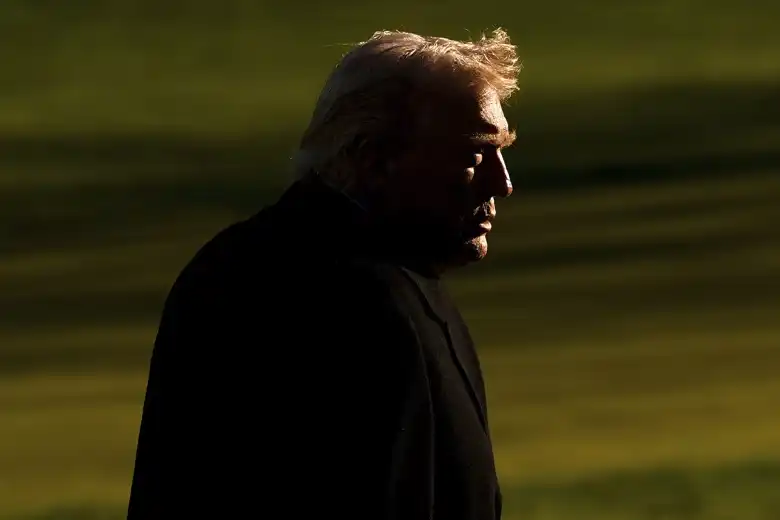
Another signal came on March 25, when Trump delivered an extensive speech about Iran at the annual fundraising dinner of the Republican Congressional Committee.
Observers noted that when the topic shifted from domestic politics to the Middle Eastern conflict, his tone changed from anger to a somewhat defensive pitch with repeated explanations. He emphasized that Iran "desperately wants" to reach an agreement, claiming its leadership is privately engaging with the U.S., "They really want to make this deal, they just don’t dare to say it publicly because they fear being killed by their people and fear being killed by us." He also made a rather telling remark: "No leader of any country wants to do this job less than the Iranian leaders, I don’t want to do it either." This statement is almost the most straightforward expression of his personal wishes.
At the dinner, he boasted that the U.S. had "won big," claiming that the large-scale military strikes had completed their core tasks, implying that it was time to stop. He also expressed obvious concern about the war driving up oil prices, which is often his most tangible economic indicator for determining whether a war should continue. Trump has explicitly told an aide that the war distracted him from other priorities, including the upcoming midterm elections, immigration enforcement policies, and advancing voter eligibility legislation in Congress.
Moreover, analysts noted that Trump exhibited a very impatient tone based on his body language that night, even lashing out at his appointed Supreme Court Justices Gorsuch and Barrett, publicly criticizing them: "They make me sick because they are harmful to the country."
Including in his speech, he conveyed concerns about the war driving up oil prices, which is typically his pragmatic economic indicator for determining whether a war should stop.
In the face of price fluctuations, Wall Street is trying to find patterns within the swings of Trump administration policies.
Many observers have found that whenever energy prices or borrowing costs hit specific thresholds, the White House's rhetoric turns to moderation, which is Trump's “TACO moment” (Trump Always Chickens Out).
Wall Street Insights noted that, according to senior energy traders, every time U.S. crude oil prices approach $95 to $100 per barrel, the White House's calming rhetoric will significantly ramp up, and expectations for government intervention will likewise heat up. Onyx Capital Group oil market analyst Jorge Montepeque noted that gas prices exceeding $4 per gallon are politically damaging, and Trump is clearly anxious about high oil prices.
U.S. Treasury yields are another trigger for cooling down. Amundi Institute for Investment Research's head, Monica Defend, mentioned that Trump has become extremely sensitive to Treasury yields in his second term, "Whenever the 10-year Treasury yield approaches 4.5%, the government starts to get really anxious, which is usually when they take action." To this end, Deutsche Bank's Chief Strategist Maximilian Uleer has developed a "stress index," combining inflation expectations and Treasury yields to predict when the White House may adjust its strategy.
The political pressure from economic stress cannot be ignored.
Currently, the political situation for the Republicans is challenging before the midterm elections. On Tuesday, a Democrat flipped a state legislative seat in South Florida, which happens to be the district where Trump's Mar-a-Lago estate is located.
Concerns within the Republican Party are spreading: the high costs of war and persistently low approval ratings are dragging down candidates in key state-level campaigns. The shadow of the midterm elections is looming closer, and a dragged-out war in the Middle East is the political burden Trump needs the least.
Israel's "time crunch" strikes
Another noteworthy detail, also revealed by The Wall Street Journal, is that the joint U.S.-Israeli forces have explicitly removed Iranian Foreign Minister Zarif and parliamentary speaker Ghalibaf from the strike list.
This is an extremely precise and deliberate diplomatic signal.
Abbas Araghchi is Iran's current foreign minister, a seasoned diplomat who was a core member of previous rounds of nuclear negotiations, well-versed in Western diplomatic rules.
And Mohammad Bagher Ghalibaf is the current speaker of the Iranian parliament, with a strong background in the Islamic Revolutionary Guard Corps, but politically regarded as a relatively pragmatic "realist" who possesses the political energy to coordinate various domestic factions, especially between moderate and Guard remnants.
In a situation where the Supreme Leader Khamenei has already been killed, Iran's command system has been severely damaged, and Tehran is plunged into a power vacuum, the U.S. and Israel's move equates to sending a clear and unmistakable message to the remaining high-ranking Iranian officials: "We have left negotiators on the table; now it's your turn to speak."
By granting these "exemptions," the U.S. and Israel have created a subtle psychological barrier within Iran's senior leadership. This gives Araghchi and Ghalibaf a very real choice: either act as "ceasefire agents" to facilitate a deal that allows both sides to exit gracefully; or stay in a command chain that could be destroyed at any moment, waiting for the next rounds of strikes.
There are already reports that the U.S. and Iran may hold secret contact in Islamabad, the capital of Pakistan, this weekend. The security backing obtained by these two exempt individuals is a prerequisite for the success of this meeting.
While Trump is eager to disengage, Israel is frantically accelerating its strike pace, presenting an almost frantic intensity.
From March 21 to 22, Iran's Natanz nuclear facility was attacked, which Iran characterized as an assault by Israel or the U.S., prompting missile retaliation. On March 25, the Israeli Air Force again struck, carrying out precise strikes on an important naval research and underwater drone production facility in Isfahan, aiming to weaken Iran's asymmetric naval combat capabilities. Israel has publicly stated that it "does not understand" the situation, but the facts on the battlefield need no explanation.
One interpretation is that Israeli officials may have realized that the window for a ceasefire is about to close . Once an agreement is reached between the U.S. and Iran, Israel will lose the political backing to continue its actions, as they have neither the guts nor the opportunity to initiate a war independently. Therefore, the current intense strikes are an effort to accomplish as many predetermined goals as possible before the window completely closes.
The release of 10 tankers is a signal of easing
On the Iranian side, it seems they are also responding to these diplomatic signals with cautious gestures and practical actions.
Since the outbreak of the war in early March 2026, shipping through the Strait of Hormuz has nearly come to a standstill due to Iran's substantial blockade, causing international oil prices to soar to $126 per barrel, and plunging the global energy market into severe turmoil.
Recently, Iran has allowed 10 tankers to pass through the strait, permitting them to leave; this is the most significant navigational breakthrough in nearly a month. Trump announced this news publicly at a White House cabinet meeting, with Iran originally proposing to release 8 tankers, later increasing it to 10. (By the time this news was published by BlockBeats, it was also reported that the number of vessels that passed through between March 23 and 26 was 12.)
Reuters, Fox News, and specialized energy information agency Argus Media have all detailed this development. It is worth noting that these tankers are flying the Pakistani flag.
Some interpretations suggest that the political implications of Iran's actions are multi-layered.
Firstly, it proves that the Iranian negotiating representatives of this faction hold real power internally, able to genuinely constrain the Revolutionary Guard's blockade rather than just speaking empty words at the negotiating table, hence allowing the 10 tankers to pass.
Secondly, reports indicate that this move directly exchanged for a five-day suspension of U.S. strikes on certain Iranian power facilities, representing a concrete "action for action" exchange, positioning both sides to test each other's sincerity through specific concessions.
Sending signals, testing responses, and then sending more signals. This is a set of diplomatic language that both the U.S. and Iran are exceedingly familiar with; although the Strait remains not fully open and the bans on vessels associated with the U.S. and Israel are still severe, this "8+2" release action has been interpreted by many as a sign of Iran's call for peace and communication under continuous military pressure. Thus, Trump stated: "I think we are talking to the right people."
Iran's "extortionate demands"
Many have been shocked by Iran's current demands for "war reparations" or "trial for Trump," believing that negotiations are simply unfeasible, with the positions of both sides being worlds apart. However, those familiar with the history of Iran-U.S. diplomacy find this method of pricing familiar, and can even say it is a traditional routine with a traceable history.
The diplomatic game between the U.S. and Iran is often described as a high-density "Persian carpet-style trade": setting excessively high prices and adopting hardline stances, yet the core logic remains to find a balance point where both sides can back down.
The classic example is the “Algiers Accords” that resolved the hostage crisis in 1981. During the crisis in 1979, Iran initially demanded the return of the deposed Shah Pahlavi, the return of an estimated hundreds of billions of dollars in global assets, and a formal apology from the U.S. for decades of "intervention," along with reparations. These demands were equally viewed as absurd at that time. However, eventually, through Algeria's mediation, both sides signed the accords: Iran released the hostages, and the U.S. returned approximately $8 billion in frozen assets, most of which were used to repay debts Iran owed to U.S. banks, and pledged not to interfere in Iran's internal affairs in the future. Both sides claimed victory, and those original "exorbitant demands" had quietly vanished from the text of the agreement.
The negotiation process of the 2015 Iran nuclear agreement (JCPOA) followed a similar pattern. In the early stages of negotiations, Iran asserted an absolute right to "unlimited uranium enrichment," refusing any inspections of military facilities, while demanding that the U.S. lift all sanctions immediately. The U.S. threatened military strikes and demanded that Iran completely abandon its nuclear program. The two sides engaged in a tug-of-war in Vienna hotels for years; each time negotiations hit an impasse, Iran would raise the enrichment purity to increase leverage, while the U.S. would respond with intensified sanctions. The finalized agreement was essentially a precise exchange of "delayed nuclear capability for economic relief," where both sides’ initial positions had been quietly abandoned, though no one openly acknowledged it.
In the context of March 2026, Iran's demands for reparations and trials carry a strong instrumental color. In the aftermath of Khamenei's death and the destruction of multiple core military facilities, if Iranian moderates do not make extreme compensation demands, they risk being labeled "traitors" by domestic hardliners. These demands are essentially meant to be abandoned; Iran is well aware that the U.S. cannot prosecute Trump, but by retracting this demand, it can afford to extract substantial concessions from the U.S. regarding lifting the oil export ban or halting attacks on Revolutionary Guard remnants.
The historical pattern is clear: when Iran's pricing is most aggressive and posturing is hardest, it often coincides with the moments of maximum internal pressure, making them the most eager to negotiate and stop losses. The so-called "war reparations" currently appear more like a fig leaf.
What are the key points of negotiation?
Currently, a leaked draft of an agreement, reportedly called the "Islamabad Framework," seems to be taking shape, with information flowing from diplomatic channels indicating that the core terms primarily consist of four parts.
The complete resumption of navigation in the Strait of Hormuz is the central demand of the global energy market and Iran's last heavyweight bargaining chip. According to the draft, Iran must commit to withdrawing fast attack boats and mines from key shipping lanes in the strait, stopping the interception and boarding inspections of merchant vessels. The recent release of the 10 tankers is widely viewed as a "trial run" for this provision. In exchange, the U.S.-Israeli coalition will cease airstrikes on Iranian military targets in southern ports and along the Persian Gulf, and possibly allow Iran to restore some oil exports to alleviate its near-collapse economic situation.
The "five-year freeze" on nuclear programs is another core arrangement. Given the physical strikes on facilities like Natanz, Iran has suffered significant technological and equipment losses, which objectively provides a step for "pausing the program." According to the proposed outline, Iran agrees to suspend all uranium enrichment activities exceeding 3.67% purity for the next five years, store existing advanced centrifuges, and sign an agreement under tight International Atomic Energy Agency monitoring, promising not to develop any nuclear weapon configurations. For Iran, five years is sufficient to rebuild its economy after the war and await changes in the international situation; for the Trump administration, this can serve as an achievement of "thoroughly solving the Iranian nuclear threat," adequate for domestic explanations.
The "offsite custody" of existing enriched uranium is the most substantive downgrade measure. The draft requires Iran to transfer most of its existing high-enrichment uranium (60% purity) to third-party countries, with candidates for the receiving end including Russia or Oman. The related substances will be converted to low-enrichment fuel for civilian nuclear power plants or stored under the supervision of multiple parties. Once the high-enrichment uranium leaves Iran, the possibility of Iran manufacturing nuclear weapons in a short time will drop to zero, and the direct motivation for Israel to launch larger-scale strikes will also significantly decrease.
Restrictions on missile range and "weaning" off regional proxies are the security red lines of greatest concern for Israel. The draft demands Iran to commit not to develop or deploy ballistic missiles with a range exceeding 2000 kilometers and reduce direct military assistance to proxies such as Hezbollah and the Houthis. In response, Israel will cease "decapitation operations" against Iranian military advisors in places like Damascus.
Divergences still exist. Iranian speaker Ghalibaf insists on "lifting oil sanctions first, then handing over enriched uranium," while the U.S. insists on the principle of "seeing the goods before paying."
However, a compromise scheme is not without space: establishing a phased "action-for-action" timeline, where Iran hands over a batch of enriched uranium, and the U.S. unfreezes a portion of the frozen assets in South Korea or Qatar, while granting specific oil sales quotas, might be a step both sides could accept.
免责声明:本文章仅代表作者个人观点,不代表本平台的立场和观点。本文章仅供信息分享,不构成对任何人的任何投资建议。用户与作者之间的任何争议,与本平台无关。如网页中刊载的文章或图片涉及侵权,请提供相关的权利证明和身份证明发送邮件到support@aicoin.com,本平台相关工作人员将会进行核查。


