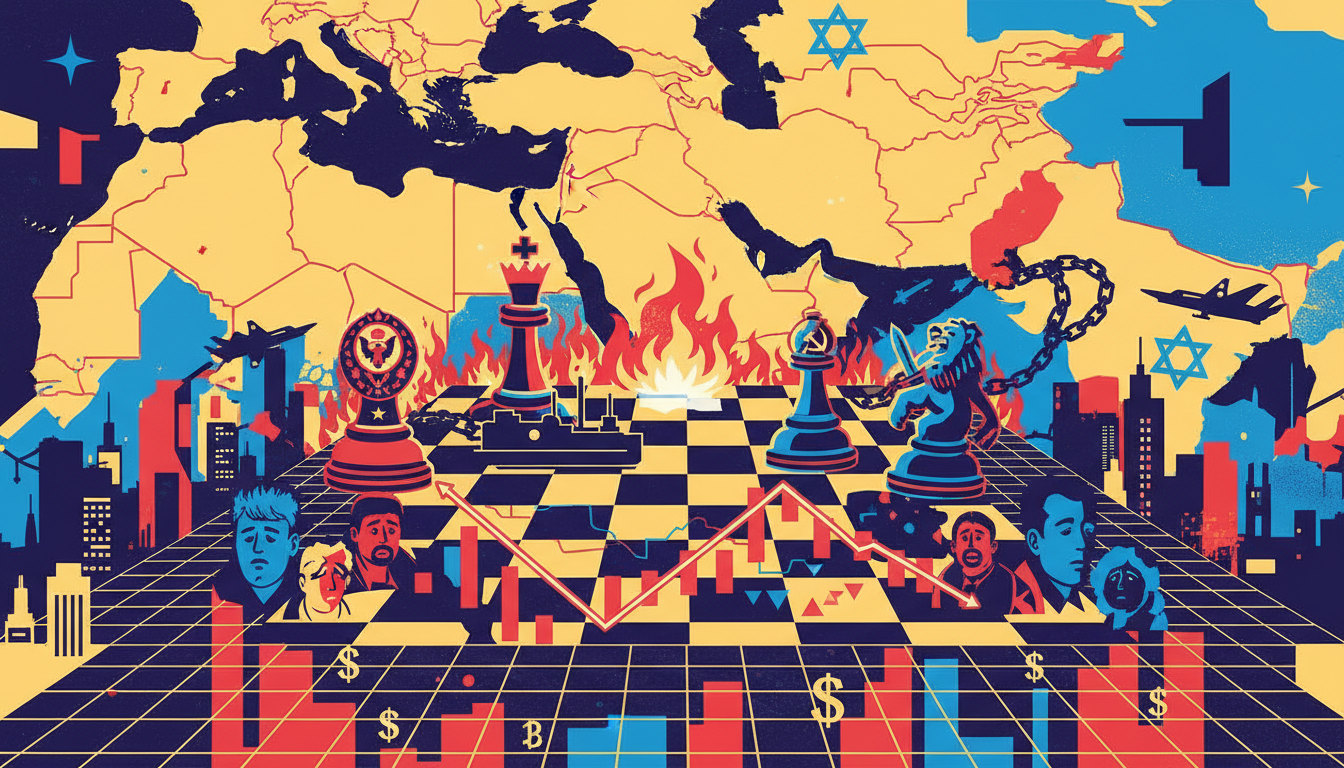
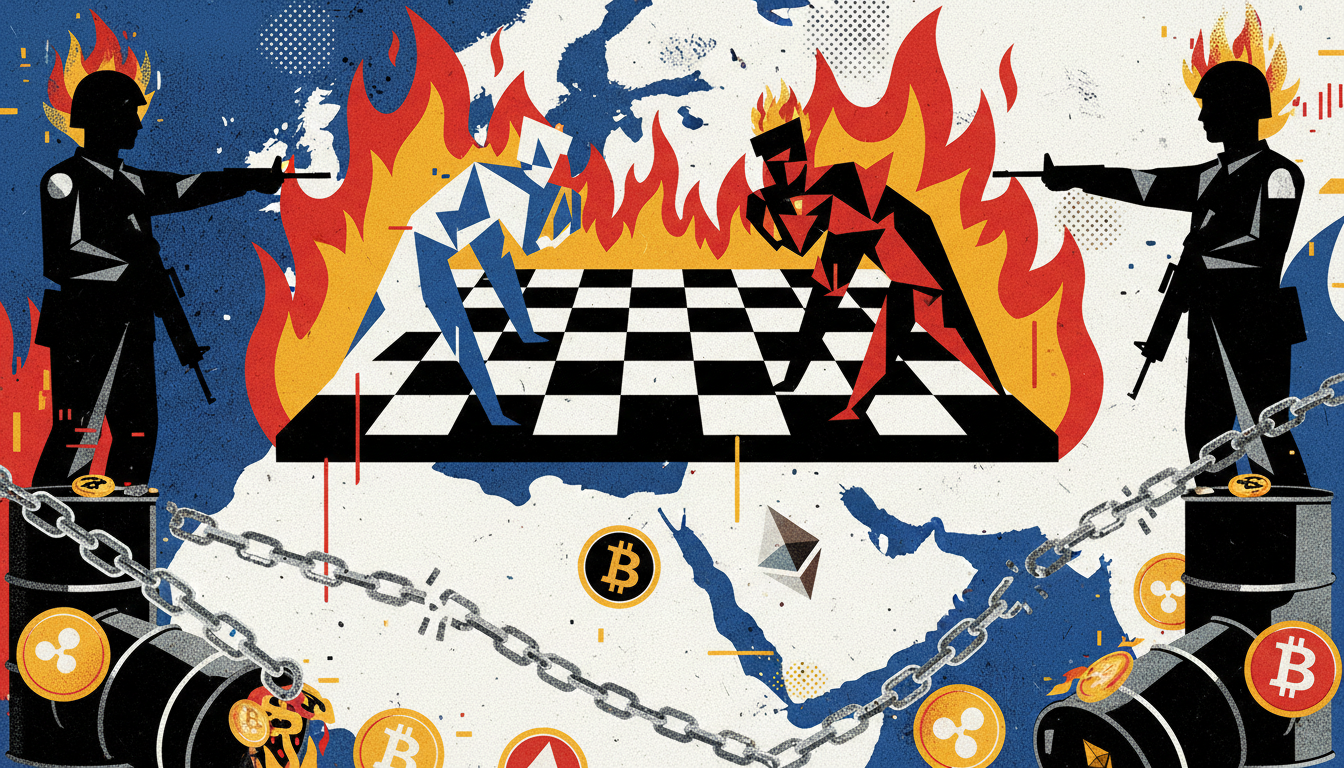
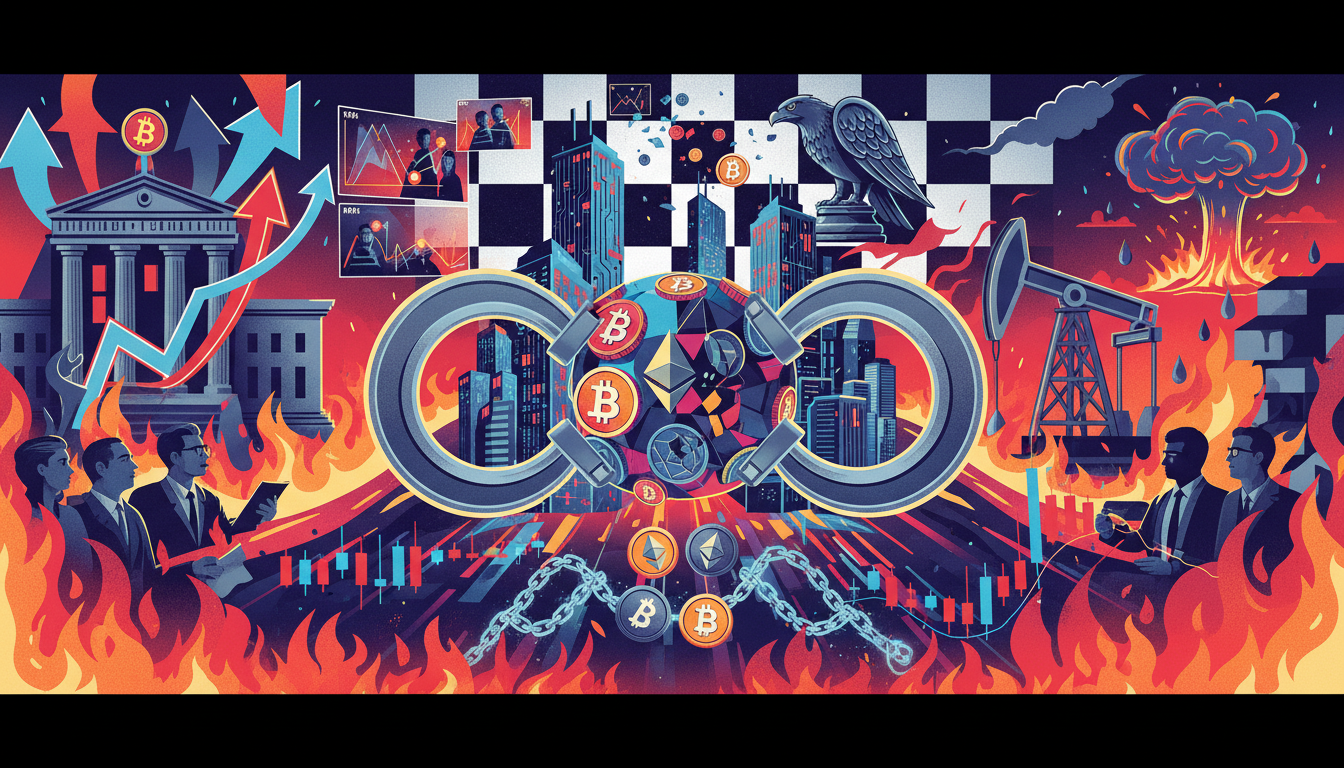
On March 27, 2026, East Eight Zone Time, Iran launched a new round of missile attacks against Israel. The Israel Defense Forces immediately activated air defense systems and issued alerts to the relevant areas, sounding the alarms for a new night of air raids and interceptions. Subsequently, Israeli Defense Minister Yoav Gallant publicly stated that strikes against Iran would further escalate and expand to more "targets and areas"; the Israeli Air Force claimed to have struck multiple missile-related targets within Iran. Currently, this information is only available from a single source, and further details await corroboration from more official and multiple sources. Coinciding with the outbreak of hostilities is the violent fluctuation in the cryptocurrency market: According to data from a single source, approximately $109 million in contract positions were forcibly liquidated across the network in the past hour under the stimulation of conflict news, with highly leveraged long and short funds being simultaneously cleansed. The Middle East situation may remain in a "high-pressure range" for a long time; amid the dual pulls of safe-haven demand and an overall decline in risk appetite, the volatility center of crypto assets has been pushed higher, and fluctuations and liquidations are becoming the new normal.
Missiles and Retaliation: A New Night of Warfare in the Middle East
On March 27, the new round of Iranian missile attacks on Israel once again thrust the already tense Middle East situation into the spotlight. Public information shows that after the attack occurred, the Israel Defense Forces quickly activated air defense systems, issuing air raid alerts to the public in multiple locations and conducting aerial interceptions. The facts that can be confirmed are still mainly focused on the basic chain of "missile attack - air defense warning - interception operation," while more detailed content regarding specific types of weapons, hit effects, etc., has either not been disclosed or is in a phase where sources are limited and cannot be cross-verified.
In this opaque military environment, Israeli Defense Minister Yoav Gallant's remarks are particularly noteworthy — he emphasized that the strikes against Iran would "further escalate and expand to more targets and areas assisting Iran in developing and deploying weapons against Israeli civilians." This effectively sends a signal to the outside world: the conflict will not quickly cool down after this round of mutual strikes but may extend to more military and security-related entities, evolving into a broader and more complex military game.
In tandem, the Israeli side claimed that from the night of March 26 to 27, the Israeli Air Force and Defense Forces had struck multiple missile-related targets within Iran, aiming to weaken Iran's missile capabilities. This claim currently comes mainly from a single source and has not seen more extensive disclosures from multinational official or independent institutions, making it impossible to disprove or fully verify; it can only serve as a suggestive backdrop for the narrative of escalating conflict rather than a mature conclusion.
From a broader security framework perspective, the "fighting while talking" judgment given by Qin Tian, Deputy Director of the Middle East Research Institute of the China Modern International Relations Research Institute, outlines a long-term tug-of-war pattern between total war and rapid ceasefires: under the current global political and economic pressures, major parties such as the US and Iran are reluctant to easily promote unlimited escalating war in the short term, but they also lack the political conditions and trust to truly "press the pause button." This ongoing confrontation, limited escalation, and occasional negotiations result in emotional shocks spilling over into the global financial market, particularly towards high-volatility crypto assets, which display a prolonged pattern of intermittent strengths and weaknesses that are difficult to dissipate completely.
Panic Selling and Liquidation Waves: High Leverage Vanishing in One Hour
According to a single source's statistics, during the window period where the latest missile attacks and statements from the Israeli military triggered public opinion fermentation, approximately $109 million in liquidations occurred across the network in the past hour. Such concentrated short-term liquidations often indicate that both long and short sides have large high-leverage positions — once the news lands and breaks existing expectations, prices quickly oscillate, with high-leverage longs being liquidated in declines, while high-leverage shorts attempting to "short the top" may also be swept away during rebounds. The result is that forced liquidations on the exchange level dominate prices, amplifying the magnitude and speed of each fluctuation.
Looking back at history, whether it’s the black swan moments before and after the outbreak of the Russia-Ukraine conflict or nodes of escalated local conflicts in the Middle East, the cryptocurrency market often experiences extreme short-term volatility within hours or even days of sudden geopolitical risks appearing: on the candlestick pattern, it manifests as a combination of "spike" and "flash crash + quick pullback," accompanied by a high volume of forced liquidation orders and rapid swings in funding rates. However, if the perspective is extended to weeks or even months, prices often show a quick technical recovery or even reach new highs after undergoing a round of panic cleaning, as macro liquidity and risk appetite are repriced — extreme declines often resemble a clearance of leverage rather than a trend's end.
After the information regarding the current conflict emerged, investors' impulses to reduce holdings in overall risk assets and the concentrated clearing of high-leverage positions in the contract market amplified each other in a chain reaction: the selling pressure on the spot side combined with the chain reaction of liqudating contracts means that price fluctuations are not entirely driven by "the degree of bearishness of the news itself," but rather by the leverage structure and liquidity depth. The market rapidly transitions from "news trading" to "liquidity trampling," with panic emotions self-reinforcing through forced liquidation mechanisms.
In such an environment, short-term emotional trading and longer-term capital allocation show a clear split: retail funds are more likely to chase rising and falling prices with high leverage driven by social media and news push, attempting to catch every sharp fluctuation of the "geopolitical conflict market"; meanwhile, institutional funds with a longer-term perspective are more focused on whether the conflict escalates into energy and shipping interruptions, and whether it rewrites inflation and interest rate trajectories, thereby repricing global asset portfolios. Before larger-scale energy or financial system shocks are witnessed, institutions are more inclined to view current volatility as "short-term disturbances of risk sentiment," adjusting weights in structural asset rotations rather than purely chasing intraday level fluctuations based on geopolitical news.
Safe-Haven Narratives and Risk Assets: Bitcoin's Dual Identity
Since the outbreak of the Russia-Ukraine conflict, narratives like "Bitcoin as digital gold" and "a borderless safe-haven asset during wartime" have repeatedly made a comeback in the market. Whenever regional conflicts escalate or the risk of capital controls rises, Bitcoin and major crypto assets are often packaged by some participants as tools to "hedge against local currency depreciation and capital outflow restrictions." However, this safe-haven narrative coexists with their high volatility and high-risk asset characteristics, constituting a long-term irreconcilable contradiction: short-term prices can swing drastically between safe-haven buying and forced selling pressure, yet holders find it difficult to perceive them as "certainty anchors" similar to gold or high-rated government bonds.
This current escalation of tension in the Middle East also shows a dual impact on the crypto market. On one hand, in regions where expectations of currency devaluation are rising, or where cross-border transfer demands are strengthening, some funds may indeed view Bitcoin and others as a firewall to bypass the traditional banking system, particularly in the context of declining trust in fiat currencies and local financial institutions. On the other hand, from the perspective of global asset allocation, rising geopolitical risks often come with a decrease in overall risk appetite, with funds flowing back into traditional safe-haven assets like the dollar, gold, and US Treasury bonds; high beta and high elasticity assets—including tech stocks and crypto—typically face initial impacts of valuation compression and position reduction.
The logic of traditional safe-haven chains remains clear: during periods of escalating hostilities or surging uncertainty, the dollar, as a global settlement and reserve currency, briefly gains properties of a monetary safe haven; gold shines based on millennia of monetary history and "no counterparty risk," especially when sovereign credit is questioned; in most cases, US Treasury bonds still represent the "highest-rated major asset." In contrast, crypto assets currently remain on the edge of the safe-haven spectrum, more like "functional hedging tools in certain regions and specific scenarios," rather than first-priority safe-haven targets at the level of global consensus. However, their potential upside lies in this marginality and functionality paving the way for market competition.
Against this backdrop, a more realistic judgment might be: as long as the Middle East situation remains on the "fighting while talking" track described by Qin Tian, and does not escalate into a global energy or financial crisis, cryptocurrencies like Bitcoin are more likely to exhibit high volatility and broad fluctuations, rather than a bull market that rises continuously along a one-sided safe-haven logic. Prices will be supported by local safe-haven demand but will repeatedly encounter selling pressure during periods of overall risk appetite contraction, amplifying both highs and lows, and making it more challenging to form a clear, one-directional trend.
The Shadow of Global Debt: Warfare and Liquidity Games
The International Monetary Fund (IMF) recently warned that the scale of global public debt is nearing the size of the global economy, reaching the highest level since World War II. This signal indicates that traditional fiscal and monetary policies are losing maneuverability in the face of a new wave of shocks: on one hand, further large-scale fiscal expansions to stabilize growth may heighten debt burdens and repayment pressures; on the other hand, aggressive monetary easing in a high-inflation environment to rescue the economy may intensify skepticism about fiat currency credibility.
Under the backdrop of "high debt, high inflation expectations, and geopolitical conflicts" overlapping, the attractiveness of sovereign credit and fiat assets is weakened. Some cross-cycle capital is becoming more conscious of diversifying allocations, increasing investments in gold, quality commodity assets, and even some non-sovereign assets with sufficient liquidity and market depth, such as Bitcoin. This allocation is not solely due to short-term price trends but arises from systemic concerns about long-term monetary oversupply, political risks, and rising probabilities of sovereign defaults.
If the Middle East situation is prolonged, the impacts on energy prices, inflation expectations, and interest rate trajectories will become more profound: elevated oil price centrals will directly raise input inflation, making it even more difficult for central banks to balance the trade-offs between curbing inflation and stabilizing growth; the uncertainty around the interest rate trajectory will further compress the valuation space for tech stocks and high-growth assets (including crypto) via the rising discount rate. Under such multiple constraints, high-valuation and high-volatility assets face a dual-layer test of "liquidity risk + valuation repricing."
In the medium term, global liquidity is more likely to exhibit a state of "structural easing + differentiated pricing of risks": under overall growth stagnation and high debt pressures, the monetary environment is unlikely to remain extremely tight for long, but funds will not be evenly dispersed across all assets; instead, they will more finely differentiate between risks and returns. For the crypto sector internally, this implies a similar "layering of safe-haven attributes": on one end are mainstream assets that are liquid, widely accepted, and whose regulatory paths are relatively clear; these may gain higher weights in global risk repricing; on the other end are long-tail assets whose narratives are fragile and rely on high-yielding promises and leverage amplifications, making them more likely to be ruthlessly abandoned in each round of geopolitical or macro shocks.
Regulatory Minefields and Trust Crises: A Side Warning from the ONUS Incident
While macro and geopolitical risks dominate the headlines, the micro-level risks of platforms and compliance have not withdrawn. The Vietnamese Ministry of Public Security recently arrested several individuals associated with the crypto platform ONUS, accusing them of defrauding investors through false advertising and other means. This information currently also mainly comes from a single channel, and the specific amounts involved, number of victims, and detailed operational methods have not yet been made public, but it sends a clear signal: in a market environment of sharp fluctuations and rising safe-haven emotions, inappropriate actions by platforms and project parties often pose a more direct threat to ordinary investors than distant war fires.
Compared to the macro risks brought about by Middle Eastern conflict, individual platform risks are actually more "certain" for most investors: the former indirect ảnh hưởng to capital gains or losses through price fluctuations and valuation repricing, while the latter may cause disasters in a short period of time through restrictions on fund withdrawals or direct asset zeroing. The ONUS incident provides a typical note for this dislocation — many people are wary of geopolitical conflicts but lack basic scrutiny of platform compliance qualifications, custody arrangements, and information disclosures.
More worrisome is that in an environment where safe-haven emotions rise and risk-free returns are scarce, various platforms and projects claiming "stable high returns," "anti-inflation," and "hedging against geopolitical risks" can easily attract liquidity influx. Once regulatory arbitrage, fund pool misappropriation, or Ponzi structures bind with geopolitical narratives, retail investors may be more likely to be caught in "secondary risks" during extreme emotions: bearing market fluctuations while being exposed to the credit black box of platforms. The ONUS incident reminds the market that under any buzzwords of “war, safe-haven, inflation,” maintaining skepticism towards high-yield promises is the first step to self-preservation.
Therefore, for readers, during a stage characterized by high macro and geopolitical noise and sharp price pulls in both directions, it is even more essential to refocus on risk control at the micro level: Is asset custody transparent and verifiable? Is the regulatory environment surrounding the platform clear? Is project disclosure complete? If disputes arise, is there a legal recourse? What truly determines the long-term security of funds is not whether your judgment of the next missile attack is precise but whether you have deliberately avoided platforms and projects that rely on exaggerated narratives and information asymmetries to survive.
The Fires of War Are Not Extinguished, and the Crypto Market Walks on the High Wire
Based on the currently visible information, the missile exchanges between Iran and Israel and the Israeli military's claimed retaliatory actions against missile-related targets in Iran have locked the Middle East situation into a high-risk range that is hard to cool down quickly. The "fighting while talking" situation described by Qin Tian suggests that for a considerable time to come, the situation is more likely to oscillate between limited escalations and intermittent negotiations rather than quickly returning to peace. Each missile probe, military statement, or negotiation signal could become a new trigger point for short-term market sentiment fluctuations.
For the crypto market, the core judgment can be summarized as follows: in the short term, the state of high volatility and frequent liquidations is likely to continue; the coexistence of safe-haven demand and selling pressure makes prices exceptionally sensitive to conflict news and macro data. The direction and intensity of trends will largely follow the intertwining of two main lines — one is whether the Middle East conflict transitions from limited confrontations to more extensive energy and shipping shocks, and the other is how major central banks, under inflation and growth pressures, adjust expectations for interest rate policies.
In such an environment, what investors can truly control is not the geopolitical landscape, but their own risk exposure: appropriately reducing leverage, decreasing overly concentrated positions, and avoiding counter-cyclical leveraging at emotional peaks is the fundamental premise for navigating high-wire market conditions. At the same time, it is necessary to remain sufficiently vigilant towards "war-themed coins" that exploit opportunities for speculation and high-yield platforms masquerading as safe havens, treating maintaining the bottom line of asset custody and compliance as a priority task. Only after ensuring liquidity and safety margins should discussions of returns and games be entertained.
Looking ahead, several key observation points will determine the position of crypto assets in the next round of global risk repricing: first, whether the Middle East situation spills over into energy supply and shipping security, and thus substantively alters the inflation trajectory; second, how major central banks weigh policies between high debt and potential shocks, and whether there are unexpected releases or tightenings of liquidity; third, whether non-sovereign assets like Bitcoin can leverage their characteristics of "digital scarcity + borderlessness" to gain higher allocation weights during the re-distribution of global asset allocation. The fires of war are not extinguished; the crypto market still walks on the high wire, and what is truly needed is not the speed of reaction to news but the patience and discipline to continuously adjust asset structures in an uncertain era.
Join our community, let’s discuss and become stronger together!
Official Telegram community: https://t.me/aicoincn
AiCoin Chinese Twitter: https://x.com/AiCoinzh
OKX Benefits Group: https://aicoin.com/link/chat?cid=l61eM4owQ
Binance Benefits Group: https://aicoin.com/link/chat?cid=ynr7d1P6Z
免责声明:本文章仅代表作者个人观点,不代表本平台的立场和观点。本文章仅供信息分享,不构成对任何人的任何投资建议。用户与作者之间的任何争议,与本平台无关。如网页中刊载的文章或图片涉及侵权,请提供相关的权利证明和身份证明发送邮件到support@aicoin.com,本平台相关工作人员将会进行核查。