Text | Kaori
Editor | Sleepy.md
In March 2026, OpenAI officially announced the discontinuation of Instant Checkout, just six months prior, this feature was highly praised by Silicon Valley media as a key component in shaping the future of Agentic Commerce. Sam Altman even portrayed it on multiple occasions as an important money-making machine for OpenAI's future, but now it has succumbed to almost zero real transaction conversion.
Interestingly, on this side of the Pacific, Alibaba's Qianwen AI shopping has fully opened for testing. Just say "I want a cup of milk tea" into the chat box, and half an hour later, the delivery person will knock on your door.
Both are AI, both are Chatbots, yet one has a dismal exit while the other boasts genuine consumer power.
The same path has yielded drastically different results, and the difference is not due to the intelligence of the model.
When we talk about AI shopping, what are we actually discussing? The second half of 2025 is set to be the hottest track. With ChatGPT boasting 900 million weekly active users, even if just one ten-thousandth of them makes a spontaneous purchase in chat, the revenue could be enormous. However, the six months from the high-profile launch of Instant Checkout to its termination have seen many harsh stories unfold.
Those without shelves cannot open a supermarket
Rewind the clock to September 2025, the day OpenAI launched Instant Checkout, and the entire retail circle was in celebration.
Shopify's president, Harley Finkelstein, called it the new frontier of online retail. On the launch day, Etsy's stock price surged by 16%. Partners quickly came on board, with Etsy allowing U.S. sellers' products to appear directly in ChatGPT, even helping merchants cover transaction fees to expedite service launch. Walmart listed about 200,000 products. PayPal planned to integrate its wallet with ChatGPT's checkout, as part of a partnership, and also promised to increase procurement of OpenAI's API and enterprise-level ChatGPT subscriptions. Stripe and OpenAI collaborated to develop the Agentic Commerce Protocol, seeking to establish industry standards for AI agent transactions.
But six months later, the bubble burst.
OpenAI had promised to connect with over 1 million Shopify merchants, but in reality, only about 30 have gone live. The landing page created specifically for ChatGPT has now quietly redirected back to the homepage. Worse still, internal data at OpenAI indicates that while many users browse and compare prices within ChatGPT, almost no one actually places orders in the chat interface.
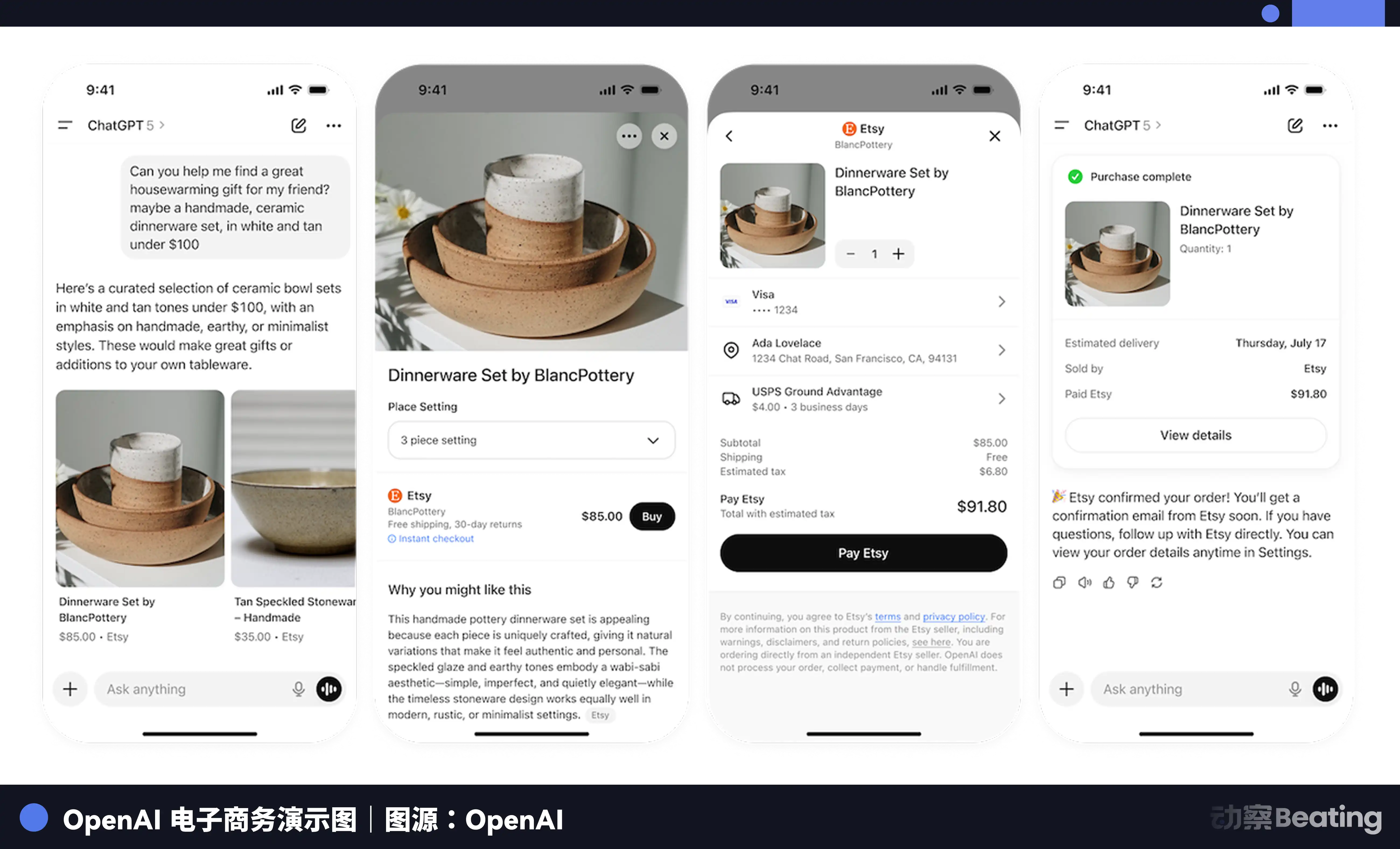
According to Walmart's data, the conversion rate of returning to the retailer's website for checkout is three times higher than staying in ChatGPT. A Forrester survey also confirmed this, noting that among users frequently using AI Q&A engines, completing purchases within the engine was the least adopted use case.
Why doesn't it work to buy things in ChatGPT? Because OpenAI is trying to act as an e-commerce platform without owning any commercial infrastructure.
The most superficial reason is habit. Users approach ChatGPT like they do Google, seeking information and making comparisons. Once they've made a decision, they go to a trusted place to swipe their card. Asking users to input their credit card number in a ChatGPT interface naturally raises feelings of insecurity. Users might let AI help choose skincare products, but when it comes time to pay, that cold, unfeeling chat box cannot provide the reassurance they need.
Moreover, even if users were willing to pay, OpenAI couldn’t handle it.
As of February 2026, OpenAI hadn't even established a system for collecting and remitting sales taxes across various U.S. states. This is infrastructure that Amazon and eBay took years to streamline. Not to mention fraud detection, return processing, and consumer protection compliance. Guaranteeing real-time accuracy of price, inventory, and shipping information among millions of products is not merely about writing a few lines of pretty code; it's a quagmire.
Forrester analysts pointed out that Instant Checkout was riddled with errors during its launch, did not support multi-product shopping carts, lacked promotional codes, and even had non-transparent shipping information.
The most awkward part isn't OpenAI itself, but the partners that were pulled into this.
PayPal not only invested engineering resources for integration but also committed to increasing procurement of OpenAI's API and enterprise subscriptions. Now, the returns from the shopping side have evaporated, but the procurement commitments remain. Insider reports suggest that PayPal and OpenAI are assessing how to continue their relationship.
Etsy's position isn’t easy either. Previously, it bore some of the transactional costs for merchants out of its own pocket, and now it has to start from scratch to create its ChatGPT App, with the fee structure still not settled. An Etsy spokesperson stated that they are still unclear whether OpenAI will charge for transactions within the App.
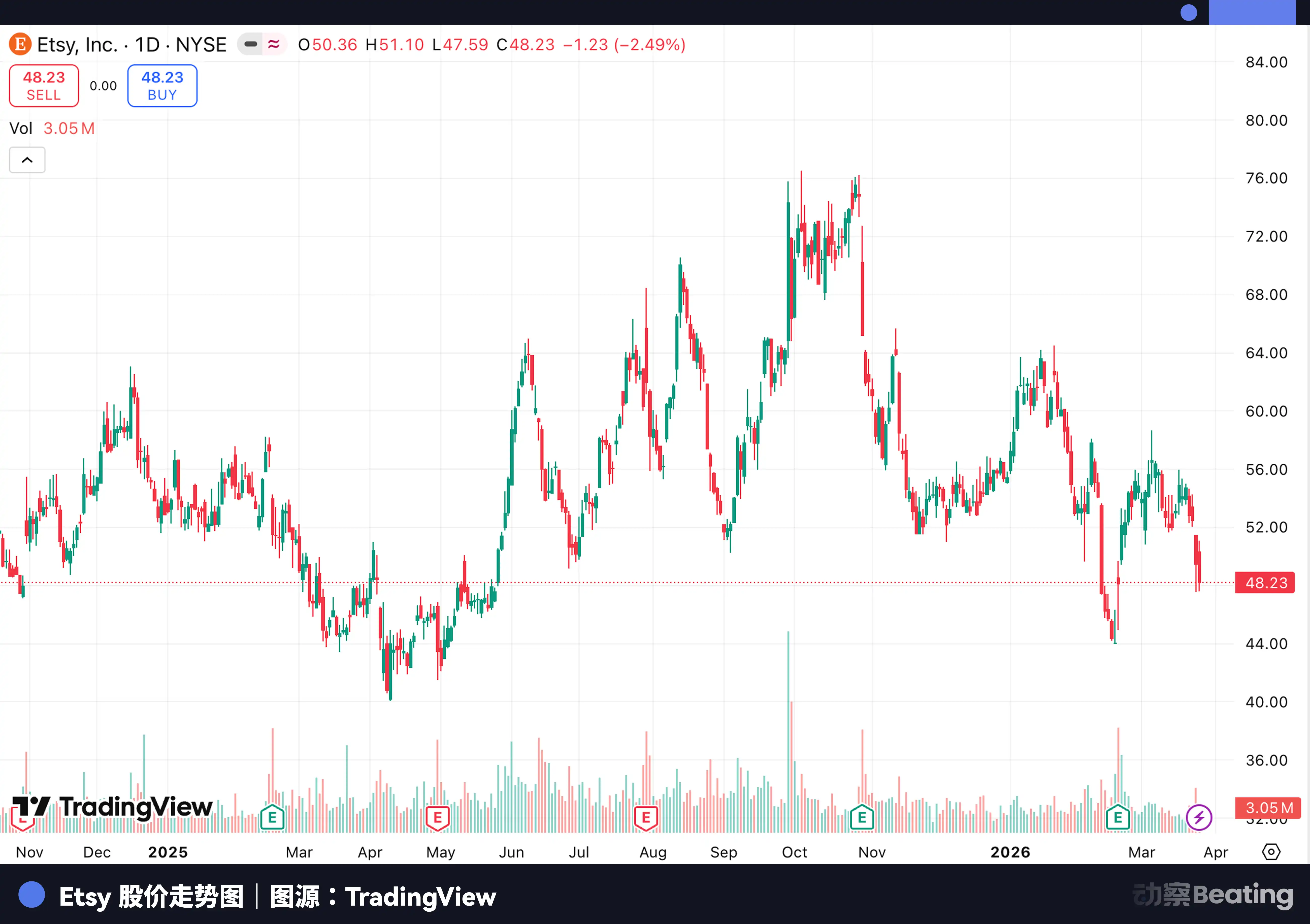
Stripe's situation is relatively better, as it was already handling subscription payments for OpenAI. This revenue stream does not rely on shopping functionality. However, most partners do not have such a cushion.
For a company heavily pivoting towards enterprise customers, this kind of shifting collaboration model poses a significant risk.
Alibaba has succeeded, but that is both a gift and a shackle of the ecosystem
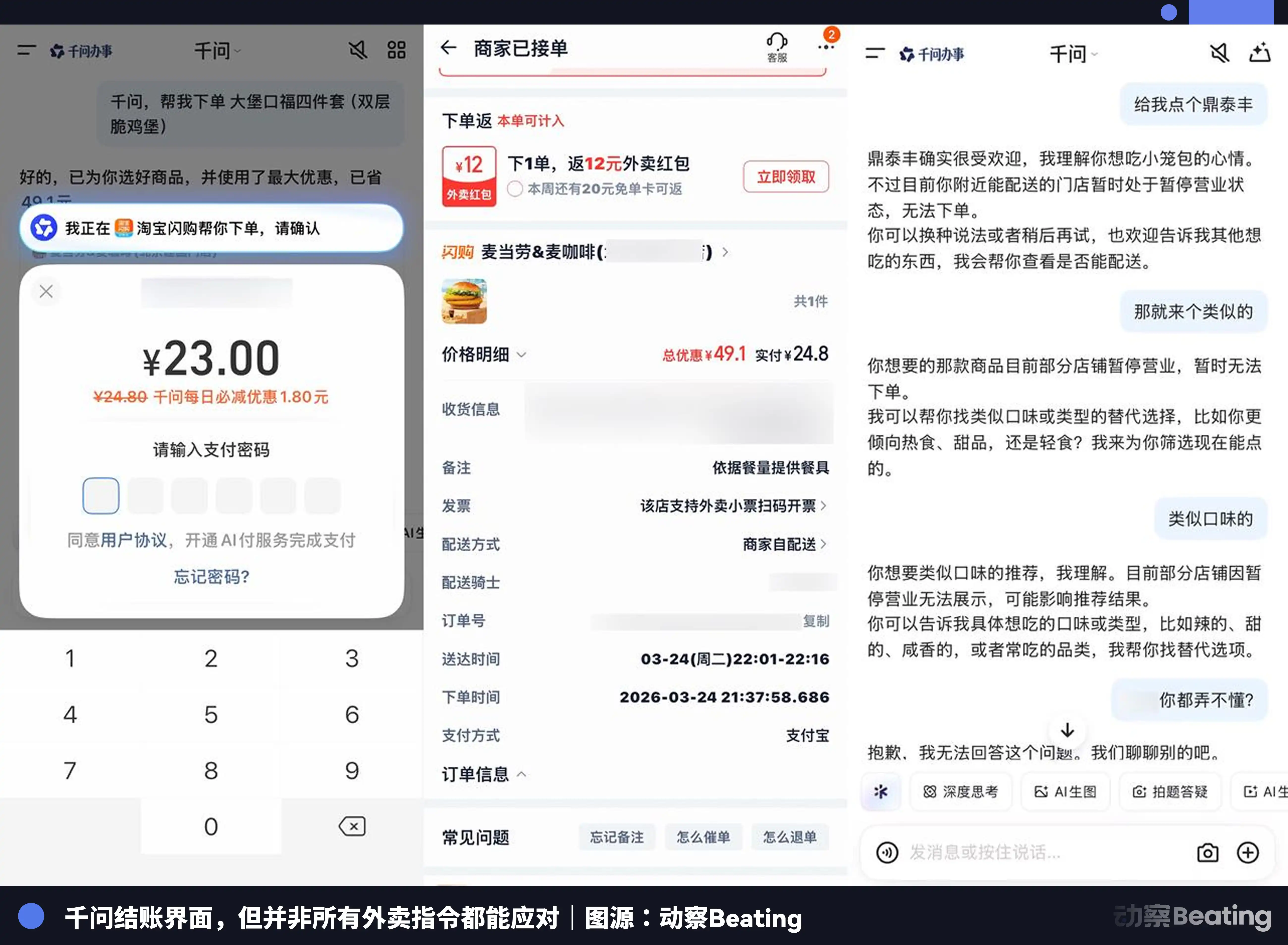
On January 15, 2026, while OpenAI's Instant Checkout was still struggling, something significant happened on the other side of the globe. Alibaba held a launch event in Hangzhou, announcing that Qianwen App would fully integrate with Taobao, Alipay, Taobao Flash Sale, Fliggy, and Amap. At the event, Wu Jia, president of Qianwen's consumer-facing business group, spoke into his phone saying "Help me order 40 cups of Ba Wang Tea Ji's Bo Ya Jue Xuan," and half an hour later, a rider delivered it.
If we compare OpenAI's Instant Checkout with Qianwen's AI shopping, the reason Qianwen can succeed is not due to which large model is smarter; the difference lies in who owns the entire chain from product discovery to package delivery.
Taobao's hundreds of millions of SKUs, Alipay's native payment, and the logistics network of Shunfeng, Yuantong, and others are readily available. When you ask Qianwen, "I’m going to hike in Four Girls Mountain next week, what equipment do I need?" it can directly pull up a list, and you just click a card to place your order seamlessly, as there are no cross-company data authorization negotiations or profit-sharing disputes involved.
That’s why domestic companies like DeepSeek and Kimi can't accomplish this. No matter how strong the reasoning ability is or how proficient the long text generation, without shelves and payment systems, they ultimately can only throw you a link. Alibaba has managed to embed the shelves directly in the chat box, while OpenAI attempted to make the chat box pretend to be a shelf.
But is this truly a perfect final form?
Alibaba's achievement is due to dragging its heavy commercial ecosystem into the large model, but when Qianwen acts as both referee and athlete, can its recommendations remain objective?
If I ask Qianwen which phone is good, will it prioritize recommending a product on Taobao for commercial interests? When an AI loses its neutral retrieval stance and devolves into a super sales assistant for its own e-commerce, can it still be considered a general-purpose brain? Essentially, this is about using a heavy old ecosystem to bind a new technological entry point.
Qianwen's "success" is not only a gift of the ecosystem but also a shackle of the ecosystem.
500 billion dollars and the elephant in the room
OpenAI also realizes it lacks this heavy ecosystem, but that’s not the only reason for its abandonment. The true elephant in the room is Amazon.
At the end of February, Amazon announced a $50 billion investment in OpenAI, becoming the exclusive third-party cloud provider for its enterprise platform Frontier. When your largest financier is a giant holding 40% of the U.S. e-commerce market and is actively promoting its AI shopping guide Rufus, it would seem quite unwise to continue pursuing in-app cash registers.
Moreover, this money itself is a powder keg. Microsoft believes that AWS hosting the Frontier platform violates its exclusive cloud agreement with OpenAI and is considering legal action. OpenAI's lawyers are using the technical term "stateful architecture" to circumvent the spirit of the contract.
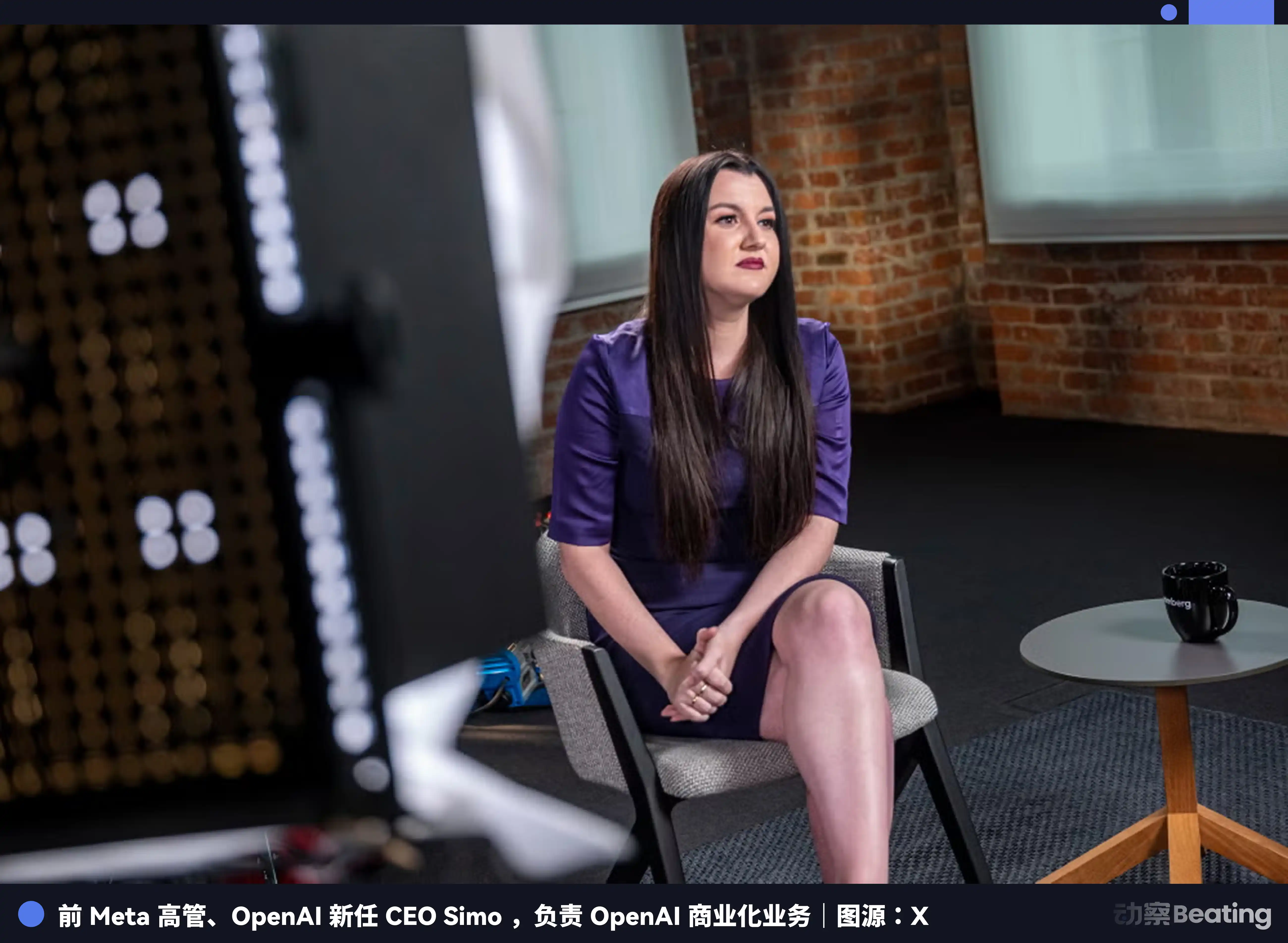
To survive the competitive landscape among giants, OpenAI must make choices. In mid-March, OpenAI's business CEO, Fidji Simo, announced a major strategic shift at a staff meeting: "We cannot miss this moment because of side projects."
What drives OpenAI's urgency is the rapid rise of Anthropic in the enterprise market. The Claude Code and Cowork products are making Anthropic the preferred choice for enterprise clients, with Ramp credit card data showing new enterprise customers are choosing Anthropic three times more frequently than OpenAI.
Last year, OpenAI spread itself too thin: Sora video generation, Atlas browser, Jony Ive hardware, e-commerce features, advertising business, adult mode.
Now, they must focus on two core battlefields: coding tools and enterprise customers. After all, making money from enterprise clients is far more reliable than scraping transaction fees from chat boxes.
OpenAI expects that this year, enterprise customers will contribute half of total revenue, up from about 40% currently. To achieve this, it plans to double its staff from 4,500 to 8,000, with new hires concentrated in engineering, research, sales, and product development.
In San Francisco, OpenAI signed a new lease, expanding its office space to over 1 million square feet.
The true battlefield of AI shopping is not the cash register
OpenAI's retreat does not mean that AI shopping is dead; on the contrary, the upper half of the funnel has been completely reshaped.
More than half of American consumers have become accustomed to letting AI help them make decisions. They no longer search for scrubbers and flip through ten pages of ads but instead directly ask, "Which one offers the best value for money?" Discovery, research, and comparisons are being pushed forward, with retailers’ own channel value being ruthlessly eroded.
However, the last-mile transaction closure requires not smarter models, but more complete infrastructure.
OpenAI has explicitly stated that it will prioritize product search and discovery moving forward, and will incorporate ads within ChatGPT. This is its way of monetizing at the discovery layer, which is much more realistic than trying to create a cash register.
Ultimately, the most likely candidate to replicate Alibaba's path in the U.S. is not OpenAI, but Amazon. It possesses user profiles, product maps, payment channels, and fulfillment infrastructure.
OpenAI’s attempt to create its own e-commerce closure failed, and then it took money from the largest e-commerce platform, potentially ending up as that platform's traffic entry point.
In China, Alibaba's full-stack advantage has led Qianwen down a different path, but this path is one only Alibaba can navigate. Wu Jia, president of Qianwen's consumer-facing business group, stated a critical point: Comprehensive agent competitiveness is very strong, while vertical agents are increasingly proven to be a phase product; there won't be many AI applications that exist independently as entrances in the future.
This translates to business language that in the future, those platforms that already possess a complete ecosystem will succeed in creating an AI shopping closure, rather than AI companies that start from scratch building everything.
You can’t grow a cash register in a chat box, but if the cash register is already in your store, casually placing a conversational AI nearby seems entirely natural. That is the most important lesson of AI shopping in 2026.
免责声明:本文章仅代表作者个人观点,不代表本平台的立场和观点。本文章仅供信息分享,不构成对任何人的任何投资建议。用户与作者之间的任何争议,与本平台无关。如网页中刊载的文章或图片涉及侵权,请提供相关的权利证明和身份证明发送邮件到support@aicoin.com,本平台相关工作人员将会进行核查。


