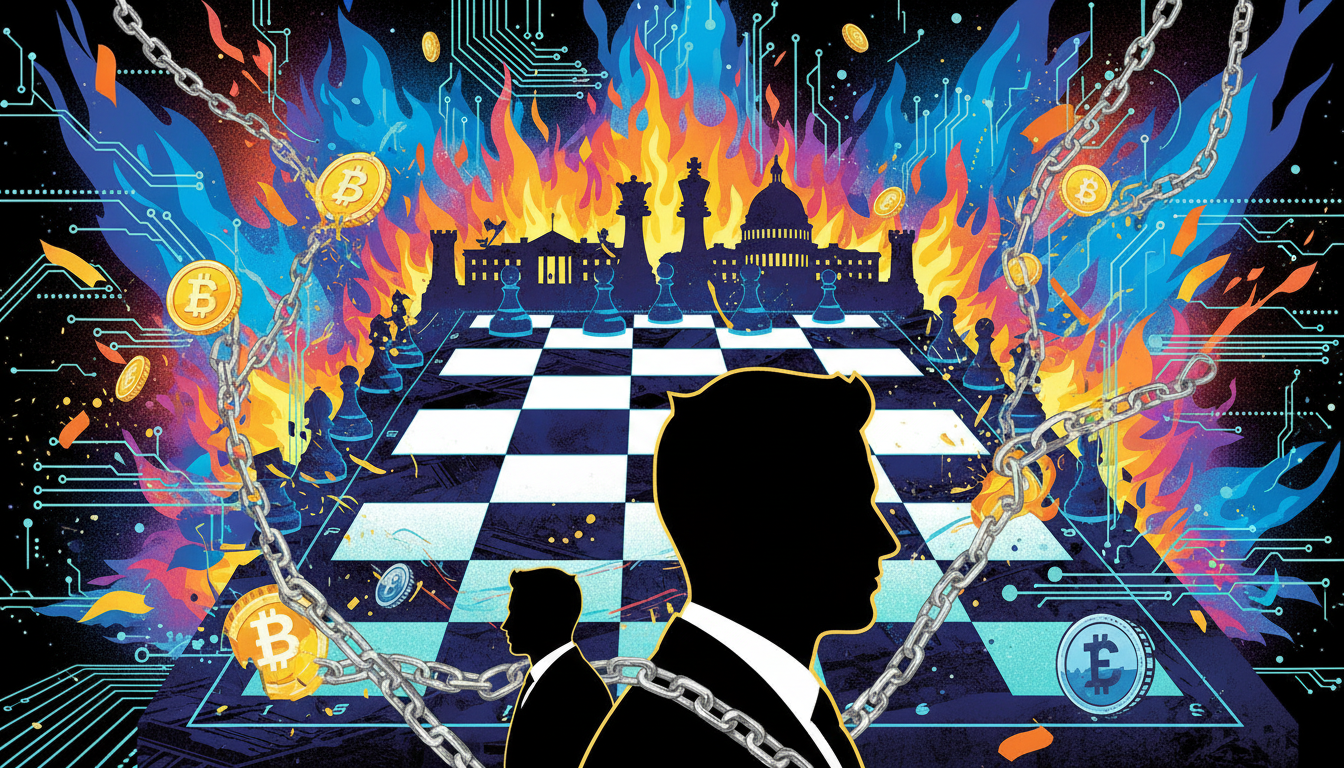
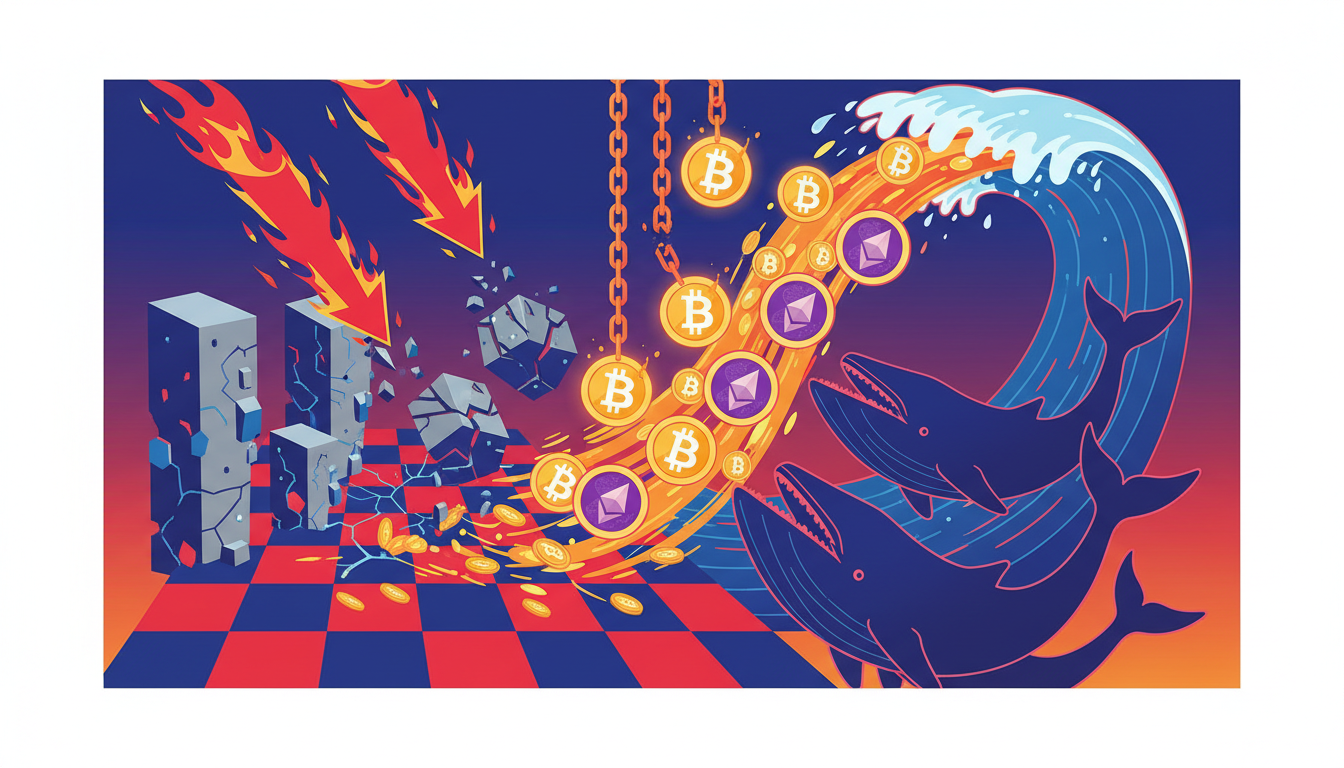
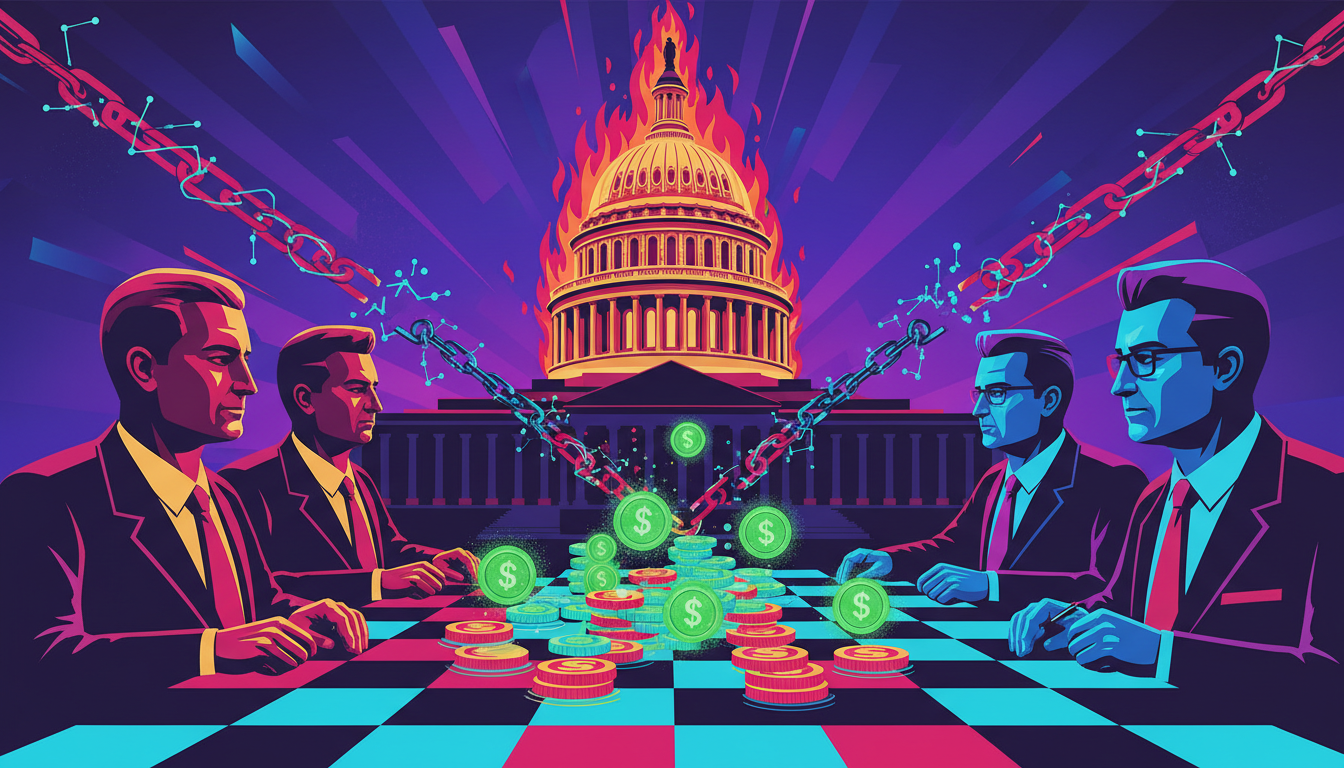
On March 27, 2026, at 8:00 AM East 8 Time, Circle once again unblocked some business hot wallets after freezing a batch of USDC-related addresses under a sealed order from the Federal District Court for the Southern District of New York. This round of operations focused on two business wallets tagged as "500 Casino" and "Whale", while public on-chain tracking and disclosure from a single information source revealed that approximately 13 related addresses remained frozen. This means that, from the initial comprehensive freeze to previously unfreezing only 1 out of 16 addresses under pressure, and now "only loosening two business pipelines," Circle is positioning itself at the center of the tension between compliance obligations and the expectations of decentralization. Centralized dollar tokens can be rapidly frozen and selectively unblocked under a single order, and this capability itself is becoming a question that the cryptocurrency world must confront.
Behind the Sealed Order: The Muted Directive
The source of this freeze and unfreeze is a sealed order from the Federal District Court for the Southern District of New York, case number 26-cv-2327. As things stand based on publicly available information, all the outside world can see is the case number itself: the identity of the plaintiff, the facts of the accusations, the amount involved, applicable legal bases, and other critical details are all sealed, leaving even the basic contours of the litigation in an information vacuum. For a narrative centered around "verifiability," this handling, which only exposes the case number while keeping everything else muted, creates a strong sense of cognitive discomfort.
On-chain investigator ZachXBT pointed out in follow-up that “The basic details of the case (such as the plaintiff, expert witnesses, etc.) have still not been made public,” which actually addresses the community's main concern: Circle's actions are "in accordance with the law," but "who is the law coming from, based on what charges, and targeting which specific behaviors" remains hidden from everyone. The profound information asymmetry makes it difficult for bystanders to perceive "procedural justice," replaced instead by an instinctive wariness of black boxes and excessive power.
In an ecosystem that emphasizes high on-chain transparency, where any transfer can be tracked, the traditional judicial system’s reliance on sealed procedures to manage assets means covering a layer of invisible decision-making over a transparent ledger: everyone can see that tokens are frozen and funds cannot flow, yet no one can know "who" and "why" the pause button was pressed. This on-chain public / off-chain sealed dislocation turns power that should be scrutinized into a fact that can only be passively accepted, amplifying the structural distrust of centralized nodes within the cryptocurrency community.
The Path from Comprehensive Freeze to Selective Unfreeze Shrinks
Initially, Circle executed a comprehensive freeze of a batch of USDC addresses based on court orders, covering not only the business hot wallets under discussion but also more addresses whose purposes have not been fully disclosed. As time passed and public opinion magnified, Circle previously announced that under pressure, it had "unblocked 1 out of 16 frozen addresses," but did not provide further public explanation. This time, it adjusted further, removing the two business hot wallets marked as "500 Casino" and "Whale" from the frozen list, while simultaneously keeping about 13 related wallets still frozen, forming a very “delicate” selective picture.
This action is hard to simply categorize as “complete obedience” or “complete defiance.” From the outcome, Circle seems to be trying to find balance between two dimensions: one is to comply with the court order by maintaining the freeze on some addresses to indicate its compliant posture within the U.S. judicial framework; the other is to unfreeze business-related hot wallets that have broader impacts to ease the pressure on affected parties and the market. This strategy of “partial unfreeze” reflects a realistic consideration: it cannot openly disregard court orders while needing to reduce systemic trust damage at the market level.
It is worth noting that in public communications, Circle has almost exclusively emphasized its position of “complying with court orders.” It has not provided substantial explanations on why it did not raise procedural objections, whether it attempted to negotiate a narrower scope of freeze, or how it assessed the impact on innocent users. This space that only showcases "results" without displaying "process" has in turn intensified various perceptions of the outside world: some believe that Circle has no choice but to comply; others speculate that it still has untapped negotiation chips between compliance and business. The absence of information itself has already become part of this incident.
The Passive Involvement of On-chain Casinos and Whale Wallets
In this round of freezing and unfreezing, the two USDC business hot wallets marked as "500 Casino" and "Whale" play the typical role of business conduits. They are not personal long-term storage addresses, but rather central nodes used by trading platforms, gambling applications, or other service providers to handle user deposits, settlements, and internal clearings. Therefore, when Circle executes the freeze, not only are these two addresses locked, but multiple centralized exchanges are unable to process normal withdrawals, directly interrupting the capital circulation of related businesses.
For these business entities, a hot wallet being frozen does not equate to a specific large holder having “asset issues,” but is more akin to the valve being shut on the main water pipe. Upstream exchanges cannot access the flow, downstream users cannot withdraw, and the liquidity of the entire business chain suddenly hits pause, also affecting end users who may not even know Circle exists or may not understand the court order mechanism. Thus, the freeze shifts from a "judicial measure targeting certain addresses" to a functional blockade on the entire business ecosystem.
A deeper issue lies in that: most users have never directly interacted with Circle when using these services; they trust the exchanges or the applications themselves, only to later find that their funds' fate is still subject to a higher centralized issuer. A single action from Circle will first ripple through to exchanges and business entities, which then reflect it back to users in the form of "withdrawal restrictions" or "temporary maintenance," ultimately creating new trust pressures. For many, this incident is not only a financial risk; it is also a first-time realization that their so-called “on-chain assets” can be simultaneously clutched by multiple centralized nodes at critical moments.
The Counteraction Path of Affected Parties Gathering for Rights Protection
As the scope of the freeze becomes clearer, some affected business entities have already stated that they are "planning to jointly take legal action against the freeze," targeting Circle and the yet-to-be-disclosed plaintiff behind it. This means that the originally one-way power chain from the court's sealed order to Circle and then to the chain is now facing bottom-up reverse inquiry: the affected parties are no longer satisfied with “waiting for unfreeze,” but are attempting to pursue the question "who pressed the freeze button" through similar judicial channels.
Within the U.S. judicial system, these on-chain business parties are mostly not in a position of rhetorical advantage: whether in resources, compliance experience, or familiarity with the local legal environment, they struggle to compare with potentially large institutions or professional teams behind this. Therefore, their strategy is to pair collective action with public exposure: raising the visibility of the case through united voices, on the one hand, increases their bargaining chips in legal maneuvering, and on the other, exerts reputational pressure on Circle and the unknown plaintiff, forcing the latter to rethink the costs between maintaining sealed status and partially disclosing more information.
Once these rights protection actions truly enter substantive proceedings, even if the final outcome is difficult to predict, they may at the procedural level pry open the current “black box” pattern. For instance, the court may need to examine the scope, duration, and impact on unrelated parties of the freeze in greater detail, or at certain stages, limited disclosures of some documents; plaintiffs may also need to bear more explanatory obligations, clarifying why their requests must be implemented through such a broad asset freeze. Regardless of how tortuous the process, forcing more information into the sunlight will itself change the current state of “only seeing enforcement, but not the reasons” imbalance.
The Dual Identity of USDC and the Rewriting of Ownership Perception
Over the past few years, USDC has long been regarded by many institutions and individuals as a relatively "safe dollar substitute": issued by an American company, subject to auditing and regulation, with low volatility and smooth integration into the banking system, making it a basic tool for hedging and settlement. However, in this incident, the same USDC, under a sealed order, turned into a lever and instrument for regulatory and judicial pressure on on-chain subjects—its technical programmability and compliance modules are used in practice to precisely lock the asset flow rights of a batch of addresses.
This situation reflects an inherent contradiction in Circle's identity: on one hand, it is a key infrastructure provider in the cryptocurrency industry, providing on-chain dollar liquidity to exchanges, project parties, and users; on the other hand, it is a compliance financial company deeply embedded in the U.S. traditional financial regulatory framework. This positions it naturally at the intersection of two orders: needing to meet authorities' demands for anti-money laundering, sanctions enforcement, and judicial assistance while exhibiting the expectation from users to be an "impartial settlement layer" that does not readily interfere in specific business activities. When court orders directly conflict with user interests, Circle's choices are bound to displease everyone.
Zooming out, this incident reflects a broader ecosystem of dollar-pegged tokens: As long as assets are held in a bank or custody account of a certain centralized entity and the on-chain contracts are embedded with "freeze/unfreeze" functions, judiciary and regulatory bodies can directly reach "decentralized" capital flows through this technical pathway. For users, the so-called "ownership of assets on a certain address" is increasingly not a simple proposition on legal and technical levels: assets can be confined by contract logic + judicial orders, with ownership evolving from "pure control of private keys" to "conditional rights within specific rules and power systems." This Circle incident merely made this transition manifest in a more impactful way.
Will the Next Freeze Happen Faster? The Cryptocurrency World's Self-Reflection
Overall, this partial unfreezing of the USDC incident exposes at least three layers of overlapping structural contradictions. The first is the conflict between judicial sealing and on-chain transparency: the court protects the case details with sealed procedures, yet presents the on-chain operations nakedly without context, creating a perceptual rift where results are visible, but reasons are not. The second is the dislocation between Circle’s compliance obligations and user asset expectations: in the face of U.S. law, Circle must follow orders; in the eyes of crypto users, however, USDC is expected to be a relatively "neutral" settlement asset, and the gap between these expectations is amplified with each choice between freezing and unfreezing. The third is the imbalance between the plaintiff's invisibility and the pressure on the frozen party: the party initiating judicial action remains hidden behind sealed documents, while the business parties and users enduring liquidity shocks and trust losses must self-validate and seek rights in the public domain.
It is foreseeable that as the scale of on-chain funds and compliance requirements rise in tandem, similar cases are likely to increase rather than decrease in the future. The "freeze-ability" of centralized dollar tokens like USDC will no longer be perceived as an anomalous risk by the market, but will gradually be regarded as an integral part of their design—a characteristic that must be confronted, buried behind contracts and company registration locations. Market participants will no longer be "surprised to find that it can be frozen," but will consider this a prerequisite in the initial design and asset allocation.
In this context of reshaping expectations, developers, project parties, and users will also diverge in their response paths: one road leads to a greater migration to decentralized assets and settlement layers, using protocols devoid of single-point control and freeze functions to carry core value storage and critical system aspects; the other path involves redesigning risk isolation and asset custody methods within compliance structures, for instance, limiting freeze-able assets to operational and turnover tiers while placing user long-term reserves in structures less susceptible to single-point restrictions. Regardless of which path is ultimately chosen, this Circle incident reminds the entire industry: as the cryptocurrency world becomes increasingly entrenched in traditional systems, the boundaries of freedom and control will not naturally remain in past imaginations but will need to be redrawn through a series of concrete conflicts.
Join our community to discuss and grow stronger together!
Official Telegram community: https://t.me/aicoincn
AiCoin Chinese Twitter: https://x.com/AiCoinzh
OKX Welfare Group: https://aicoin.com/link/chat?cid=l61eM4owQ
Binance Welfare Group: https://aicoin.com/link/chat?cid=ynr7d1P6Z
免责声明:本文章仅代表作者个人观点,不代表本平台的立场和观点。本文章仅供信息分享,不构成对任何人的任何投资建议。用户与作者之间的任何争议,与本平台无关。如网页中刊载的文章或图片涉及侵权,请提供相关的权利证明和身份证明发送邮件到support@aicoin.com,本平台相关工作人员将会进行核查。