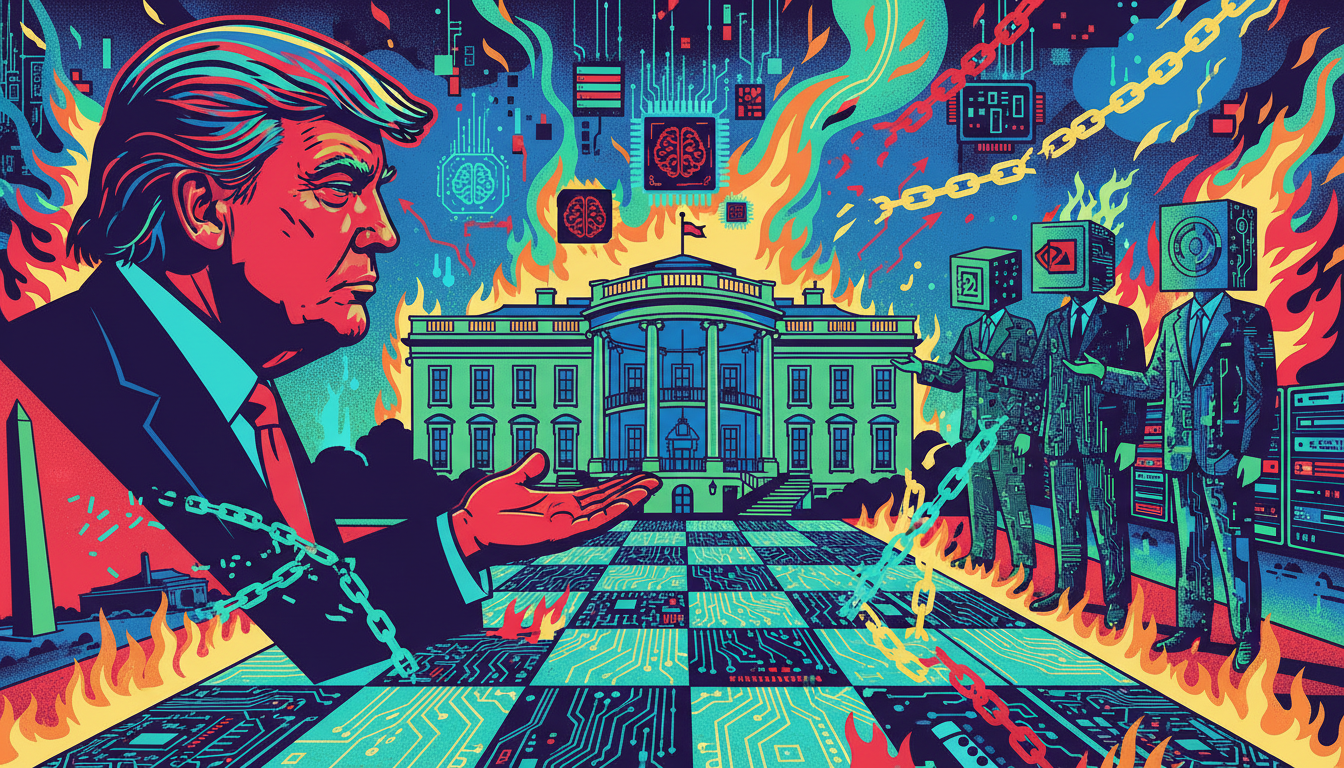
On March 25, 2026, Eastern Eight Time, the boundary between cryptocurrency exchanges and traditional markets was further blurred: Bitget and Binance almost simultaneously launched a new round of stocks and crypto derivatives. On one side, Bitget introduced contracts related to equities and industry indices such as EWT and KWEB into its cryptocurrency trading terminal, while on the other side, Binance launched BSB perpetual contracts and several TradFi equity contracts, and promoted assets similar to PRL, valued at approximately 9.6 million USD (according to a single source). On the same day, tensions escalated in the Middle East — the Iranian military reported missile strikes on a U.S. aircraft carrier, emphasizing the control over the Strait of Hormuz and the Persian Gulf, tightening key energy corridors once again. Product innovation and geopolitical conflict overlapped in the same time window, as exchanges tried to capture new flows with equity-oriented products while macro conflicts were repricing risk appetite, and this tension quickly fed back into the volatility and sentiment in the crypto market.
Bitget's Bet on Equity Contracts
The core of Bitget's new launch is bringing EWT and KWEB equity contracts into its derivatives matrix. Although the official details of these contracts' components have not yet been disclosed, from their naming and positioning, one type targets energy and infrastructure-related equity exposure, while the other leans towards internet and regional technology sectors, corresponding to actual industry and regional risk exposures. For Bitget, this means a transition from pure crypto cycles to incorporating energy, technology, and specific regional equity sentiments, allowing users to simultaneously bet on multiple narratives within a single interface.
What is even more concerning is that this batch of contracts supports up to 25 times leverage, a figure sourced from a single public source and has not been cross-verified by multiple parties, necessitating users to self-verify and fully understand the risks involved. High leverage means that even if the underlying volatility is not extreme, a significant price fluctuation in a short time can trigger mass liquidations. For veteran players accustomed to high-leverage contract games, this may just be a "routine configuration," but for traditional finance newcomers attracted by the "equity contract" narrative, this risk amplification mechanism can easily be underestimated.
The choice to amplify stock derivatives at this current juncture is not coincidental. Bitget is clearly aware that the stickiness of traditional brokers and U.S. stock brokers to global retail investors is becoming a traffic entry point that cryptocurrency exchanges are competing for. By providing crypto-based contracts, U.S. stock-related equity contracts, and thematic indices under a single account, Bitget hopes to directly convert the interest in "U.S. stock/sector stories" into on-chain trading behavior, lowering the migration threshold for newcomers and TradFi users. However, this strategy, compounded by the rising tensions in the Middle East, will present the complex risks of high leverage + cross-market to new users at a time of maximum macro uncertainty.
In the context of escalating tensions in the Strait of Hormuz and significant volatility in energy price expectations, stock contracts linked to energy, technology, and emerging market sentiments can quickly become amplifiers if faced with extreme gaps or intraday shocks. Prices do not need to exhibit a "disastrous" trend; as long as the market experiences severe mispricing at the moment news breaks, high-leverage positions may see concentrated liquidations, and what was initially viewed as "an additional asset choice" could rapidly evolve into a primary battleground for risk clearing.
Binance's Multi-Pronged Strategy and Sentiment Binding
Unlike Bitget's concentrated efforts, Binance's layout resembles a multi-pronged offensive. Firstly, it continuously launches new crypto-native BSB perpetual contracts, expanding its contract lineup with high-volatility, strongly narrative assets; secondly, through TradFi equity contracts, it incorporates equity assets related to U.S. stocks and sector indices into its contract system, forming a complete spectrum from pure crypto to traditional equities. Additionally, through the Binance Alpha platform, Binance has also introduced new assets like PRL, with a market cap of around 9.6 million USD, a number that similarly lacks multi-source validation and requires investors to clarify the limitations of their information sources before use.
This dual-track approach reflects differences in strategy and target demographics: Bitget seems to be signaling to external users with the concept of "equity contracts," while Binance consolidates its status as a "universal asset supermarket" — maintaining dominance in crypto-native contracts while ensuring that any macro narrative (AI, U.S. tech stocks, energy, or even emerging markets) finds a corresponding trading entry on the platform. In comparison, Binance's target demographics for equity-structured, equity-related products are more tiered: one end includes professional players deeply engaged in crypto, willing to engage in cross-market arbitrage, while the other end consists of semi-professional users familiar with U.S. stocks and macro narratives, eager to experiment with 24-hour trading through crypto accounts.
When leading platforms actively connect themselves with the sentiment of traditional markets through equity contracts and TradFi assets, the transmission pathway of volatility becomes more direct. Theoretically, significant declines in U.S. stocks, surging energy prices, and sector rotations in traditional markets will be quicker to reflect through these contracts into the crypto space:
● If there is significant negative news after U.S. stock market hours, contracts linked to the corresponding indices or constituent stocks will likely price first during crypto trading hours, potentially amplifying overnight gaps due to existing crypto market sentiment;
● Conversely, macro positive developments and sector rotations can also preheat risk appetite for the next trading day in the crypto space through these equity contracts, thus influencing the buying and selling pace of high-beta tokens and thematic sector coins.
Binance and Bitget's differing strategies ultimately point to the same result: the sentiment and funding paths of traditional markets are being more tightly welded into the crypto derivatives system, with the coupling of pricing quietly increasing.
Missiles Targeting Aircraft Carriers and the Energy Gate of Hormuz
Alongside the accelerated expansion of product lines, the narrative of war in the Middle East is once again heating up. According to public reports, the Iranian military reported missile strikes on a U.S. aircraft carrier, but did not disclose or confirm specific results and casualty details; we do not make any assumptions regarding the related effects here. In the same round of statements, Iranian Navy Commander Irani emphasized that the Iranian Navy has "strong control and dominance capabilities over the Strait of Hormuz and the Persian Gulf," a phrase that alone suffices to illustrate the tense degree of maritime corridor games.
The Strait of Hormuz is the throat of the global energy system — a large amount of seaborne crude oil and natural gas must pass through this narrow channel. Once the situation escalates to an actual blockade or high-risk state, global energy prices, inflation expectations, and demand for safe-haven assets will quickly be repriced. For risk assets, this is an impact involving the simultaneous elevation of discount rates, corporate costs, and risk premiums, and crypto assets are now firmly included in this macro equation.
Historically, the relationship between Middle Eastern conflicts and Bitcoin has oscillated between "safe haven asset" and "high beta risk asset": when localized conflicts escalate but do not trigger systemic financial tension, Bitcoin is often treated by some funds as a "non-sovereign asset" to hedge against credit risks, benefiting prices in the short term; conversely, when conflicts tighten U.S. dollar liquidity and overall global risk appetite declines, Bitcoin and mainstream crypto assets tend to retrace along with U.S. stocks, exhibiting beta properties closer to "high-risk tech stocks." Currently, the Iranian missile strikes on aircraft carriers and the emphasis on control over Hormuz have once again forced the market to face the dilemma of this attribute switch: will funds view on-chain assets as a safe haven in the fires of war, or as risk assets needing to be reduced?
Pricing Distortion of Equity Contracts Amidst War Clouds
Pulling the timeline back to March 25, 2026, we see two dimensions of narrative simultaneously driving up: one is that exchanges accelerated the launch of stock and equity derivatives on the same day, and the other is that the tensions in the Middle East were ignited by tactical actions at the same moment. When traditional financial sentiment is quickly transmitted on-chain, the pricing mechanisms in the crypto market undergo structural changes. Originally, the volatility of U.S. stocks and crude oil futures was primarily transmitted through sentiment, liquidity, and certain related sector tokens. However, when platforms like Bitget and Binance directly offer contracts linked to U.S. stocks and specific sectors, the transmission path shifts from "indirect spillover" to "direct linkage + leverage amplification."
When crude oil and military sentiments dominate the macro narrative, equity contracts linked to energy, broad market indices, or even military-related enterprises can easily become tools for cross-market arbitrage and mispriced kills:
● Macro traders can hedge or speculate on the next day's trends in U.S. stocks using equity contracts traded 24 hours on crypto exchanges, forming "night market rehearsals," which can in turn influence tokens related to energy and military narratives on the same platform;
● Traditional retail investors may misunderstand short-term volatility as long-term trends under the stimulus of conflict news, using high leverage to bet in a certain direction. If the news eases or is reinterpreted by the market, directional mispricing and concentrated liquidations can occur.
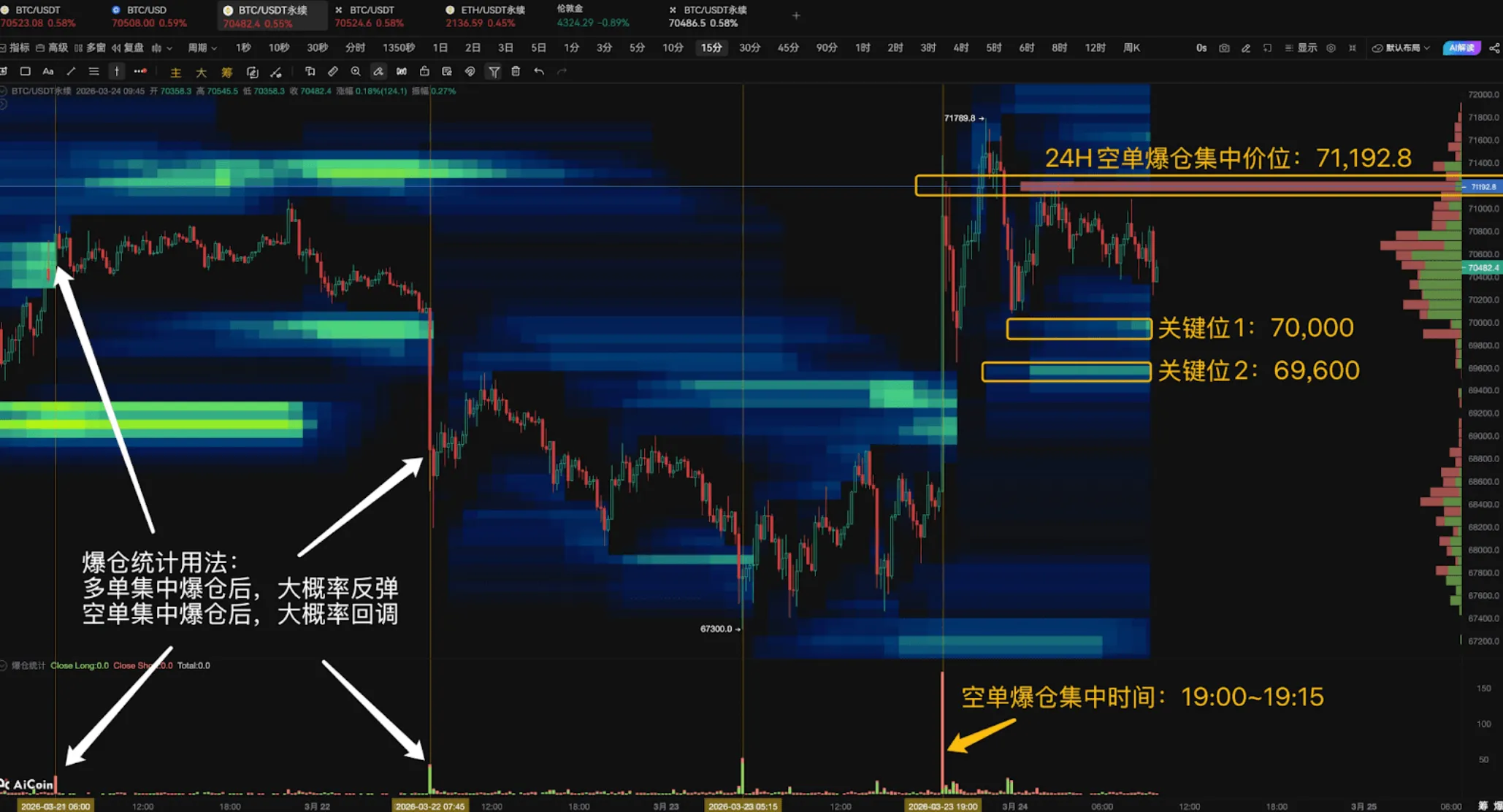
In such a structure, the intersection of high-leverage derivatives and geopolitical conflict news becomes a potential ignition point for chain reactions of cascading liquidations. Historically, whenever macro black swan events occur, the amount of liquidations in the contract market and the density of clearing sharply amplify — even if we currently lack specific liquidation data, we can see consistency in mechanisms from past similar events: prices sharply gap due to news, the risk engine triggers margin maintenance requirements according to established rules, positions with higher leverage are liquidated first, leading to a second wave of price shocks, thus impacting more positions that were originally not touching risk lines, creating a "clearing - decline - re-clearing" chain reaction.
This also exposes a more macro worry: as exchanges continuously stack cross-market, high-leverage, multi-asset trading entries, they increasingly resemble a "full-time cross-market trading terminal." However, during black swan events, this structure is likely to amplify rather than hedge systemic risks — when sentiments around U.S. stocks, crude oil, military, and crypto assets are tied together by the same pool of liquidity and leverage mechanisms, any imbalance on one side may self-amplify within the platform.
Regulatory Uncertainty under American Political Clouds
Apart from the Middle Eastern conflicts, American domestic political trends are also closely monitored by the market, but many pieces of information still remain to be verified. Discussions about congressional struggles, the boundaries of presidential power, and even the 25th Amendment are lively in public opinion but do not form a completely clear policy pathway. In this context, figures like Congresswoman AOC have repeatedly expressed viewpoints regarding presidential powers and the 25th Amendment in public settings, which are verifiable historical statements; however, due to the lack of complete and unified official confirmation, it is not prudent to make definitive descriptions or extrapolate conclusions regarding specific stances on current events.
The U.S. political rift and fluctuating regulatory attitudes have directly exacerbated compliance uncertainties for exchanges when laying out traditional financial products. On one hand, exchanges hope to attract more users from the U.S. and globally with U.S. stock contracts and equity derivatives, packaging themselves as "the next-generation global securitization trading platform"; on the other hand, U.S. regulatory agencies' attitudes toward crypto platforms providing similar securities or derivative securities products remain unstable, and regulatory boundaries and enforcement standards may shift with political winds. This uncertainty compels exchanges to pursue depth and breadth in their products while facing the long-term suspense of "when they will be classified, and how licensing will materialize."
When the U.S. political game and Middle Eastern conflicts coexist, they together form a dual macro ballast that weighs on the market. The former determines the medium-term trends of regulation and U.S. dollar liquidity, while the latter influences energy and inflation expectations, both of which ultimately affect traders' position choices between "pure crypto assets" and "U.S. stock/equity contracts." For users of platforms like Bitget and Binance, the question is no longer "buy crypto or buy stocks," but "how to switch risk exposures across different assets and leverage types on the same trading terminal in a highly uncertain political and geopolitical environment."
A New Casino in the Storm: The Mismatch of Exchange Innovation and Risk
Throughout this round of expansion in equity and stock derivatives by Bitget and Binance, we can see that the boundaries of cryptocurrency exchanges' roles are being reshaped: evolving from early "crypto-to-crypto matching platforms" into comprehensive trading hubs that encompass U.S. stock contracts, equity derivatives, crypto futures, and new asset issuances. The introduction of equity contracts does not merely add a few trading pairs but brings traditional financial risk factors, regulatory issues, and liquidity shocks into the on-chain ecosystem. Exchanges are no longer just participants in the crypto cycle; they are actively integrating into the global risk pricing system.
Meanwhile, the escalation of the Middle Eastern situation and U.S. political risks have made the identity of crypto assets oscillate increasingly between "safe haven" and "high beta assets." Iran's strong maritime stance and the stress in Hormuz have heightened energy and inflation expectations, while U.S. stock and crude oil may see more frequent gaps and sharp falls; the political tug-of-war within the U.S. adds volatility to the regulatory and liquidity environment. Bitcoin and mainstream crypto assets may be seen as hedging tools at certain stages, but they inevitably bear selling pressure during liquidity crunches and declines in risk appetite.
In this situation, investors need to closely monitor several key variables in the short to medium term:
● The evolution of the situation in the Strait of Hormuz and the Persian Gulf — each escalation from verbal threats to actual blockades may reprice energy and inflation expectations;
● The cadence of U.S. regulatory and political attitudes — including enforcement actions targeting crypto platforms, definitions of equity derivative nature, and the progress of congressional negotiations on relevant topics;
● The transparency and enforcement of risk management rules by leading exchanges — whether they can avoid "technical stomp" and excessive liquidations in extreme markets.
From a more cautious perspective, the current speed of product innovation and risk management capabilities show a visible mismatch. The race between Bitget and Binance in contract multipliers, cross-market products, and asset launches indeed enhances trading convenience and strategic space, but it also unknowingly builds a complex system characterized by high coupling, high leverage, and cross-assets. Should a black swan moment occur, where geopolitical conflicts, U.S. stock flash crashes, and regulatory crackdowns intersect, whether the existing risk engine and margin mechanisms can withstand such multi-source shocks is a systemic issue that has yet to be fully validated. For institutional and individual traders, there may be a need to more coolly assess whether the underlying structural support of this "new casino" is sufficiently sturdy while admiring its dazzling lights.
Join our community to discuss together and become stronger!
Official Telegram community: https://t.me/aicoincn
AiCoin Chinese Twitter: https://x.com/AiCoinzh
OKX welfare group: https://aicoin.com/link/chat?cid=l61eM4owQ
Binance welfare group: https://aicoin.com/link/chat?cid=ynr7d1P6Z
免责声明:本文章仅代表作者个人观点,不代表本平台的立场和观点。本文章仅供信息分享,不构成对任何人的任何投资建议。用户与作者之间的任何争议,与本平台无关。如网页中刊载的文章或图片涉及侵权,请提供相关的权利证明和身份证明发送邮件到support@aicoin.com,本平台相关工作人员将会进行核查。