In late March 2026, Beijing time, market rumors indicated that SpaceX is planning to secretly submit IPO application documents to regulators, aiming for a listing on the U.S. capital market in June 2026. This means that one of the most closely watched private aerospace companies over the past twenty years is moving from private equity and over-the-counter trading fantasies to open market valuations. Several cryptocurrency and technology media outlets cited a single source stating that the IPO is expected to raise over $75 billion, placing it in the candidate list for "one of the largest IPOs in U.S. history". With macro liquidity being re-priced and panic in the crypto market soaring, a traditional tech feast that could attract a vast amount of funds and attention suddenly enters the spotlight, inevitably raising a core question: Will SpaceX draw emotion and funds away from the crypto space, or conversely ignite a frenzied celebration of high-risk assets?
The $75 Billion Giant Variable Coming to Wall Street
Currently, the information surrounding the SpaceX IPO remains in a “half-official, half-rumored” phase. Research briefs show that market rumors generally point to: SpaceX is ready to secretly submit its S-1 documents to the SEC, with the time frame roughly between March 25 and April 1, 2026, but this timeline is still marked as “to be verified” and has not yet received formal confirmation from either regulators or the company. What is clearer is that the target listing date has been reported by multiple parties as June 2026, which allows Wall Street and global tech investments several months for pre-heating and position adjustments.
What truly ignites discussions is that glaring number—“over $75 billion”. According to the single source cited in the briefs, this scale would push SpaceX directly into the ranks of one of the largest IPOs in U.S. history. Considering that traditional giant IPOs often oscillate in the range of several billion dollars, over $75 billion implies: either a very high valuation with a lower circulation ratio, or a mid-to-high valuation corresponding to historically rare actual fundraising amounts. As a result, the market is discussing around a rough range: if $75 billion is only the “lower limit,” the upper limit could be further raised; conversely, even if $75 billion is closer to the “ideal target,” its size is enough to reshape the risk preference structure of the primary and secondary markets in a short time.
Starting from the positioning of “one of the largest IPOs in U.S. history,” the traditional tech and finance circles have been reviewing the impact paths of past significant IPOs on indices, industry funds, and risk tolerance—although specific historical cases and figures were not provided in the brief, it is certain that such events often accompany index weight restructuring, passive funds being forced to adjust their holdings, and fierce competition for allocations of new issues. SpaceX reaching this height in pricing itself is a narrative pricing: it is not just an aerospace company’s IPO, but seen by the market as a potential turning point for the reordering of tech cycles, liquidity cycles, and risk assets.
It needs to be repeatedly emphasized that the $75 billion scale and the statement of “one of the largest IPOs in history” are currently only media and single-source calculations and interpretations and have not received official endorsement from SpaceX or regulators. Key data such as specific issuance price range, final fundraising total, and circulation ratio still have considerable uncertainty. For the crypto market, all emotional predictions and financial interpretations based on these numbers can currently only be viewed as scenario hypotheses rather than established facts.
The Tear Between Musk's Narrative and Asset Pricing
Beyond scale, what is even harder for the market to digest is the valuation. The brief cites a single source claiming that the current discussion range for SpaceX's overall valuation is roughly between $1.25 trillion and $1.75 trillion, and this span itself reflects a huge discrepancy between narrative and pricing. Without a public prospectus, detailed financial statements, or clear disclosures of profitability pathways, the market's pricing of SpaceX is more a discounting of Musk's personal IP, aerospace, and Starlink vision, rather than traditional DCF model calculations.
Supporting the high-valuation narrative is a whole set of business stories that have been repeatedly magnified: Reusable rockets reduce launch costs, allowing SpaceX to capture the “ticket” to commercial aerospace; the global deployment of Starlink is seen as a potential internet infrastructure for hundreds of millions of users; combined with grand visions like “Mars colonization” and “space Internet,” these stories are packaged in the capital context as “tech assets with limitless long-term imagination.” However, the research brief explicitly points out that, currently, key financial data such as SpaceX's revenue, profit margins, Starlink ARPU, and launch business profit structure have not been disclosed, and media and commentators are prohibited from fabricating or excessively extrapolating these specific numbers; thus, the high valuation carries a considerable degree of “faith premium.”
In this information structure, different types of funds naturally exhibit a tear in expectations. Traditional institutions care more about verifiable cash flows, regulatory compliance, and index inclusion rhythms; they might view SpaceX as a “high-risk but eligible for core allocation” tech weight; retail investors and tech bulls may be more easily ignited by Musk's personal narrative and the grand vision of “changing the world”, treating it as the starting point for the next long-term ten-bagger. This positioning difference is bound to create significant expectation gaps and emotional noise in the IPO pricing range, first-day performance, and subsequent volatility.
For crypto investors, Musk is no longer just a CEO but a personified symbol of “high-risk, high-growth assets”. From Tesla's extreme stock price volatility to his ability to drive certain tokens into rapid short-term spikes with a single sentence on social media, the crypto space has long been accustomed to placing “Musk-related” in the same risk spectrum as highly volatile crypto assets. Once SpaceX makes its way to the secondary market, many crypto funds will instinctively view “SpaceX/Tesla/Musk-related tokens” as a loosely defined conceptual basket and adjust their holdings in synchronization with unified risk preferences; this symbolic pricing itself is the most concerning part of this round of IPO narrative.
Will the Panic Level 14 in Crypto be Bled Dry?
As the massive imagination of the SpaceX IPO heats up on Wall Street, the crypto market is in an emotional low point. Research briefs show that the current crypto market sentiment is assessed as “extreme fear”, with a fear and greed index of only 14 (according to a single source), meaning that within the spectrum of risk assets, the crypto sector is under dual pressure from sentiment and valuation. Against this backdrop, a potential IPO aiming to raise over $75 billion undoubtedly represents a high-intensity external shock variable for the already fragile crypto funds and confidence.
From a fund allocation perspective, institutions and high-net-worth funds often conduct unified risk budgeting management between “high-growth tech stocks” and “high-volatility crypto assets.” An IPO of a tech giant like SpaceX possesses a more mature regulatory framework and exit channel on one hand, and the expectation of being included in mainstream indices and receiving long-term buy-in from public and passive funds on the other; by contrast, crypto assets, when facing short-term macro headwinds and intensified regulatory uncertainties, are easily regarded as liquidity pools to prioritize in reducing holdings. When the mega IPO kicks off bookkeeping and allocation competitions, many institutions may likely reduce some crypto positions to exchange for new stock subscription chips, leading to a passive withdrawal of funds from the crypto market in the short term.
With crypto already in a panic zone, such a large-scale new stock supply cannot be underestimated in its pressure effect on overall liquidity and risk preferences. On one hand, idle cash and venture capital will be strongly attracted to participate in the IPO defined as a “historical event in technology”; on the other hand, crypto funds that are already deep in losses or observing will face a practical choice: either to continue to stubbornly hold in the low-mood, unclear narrative crypto space, or to shift limited risk budgets to a more clearly expected and uniformly story-driven traditional tech target.
Based on this, two opposing paths of capital flows can be roughly delineated:
● “Throw coins to subscribe for the IPO” path: Pessimists believe that the crypto bear market has not ended, choosing to cut losses or reduce holdings in crypto assets when the fear index is between 10-20, redirecting funds towards the SpaceX IPO and other “high-growth but more mainstream” tech targets, hoping to compensate for previous losses in crypto with new stock dividends. This path will likely amplify the decline and panic emotionality in the crypto space in the short term.
● “Buy the dip in crypto” path: Another portion of funds might view SpaceX's listing as a signal for the start of a major cycle of tech risk assets, and on the premise that traditional tech targets have already been crowding priced in, they may choose to increase positions in crypto assets that have been mispriced near a fear index of 14, betting that both tech and crypto will mutually benefit from a new round of heightened risk preferences in the medium to long term. This path emphasizes a "pressure then lift" dimension temporally, with short-term fluctuations exchanged for cyclical resonance.
Which path will dominate depends on the macro environment, regulatory direction, and the advancement of the SpaceX IPO itself in the coming months, but it is certain that: the crypto market can no longer consider itself an isolated world.
Does Tech Bull Market Expectation Bite Back or Ignite Crypto?
If we shift the perspective from a single event to a cyclical level, the SpaceX IPO appears more like a highlight node in the narrative of a tech bull market. Historical experiences indicate that when large tech IPOs cluster and tech stock indices continuously hit new highs, the market often forms a self-reinforcing cycle: media boosts “innovation bull market” expectations → funds chase leading tech weights → risk preferences spillover to more marginal, higher beta assets. In the last round of the cycle, this communication chain has frequently bundled some emerging tech sectors with crypto assets, creating an emotional resonance.
In this macro analogy, if SpaceX successfully lists with a high valuation and high subscription enthusiasm, it is likely to be interpreted as a significant event marking the official return of the tech innovation bull market. High-boom lanes like aerospace, satellite Internet, AI computing power, and autonomous driving will be reconnected in narrative, forming a grand framework of “the main line of technology for the next decade.” For the crypto market, although there are fundamental differences in industry logic and regulatory attributes with these lanes, they are often categorized in the same group of “high volatility, high expected return” options within the risk asset basket of fund managers.
Once the sentiment for tech growth overall rises, crypto assets often emerge in a higher beta form: when the tech index rises by 1%, some crypto sectors may rise by 3%-5%; when tech stocks experience a 10%-15% pullback, crypto may face a 30%-50% deep reordering. This “amplifier” characteristic arises from the weakness of crypto in valuation anchors and cash flow support, which also means that when sentiment shifts from recovery to euphoria, crypto has a latency for catch-up or even over-exuberance. Thus, the SpaceX listing may trigger a time-offset trading thought process:
● In the early phase, funds focus on buying up SpaceX and a host of mainstream tech weights, while crypto continues to bottom or even test new lows within the extreme panic zone;
● As SpaceX's share price stabilizes or even strengthens, confirming the narrative of “the return of the tech bull market,” some funds that missed the main rising phase begin to look for potential targets for catch-up with higher elasticity, and crypto, as one of the most marginal but liquid assets in the risk spectrum, has an opportunity to receive relatively concentrated incremental attention during this phase;
● If macro liquidity cooperates, the time-lag trading of tech stocks leading the charge while crypto lags in catch-up could become one of the main lines for some hedge funds and long-short strategy funds.
Of course, all of this hinges on the smooth progression of the SpaceX IPO, absence of black swan events in the macro environment, and no sudden regulatory escalations. For the crypto space currently oppressed by panic indices, a more pragmatic approach is to view this event as a potential anchor point for the resonance of technology and risk assets over the next one to two years, rather than a simplistic narrative of “betting on the IPO will lift Bitcoin.”
From Rockets to On-Chain: How Musk's Assets Are Linked to Emotion
Expanding the perspective from the company to the individual, another important impact of the SpaceX IPO is the further expansion of Musk’s overall asset map. Over the past decade, Musk has built an emotional and financial “invisible channel” between the two narratives of tech and crypto through Tesla's stock price and statements on social media—from publicly announcing Tesla's purchase of Bitcoin to frequently mentioning certain tokens on social platforms, and releasing hints through details like profile pictures and bios, he has repeatedly created a “Musk's statements → related assets spike/dive” chain reaction in the market.
After SpaceX lands in the public market, this “super symbol” role will be further strengthened. On one hand, Musk will control both Tesla and SpaceX, two large-cap giants, and his personal wealth and voice will be cyclically magnified according to stock price performance; on the other hand, the market and media will spontaneously bundle everything related to him—from Tesla stocks to SpaceX and crypto assets he has publicly mentioned or are considered “favorites”—into a vague “Musk concept” basket for trading.
On an operational level, this means that in the future, whenever SpaceX or Tesla experiences significant positive developments, revaluation, or regulatory events, the market may habitually interpret a “rocket-to-chain emotional link”:
● SpaceX/Tesla stock prices surge → Media emphasizes the narrative of “Musk wins again” → Social platforms spread old memes and images about Musk and crypto again → Some funds attempt to short-term trade in “Musk concept coins” or broader high-volatility crypto sectors;
● Conversely, when Musk's assets face severe drops due to regulatory pressure, disappointing performance, or public controversy, the market may also simultaneously “risk-reduce” on certain crypto assets, believing that “the diminishing Musk halo will affect the premium space of related assets”.
It must be emphasized that this linkage is based more on emotion and narrative than on any solid fundamental correlation. The number of rocket launches, growth in Starlink users, and progression of Mars plans have almost no direct causation with the technical iterations or network effects of a particular crypto project. However, in the reality of highly fragmented information and narratives far outweighing on-chain data, the name “Musk” is sufficient to bridge short-term emotional connections between the two markets. For participants, understanding this narrative-driven correlation, while clearly separating it from fundamental logic, is a basic competency when facing the future “Musk asset universe”.
Giant IPO Ahead: Should the Crypto Space Bet or Wait?
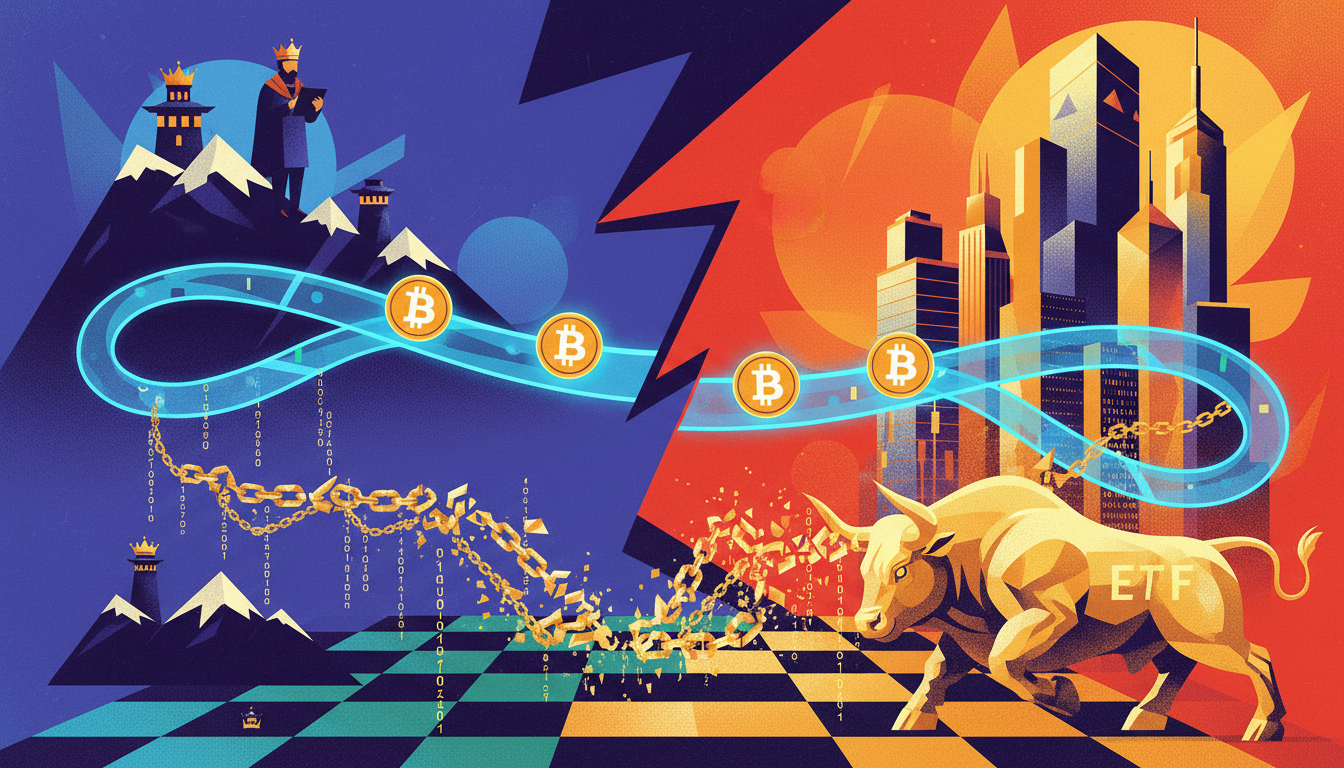
In summary, the SpaceX IPO still presents significant uncertainties in scale, valuation, and timeline: the over $75 billion fundraising scale and the positioning as “one of the largest IPOs in U.S. history” stem from single media and market extrapolations; the valuation range of $1.25 trillion to $1.75 trillion lacks supporting financial details; the timeline for secretly submitting the S-1 from late March to early April 2026 and a June 2026 listing remains at the “to be verified” stage. Nevertheless, should such a large-scale and symbolic event proceed, the impact on the crypto market is bound to be two-way: in the short term, it may siphon off some liquidity and attention through the “throw coins to subscribe for IPO” path, but in the medium to long term, it may provide a stage for retuning the pricing of crypto as a high beta risk asset under the grand narrative of “the return of the tech innovation bull market.”
In the immediate environment of a fear level of only 14 and the market being in extreme fear, crypto investors might find it more beneficial to systematically reflect on: Where is global risk preference and liquidity migrating? How do the relative attractivity of tech stocks, treasury bonds, commodities, and crypto change under a unified asset allocation framework? SpaceX is merely a highlight node in this liquidity redistribution and not the entire answer.
In terms of operational thinking, a more rational path might be: Differentiate short-term emotional impacts from medium to long-term resonance opportunities for tech risk assets. In the short term, be alert for crypto liquidity contractions and volatility amplifications caused during the SpaceX IPO advancement due to subscriptions and rebalancing; in the medium to long term, view the performance of tech mainlines such as SpaceX, AI, semiconductors as external thermometers for judging whether the major cycle of risk assets is restarting, and accordingly determine the weight adjustment pace of crypto in the overall asset portfolio, rather than simply betting "SpaceX's listing = Bitcoin surge".
Lastly, a point that needs to be continually reminded is: Maintain caution regarding all unverified timelines and valuation figures. Whether regarding “submitting a confidential S-1 at the end of March 2026”, “listing in June”, “$75 billion in fundraising”, or “$1.5 trillion valuation midpoint”, these are all merely circulating versions from the market and media, and only the documents formally disclosed by SpaceX and regulators carry legal validity and price guidance significance. Until then, keeping a sufficient distance from any “certain transactions” based on rumors may be more important than chasing the story itself.
Join our community to discuss and grow stronger together!
Official Telegram community: https://t.me/aicoincn
AiCoin Chinese Twitter: https://x.com/AiCoinzh
OKX benefit group: https://aicoin.com/link/chat?cid=l61eM4owQ
Binance benefit group: https://aicoin.com/link/chat?cid=ynr7d1P6Z
免责声明:本文章仅代表作者个人观点,不代表本平台的立场和观点。本文章仅供信息分享,不构成对任何人的任何投资建议。用户与作者之间的任何争议,与本平台无关。如网页中刊载的文章或图片涉及侵权,请提供相关的权利证明和身份证明发送邮件到support@aicoin.com,本平台相关工作人员将会进行核查。