On March 25, 2026, OpenAI announced the cessation of Sora consumer applications and API services. This product line, which was seen as a “hit in consumer video generation” over the past year, has hit the brakes. At the same time, OpenAI explicitly stated that it would redirect the teams and technologies behind Sora towards world simulation research, and confirmed that the previously much-anticipated cooperation with Disney has also been terminated, marking a sudden halt to what seemed to be a clear path to commercialization. In the short term, this represents a shift of resources from traffic and revenue expectations to foundational research and long-term visions; in the long run, it is an open experiment on how a company chooses between blockbuster products and underlying science. Complicating matters, this is all happening within a macro environment characterized by extreme fragility — the cryptocurrency fear index has fallen to 14, classified as “extreme fear”, with tech stocks and risk assets under pressure, and the market scrutinizing every attempt to “tell new stories” in the most conservative manner.
From a global toy to the moment the stop button was pressed
In the consumer wave of generative AI, Sora was once one of the most symbolic products: generating high-fidelity video from a text prompt became the focal point in discussions about countless short videos, advertisements, and the creator ecosystem. It was not only seen as “the next-generation content production tool” but also regarded as a landmark for AI's entry into mainstream entertainment and the creative industry. Although external observers never obtained authoritative data on Sora's specific user scale, its phenomenon on social media, where it was imitated and experimented with by creators, was sufficient to qualify it as a “blockbuster in consumer video generation.
The shutdown was not conducted quietly. “We're saying goodbye to Sora...”, came from a public statement by @soraofficialapp, marking a clear end to this product line. Subsequently, OpenAI confirmed the cessation of Sora's consumer applications and API services, categorizing it as a product line adjustment and resource restructuring, rather than a simple delisting or technical mishap. From the wording to the rhythm, this resembled a strategic contraction that had long been planned, chosen to be “publicly announced” at a certain critical point.
For developers and content companies relying on Sora APIs for creation, experimentation, and commercial exploration, this decision's impact was immediate: service windows close, calling interfaces halt, and the existing prototypes, workflows, and business models built around Sora were forced to be interrupted or migrated. Those film post-production teams, advertising agencies, and MCN institutions that treated Sora as part of their toolchain needed to reassess their costs and processes, seek alternatives, or completely reconstruct their creative production methods.
More symbolically, it was the termination of the collaboration with Disney. Previously, this collaboration was seen as a template for “Hollywood + generative video”: one side had the world's strongest IP library and content distribution channels, while the other represented cutting-edge AI technology, creating almost limitless narrative space. Now, with the cooperation hitting the stop button, it not only sharply contracted this commercial imagination route but also conveyed a message on an emotional level: even the partners with the most traffic and IP resources cannot, at this stage, form a stable and sustainable commercial loop with general video generation models.
No more blockbusters: Why OpenAI turned to world simulation
While announcing the shutdown of Sora consumer services, OpenAI explicitly stated, “will continue to use relevant teams in the direction of world simulation research”. This statement from a spokesperson provides the main clue for understanding this shift: rather than continuing to invest computing power and teams into a high-traffic product under compliance and cost pressures, it is better to channel the same talents and technology accumulation into the “world simulation” research that is more aligned with the long-term AGI roadmaps. World simulation can provide models with more consistent and controllable physical and social environments, serving as a foundational infrastructure for stronger general intelligence.
The pressures facing consumer video generation products are common across the entire industry. First is computational resource consumption: generating high-resolution, long-duration, multi-camera videos requires far more resources for training and inference than texts and images. Even without discussing specific per-call costs or overall expenditure scales, this product line inherently implies continuous computational expense and infrastructure pressure. Second is content review and copyright risks: video is more impactful than text and images and crosses regulatory red lines more easily. Ensuring that generated content does not cross illegal, violent, sexual, or extreme political boundaries under extensive open calls is a severe test of any platform's governance capability; simultaneously, the blurred lines between generated content and real IP, celebrity images, and brand assets magnify potential copyright and portrait rights disputes.
“High computational costs are the main reason for suspension” is a market speculation that has appeared multiple times in social media and analytical articles, but these remain at the verification pending level. In publicly available information, OpenAI did not list computational costs as a primary reason and did not disclose any specific data regarding cost structures or financial performance. What can currently be established as fact is that the product line has stopped serving ordinary users and developers, and the team and technology have been redirected to world simulation research; as for the underlying financial pressures, regulatory games, or internal strategic conflicts, they can only be seen as inferences for external observers.
The termination of collaboration with Disney also released another layer of signals in terms of content distribution and brand safety. For traditional content giants, collaborating with cutting-edge AI companies was initially a way to expand productivity and explore new narratives; however, when generative models struggle to provide sufficient certainty regarding copyright, brand tone, and content controllability, this collaboration becomes a high-risk experiment. The termination of collaboration does not equate to a rupture of the relationship; rather, it resembles a pause button on the large-scale production of commercial content using general video generation models under existing institutional and technological conditions. Its symbolic significance lies in: the mainstream content distribution system temporarily cannot fully embrace these open tools; they require stronger world understanding, finer control interfaces, and more mature risk control frameworks.
$1 billion pivot: From quick profits to betting on world models
At the same time as the Sora shutdown, OpenAI announced through its non-profit sector, an investment of $1 billion in AI-related endeavors (according to Jinshuju data). This move occurred almost simultaneously with the product line adjustment, creating a stark contrast: on one side is the shrinkage of consumer video generation business, while on the other is an increase in investment in the long-term AI ecosystem and foundational research. The temporal overlap makes this series of decisions seen as a comprehensive strategic pivot rather than isolated events.
The position of “world simulation” and “world models” in the current AI roadmap is far superior to “playful video generation toy.” World models attempt to allow AI to build a coherent, inferable internal environment representation, enabling the model to understand actions and outcomes across time and scenes; world simulation utilizes this capability to run complex physical, economic, and social interactions in a virtual environment, validating strategies, planning, and reasoning. In comparison, short video generation is more of a visual demonstration and application frontend for such foundational capabilities: the former is “engine and world,” while the latter is “onto the screen.” OpenAI's adjustment can be seen as pulling resources from the “display layer” back, reinvesting in the evolution of the “engine itself.”
From a business perspective, yielding to foundational research investment means proactively forgoing potential revenue growth from consumer-grade SaaS. Sora represented a relatively straightforward commercial path: monetizing video generation capabilities through subscriptions, pay-per-use, or sharing revenue with content platforms; world simulation and world models, however, lean more towards medium to long-term returns, potentially releasing value through enterprise-level solutions, industry collaborations, or even future new forms operating systems and agency systems. For a leading AI company, this will directly affect the market's perception of its cash flow curve, profit models, and future “valuation story” — shifting from “short-term high-growth application company” to “heavy asset, long-cycle infrastructure and research company.”
Compared to traditional tech giants, OpenAI's path choice is particularly unique. Over the past decade, cloud computing and advertising businesses have provided large tech companies with stable and massive cash flows, in turn supporting AI foundational research and chip investments; these companies first built a “money-making machine” and then used profits to back foundational science challenges. Yet, OpenAI has always been in a “non-profit + commercial dual-track structure”: the non-profit entity controls the direction and intellectual property of the company, while the commercial entity provides capital and market pathways. This time, by directly investing $1 billion through the non-profit sector while simultaneously shrinking the most engaging consumer product line, it effectively chose a path of “first solidifying research and world models before considering how to maximize monetization”. This structural choice reflects its long-term commitment to AGI and increases dependence on capital market patience and partner trust.
Adjusting course during a panic cycle: AI and crypto's resonance
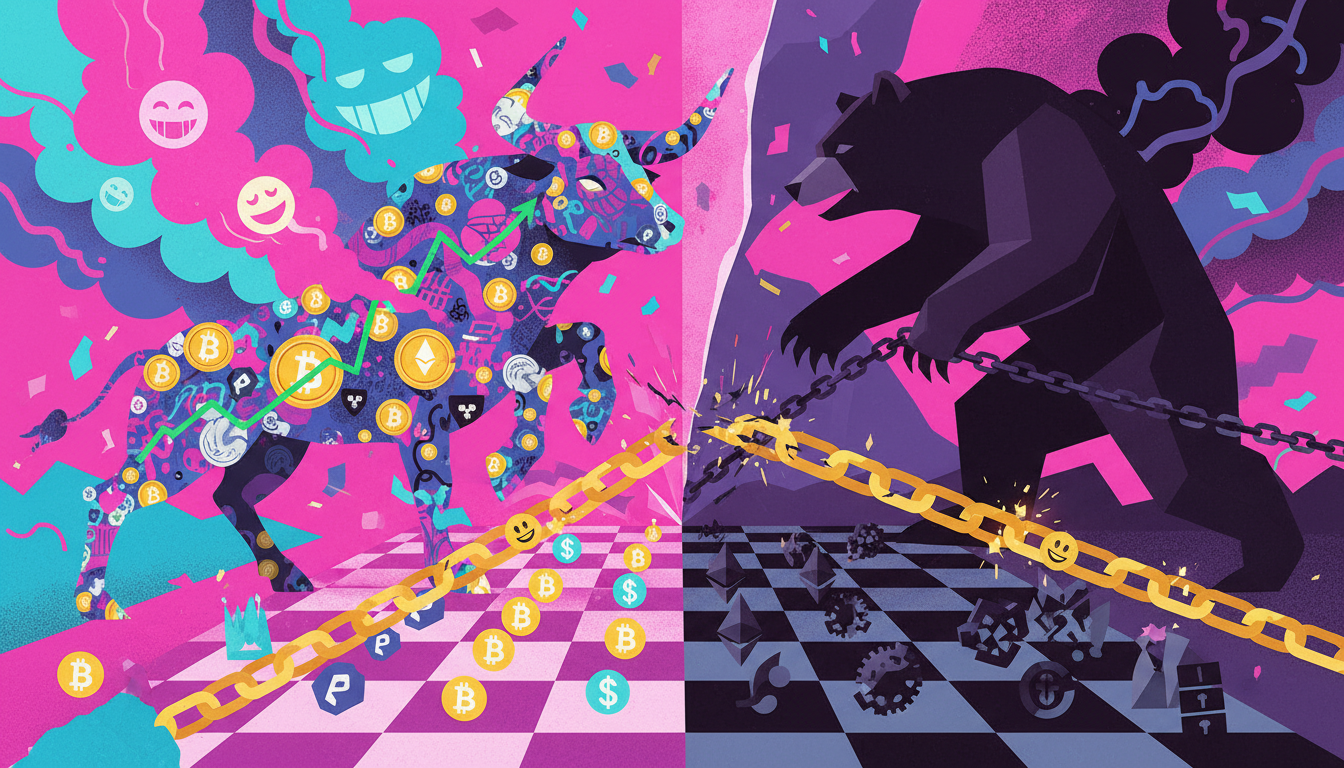
As OpenAI collectively turned on product and capital allocation fronts, external market sentiment was in a state of extreme fragility. The cryptocurrency fear index has dropped to 14, classified as “extreme fear”, indicating that most investors' tolerance for risk assets has fallen to low levels, preferring to wait with cash or reduce their positions rather than pay a premium for new stories. Tech stocks and assets associated with AI concepts also face valuation compression pressures; in this environment, any action of “withdrawing from C-end blockbusters to shift toward foundational research” will be amplified as a signal: short-term monetization is below expectations, or there is hesitation regarding profitability paths.
From an investor's perspective, when a leading AI company shifts from intuitive and easily communicable C-end products to abstract, complex foundational research, it intensifies the divide between “long-term stories vs short-term realizations”. Optimists might view this as proactively building a long-term moat before the bubble fully bursts, placing limited resources on directions closer to AGI such as world models and world simulations; the cautious may interpret it as: when even leading companies choose to shut down consumer-grade hits, it indicates that the current application layer business model's uncertainty exceeds expectations, making future revenue and profit paths even murkier. This divide will be manifested as greater volatility in valuations and positions.
Shifting the perspective back to the cryptocurrency industry, this kind of “narrative rotation” is not unfamiliar. From the DeFi frenzy to the NFT carnival and later to infrastructure and L2 construction, each round experienced a transition from “highlights on the application end” to “catching up on underlying infrastructure.” The application phase brings users and topics but also exposes issues like performance, security, and regulation; subsequently, funds and developers return to the fundamentals, attempting to reconstruct protocols and expand capabilities to support the next wave of application trends. OpenAI's shift from Sora to world simulation, in a sense, parallels the cryptocurrency industry's retreat from hot applications back to the rhythm of Rollup, DA, and modular architecture: when the existing technology stack cannot support larger-scale and more complex narratives, the cycle naturally settles at the bottom.
This also means that funds may gradually flow back from the feverish application end to computing power, models, and world simulation directions. In the AI field, investors will pay more attention to whether companies and projects can provide more efficient training infrastructure, stronger model capabilities, or establish standard-setting authority in world simulation and agent systems; in the crypto field, there may be a preference for supporting foundational infrastructure coordinated with AI — such as computing networks designed for model inference, on-chain protocols for training data traceability, and attempts to embed world models into on-chain games and financial systems. For funds that are simultaneously investing in both AI and crypto tracks, this round of “retreating from the front end and consolidating at the bottom” is both a risk and an opportunity window for reconfiguring positions.
A tomorrow without Sora: The starting point for world simulation and new narratives
Overall, OpenAI's cessation of Sora's consumer business, termination of collaboration with Disney, and simultaneous reinforcement of world simulation and $1 billion non-profit investment form a clear logical chain: retreating from a consumer video generation product that sparked public opinion to a long-term bet on world models and infrastructure. This feels more like a rebalancing of commercialization pace and resource allocation rather than a simplistic “product failure.” Sora's role in history may have been to demonstrate the imaginative ceiling and real constraints of video generation pathways, and then redirect attention to the more strategically significant question: What kind of world simulation capabilities do we need to support truly reliable content production and agent behavior?
The combination of world simulation and general AI will open new opportunity windows in multiple directions: in content production, it can help models understand the physical and emotional logic of story worlds, generating more coherent and controllable long narratives and interactive videos; in gaming and virtual worlds, world simulation will become the foundation for building large-scale open worlds, real-time economies, and NPC intelligent behaviors, further blurring the boundaries between traditional gaming and on-chain virtual worlds and digital asset systems; in finance and the crypto-native world, stronger world models can be used to simulate market structures, strategy interactions, and extreme scenarios, providing new tools for risk pricing, algorithmic trading, and DAO governance. For developers, this path means shifting from “excelling at a blockbuster tool” to “participating in the engine of reshaping world rules.”
However, during a phase where narrative density and price volatility are rising, it is crucial to be vigilant against the confusion between facts and speculation. What can currently be confirmed is: Sora's consumer applications and API services ceased after March 25, 2026; OpenAI is redirecting the team to world simulation research; the partnership with Disney has ended; and the non-profit sector will invest $1 billion in AI-related initiatives. As for the direct reasons for shutdown, details of internal struggles, and the specific form of future business models, they remain at the level of inference and imagination. Whether in AI or crypto tracks, distinguishing “verified facts” from “ongoing speculation” and adjusting expectations and positions accordingly might be more important than chasing any single blockbuster.
Join our community for discussions and to become stronger together!
Official Telegram community: https://t.me/aicoincn
AiCoin Chinese Twitter: https://x.com/AiCoinzh
OKX welfare group: https://aicoin.com/link/chat?cid=l61eM4owQ
Binance welfare group: https://aicoin.com/link/chat?cid=ynr7d1P6Z
免责声明:本文章仅代表作者个人观点,不代表本平台的立场和观点。本文章仅供信息分享,不构成对任何人的任何投资建议。用户与作者之间的任何争议,与本平台无关。如网页中刊载的文章或图片涉及侵权,请提供相关的权利证明和身份证明发送邮件到support@aicoin.com,本平台相关工作人员将会进行核查。