On March 24, 2026, East 8 Time, a suspected hacker address related to the Venus flash loan attack acted again, making a significant asset transfer for the first time after a long period of hiding. On-chain data shows that this address transferred 1,743 ETH, worth about 3.78 million dollars, to a new address in one go on that day. In the previous approximately 10 months, it had accumulated about 7,450 ETH, valued at approximately 16.11 million dollars, primarily parked in Aave for lending and investment. The path from profiting from the attack to long-term mixing, and then to a large cross-address transfer raises an uncomfortable question: when hackers turn "ill-gotten gains" into on-chain investment positions, is the risk still left in the historical events of Venus, or has it quietly migrated to protocols like Aave and the broader DeFi balance sheet?
Ten Months of Mixing: How Hackers Extended the Timeline
From the public blockchain records, the address related to the Venus flash loan attack maintained a stable rhythm of receiving ETH from Tornado Cash for about 10 months after the incident. The funds did not move in large sums at once but were split into multiple smaller transfers over extended intervals, forming a low-frequency but continuous capital flow. For trackers, this "slow dispensing" strategy deliberately weakened the temporal concentration, making each transaction seem ordinary, yet over time cumulative formed a substantial ETH pool.
In this flow, Tornado Cash played the typical role of "splitting and obscuring": the attack profits were broken down and injected into the mixing pool, then flowed out in the form of new addresses and combinations. The correspondence between input and output addresses was scattered, and the temporal and monetary features were smoothed out, greatly extending the technical path and cost of tracking the funds. Public information did not provide a precise breakdown of each transaction, but the fact that it "continuously received ETH from Tornado Cash, accumulating about 7,450 ETH" indicates that this was not a one-time escape, but a long-planned money laundering effort.
Because of this, some security teams have evaluated that this address exhibited a "highly organized capital management model". This is not an impulsive attack but rather a patient and professional money laundering and asset management process: first mixing funds long-term through Tornado Cash, then systematically arranging the gradually accumulated ETH into an operational asset pool, which is then reconfigured through mainstream lending protocols. Time was extended, and the path was layered; the hacker quietly transformed from a short-term attacker to a "long-term capital manager."
1,743 ETH Instant Transfer: From Still Water to Rapid Flow
Following such a long-period trajectory of "low-frequency mixing + stable financial management," the sudden large transfer on March 24, 2026 is particularly conspicuous: the on-chain record shows that this address transferred 1,743 ETH to a new address at once, amounting to about 3.78 million dollars. Compared to the previous ten months of split reception and slow accumulation, this operation was both concentrated and intense, as if the originally calm surface of water was suddenly stirred up.
In terms of the timing context, this transfer did not accompany any known public announcements or on-chain liquidation events; hence it seems more like a proactive adjustment of the attacker's internal pace rather than a passive response. However, regarding the motive, everything can only remain at the speculative level at this point: on one hand, the hacker may hope to further avoid existing on-chain tracking paths by migrating to a new address, "retiring" the already exposed old address; on the other hand, it cannot be ruled out that this was preparation for the next phase of operations, such as further layers of money laundering or adjusting asset combinations and leverage structure. But these remain unconfirmed and cannot be regarded as conclusions.
For on-chain "trackers," such a large scale of concentrated movement itself is a strong signal: it indicates that the hacker is still actively managing this fund rather than forgetting or abandoning it. At the same time, such actions will quickly be captured by security teams and media, transporting them into the public opinion arena, reinforcing the market's perception that "hacker funds are still in play." Even if the current DeFi market may not experience price shocks due to the flow of 1,743 ETH, on the emotional level, every large migration serves as a collective "reminder" of protocol security, on-chain risk control, and compliance capabilities.
From Hacker Spoils to Financial Positions: Aave Became the New Container
Before this transfer, public data revealed that this address had accumulatively held about 7,450 ETH, estimated to be worth about 16.11 million dollars at that time. The main use of this asset was not simple dormancy but rather being deposited in Aave for lending and financial management. In other words, the "spoils" originally sourced from the Venus flash loan attack have now been packaged into a substantial DeFi financial position that continuously rolls out returns on another mainstream protocol.
From the hacker's perspective, placing funds into such mainstream lending protocols carries several intuitive logics: first, earning returns, letting the originally static ill-gotten gains generate interest returns during the long-term hiding period, extending the efficiency of capital in the "attack—money laundering—cash-out" chain; second, obtaining collateral capacity, using ETH as high liquidity collateral, then lending out other assets, expanding operational space; third, gaining a larger funding maneuverability on leverage and multi-asset fronts, allowing for further capital movement among different protocols and assets.
It is important to emphasize that the current public information can only confirm the fact framework that "this address mainly engages in lending and financial management operations through depositing in Aave." As for the specific lending strategy it employs on Aave—including liquidation line design, interest rate curve selection, and whether multi-step strategies are stacked—these are all marked as to be verified information. In the absence of detailed on-chain breakdowns and security team disclosures, any narrative description of complex strategies is irresponsible speculation and needs to be carefully delineated.
Venus's Call to Action Did Not Inflict Serious Damage: The Pull Between Technical Risks and Narrative Stability
At the protocol level, Venus's public statements attempt to delineate boundaries amidst this turmoil. According to a single source report, Venus has suspended USR related markets, but at the same time repeatedly emphasizes that Venus Core has not been affected. This means that the project side acknowledges that peripheral markets and related modules have been impacted, taking an "emergency brake," while at the same time striving to differentiate "peripheral" from "core," attempting to stabilize user safety expectations for the main protocol.
Some commentators believe that "Venus emphasizing that the core protocol has not been affected is key crisis management." In a highly financialized and expectation-driven DeFi environment, the project team must find a difficult balance between handling technical risks and ensuring narrative stability: if it downplays the event too much, it will be questioned for concealing risks; whereas if it overly amplifies the problem, it might lead to on-chain runs and liquidity crises that self-fulfill. Therefore, the phrasing of "suspending part of the market + reassuring the core protocol" is essentially an attempt to keep this incident within the scope of "manageable accidents."
However, from the perspective of users and liquidity providers, even if the logic of Venus Core's contracts is not directly damaged, the suspension and uncertainty in peripheral markets will still gradually erode trust. For ordinary depositors and borrowers, the issue is not only "is my position safe," but also "how will the protocol decide and communicate when problems arise." For larger LPs and institutions, any severe fluctuations in peripheral markets will re-enter their risk models, affecting subsequent funding allocations and exposure limits. The core has not been seriously harmed, but that does not mean the ecosystem does not incur a discount on trust.
Under the Shadow of Flash Loans: The Risk Closed Loop is Taking Shape
If we place this Venus-related incident back into a larger industry picture, we can see a recurring narrative thread: flash loan attacks are increasingly becoming one of the sources of systemic risk in the DeFi world. Attacks initiated without prior capital, relying only on code logic and liquidity flaws, subject protocols to extreme capital pressures and price manipulation in a short time; once the defense line is breached, large amounts of "responsive capital," like this case, will emerge.
Subsequently, mixing tools like Tornado Cash have long played the role of "invisibility cloak" in illegal capital flows: they split the attack earnings, wash and mix them, then output again, weakening the readability of on-chain data. When these "laundered funds" flow back into mainstream lending protocols like Aave, becoming substantial collateral positions and lending liquidity, an on-chain financial risk closed loop is quietly formed:
● One end is poorly designed protocols and flash loan tools that create initial risk events and funding gaps;
● The middle is mixing and cross-address migration, extending time, scattering paths, and blurring regulatory and tracking perspectives;
● The other end is the "capital sedimentation pool" served by top lending protocols, which not only takes in the cleaned assets but also reintroduces this capital back into the DeFi ecosystem.
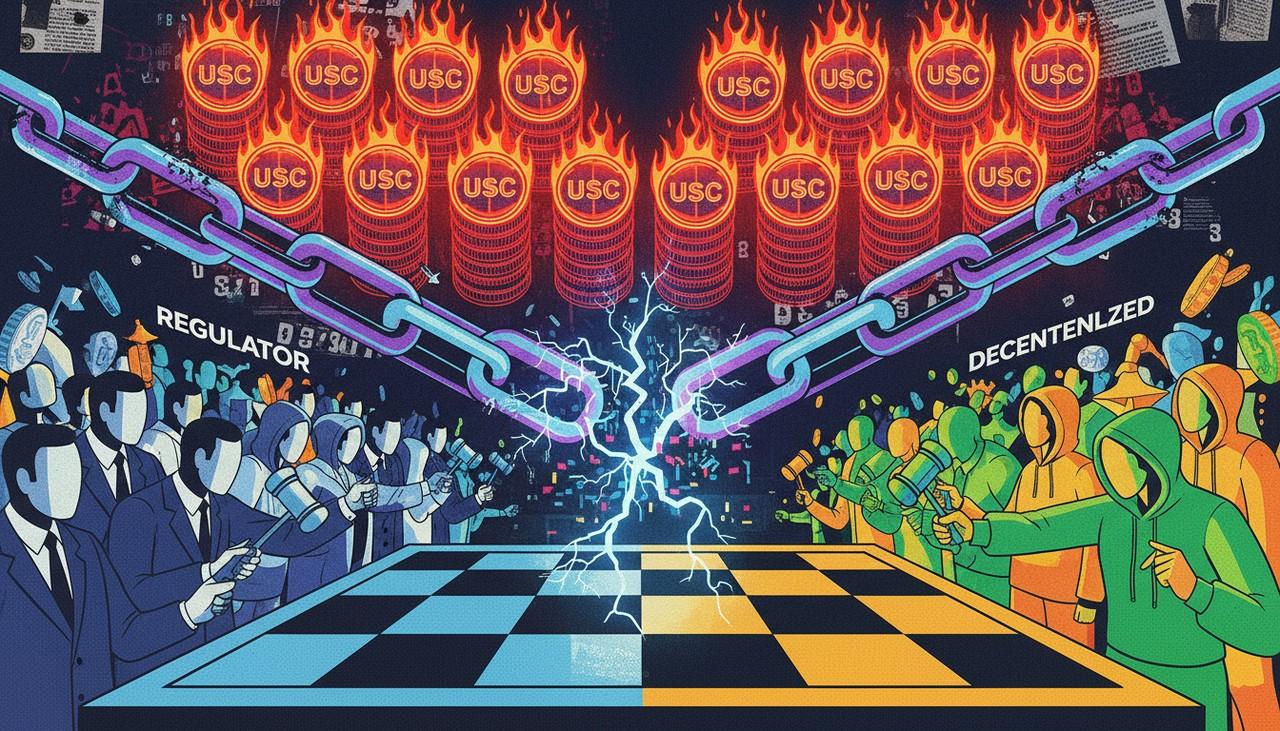
Surrounding this closed loop, the tug-of-war between regulation, compliance tools, and decentralized ideals is becoming increasingly sharp. On one hand, all actions occur on the public chain, with transaction records being open and transparent, theoretically facilitating evidence gathering and long-term tracking; but on the other hand, the judicial and regulatory rhythms of the real world struggle to keep up with cross-address, cross-protocol, and cross-time funding maneuvers, let alone swiftly enforce constraints in the face of contract autonomy and globalized liquidity. Hacker funds flow visibly on-chain, but it is challenging for traditional systems to "pull back to reality" in the short term.
The Hacker is Still on the Field; The Risk Has Not Departed
Returning to this Venus-related incident itself, what has become clear are three intertwining main lines: first, the long-term money laundering lasting about 10 months after the attack, continuously receiving ETH via Tornado Cash, splitting paths, and stretching time; second, the financial sedimentation of funds on lending protocols like Aave, converting the original "ill-gotten gains" into an on-chain asset pool that can generate continuous returns; third, the sudden large transfer of 1,743 ETH on March 24, 2026, breaking the original static pattern and reminding everyone that the hacker is still actively dispatching this fund. Collectively, these indicate that the risk has not been "solved," but is continuously migrating between protocols and addresses.
Meanwhile, some of the most critical questions in this case remain blank: including the specific identity of the attacker, the final destination of the funds, and whether it has deeper potential connections with other DeFi events. The existing briefing clearly marks that these details are either missing or are information realms prohibited from fabrication—we can only stay at the abstract level of "the attacker profits, the protocol is harmed" and cannot imagine the amounts, fund allocations, or even character portraits definitively.
Looking forward, what truly deserves continual attention is not where this 1,743 ETH ultimately flows, but how regulation, on-chain tracking tools, and the protocol's own risk control will respond to such complex cross-protocol and cross-time events: will contract designs continue to strengthen in terms of flash loans and oracle levels? Will top lending protocols introduce more refined risk control and compliance rules in accepting high-risk funds? Can on-chain analysis and compliance infrastructures expose these "invisible positions" earlier? Before these questions receive partial answers, one thing is certain: the hacker is still on the field; the risk has not truly exited, and the focus should not remain only on a single attack news but should extend to every subsequent action of this money on-chain.
Join our community to discuss and become stronger together!
Official Telegram community: https://t.me/aicoincn
AiCoin Chinese Twitter: https://x.com/AiCoinzh
OKX welfare group: https://aicoin.com/link/chat?cid=l61eM4owQ
Binance welfare group: https://aicoin.com/link/chat?cid=ynr7d1P6Z
免责声明:本文章仅代表作者个人观点,不代表本平台的立场和观点。本文章仅供信息分享,不构成对任何人的任何投资建议。用户与作者之间的任何争议,与本平台无关。如网页中刊载的文章或图片涉及侵权,请提供相关的权利证明和身份证明发送邮件到support@aicoin.com,本平台相关工作人员将会进行核查。