Author: Coach Liu
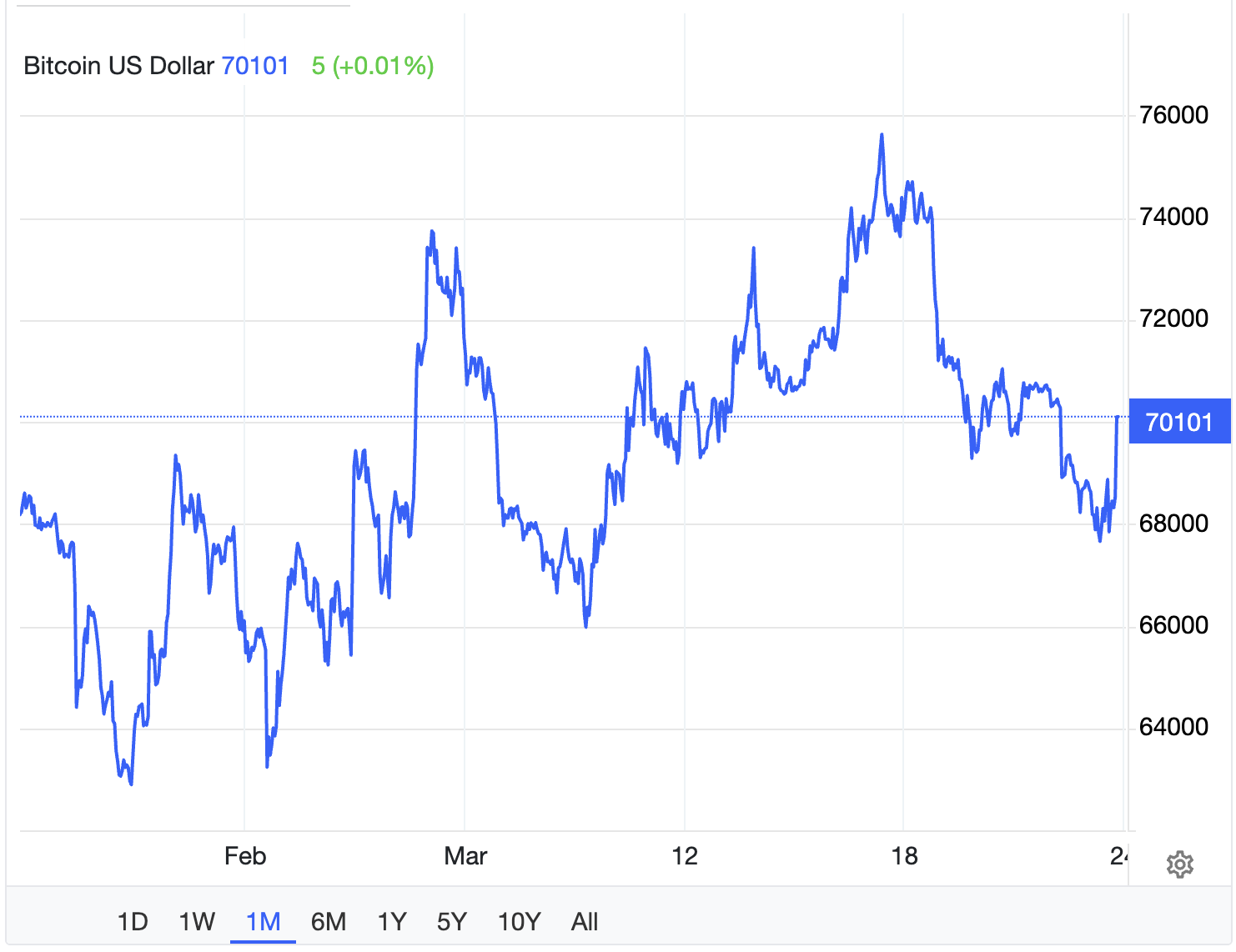
Waking up from sleep, BTC has returned to 70k. Driving in the morning, the radio was broadcasting news of gold being pressured as the Federal Reserve's interest rate meeting in March failed to meet expectations for a rate cut, wiping out all gains for the year.
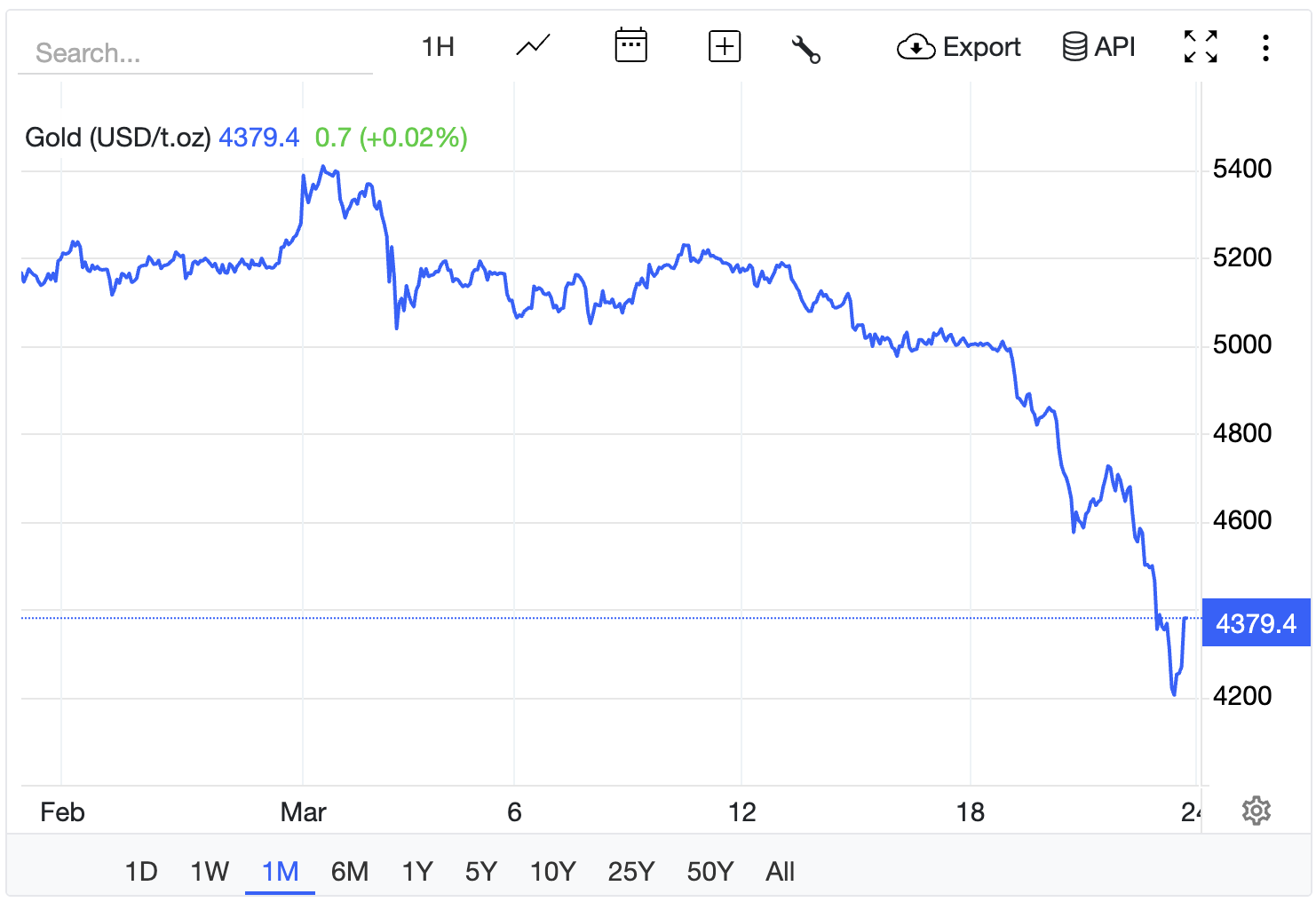
Recently, the escalation of geopolitical crises in the Middle East has led to fluctuations in global capital markets. According to traditional financial theory, geopolitical conflicts should push up gold prices—this logic is rooted in gold's value as a safe haven for thousands of years, becoming an instinctive reaction for market participants. However, the market performance in March 2026 broke this stereotype: gold prices continued to decline, falling below the critical support level of 4500 dollars, while Bitcoin's decline was much smaller compared to traditional risk assets like stocks, showing a certain characteristic of "relative safety."
This abnormal divergence, on the surface, is a difference in asset price trends, but at a deeper level, it reflects a structural change long ignored by the market: the investor groups for gold and Bitcoin are undergoing a fundamental split. The former is dominated by central banks and traditional financial institutions, while the latter is driven by retail investors and emerging market participants. Both groups are facing the same crisis but are following completely different behavioral logics.
1. Two Types of Hedging, Two Logics
To understand this divergence, we first need to recognize who is trading and why they are trading.
The pricing power in the gold market is no longer in the hands of retail investors. According to data from the World Gold Council, over the past five years, global central banks have averaged more than 1000 tons of net gold purchases per year, setting a new record since the dollar decoupled from gold in 1971. In 2020, the proportion of gold in international reserves reached 14.4%, a new high in 20 years [1]. Central banks from countries like Russia, China, Turkey, and India have become the most important marginal buyers in the gold market.
The logic behind central banks buying gold is completely different from that of retail investors. Harvard PhD Matthew Ferranti provided a sharp analysis of this behavior in a paper in 2022 [2]. He found that from 2016 to 2021, nations facing high risks of U.S. sanctions saw their central bank gold reserves increase significantly more than other countries. The underlying logic is simple: gold is one of the few assets that are not controlled by any sovereign nation. When your foreign exchange reserves might be frozen and your U.S. Treasury holdings might default, physical gold becomes the last means of payment.
This is a hedge against sovereign risk. The decision-making cycle for central banks can last several years or even decades, making them almost insensitive to short-term price fluctuations. They buy gold, not because it is cheap, but because of strategic necessity.
The driving force in the Bitcoin market is entirely different. Despite a significant increase in institutional investor participation in recent years, pricing power in Bitcoin is still held by retail investors. These individuals are spread across the globe, especially in countries suffering from hyperinflation like Turkey, Argentina, and Nigeria, where Bitcoin is seen as an alternative savings method to combat currency devaluation.
Their logic is rooted in distrust of fiat currency. The global monetary easing policies after 2020 made countless ordinary people realize that their cash is being diluted. The total cap of 21 million Bitcoins serves as a psychological anchor for them in fighting inflation. When crises occur, they do not calmly strategize like central banks but instinctively buy out of panic—not to make money, but to preserve the value of their labor.
This presents two entirely different hedging needs: one is a hedge against political risks at the national level, whereas the other is a hedge against currency devaluation at the personal level.
2. Historical Crisis Performance: From Convergence to Divergence
Reviewing the performance of Bitcoin and gold over the past decade reveals a clear evolutionary path.
Before 2020, the correlation between Bitcoin and gold was unstable. During the 2013 Cyprus crisis, Bitcoin rose significantly, seen as an early signal of a safe haven; whereas in the early stages of the COVID-19 pandemic in 2020, both dropped simultaneously but later rebounded together.
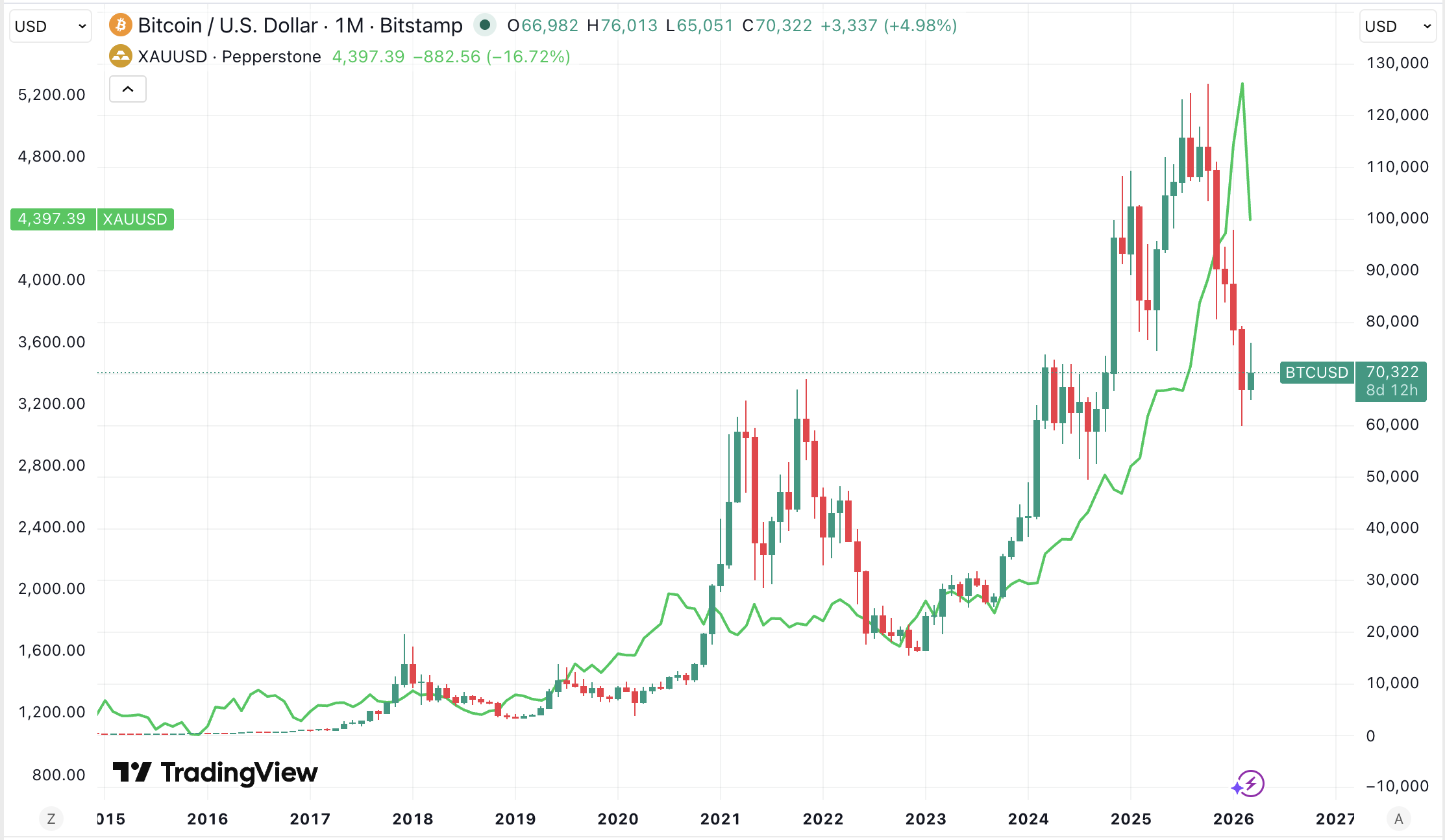
However, after 2023, the situation changed. According to CoinMetrics data, the 30-day rolling correlation between Bitcoin and gold fell from 0.72 in 2021 to -0.12 in 2023, and had dropped to -0.35 by the first quarter of 2026 [3]. This indicates that the two began to demonstrate reverse movements.
The point of divergence coincides exactly with the acceleration of gold purchases by global central banks and the rapid institutionalization of Bitcoin. After the Russia-Ukraine conflict in 2022, about 300 billion dollars of Russian foreign exchange reserves were frozen, which became a turning point for central banks to reconsider the safety of dollar reserves. Since then, gold has become an asset that various central banks are eager to acquire. Meanwhile, the approval of Bitcoin ETFs in the U.S. led to a surge of funds from traditional financial institutions into the Bitcoin market, changing its original investor structure.
Thus, we see an interesting situation: when gold is strategically bought by central banks, its price actually declines. Why? Because central banks prefer to buy more when the price is lower. Conversely, the retail investor-led Bitcoin market remains relatively firm due to concerns over currency devaluation.
This does not mean that gold's safe haven property has failed, but rather that its pricing logic is being overshadowed by sovereign demand.
3. The Narrative of Digital Gold: From Myth to Correction
Since its inception, Bitcoin has been endowed with the narrative of digital gold. This narrative is built on several core assumptions: scarcity, inflation resistance, safe haven property, and value storage. However, the performance during this crisis has put this narrative to a real-world test.
If Bitcoin is truly the Gold 2.0, then it should rise like gold when geopolitical crises erupt, or at least not fall more than gold. But the reality is that gold is declining while Bitcoin remains relatively firm—neither rose in unison but rather diverged.
Does this mean that the narrative of digital gold is wrong? Not necessarily. A more accurate statement might be: the safe haven property of Bitcoin is not on the same dimension as that of gold.
The safe haven target for gold is sovereign risk—when trust collapses between nations, and when fiat reserves may be frozen, gold becomes that hard currency that cannot be confiscated.
The safe haven target for Bitcoin is fiat risk—when excessive money printing by central banks leads to currency devaluation, and when a crisis of trust emerges in the banking system, Bitcoin is that alternative not controlled by any central bank.
From this perspective, Bitcoin and gold are not substitutes, but rather complementary assets. They each serve different hedging needs, corresponding to different investor groups.
There is a noteworthy conclusion in Dr. Ferranti's paper: in the face of sanction risks, Bitcoin could account for about 5% of optimal asset allocation for central banks; if there is a shortage of physical gold, this proportion could rise to 10% [4]. Yet even so, gold remains the first choice—because gold's physical properties determine its reliability in extreme situations.
This means that for Bitcoin to truly become digital gold, it needs to bridge a crucial gap: being formally included as a reserve asset by various central banks. Until that day comes, its main driving force will still be the fear of currency devaluation among global retail investors.
4. Future Fund Rotation: Different Crises, Different Scripts
Different types of crises will impact Bitcoin and gold differently.
If it is a geopolitical crisis, as mentioned before, gold might be suppressed by central bank actions, while Bitcoin could remain relatively firm due to retail investors’ safe haven demand.
If it is a global economic recession, the situation could reverse. During the 2008 financial crisis, gold surged significantly after the liquidity crisis; during the initial phase of the COVID-19 pandemic in 2020, Bitcoin crashed and then rebounded strongly. In such scenarios, both might move in synchrony, with Bitcoin perhaps showing even greater resilience.
If it is a crisis of excessive fiat issuance or inflation, Bitcoin usually performs better than gold. The bull market from 2020 to 2021 has proven that when global central banks work together to inject liquidity, Bitcoin is one of the biggest beneficiaries, while gold's price increase is relatively limited due to suppression from real interest rates.
If it is a systemic crisis within the crypto ecosystem, such as the Luna and FTX incidents in 2022, Bitcoin could plummet, while gold may become a safe haven for funds.
Therefore, for investors, a simplistic binary of whether Bitcoin is or is not digital gold is meaningless. What truly matters is to understand the driving logic of both asset classes according to the type of crisis and make appropriate decisions.
5. Conclusion
The divergence in the trends of gold and Bitcoin is not a random market fluctuation, but an inevitable result of two types of hedging needs, two investor structures, and two historical contexts.
Behind gold lies the vigilance of central banks against the hegemony of the dollar, a defensive layout against sovereign risk. Behind Bitcoin are the anxieties of countless ordinary people regarding currency devaluation and the pursuit of financial autonomy.
These two forces are redefining the connotation of safe haven assets. In the future, when crises strike again, we may witness more divergence and more surprises. But one thing is certain: those who can clearly understand these two logical differences will gain the upper hand in this cognitive war.
References:
[1] World Gold Council, "Central Bank Gold Reserves - 2025 Report", 2026.
[3] CoinMetrics, "Bitcoin & Gold Correlation Analysis (2020-2026)", Mar 2026.
免责声明:本文章仅代表作者个人观点,不代表本平台的立场和观点。本文章仅供信息分享,不构成对任何人的任何投资建议。用户与作者之间的任何争议,与本平台无关。如网页中刊载的文章或图片涉及侵权,请提供相关的权利证明和身份证明发送邮件到support@aicoin.com,本平台相关工作人员将会进行核查。


