Author: Cathy
March 23, Black Monday.
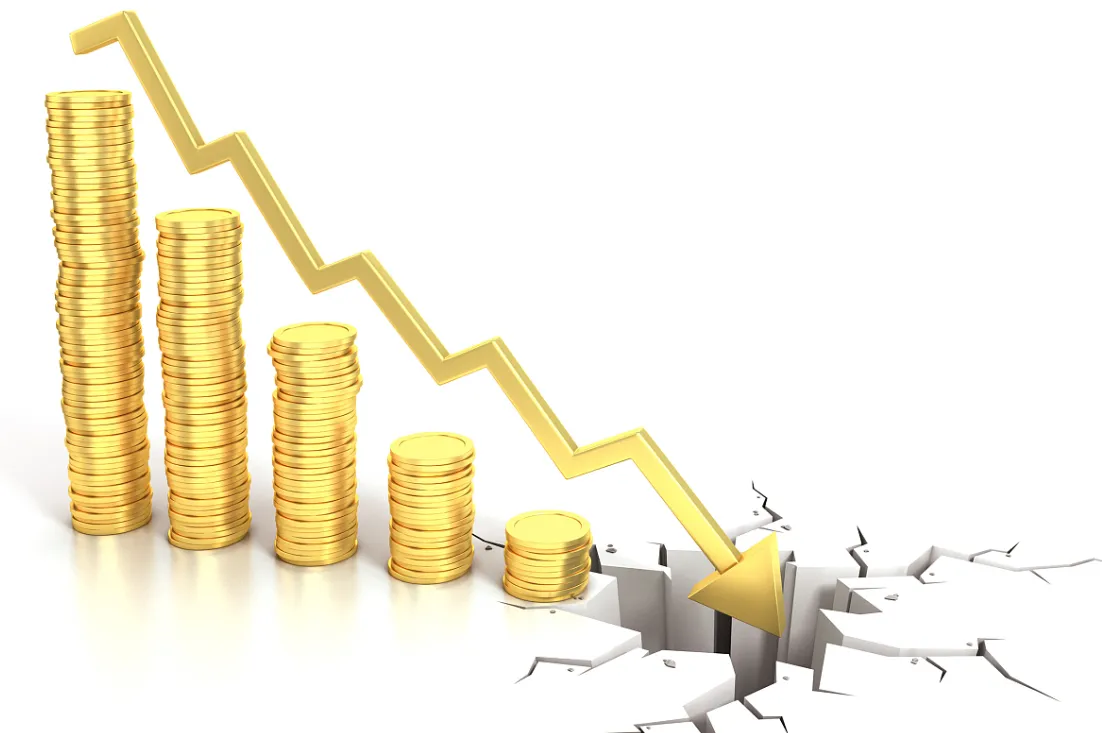
Gold, silver, U.S. stocks, European stocks, copper, aluminum, zinc, tin, Bitcoin——everything fell. Not just a little, but the kind of drop that makes you doubt whether your account has been hacked.
The most outrageous was gold.
There is war in the Middle East, the Strait of Hormuz is blocked, oil prices soared to $114, and the whole world is shouting "World War III" —— according to textbooks, gold should have skyrocketed. What actually happened? Spot gold plummeted by 10.24% in a week, dropping below $4500, marking the worst record in 43 years. On March 23, it even dropped directly to around $4100, with an intraday decline of over 6%. The last time such a level of crash happened was in 1983.
Safe-haven assets crashed at the very moment they were supposed to provide protection; this is not a joke, it is the reality of March 2026.
01 A Spark Set Off the Whole Chain
The story starts on February 28.
On that day, the United States and Israel jointly launched a military strike against Iran, codenamed "Operation Epic Fury." The goal was clear: to destroy Iran's missile and nuclear capabilities. On the first day of the operation, the U.S.-Israeli coalition struck with precision-guided munitions, killing about 40 high-ranking Iranian officials, including Supreme Leader Khamenei, and Iran's command system was crippled within a few hours.
But Iran's retaliation was unconventional——they chose a more deadly action than launching missiles: blockading the Strait of Hormuz.
How important is this strait? 20%-25% of the world's oil shipping passes through it. Blocking it means choking the global economy's windpipe. The Iranian Revolutionary Guard began intercepting vessels on February 28, and by the second week of March, they had completely shut down the shipping lanes, trapping large amounts of crude oil in the Persian Gulf.
At the same time, Iran launched a retaliatory operation codenamed "Real Commitment-4," firing a large number of missiles and drones at six countries including Israel, the UAE, Saudi Arabia, and Qatar. Dubai International Airport was bombed, smoke billowed up near the Burj Khalifa. Analysts warned that if the crisis drags on until mid-year, global food security would face severe challenges.
Brent crude oil skyrocketed to $114.
02 The Dream of Rate Cuts Shattered, the Nightmare of Rate Hikes Came
The lethal impact of soaring oil prices lies not in the prices themselves but in the spark it ignited: stagflation.
Before the war, global investors were still immersed in the dream of "inflation peaking, central banks cutting rates." Then came the February PPI data, which showed a year-on-year increase of 3.4% and a month-on-month increase of 0.7%, far exceeding expectations. Oil dragged inflation back from the supply side.
On March 18, the Federal Reserve's FOMC meeting kept the interest rate unchanged at 3.50%-3.75%, but the signals released were even harsher than a rate hike: PCE inflation expectations were raised from 2.4% to 2.7%, and the dot plot indicated that several officials felt it was not the right time to continue cutting rates, causing market expectations for further loosening to cool sharply.
Market expectations for rate cuts within the year quickly dissipated, and tightening expectations reflected in interest rate futures clearly intensified.
Within a week, the market shifted from "two rate cuts this year" to "there may be rate hikes." This 180-degree reversal of expectations was the real detonator for the complete crash on March 23.
03 Gold: From "King of Safe Havens" to "Last ATM"
Returning to the core question: Why didn’t gold rise and instead fell amidst such fierce warfare?
In short, three reasons.
First, interest rates crushed gold.
Gold does not earn interest; the only return from holding it is price appreciation. When the 10-year U.S. Treasury yield soared by 13 basis points to around 4.38% on March 20, the highest since July 2025, and the dollar index broke above 100 in mid-March, the opportunity cost of holding gold skyrocketed. Market attention shifted from "worrying about war" to "worrying about rate hikes——when the attractiveness of yields outweighs safe-haven sentiment, gold is the first to be abandoned.
Second, the script of 1983 was replaying.
In March 1983, the collapse of oil prices led to cash flow shortages for OPEC countries, forcing them to sell off gold reserves for cash, with gold price dropping by over $105 in a week. 43 years later, the script has changed its shell: this time, oil prices are rising, but the issues faced by Saudi Arabia and the UAE are more bizarre——oil cannot be sold. With the Strait of Hormuz blocked, oil is trapped in the Persian Gulf, and oil export revenues are virtually zero.
Yet military expenses keep burning. The U.S. military alone spent $11.3 billion in the first six days. Countries sitting on gold mines now have to turn gold into cash to keep operating. The sovereign-level selling pressure is invisible to retail investors, but it puts a tight ceiling on gold prices.
Third, gold became everyone's "ATM."
This is the most brutal layer. Gold rose 64% in 2025, making it one of the best-performing major assets over the past year. When, on March 23, the stock market, bond market, and private credit all collapsed, margin calls came in like a tidal wave, and institutional investors didn’t have many liquid assets to quickly cash out——gold was that "liquidity reservoir." Positions that had made money were sold first because they could be sold.
This is the fate of gold: in normal times, it wears the crown of safe haven; in a true liquidity crisis, it is the first to be pawned.
04 $2 Trillion Private Credit, Exploded
The plunge in gold is not an isolated incident. Behind it, there is an even bigger bomb ticking: private credit.
In recent years, around $2 trillion in private credit funds have flooded into the technology sector, with technology and software being one of the key directions for investment. The logic is simple——software is synonymous with "light assets and high growth," lending to them is supposed to be a no-loss situation.
Until AI came.
Meta plans to spend $135 billion a year on AI infrastructure, but where are the profits? They are still on the way. As Wall Street began to doubt the return cycle of AI, software company valuations started to collapse, and the collateral for private credit shrank along with it. JPMorgan directly downgraded the valuations of software loans and tightened lending limits.
Panic spread to asset management giants. Blackstone's flagship fund BCRED faced investor redemption demands of $3.8 billion, accounting for 7.9% of its total size, far exceeding the 5% redemption limit for the quarter. Even more harshly, Blue Owl announced the permanent suspension of regular redemptions——translated into plain terms: money is in, don’t think about getting it out.
When the door to private credit was welded shut, money could only escape through the windows of the public market. Gold, blue-chip stocks, and everything liquid became scapegoats.
05 Bitcoin: $68,000, Stuck
The performance of the cryptocurrency market in this storm can only be described as "awkward."
Bitcoin fluctuated around $68,000 on March 23, although it performed better than gold throughout the week, the narrative of "digital gold" completely fell apart that week. When the liquidity crunch in traditional financial markets spread, Bitcoin and all risk assets were sold off like everything else. It did not become a safe haven, nor did it become an inflation hedge; it simply… followed the drop.
Interestingly, the root causes of this round of crash——war, oil prices, the Federal Reserve——are not directly related to the cryptocurrency industry. But in the face of true systemic risk, all asset classes tend to correlate to 1.
There are no "non-correlated assets," only assets that haven’t reached extreme situations yet.
06 Conclusion
The GDP for the fourth quarter of 2025 has already been revised down to 0.7%, inflation expectations have gone out of control again due to soaring oil prices, and the Federal Reserve finds itself stuck on a tightrope between "controlling inflation" and "preventing recession."
UBS stated that the long-term logic of gold has not been destroyed. Maybe so. But in the short term, as long as the Strait of Hormuz remains blocked and the Federal Reserve remains tight-lipped, gold will find it difficult to escape the fate of being an "ATM."
March 2026 taught the market one lesson: in a true crisis, there are no safe-haven assets, only liquidity.
And liquidity never considers feelings.
免责声明:本文章仅代表作者个人观点,不代表本平台的立场和观点。本文章仅供信息分享,不构成对任何人的任何投资建议。用户与作者之间的任何争议,与本平台无关。如网页中刊载的文章或图片涉及侵权,请提供相关的权利证明和身份证明发送邮件到support@aicoin.com,本平台相关工作人员将会进行核查。