When missiles streaked across the night sky of the Middle East, gold—this "ultimate safe haven" embedded in human genes—was simultaneously experiencing the most severe plunge in 45 years.
March 23, 2026, is destined to be recorded in the annals of precious metals history. Just three weeks into the Israel-U.S. war against Iran, spot gold plummeted over 8% in a single day, falling consecutively below the significant levels of 4400, 4300, 4200, and 4100, erasing all of this year's gains. Silver fared worse, at one point crashing over 10% and hitting a low of $61/ounce.
This is no longer a "correction" but a stampede.
War and inflation should have been gold's most faithful allies. This time, however, they became the last straw that broke gold's back.
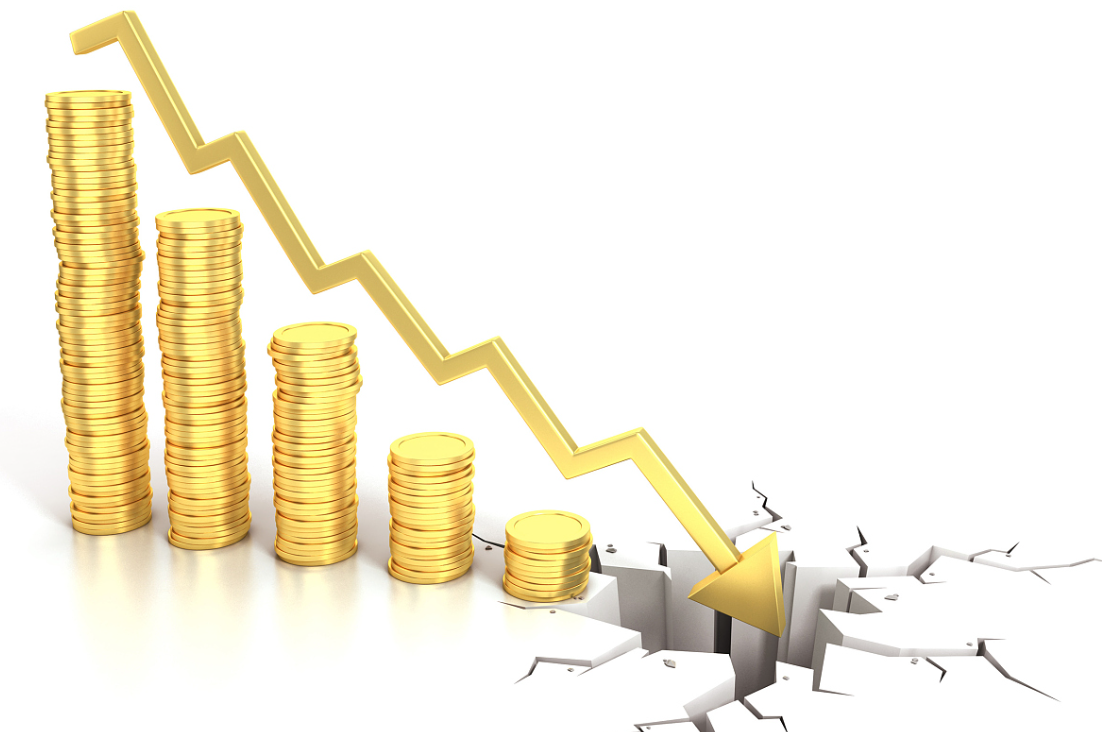
1. An Uncommon Plunge: When Safe-Haven Assets No Longer Provide Safety
● The market is teaching everyone a harsh truth: there is no eternal safe haven, only eternal profit-seeking capital.
● Since the escalation of conflict, gold's cumulative decline has neared 20%, retreating over 22% from the historical high of $5594 set in January. What does this mean? If you bought gold before the war, the return three weeks later even lagged behind a basket of highly speculative stocks—those high-volatility varieties that the market scoffed at.
● Even more bizarre, this drop is not an isolated asset correction but presents a rare "simultaneous drop" pattern with the stock market. The negative correlation between gold and stocks has been completely shattered in extreme conditions.
Why? Because the market's pricing logic has undergone a fundamental shift.
2. Who is the Real Culprit? Interest Rate Logic Crushes Safe Haven Logic
The perception of "gold in troubled times" is essentially a simplified narrative. In reality, gold pricing involves at least three layers of game theory: interest rate expectations, dollar movement, and risk aversion sentiment.
This time, the first three aspects are rarely pointing downward simultaneously.
1. High Oil Prices Kill Rate Cut Expectations
The war in the Middle East pushed Brent crude oil above $100, reaching a new high since mid-2022. This should have been a catalyst for heightened gold safe haven sentiment—oil crises always accompany uncontrolled inflation.
However, the problem is that the rise in oil prices directly altered the Federal Reserve's calculations. On March 18, the Federal Reserve announced it would keep the interest rate unchanged at 3.5%-3.75%, with a dot plot showing that most officials supported only one rate cut this year, a significant reduction from the previous expectation of 2-3 cuts. Powell clearly stated: There will be no rate cuts until inflation has significantly receded.
This is a lethal blow to gold. As a non-yielding asset, gold's holding cost is directly linked to interest rates. As the market shifts from "rate cut trades" to "interest rate hike expectations," capital massively withdraws from gold and floods into interest-yielding government bonds and dollar assets.
2. The Dual Advantages of the Dollar
What is more troublesome is that the dollar is displaying rare "dual advantages" in this conflict—both as a safe haven and a source of income.
Benefiting from the status of the U.S. as a net exporter of oil, the dollar index has risen above the 100 mark. Holding dollars not only avoids geopolitical risks but also enjoys a risk-free interest rate of over 4%. In contrast, gold cannot provide anything beyond "a sense of security."
And when the market is most lacking in panic, investors will prioritize the asset that can both hedge and generate income.
3. The Backlash of Crowded Trades
However, the core reason for this round of sharp decline is hidden in a set of data: as of March 17, hedge funds and other large speculators had increased their net long positions in gold to the highest level in seven weeks.
What does this mean? Gold has become a highly crowded trade over the past year.
When everyone is on board the ship, the ship is in the most danger. After the outbreak of hostilities, these leveraged funds were forced to flee—some to cut losses, some to replenish margins for other assets, and some simply because "if others run, I run too."
And this is how the stampede occurred. The assets that had risen the most before the retreat fell the hardest. Gold perfectly illustrated this iron law.
3. Deeper Structural Cracks: Are Central Banks No Longer Buying Gold?
If fleeing speculative funds are a "fast variable," then the shaking of the logic behind central bank gold purchases is a "slow variable" that can change gold's long-term pricing.
Over the past two years, the super bull market in gold has had a core support: Following the freezing of Russian assets, central banks globally shifted their foreign exchange reserves from dollars to gold. In 2025, global net purchases of gold still exceeded 300 tons. This is the most solid structural buying for gold.
But the war in Iran has disrupted this logic.
● The International Energy Agency (IEA) has defined this oil supply disruption as "the largest supply shock in the history of the global oil market." For oil-importing countries, what they need most right now is foreign exchange reserves to secure energy imports, not to increase gold holdings.
● The most extreme situation may occur in the oil-producing countries of the Persian Gulf. If the Strait of Hormuz is blocked and oil and gas exports are interrupted, these traditional gold buyers may even turn into sellers—they need cash to maintain fiscal operations instead of continuing to hoard gold bars.
● At the same time, physical gold holders in India are also beginning to stir. The soaring oil prices are impacting the local economy, leading residents to potentially cash in their gold jewelry and bars to deal with living pressures. When both central banks and retail investors switch from buyers to sellers, the gold market suddenly finds itself facing: there are no buyers below.
4. AiCoin Perspective: How to Survive in This Market?
This level of market activity is a devastating blow to traders but also an opportunity for reshuffling. On the AiCoin platform, we have observed several key phenomena:
1. Multi-Account Management Becomes a Necessity
During the plunge, many asset management teams faced urgent demands to reduce positions. In the past, managing 50 accounts required more than half an hour of manual operation, missing critical windows. With AiCoin's multi-account ordering function, these institutions can complete bulk liquidations in 10 seconds and set stop-loss levels uniformly.
In this gold crash, the fastest reacting traders were those institutions using batch trading tools. When algorithms triggered stop-losses, millisecond response speeds determined the extent of losses.
2. The Value of Cross-Market Monitoring
The interconnections between gold, the stock market, the dollar, and crude oil have intensified dramatically during extreme market conditions. AiCoin's panoramic account management function allows users to monitor all positions and capital flows in real-time, quickly identifying which assets are being "bled dry."
During this crash, many professional traders anticipated gold's breakout by observing the real-time fluctuations of the dollar index and oil prices.
3. The Double-Edged Sword of Leverage
The scale of leverage in the gold market is difficult to quantify accurately, but based on long position data, a significant amount of leveraged funds were forced to liquidate during this decline. AiCoin's risk control system reminds users: when market volatility (VIX) surges suddenly, leverage should be reduced inversely.
5. Future Outlook: Can Gold Still Be Bought?
● In the short term, the bearish factors have not yet cleared. After Trump announced on March 23 to postpone strikes on Iranian energy facilities, gold prices briefly rebounded from $4100 to above $4400. But this is only a "delay," not a "cancellation." The shadow of a 48-hour ultimatum remains, and market sentiment could turn again at any moment.
● In the medium term, the key variable is whether oil prices can pull back. If crude oil prices cool down, rate cut expectations may re-emerge, providing gold with a breathing window.
● In the long term, the underlying logic for gold has not collapsed. De-dollarization is a structural trend, and central bank gold purchases are merely a slowdown in pace, not a reversal. The judgment from Galaxy Securities is worth considering: this round of adjustment is more of a change in pace than a trend reversal.
However, for traders at present, the most important thing is to understand one point: the market is undergoing a transition from "credit logic" to "interest rate logic." In this phase, the priority of the dollar is higher than that of gold, and the weight of interest rates is higher than that of geopolitics.
Buying the dip? Sure, but please take risk control along.
As the Shanghai Gold Exchange reminded on March 23: "Recently, there are many factors affecting market instability, and precious metal prices are significantly more volatile."
In this moment of explosive volatility, surviving is more important than betting on the right direction.
Join our community for discussions and become stronger together!
Official Telegram community: https://t.me/aicoincn
AiCoin Chinese Twitter: https://x.com/AiCoinzh
OKX Welfare Group: https://aicoin.com/link/chat?cid=l61eM4owQ
Binance Welfare Group: https://aicoin.com/link/chat?cid=ynr7d1P6Z
免责声明:本文章仅代表作者个人观点,不代表本平台的立场和观点。本文章仅供信息分享,不构成对任何人的任何投资建议。用户与作者之间的任何争议,与本平台无关。如网页中刊载的文章或图片涉及侵权,请提供相关的权利证明和身份证明发送邮件到support@aicoin.com,本平台相关工作人员将会进行核查。