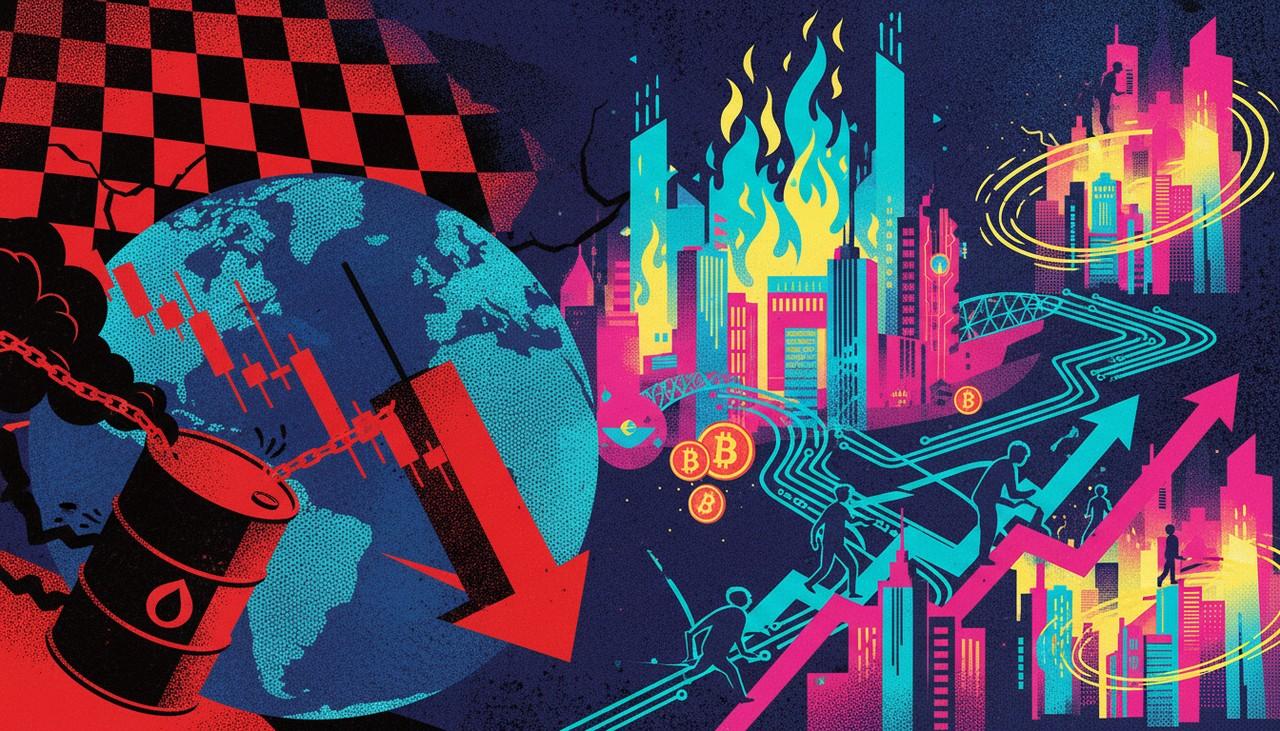
This week, a rumor about a "fee" regarding the Strait of Hormuz rapidly spread in global markets, and then sharply declined after an official denial from Iran. This throat passage, which accounts for about 20% of global oil trade, once again reminds traders of the reality: an unverified piece of information can be enough to shake the risk pricing of energy and financial assets. Between the rumor and the "baseless" clarification, the liquidity in the crypto market temporarily tightened, emotions peaked and then retreated, and funds quickly migrated between risk aversion expectations and news corrections, leaving another collective review of how geopolitical noise amplifies market volatility.
Reversal of the $2 Million Rumor: Energy
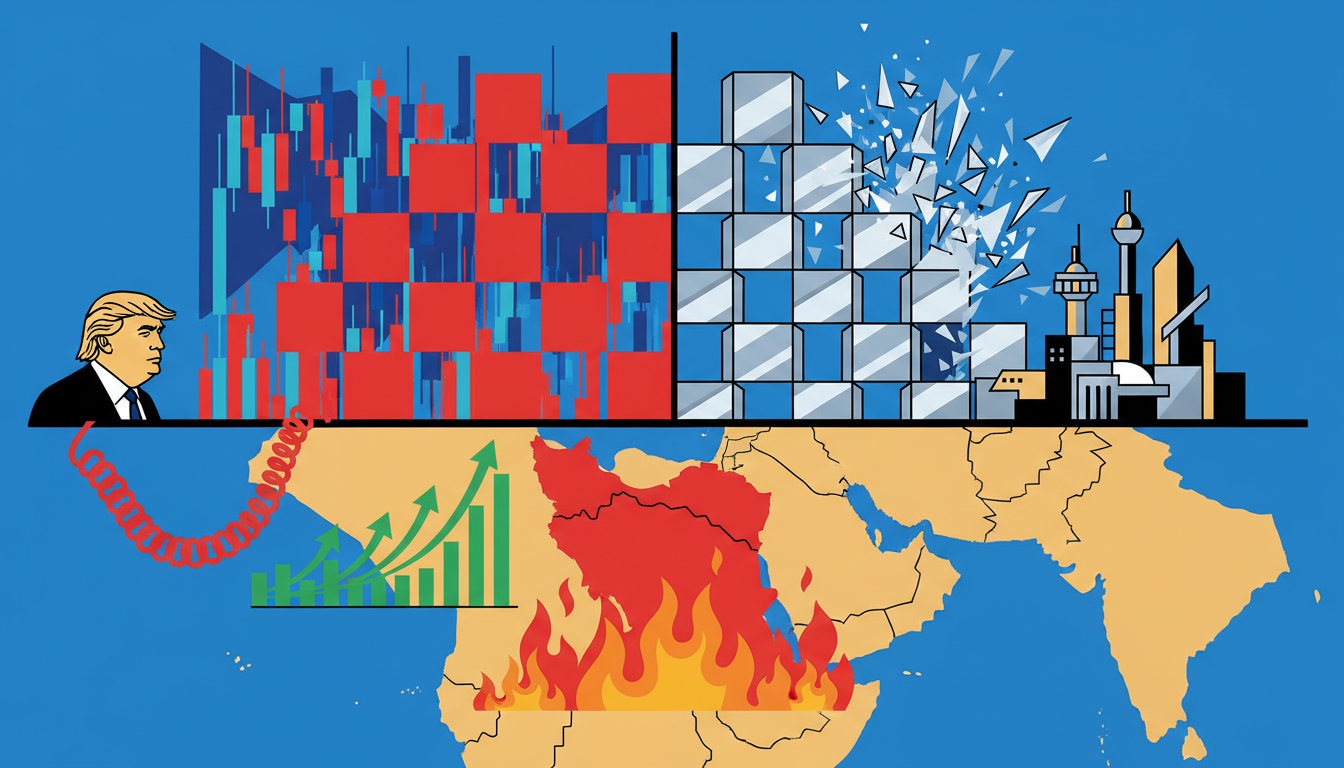
The claim that "Iran charges $2 million for transit vessels" initially circulated in social media and some news channels in the form of short texts and screenshots, which quickly got interpreted as a signal that the cost of passing through the Strait of Hormuz might increase sharply. In traditional market interpretations, such claims are often directly reflected as expectations of rising energy supply risks and shipping costs, while in the crypto market, some traders' first reaction was "geopolitical risk aversion sentiment is rising", corresponding to the imaginative space of energy, inflation, and liquidity overflow.
Subsequently, the Iranian Embassy in India came forward to deny this news, stating that the claim about Iran charging ships passing through the Strait of Hormuz $2 million is "baseless". This definitive denial provided the market with a relatively clear official anchor: at least publicly, Iran did not acknowledge any additional charging arrangements, attempting to extinguish the geopolitical premium enlarged by "overinterpretation". This rapid clarification in an era of highly fragmented information is, itself, part of managing market expectations.
The Strait of Hormuz connects the Persian Gulf with the open sea and is the necessary route for about 20% of global oil trade, whose traffic arrangements and cost expectations are directly reflected in the imaginative space of crude oil benchmark prices and global shipping costs. Financial markets, which are highly sensitive to prices, do not require precise charging schemes or formal documents; the mere emergence of a narrative suggesting "possible price increases" is sufficient to trigger a repricing of inflation, risk premiums, and demand for safe-haven assets. Crypto assets are not "outsiders" in this chain but are viewed by some funds as "secondary safe-haven" or "high beta risk assets", often exhibiting an effect of passive volatility amplification when geopolitical winds stir.
What is more subtle is that, in the absence of any concrete charging data or continuous official sources following up, traders' position adjustments are more centered around "expectations" rather than "facts": some will reduce their risk positions due to concerns that rising energy prices will exacerbate macro uncertainty, while others may engage in short-term speculation betting on volatility spikes brought by heightened sentiment, choosing to leverage in anticipation of rapid ups and downs. After the news was clarified, positions had to be recalibrated in a short time, forming a cycle of "first trading based on imagination, then correcting based on reality". This dynamic is also a typical interpretative path of geopolitical narratives in the crypto market.
Geopolitical Shadows Disperse: Why Perp DEX Transactions Don't Rise
In the context of alternating geopolitical tension expectations and clarifications, the crypto derivatives market did not experience a continuous "volume frenzy". According to data from DefiLlama, the trading volume of mainstream perpetual contract DEXs has significantly retreated: Hyperliquid recently saw its trading volume drop to about $4.9 billion, while EdgeX was about $2.9 billion, with activity levels significantly decreasing compared to earlier periods when geopolitical sentiment was more tense. This divergence—geopolitical shadows dissipating, sentiment temporarily cooling, while derivatives transactions did not increase but decreased—points to a change in risk appetite rhythm.
During the initial transmission of the news, some high-frequency and leveraged funds actively "chased volatility," viewing perpetual contracts as the main tool for amplifying returns and hedging exposure. As Iran issued its "baseless" clarification, the imaginative space for geopolitical tail risks was compressed, and the short-term logic of volatility was difficult to sustain, leading the market to switch from "seeking opportunities for severe volatility" to "preferring to act less rather than make more mistakes," resulting in a natural cooling of perpetual contract volume. The levels of $4.9 billion and $2.9 billion are not low by any means, but relative to the heat during the period of rising sentiment, they have begun to revert to a more restrained state.
This shift from "chasing volatility" to "watching for risk aversion" corresponds to a synchronous contraction of leverage and short-term trading activity: on one hand, high-leverage players are starting to focus more on position survival rather than extreme returns in an environment where geopolitical news frequently contradicts itself; on the other hand, market-making and arbitrage funds will also reduce their proactive exposures after spreads and volatility compress, preferring to lower positions in exchange for a buffer against future uncertainties. This "thermometer of sentiment" regarding perpetual contracts reflects a risk management orientation of "overly calm" in the backdrop of trading volume decline.
It is important to emphasize that the current decline in Perp DEX transactions cannot be precisely attributed to any single event or rumor. Geopolitical news is just part of the entire narrative environment; macro data, regulatory expectations, internal fund rotations in crypto, and other multifactorial influences jointly create the current liquidity landscape. Simply attributing the transaction decline to the Hormuz fee rumor and its clarification not only overlooks a more complex background but also misleads the judgment of subsequent market rhythm.
Liquidity is Migrating: From Geopolitical Panic to Product Experience
If we view the Hormuz incident as a microcosm, we can see a hidden linkage chain: geopolitical risk expectations → energy and inflation imaginative space → global risk appetite changes → overall liquidity migration in the crypto market. When the market is concerned about energy passages being obstructed or transit costs rising, the volatility expectations for crude oil and related assets increase, macro risk premiums rise, and some funds actively compress high-risk positions to leave a buffer zone against "black swans", with crypto assets naturally being the first to feel the brunt due to their high volatility characteristics. Part of the liquidity briefly flows into varieties with stronger "safe-haven narratives", while another part directly withdraws from the market to watch.
At a finer level, short-term risk aversion sentiment will reshape the flow of funds and position structures between spot, perpetual, and cross-exchange: on the spot end, incremental funds slow down, with older funds tending to reduce exposure to high beta assets; on the contract end, the leverage ratios of short-term speculators converge, triggering a more moderate environment for liquidations and forced closings; at the cross-exchange level, liquidity will shift from platforms requiring high-frequency operations and higher liquidity demands to those that facilitate stability, transparency in risk control, and relatively simple varieties, in order to reduce operational and counterparty risks.
When overall liquidity tends to tighten, the competition between exchanges shifts from "who has the livelier market" to "who can keep limited liquidity around longer". Enhancing matching efficiency, reducing slippage, and optimizing order book depth become key strategies for capturing user time: under the same trading volume, platforms that can provide closer to ideal pricing transaction experiences have a better chance of becoming havens for funds during a "shrinking cycle". For high-frequency and institutional funds, even a 1 basis point improvement in slippage, combined with a weekly transaction volume of tens of billions of dollars, is enough to impact venue selection.
Given the highly uncontrollable external macro and geopolitical variables, the importance of internal products and experiences is further amplified. Exchanges cannot control whether the Strait of Hormuz charges fees, nor whether a certain country imposes sanctions, but they can define their matching efficiency, asset entry, and product forms. As geopolitical noise rises and then cools in rounds, what platforms can firmly grasp is often the "experience that funds are willing to leave and use repeatedly," rather than a few short-term sentiment-driven bursts of trading volume.
New Flash Swap on Gate: Exchanges Use Products to Hedge Volatility
In an environment where overall transaction volume declines and volatility compresses, Gate has chosen to launch a new flash swap function, which points to another growth logic—improving capital turnover and utilizing fragmented funds in a "low volatility era". From the public introduction, the core feature of these flash swap products is to provide users with a one-click asset exchange tool without requiring orders or deep engagement in market judgments, emphasizing "quick swaps" and "worry-free" experiences rather than pursuing extremely optimized trading scenarios.
For a large number of small and medium-sized funds and non-professional users, in a low-volatility, low-leverage environment, they are more concerned with how to efficiently handle "fragmented funds" in their accounts: quickly turning idle small assets into mainstream coins for other opportunities, or smoothly switching between different assets, rather than frequently opening contracts for short-term trading. Flash swap products play the role of a "fund pipeline", improving the turnover speed of funds within the platform without significantly increasing operational complexity, allowing assets that might otherwise sleep to be converted into more frequent usage behaviors.
Compared to on-chain DEXs, centralized flash swaps are more attractive to ordinary users in terms of usage thresholds and actual costs. On one hand, users do not need to understand pool depth, price slippage, or on-chain interaction details; they only need to initiate an exchange through a unified interface; on the other hand, when on-chain transaction fees are in an unstable state, centralized platforms can smooth users' individual trading costs through internal matching and fund pool configurations. For large professional funds, this may not be the most optimal pricing tool, but for ordinary users who are used to completing all operations within an app, the "low-threshold one-stop" nature of flash swaps is enough to serve as a starting point for daily use.
From the exchange's own motivation perspective, in the phase of declining Perp DEX transactions and overall trading income pressure, relying on product innovation to maintain activity is a proactive choice to "hedge cyclical volatility": by utilizing tools such as flash swaps, they can expand trading behavior from "contract trading that only erupts during high volatility" to "daily asset management and small allocations," allowing the platform's activity to not be entirely reliant on the warmth and coldness of market sentiment. This structural adjustment is not only a response to the current low-volatility environment but also paves the way for solidifying user stickiness ahead of the next round of cycles.
From Hormuz to AI Agents: New Demands and Old Narratives on Stage Together
On a longer timeline, the short-term fluctuations of geopolitical risks are being performed alongside the medium to long-term narrative expanding around payment and settlement demands. Bernstein analysts have pointed out that "AI agent payments are seen as a potential new source of demand for stable coins", which represents the market's collective imagination regarding on-chain settlement demands under future scenarios of machine agency and automated payments. Unlike the Hormuz charging rumor, which is clarified within a day, AI agent payments belong to a long-term story that “won't land tomorrow but may reshape the underlying trades many years later”.
If we compare the two on the same timeline, a distinctly different rhythm can be observed: on one end, short-term volatility brought about by geopolitical risks may rapidly amplify and then quickly fade within a few days; on the other, the slow accumulation of payment and settlement demands requires a journey through technology maturation, regulatory adaptation, user habit transitions, and multiple validations. When macro and policy uncertainties remain high, these types of long-term demand stories more indirectly affect institutions' and retail investors' imaginations of "asset allocation paths for the next few years," thereby influencing the current holding rhythm: some will choose to "dollar-cost average" in belief that future machine payments will amplify on-chain settlement demand, while others may deem the short-term environmental noise too loud, opting to minimize exposure and wait for more certain signals.
For traders, what's more crucial is to learn to differentiate between "narrative-driven potential demand" and "already-realized actual flow". The logic of AI agent payments and stablecoin incremental demands is not a pie-in-the-sky idea technically and commercially, yet still, there is temporal and pathway uncertainty before it can be translated into daily added settlement amounts on-chain. If the market immediately uses "growth in the coming years" as the complete basis for current valuations whenever related reports appear, that is equating "what could happen" with "what has already happened" to price, which could easily result in reverse corrections when narratives and realities misalign.
In short-term news like the Hormuz incident, traders learn how to control leverage and rhythm amid information noise; in long-term narratives like AI agency and payment expansion, they need to learn how to filter those assets and industries "likely to benefit in the end" amid uncertainty while maintaining restraint on valuation rhythm. Both types of learning capabilities are indispensable.
What the Crypto Market Learns After the Rumors Fade
Looking back at the entire process of the Hormuz charging rumor and the Iranian official clarification, it becomes evident how an unverified "charging $2 million" rumor rapidly amplifies the market's imagination regarding risks in energy passages, and how this subsequently impacts the liquidity expectations of crypto assets through risk aversion sentiment; conversely, a "baseless" official statement quickly compresses tail risk premiums, providing an anchor for emotional repair. In the short term, funds reduce leverage and trading frequency in the repeated assessment of "whether something big will happen," ultimately seeking a new pricing focus once the noise dissipates.
In parallel, there has been a decline in Perp DEX transactions, with Hyperliquid around $4.9 billion and EdgeX around $2.9 billion, as well as exchanges like Gate attempting to maintain platform liquidity through product innovations like flash swaps to hedge fluctuations in trading income. Together, they outline a market image of a "decreasing volatility era": volatility is no longer sustained by a single narrative but converges under multiple constraints of geopolitics, macroeconomics, and regulation; liquidity also does not solely rely on high multiples of leverage and extreme situations, but is increasingly dispersed across asset management and product experience.
For traders, in future similar geopolitical and macro noise, the key variables worth paying attention to include: liquidity location—whether funds are concentrated in certain types of assets or platforms, or are exhibiting a dispersed, watching posture; product efficiency—which platform can carry the trading demand with less slippage and higher matching efficiency under similar market conditions; and long-term demand cues—which narratives possess the potential to translate into real usage and settlement scales, and which are merely temporary accounts. Only by establishing one’s decision-making framework on these three clues can one avoid being led by emotions with every gust of wind.
Looking ahead, when geopolitical incidents similar to Hormuz arise again, the crypto market is highly likely to continue exhibiting a pattern of "first amplifying emotions, then rapidly correcting through new information". Opportunity windows often exist in two phases: first, when there is a clear misalignment between expectations and facts, and the market excessively chases a single narrative; second, when narratives wane, transactions decline, and quality products and assets are overall discounted. The real challenge is not to determine whether the next rumor is true or false, but to first clarify one's position and role in this cycle of noise before the truth of the matter is revealed.
Join our community to discuss and grow stronger together!
Official Telegram community: https://t.me/aicoincn
AiCoin Chinese Twitter: https://x.com/AiCoinzh
OKX Benefit Group: https://aicoin.com/link/chat?cid=l61eM4owQ
Binance Benefit Group: https://aicoin.com/link/chat?cid=ynr7d1P6Z
免责声明:本文章仅代表作者个人观点,不代表本平台的立场和观点。本文章仅供信息分享,不构成对任何人的任何投资建议。用户与作者之间的任何争议,与本平台无关。如网页中刊载的文章或图片涉及侵权,请提供相关的权利证明和身份证明发送邮件到support@aicoin.com,本平台相关工作人员将会进行核查。