Author: Joe Zhou, Foresight News
Editor's Note:
72 hours before the outbreak of war, I fled Tehran.
In June 2025, I conducted a week-long field study in Iran. I recorded the surreal and cruel reality under sanctions: the official exchange rate was 20 times different from the black market, stacks of "billions in cash" filled the trunk of a motorcycle, and massive cryptocurrency advertisements stood in bustling city streets.
Less than three days after the research ended, a missile struck less than a kilometer from where I was staying. What I recorded then was not a slice of daily life but a closer glimpse of a nation’s financial system on the brink of collapse.
Just eight months later, this country issued banknotes worth five million rials. A month later, on March 21, 2026, banknotes worth ten million rials were introduced.
This is not a travelogue, but a reality experiment occurring under the sanctions of the international mainstream world—about the collapse of fiat currency and how "stablecoins" gradually transform from "narrative" into "real necessity."
Holding One Hundred Million Cash at the Crossroads
Standing on the streets of Tehran, the capital of Iran, I held one hundred million in cash.
Not the cold, hard numbers on a banking app, but stacks of paper money piled as thick as bricks. The motorcycle owner skillfully counted out this cash from the trunk and handed it to me; the whole process took less than three minutes.
With just 200 dollars, I exchanged for 160 million Iranian rials—needing a large plastic bag to barely fit it all.
After comparing offers, I received a quote: 1 dollar for 800,000 rials. I accepted it, even feeling somewhat gleeful, because Iran's official exchange rate is 1:42,000. In other words, if I exchanged at the airport at the official price, the money I held would only be worth a twentieth of what I had now.
The official and unofficial exchange rates shockingly differed by a factor of 20.
I held this pile of money in my hands, like a pile of expired lottery tickets. If I had owned this many rials ten years ago, I could have exchanged them for 6,600 dollars; and now, they were worth only 200.
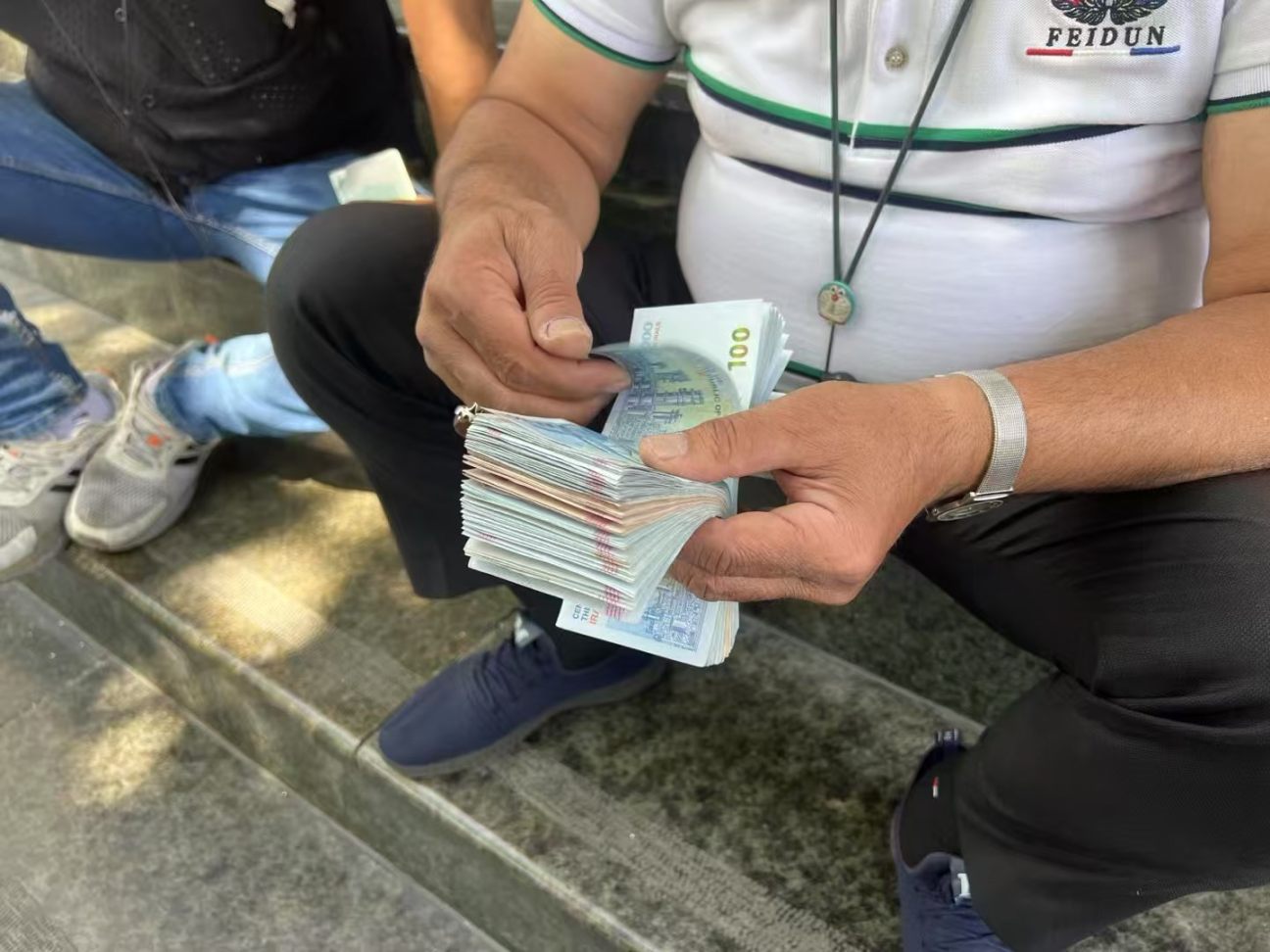
Image: The Iranian black market, a scalper counting money
I stood at the beginning of the black market street. This street extended a full kilometer, with motorcycle trunks stuffed with bundles of cash, and across the street, traffic flowed like the crowded, noisy center of Beijing fifteen years ago.
In Iran Mall in Tehran, an Iranian grandfather once told me: "Even for a middle-class Iranian, working diligently every day and saving for many years, it is impossible to afford a single international trip."
Holding this heavy bag of money, I suddenly understood: the history of inflation had never disappeared.
It had once been Germany after World War I in 1923 (the price of a loaf of bread soared from millions of marks to billions within months), and also China in 1948 (bundles of million-valued gold yuan notes on a handcart couldn't buy a bag of rice). And now, this name has transformed into Iran, Turkey, Myanmar, Zimbabwe…
Inflation is never an obscure word in history books, but a relentless and cruel cycle.
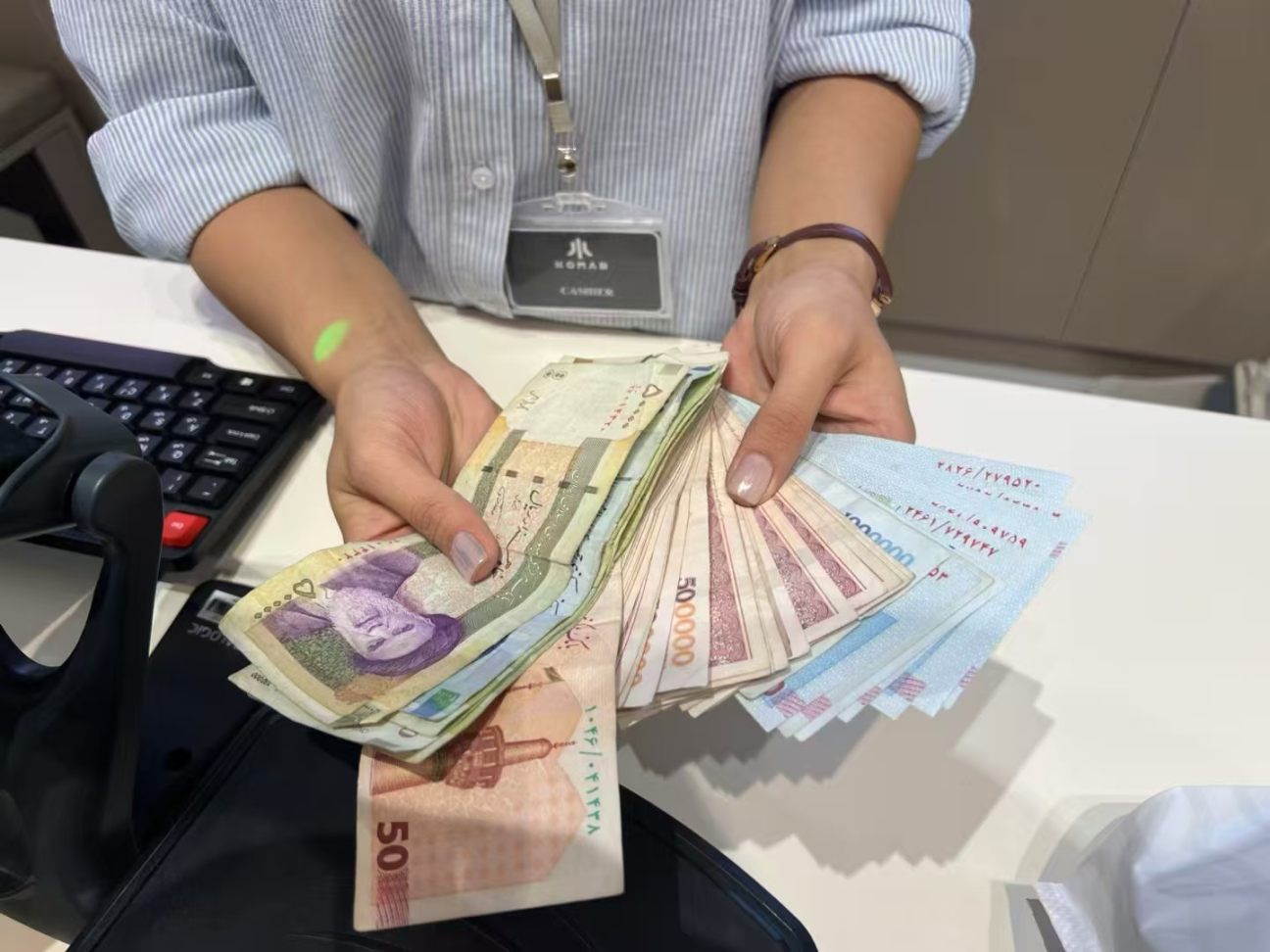
Image: In an Iranian mall, I bought a regular short-sleeve shirt for 20 million Iranian rials
It was June 2025, my third day in Iran. I handed over a thick stack of paper money worth 20 million rials, only to exchange it for a regular short-sleeve shirt.
A week later, Tehran’s night sky would be torn apart by air raid sirens, missiles would fall less than a kilometer from where I stayed. And at that time, the value of the one hundred million rials in my hands would rapidly diminish once again.
12 Hours Ejected by the System
Time rewinds to three days ago. When I just landed in Tehran, I did not possess this "one hundred million cash," only an unprecedented sense of loss of control.
My phone displayed "no service," unable to connect to any network. I took out two international credit cards—a Visa and a Mastercard. They had accompanied me through more than a dozen countries, passing through any ATM with ease, but here they had no card slot to insert them into.
There is a global financial network called SWIFT; Iran has one called Shetab. They are isolated from each other like two parallel universes that do not connect.
I realized that all the travel experiences I relied on had hit reset.
Over the years, I had grown accustomed to traveling without plans, just going wherever; I always thought the world was tightly stitched together by the internet and financial systems. But Iran was not part of this network.
This was not a random technical glitch but a structural isolation. It wasn’t until I stared at those two nearly useless plastic cards that "SWIFT," which had been an abstract term, finally became concrete.
No internet, no way to call a taxi; no cash, couldn't move an inch. I had been "kicked out" of the entire modern payment system.
When I found myself disordered and at a loss in the airport, a long-silent, low-key "fellow network" began to play its role.
I met two Chinese people: Luo, a Zhejiang businessman engaged in equipment trade, and Jing, who runs a hotel in Sri Lanka. After hearing of my predicament, Luo hardly hesitated and immediately handed me 10 million rials; Jing also gave me 4.5 million after a brief inquiry.
There was no collateral, no contract, not even time to add WeChat. This 14.5 million rials, worth only about 200 yuan in RMB, became my "lifeline" for surviving in Iran.
Luo told me that traveling frequently to the Middle East, such "accidents" are normal. To conduct business, they usually establish settlement accounts in Dubai and trade in euros or RMB.
When the official forex settlement channels are cut off, the market will always find rough exits, flowing like water. Be it cash mutual aid between compatriots at the airport, or cross-border traders using offshore accounts in Dubai, or black market transactions in the trunks of street motorcycles, these are forms of grassroots wisdom that emerge out of necessity.
In Tehran, I Weaved "Four Financial Nets"
Throughout our lives, we are wrapped in various invisible networks. To get to know a person or understand a country is essentially to connect a network node.
Yet on the global financial map, Iran is a disconnected island. Here, you can't "log in" to the existing system. To connect with it, you have to start from scratch and weave your own network.
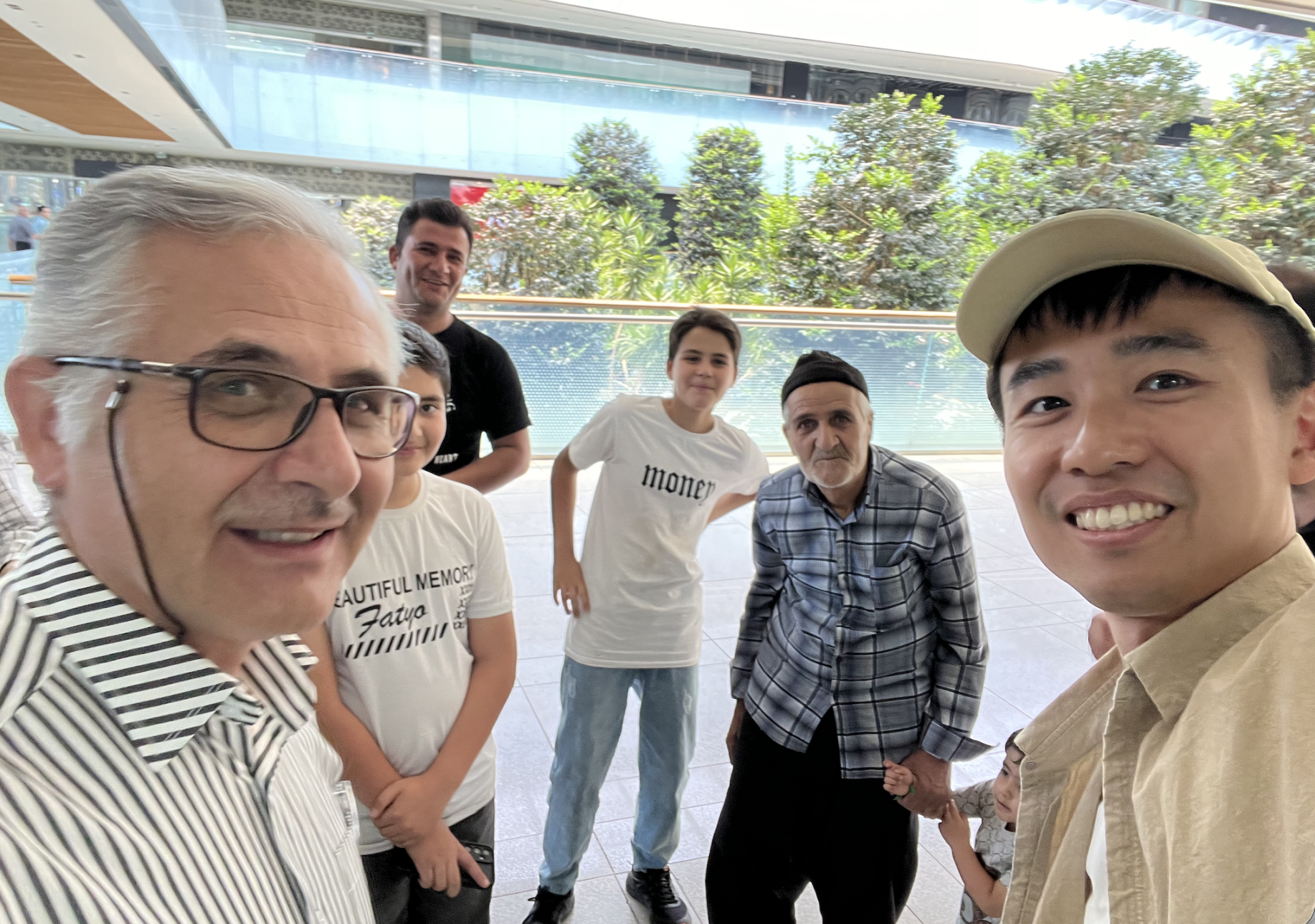
In Tehran, I successively wove four nets.
The first was the "emergency network" of mutual assistance among compatriots.
The first nodes I found were Luo and Jing. Although they were also outsiders in Iran, they had local cash. By scanning QR codes, I transferred RMB to them via Alipay and WeChat, and they handed me rials.
On the surface, it seemed I was weaving a network of interpersonal relationships; but fundamentally, it was the national-level financial networks of Alipay and WeChat that caught me in an airport hall in a foreign land.
However, the cash in hand for casual travelers is limited and can only alleviate immediate needs. To stay in this country long-term, I needed more stable channels.
So, I followed the traces and wove the second net—the "transit network" of Chinese gathering places.
In this city, restaurants, hotels, and convenience stores run by Chinese naturally become transit points for fellow travelers and logically become small "currency exchange centers" and "information exchange stations."
Because there is daily customer flow, the owners have relatively sufficient cash on hand. At a hotel, the rate offered to me was 1 dollar to 700,000 rials. I again exchanged for a thick stack of paper money that could sustain me locally, using the very familiar WeChat and Alipay.
But this was still not enough. I had to dive deeper to find the third net—the black market.
The rate given by the Chinese owners was not the best. On the one-kilometer-long street of the black market, 1 dollar can be exchanged for 800,000 rials.
If exchanging 10,000 yuan, the black market could save you over 1,200 yuan in exchange loss. If it were a foreign trade payment of 1 million yuan, that would be a profit difference of over a hundred thousand.
That is why the black market scalpers on motorcycles have become the most resilient and indispensable underground financial network in this country.
However, the first three nets all have a fatal flaw: they can only circulate within the Chinese community or rely on the extremely primitive "cash in exchange for goods" method.
In Iran, I made several local friends. We could chat freely on Instagram or WhatsApp, connecting with each other without obstacles in the information network. Yet, if I didn't bring cash today, I couldn't transfer money to my Iranian friends as I did with Luo and Jing.
The information network is globalized, but the financial network is firmly welded within national borders.
The only way I could establish an economic connection with locals still remained in the primordial era: two people had to meet in the same physical space, exchanging dollars for local currency hand to hand.
This was the recurring dilemma I faced while traveling through more than a dozen countries: we could easily obtain a foreign contact's information, but could not establish an effective "financial network" with them. Even splitting a bill with friends was impossible unless I happened to have dollars or a bundle of rials in my pocket.
Until I found the fourth net—the cross-border stablecoin network.
The Last Net in the Gaps
In this country where even QR code payments do not exist, I saw a highly sci-fi scene.
On the streets of Tehran, I caught a glimpse of a giant electronic billboard. The deep blue background was emblazoned with a huge Bitcoin logo, alongside a line of Persian text. Later, I verified that it was an advertisement for Iran's local exchange, Nobitex, stating, "Iran's largest cryptocurrency platform."
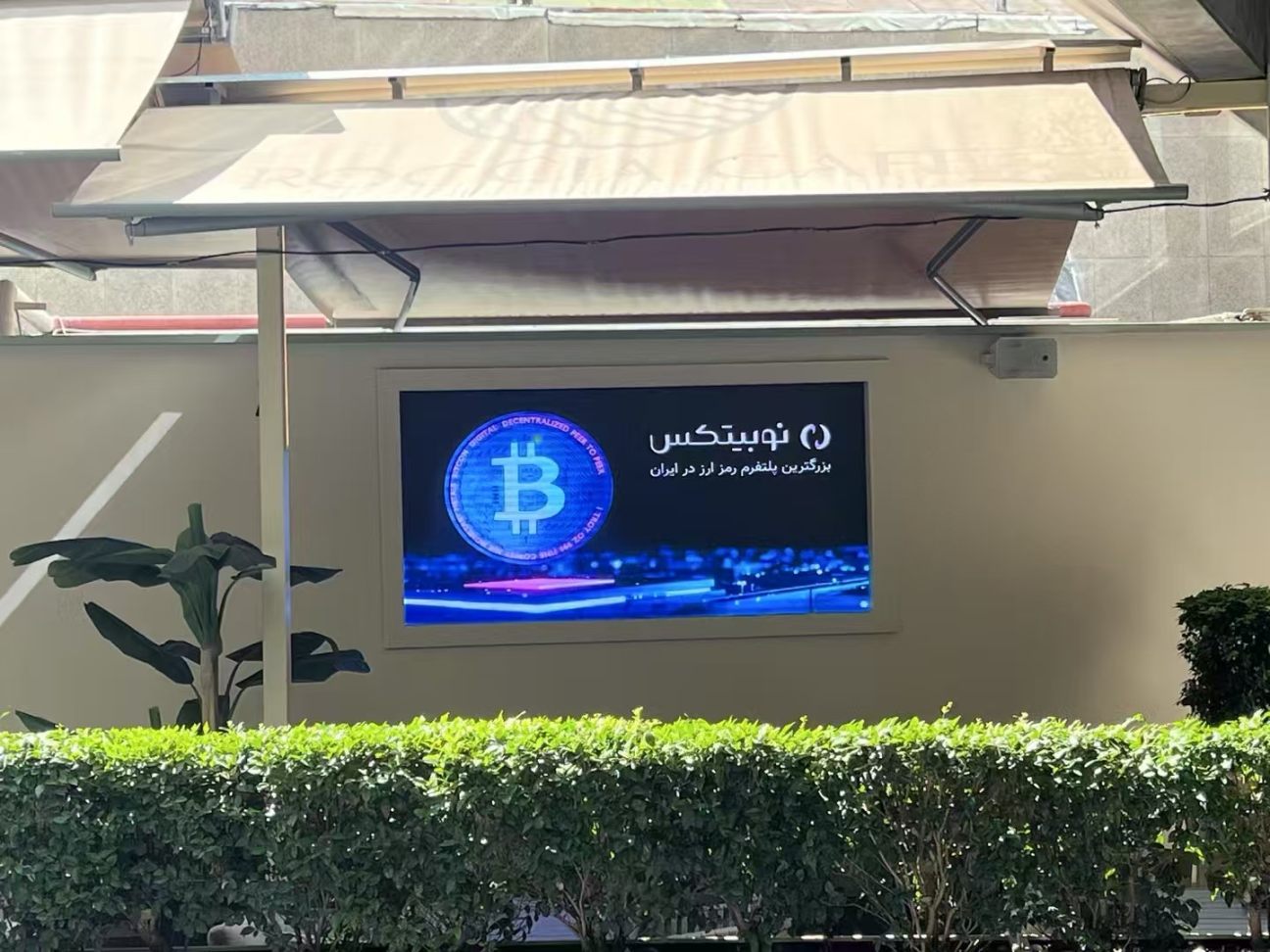
Image: Iran street advertisement: Nobitex - Iran's largest cryptocurrency platform
This was an extremely strong sense of rupture.
In this country, modern mobile payment felt like a piece of puzzle that had been violently ripped out, having never existed; you couldn’t withdraw cash from banks, and credit cards were akin to waste cards. But alongside traditional physical dollars and heavy paper currency, a decentralized system based on cryptocurrencies boldly advertised itself, thriving on the edge of sanctions.
Unable to use international mainstream exchanges, Iranians have even managed to create their own local cryptocurrency ecosystem and financial network.
In this network, there are no sanction lists from the SWIFT system, no complicated offshore accounts, and there’s no need to shove bundles of paper money into a motorcycle trunk. With just one address, value can penetrate Iran's borders as effortlessly as sending a WhatsApp message.
I specially went to an Iranian currency exchange store, where some shops already accept exchanging "dollar stablecoin USDT" for Iranian rials, at a cost of about 30 dollars in fees.
But I found a way to establish an effective financial network between the local populace and foreign strangers.
Although this financial network has not become widespread, its scale is quietly growing. In particular, for people in countries like Turkey, Iran, and Egypt, when they discover their local currency is continuously depreciating, the demand for such a network is especially urgent.
In the hidden corners of Tehran, there were even several Crypto ATMs.
This is not an isolated instance. In 2025, I traveled to eleven countries and found that more than half of them already supported cryptocurrency development to some extent. Especially in Iran, Georgia, Armenia, Egypt, and Dubai, I discovered that locals had Crypto ATMs and offline exchange stores. Countries like Vietnam and Thailand have even supported stablecoin scanning and card payment.
A new network has begun to spread globally. And this network does not only serve financially stable developed countries, but precisely in those countries with extremely fragile and even sanctioned finances, the most substantial real demands are emerging.
The Last Financial Network for Ordinary People in Iran
After returning home, I resumed using cards, scanning codes, and ordering takeout, everything returned to normal. But I still occasionally pay attention to the situation in Iran.
On March 21, 2026, Iran's central bank issued new banknotes worth 10 million rials (about 5 dollars)—becoming the highest denomination of fiat currency locally.
Just a month ago, they had just introduced new banknotes worth 5 million rials.
In just six months, the highest denomination has doubled.
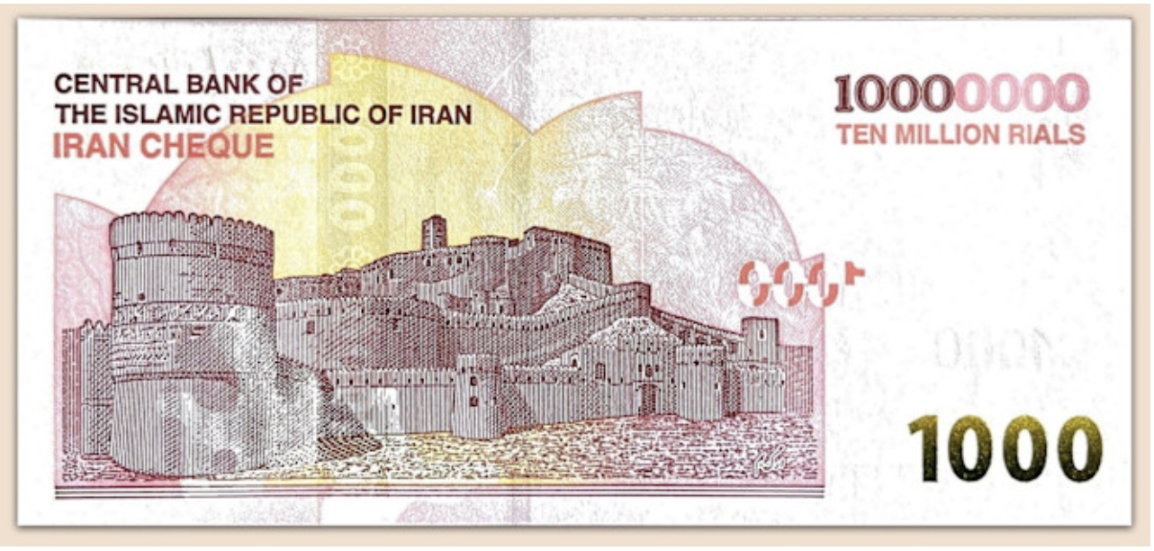
I occasionally think of that street, the bundles of rials stuffed in motorcycle trunks, and those who set up accounts in Dubai, exchanged dollars in the streets, and bargained in the black market.
They were not fighting against some grand system; they were just using every ounce of effort to find a way to survive.
There, you see two economic systems: one written in the news, the other hidden in motorcycle trunks.
The macro SWIFT system keeps Iran at bay, while national-level mobile payment networks like WeChat, Alipay, and PayPal cannot reach. People abandoned by the system can only rely on compatriot mutual aid, transit points, and street black markets to painstakingly maintain the first three fragile financial nets.
However, stablecoins are constructing the fourth financial network—it disregards national borders, allowing sanctioned countries to maintain trade and permitting ordinary people to flow value between nations.
This may bring about certain regulatory risks. But for the people of sanctioned countries, they have already lost enough.
The nation is sanctioned, but the people are innocent.
When the flames of war ignite and inflation becomes chaotic, stablecoins become the last financial network that ordinary people can choose to connect with the world.
免责声明:本文章仅代表作者个人观点,不代表本平台的立场和观点。本文章仅供信息分享,不构成对任何人的任何投资建议。用户与作者之间的任何争议,与本平台无关。如网页中刊载的文章或图片涉及侵权,请提供相关的权利证明和身份证明发送邮件到support@aicoin.com,本平台相关工作人员将会进行核查。


