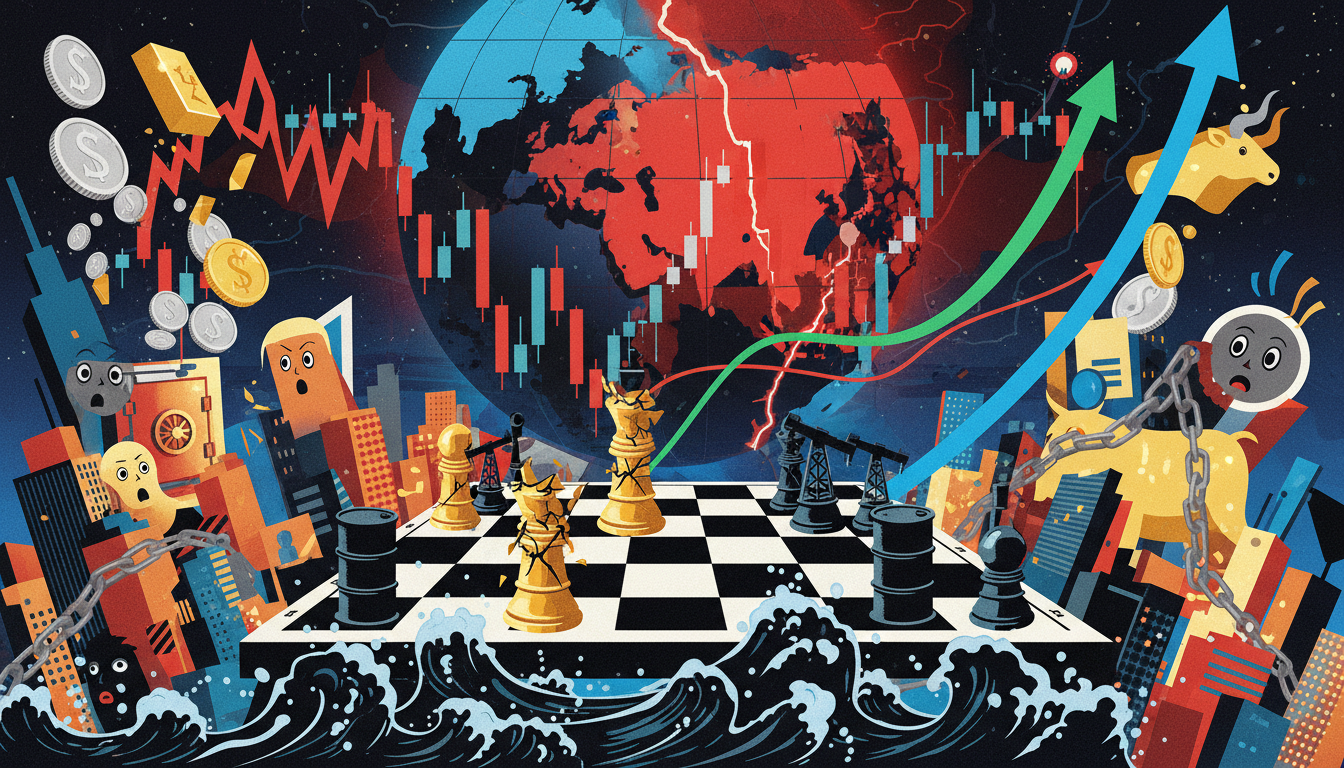
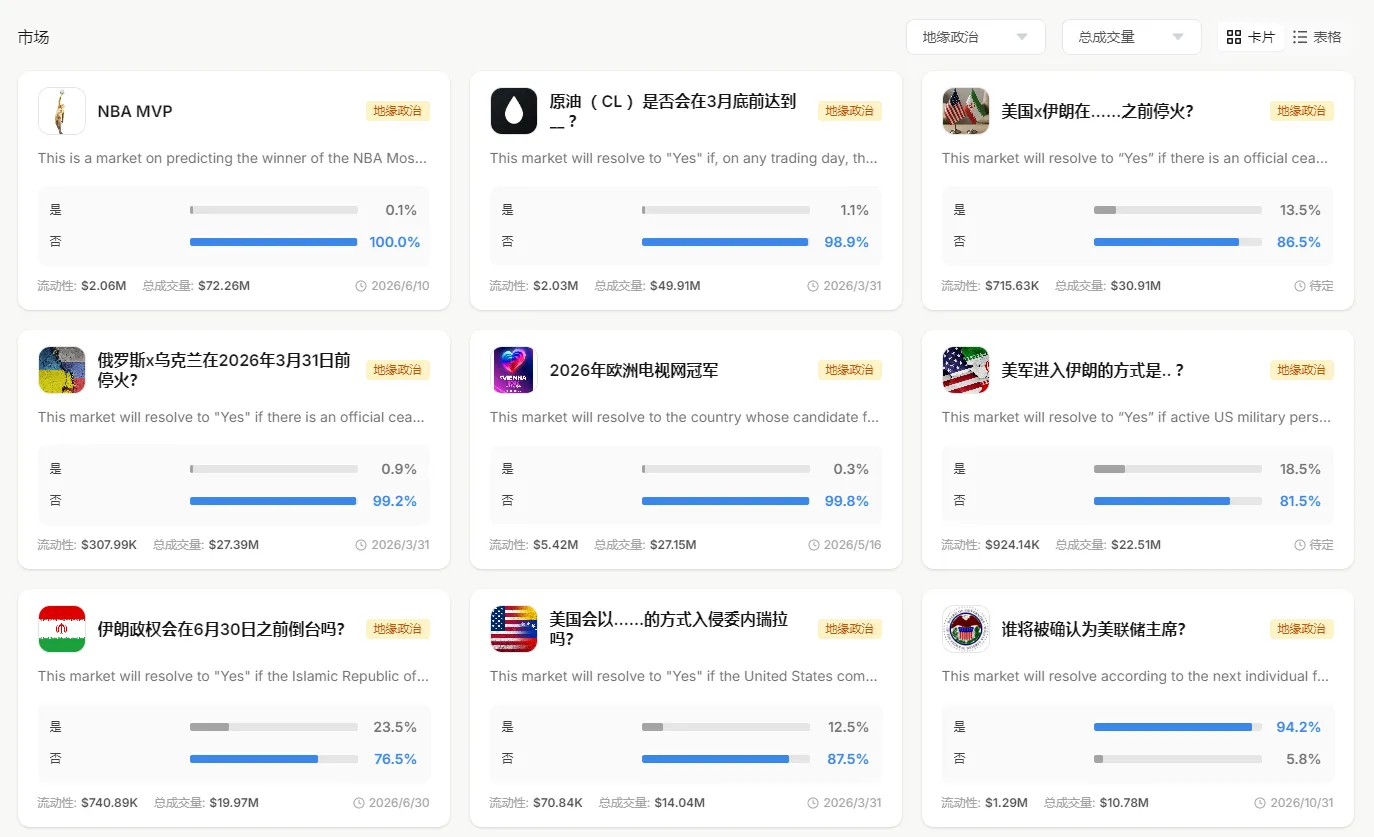
On March 23, 2026, Eastern Standard Time, an Ethereum old address that had been dormant for nearly ten years finally pressed the transfer button. The address 0xa2F…F85A transferred 15,000 ETH to Coinbase in one go, amounting to approximately 30.97 million USD based on on-chain tracking referenced prices. This large amount of chips, which had been almost untouched since 2016, had a cost of only 11.61 USD/ETH, implying about 30.79 million USD in paper profit, corresponding to an astonishing return rate of 17,680%. In the current not-so-ample spot liquidity, this has formed a clear potential selling pressure shadow. Meanwhile, the Middle East conflict has continued for four weeks, with mutual threats between the US and Iran pushing oil prices higher. Gold, however, recorded a "weekly drop that created a record since 1983". Against the backdrop of "the explosion in the capital of Iran being unprecedented" and similar narratives, macro risk aversion emotions are highly torn: high oil prices, plummeting gold prices, and violent fluctuations in risk assets. In this context, early ETH old players chose to cash out significantly, and how risk aversion funds would realign amidst the war, oil prices, and old chips fleeing became a core issue looming over the entire crypto market.
Ten-Year Chips Moving Out: 17680% Cash-Out Pressure
The story of address 0xa2F…F85A dates back to when Ethereum was still in its infancy in 2016. According to multiple data sources (according to Jinse Finance, Planet Daily, TechFlow), the cost basis for that address is around 11.61 USD/ETH, and its holding almost spans the entire evolution cycle of Ethereum from an early experiment to being one of the top two assets by global market capitalization. Over a decade, Ethereum has experienced several rounds of bull and bear markets, and two major narrative switches, while this batch of old chips maintained extremely low on-chain activity until suddenly "emerging" on March 23, 2026.
This single-time recharge of 15,000 ETH to Coinbase, valued at approximately 30.97 million USD at current prices, if calculated at the cost of 11.61 USD, has a potential floating profit of about 30.79 million USD, corresponding to a return rate of 17,680%. This combination of "extreme profit + large scale" would be regarded as a very strong cash-out signal at any stage, especially considering the current ETH spot liquidity is not ample; any potential massive sell order could psychologically amplify the collective imagination of "selling pressure is approaching."
For market participants, this extreme high-return cashing action of old chips often serves not only as a disturbance in funds but also as an emotional suppression: on one hand, it reminds newcomers that they are still deeply mired in volatility, while on the other, it breaks the illusion that "old players will always hold onto their chips." In the context of intensified conflict and macro uncertainty, this clearing is easier to interpret as "smart money is starting to leave." It should be emphasized that the current publicly available information has not disclosed the remaining positions of that address, and we cannot ascertain the true identity behind it. Therefore, one cannot deduce a larger scale of selling pressure, nor will we make any nature-based speculation about the actual controller; the event’s confirmable scope is limited to this 15,000 ETH large recharge itself.
Extreme Profits vs. Deep Losses: Fates at Both Ends of the Same Chain
In stark contrast to this 2016 OG’s substantial cashing out is another ETH whale still deeply trapped in losses. According to on-chain data compiled by TechFlow, address 0x2607 currently faces a floating loss of approximately 26.77 million USD. On the same public chain, one batch of chips is sent to the exchange with an astonishing gain of 17,680%, while another substantial batch still endures tens of millions of USD in paper losses. This cold numerical contrast highlights the huge tear between different cycle participants within a single asset.
The gap between early players and later whales is not only in purchase price but also in the macro environment and risk preferences they occupy. ETH in 2016 was still in a high uncertainty technical experiment stage, and daring to hold long-term was itself a form of extreme bet; whereas large addresses entering at subsequent cycle highs often had mixed decisions based on institutional narratives, macro liquidity easing, and collective sentiments of "not wanting to miss out on new assets." When the macro environment turns from easing to tightening, and conflicts and safety incidents overlap, later large holders with enormous paper losses often face the choice of "cutting losses or hanging on" within a narrower time window.
Within the current price range, the actions of profit-taking and loss-bearing participants are especially crucial: for early addresses like 0xa2F…F85A, even cashing out only part of the chips is enough to lock in astonishing profits, and their rational choice often tends to be " unload some risk first and then assess the situation"; while addresses like 0x2607, in deep floating losses, are more likely to see concentrated liquidation when prices break key support, triggering a chain reaction. The differentiation of whale behaviors essentially reflects vastly different expectations and risk preferences towards future market directions—some see the present as the last window for high-price cashing out, while others view it as a necessary period to endure for mid-term retracement. This tension causes every large transfer to be amplified and interpreted on social media, becoming a potential starting point for emotional dominoes.
Conflict Raising Oil Prices: Are Risk Aversion Funds Retreating from Gold or Turning to Crypto?
Behind this wave of old chips moving is an increasingly complex geopolitical situation in the Middle East. Before and after the on-chain event, the Middle East conflict has continued for about four weeks, with mutual threats between the US and Iran escalating continuously. According to TechFlow reports, this situation is pushing international crude oil prices to remain at a high level, with Goldman Sachs even providing a judgment of "long-term high oil prices," one reason being that geopolitical risks and supply uncertainties have elevated risk premiums.
In sharp contrast to high oil prices is the unusual movement of traditional safe-haven asset gold: According to TechFlow, "gold recorded the largest weekly drop since 1983," at a moment when risk narratives should shine the most, gold prices saw a historically significant short-term collapse. At the same time, reports from Jinse Finance and Rhythm describe the "explosion in the capital of Iran as unprecedented," and such extreme rhetoric amplifies market worries about the escalation of conflict. When war, explosions, and the price flash crash of traditional safe-haven assets are continuously presented to investors, a more general question begins to emerge: where is true "risk aversion" now?
In the interval where gold has "failed" short-term while oil prices are in high-level turbulence, crypto assets are once again being packaged by some funds as "alternative safe-haven tools"—on one hand, they possess decentralized and easy cross-border mobility attributes; on the other, in the context of high inflation and currency credibility controversies, leading assets like Bitcoin and Ethereum are seen by some investors as extensions of "digital hard assets." But it must be emphasized that this narrative heavily relies on emotions and story packaging and behaves differently from traditional safe-haven assets. More importantly, there is a high level of uncertainty surrounding the future paths of the Middle East conflict and oil prices; at this stage, one cannot, nor should one, speculate on specific oil price ranges or timelines for conflict escalations. What can currently be confirmed is that the rotation of war, oil prices, and safe-haven assets collectively forms the macro background for price fluctuations in this cycle.
From Crude Oil to Ethereum: How Risk Premium Chains Transmit
According to views cited by TechFlow, the structural growth of global long-term strategic reserves may keep oil prices at a high level in the future. In simple terms, in the context of frequent geopolitical conflicts and rising supply uncertainties, countries tend to increase their energy reserves, which raises the "bottom demand" for energy assets like crude oil, causing their long-term risk premiums to rise. The upward shift of energy prices is not solely a concern for commodity traders; it will transmit to a broader range of risk assets through inflation and interest rate expectations.
When the market begins to expect long-term high energy costs, rising imported inflation pressures increase the likelihood that central banks will maintain high interest rates or delay rate cuts; the stock market, tech stocks, and highly leveraged assets are the first to feel the pressure of valuation repricing. Crypto assets, as the most volatile portion of the risk asset spectrum, are also included in this transmission chain: on one hand, when long-term inflation expectations rise, the narratives of "anti-inflation" and "hedging fiat currency depreciation" will be reinforced; on the other hand, a high interest rate environment compresses valuations for cash flow-less assets, leading to price suppression under rising discount rates. This contradictory force makes crypto pricing on a macro level more dependent on "risk premiums" rather than a single narrative.
At this node, the risk premiums within crypto are also being redistributed. TechFlow points out that recent DeFi security incidents have resulted in losses exceeding 137 million USD; although specific projects and attack paths are not the main focus of this article, this number is enough to illustrate: at the smart contract level, the frequency and single-event losses from risk incidents remain high. When external macro uncertainties overlap with internal security incidents, funds begin to segment their risk pricing for different on-chain products: some funds withdraw from high-leverage and high-complexity DeFi protocols, turning to leading asset spot or simpler derivatives; others continue to gamble between high APY and high risk. The correlation structure among crude oil, gold, and crypto in this round of conflict is also changing—oil prices reflect supply risks and inflation expectations more, while gold oscillates between rates and dollar movements, and crypto assets are squeezed between the roles of "digital safe haven" and "high-risk speculation," making it more challenging for traders to navigate asset allocation.
Old Addresses, DeFi Hunters, and Retail Investors: Three Roles on the Same Chain
Aside from the long-dormant OG addresses and deeply trapped whales, another group of participants more adept at navigating the edges of on-chain risks have also quietly profited. According to Jinse Finance, address 0x78c…dBE18 once profited about 2 million USD through the on-chain tool SIREN. These cases showcase the high risk preference of seasoned on-chain players amidst complex derivatives and protocols. They typically do not cling to long-term holdings of any single asset but instead engage in short-cycle arbitrage and swing trading around contracts, options, and liquidity mining. In the same turmoil, they play the role of "DeFi hunters."
Connecting these three roles: one end is the OG cash out—like 0xa2F…F85A, exchanging nearly perfect 17,680% cash-out after ten years; the other end is the whale deep trapped—like 0x2607, suffering tens of millions of USD in floating losses on the same asset; caught in between are the DeFi hunters—like 0x78c…dBE18, continuously rolling chips between high-risk protocols and on-chain derivatives. This structure reveals that wealth on-chain is shifting from early steadfast holders to a new generation of high-frequency players and later-arriving institutions and retail investors during the rotation of new and old cycles.
In the dual context of geopolitical tension and frequent security incidents, participants with different fund sizes and styles have seen a divergence in strategy choices: large institutions and early addresses are more inclined to observe or reduce positions in the face of intensified macro uncertainty, locking in some profits and lowering tail risk; medium-sized funds may attempt to incrementally increase positions in dips, betting on valuation recovery after calming conflicts and risk premiums; while small retail participants, driven by emotions, are more likely to exhibit chasing highs and killing lows, lacking refined risk management. It is important to clarify that a single large transfer or a specific address's successful arbitrage in DeFi does not equate to a reversal of trends; it is merely a local sample within the vast data on-chain. However, in the current environment, highly sensitive to war and macro data, such events are often amplified and interpreted by the market, becoming an overly emphasized piece of the narrative puzzle.
As the Flames of War Have Not Died Down, Chips Move First: What to Keep an Eye on Next
In summary, the ongoing conflict in the Middle East, high oil prices, Goldman Sachs' judgment on long-term high oil prices, gold achieving its largest weekly drop since 1983, and the choice of 2016 ETH old chips to conduct a large recharge to exchanges at a return rate of 17,680%—these originally disparate clues are converging into the current main narrative driving emotions: the macro risk-averse structure is shifting, and early on-chain chips are beginning to loosen. Old players moving their chips while the flames of war have not yet extinguished raises sharper questions about "where should risk aversion funds go."
It must be emphasized that a large recharge does not equate to immediate selling. What is visible on-chain is simply the wallet that funds are entering at exchanges; whether they are placed for selling, at what price, and at what rhythm, external observers cannot confirm. However, at this stage, with limited spot liquidity and highly sensitive emotions, such large-scale movements have a "signal effect" sufficient to sway short-term expectations—markets often prefer to be overly cautious than to easily ignore potential selling pressure shadows.
Looking ahead, what truly deserves continued attention is not the dramatized accounts of individual addresses on social media, but a few more structural information clues: first, the linkage between oil prices and the evolution of the conflict—if the conflict escalates or strategic reserves continue to grow, energy risk premiums may further increase; second, whether there are resonant changes in on-chain whale addresses and institutional fund flows—for example, more OG addresses becoming active, a net inflow to exchanges amplifying, or indications of increased institutional participation; third, the dynamic allocation of DeFi security incidents and on-chain risk premiums. For ordinary participants, maintaining a sense of reverence towards data and risk in a highly narrative-driven context is particularly important: do not be swept up by the emotions of a single event, nor elevate individual cash-outs or arbitrage to grand judgments of "the end of an era." War, oil prices, gold, and Ethereum are merely different coordinates in this round of global risk repricing, with the actual determinants of profits and risks still being one's own position management and tolerance for uncertainty.
Join our community, let’s discuss and grow stronger together!
Official Telegram community: https://t.me/aicoincn
AiCoin Chinese Twitter: https://x.com/AiCoinzh
OKX benefit group: https://aicoin.com/link/chat?cid=l61eM4owQ
Binance benefit group: https://aicoin.com/link/chat?cid=ynr7d1P6Z
免责声明:本文章仅代表作者个人观点,不代表本平台的立场和观点。本文章仅供信息分享,不构成对任何人的任何投资建议。用户与作者之间的任何争议,与本平台无关。如网页中刊载的文章或图片涉及侵权,请提供相关的权利证明和身份证明发送邮件到support@aicoin.com,本平台相关工作人员将会进行核查。