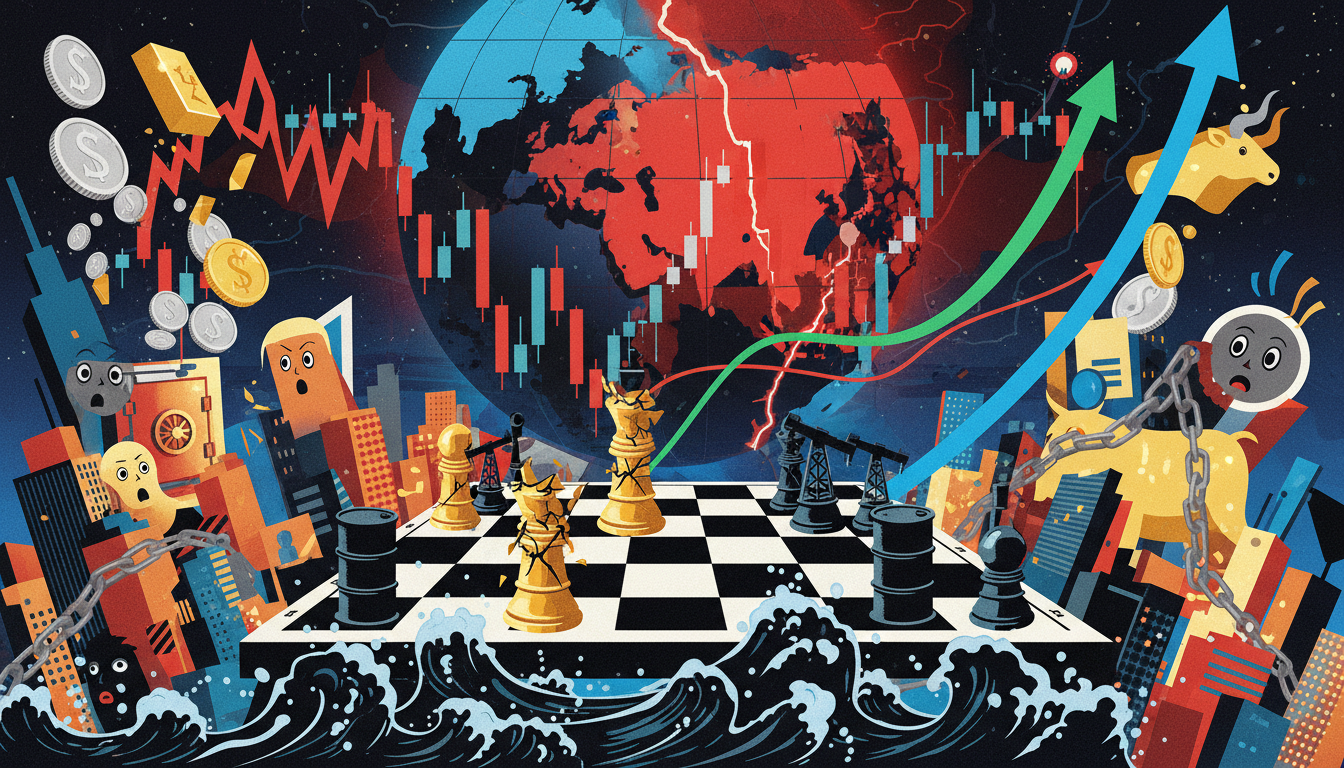
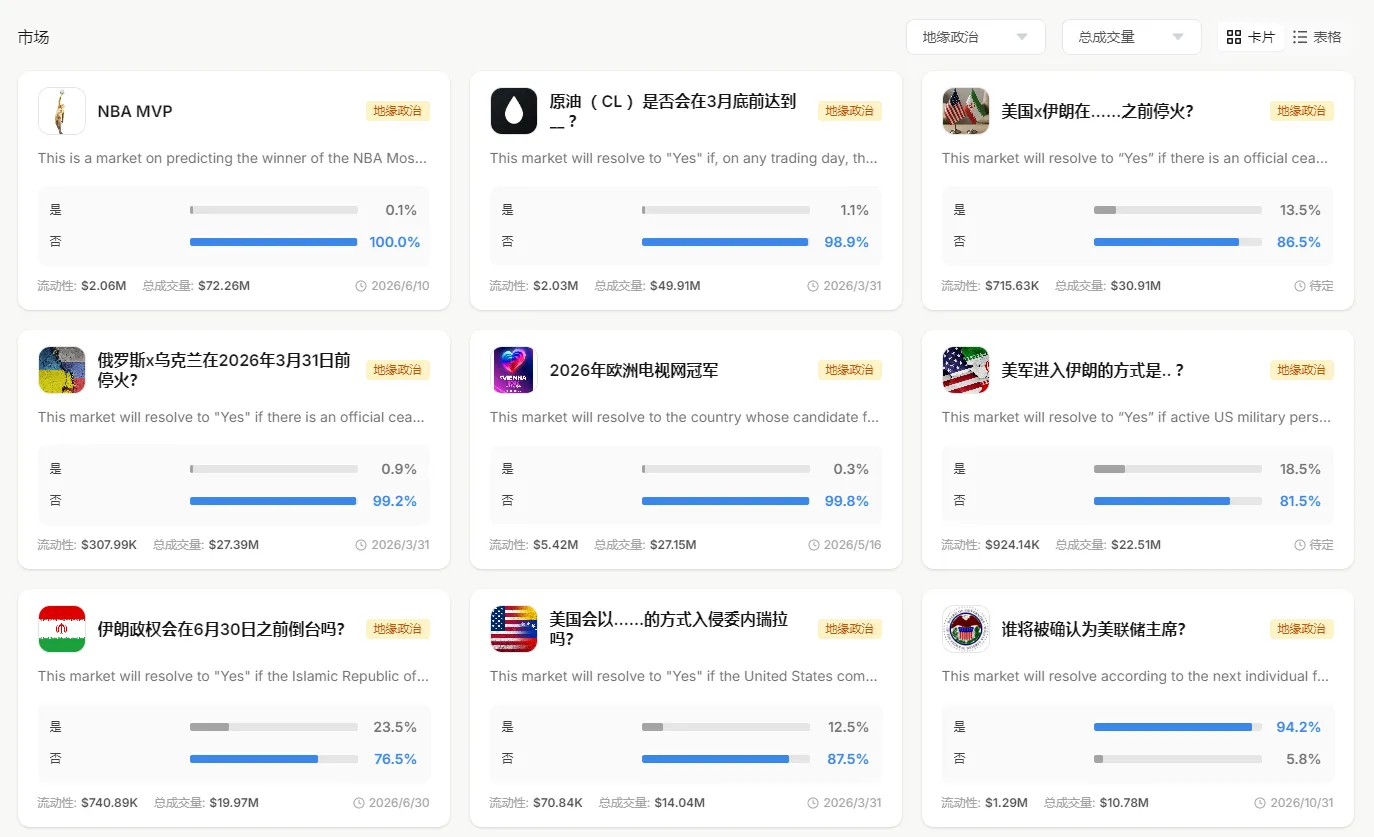
On the evening of March 23, 2026, Beijing time, a large-scale explosion described as "unprecedented" by Al Jazeera occurred in the Iranian capital, instantly impacting multiple markets including crude oil, commodities, and cryptocurrencies. At the same time, WTI crude oil futures surged past 101 dollars, London copper fell sharply by 6.7% in a single week, and the cryptocurrency market experienced massive liquidations within hours. What further added to the sense of dislocation was that traditional safe-haven asset gold and cryptocurrency, often regarded as "digital gold," did not soar in panic but instead failed collectively amidst oscillations of rising and falling prices. The energy inflation expectations driven by the surge in oil prices, combined with fears of a slowdown indicated by the plummeting copper prices, turned this night into a moment of intense questioning regarding cross-market risk hedging logic: as regional conflicts escalated, traditional and emerging safe-haven assets failed simultaneously—how much of the global risk pricing system remains reliable?
The Impact of the Iranian Explosion on Global Markets: Oil Soars, Copper Plummets
On March 23, 2026, a large-scale explosion suddenly occurred in the Iranian capital. International media described the extent of the destruction as "unprecedented," but key details such as the responsible party and underlying motives remain highly uncertain through public channels. The ambiguity of the event added a dangerous layer to market sentiment: panic had a real-world carrier but lacked quantifiable boundaries, leading prices to seek answers amid speculation.
Amid this uncertainty, the energy market, already buoyed by geopolitical premiums, was the first to lose control. According to Hyperinsight data, WTI crude oil futures briefly surged past 101 dollars as the news spread, reaching a temporary high, and subsequently fell back due to short-term profit-taking and official statements. Behind the oil price trends, safe-haven buying and short-term speculation intertwined: on one hand, traders bet on increased supply risks in the Middle East, raising the oil price "cost floor;" on the other hand, algorithms and high-frequency strategies continuously chased momentum in the midst of violent fluctuations, amplifying both the surges and the retreats into severe seesaws.
In stark contrast to crude oil was the "surrender-style pricing" of industrial metals. According to a single source's statistics, London copper fell by 6.7% in a single week; during the same period of rising energy prices, copper seemed to have quickly lost the essence of its growth narrative. As a barometer of global industrial activities and manufacturing cycles, its sudden drop was not an isolated technical adjustment but rather indicative of a concentrated price-cutting exercise regarding future demand prospects: under the expectation that high oil prices would suppress profit margins, corporate investment and production willingness were preemptively discounted by the market.
Behind the peak in oil prices and the collapse in copper prices is a complex macro background where energy inflation expectations coexist with industrial demand worries. On one hand, the high WTI prices intensified concerns about a resurgence of "imported inflation," complicating monetary policy; on the other hand, the collective weakness of industrial metals reminded investors of the limited capacity of real economic activities to withstand a high-cost environment. This pair of "inflation-growth" indicators, crude oil and copper, presented a tug-of-war image after the Iranian explosion: the inflation floodgates might be reopened, but future growth expectations were already being downgraded.
Gold and Crypto Sway in Unison: The Failure of the Safe-Haven Script
If the Iranian explosion can be viewed as a stress test for the global safe-haven system, then gold also failed to provide a reassuring answer this time. Market commentary widely cited analyst Kyle Rodda's view—the performance of gold largely depends on whether Trump’s threats to Iran will actually materialize. Initially, gold saw buying momentum following the explosion news, but as White House statements wavered and the situation remained uncertain, gold prices experienced repeated fluctuation in the pendulum of expectations regarding potential military escalation. The entanglement of safe-haven demand and bets on subsequent sanctions, negotiations, or even de-escalation prevented gold from demonstrating the "one-way safe-haven flight" typically expected in traditional textbooks.
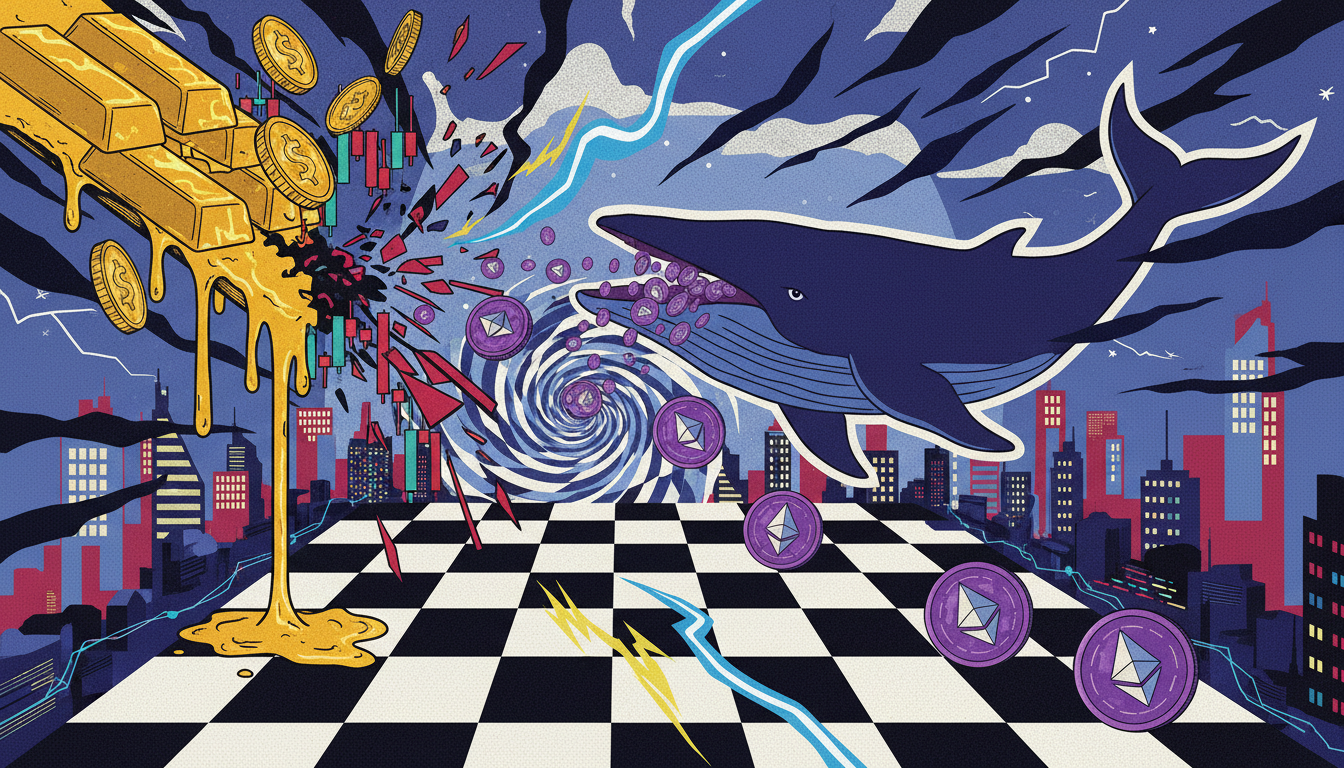
Similarly granted hopes for safe-haven, Bitcoin has repeatedly been packaged as "digital gold." According to the market narrative formed over the past few years, when geopolitical risks erupt, gold and bitcoin often exhibit some form of divergent path in the short term: gold absorbs conservative capital, while bitcoin attracts funds willing to embrace volatility. However, this time, after the explosion, the crypto market did not chart an independent course but instead moved in high-speed oscillations alongside traditional risk assets, showing more characteristics of "risk assets" rather than "safe-haven assets." Traditional and emerging safe havens failed to form a complementary relationship, instead displaying very synchronized swings in direction and rhythm over the same timeframe.
This abnormal correlation was illuminated even more glaringly in on-chain data. According to Coinbob and market monitoring data, BTC shorts took profits of 33.6 million dollars during the extreme situation, while on the other side, a heavily invested ETH address faced an unrealized loss of as much as 26.77 million dollars, with a drawdown of about -52%. The former symbolizes the short sellers profiting from a drastic drop, while the latter exemplifies the concentrated injuries of highly leveraged long positions against a black swan event. When gold did not give a clear direction and the crypto market became a "volatility amplifier" amidst massive liquidations, the so-called "diversified hedging portfolio" appeared extraordinarily pale that night.
When gold and crypto assets simultaneously failed, a gap was rudely opened in the market's risk pricing and consensus on hedging. Investors began to realize that many narratives surrounding "digital gold" and "non-correlated assets" are essentially summaries from a lax environment and liquidity feast rather than hard constraints that had been tested in the face of true systemic shocks. In high-uncertainty events like the Iranian explosion, the traditional role distribution among safe-haven assets was disrupted, and the pathway for risk premiums shifted from "stock market → gold/bitcoin" to "stock market → crude oil → overall market shaking," with old scripts thoroughly torn apart for the first time in reality.
Algorithm Strategies Stunned by the Black Swan: A Collective Collapse of On-Chain Leverage
If the misalignment of cross-market prices still reflects a macro narrative-level impact, then on a more specific trading level, the black swan directly struck algorithmic strategies and highly leveraged capital. On Hyperliquid, two major addresses established million-dollar WTI long positions before and after the explosion, attempting to bet on an escalation in the Middle East leading to a stronger surge in oil prices. This high-leverage "all-in geopolitical premium" strategy fundamentally ties capital exposure to a single risk factor, meaning if prices retreat sharply or information paths deviate from expectations, the drawdown will geometrically magnify.
Visible cases on-chain resemble the projection of this risk exposure. The aforementioned ETH whale address with a 26.77 million dollar unrealized loss, experiencing an overall drawdown of about 52%, often involves complex strategy compositions layered with multi-level leverage, algorithmic hedging, and cross-asset correlation assumptions. Meanwhile, the BTC shorts that profited 33.6 million dollars highlight another facet: some models unexpectedly hit the mark through extreme volatility, transferring losses from other leveraged long positions to a few short accounts through forced liquidations and slippage. In this process, concentrated exposure of quantification, leverage, and on-chain derivatives was greatly amplified in an extreme manner within the on-chain ledger.
The more profound issue is that events like the Iranian explosion, a geopolitical black swan event, directly shattered the historical backtesting and correlation assumptions upon which many algorithmic trading models depend. Over the past few years, model engineers have become accustomed to tuning parameters within the framework of "limited shocks + high liquidity": the correlations of crude oil and stock markets, the beta of bitcoin to the Nasdaq, the inverse relationship between gold and real interest rates, all encoded into strings of signals. But when energy and industrial metals undergo drastic changes in opposite directions, when gold no longer consistently functions as a "risk switch," and when bitcoin behaves more like a tech stock than a store of value during geopolitical conflicts, these correlations written into the code begin to fail, stop-loss logic and risk control thresholds are continuously triggered, further exacerbating market fluctuations.
This vulnerability is not limited to centralized derivative markets. According to a single source's statistics, losses in the DeFi space reached 137 million dollars in the first quarter of 2026, reminding the market that whether due to protocol vulnerabilities or failures in liquidation mechanisms, structural security issues in on-chain financial systems, when compounded with extreme market shocks, manifest risks through pathways that are not yet fully understood. The on-chain leveraging, already fragile liquidity, and complex liquidation logic, become amplifiers that transmute individual errors into systemic shocks in the context of black swan events like the Iranian explosion.
Energy Inflation Coupled with Federal Reserve Stalemate: The Macro Script is Compelled to be Rewritten
As crude oil surged towards triple digits again due to the Middle East explosion, the challenges of monetary policy extend beyond asset pricing. In Washington, the long-term market focus is on whether the power transition within the Federal Reserve and the interest rate path can maintain stability amid elections and geopolitical conflicts. Wall Street Journal reporter Nick Timiraos succinctly articulated the current predicament: "Rising energy prices complicate the Fed's power transition." As inflation shadows driven by oil prices press down on the economy again, any discussions about easing or rate cuts must reconsider the variable of "a second surge of energy inflation."
More precarious is the unresolved personnel arrangement within the Federal Reserve itself. One of the candidates, Waller, faces judicial investigation and political obstruction, creating uncertainties in the nomination process, final selections, and policy continuity between new and old teams. With public channels providing no precise timelines or details of internal negotiations, what the market sees is only the surface: the "cockpit" of interest rate decision-making is not firmly stabilized during critical moments. The expectations for the interest rate path become increasingly sensitive in this context, with any unexpected movements in energy prices or inflation data triggering amplification effects on swap curves, treasury yields, and equity-debt valuations.
While energy inflation pressure reemerges, the Federal Reserve must also weigh another factor: how to find a fragile balance between combating inflation and maintaining liquidity amidst a highly volatile cross-market environment. If the response to oil price shocks is overly aggressive, excessively tightening monetary policy will add another burden to already pressured growth and employment; if actions are slow, allowing inflation expectations to decouple again could lead to a repetition of the "inflation-rate hike-hard landing" script. This dilemma has been amplified in the market chain reactions triggered by the Iranian explosion.
The crypto market no longer stands as an "outsider" in this macro narrative. The divergence in crude oil and copper prices, the failure of gold and bitcoin as hedges, along with the repricing of the Federal Reserve's interest rate path, together shape a new macro stage: capital is no longer merely making geometric switches between stocks, bonds, gold, and cryptocurrencies but simultaneously viewing energy prices and policy vacuum as core variables. When crude oil determines inflation expectation ranges, the Federal Reserve's personnel and path influence actual interest rate corridors, while crypto assets are re-weighted within this triangle of "inflation-rate-risk appetite." Following the Iranian explosion, the main line of the macro narrative must be rewritten, compelling the crypto market to awaken from the illusion of "independent bulls and bears" and face the reality of its deep entrenchment within the global risk cycle.
DWF Shadows and SIREN Windfall: Glaring Contrast of Local Stories
In this moment of macro risk reaching a fever pitch, another scene on-chain appears particularly ironic. Research briefs indicate that a certain address associated with DWF Labs made approximately 2 million dollars through operations involving SIREN tokens. Against the backdrop of severe market turbulence and the failure of mainstream asset hedges, this localized windfall story stands out sharply. From the flow of funds, these operations are often not simple "buy low sell high," but rather revolve around thinly traded small-cap tokens, exploiting insufficient order book depth and information asymmetry to create significant volatility and achieve low-cost exits within a short timeframe.
This split between macro panic and localized windfall essentially reveals the complexity of the crypto market structure. On one hand, bitcoin and ether absorbed the global risk sentiment shock following the Iranian explosion, carrying narratives about inflation hedging and systemic risk; on the other hand, small tokens like SIREN are playing out scenes of extreme volatility in corners of fragmented liquidity that are almost irrelevant to macro trends. For ordinary participants, the same market holds both "macro systemic risk" and "localized structural speculation," with the spread between the two easily eroding trust.
In a panic market, the behavior of leading market-making institutions and whales can further amplify this distrust. For large funds familiar with the order book structure and on-chain ecosystem, macro volatility provides volatility and narrative heat, while small-cap tokens are the best vehicles to harvest emotions and liquidity. While most eyes are still glued to the Iranian explosion, the Federal Reserve's movements, and bitcoin's price, a minority of capital has quietly completed position rotations and profit realizations on edge assets like SIREN. This contrast of "surface panic—underlying arbitrage" is eroding the entire market's foundation of trust in price signals.
In an environment where structural speculation and macro systemic risk intertwine, the survival logic for small-cap tokens is forced to change. On one hand, macro risks heighten capital's requirements for liquidity and counterparty quality, necessitating that projects able to survive long-term provide more solid fundamentals and transparency beyond narrations; on the other hand, speculative capital will still incessantly seek arbitrage opportunities in regulatory vacuums, information asymmetry, and emotional extremes. Black swans like the Iranian explosion merely concentrated this tension into one night: when mainstream hedges fail and systemic risks rise, small tokens either become chips on the volatility betting table or are forced to find new value support amidst a harsher filtering process.
After the Myth of Hedging Crumbles: Where Will Capital Flow?
Looking back at this chain reaction triggered by the Iranian explosion, crude oil, copper, gold, and crypto assets collectively misaligned within a short time: WTI briefly surged above 101 dollars, intensifying concerns about energy inflation; copper fell sharply by 6.7%, indicating poor growth prospects; gold oscillated amidst expectations of whether Trump’s threats to Iran would manifest; while bitcoin and ether lost their "digital hedge" aura amidst massive liquidations and on-chain losses. Safe-haven assets did not create a common support but instead revealed their own fragile boundaries under the multi-pronged assault of geopolitical conflict, energy prices, and policy uncertainty.
This incident also mercilessly outlines the real limits of algorithmic trading, leveraged capital, and DeFi security in the face of black swans. The million-level WTI long positions, 33.6 million dollar BTC short profit-taking, 26.77 million dollar ETH large unrealized losses, and 137 million dollars in DeFi losses in the first quarter collectively indicate: when historical backtests and correlation matrices fail in extreme events, the risk control and liquidation rules written into the code struggle to be "rock solid." On-chain and off-chain financial engineering presents the same fragile contours under the shadow of black swans.
Looking ahead to the paths to come, under the premise of the unresolved power transition at the Federal Reserve and the lingering shadow of energy inflation, global capital may follow at least three migratory directions: first, more conservative capital may flow back to short-duration high-rated bonds and cash-type tools, prioritizing liquidity and nominal safety; second, slightly more risk-averse capital may bet on energy stocks and commodities-related assets, internalizing geopolitical premiums into profit drives; third, capital still believing in long-term inflation and currency devaluation narratives will continue to seek longer-cycle "stores of value" in gold and certain crypto assets, but will significantly tighten leverage and liquidity requirements, reducing reliance on the so-called "digital hedge" aura.
For ordinary participants, the more important thing is to distinguish between short-term emotional shocks and long-term narrative reconstructions. The abnormal volatility triggered by the Iranian explosion is a stress test under extreme circumstances, rather than a standard template for every future risk event. Whether it is the hesitation of gold, the sharp drop in bitcoin, or the glaring stories of small-cap windfalls, none should be simplistically interpreted as a "new normal." After the myth of hedging is torn apart, what is truly worth vigilance is treating these extreme moments as linear experiences to replicate, and then, in the face of the next differently shaped black swan, repeating the paths of algorithm failures and leveraged liquidations.
Join our community to discuss and become stronger together!
Official Telegram group: https://t.me/aicoincn
AiCoin Chinese Twitter: https://x.com/AiCoinzh
OKX Welfare Group: https://aicoin.com/link/chat?cid=l61eM4owQ
Binance Welfare Group: https://aicoin.com/link/chat?cid=ynr7d1P6Z
免责声明:本文章仅代表作者个人观点,不代表本平台的立场和观点。本文章仅供信息分享,不构成对任何人的任何投资建议。用户与作者之间的任何争议,与本平台无关。如网页中刊载的文章或图片涉及侵权,请提供相关的权利证明和身份证明发送邮件到support@aicoin.com,本平台相关工作人员将会进行核查。