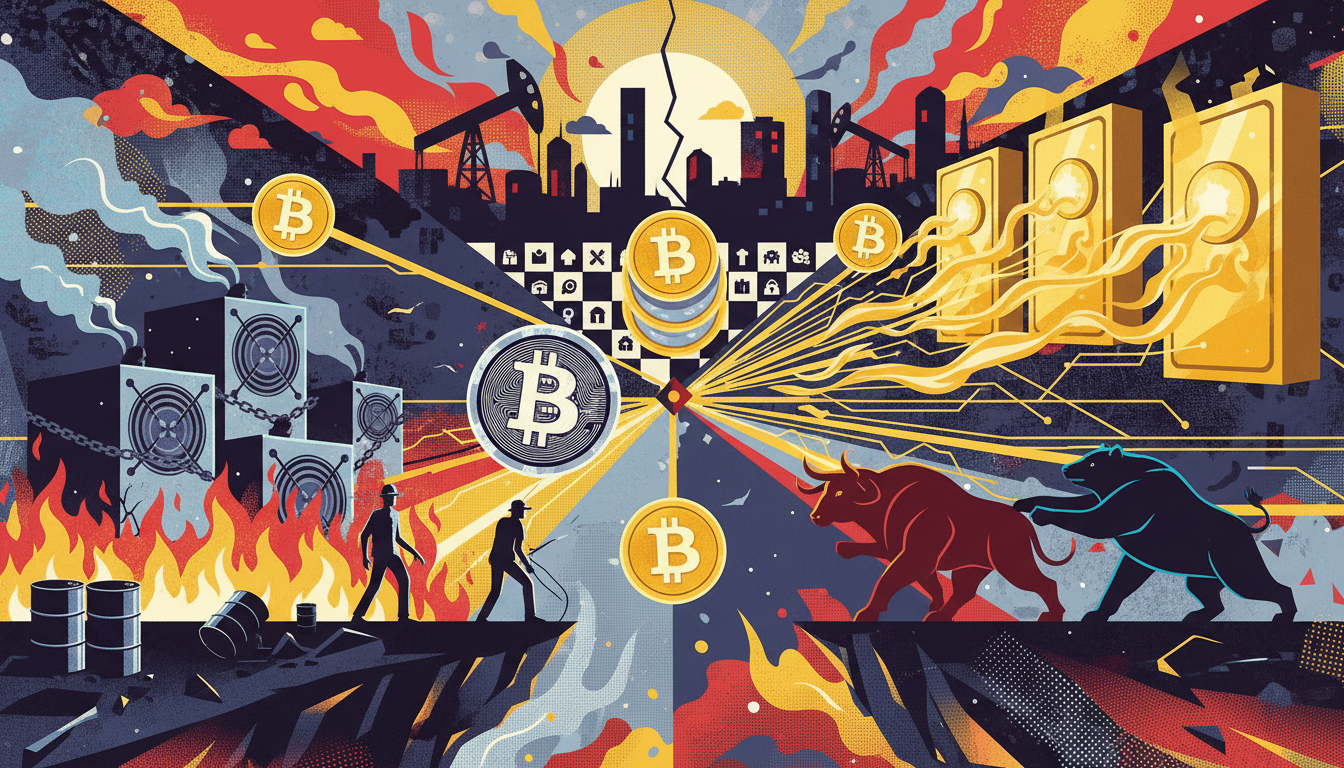
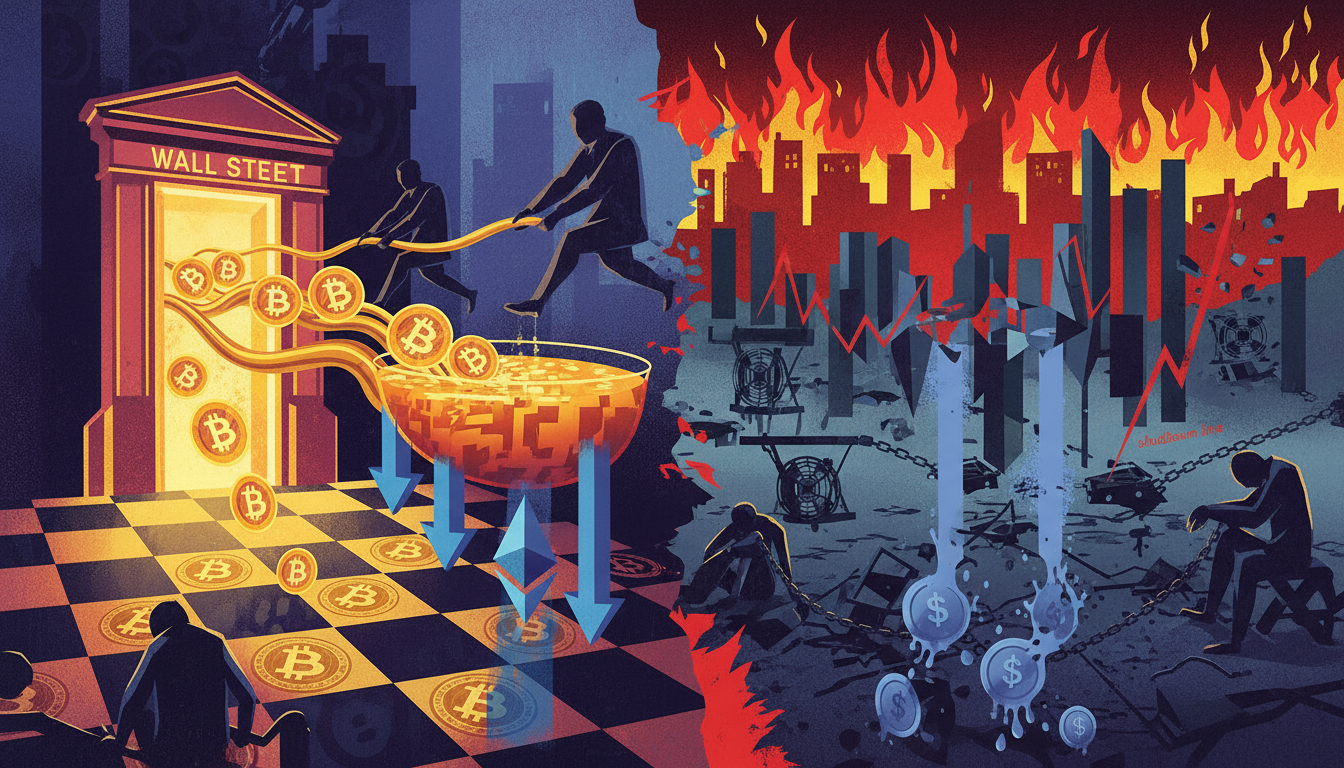
On March 23, 2026, Beijing time, gold prices experienced a sharp pullback amid a sudden change in global risk sentiment, falling alongside US stocks and resonating with the South Korean stock market, but showing a strong contrast with the relative resilience of the cryptocurrency market. Just as the gold price corresponding to PAXG briefly fell below $4,340, with a 24-hour decline of 3.23%, Sky co-founder Rune Christensen was captured by Onchain Lens opening a 20x leveraged long position in GOLD and simultaneously using the TWAP algorithm to gradually close out his short position in the S&P 500. This action shows a player from the crypto world choosing to leverage to go long on gold while reducing short exposure to US stocks at the moment traditional safe-haven assets were crashing. The intertwining of gold's plunge, US stocks' decline, and relative resilience of cryptocurrencies raises a core question: What new order are crypto participants actually betting on as traditional safe havens gradually fail?
The 3% pullback in gold erased $1.5 trillion in an unconventional night
The market action on March 23 was first written in gold. On-chain gold assets represented by PAXG briefly fell below $4,340, and according to Golden Finance data, it had a 24-hour decline of 3.23%, which is already an extremely severe single-day fluctuation in the traditional precious metals market. After the price fell below $4,350, Gate statistics showed that within just three hours, the market capitalization of gold had evaporated by approximately $1.5 trillion, with the dramatic volatility of safe-haven assets directly tearing apart the narrative of “safe assets.”
During the same period, risk assets were also not spared. According to Bitget data, the South Korean KOSPI Index fell by approximately 6% in a single day, resonating with the pullback in gold, presenting a rare combination of “safe-haven asset decline and risk asset drop” rather than the ideal hedging structure of “stocks falling and gold rising” mentioned in traditional textbooks. The broader global risk assets faced collective pressure during this round of shocks, and gold did not act as the expected safe haven; rather, it was sold off along with the stock market amid panic.
This indicates that at least in this round of volatility, the classic narrative that “gold = ultimate safe haven” sharply diverged from the actual price behavior: when liquidity was rapidly withdrawn and margin calls were made, gold was no longer a harbor for all funds, but more like a “cash machine” being sold off to fill other risk exposures. Against this backdrop, a founder in the crypto space choosing to leverage and go long on gold during the crash itself strongly colors his action as counter-trend.
Sky co-founder counter-trend bets on gold while reducing short positions on US stocks
Based on on-chain tracking from Onchain Lens, during the period when the gold price dropped below $4,350 and continued to pierce down to the $4,340 range on March 23, Rune Christensen opened a 20x leveraged long position in GOLD, clearly betting on a recovery in gold prices after the panic sell-off. This timing and price position almost coincided with the node where traditional funds were “cutting losses” and risk assets were collectively de-leveraging, constituting a standard counter-trend increase in position.
Meanwhile, on-chain data also showed that he was not merely betting everything on gold but was also gradually closing out his prior short positions in the S&P 500 Index ($SP500) through a TWAP (Time Weighted Average Price) method. TWAP means he chose to execute orders in batches over a period rather than closing them all at once, which lessened the impact on market prices and aligned more with a tactical approach that anticipated ongoing risk in US stocks but needed to hedge against extreme short-term sell-offs caused by panic.
These two sets of actions together represent a typical high-risk directional choice: on one hand, increasing a 20x leveraged long position in gold amid its flash crash, while on the other, cutting back his bearish position on US stocks. What’s more noteworthy is that this adjustment was made by a founder deeply rooted in the crypto industry regarding traditional assets, rather than routine trading around Bitcoin or on-chain tokens. It needs to be clarified that currently, public information has not disclosed Rune’s specific position size or the proportion of S&P 500 short position closure, which is also a hard boundary for analysis—any further speculation on position scale would exceed the factual basis, and this article does not engage in guesswork.
Funds’ chaotic migration between assets after escalation of the Iran conflict
To understand this unusual cross-asset behavior, it’s essential to pull the timeline back to February 28, when the Iran conflict broke out. Since that day, global risk appetite has generally contracted: geopolitical uncertainties rose, instincts for safe havens and de-leveraging began to dictate the flow of funds, and the triangular relationship of “stocks, bonds, gold” in traditional textbooks has been increasingly distorted in reality.
During this period, gold was first supported by safe-haven sentiment, but then shifted towards a sharp pullback under the compounded pressures of interest rate hikes, liquidity tightening, and margin calls; US stocks stumbled amid the dual effects of the conflict and economic expectations, with the stock market of an outward-oriented economy like South Korea enduring an extreme shock with approximately 6% daily decline, becoming a magnifier of risk aversion sentiment. Different markets, regulatory frameworks, and capital structures resulted in each index showcasing its own panic imprint in terms of pullback rhythm and amplitude.
In contrast, mainstream crypto assets did not prove utterly safe during this round of external shocks but displayed some relative resilience. On March 23, Bitcoin hovered around $68,000, with a weekly drop of approximately 6% (according to CoinGecko), which is not slight in absolute value, but from a historical perspective, since the Iran conflict, Bitcoin's overall decline has been less than that of the global stock market. In other words, when traditional risk assets and some safe-haven assets were being liquidated by panic funds, emerging assets like Bitcoin did not collapse first as they had in certain extreme periods in the past, but rather maintained a relatively stable stance amid severe shocks.
This misalignment in trajectories formed a new narrative tension: on one side, gold oscillates amid conflicts and liquidity games, with its safe-haven identity repeatedly questioned; on the other side, cryptocurrencies like Bitcoin emerge as a sort of “new candidate for safe haven” within a framework of high volatility. It is against this macro backdrop that the crypto founder makes directional bets on gold and US stocks, essentially participating in a reconfiguration of the roles of “old safe havens” and “new safe havens.”
Bitcoin’s four-year cycle and Ethereum pressures under internal narratives
At the same time as macro panic and geopolitical risks loom, the internal mechanisms of the crypto market also have their independently operating narrative gears. Anthony Scaramucci, the founder of SkyBridge Capital, recently continues to assert that today’s Bitcoin bear market and adjustment phase can still be explained using the traditional “four-year cycle theory”—halving, supply contraction, and institutional participation rhythm constitute the core of Bitcoin price volatility. This statement implies that, despite severe external turmoil, the operation logic within Bitcoin has not been completely interrupted, with macro winds and waves acting more as “high-frequency noise” over cycles.
In contrast, Ethereum's ecosystem faces pressures more from technology and strategy itself. A report from CoinDesk points out that Ethereum is under simultaneous pressure from expansion paths, quantum safety, and AI strategies: on one hand, issues regarding on-chain throughput and costs demand a clearer expansion path; on the other hand, the potential threats posed by quantum computing and uncertainties in infrastructure positioning within the AI wave are squeezing the market's patience for its long-term narrative.
Ethereum co-founder Vitalik Buterin has openly stated that existing second-layer networks do have problems in terms of scaling, with obvious shortcomings from security models to data availability and user experience. This self-criticism from a project founder is honest in the tech circle, but in a market context sensitive to emotions, it can be magnified into doubts about the robustness of the existing architecture.
The result is, on a macro level, gold, US stocks, and the South Korean stock market swung violently under the shadow of conflict; on a micro level, Bitcoin still fluctuates according to the four-year rhythm, while Ethereum is forced to respond to three difficult questions of expansion, quantum, and AI simultaneously. The rhythms of these two narrative lines are not synchronized: the panic selling pressure from traditional assets is high-frequency and direct, while the pressures in the crypto world are more reflected in the slow variables of mid-to-long-term technological routes and systemic evolution. This misalignment has also caused the meaning of “safe haven” to quietly shift across different markets.
What signal does the crypto founder's bet on gold convey
Returning to Rune's combination operation of “long gold + reduce short US stocks”, it acts like a public comment on market pricing itself. He chose to open a 20x leveraged long position at a moment when gold prices rapidly plummeted and the safe-haven narrative was being questioned, while rhythmically closing out his S&P 500 short positions through TWAP, which at least conveys two layers of potential meanings: one is that he believes current sell-offs in gold are mixed with excessive panic, and its long-term safe-haven attributes have not been fundamentally compromised; the second is that he remains wary of systemic risks in US stocks but needs to adjust the hedging intensity following extreme volatility.
From a market interpretation perspective, such an operation can easily be viewed as a reaffirmation of gold's long-term safe-haven attributes and a judgment that there is still downward space for US stocks. By reducing bearish bets on the stock market and simultaneously increasing long gold leverage near the panic’s lowest point, he is, in a sense, betting on the idea that at some point in the future, the safe-haven narrative will return to gold rather than indiscriminately overflowing into cash or short-term bonds.
Meanwhile, Bitcoin’s relatively resilient performance during this stage provides a real-world example for capital to rebalance between gold and crypto: gold may lose momentum in the short term amid liquidity tightening, but its deep-rooted “store of value and safe haven” label remains intact; although Bitcoin has higher volatility, it has displayed price trajectories different from traditional stock markets under the resonance of geopolitical conflict and cyclical drivers. Capital might be attempting to find new combinations of weights between “old safe haven” (gold) and “new safe haven candidates” (crypto assets like Bitcoin), and Rune's cross-market operations happen to be at the crossroads of this weight re-evaluation.
It is important to emphasize that the above discussion is solely based on publicly available on-chain trading signs and market data, focusing on changes in market pricing and narrative structures, rather than trying to speculate on Rune's personal subjective motives or risk preferences. In the absence of specific position sizes, funding costs, and insider information, any detailed description of his “degree of staking” or psychological expectations would deviate from factual boundaries.
Where does crypto stand after the reshuffling of the safe-haven narrative
In summary, the series of asset performances on March 23 formed an unconventional combination: gold plummeted, US stocks and the South Korean stock market significantly retreated, while mainstream crypto assets like Bitcoin showed relative resilience. This represents a clear deviation from the traditional path of “stocks falling and gold rising, cryptos dramatically following”, and has blurred the list of “safe-haven assets” in reality.
When gold evaporated approximately $1.5 trillion in market capitalization within just three hours, and the KOSPI experienced about a 6% daily drop, while Bitcoin was still around $68,000 bearing a manageable weekly decline, the market was forced to reassess: Has the correlation between gold and US stocks developed a short-term stickiness under the pressure of conflict? Is the linkage coefficient between crypto assets and these traditional assets gradually shifting from a simple “high beta risk asset” tag to a more complex dynamic relationship?
On a longer-term dimension, geopolitical risks and technological evolution will continue to intertwine: on one side, conflicts, uncertainties, and monetary policies repeatedly shape the demand for safe havens; on the other, Bitcoin's four-year cycle and Ethereum's self-innovation in scaling, quantum, and AI constantly rewrite the internal value structures of crypto. Amidst the entanglement of these two forces, crypto assets are likely to be endowed with a “safe haven + speculation” dual role—serving both as a hedge against traditional finance and sovereign risks while retaining high volatility and high-risk premiums, providing an offensive space for risk-accepting capital.
A crypto founder like Rune, increasing leverage in gold during its flash crash and adjusting short positions in the stock market amid panic, may very well represent a microcosm of this role transition process: the safe-haven narrative is being reshuffled, and the crypto world is no longer merely the passive recipient of traditional market sentiment but is beginning to participate in rewriting new risk and value coordinates through its own cycles and structures.
Join our community to discuss and become stronger together!
Official Telegram group: https://t.me/aicoincn
AiCoin Chinese Twitter: https://x.com/AiCoinzh
OKX Welfare group: https://aicoin.com/link/chat?cid=l61eM4owQ
Binance Welfare group: https://aicoin.com/link/chat?cid=ynr7d1P6Z
免责声明:本文章仅代表作者个人观点,不代表本平台的立场和观点。本文章仅供信息分享,不构成对任何人的任何投资建议。用户与作者之间的任何争议,与本平台无关。如网页中刊载的文章或图片涉及侵权,请提供相关的权利证明和身份证明发送邮件到support@aicoin.com,本平台相关工作人员将会进行核查。